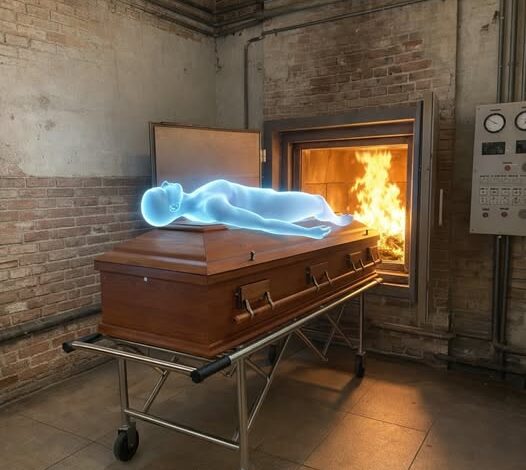
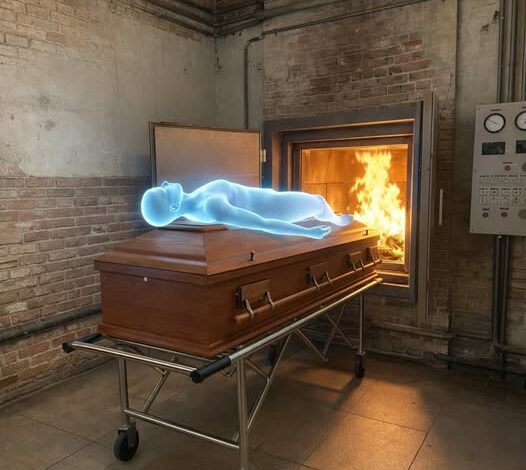
In the modern era, the landscape of end-of-life care has shifted dramatically. Driven by escalating costs, urban land scarcity, and a cultural push toward minimalist efficiency, cremation has transitioned from a fringe alternative to a dominant preference. However, for those who anchor their lives in the tenets of Judeo-Christian scripture, this shift invites a profound theological inquiry. Is the choice to cremate a body merely a matter of logistical convenience, or does it represent a departure from the sacred reverence prescribed by God for the human form? To understand whether cremation constitutes a “sin” or a deviation from divine intent, one must look beyond contemporary trends and delve into the scriptural narrative regarding the body, death, and the promise of the hereafter.
The Biblical Precedent of Burial
The most compelling argument against cremation is found not in a single prohibitive commandment, but in the overwhelming and consistent pattern of behavior established by the faithful throughout the biblical record. From the patriarchs of Genesis to the apostles of the New Testament, the “right way” to handle the dead was inextricably linked to the earth.
Consider the burial of Sarah. When the matriarch passed away, Abraham did not seek a quick or efficient disposal; instead, he negotiated with the Hittites to purchase a specific cave in Machpelah. This act was a testament to his belief that even in death, Sarah’s physical remains held significance. This precedent continued with Jacob, who, on his deathbed in Egypt, gave strict instructions to be carried back to the land of his fathers to be buried. Even Joseph, rising to the heights of Egyptian power where mummification was the norm, commanded that his bones be carried back to the Promised Land.
The most poignant example, however, is the burial of Moses. Scripture tells us that God Himself buried Moses in a valley in the land of Moab. If cremation were a neutral or preferred method of handling the body, the Creator of the universe would likely have demonstrated it. Instead, the divine act of burial serves as the ultimate stamp of approval on returning the body to the dust from whence it came, in a manner that preserves its integrity.
The Symbolism of the Seed and the Tomb
In the New Testament, the theology of burial is elevated through the metaphors of Jesus Christ and the Apostle Paul. When Jesus was laid in the tomb of Joseph of Arimathea, it was not merely a pause in his journey; it was the fulfillment of a “grain of wheat” falling into the ground. Paul utilizes this exact agricultural imagery in his letters to the Corinthians to explain the resurrection. He posits that the body is like a seed: it is “sown” in corruption so that it may be “raised” in incorruption.
For many theologians, burial acts as a physical profession of faith. By placing a body in the ground, the community of believers is “planting” a loved one in anticipation of a future harvest. Cremation, by contrast, involves the rapid and violent destruction of that “seed” via fire. While fire in the Bible often represents purification, it more frequently symbolizes judgment, wrath, and the destruction of the enemies of God. The rare instances of burning human remains in the Bible—such as the judgment upon Achan or the threats against the kings of Edom—are almost exclusively associated with curse and disgrace, never with the honoring of a saint.
The Body as a Sacred Trust
A central pillar of the Christian faith is the belief that the human body is not a disposable shell or a “prison” for the soul, as some ancient philosophies suggested. Rather, the body is a fundamental part of the human person, created in the image of God. The doctrine of the Incarnation—God becoming flesh in the person of Jesus—forever sanctified the physical human form. Furthermore, the New Testament describes the believer’s body as a “temple of the Holy Spirit.”
If the body is a temple, then its treatment after the “spirit departs” remains a matter of stewardship. Proponents of burial argue that destroying a temple through fire is an act of desecration, whereas returning it to the earth allows for a natural, God-ordained process of decay. This perspective views burial as a final act of worship, a way of returning a borrowed gift back to the Giver with the same dignity with which it was received.
Addressing the Fear of Resurrection
A common point of confusion among the faithful is whether cremation “prevents” God from performing the miracle of resurrection. It is vital to clarify that God’s sovereignty is never limited by the physical state of a corpse. Throughout history, martyrs have been burned at the stake, sailors have been lost at sea, and bodies have been vaporized in explosions. None of these circumstances hinder the Almighty. On the day of resurrection, the sea will give up its dead, and the dust of the earth will hear His voice.
The concern regarding cremation is therefore not about God’s ability to resurrect, but about the believer’s expression of faith. Resurrection is an act of divine reconstruction. Choosing burial is a way of aligning our earthly actions with our heavenly hope—choosing the “sleep” of the grave over the finality of the flame.
The Role of Intent and Necessity
In a world filled with economic hardship, the question of “sin” often hinges on the heart. Is a family “sinning” if they choose cremation because they cannot afford the exorbitant costs of a modern casket, vault, and cemetery plot? The overarching message of Scripture suggests that God prioritizes the heart over the ritual. If cremation is chosen out of dire necessity, poverty, or legal requirement, it is unlikely to be viewed as a rebellion against God.
However, the “sin” may lie in the motivation if the choice is driven by a nihilistic view of the body, a desire to “erase” the memory of the deceased, or a total disregard for the traditions of the faith. When convenience and cost-cutting take precedence over reverence and sacred symbolism, the spiritual integrity of the process is compromised. The Bible calls believers to be “not conformed to this world,” which includes resisting the urge to treat death with the same disposable mindset that modern society applies to consumer goods.
The Call to Dignity and Reverence
While there is no specific verse that explicitly states, “Thou shalt not cremate,” the collective weight of biblical history, symbolism, and theology points toward burial as the more faithful path. Burial honors the body’s history, acknowledges the gravity of death, and looks forward to the hope of the resurrection with patient expectation. It treats the end of life not as a problem to be solved quickly, but as a transition to be marked with solemnity.
For the older adult or the family planning for the future, the decision between the grave and the furnace is more than a financial one; it is a final statement of what they believe about the human person. To choose burial is to follow in the footsteps of the prophets, the apostles, and Christ Himself. It is a choice that favors the quiet, natural rhythm of the earth over the artificial intensity of the fire.
In the final analysis, our destiny is not determined by how our physical remains are handled, but by the life we lived and the faith we held. Yet, even in our passing, we have one final opportunity to bear witness to the truth: that our bodies are not our own, they were bought with a price, and they are destined for a glory that no fire can consume. By choosing the path of reverence, we honor the Creator who fashioned us from the dust and the Savior who promises to call us from it once again.
Leave a Reply