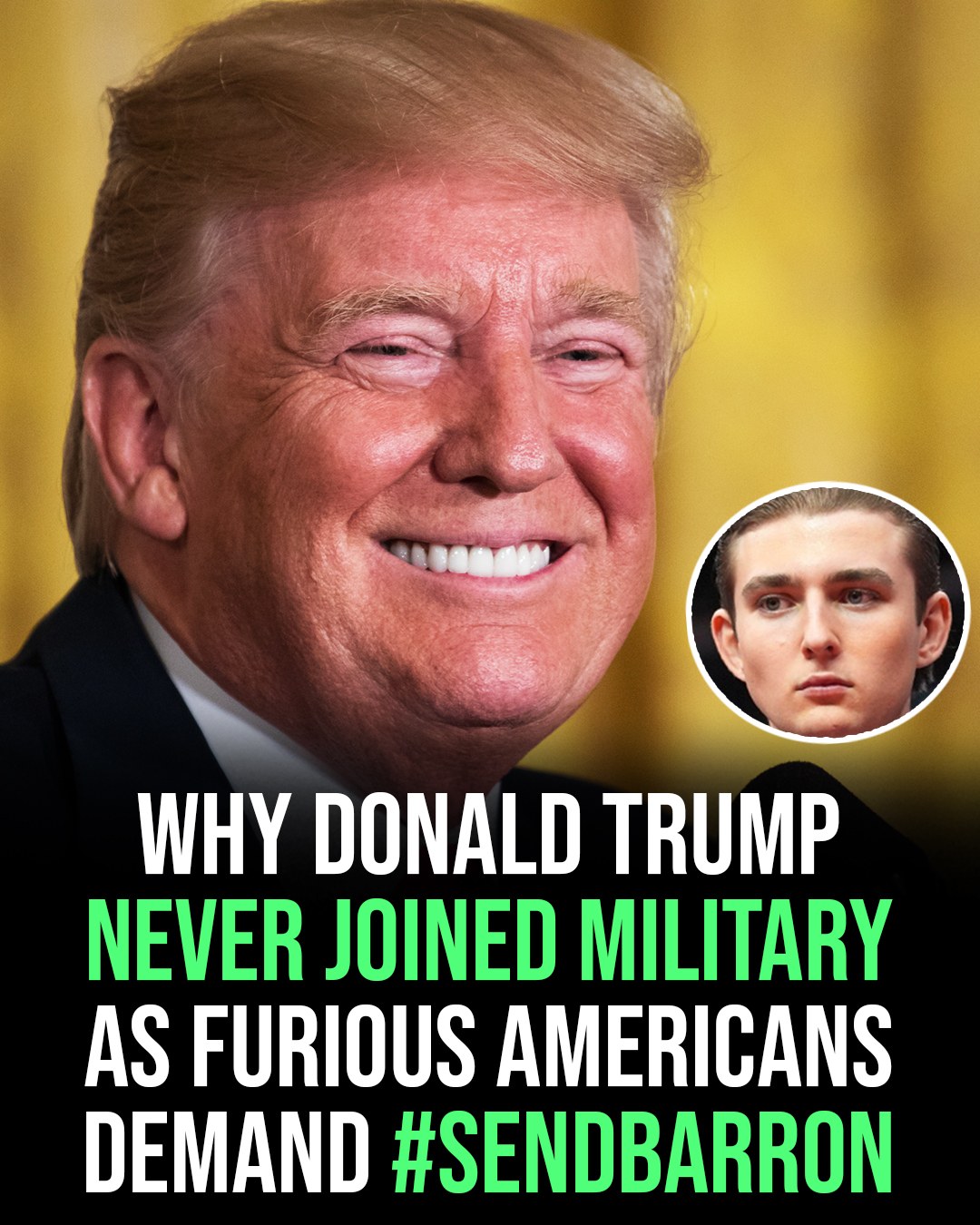
President Donald Trump reignited debate about his personal history with military service after sharing a nostalgic photo from his teenage years at the New York Military Academy. The image, posted on Truth Social, shows a young Trump in a military-style cadet uniform standing beside his parents, Fred and Mary Trump, at the academy in Cornwall-on-Hudson, New York, where he studied from the age of 13 until 18. Trump captioned the image simply: “At Military Academy with my parents, Fred and Mary!”
The post quickly triggered reactions across social media, drawing both praise from supporters and criticism from detractors. The timing added to the attention surrounding the image. It appeared only hours after U.S. Central Command reported that a military refueling aircraft had gone down in western Iraq, during a period of heightened tensions in the Middle East following U.S. and Israeli strikes connected to Iran.
Many online commentators immediately connected the nostalgic academy image to Trump’s long-debated Vietnam-era draft history. During the Vietnam War, which lasted from 1955 to 1975, American men between the ages of 18 and 26 were eligible for military conscription. Trump, born in 1946, was within the draft-eligible age range during the peak years of U.S. involvement in the war.
Historical records show that Trump received five draft deferments during that period. Four were student deferments granted while he attended Fordham University and later transferred to the Wharton School at the University of Pennsylvania. Student deferments were commonly issued at the time to individuals enrolled in college.
While studying at Fordham, Trump briefly participated in the Reserve Officers’ Training Corps (ROTC), a program that trains college students for future military officer commissions. Participation in ROTC could lead to military service following graduation. Trump reportedly left the program during his second year as the Vietnam War intensified, choosing not to continue the commitment required for potential deployment.
At the time, some professors advised students to maintain strong academic performance to qualify for draft deferments. Reports indicate that although Trump did not initially make the dean’s list, he was encouraged to improve his academic standing to maintain his deferment status.
Later, Trump received a medical exemption after being diagnosed with bone spurs in both heels. Bone spurs, medically known as osteophytes, are small bony growths that can develop along joints and may cause pain or mobility problems. According to medical sources such as the Mayo Clinic, treatments may include medication, therapy, or surgery depending on severity.
Trump’s diagnosis was reportedly made by Dr. Larry Braunstein, a podiatrist from Queens. Accounts later suggested that the doctor provided the diagnosis as a favor to Trump’s father, Fred Trump. The medical exemption ultimately disqualified Trump from military service under Selective Service regulations at the time.
The exemption has remained a point of controversy for decades. Critics argue that Trump’s avoidance of the draft contrasts with images or statements that highlight military imagery from his youth. After the recent photo was posted, journalist Aaron Rupar criticized the post online, while political group The Lincoln Project referred to the image as an example of “stolen valor.”
Some critics on social media revived the nickname “Cadet Bone Spurs,” referencing the medical deferment that kept Trump from serving during the Vietnam War. The renewed discussion illustrates how Trump’s draft history continues to attract scrutiny whenever military themes appear in his public messaging.
Trump has addressed the issue in previous interviews. He has described the bone spur condition as temporary and said it eventually healed. Trump has also stated that he opposed the Vietnam War personally, describing it as distant and unnecessary compared with conflicts such as World War II.
In a 2019 interview, Trump said he would have been “honored” to serve if circumstances had been different. He framed his lack of military service as a combination of medical exemption and personal opposition to the war rather than a lack of patriotism.
Approximately 2.7 to 2.8 million Americans served during the Vietnam War. The conflict resulted in 58,220 U.S. service members killed, more than 300,000 wounded, and over 1,500 missing in action for years after the war ended.
Trump’s post also resurfaced amid renewed concerns about global conflict following U.S. and Israeli strikes tied to tensions with Iran. These developments sparked online discussions about military readiness and the possibility of conscription in extreme circumstances.
Some social media users extended the conversation to Trump’s youngest son, Barron Trump, who is currently 19 years old and within the age range for Selective Service registration. Under U.S. law, male citizens and immigrants between ages 18 and 25 must register with the Selective Service System, even though the United States has not used a draft since 1973.
Failure to register can result in legal penalties and ineligibility for certain federal benefits. If a draft were ever reinstated, individuals turning 20 during the lottery year would typically be called first, followed by those aged 21 through 25.
The discussion online included jokes and political commentary about Barron potentially serving if a draft were implemented. Some posts suggested he should be drafted first, reflecting the viral nature of political humor and criticism on social platforms.
Others noted that Barron’s height—reported to be around 6 feet 7 inches—could affect eligibility for certain military roles. Some positions, particularly those requiring work in confined environments such as armored vehicles or aircraft cockpits, have height restrictions.
Military experts explain that while extreme height may limit assignment to specific roles, it does not necessarily prevent someone from serving in other positions. Modern armed forces offer a wide range of occupational roles with varying physical requirements.
The debate surrounding Trump’s academy photo reflects broader public fascination with the intersection of military history, political leadership, and family legacy. Images associated with discipline and military training often evoke strong reactions when paired with historical scrutiny.
Supporters of Trump praised the photograph as a reminder of his youth, family background, and early exposure to structured education. Critics, however, interpreted the image through the lens of Vietnam-era deferments and questions about privilege and draft avoidance.
Public reactions illustrate the polarized nature of political discourse in the social media era. Supporters and opponents frequently interpret the same images or statements through very different narratives shaped by political beliefs.
The resurfacing of Trump’s draft history also highlights broader conversations about fairness during the Vietnam War. Student deferments and medical exemptions were widely used by draft-eligible men during that era, particularly among college students.
Historians note that these policies allowed many individuals to legally avoid service, raising long-standing debates about privilege, socioeconomic status, and the fairness of the draft system.
Trump’s nostalgic academy image ultimately became a focal point for those debates. For some observers, it symbolizes discipline and family tradition, while for others it reopens discussions about military obligation and political accountability.
The conversation surrounding the post demonstrates how personal history, current geopolitical tensions, and social media commentary can quickly intersect. In modern political culture, even historical photographs can trigger renewed examination of past events and decisions.
Whether viewed as a simple family memory or as a reminder of unresolved debates about military service, Trump’s academy photograph once again placed his Vietnam-era draft history at the center of public discussion.