Before it became a cinematic landmark, The Graduate was a collection of risks that many in Hollywood believed would fail. It wasn’t built on a foundation of confidence, but on the intuition of director Mike Nichols, who chose to break the industry’s most established rules to create something authentically human.
The Casting Gamble: Hoffman over Redford
The most significant risk was the casting of the lead, Benjamin Braddock. Hollywood expectations at the time demanded a “traditional” leading man—someone like Robert Redford. Redford had the charm, the physique, and the polished confidence that guaranteed a box-office draw.
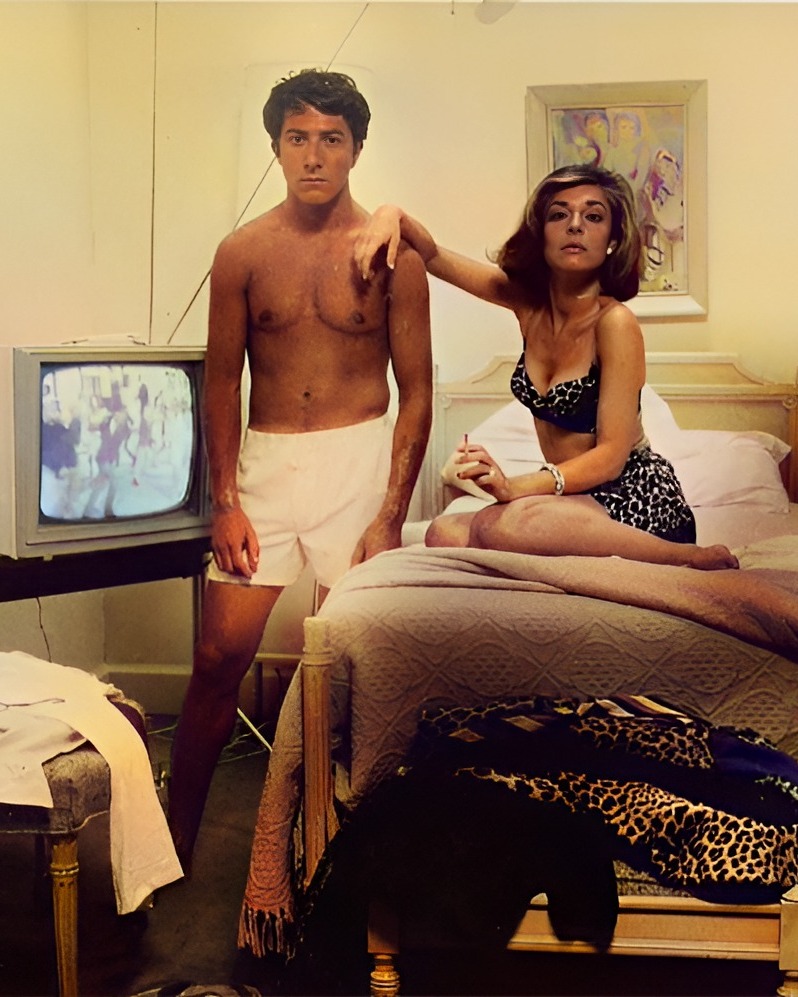
But Nichols wanted someone who looked like they didn’t belong. He chose Dustin Hoffman, an actor who was:
- Unconventional: He lacked the “striking” looks of a 1960s movie star.
- Vulnerable: His visible anxiety and awkwardness weren’t flaws; they were the emotional core of the character.
- Authentic: Hoffman brought a “manufactured” quality to the role that made Benjamin’s sense of being “lost” feel painfully real.
The Complexity of Anne Bancroft
Anne Bancroft delivered a performance that became a cultural icon, but the reality behind the role was a testament to the power of film artifice.
While she played the “older” woman, Mrs. Robinson, Bancroft was actually only six years older than Dustin Hoffman in real life. Through masterclass acting, specific lighting, and wardrobe choices, she transformed into a symbol of seductive yet deeply unhappy emotional emptiness.
The Success Trap: While the role immortalized Bancroft, it became a double-edged sword. It so thoroughly defined her public image that it overshadowed much of her diverse and brilliant career that followed.
A Tone of Discomfort
The Graduate refused to tell the audience how to feel. It pioneered a style that modern audiences now take for granted:
- Awkward Silences: Nichols allowed scenes to linger in discomfort far longer than traditional editing allowed.
- Unresolved Tension: The film didn’t offer the “neat” happy ending typical of the era.
- Emotional Ambiguity: It balanced humor with a profound sense of isolation, reflecting the real-life uncertainty of the generation it depicted.
The Legacy of Risk
The Graduate succeeded specifically because it ignored the formula for success. It spoke to a growing cultural sense of alienation that a “safe” film starring a “perfect” leading man could never have captured.
By choosing the awkward over the polished and the ambiguous over the certain, Mike Nichols proved a fundamental truth about storytelling: The films that stay with us are rarely the ones that play it safe. It remains a reference point for cinema not because it was comfortable, but because it dared to be real.