The interior of a modern car feels almost futuristic. Touchscreens dominate the dashboard, buttons have disappeared, and the center console often looks clean and minimal. For drivers who grew up with this technology, selecting how the car moves usually means turning a dial or pressing a small switch.
But for those who drove cars from the 1980s and early 1990s, the gear shifter told a different story.
Back then, the gear selector wasn’t just a simple control. It was a physical guide to how the machine behaved. Each letter and number had a purpose—P for Park, D for Drive, R for Reverse.
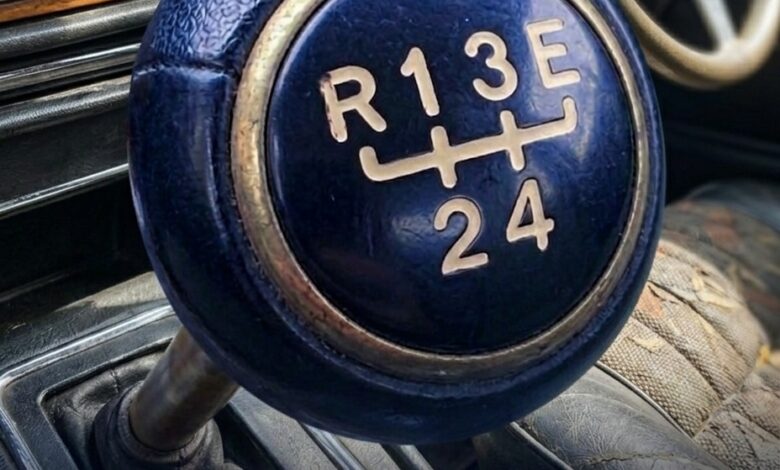
And then there was another letter that many people today no longer recognize.
E.
For drivers seeing it for the first time today, it can look mysterious, almost like a forgotten code from another era of automobiles.
During the late twentieth century, however, that letter had a very clear meaning.
“E” stood for Economy.
In the 1980s and early 1990s, fuel efficiency became a major concern after global oil crises caused gasoline prices to rise sharply. Car manufacturers began experimenting with ways to help drivers save fuel.
The Economy gear was one of those early solutions.
When a driver selected E, the car’s transmission changed the way it behaved. Instead of letting the engine rev higher before shifting gears, the system shifted earlier, keeping the engine running at lower RPMs.
Lower RPM meant less fuel consumption.
The car would reach its highest gear more quickly, the engine would run quieter, and fuel would be used more slowly.
Driving in Economy mode required a different style behind the wheel.
Acceleration became smoother and more gradual. Sudden bursts of power were reduced, and the car avoided aggressive “kick-down” gear changes used for quick overtaking. In some vehicles, the throttle itself became less sensitive.
Pressing the gas pedal hard no longer produced a strong surge of power. Instead, the car responded more calmly and steadily.
In a way, the Economy gear acted like a built-in reminder to drive more efficiently.
For drivers, it offered direct control over fuel consumption at a time when saving gas mattered greatly.
But as technology advanced, the physical E gear slowly disappeared.
Modern vehicles no longer need a dedicated position on the gear shifter to manage fuel efficiency. Today’s cars rely on powerful onboard computers that constantly analyze driving conditions.
These systems monitor countless variables—speed, temperature, altitude, engine load, and even driver behavior—making thousands of adjustments every second.
Instead of requiring the driver to activate Economy mode manually, the car now optimizes efficiency automatically.
Features such as fuel injection systems, multi-gear transmissions, hybrid technology, and aerodynamic design all contribute to maximizing fuel economy without any extra input from the driver.
As a result, the old “E” gear position gradually faded away.
But the story of that letter didn’t end there.
In a surprising twist, the letter E has returned to modern vehicles—though with a completely different meaning.
Today, in many electric cars, E represents Electric mode or e-Pedal driving.
Instead of controlling fuel consumption, it now refers to systems like regenerative braking, where the car converts motion back into energy and stores it in the battery.
In some electric vehicles, activating this mode allows drivers to slow the car simply by lifting their foot off the accelerator, rarely needing to press the brake pedal.
The letter that once symbolized saving gasoline has now become associated with a future that may not rely on gasoline at all.
Looking at an old Mercedes, Volvo, or other classic car and spotting that “E” next to Drive is like seeing a small piece of automotive history.
It represents a time when efficiency required a conscious choice—when drivers physically moved the gear lever to tell the car they wanted to use less fuel.
Today that decision is made quietly by software.
The machines have become smarter, the controls simpler, and the process invisible.
Yet the original idea behind that small letter never disappeared.
Because whether it stands for Economy or Electric, the message has always been the same:
go further while using less.
And that simple goal continues to shape every new car built today.