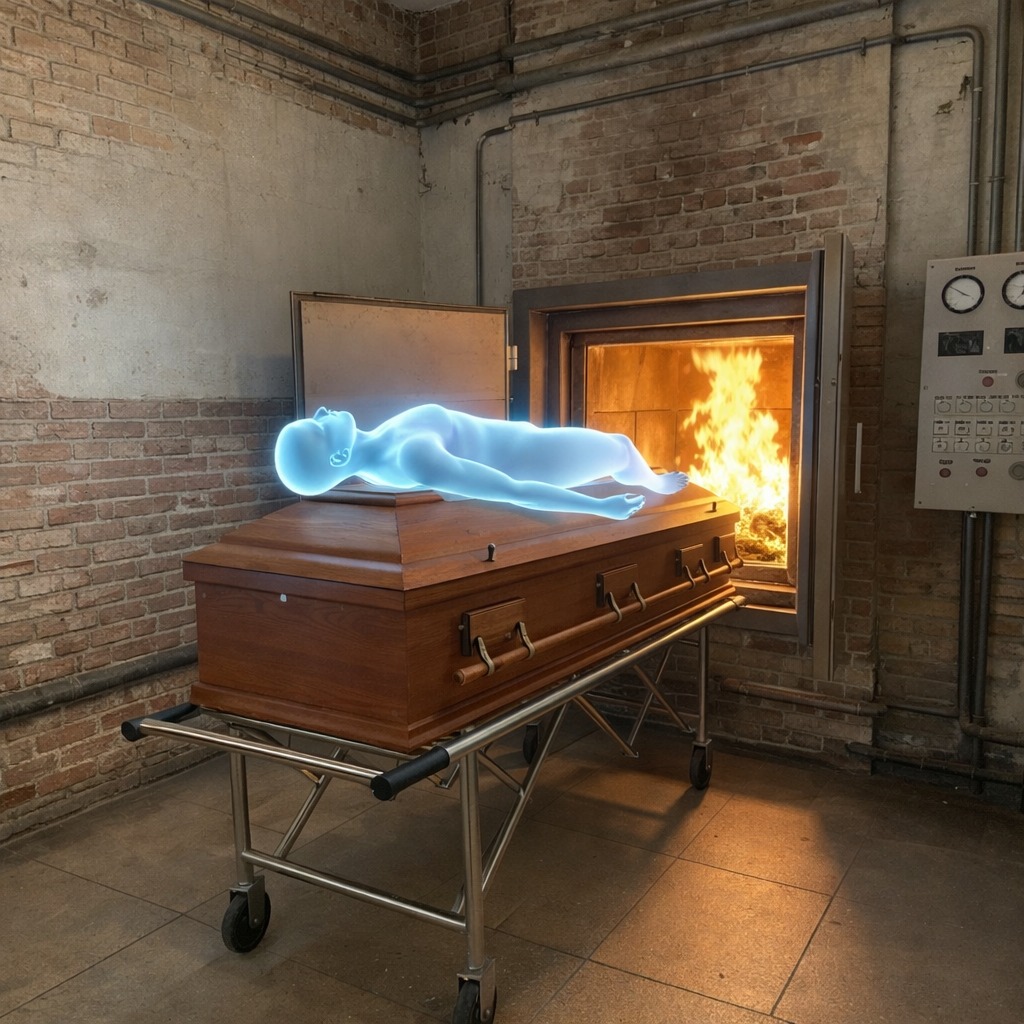
The sound of the incinerator and the reduction of a human body into ash have become common occurrences in today’s world. Over the last few decades, Western society has moved significantly away from traditional churchyard burials toward the practicality of cremation. This shift is primarily fueled by the massive costs of cemetery plots, the limited space in metropolitan areas, and a rising concern over the toxic chemicals used in embalming. However, as the smoke ascends, so do the concerns of believers. A persistent question often lingers in the minds of the faithful: Is opting for cremation a sin in the eyes of God?
To grasp the conflict surrounding this issue, one must explore the ancient foundations of Judeo-Christian heritage. For thousands of years, burial was far more than a practical necessity; it was a powerful theological declaration. In the ancient Near East, the manner in which a person was laid to rest reflected their perspective on the afterlife and their honor for the Creator. Throughout the Old Testament, the patriarchs treated the remains of the dead with a deep, sacred respect. Abraham went to great lengths to buy a cave in Hebron for Sarah’s burial—a location that would eventually hold his own body and those of his children. Even Moses was buried by the hand of God in a valley within Moab.
This cultural emphasis on burial was solidified in the New Testament by the core event of the Christian faith: the death and rising of Jesus Christ. After the Savior passed, He was wrapped in cloth and placed inside a stone tomb. For the early church, burial was an act of following Christ’s example. Burying a loved one was seen as imitating the Lord, symbolizing the “planting” of a body into the soil like a seed, with the hope that it would one day grow into a perfected, resurrected form. This imagery is where the unease with cremation originates. If the human body is considered a “temple of the Holy Spirit,” as the Apostle Paul wrote, does burning that temple constitute an act of disrespect?
For centuries, the church held a firm and often inflexible position. Many early theologians linked cremation with pagan customs and the rejection of the resurrection. Historically, some enemies of the church burned the bodies of martyrs specifically to insult Christian hope, believing that if the physical form were destroyed, God could not restore it. In response, the church emphasized burial as a public testament of faith—a physical claim that death is merely a temporary sleep and the body is waiting for the final trumpet. This historical context is why some denominations and traditional believers still feel uncomfortable with the practice today, fearing it removes the dignity and biblical symbolism from the transition to death.
Nevertheless, a careful and objective look at the Scriptures reveals an interesting fact: the Bible does not explicitly ban cremation. There is no divine commandment stating “Thou shalt not burn the dead” found in the law or the apostolic letters. While burial is clearly the consistent biblical habit, it is presented as a cultural tradition rather than a mandatory law from God. The few times burning is mentioned negatively in the Bible, it usually involves divine judgment or the desecration of an enemy, rather than a general rule for all believers.
Modern scholars and theologians have started to view the topic with a mix of logic and compassion. They point out that the core of the Gospel is the saving of the soul and God’s total authority over all matter. If the resurrection relied on keeping physical remains intact, those martyred at the stake, sailors lost at sea, or victims of explosions would be without hope. This idea contradicts the belief in an all-powerful Creator. If God could create the entire universe out of nothing, He is certainly capable of rebuilding a glorified body from scattered molecules or ashes. The process of resurrection is a divine miracle that goes beyond the physical condition of the remains.
This change in outlook has helped many families handle 21st-century realities without feeling spiritual guilt. They view cremation not as a dismissal of the body, but as a faster version of the natural “dust to dust” cycle. Whether a body breaks down over many years in a coffin or quickly through heat, the biological result is identical. The true essence of a person—their soul, their impact, and their identity in Christ—does not reside in bone or ash. It is kept in the memory of God.
Furthermore, supporters of cremation argue that it can be done with as much reverence as a traditional funeral. A memorial service centered on Scripture, a respectful handling of the ashes, and a thoughtful placement of the urn can all honor the deceased in a way that fits Christian principles. Often, the money saved by choosing a more affordable option allows a family to use those funds to honor the person’s legacy through charity, which many see as a more powerful testimony of faith than a luxury casket.
In the end, the discussion over cremation highlights a deeper truth about faith. It reflects the balance between long-standing tradition and grace, and between the symbols we use for mourning and the eternal truths they represent. While the Bible offers a beautiful heritage of burial that mirrors the hope of rising again, it also provides grace for the practical choices of a modern world. For the believer, the final resting place of the physical body is a temporary detail in a much larger narrative.
Christian hope is not based on preserving the physical “tent” we live in on earth, but on the promise of a new, heavenly home. Whether someone is buried under a headstone in a quiet cemetery or scattered along a shoreline, the promise remains the same. Death has been defeated. As families make these tough choices, they can find comfort in knowing that God’s love is not restricted by earth or fire. The focus stays on the life that was lived and the eternal life to come—a hope that goes beyond both the grave and the urn, looking toward the day when everything is made new.
The Hidden Truth Behind Cremation and The Bible That Most Believers Never Knew
Previous Article Next Article
The Man In Black Secrets Behind The Tragedy And Triumph Of A Country Legend
The Brutal Reality Facing Artemis II Astronauts After Splashdown That NASA Does Not Want You To See