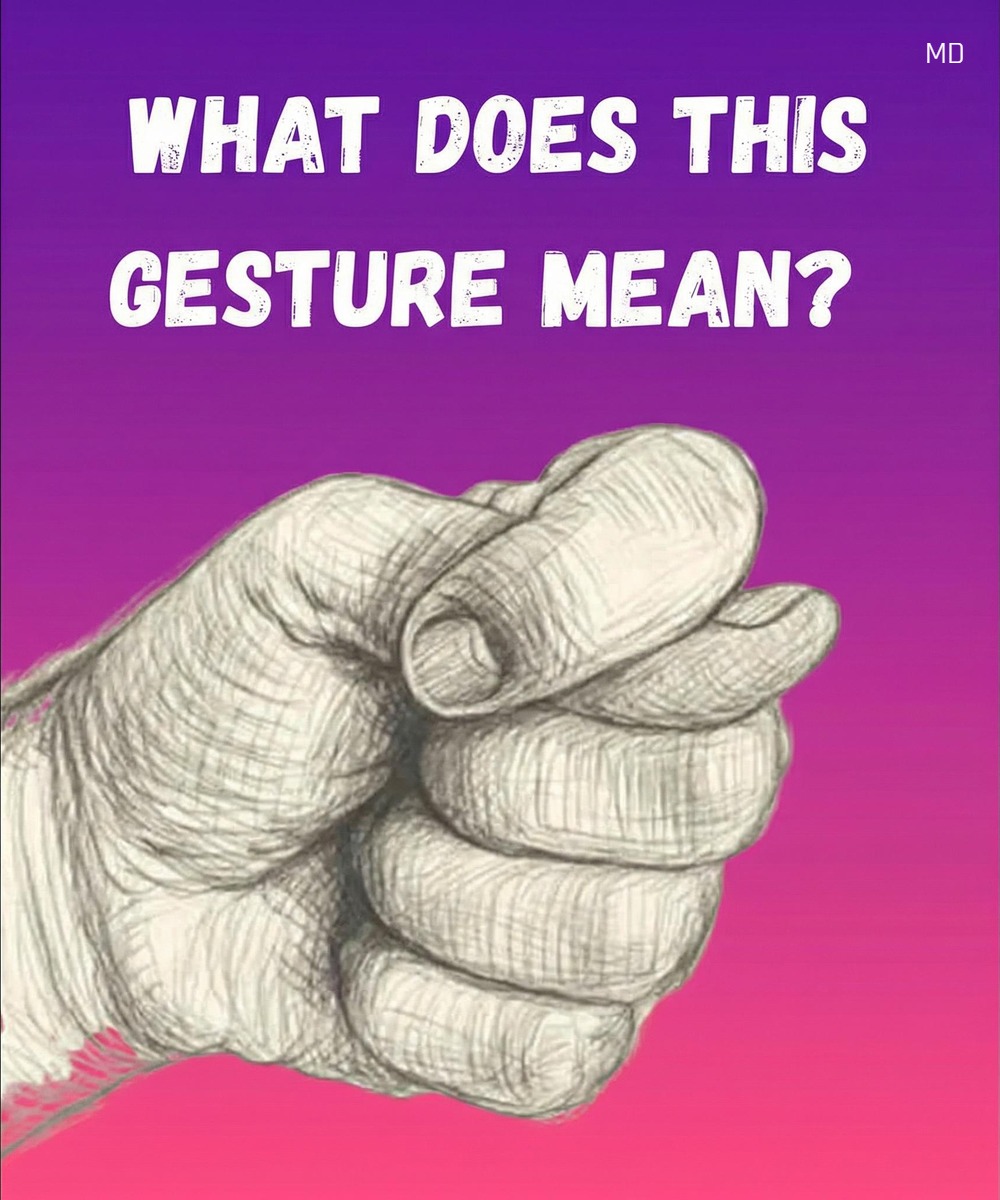
The human hand is perhaps the most sophisticated instrument of communication ever devised by nature. Long before the written word and parallel to the development of complex spoken language, the hands served as the primary interface for human expression. Among the vast lexicon of manual signals, few are as enigmatic, ancient, or culturally versatile as the “fig” gesture. To the uninitiated, it appears as a simple, perhaps even clumsy, clenched fist. However, the positioning of the thumb—tucked firmly between the index and middle fingers—transforms the hand from a blunt instrument of force into a sophisticated carrier of subtext. This gesture, known historically as the mano fuca, has traversed centuries of human history, evolving from a potent symbol of fertility and warding to a quiet tool of social resistance and, eventually, a playful relic of childhood games.
The journey of the fig gesture begins in the ancient world, where physical symbols were often imbued with a sense of cosmic or spiritual weight. In the Mediterranean basin, particularly within the Roman Empire, the gesture was far from a casual flick of the wrist. It was deeply tied to the “evil eye,” a pervasive belief that malevolent glares could bring misfortune, illness, or death. The fig gesture was thought to act as a metaphysical shield. Because the visual arrangement of the fingers resembled certain anatomical forms—specifically the fruit of the fig tree, which has long been a metaphor for fertility and life—it was believed to possess a generative power that could neutralize the “dry” and destructive energy of a curse. In this context, the gesture was an act of profound self-defense, a way for the common person to navigate a world they believed was populated by unseen spiritual threats.
As Europe moved into the Middle Ages and the early modern period, the utility of the fig gesture shifted from the supernatural to the social. In rural communities where social hierarchies were rigid and the consequences of open defiance could be severe, the gesture became a vital tool for the “politics of the weak.” When tax collectors, local lords, or unwanted officials arrived in a village, a direct verbal refusal could lead to imprisonment or worse. Instead, residents developed a repertoire of silent signals. The fig gesture, delivered discreetly from the shadows of a doorway or under the concealment of a shawl, allowed a person to communicate a firm “no” without the escalation of a shouting match. It was an act of quiet sovereignty. By using the gesture, an individual could maintain their dignity and set a clear boundary while avoiding the catastrophic fallout of open conflict. This era cemented the gesture’s reputation as a symbol of resilience—a way to say “I see you, and I refuse you” with absolute calm.
The cultural geography of the gesture is equally fascinating, as its meaning underwent a radical transformation depending on which border one crossed. In Italy and Brazil, the figa evolved into a good-luck charm, often carved out of wood, gold, or silver and worn as a pendant. In these cultures, the gesture lost its edge of refusal and became a beacon of protection and prosperity. Conversely, in parts of the Slavic world and Turkey, the gesture—often referred to as the kukish or nana—retained a more aggressive, mocking tone. In these regions, showing someone the fig was a visceral way of saying “you get nothing,” a visual representation of a void or a zero. It was used to puncture the arrogance of someone asking for an unreasonable favor or to mock a person who had failed in an endeavor. This duality—luck on one hand, mockery on the other—highlights how human beings can take a single physical form and imbue it with diametrically opposed intentions.
As societies modernized and the threat of the “evil eye” faded into the background of folklore, the fig gesture found a new home in the world of childhood. For many born in the twentieth century, the gesture is inextricably linked to the “I’ve got your nose” game played by parents and grandparents. In this sterilized version of the ancient sign, the thumb protruding between the fingers represents the stolen nose of a laughing child. It is a remarkable example of cultural survival; a gesture that once warded off demons and defied feudal lords was domesticated into a tool of familial bonding and innocent deception. Yet, even in this playful context, the core essence of the gesture remained: it was a secret, a trick, and a way of using the hand to represent something that wasn’t actually there.
In the contemporary era, the fig gesture has largely retreated from the public square. We live in an age of hyper-verbalization and digital saturation, where disagreement is usually expressed through the clatter of a keyboard or the selection of a standardized emoji. The nuanced, tactile language of the hand has been flattened into a series of pixels. Yet, there is something lost in this transition. The fig gesture represented a form of communication that required physical presence and emotional restraint. It was a “low-resolution” signal that required “high-resolution” social awareness to interpret. To use the gesture effectively, one had to understand the timing, the relationship, and the cultural context of the moment. It was an exercise in social intelligence.
The enduring legacy of the fig gesture lies in its lesson of measured response. In a modern world where every disagreement feels like it must be litigated at maximum volume, the history of this clenched fist offers an alternative path. It reminds us that power does not always reside in the loudest voice or the most aggressive stance. Sometimes, the most effective way to stand one’s ground is through a quiet, symbolic act of refusal. There is a certain grace in the “fig”—a refusal to engage in the theater of hostility while still maintaining a firm position. It is the physical embodiment of the phrase “speak softly and carry a big stick,” or perhaps more accurately, “speak not at all and let your hands tell the story.”
As we look back at this journey from ancient talismans to the kitchen tables of our grandparents, we see a reflection of the human condition itself. We are a species that craves connection but requires boundaries; we are driven by a need for protection but possessed by a sense of humor. The fig gesture, in all its various forms, managed to capture all of these facets. It was a charm, a shield, a taunt, and a toy. While it may never return to its status as a primary mode of communication, its memory serves as a bridge to a time when our hands were as eloquent as our tongues. In remembering the fig, we reconnect with a lineage of human ingenuity that valued the subtle over the shrill and the symbolic over the literal. It remains a testament to the idea that even the smallest movement of a thumb can carry the weight of a thousand years of history.
If you find yourself in a situation where words feel insufficient or where a loud argument seems like a waste of breath, there is a quiet dignity to be found in the lessons of the past. The fig gesture reminds us that we have always had the tools to navigate tension with a touch of wit and a steady hand. It is a reminder that resilience doesn’t have to be noisy, and that sometimes, the most profound thing you can do is tuck your thumb, hold your ground, and let the silence speak for itself.
Leave a Reply