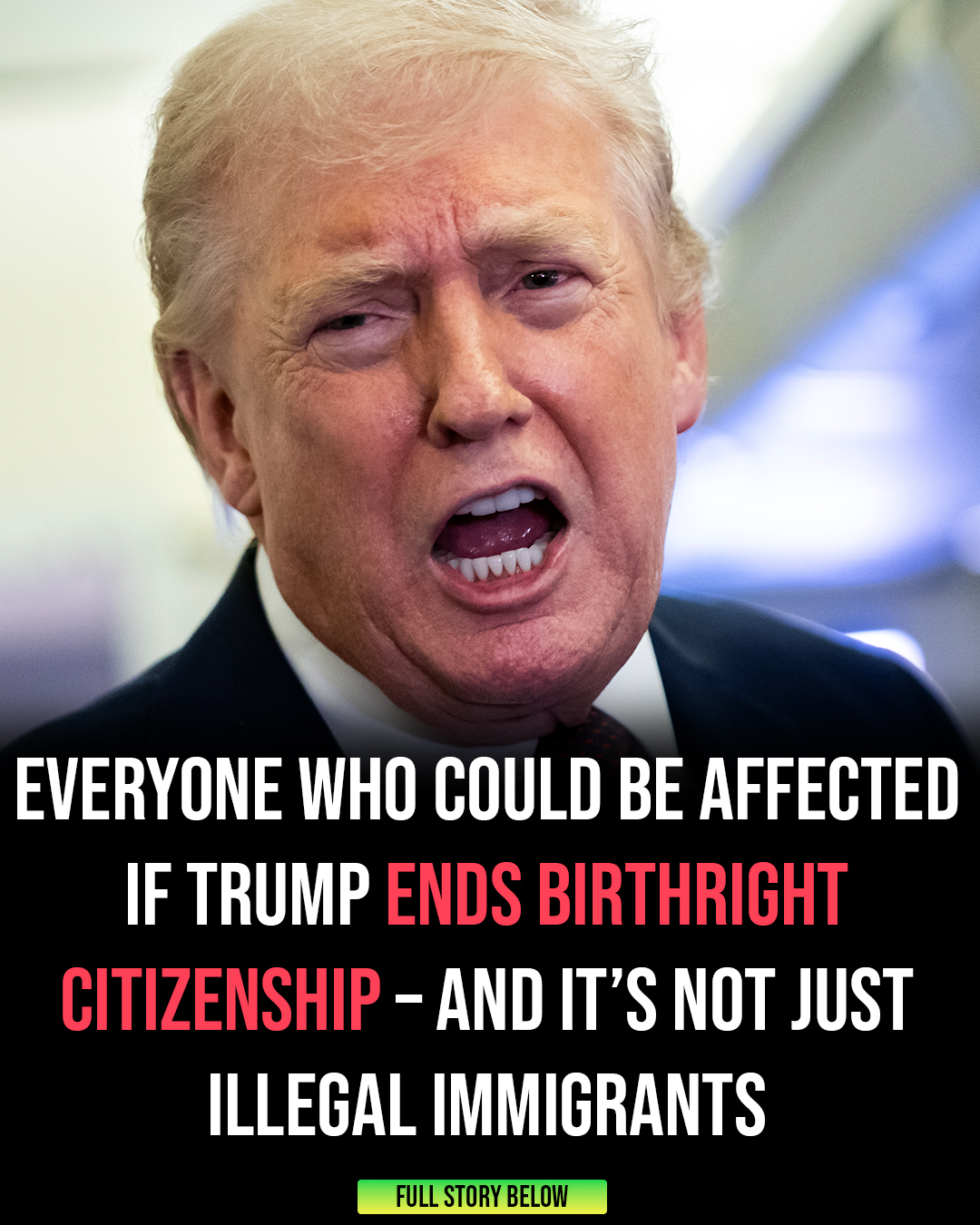
The definition of American identity is currently facing its most profound challenge in over a century. On April 3, 2026, the political landscape was transformed as Donald Trump advanced a controversial executive order designed to dismantle birthright citizenship. While much of the initial public debate concentrated on undocumented populations, the actual scope of the policy is far more radical. This order threatens to strip away the future citizenship rights of children born to legal residents, including international students and high-tech specialty workers residing in the United States.
For more than 150 years, the 14th Amendment has served as the constitutional cornerstone of American identity. It guarantees that any individual born on U.S. soil is a citizen—a principle Connecticut Attorney General William Tong recently described as “Period. Full stop.” The new executive order, however, attempts to circumvent this precedent. It seeks to deny automatic citizenship to infants if their parents are in the country unlawfully or even on temporary, legal visas. Under this rule, a child born to an H-1B worker from India, a doctoral student from Canada, or even a visitor from the UK would no longer be recognized as an American at birth.
The potential impact of this shift is immense. Statistics from Pew Research indicate that in 2022 alone, roughly 1.2 million U.S. citizens were born to undocumented parents. This new proposal would render an entire generation either stateless or forced to adopt the citizenship of their parents’ home countries—nations many of these children have never seen. Furthermore, the policy endangers the “American Dream” for thousands of legal visa holders who contribute significantly to the U.S. economy and scientific research sectors.
The legal response was immediate and intense. Attorneys general from 22 states have filed lawsuits, asserting that a president cannot override the Constitution through an executive order. The conflict has moved rapidly to the U.S. Supreme Court, which began hearing historic oral arguments this week. In a move without modern precedent, Trump himself attended the proceedings, marking the first time a sitting president has participated directly in a Supreme Court hearing of this nature.
On social media, Trump defended the order by claiming birthright citizenship has been exploited by wealthy individuals from “China and the rest of the world” to “pay” for their children’s status. He argued that the 14th Amendment’s original intent was strictly limited to the post-Civil War era and the children of formerly enslaved people, rather than being a universal right. Linking the issue to his platform of national sovereignty and tariffs, he criticized the U.S. court system as a global laughingstock.
As the Supreme Court justices deliberate, the country exists in a state of high-stakes uncertainty. A ruling in favor of the executive order would represent the most significant contraction of American civil rights in the modern era. It would effectively establish a tiered system of belonging, where a parent’s immigration paperwork dictates a child’s fundamental rights. For families currently expecting children on American soil, the “American” label is no longer a certainty, but a question. The global community is watching closely, as the fundamental essence of the American “Melting Pot” appears to have reached a critical boiling point.