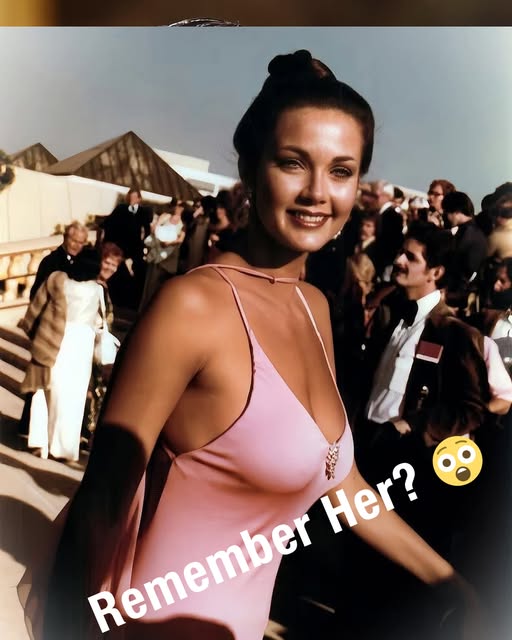
In 1975, female action heroes were almost unheard of in Hollywood. Although the women’s liberation movement was gaining momentum across the United States, television and film were still largely controlled by male-centered narratives. Into that environment stepped Lynda Carter—a statuesque performer from Phoenix, Arizona, who would eventually redefine what a female hero could look like on screen. Wearing a tiara and the colors of the American flag, she brought Wonder Woman to life and helped reshape expectations for women in entertainment. Yet the journey to that iconic role was far from simple and included moments of financial uncertainty and creative struggles behind the scenes.
Born in 1951, Carter showed a talent for performing early in life, appearing on television for the first time when she was just five years old. Music, however, was her original dream. By the age of fifteen, she was already singing in local restaurants and small venues, earning modest pay for weekend performances. She later enrolled at Arizona State University but eventually left school to pursue a music career. When that path failed to gain the traction she hoped for, she shifted direction and entered the beauty pageant world, eventually winning the Miss World USA title in 1972. Despite the recognition, she later described the pageant experience as difficult and emotionally demanding.
By the early 1970s, Carter was trying to establish herself in Los Angeles. She took acting classes and appeared in small television roles, but success remained uncertain. Competition was intense, and work was inconsistent. At one particularly challenging moment, she reportedly had only $25 left in her bank account. On the very day she considered leaving Hollywood and returning to Arizona, she received life-changing news: she had been chosen from hundreds of candidates to play Diana Prince in Wonder Woman.
The production itself reflected the cultural tensions of the 1970s. Some producers were worried that the character’s strong, independent personality might alienate audiences. Carter, however, insisted on portraying Wonder Woman as a confident and capable hero rather than a decorative figure. When the studio proposed using a male stunt performer for certain action scenes, she strongly objected. To demonstrate her commitment, she even performed a risky helicopter stunt herself before the production finally agreed to hire a female stunt professional.
Although she was widely praised for her beauty—earning titles such as “The Most Beautiful Woman in the World” in 1978—Carter pushed back against attempts to reduce her image to simple glamour. She disliked a widely circulated poster that portrayed her in a vulnerable pose, explaining that she never wanted the character to be viewed merely as a pin-up. Instead, she aimed to present Wonder Woman as someone women could admire and relate to—a symbol of strength and friendship rather than just physical appeal.
After the series concluded in 1979, Carter’s life moved through several personal and professional transitions. While she continued working in entertainment, her first marriage to talent agent Ron Samuels proved difficult and coincided with a period when she struggled with alcohol. A turning point came in 1984 when she met attorney Robert A. Altman. Their relationship quickly grew strong, and she eventually stepped away from the intense spotlight of Hollywood to focus on family life.
The couple settled in Potomac, Maryland, where Carter devoted much of her time to raising their two children, James and Jessica. With Altman’s support, she also achieved long-term sobriety and built a quieter life away from constant public attention. His death in 2021 was a painful loss, yet Carter has continued to remain active and connected to her legacy.
In recent years, she even returned to the world of Wonder Woman with an appearance in Wonder Woman 1984. Now in her seventies, Lynda Carter continues to be regarded as a timeless figure in pop culture. Her influence extends beyond the screen—demonstrating that true strength is not only about fictional powers, but about resilience, self-respect, and the determination to stand tall in a world that sometimes tries to limit you.