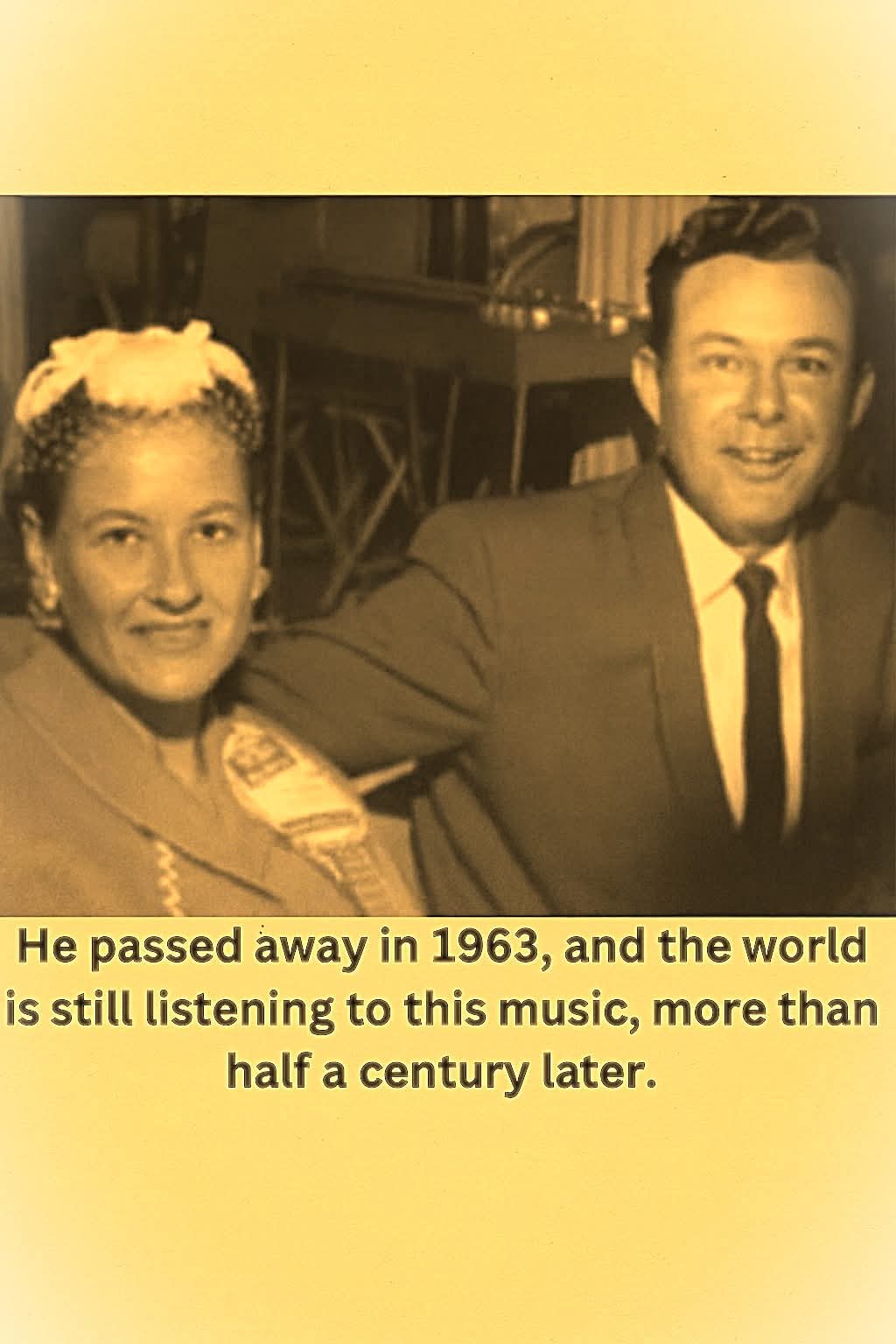
In the evolving landscape of American music, 1960 stands as a pivotal year—a moment when the raw, honky-tonk grit of traditional country music began to merge with the smoother textures of popular song. At the center of this transformation was a single track that would not only redefine a genre but also cement the legacy of one of music’s most distinctive voices. The song was “He’ll Have to Go,” and the voice belonged to Jim Reeves. To understand the impact of this recording is to understand the birth of the Nashville Sound, a movement that helped revive country music and bring it into the living rooms of a modern era.
The origin of “He’ll Have to Go” was as humble as the lyrics themselves. The story begins with the husband-and-wife songwriting duo Joe and Audrey Allison. Inspiration struck Joe during an ordinary moment in a crowded bar. Amid the noise of the room, he noticed a man standing at a payphone, quietly trying to speak with someone on the other end of the line. The man spoke softly, his voice filled with tension and emotion as he tried to handle a delicate situation while the noise of the bar continued around him.
Joe Allison was captivated by the emotional intensity of that one-sided conversation—the intimacy of the telephone as a bridge between two distant people. When he returned home, he shared the idea with Audrey, and together they developed a story inspired by what he had witnessed. The lyrics describe a man calling the woman he loves, only to realize that another man is in the room with her. Instead of reacting with anger, the narrator speaks calmly, almost in a whisper. “Put your sweet lips a little closer to the phone,” he asks, “and let’s pretend that we’re all alone.” It became a powerful example of quiet emotional storytelling.
When the song reached the legendary producer and guitarist Chet Atkins at RCA Victor, he immediately recognized its potential. At the time, Nashville was working to compete with the growing popularity of rock and roll. Atkins, together with producers such as Owen Bradley, was developing a new musical style known as the Nashville Sound. This approach reduced the rougher elements of traditional country and replaced them with smoother arrangements, background vocal groups such as the Anita Kerr Singers, and a polished vocal style that appealed to a broader audience.
Jim Reeves was the ideal voice for this new direction. Known as “Gentleman Jim,” Reeves possessed a warm and resonant baritone voice. Early in his career he had sung in a higher, more traditional country style, but under Atkins’ guidance he began exploring the richness of his lower vocal range. In “He’ll Have to Go,” Reeves sang very close to the microphone, creating a sense of intimacy that made listeners feel as if the song was being delivered directly to them. This approach helped bridge the emotional storytelling of country music with the smooth vocal tradition of artists such as Nat King Cole and Bing Crosby.
The recording session reflected the elegance of the emerging Nashville Sound. The arrangement remained simple and gentle, supported by piano and a steady rhythm that allowed Reeves’ voice to remain the central focus. There were no dramatic instrumental solos or heavy production effects. Every musical element served the emotional tone of the song. When the track was released in late 1959 and climbed the charts in 1960, it quickly became a major success.
“He’ll Have to Go” topped the country charts for fourteen consecutive weeks and also became a significant crossover hit on the Billboard Hot 100, reaching number two. This success was extremely important for the Nashville music industry. It demonstrated that country music could appeal to mainstream audiences and succeed internationally. The song gained popularity in countries such as the United Kingdom, Norway, and South Africa, proving that its theme of love and distance resonated with listeners worldwide.
The success of the song turned Jim Reeves into an international star. He toured widely and helped introduce the Nashville Sound to audiences who had previously overlooked country music. His smooth vocal style helped reshape the image of the genre, presenting it as refined, emotional, and accessible.
Tragically, Reeves’ career was cut short. In July 1964, at the height of his success, he was piloting a small aircraft that crashed during severe weather near Nashville. His passing at the age of forty deeply affected the music community and fans around the world.
Despite this loss, “He’ll Have to Go” continued to live on through radio, recordings, and performances. Over the decades, the song has been interpreted by many artists, including Elvis Presley, Ry Cooder, Bryan Ferry, and Tom Jones. Each performer brought a new interpretation while preserving the emotional core of the original composition.
Today, the song remains an important part of music history. It represents a moment when country music expanded beyond its traditional boundaries and connected with a wider audience. The simple image of a man speaking softly into a telephone—asking the woman he loves to “tell the man to go”—still resonates with listeners many decades later.
The enduring appeal of “He’ll Have to Go” lies in its emotional honesty. It captures a moment of vulnerability and longing that feels universal. Combined with Jim Reeves’ warm delivery and Chet Atkins’ thoughtful production, the song remains a timeless example of the Nashville Sound and a reminder of the power of simple storytelling in music.