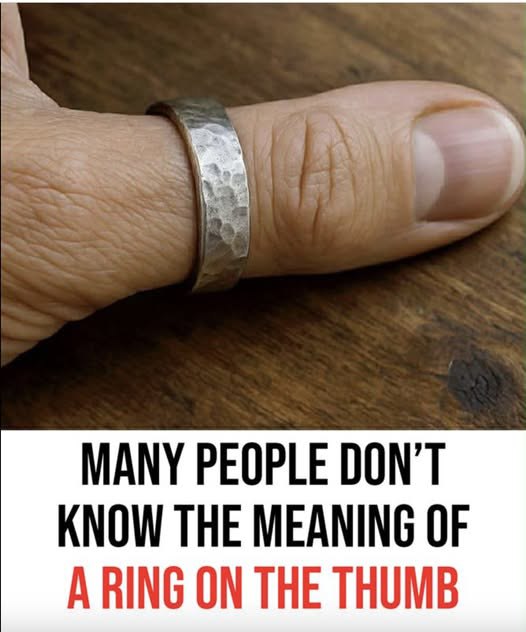
Rings have never been just accessories. Long before they became fashion statements or sentimental gifts, they carried meaning—sometimes obvious, sometimes hidden. Across cultures and centuries, rings have symbolized commitment, authority, loyalty, wealth, spirituality, and identity. The finger chosen was never random. It mattered. It still does.
Most people recognize the symbolism of a ring on the ring finger, tied to love and marriage, or the index finger, often associated with leadership and ambition. But the thumb ring exists in a quieter, more intriguing space. It doesn’t announce itself with tradition or expectation. It doesn’t follow the rules most people know. And that’s exactly what makes it powerful.
Historically, the thumb has always been different. Anatomically, it’s the strongest finger. It moves independently, opposes the others, and makes grip and control possible. Without the thumb, the hand loses much of its function. Cultures noticed this long before modern anatomy explained it, and they attached meaning accordingly.
In ancient societies, thumb rings often signified strength and status. In some parts of Asia and the Middle East, thumb rings were worn by archers. They weren’t decorative—they were tools, protecting the thumb while drawing a bowstring. Over time, these rings became symbols of skill, discipline, and power. Wearing one implied mastery. Not everyone earned that right.
In other cultures, thumb rings were markers of wealth and social standing. Because the thumb is larger, rings made for it required more material, making them more expensive. A thumb ring quietly said, “I can afford excess.” It wasn’t flashy like a crown or necklace, but it didn’t need to be. The message was understood by those who knew how to read it.
Unlike rings tied to marriage or religious obligation, the thumb ring was often a personal choice. That freedom gave it a different tone. It wasn’t about belonging to someone else or fulfilling a role. It was about self-definition.
In modern times, that theme hasn’t disappeared—it’s evolved.
Today, people wear thumb rings for many reasons. Fashion plays a role, obviously. A thumb ring stands out without being loud. It breaks symmetry. It disrupts expectations. On a subconscious level, that makes it compelling. It signals confidence without trying too hard.
But even when worn purely for style, a thumb ring often reflects something deeper. People who choose it tend to value independence. They’re comfortable stepping outside convention. They don’t need validation through traditional symbols. The thumb ring doesn’t beg to be noticed, but it doesn’t hide either.
Psychologically, the thumb is associated with willpower and self-direction. In palmistry and symbolic systems, it represents determination, logic, and personal authority. A ring placed there can feel grounding, reinforcing a sense of control and autonomy. It’s no coincidence that many people describe feeling “stronger” or more centered when wearing one.
There’s also an element of boundary-setting. Unlike rings associated with partnership, a thumb ring doesn’t signal availability or obligation. It subtly communicates self-possession. For some, it’s a reminder that their choices are their own. For others, it’s an outward reflection of an inner mindset: I move on my terms.
Gender norms around rings have shifted, but the thumb ring has always resisted categorization. Historically worn by warriors, nobles, artists, and rebels alike, it never belonged exclusively to one gender. That neutrality makes it especially appealing today, when many people reject rigid labels altogether.
For women, a thumb ring is often interpreted as a symbol of strength and self-sufficiency. It pushes back against the idea that jewelry must exist to signify romantic attachment. It can represent independence, resilience, and confidence—qualities that don’t require explanation.
For men, it can signal individuality and nonconformity. It’s less traditional than a signet ring, less expected than a wedding band. It suggests someone who’s comfortable stepping slightly off the beaten path without making a spectacle of it.
In some communities, the thumb ring has also been linked to creativity and nontraditional thinking. Artists, writers, and musicians have long gravitated toward symbols that quietly reflect their internal world. A thumb ring fits that mold. It doesn’t shout rebellion. It simply exists on its own terms.
Material matters too. A thick metal thumb ring carries a different energy than a slim, minimalist band. Heavier designs often emphasize strength and authority, while simpler ones lean into clarity and self-awareness. Even the choice of metal—silver, gold, steel—can subtly reflect personality traits like adaptability, stability, or endurance.
What’s striking about the thumb ring is how often people choose it instinctively. They may not articulate the reason, but something about it feels right. It’s comfortable. It feels balanced. That instinct is telling. Humans have always used symbols to express what words can’t quite capture.
In a world obsessed with signaling—status updates, labels, declarations—the thumb ring remains understated. It doesn’t demand interpretation. It invites it. Those who notice may read strength, independence, or confidence. Those who don’t will simply see a ring.
And that’s part of its appeal.
The thumb ring isn’t about following tradition or breaking it for the sake of rebellion. It’s about choosing intentionally. It reflects a quiet assurance that doesn’t need approval. A reminder of autonomy worn in plain sight.
One small accessory. One subtle statement. And yet, for those who understand it, it speaks clearly: this person knows who they are, and they’re comfortable standing there without explanation.
Leave a Reply