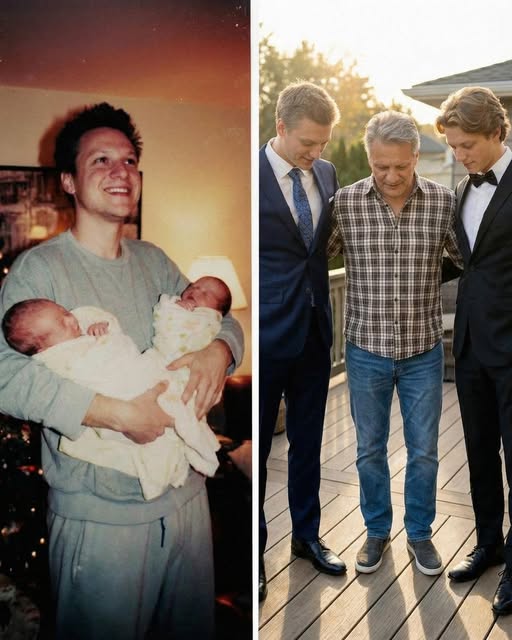
Seventeen years after my wife vanished without a word, she stood on my doorstep again—minutes before our twin sons were set to graduate from high school.
For a moment, time folded in on itself. I saw the woman she used to be layered over the stranger in front of me: older, thinner, her eyes carrying the weight of years that hadn’t been kind. I felt a surge of emotions I thought I’d buried for good—anger, confusion, a dull ache of something like grief. All of it came rushing back in the space between one breath and the next.
When Logan and Luke were born, I believed—naively, maybe—that love would be enough. We were young, broke, and exhausted, but we laughed a lot. We made plans in fragments, talked about the future in half-sentences while rocking bassinets with our feet. I imagined birthdays, scraped knees, school plays, and late-night talks. I imagined us doing it together.
That belief ended one quiet morning.
I woke up to the sound of both babies crying, the kind of cry that means they’ve already been awake too long. The bed beside me was cold. At first, I thought she’d stepped into the shower or gone to the kitchen. I checked the apartment. Nothing. No note. No text. No explanation. Just two newborns and a silence so loud it felt physical.
She was gone.
Becoming a single father overnight doesn’t come with instructions. There’s no adjustment period. You just do what needs to be done. I learned how to change diapers with one hand while warming bottles with the other. I learned how to function on scraps of sleep and how to budget down to the last dollar. I took whatever work I could find and accepted help when it appeared, even when pride told me not to.
There were nights I sat on the floor between two cribs, exhausted beyond words, wondering how I would survive the next day. But then one of the boys would wrap his tiny fingers around mine, and the question would answer itself. You survive because they need you to.
I never lied to Logan and Luke about their mother. When they were small, they asked simple questions. Where is she? When is she coming back? I told them the truth in words they could handle: she wasn’t ready to be a parent, but I was. As they grew older, the questions changed, becoming sharper and harder. Why didn’t she want us? Did we do something wrong?
I told them the same thing every time. None of this was their fault. Some people run when life demands more than they know how to give. I stayed.
Over the years, we built a rhythm. It wasn’t glamorous, but it was solid. Mornings were rushed. Dinners were loud. Weekends were spent fixing things, doing laundry, or collapsing together on the couch. We talked—really talked—about school, friends, disappointments, and plans. Trust grew quietly, like something living.
Logan became thoughtful and deliberate, the kind of kid who listened before he spoke. Luke was more impulsive, quick to laugh, quick to defend his brother. They were different in every way except the one that mattered most: they showed up for each other.
Graduation day was supposed to be uncomplicated. Caps and gowns hung in the hallway. Ties were laid out on the table. There was pride in the air, the good kind that comes from knowing how much effort it took to reach a milestone.
Then there was a knock at the door.
I opened it, and there she was.
She said my name like it was still hers to use. She said she’d panicked all those years ago, that she’d been scared and overwhelmed. She said she thought about the boys every day. As she spoke, it became clear this wasn’t just about closure or regret. Life had cornered her. She had nowhere else to land.
Logan and Luke stood behind me, listening. They didn’t interrupt. They didn’t raise their voices. They just watched her with a calm that came from years of learning how to manage disappointment.
When she finished, Logan spoke first. He said they didn’t know her. Luke followed, explaining that growing up without her had shaped them, that you can’t step back into a life simply because you’re ready now. Love, he said, doesn’t work on delayed schedules.
I stood there, stunned by their composure.
She looked at me then, searching my face for direction, for permission, maybe even for rescue. But some moments don’t need fixing. They need clarity.
I told her I hoped she found stability. I offered information—resources, places that could help her get back on her feet. But I was clear about one thing: she couldn’t return out of necessity and expect to reclaim a role she had abandoned. Not now. Not like this.
She left quietly.
The house felt lighter after the door closed. Not colder. Lighter.
Logan adjusted his tie. Luke checked the time. Neither of them said much. We didn’t need to. We walked out together toward the ceremony, three men moving forward instead of looking back.
As they crossed the stage later that day, diplomas in hand, I felt something settle inside me. Not triumph. Not bitterness. Just certainty.
Love isn’t proven by dramatic returns or apologies delivered too late. It’s proven by presence. By staying when it’s hard. By waking up every day and choosing responsibility, patience, and care even when no one is watching.
That choice shaped our family. It shaped my sons. And it shaped me.
I never regretted it.
Leave a Reply