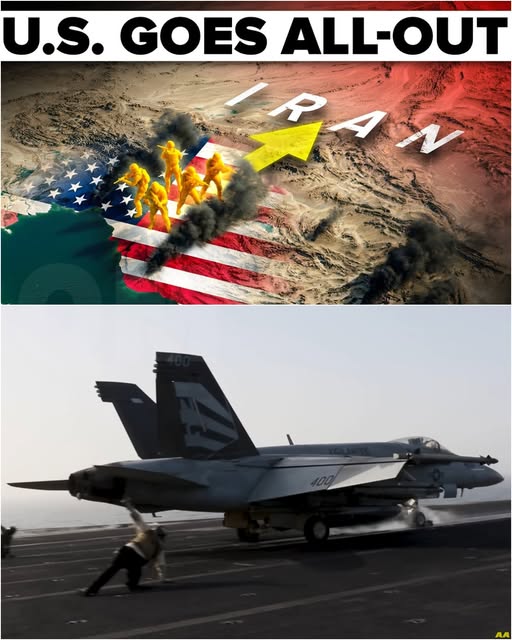
In recent years, tensions between the United States and Iran have remained one of the central concerns in global politics, shaped by cycles of escalation, restraint, and continued uncertainty. While headlines and online discussions often present dramatic or definitive outcomes, the reality is far more complex. Behind the public rhetoric lies a layered process of strategic calculation, where military, political, and diplomatic factors intersect in ways that rarely produce simple answers.
Recent developments have once again drawn attention to the delicate balance in the region, particularly regarding Iran’s nuclear program and its wider regional influence. Analysts and policymakers continue evaluating how events might evolve, aware that even limited actions can produce consequences far beyond their immediate scope. What may appear as isolated decisions often exist within a much broader strategic environment that requires caution from all sides.
At the center of many concerns is Iran’s nuclear activity, which has been monitored for years by international organizations. Iran maintains that its nuclear program serves civilian purposes, particularly energy production. However, some governments remain concerned about the possibility of weaponization. This difference in interpretation continues to shape diplomatic negotiations, policy decisions, and the overall strategic posture of involved nations.
When discussing possible military scenarios, airpower is frequently mentioned as a primary tool. Modern aerial capabilities allow countries to project force, collect intelligence, and target infrastructure without deploying large ground forces. However, many of the more dramatic claims circulating publicly—especially those describing rapid or large-scale destruction—are often speculative and should be viewed cautiously. In practice, military strategy usually focuses on signaling and deterrence, using limited actions to influence behavior rather than triggering full-scale conflict.
More complex scenarios, such as direct operations targeting nuclear facilities, are sometimes debated but remain highly unlikely due to the risks involved. These types of missions would require extremely precise intelligence, coordination across multiple military branches, and the ability to manage fortified and often underground facilities. Even if such operations were successful, maintaining control over these sites would present additional challenges, particularly given Iran’s geography and defensive capabilities.
Geography itself plays a critical role in shaping any potential action. Many of Iran’s key installations are located deep within the country, deliberately positioned to be difficult to reach and defend against external threats. Accessing these locations would require extensive planning, logistical support, and sustained operational capacity—factors that make large-scale ground operations both costly and strategically complicated.
Another important dimension is the Strait of Hormuz, one of the most vital energy transit routes in the world. A significant portion of global oil shipments passes through this narrow waterway, making it central to both economic stability and strategic planning. Any disruption in this corridor would immediately affect global energy prices, supply chains, and broader financial markets.
Alongside military considerations, information itself has become a powerful factor in shaping how events are perceived. In today’s digital environment, claims, images, and narratives can spread rapidly, often without verification. This adds another layer of complexity, where public understanding may be shaped as much by speculation as by confirmed developments. Distinguishing credible information from unverified claims has become essential for interpreting events accurately.
Despite ongoing tensions, most experts agree that a full-scale conflict remains unlikely due to the enormous scale of potential consequences. Instead, strategies tend to focus on limited objectives—deterrence, containment, and maintaining strategic balance—while still leaving room for diplomatic engagement. Negotiations, even when slow or inconsistent, remain a crucial element in managing long-term risk.
The broader implications of any escalation extend far beyond the region itself. Energy markets, international alliances, and global economic stability are all closely connected to developments in U.S.–Iran relations. Decisions made in this context rarely remain isolated; they interact with interconnected systems that amplify their global impact.
As the situation continues to evolve, one constant remains: the importance of perspective. While speculation and dramatic scenarios often dominate public discussions, real-world decision-making tends to be far more measured, constrained by both risk and consequence. Understanding this distinction is essential when navigating a geopolitical landscape where uncertainty is often the only constant.
Ultimately, the relationship between the United States and Iran reflects a broader challenge in modern geopolitics—balancing power, restraint, and communication in ways that avoid unintended escalation. As events continue to unfold, the focus will remain on managing tension while preserving stability, even in an environment where both can shift rapidly.