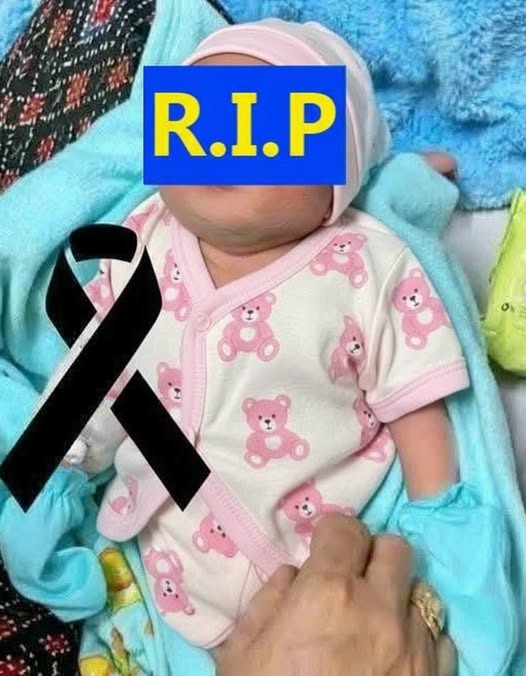
In the quiet early hours of a Monday morning in the Jardim das Américas 2ª Etapa neighborhood of Anápolis, the fragile boundary between a moment of paternal warmth and an irreversible catastrophe dissolved. What was meant to be a routine night of bonding between a father and his two-month-old son ended in a tragedy that has resonated far beyond the borders of the state of Goiás. The infant lost his life following an accidental fall from the arms of his fifty-four-year-old father, who had reportedly succumbed to sheer exhaustion and fallen asleep while cradling the child. This heartbreaking incident, occurring just fifty-five kilometers from the capital of Goiânia, has left a family shattered and ignited a delicate investigation by the Civil Police into the silent dangers of sleep deprivation among new parents.
The mechanics of the tragedy, as reported by the father to the responding authorities, are as simple as they are devastating. Exhausted by the relentless demands of caring for a newborn, the father sat with the infant in his arms, seeking perhaps a moment of shared rest. However, the biological imperative of sleep overtook him. In the ensuing lapse of consciousness, the child slipped from his grasp, suffering a fatal impact. When the Mobile Emergency Care Service (SAMU) arrived at the residence, the rescuers were met with a scene of profound grief; despite their rapid response, they could only confirm that the two-month-old had already passed away. The Military Police were subsequently alerted by the Forensic Medical Institute (IML), triggering a formal inquiry into a death that, on the surface, appears to be a hauntingly common domestic accident fueled by the physical tolls of early parenthood.
The Forensic Lens: Investigating the Unthinkable
While the emotional weight of the case is staggering, the Civil Police of Anápolis are tasked with the cold, objective duty of verification. Police Chief Kênia Segantini, who is leading the inquiry, has maintained a cautious stance, awaiting the comprehensive results of the autopsy and the formal testimonies of family members. In cases involving the sudden death of an infant in a domestic setting, the investigative process is rigorous by necessity. Detectives are working to reconstruct the timeline of the evening, looking for any factors that might have contributed to the fall beyond the father’s reported exhaustion.
[Image: A depiction of the psychological and physical toll of “parental burnout” and sleep deprivation]
The investigation will scrutinize the environment of the accident: the height of the fall, the surface of the floor, and the physical state of the father at the time of the incident. While the prevailing theory remains that this was a tragic accident, the legal system must rule out negligence or other contributing variables. This process, though painful for the grieving family, is a standard protocol designed to ensure that the full truth of the child’s passing is documented. The testimony of the mother and any other residents of the household will be crucial in establishing the context of the father’s fatigue and the general safety standards within the home.
The Biological Reality of Sleep Deprivation
The tragedy in Anápolis highlights a critical, often overlooked public health issue: the extreme physiological impact of sleep deprivation on new parents. In 2026, as the pace of life continues to accelerate and the “village” of support for young families often feels more distant, the phenomenon of “micro-sleep”—unintentional bouts of sleep lasting only seconds—has become a significant risk factor in domestic accidents. For a parent of a two-month-old, the cumulative effect of broken sleep can result in cognitive impairment equivalent to legal intoxication.
[Image: An infographic illustrating the risks of co-sleeping and “lap-sleeping” during the first six months of infancy]
Medical professionals often warn against “lap-sleeping” or holding an infant while sitting on soft furniture like sofas or armchairs when one is tired. If a parent falls asleep in such a position, the risk of the child falling or being smothered increases exponentially. This case serves as a somber reminder that the instinct to hold a child close, while rooted in love and the desire for comfort, can become a hazard when the body’s need for sleep becomes an irresistible force. The tragedy in Jardim das Américas is a visceral example of how a momentary lapse in a parent’s physical control can have permanent, life-altering consequences.
A Community in Mourning
As the legal and medical investigations continue, the local community has rallied around the family, though the atmosphere remains one of heavy, hushed sorrow. In a neighborhood like Jardim das Américas, where families are often tightly knit, the loss of an infant is felt collectively. Neighbors have described the family as devoted, making the accidental nature of the death even harder to reconcile. The father, currently at the center of both an investigation and a crushing personal trauma, represents a figure of immense sympathy for many who have experienced the “fog” of early parenthood themselves.
Grief counselors have noted that accidents of this nature carry a unique burden of guilt that can complicate the mourning process for the surviving parent. The psychological aftermath of being the literal “arms” from which a child fell is a weight that few can imagine. Local support groups and religious organizations in Anápolis are expected to play a significant role in helping the family navigate the coming months, providing a space where the “emotion and questions” surrounding the case can be processed without the immediate pressure of legal scrutiny.
Conclusion: A Legacy of Vigilance
The story of the baby in Anápolis is a tragedy that will likely leave a permanent mark on the region’s discourse regarding infant safety. As the Civil Police conclude their work and the family begins the long road of healing, the legacy of this two-month-old boy may be found in a renewed awareness among other parents. It is a call for “careful vigilance,” not only regarding the child’s environment but also the parent’s own physical limits.
[Image: A safety guide for new parents on creating “Safe Sleep Zones” and managing nighttime exhaustion]
In the end, the investigation by Chief Segantini will likely categorize this as a domestic tragedy—a heartbreaking convergence of love and exhaustion. The infant’s death is a reminder that the “moments of warmth” we cherish are fragile and that the responsibilities of parenthood require a support system that accounts for the human need for rest. As the city of Anápolis mourns, the focus remains on the family, the search for clarity, and the hope that by sharing this story, other families might be spared the “irreparable tragedy” that claimed a life far too soon. The quiet halls of the Jardim das Américas 2ª Etapa neighborhood serve as a somber witness to a night where time stopped, and a family’s future was rewritten in a single, weary moment.
Leave a Reply