Blog

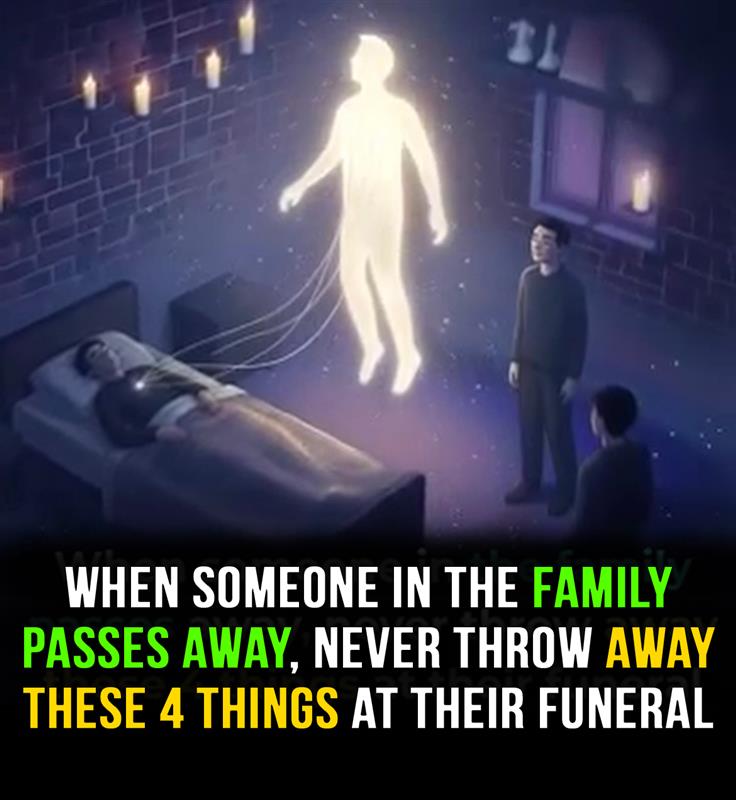
  • Never throw away these 4 things after a loved one dies!

    Never throw away these 4 things after a loved one dies!

    Grief doesn’t arrive politely. It doesn’t knock, doesn’t wait, doesn’t care if you’re ready. It comes like a fog—thick enough to blur everything familiar, heavy enough to slow you down, and disorienting enough to make simple choices feel impossible. When someone you love dies, you grasp for anything that feels like control. Some people clean. Some people donate boxes of clothes before the smell of their perfume even fades. And some throw everything into trash bags because the alternative is sitting still with the ache.

    But the truth is simple: once something is gone, you can’t get it back. And some things—quiet, ordinary, unremarkable things—carry a weight you won’t understand until much later. Before you start clearing closets or emptying drawers, it’s worth pausing long enough to think. Sometimes grief tricks you into believing that simplifying will somehow soften the pain. What it actually does is rob you of the little anchors that could steady you later.

    There are four kinds of things worth keeping, even if you don’t know why yet.

    The first is handwriting. A note, a list, a birthday card, the back of an envelope with their rushed scribble on it—these scraps feel insignificant in the early days. But months or years later, when the memory of their voice feels dim, something as simple as their handwriting can hit with the force of a heartbeat. The curve of their letters, the pressure of the pen, the way they spelled a certain word wrong every time—these details bring a person back in a way polished memories can’t. Handwriting has texture. It has personality. It feels alive. Tuck these notes somewhere safe. One day, you’ll be grateful you did.

    The second thing is their voice and their face—captured in photos, videos, voicemails, anything. When grief is raw, it’s tempting to silence the world by deleting reminders or avoiding anything that feels too sharp, too real. But time changes how we experience loss. The day will come when a voicemail becomes a treasure, not a trigger. A short video clip will feel like a small miracle. You’ll notice things you had forgotten: how they laughed between sentences, how their eyes squinted just before they smiled, the rhythm of their footsteps in the background of the recording. These images and sounds preserve details your mind will eventually blur. Losing someone is painful enough; you don’t need to erase pieces of them too.

    Then there are the objects they touched—small, everyday items that once blended into the background. A worn watch. A favorite mug. A pair of glasses with tiny scratches from years of use. These items hold an emotional temperature no photograph can replicate. They carry the shape of their routine, the rhythm of their days. Holding something they held can settle you in moments of chaos. Grief makes you crave presence, and sometimes the closest thing you get to presence is touch. You don’t need to keep everything. But choose a few things that feel like them—their everyday them, not their curated holiday self. Those items become grounding stones.

    And lastly, documents. Not just the obvious practical ones—wills, insurance papers, bank information—but also the pieces of their personal history. School certificates, old letters, military records, notebooks, even receipts tucked away in drawers. These things tell a story. They show where they came from, what they achieved, what mattered to them. They become threads in the tapestry of your family’s memory. One day, someone younger may want to know who their great-grandparent was, what job they worked, what choices they made. These documents turn a life into a legacy.

    When someone dies, there is a dangerous urgency in the air. Everyone wants to be useful. Everyone wants something to “do.” Clearing out belongings becomes an easy task to latch onto. But grief isn’t a checklist. It’s not a project to finish. It’s a slow and painful education in how to love someone who is no longer physically here.

    So give yourself permission to slow down. Keep what feels like them, even if you can’t yet explain why. You don’t owe anyone an explanation for the box you keep under your bed or the mug you refuse to donate. What matters is that these objects connect you to the parts of your loved one that grief cannot erase.

    One day, you might find that the smallest thing—a keychain, a ticket stub, a messy grocery list—hits you with warmth instead of pain. Those moments remind you that grief makes space for love, not the other way around.

    People often say, “You can’t take anything with you when you go.” That may be true for the person who leaves, but those left behind carry pieces of them in ways that defy logic. A life is more than memories. It’s touch, sound, handwriting, texture, routine, history. These pieces matter. Don’t let the fog convince you otherwise.

    If you’re grieving right now, take a breath. You don’t have to sort everything today. You don’t have to make irreversible decisions in the middle of heartbreak. Keep what feels right. Put aside what you’re unsure about. You can always let go later. You can’t always get something back.

    And if you’ve carried keepsakes through your own loss, you already know how much comfort they can bring on days when the world feels colder. Your experience might be exactly what someone else needs to hear.
  • Our Neighbor Destroyed My Sons Puppys House – Karma Was Faster than Me

    Our Neighbor Destroyed My Sons Puppys House – Karma Was Faster than Me

    I never planned on owning a dog, and I definitely didn’t plan on getting into a silent war with our most uptight neighbor. But life has a sense of humor, and sometimes karma works faster than you do.

    It started one ordinary Thursday. I walked into the house after work expecting to find my 10-year-old son, Mason, sprawled on the couch with cartoons humming in the background. Instead, his backpack was abandoned in the middle of the hallway like he’d dropped it while running. Before I could call out, I heard him yelling from the back porch.

    “Mom! Hurry!”

    His voice wasn’t scared—it was urgent in that kid way where you can’t tell if he found a snake or discovered buried treasure. I followed the noise and stopped cold at the screen door.

    Mason stood there clutching his hoodie like it was a blanket for something alive. When he peeled it back, the situation became painfully clear.

    Inside was a tiny, shaking puppy—brown fur matted with dirt, ribs too visible, ears drooping like they were carrying the weight of the world. When he saw me, his tail wagged just once, hesitant but hopeful.

    “Oh, Mason…” I breathed. “You know we can’t have a dog. The lease—”

    “I know,” he cut in, voice wavering. “But he was behind the dumpsters at school. He was crying. Mom, he was freezing.”

    Right then, Dan walked in behind me, fresh from work. He looked at the puppy, then at Mason’s eyes, and I knew we were doomed.

    I sighed. “We can’t keep him. But we can help him for a few days. Outside only.”

    The transformation in my kid’s face was like flipping on a stadium light.

    That night, Mason bathed the pup in lukewarm water and dried him with an old towel. He named him Buddy. By bedtime, Buddy was asleep in Mason’s lap, snoring softly like he finally felt safe.

    The next morning, Mason woke up with a plan—and a blueprint.

    He had drawn a full architectural sketch of what he called a “luxury puppy home.” Windows. Chimney. Curtain details. A labeled “emergency cookie storage” compartment.

    Dan took one look and burst out laughing. “The kid’s an engineer.”

    So we built it that weekend. Using scrap wood, extra nails, leftover paint, and Mason’s old baby blanket, we created a sky-blue doghouse with white trim. When Buddy walked inside and curled up like he’d been waiting for it his whole life, Mason practically floated.

    It was perfect—right up until Mrs. Henderson entered the story.

    She was the kind of neighbor who vacuumed her driveway and trimmed her roses with surgical precision. Her lawn looked like it was afraid of her. She wore pearls just to check the mailbox. And she had the permanent facial expression of someone who smelled something unpleasant and blamed the entire neighborhood for it.

    The first time she saw Buddy, she froze at her fence.

    “Is that thing yours?” she demanded.

    Mason beamed. “He’s my friend! His name is Buddy!”

    “Well, your friend kept me awake last night. Yipping. Squealing. Some of us enjoy peace.”

    I apologized and explained he was only temporary. She glanced at Buddy’s little blue house like it was a condemned shack and muttered something about “circus people.”

    Great start.

    But the worst came a few days later.

    I got home early that Wednesday. Mason wasn’t on the porch. Instead, I heard quiet sobbing by the hedge. When I found him, he pointed with trembling hands.

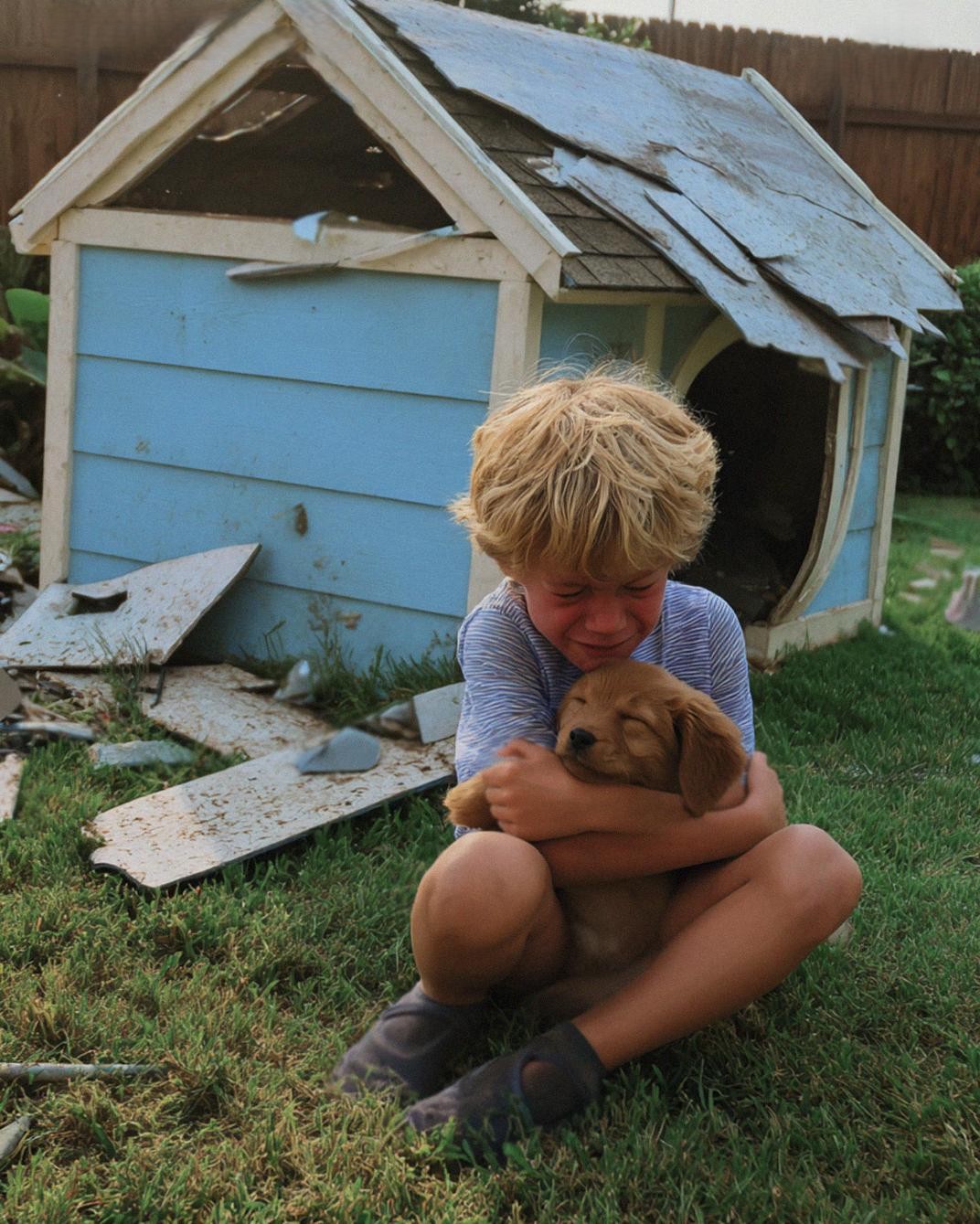
    Buddy’s house—the one we spent all weekend building—was demolished.

    Wood splintered. Roof crushed. Blanket soaked with mud. Mason’s carefully labeled cookie compartment torn open and tossed aside.

    And Buddy was nowhere.

    My son panicked, calling his name again and again. After almost an hour of searching, we found him wedged under a hedge, shaking in fear but unharmed.

    When I stood up, I noticed something that made my stomach twist—pieces of our painted wood scattered near Mrs. Henderson’s fence. Fresh drag marks in the soil. It didn’t take a detective.

    “Mom,” Mason whispered, “why would someone hurt Buddy?”

    I hugged him. “Some people don’t understand kindness, kiddo. But that doesn’t mean we stop showing it.”

    That night, we rebuilt Buddy’s house—stronger, sturdier. Mason added a handwritten sign:

    “THIS IS BUDDY’S HOME. HE IS A GOOD BOY. PLEASE DON’T BE MEAN.”

    I even wrote Mrs. Henderson a polite note explaining we were trying to rehome him soon. She never responded.

    But karma? Karma responded faster than anyone expected.

    Two nights later, during a heavy rainstorm, I came home to flashing lights reflecting off the wet pavement—an ambulance and a police cruiser outside Mrs. Henderson’s house.

    I panicked, thinking she’d reported us.

    But Dan met me at the door, eyes wide. “Buddy saved her.”

    Turns out, she’d gone outside during the storm to fuss over her roses, slipped in the mud, and hit her head on a stone border. She collapsed unconscious in the dark.

    Buddy heard the fall and went berserk—barking loud enough to shake the fences. Mason, hearing the commotion, ran outside and found her lying there. Dan called 911. Paramedics said another hour in the cold and rain could’ve killed her.

    And Buddy? He refused to leave her side until they carried her into the ambulance.

    Three days later, she came home with a bandage hidden under her hair and humility hidden in her voice. She approached Mason in the yard while Buddy chased a ball.

    “Boy,” she said stiffly, “I owe you and your… dog… an apology.”

    Mason blinked. “His name is Buddy.”

    “Yes. Buddy.” She hesitated. “He saved my life. And you did too.”

    She handed Mason a small container of cookies. “For both of you.”

    The next day, she brought a gift—a wooden plaque, hand-varnished, with roses carved around the edges.

    “Buddy’s House — Where Kindness Lives.”

    It hit me harder than I expected.

    From then on, Mrs. Henderson became a different woman. She visited often, bringing treats for Buddy or chatting with Mason about school. She started laughing—actually laughing—and her yard felt a little less like a museum and more like a place where humans lived.

    And then came the twist I never saw coming. Our landlord called.

    “Your neighbor told me everything,” he said. “The dog stays. No extra fees. Consider it a special exception.”

    Mason cried when I told him. Buddy spun in circles like he understood every word.

    Now Buddy sleeps inside, curled at the foot of Mason’s bed, while his blue house in the backyard glows with fairy lights and a plaque that catches the sun.

    What happened wasn’t punishment—it was a reminder. Kindness can change people. Sometimes it comes from a kid with a big heart. Sometimes from a dog who refuses to give up.

    And sometimes, it comes exactly when someone needs it most.

  • Reasons why you might be waking up with tingling hands!

    Reasons why you might be waking up with tingling hands!

    Most of us have experienced it at one point or another: waking up with tingling hands, numb fingers, or that faint burning sensation crawling along the skin. You open your eyes, try to move your arm, and for a split second it feels like your limb doesn’t belong to you. Then, slowly, the feeling creeps back—first uncomfortable, then normal.

    It’s easy to brush it off as “my arm fell asleep,” but there’s more going on beneath the surface. That tingling has a name, a cause, and in some cases, a warning attached to it.

    The medical term is paresthesia. According to the National Institute of Neurological Disorders and Stroke, paresthesia describes the prickling, buzzing, numb, or burning sensations that can appear anywhere in the body. It’s not exactly painful, but it’s irritating enough to notice. Most importantly, it can show up without warning—whether you’ve been asleep, sitting too long, or even while you’re fully awake and active.

    The kind most people recognize is transient paresthesia—the temporary version that appears when you’ve put pressure on a nerve or restricted blood flow. Sleep in a strange position, lean on your elbow too long, sit on your foot, or let your wrist stay bent under your pillow, and you can almost guarantee that pins-and-needles feeling will show up.

    What’s happening is simple: you’ve compressed the nerve that normally sends signals to your brain, or you’ve reduced the blood supply that keeps the nerve functioning smoothly. When you shift positions, circulation returns and the nerve wakes up—hence that buzzing or prickling sensation.

    This kind of tingling is common, harmless, and goes away quickly once blood flow returns. Stretching, shaking out the limb, or massaging the area usually restores normal feeling within minutes.

    But transient paresthesia isn’t the only type. Sometimes tingling can point to something deeper—something that isn’t caused by a poor sleeping position or leaning on your arm too long.

    Chronic paresthesia is different. It lingers. It returns often. It appears in places where you haven’t put any pressure at all. And when that happens, it can be a sign of nerve damage or neurological issues.

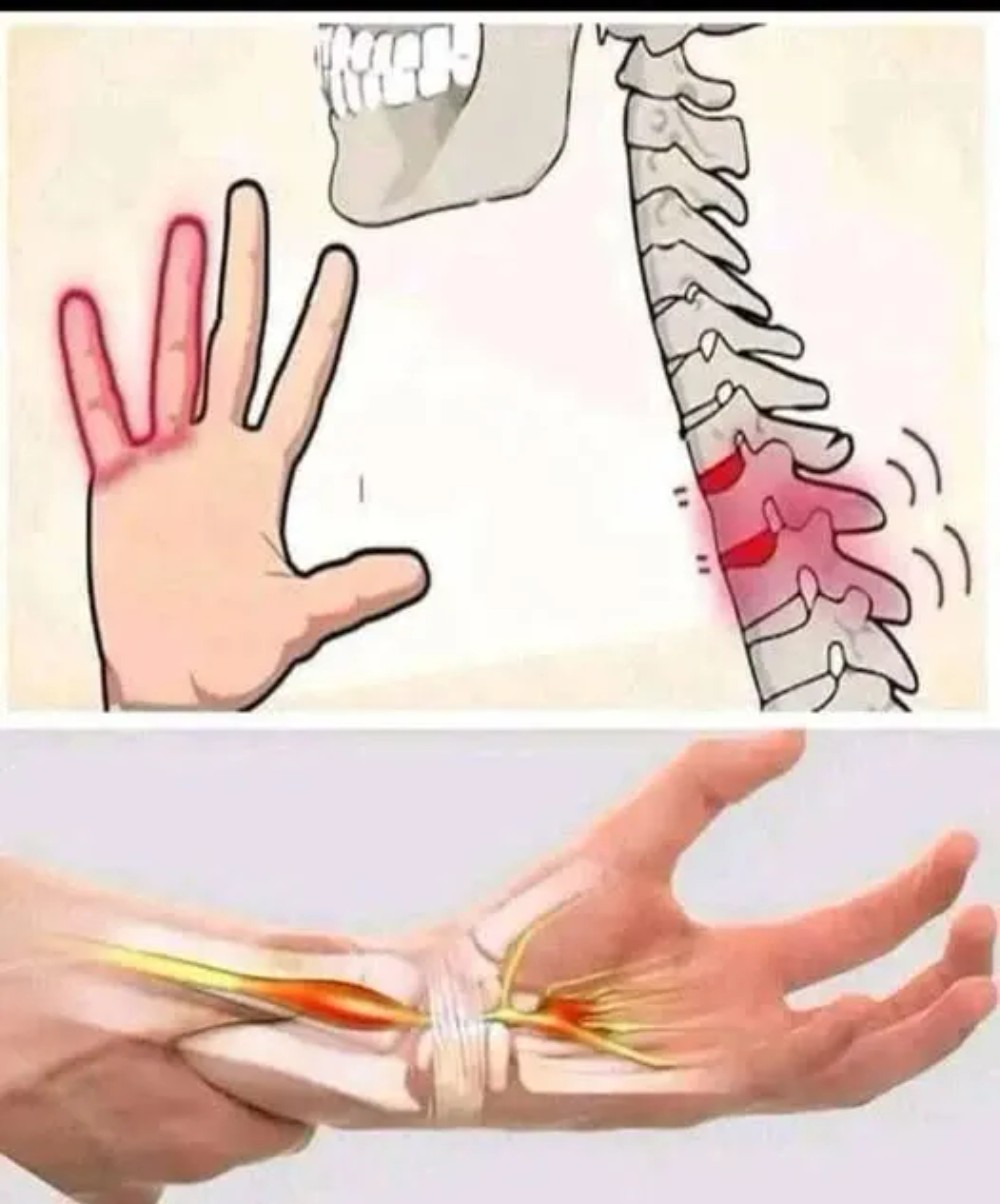
    There are several possible causes for long-term or recurring tingling. Nerve injuries—from sports, accidents, or repetitive movements—are common culprits. A herniated disc in the spine can press on nerves and send tingling sensations down the arms or legs. Medical conditions like multiple sclerosis, stroke, encephalitis, or peripheral neuropathy can lead to ongoing numbness or tingling as well.

    Even problems like carpal tunnel syndrome can trigger persistent paresthesia, especially if you spend hours typing, working with your hands, or performing repetitive wrist motions. Tumors—though far less common—can also press on nerves and produce similar sensations.

    But chronic paresthesia isn’t always tied to something severe. Sometimes it stems from vitamin deficiencies, especially B12, or from uncontrolled diabetes. It can also appear during anxiety or panic episodes, when rapid breathing affects the balance of carbon dioxide in the blood.

    Still, the point remains: tingling that keeps returning, lasts longer than a few minutes, or appears without a clear cause deserves attention. While most cases are harmless, the ones that aren’t can be serious if ignored.

    Knowing the difference comes down to paying attention to patterns. If tingling hands wake you up once in a while—and you know you fell asleep with your arm twisted under you—there’s no mystery to solve. But if it happens regularly, or if the sensation is accompanied by weakness, pain, or difficulty moving the limb, it’s time to take it seriously.

    There are simple ways to reduce the likelihood of waking up with tingling hands. Start with how you sleep. Keeping your wrists straight instead of bent can help. Using a supportive pillow to keep your neck aligned can ease pressure on nerves that run from the spine into the arms. Side sleepers often compress nerves in the shoulder or arm without realizing it, so shifting positions may help.

    If you spend long hours at a desk, small adjustments can make a big difference. Ergonomic chairs, proper wrist support, and taking frequent breaks reduce nerve compression. People who work with their hands—artists, mechanics, hairdressers, construction workers—often benefit from stretching throughout the day to keep blood flowing and joints mobile.

    As for controlling tingling when it appears, the solution is straightforward: move. Shake out the limb. Stretch the fingers and wrist. Rotate the shoulder. These simple actions boost circulation and relieve pressure. Warm water can also help relax tense muscles and ease nerve compression.

    But no home remedy replaces medical advice when something feels wrong. If your tingling is severe, persists for days, or comes with symptoms like dizziness, muscle weakness, headaches, vision changes, or trouble walking, don’t wait. Those signs can indicate nerve impairment or a neurological condition that needs immediate evaluation.

    Even if your symptoms seem mild, it’s worth checking in with a doctor if the tingling becomes a daily occurrence or keeps interrupting your sleep. Early diagnosis is always better than late intervention.

    Most importantly, don’t ignore changes in your body because you assume they’re “no big deal.” Our nervous system is complex, delicate, and good at alerting us when something isn’t quite right. Tingling might be harmless—but it might also be your body asking for help.

    For many people, paresthesia remains a small, occasional inconvenience—an odd sensation that fades as quickly as it arrived. But for others, it becomes a clue, a signpost pointing toward an underlying issue that needs attention.

    If you’ve ever dealt with persistent tingling or numbness, you know how unsettling it can be. And if you haven’t, chances are you will at some point in your life. Knowing what it means—and when to act—can save you worry, time, and potentially more serious complications.

    Everyone’s experience is different, and there’s no “one size fits all” explanation. That’s why paying attention matters. Your body has its own way of sending messages, and tingling is one of the clearer ones.

    If you’ve had paresthesia before, or if you live with it regularly, your perspective might help someone else understand what they’re feeling. Sharing experiences reminds people they’re not alone—and sometimes, it’s the reminder we need to take our own symptoms seriously.

    If you want, tell me how often this happens to you and what it feels like. I can help you break down whether it sounds normal or worth getting checked.

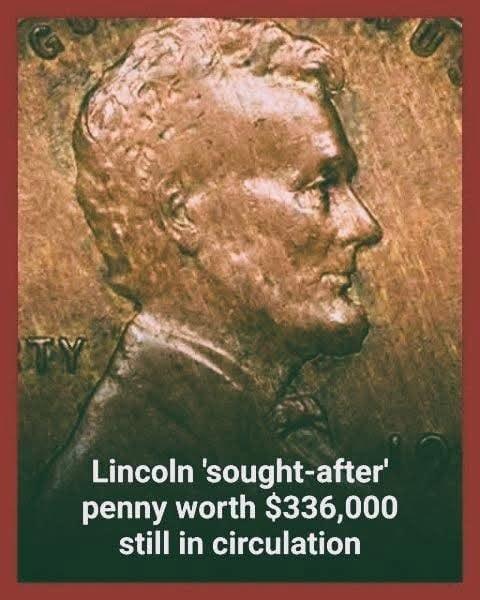
  • Check Your Change, A Lincoln Penny Worth $336,000 Might Be Sitting There

    Check Your Change, A Lincoln Penny Worth $336,000 Might Be Sitting There

    Most coins pass through your hands without a second thought—spare change tossed into a cup holder, a penny dropped on the sidewalk, a handful of coins emptied from a pocket at the end of the day. But every so often, a coin comes along that flips the script entirely. And tucked somewhere in the endless flow of American pocket change is a piece of history so rare, so unlikely, that a single example can command more than $300,000 at auction.

    It’s the 1943 Bronze Lincoln Cent, and its existence is the result of timing, chaos, and an oversight during one of the most intense periods in American history.

    To understand why this penny matters, you need the context. In 1943, World War II was in full swing, and the U.S. military was consuming copper at an astonishing rate. Copper was needed for ammunition, shell casings, wiring, and countless other wartime necessities. The government didn’t have the luxury of wasting metal on everyday pocket change. So the U.S. Mint made a drastic decision: switch the composition of pennies from the traditional bronze alloy to zinc-coated steel.

    This was no small shift. Copper had been used in American cents since the late 1700s. Suddenly, the Lincoln penny—one of the most recognizable coins in the world—was being transformed into something new, something temporary. The steel cent was lighter, gray in color, and prone to rust. People didn’t love them, but the war effort needed copper, and the country adapted.

    But during that transition, something unexpected happened. When the mint switched over its equipment in late 1942, a handful of bronze planchets—blank discs used to strike coins—were left behind in the machinery. They weren’t supposed to be there. They should’ve been pulled, melted down, or recycled. But a few of them remained lodged in the coining presses.

    When production began on the new 1943 steel cents, the machines struck those leftover bronze planchets by mistake. The result: a tiny number of 1943 pennies minted in bronze instead of steel. These coins were never planned, never recorded, and not discovered until years later.

    When the first bronze 1943 cents surfaced in 1947, the numismatic world lit up. People were stunned. Wartime minting had been strict, controlled, and monitored closely. Mistakes weren’t impossible, but they were rare. And this one produced something extraordinary—a coin that by all logic shouldn’t exist.

    As word spread, newspapers picked up the story. Coin collectors went hunting through their jars and drawers. Ordinary Americans checked their pockets hoping to stumble upon a small fortune. Kids emptied piggy banks looking for that warm copper shine instead of dull wartime steel. For a brief moment, the entire country seemed to be on a treasure hunt.

    Over time, the coin became more than a curiosity—it became a legend. For collectors, the 1943 Bronze Lincoln Cent represented something almost poetic: a collision of history, chance, and timing. It had the familiar portrait of Abraham Lincoln, sharp and bold, surrounded by the smooth bronze surface Americans were used to seeing. Beside it, the steel version of 1943 looked cold and utilitarian. The bronze cent felt like a ghost—a survivor from a year when it shouldn’t have existed at all.

    Every authentic example tells a story about the era. America was stretched thin by war. Factories ran day and night, materials were rationed, and the Mint itself had to reinvent one of the most common coins on the continent. Amid that whirlwind, a few copper planchets slipped through—a tiny reminder of the human side of mass production.

    No one knows the exact number of surviving bronze 1943 cents. Estimates suggest fewer than two dozen across all U.S. Mint facilities—Philadelphia, Denver, and San Francisco. Some are in museums. Some sit in private collections. A handful remain unaccounted for, possibly still hiding in old cigar boxes, estate sales, or jars of forgotten change.

    The value depends on condition. The better preserved the coin, the higher the price. One particularly pristine 1943 Bronze Cent sold at auction for over $1 million. Even worn examples routinely reach six figures. It’s not hype—it’s rarity, historical weight, and the fact that the error is the result of pure accident. You can’t replicate it. You can’t fake the wartime circumstances that produced it.

    What makes the 1943 bronze penny especially compelling is its blend of wartime urgency and small-scale mystery. This wasn’t a deliberate limited edition or a commemorative novelty. It was a slip in the machinery during one of the most pressured manufacturing shifts in U.S. Mint history. Something left behind. Something overlooked. Something that survived when it shouldn’t have.

    Eight decades later, collectors still chase it. The story gets told again and again: the penny worth a house, the mistake worth a small fortune, the coin that outlived the era that produced it. It’s the kind of artifact that connects everyday Americans to a monumental time period—proof that even the smallest objects can carry enormous meaning.

    The beauty of this particular penny is that it merges the ordinary with the extraordinary. It looks like any regular pre-war one-cent coin—Lincoln’s profile, the familiar inscriptions, the same size and weight Americans knew for years. But behind its surface is the entire backdrop of a country at war, shifting resources, tightening production, and doing everything it could to stay afloat.

    The steel penny is a wartime symbol. The bronze 1943 penny is a wartime accident. And accidents are always far more interesting.

    For anyone who collects coins, or even those who just like the idea that treasure might be hiding in plain sight, the 1943 Bronze Lincoln Cent is a reminder that not everything rare is flashy. Sometimes rarity looks like a simple copper penny—the kind of coin most people wouldn’t bother to pick up off the ground.

    And maybe that’s why it still captures attention. It’s approachable. Familiar. And yet incredibly hard to find.

    So the next time spare change jingles in your pocket, or you empty a jar of coins to roll them up, it’s worth giving each penny a glance. You’re probably not sitting on a six-figure rarity—but “probably” isn’t the same as “definitely.” The right coin in the right place has changed people’s lives before.

    The 1943 Bronze Lincoln Cent stands as one of the most striking reminders that history doesn’t just exist in museums or textbooks. Sometimes, it’s hiding in your palm, disguised as something ordinary. A tiny piece of metal with a story bigger than anyone could’ve imagined—a survivor from a chaotic year, a minting mistake turned national treasure, and proof that even the smallest oversight can leave a mark that lasts for generations.

    If you want, I can also rewrite this in a more dramatic, more conversational, or more newsy tone.

  • My Boyfriend Kicked Me out after Learning I am Pregnant, 26 Years Later My Son Paid Him a Visit – My Story

    My Boyfriend Kicked Me out after Learning I am Pregnant, 26 Years Later My Son Paid Him a Visit – My Story

    Tina spent most of her childhood imagining a grand white wedding—the kind with flowers, music, and her whole family celebrating. Instead, at eighteen, she found herself eloping with her high-school sweetheart, Richard. No dress, no aisle, no celebration. But she didn’t care. She loved him, and that felt like enough. Richard came from money, but his background never mattered to her. What she wanted was simple: a life with the boy she’d loved since she was sixteen.

    For a little while, things were good. They lived in a small apartment, scraped meals together, and reassured each other that the future would sort itself out. It felt young and messy and full of promise.

    Then Tina found out she was pregnant.

    She told him one evening, smiling, her hands trembling with excitement. She expected shock, maybe surprise—Richard had always talked about wanting a family someday. Instead, she watched the color drain from his face.

    “What do you mean you’re pregnant?” he snapped, pacing like someone had just delivered bad news.

    Tina tried to calm him. “I know we didn’t plan this, but you’ve always loved kids. You’d be an amazing father.”

    He stopped walking and stared at her as if she’d turned into a stranger. “A family man?” he said. “The only reason we married was so I could get away from my family. And now you do this? How could you trap me like this?”

    His words hit her like a slap. She stood there, stunned, telling herself he didn’t mean it, that he just needed time to let it sink in. She defended him in her own mind even after he stormed out.

    The next night, he came home drunk. Before she could speak, he shoved her bag into her hands and pointed to the door.

    “Get out, Tina,” he said. “If I see you here again, we’re going to have a problem.”

    She didn’t argue. She simply left, still convincing herself he’d cool down and apologize. But when she returned days later, the locks were changed. Desperate, she called his parents. Maybe they could talk sense into him.

    Instead, she was met with venom.

    “How dare you call us,” his mother shouted. “We know everything. How you cheated. How you got pregnant by another man. Don’t ever call here again.”

    Tina stood there with the phone pressed to her ear, shaking. She tried to explain, but they hung up. In a single moment, she saw the truth clearly: Richard had created his own story and painted her as the villain. She and her unborn child were on their own.

    The years that followed weren’t easy. Money was tight. Sleep was rare. But Tina did everything she could to raise her son, Greg, with love instead of bitterness. Greg grew up fast—faster than any child should. By fifteen, he was working as a caddy at the local golf club. He handed half his earnings to Tina every week without her asking. He wasn’t the top student, but he worked harder than most adults. He wanted more for them both.

    Tina didn’t hide the truth from him. Greg grew up knowing exactly what kind of man his father had been. He rarely talked about it, but every time Richard’s name came up, a cold, heavy anger flickered behind his eyes.

    By twenty-six, Greg had built a thriving business from scratch. He hired his mother. He bought her a car. He became the kind of man any parent would be proud of—steady, determined, disciplined. But the wound left by his father never closed. Eventually, it hardened into something darker.

    One afternoon, he decided it was time to confront the man who abandoned them.

    He found Richard’s address and parked outside the old, worn-down house. A baseball bat sat beside him on the passenger seat. He wasn’t sure what he planned to do, but the anger inside him had been simmering for years.

    Then the front door opened.

    The man who stepped out wasn’t the intimidating figure Greg had imagined all his life. Richard looked frail, beaten down, older than his years. His clothes hung loose on his thin frame. He moved slowly, shuffling toward the trash cans like a man carrying the weight of every bad choice he’d ever made.

    Greg watched in stunned silence. The bat suddenly felt ridiculous—childish, even. The monster he’d been hunting was just a broken man.

    His gaze drifted to the “For Sale” sign planted in the yard. A foreclosure notice was stapled to the door. When Greg called the number on the sign, he learned the full story: the house was being repossessed to cover Richard’s debts. He had nothing left.

    Greg gripped the steering wheel and let the realization settle in. Revenge wasn’t justice. It was a trap, and he’d almost walked right into it. He drove away without touching the bat again.

    A week later, he bought the house.

    When the paperwork was ready, Richard arrived at the agent’s office looking defeated, expecting to finalize the sale and hand over the last thing he owned. Instead, he stepped into the room and saw Tina—and a grown man standing beside her.

    Greg didn’t look away. “I’m your son,” he said flatly. “The one you threw away.”

    Richard opened his mouth, but nothing came out.

    Greg slid the keys across the table. “You need to leave the property today.”

    Richard swallowed hard. Shame washed over his face. He nodded, silent, and walked out.

    As the door closed, Tina realized Greg had thrown Richard’s own words back at him—the same words Richard had once screamed at her.

    “If I see you again, we’ll have a problem.”

    This time, the words didn’t come from cruelty. They came from a man who had finally freed himself—and his mother—from a past that had held them hostage for decades.

    What sticks with Tina the most isn’t that Richard got what he deserved. It’s that Greg didn’t become the kind of man his father was. He let the pain end with him.

    And that, she realized, was the real victory.

    If you want, I can also rewrite this with more emotional intensity, a simpler tone, or a more cinematic feel.

  • Who were the three young women who lost their lives after the luxury car fell into! See more

    Who were the three young women who lost their lives after the luxury car fell into! See more

    The crash happened late on a quiet Sunday night, the kind of night where the roads are mostly empty and the world feels half-asleep. A luxury sports car was seen speeding along a narrow stretch near the river — a bend locals know too well. Minutes later, emergency calls poured in. The vehicle had broken through the guardrail and plunged straight into the water.

    By the time rescue crews arrived, it was already too late. The current was too strong, the impact too violent. Three young women — all in their early twenties — died before help could reach them. News of the accident spread by morning, and it didn’t take long before the entire community found itself reeling.

    The victims were close friends, practically inseparable since high school. Earlier that evening, they had been celebrating one of their birthdays at a restaurant not far from the crash site. Witnesses remember them laughing, taking pictures, and stepping out into the parking lot arm-in-arm, full of the energy only youth can carry.

    No one could have imagined that those would be their final moments.

    Families were notified shortly after midnight. Parents who had been asleep woke to the kind of knock that shatters a life in seconds. Each family described their daughters as hard-working, ambitious, and kind — young women who had dreams mapped out, degrees in progress, jobs they were proud of, and plans stacked years into the future. One wanted to become a nurse. Another was studying architecture. The third had just landed her first internship and had spent the week telling everyone how excited she was.

    In an instant, all those futures were cut away.

    By sunrise, friends, classmates, and neighbors began gathering at the crash site. What started as a few bouquets quickly turned into a full memorial. Flowers, candles, handwritten notes, and framed photographs lined the guardrail that overlooked the river. People stood in silence, some crying openly, others staring at the water as if waiting for answers that would never come.

    The grieving wasn’t limited to those who knew the young women personally. The tragedy shook the entire community. Locals talked about how fragile life is, how quickly things can change, and how none of us are promised another morning. Even people who had never crossed paths with the victims found themselves deeply affected — because three young lives ending in such a violent moment hits something universal.

    Investigators worked through the night and continued into the next day, trying to determine exactly what caused the crash. The early reports pointed to excessive speed — the car was known for its power, and that stretch of road is notoriously unforgiving. But police were careful not to jump to conclusions. Mechanical failure was still on the table, and toxicology tests were underway. Surveillance footage from nearby businesses was collected to piece together the moments leading up to the crash.

    People wanted answers, but investigations take time. And right now, the families were just trying to breathe.

    On social media, the outpouring of love and grief was overwhelming. Thousands of posts appeared within hours — pictures, stories, and memories flooding timelines. Friends wrote about late-night conversations, road trips, study sessions, inside jokes, and small moments that suddenly felt monumental. Hashtags with the girls’ names trended throughout the region, turning the tragedy into a collective heartbreak.

    Amid the grief, frustration also surfaced. Local residents pointed out that this wasn’t the first serious accident along that same stretch of road. Some had been warning about the sharp bend for years, calling for better lighting, improved guardrails, or speed-reduction measures. Several people spoke out publicly, arguing that it shouldn’t take three young women dying for authorities to prioritize safety. Petitions quickly circulated, demanding action.

    Still, none of it could change what had already happened.

    The families released brief statements the following day. Most simply asked for privacy as they tried to process the unimaginable. But each family also expressed deep gratitude for the support — the messages, flowers, and gestures of kindness that had poured in nonstop. For parents trying to grasp the loss of their children, the community’s compassion mattered more than people realized.

    Plans for vigils began forming almost immediately. Local churches volunteered space. Students organized candlelight walks. Others arranged for lanterns to be released over the river in the victims’ memory. Even business owners along the neighborhood closed early the next day to allow employees to attend.

    The accident became a reminder that tragedies don’t hit one family — they ripple outward, touching everyone.

    In the days that followed, more details trickled in. Experts analyzing the crash site confirmed that the car’s speed had likely played a major role. The bend was too sharp, the pavement too slick, and the guardrail too old to withstand such impact. Toxicology reports were still pending, but investigators made it clear: nothing suggested foul play. This was an accident — a devastating, irreversible accident.

    People repeated the same sentiment over and over: they were too young. They had too much life ahead. They should’ve had years to grow, to explore, to love, to fail, to try again. Their families should’ve been planning graduations and careers, not funerals.

    Yet reality had already claimed them.

    The memorial at the crash site continued to grow. Every day, new flowers appeared. Someone left a stuffed toy. Another person placed three white roses tied together with ribbon. A handwritten letter, taped to the guardrail, read: “You were loved. You are loved. You will always be loved.”

    In moments like this, a community remembers what it means to take care of one another — even in grief. Strangers embraced. Old disagreements were ignored. People checked on neighbors they barely spoke to. Parents held their children tighter. The tragedy forced everyone to confront how fragile everything is.

    The families, though devastated, expressed one final thought through their attorney: if their daughters’ deaths led to the road finally being improved — even slightly — and prevented another family from suffering the same nightmare, then at least some meaning could come from the loss.

    It wasn’t comfort, but it was something to hold onto.

    As the investigation continues, and as friends and families gather for vigils, the three young women are remembered not for how they died but for how they lived — vibrant, hopeful, full of promise. Their absence has carved a painful void, but their memory continues to pull people together in ways that speak to the impact they had, even in their short time here.

    Life changes fast. Sometimes faster than we’re ready for. And this tragedy is a harsh reminder of that truth.

  • The Secret My Best Friend Kept For Years!

    The Secret My Best Friend Kept For Years!

    My best friend Sarah had her son when she was just sixteen. She was scared, overwhelmed, and way too young to be carrying that kind of responsibility, but she faced it head-on. She let people assume whatever they wanted. She never once revealed who the father was, and no one ever pushed her. Not even me. We’d been inseparable since we were kids — shared everything, trusted each other with things we’d never told another soul — but that one piece of her life stayed locked away. I figured she had her reasons, and I respected that.

    Over the years, her son Thomas became part of my life too. I babysat him, watched him learn to walk, taught him how to spell his name, showed up to school events when Sarah was stuck at work. He felt like family, even though I never labeled it that way. He was just… Thomas. A kid I loved, simple as that.

    But every now and then, something about him tugged at a thread I couldn’t quite place. A habit, a look, a tone. Maybe it was the way he laughed — that same ridiculous snort that my brother used to let out when he couldn’t breathe from laughing too hard. Maybe it was the shape of his eyes or the way he tilted his head when he didn’t understand something. I always brushed it off. Kids resemble people all the time. We see what we want to see.

    Then one afternoon everything snapped into focus.

    I was watching Thomas while Sarah worked a double shift. He dropped his toy truck, bent down to grab it, and his shirt lifted just enough for me to see the birthmark on his lower back. A small oval, off to the right side — the exact same one my family had passed down for generations. I had it. My brother had it. My mother had it. Same shape, same placement, like a stamp our bloodline insisted on giving every few decades.

    I froze. Everything inside me just stopped. It wasn’t the kind of birthmark you see on strangers. It was unmistakable — the kind that makes your stomach drop because you know exactly what it means.

    I tried to tell myself it was coincidence. I tried to calm down, finish the night, focus on Thomas. But I couldn’t. The thought dug in and refused to leave. So I did something I never imagined I’d do.

    I waited until Thomas finished his snack, then I quietly slipped the spoon into a plastic bag and took it home. I stared at it for an hour, arguing with myself, pacing around the kitchen like a lunatic. It felt wrong, intrusive, like I was crossing a line I had no right to cross. But the need for answers outweighed everything else.

    The next day, I mailed it in for a DNA test.

    I told myself it was ridiculous. I repeated it like a mantra. I hoped the results would come back showing no connection at all, so I could laugh at myself and move on. But when the email finally arrived, there was no laugh. No disbelief. No relief.

    Just a cold, crushing truth.

    The child in that sample was directly related to me — a 99.9% match to my immediate family line. Thomas wasn’t just “like family.” He was family. My nephew. My brother’s son.

    Shock isn’t even the right word. It felt like someone had ripped open the last decade of my life and rewrote it behind my back. My brother and Sarah? When? How? Why didn’t I know? Why didn’t she tell me? Why did she have to carry this alone?

    I didn’t confront her. I didn’t even know how. What was I supposed to say? “Hey, I stole your kid’s spoon and did a DNA test”? That wasn’t a conversation — that was a betrayal.

    So I waited. And the secret sat on my chest like a weight I couldn’t shake.

    A few weeks later, Sarah came over. Nothing unusual — just coffee, catching up, the normal routine. But she looked different. Nervous. Like someone preparing for surgery without anesthesia.

    “I need to tell you something,” she said, staring at her hands. “I’ve been holding it in for a long time.”

    I already knew what was coming, but hearing it still hit like a punch.

    “Thomas’s father… is your brother.”

    She said it quietly, like she was afraid the walls would judge her. She explained everything — how they were seeing each other behind everyone’s back, how things fell apart before she even knew she was pregnant, how ashamed she was as a teenager, how terrified she felt, how she didn’t want to drag him into something he had no interest in. She carried all that alone while pretending she was fine.

    For the first time, I saw how heavy that secret had been for her. How young she’d been. How confused. How isolated. I expected anger to flare up, but it didn’t. The shock was there, sure, but the more she talked, the more it softened into understanding.

    She didn’t hide it to hurt me or my family. She hid it because she was scared — and because she didn’t trust my brother to step up. She was right. He wasn’t the dependable type back then.

    I could’ve told her about the DNA test, but I didn’t. It didn’t matter anymore. She had chosen that moment to trust me with the truth, and that counted more than how I discovered it.

    “Thank you for telling me,” I said. “Whatever happens next, you’re not alone in this.”

    Thomas was still the same kid — stubborn, funny, sweet, endlessly curious. The only difference was that now, the connection I always felt made sense. He wasn’t just a child I helped raise out of love.

    He was blood.

    The next weeks were messy, emotional, and strange in all the ways you’d expect. But something about the truth made everything feel steadier. It changed the air between Sarah and me — not in a bad way, but in a way that made our friendship stronger, more honest. And with Thomas, I felt a new sense of responsibility, a deeper understanding of the role I already played in his life.

    The truth has a way of crawling out of the shadows no matter how long it sits there. And when it does, you realize you can either let it blow everything apart or let it rebuild things stronger.

    I chose the latter.

    Because family isn’t defined by how the story starts. It’s defined by how you show up once you finally know the truth.

    If you want it longer, more dramatic, more emotional, or more intense, I can expand it further.

  • Hello, Honey? This Hilarious Phone Call Has Seniors Laughing Out Loud

    Hello, Honey? This Hilarious Phone Call Has Seniors Laughing Out Loud

    Sometimes the best laughs come from a moment so unexpected it knocks the seriousness right out of the room. This story has been circulating among seniors for years, and it works every time — not because it’s crude or loud, but because it’s clever. It’s the kind of joke that sneaks up on you, plays it straight, and then flips the whole thing upside down with one perfect twist. A classic setup, a patient build, and a payoff that lands like a punchline should: clean, sharp, and satisfying.

    It starts on a quiet afternoon in a country club lounge. The kind of place where people finish their golf game, complain about their back pain, and wait for their next round of cards. One man is sitting alone, relaxed, half-listening to the hum of casual conversation around him. Nothing dramatic. Nothing unusual. Then his phone rings.

    Except it’s not his phone. But he doesn’t know that yet.

    A shiny smartphone, left on a nearby table, starts buzzing with a charming little ringtone — the kind you’d expect from someone who still personalizes their incoming calls. He picks it up. Maybe he thinks it’s his. Maybe he’s trying to be helpful. Or maybe he’s just curious. Either way, he answers.

    “Hello?”

    A woman’s voice comes through, warm and familiar — the kind of voice that belonging to a wife who knows exactly how to get what she wants.

    “Honey, it’s me. Are you at the club?”

    He should’ve said, “You’ve got the wrong number.” He doesn’t.

    “Yes,” he answers, calm as ever.

    “Perfect! Listen, I’m at the mall. I just found a gorgeous mink coat — stunning. Can I buy it?”

    He pauses for a moment, but only long enough to play the part a little better.

    “What’s the price?”

    “Only fifteen hundred.”

    “Well,” he says, “if you like it that much, go ahead.”

    Anyone else would’ve ended it there. But this woman has momentum.

    “And while I was out,” she continues, “I stopped by the Mercedes dealership. Those new models just came out. I saw one I absolutely love. The salesman gave me a price — sixty thousand. And since we need to trade in the BMW…”

    “For that price,” he says, “make sure it has all the options.”

    A few heads around the lounge turn. People pretend not to listen, but of course they’re listening. This is far better than the golf stories they were stuck with five minutes ago.

    The woman on the phone is thrilled — too thrilled. And she isn’t done.

    “One last thing,” she adds. “I drove by that house we loved last year — the one with the pool, the English garden, a whole acre of private parkland. And it’s beachfront. It’s back on the market.”

    “How much?” he asks, now fully committed to the bit.

    “Four hundred fifty thousand. But honestly, it’s a steal. And we have enough in the bank to cover it.”

    He takes a breath as the entire lounge leans into the conversation.

    “Offer four-twenty,” he says. “See if they’ll take it.”

    The woman gushes. “You’re the best. I love you.”

    “Love you too,” he replies, almost tenderly.

    Then he hangs up.

    Silence. Half the lounge is staring at him. A few mouths hang open. Someone mutters something about wishing his spouse would let him buy a new car. Another whispers they didn’t even know mink coats were still legal.

    The man slowly closes the phone, holds it up, and in a perfectly steady voice asks:

    “Does anyone know whose phone this is?”

    The room erupts. The timing, the delivery, the innocence of the setup — everything lines up like a perfectly executed prank. Simple, harmless, and devastatingly effective. The man didn’t make a fool of anyone but the situation itself, and the punchline lands exactly where it belongs.

    It’s the kind of humor older folks appreciate because it relies on wit, not shock value. It feels like the kind of story someone might tell at a potluck, a family dinner, or after church on Sunday — the kind that makes everyone laugh without making anyone uncomfortable. A reminder that comedy doesn’t need to be crude; it just needs to be clever.

    And because laughter works best when it doesn’t stop too quickly, here are a few more classics that fit the same spirit — clean, sharp, and timeless.

    A man spots a “Talking Dog for Sale” sign and, curious, asks the owner to see the dog. In the backyard sits a golden retriever. The man asks, “Can you really talk?” and the dog says, “Yep.” Without missing a beat, the dog launches into a whole story about his years working for the CIA, flying around the world, eavesdropping on dangerous criminals, and eventually retiring for a quieter life. Amazed, the man asks the owner how much he wants for the dog. “Ten dollars,” the owner says. “Ten? Why so cheap?” The owner shrugs: “Because he’s a liar. He didn’t do any of that.”

    Another favorite: an elderly couple having dinner when the wife says she’s going upstairs for a bath. The husband goes to run the water. A few minutes later, the wife comes up and finds him staring blankly into the bedroom closet. “What are you doing?” she asks. Confused, he answers, “I forgot if I was getting dressed or taking a bath.”

    Then there’s the man who walks into a pharmacy asking for something to stop hiccups. The pharmacist slaps him across the face so hard it echoes. “Why’d you do that?” the man demands. “Well, you don’t have hiccups anymore, do you?” “No,” the man replies, “but my wife in the car does.”

    And, of course, the retirees arguing over passwords. One says, “My memory is so bad, I changed my password to ‘incorrect’ so when I forget it, the computer tells me, ‘Your password is incorrect.’” The other nods slowly and says, “Smart. Mine’s going to be ‘forgotten.’ That way it’ll say, ‘Your password has been forgotten.’”

    Jokes like these stick around because they’re built on rhythm, not shock. They’re safe to tell to anyone. They remind us of simpler days when humor relied on timing, irony, and human nature — not volume or vulgarity. They work because everyone recognizes something familiar in them. A forgetful spouse. A harmless prank. A clever twist. A moment that breaks the seriousness of the day.

    Laughter is one of the last things age can’t take from you. It lightens the mind, eases the body, and reminds you that no matter how heavy life gets, there’s always room for something unexpected — like a random man in a country club casually agreeing to buy a stranger a house, a Mercedes, and a mink coat.

    So keep this story in your pocket. Tell it at your next gathering. Share the twist. Watch the reactions. Some jokes fade. This one doesn’t — because smart humor never expires.

    If you want it even longer, funnier, or in a different tone (more dry, more sarcastic, more dramatic), I can reshape it however you want.

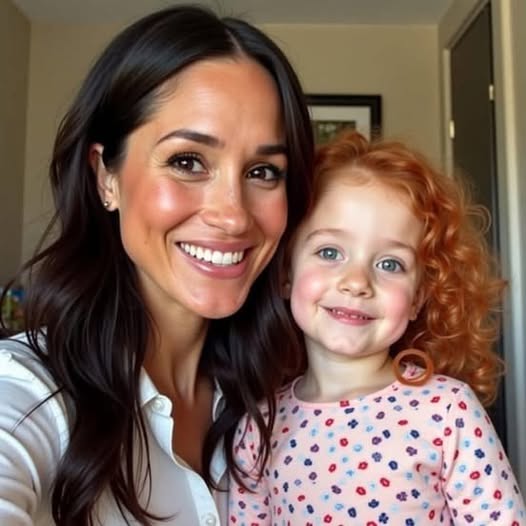
  • Meghan Markle publicly shared a photo of her daughter, Lilibet, for the first time, leaving the entire UK stunned

    Meghan Markle publicly shared a photo of her daughter, Lilibet, for the first time, leaving the entire UK stunned

    Meghan Markle caught the UK off guard when she posted the first publicly shared photo of her four-year-old daughter, Lilibet Diana. For a couple that has fiercely guarded their children’s privacy since stepping back from royal duties, the sudden openness came as a genuine surprise — and it immediately set social media on fire. Within minutes, the image spread across every major platform, dominating headlines and sparking conversations from London cafés to California living rooms.

    The photo itself didn’t rely on theatrics. It was simple, soft, and natural — and that’s exactly why people reacted so strongly. Lilibet stands in a sunlit garden, her small hand wrapped around a bunch of fresh daisies. The lighting is warm, almost nostalgic, brushing across her pale dress and catching the red strands of her hair. There’s a quiet charm in the composition, the kind of image that doesn’t try too hard, yet says more than any official portrait ever could.

    Meghan’s caption was what really set the tone. She wrote about Lilibet as a symbol of “love and strength,” a phrase that felt intentionally chosen. It gave the photo emotional weight without turning it into a spectacle. For a family that has spent years navigating public scrutiny, criticism, and endless speculation, the words carried a sense of grounding — a reminder that behind the headlines and noise, there’s a family simply trying to live its life.

    And that’s where the public reaction became fascinating. The UK — often divided in its feelings toward Meghan and Harry — responded with a mix of surprise, reflection, and even warmth. People who typically tear apart every Sussex headline suddenly paused, softened, and found themselves admiring a moment of ordinary beauty. The photo didn’t feel strategic. It felt human.

    Many noticed how much Lilibet resembles her father. The unmistakable red hair, the soft expression, the gentle smile — traits that run deep in the family line. Some compared her to Harry as a child; others pointed out fleeting echoes of Princess Diana. These observations had nothing to do with controversy or debate. They came from a place of nostalgia, the kind of collective memory that binds generations together.

    What struck people most was the fact that Meghan and Harry chose to share this moment at all. Since moving to California, they’ve been careful — even protective — about shielding their children from the public eye. It wasn’t a secret and it wasn’t complicated: they wanted their kids to grow up with normalcy, something they themselves didn’t have. That’s why this post felt so deliberate. It wasn’t random. It wasn’t impulsive. It was intentional.

    For some royal watchers, this act of openness hinted, however subtly, at a possible thaw in the tension between the Sussexes and the rest of the royal family. Whether that interpretation is hopeful or simply imaginative doesn’t change the fact that people wanted to believe it. The UK has always had a complicated relationship with the couple, but this photo managed to cut through the static. It reminded people that beyond disagreements, protocols, and public drama, children remain innocent threads that tie families together.

    The serene setting of the photo added to this narrative. It didn’t appear overly staged or excessively curated. It looked like a real moment — sunlight filtering through the leaves, a child holding wildflowers, the natural ease of a candid capture. People connected with that authenticity. For once, the story wasn’t about tension, criticism, or speculation. It was about a child, growing, laughing, living her life.

    The response didn’t stay confined to fans. Celebrities, public figures, photographers, and even media personalities reacted positively. Some praised Meghan’s photography skills. Others commended the couple for choosing to share something meaningful rather than polished. The warmth of the reaction cut across the usual tribal lines of royal commentary.

    But perhaps the most interesting element wasn’t public praise — it was the shift in tone. Conversations moved from “What are they doing now?” to “Look how big she’s gotten,” “She has her dad’s hair,” and “She looks so carefree.” The discourse became less about the Sussex narrative and more about the small, universal beauty of childhood.

    And in that softness, people found themselves reflecting on how quickly time passes. Many remembered when Lilibet’s birth was first announced. Others recalled the early debates about whether she would ever be seen in public. For those who’ve followed the royal family for decades, this photo became a reminder that even in complicated families, children grow, life moves forward, and milestones happen whether the world is watching or not.

    Of course, the photo also sparked conversations about privacy. Some wondered if this marked a new era for Meghan and Harry — a more open approach. Others believed it was a one-time exception, a rare moment they felt comfortable sharing. What seemed clear was that this wasn’t a return to traditional royal visibility. It was a controlled, personal decision made on their own terms.

    And that’s exactly why it resonated. Not because it was polished. Not because it was royal. But because it was real.

    The UK, despite its ongoing debates about Meghan and Harry, paused long enough to appreciate something genuine. A mother sharing a picture of her daughter. A father’s unmistakable features reflected in a child. A connection to a grandmother gone too soon. A fragile sense of unity in a story that usually sparks division.

    One photo — not a statement, not an interview, not a documentary — managed to remind people that behind every headline is a human family trying to protect its peace. And for a brief moment, the world let them.

    If you want, I can expand it, sharpen the tone even more, make it more dramatic, or shape it to fit a specific publication style.

  • President Trumps FBI Announces Major Arrest!

    President Trumps FBI Announces Major Arrest!

    President Trump’s administration marked a major milestone this week after the FBI confirmed the capture of another fugitive from its “Ten Most Wanted” list — a development the White House framed as part of its ongoing crackdown on violent criminal networks. The arrest and extradition of Francisco Javier Roman-Bardales, a high-ranking figure within the MS-13 gang, sent a clear message: under this administration, dangerous criminals will be pursued, caught, and held accountable.

    Roman-Bardales had been wanted for years. Authorities linked him to an extensive web of criminal activity, including drug distribution and extortion operations in both the United States and El Salvador. Investigators also tied him to multiple acts of violence, including deadly attacks carried out against civilians and rival gang members. For law enforcement, he wasn’t just another fugitive — he was a key player in a violent organization known for leaving destruction in its wake.

    His capture didn’t happen overnight. It required coordination between U.S. officials and counterparts in Mexico, where he had taken refuge. After months of tracking, negotiation, and intelligence-sharing, Mexican authorities handed him over to the FBI. When Director Kash Patel publicly announced the extradition, he emphasized the significance: another name on the “Ten Most Wanted” list crossed out, another threat removed from the streets.

    This arrest makes Roman-Bardales the third major fugitive to be caught since early 2025, marking what administration officials are calling one of the most aggressive crime-fighting streaks in recent years.

    Just days before, on January 30, 2025, Arnoldo Jimenez — wanted on first-degree murder charges — was taken into custody after years on the run. Jimenez had been sought in connection with a brutal slaying that had haunted investigators and devastated the victim’s family. His arrest offered long-awaited relief to those who had never stopped demanding justice.

    And earlier that same week, on January 25, 2025, another fugitive, Donald Eugene Fields II, was captured. Fields had been wanted on suspicion of child rape and child sex trafficking — crimes that left communities outraged and desperate for closure. His arrest brought an end to a chilling case that had stretched beyond state lines.

    With three fugitives captured in a matter of weeks, the pattern was impossible to ignore. For supporters of the administration, these arrests were proof of a commitment to law and order. For critics, they were a rare moment of agreement: the removal of dangerous criminals from public streets benefits everyone.

    What stood out most in the public reaction wasn’t the politics — it was the relief. Families affected by these crimes had carried the weight of trauma and unanswered questions for years. Their stories rarely made front-page headlines. Their pain didn’t fit neatly into political sound bites. But these arrests meant something to them, something personal, something that felt like hope finally breaking through after long darkness.

    Roman-Bardales’ extradition in particular struck a chord. MS-13 has long been synonymous with brutal violence, both in the United States and Central America. Its operations stretch across borders, involving everything from drug trafficking to extortion to targeted killings. Removing a senior leader from the organization forces real disruption and sends tremors through its hierarchy. For communities that have lived under the threat of gang intimidation, even one arrest can shift the atmosphere.

    Behind the scenes, officials described the operation as complex, deliberate, and months in the making. International extraditions require layers of legal work, diplomatic coordination, and precise timing. It wasn’t a simple handoff — it was the result of shared goals and persistent effort. The FBI credited the success to cooperation with Mexican authorities and growing pressure on transnational criminal groups.

    The White House quickly highlighted the arrests as part of a larger effort to clamp down on violent crime nationwide. They emphasized a policy strategy focused on stronger border enforcement, expanded cooperation with international law enforcement agencies, and increased resources dedicated to tracking fugitives believed to be hiding abroad.

    According to administration officials, the message is straightforward: there is no safe hiding place for violent offenders, no country far enough to escape accountability.

    For ordinary Americans watching from home, the news carried a different tone. They weren’t interested in political framing. What mattered was the sense that justice was finally gaining momentum. That criminals who had evaded capture for years were being located. That cases once labeled “cold” were coming back to life. That families who had mourned without closure were now one step closer to answers.

    Communities affected by gang violence, in particular, expressed cautious optimism. These neighborhoods know the weight of fear. They know what it feels like to look over their shoulders, to wonder whether threats would escalate, to see young people pulled into cycles of crime. Removing a leader like Roman-Bardales doesn’t erase the problem — but it does cut into the structure that keeps that violence alive.

    Law enforcement officials were careful to note that the fight isn’t over. Many dangerous fugitives remain at large, and the work of dismantling organized criminal networks is slow, difficult, and constant. But victories like these matter. They send ripples through communities, reminding people that long-term cases aren’t forgotten, that justice isn’t surrendered just because the timeline stretches across years.

    In press briefings, administration representatives reiterated the same point: the safety of the American people is non-negotiable, and the government will pursue every tool available — legal, diplomatic, and investigative — to protect its citizens.

    The political noise will continue, as it always does. But beneath that noise, real families are experiencing real closure. Real communities are breathing easier. And real justice, however delayed, is finally catching up to those who spent years believing they could outrun it.

    Roman-Bardales now faces the U.S. justice system. So do Jimenez and Fields. Their arrests mark the end of long pursuits — and the beginning of accountability.

    And for the people whose lives were torn apart by their crimes, that accountability matters more than any headline ever could.