Blog

  • The Windshield Shatters!

    The Windshield Shatters!

    The first light of dawn slid across the misty hills of Minas Gerais, turning the fog into gold. Beneath the enormous ceiba tree, its roots like veins gripping the red earth, Benedita stood barefoot and still. The tree was sacred—older than the plantation, older than any master. It had witnessed generations of pain and quiet defiance. And today, it would witness something else: freedom being claimed, not granted.

    Tomás approached slowly, boots crunching on the damp soil. His shirt was unbuttoned at the collar, his hands stained with dust and ink. For the first time, he looked uncertain—not as the owner of mines and men, but as a man stripped of certainty. He stopped a few paces away. “You said this place would listen,” he murmured.

    Benedita’s hand rested on the ceiba’s bark. “Here, the walls can’t lie. Speak freely, and so will I.”

    He hesitated, eyes darting to the horizon where the morning smoke rose from the workers’ quarters. “Then tell me,” he said. “What is it you want?”

    She turned to face him. Her dress was simple, her posture unbroken. “My name. My life. My children—if I ever have them—to be born free. That’s what I want.”

    Tomás exhaled sharply, the weight of her words pressing down harder than any chain. “You know that isn’t how this world works,” he said.

    “It’s how you can choose to work,” she replied. “You built this land with your own hands. You decided which men to pay, which families to tear apart, which laws to obey. Don’t tell me you have no power.”

    Her voice didn’t rise, but every word struck like a hammer.

    He looked down, jaw tight. She stepped closer. “You said you wanted heirs,” she continued. “But what good is legacy if it’s built on stolen lives? Strength isn’t in ownership—it’s in choice.”

    Tomás rubbed his temples. “Benedita, I never meant to harm you.”

    “I know,” she said. “But meaning well changes nothing. Action does.”

    Then came the question that drew the air out of the morning. “Will you free me?”

    The cicadas paused their endless hum, as if waiting for his answer.

    He met her eyes, chest rising and falling. “If I do that,” he said quietly, “society will say you have no right to stay with me.”

    She tilted her head. “Then let them talk.”

    “And if I free you and you leave?” he asked, voice breaking. “If you walk away forever?”

    “Then you’ll know that what we had was never slavery dressed as love,” she said. “It will be real—or it will be nothing.”

    Something inside him cracked then. The proud posture, the miner’s arrogance, the careful mask of control—all of it slipped. What remained was a man who feared losing the one person who saw him not as a master, but as a man still capable of redemption.

    He took a step closer. “Then I’ll do it,” he said, voice unsteady. “I’ll go to Vila Rica. I’ll sign the papers myself. You’ll have your freedom, your name, everything that was ever yours.”

    Her breath caught. “And if I stay?”

    His voice softened. “Then you’ll stay as an ally, not as property.”

    The ceiba’s leaves whispered above them, as though the earth itself approved.

    Benedita nodded once. “Thank you,” she said quietly. “But freeing me isn’t enough.”

    He gave a faint, knowing smile. “It never is, is it?”

    She gestured toward the mines. “You want a legacy? Start there. The men breaking their backs below the ground, the women washing the ore, the children carrying water—they’re dying for your gold. Change that. Free them too.”

    Tomás looked at her, startled. “You’re asking me to dismantle everything my family built.”

    “I’m asking you to build something better,” she said. “Because the world already has enough men who own things. It needs men who stand for something.”

    Silence stretched between them, heavy but alive. The sound of hammers echoed faintly from the distance, each strike like a heartbeat of the land itself.

    At last, Tomás nodded. Not as a man defeated—but as one reborn. “Then we’ll rebuild it,” he said. “But I need to know—will you walk beside me?”

    She studied him for a long moment. The sun had risen just enough to light his face—young still, but lined by the cost of choices. “I will walk beside any man who walks in truth,” she said finally. “Whether that remains you is up to you.”

    And for the first time, Tomás smiled. Not the cold smile of ownership, but something real, something human. He extended his hand. Benedita hesitated, then placed hers in his—not in submission, but in choice.

    Under the ceiba tree, they stood in quiet acknowledgment. A slave and her master no longer. Two people, bound not by law but by a fragile, radical understanding: that freedom and love cannot exist apart.

    Years later, miners would still speak of that day. They would say the land changed after that morning—that the mines grew safer, that families were no longer torn apart, that the man who once ruled by fear began freeing the very people who built his empire.

    They whispered that it began beneath the ceiba tree, with a woman whose courage remade a kingdom of iron and stone into something living.

    Benedita’s name never appeared in official ledgers, but it lived in the songs of those who worked the red earth. They told stories of the woman who stood before power and demanded humanity, who taught her people that dignity could be claimed, not begged for.

    And when dusk settled each evening, Tomás would stand outside the home they rebuilt—no longer fortress, but refuge—and watch Benedita teaching letters to the children born free. Children who would never wear chains. Children who would inherit not a mine, but a future.

    He would sometimes smile to himself, remembering the woman who had once stood beneath a sacred tree and refused to be owned.

    For the first time in his life, Tomás understood what it meant to build something that couldn’t be taken away.

    And every time the wind moved through the ceiba leaves, it sounded like her voice, reminding him: freedom isn’t granted. It’s chosen.

  • My parents kicked me out at 18 and said, Be grateful we fed you, So I fed them something they couldnt swallow

    My parents kicked me out at 18 and said, Be grateful we fed you, So I fed them something they couldnt swallow

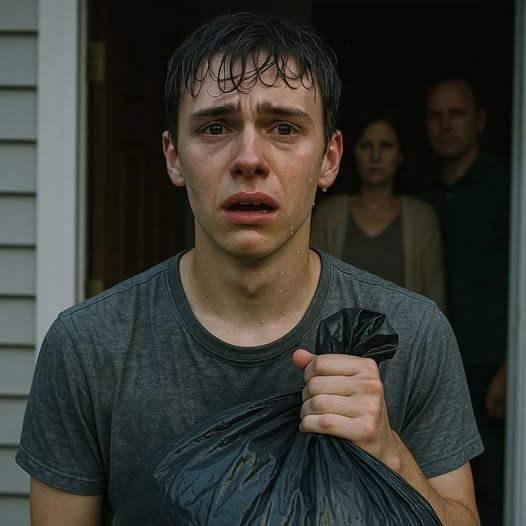
    I woke up on my eighteenth birthday to ice-cold water splashing across my face. My mom stood over me, grinning like she’d been waiting for this. Behind her, my stepdad Mark leaned against the doorframe, holding a trash bag stuffed with my clothes. “Time to man up and move out,” she said, her tone sharp, final.

    I blinked through the shock. “You’re serious?”

    She laughed. “You’ve been nothing but a burden since your dad died. Crying, therapy, excuses. We’ve had enough.”

    Mark shrugged like it was a business deal. “We fed you for eighteen years. You should be grateful.”

    They pushed the bag into my arms and locked the door behind me. No goodbye. No second glance.

    I wandered for hours, numb, until I found a homeless shelter downtown. While filling out the intake form, my hands shook so hard I could barely write my name. My phone buzzed. I hoped it was someone offering help. It wasn’t.

    Mom: Stop telling people you’re homeless. You’re embarrassing us.
    Mark: At least your dad had the decency to die in Afghanistan. 🙄

    Something inside me cracked. The counselor, a woman named Carla, came over and put a hand on my shoulder. “Honey, what’s wrong?”

    I showed her the texts. She frowned, then glanced down at my form. Her expression changed. “Wait—your father died in Afghanistan?”

    “That’s what I was told.”

    “Did you ever see a body? A burial?”

    “No. There was a funeral, but…”

    She typed quickly, then went pale. “James, your father didn’t die in Afghanistan. He’s alive. He’s been at the Palmer VA Hospital for twelve years.”

    The world tilted. “No. We had a funeral.”

    Her voice was firm. “You need to go there. Now. Before your mother realizes you know—before they realize the benefits are about to disappear.”

    My brain couldn’t process it. Every memory—Mom avoiding war documentaries, the missing photos, the sudden move after the ‘funeral’—it all snapped into place.

    Carla grabbed her keys. “I’m driving you.”

    The VA hospital smelled like bleach and floor wax. She led me down a quiet hallway and nodded at a door. Inside, a man sat by the window, thinner than I remembered, but familiar—the same eyes, the same crooked nose.

    “Dad?”

    He turned, disbelief melting into tears. “James. They told me you hated me.”

    “I thought you were dead,” I whispered. “Mom said you died a hero.”

    He shook his head. “They said you knew the truth. That you wanted nothing to do with me.”

    Before I could respond, my phone buzzed again—a bank alert. Account closed. My savings gone.

    Dad took the phone and read the message, his face hardening. “Every month, my combat pay went to you. For your future. I never saw a cent.”

    A nurse stepped in. “Mr. Kravski has been cleared for discharge for years,” she said. “He just needs a family signature.”

    “I’ll sign,” I said without hesitation.

    The next morning, he walked out in hospital jeans and a flannel shirt that didn’t fit right. As we drove toward my mother’s house—the one she’d thrown me out of yesterday—his jaw clenched. “They stole twelve years,” he muttered.

    Mom opened the door, mug in hand. When she saw Dad, it shattered against the floor. Mark froze beside her, pale.

    “Hello, Mark,” Dad said evenly. “We need to discuss my death benefits.”

    Mark’s face twisted through disbelief and rage. Mom tried to play calm. “James, honey, you shouldn’t have left the hospital. You’re confused.”

    Her voice—sweet, poisoned—snapped something in me. I hit record on my phone and kept it low, catching every word, every lie. Mark lunged, but Dad stepped forward, steady despite the tremor in his hands. “Step back,” he warned.

    The neighbor came outside, and Mark froze. Mom switched tactics instantly. “Come inside. Let’s talk calmly.”

    I put a hand on Dad’s arm. “We’re leaving.”

    That night, in a cheap motel that smelled of smoke and old carpet, we laid everything out on the desk—bank alerts, texts, discharge papers. Proof of twelve years of theft disguised as care.

    Carla called the next morning. She’d spoken with legal aid and adult protective services. “You need to file a police report,” she said. “Your parents have committed fraud and elder exploitation.”

    The words hit hard. My dad was a soldier, not a victim—but he was both now.

    We spent days gathering evidence. Screenshots. Recordings. Bank statements. Every lie documented. I learned that documentation was survival.

    The VA confirmed someone had been managing his benefits for twelve years—a “representative payee.” They couldn’t say who, but I didn’t need to ask.

    At legal aid, our attorney, Ms. Bruno, took one look at my files and nodded. “You’ve already done half the work,” she said. “We’ll handle the rest.”

    Soon, a caseworker from Adult Protective Services called. “We’ve opened an investigation,” he said. “Don’t contact your parents directly. Let us handle it.”

    That night, Mom texted again: Come home and stop embarrassing us. We can fix this.

    I took a screenshot, filed it under evidence, and didn’t reply.

    Weeks blurred into paperwork and calls. The bank investigator, Agatha, found years of transfers from Dad’s account to one under Mom and Mark’s names. The VA confirmed the power of attorney they’d used was fake—faded seal, mismatched signature. Ms. Bruno smiled grimly. “Forgery. We’ll prove it.”

    Then Mark showed up at our motel. I called 911 before his truck even stopped. He sped off when the sirens came, but it was enough. Ms. Bruno filed for a restraining order. The judge granted it immediately.

    For the first time, I felt safe.

    When the VA scheduled our payee review, Ricardo, the social worker, met us in the lobby. He interviewed Dad first. Forty-five minutes later, Dad came out steady and calm. “They asked who I trusted with my benefits,” he said. “I told them you.”

    Days later, APS confirmed “substantiated financial exploitation of a disabled veteran.” Proof.

    Then the bank called: funds recovered, accounts frozen, restitution in progress.

    At the settlement hearing, Mom looked smaller, thinner. She tried to smile. I didn’t. Ms. Bruno laid out the evidence—bank transfers, forged papers, recordings. After two tense hours, Mom agreed to repay part of what they’d stolen. Mark sat silent, seething.

    Outside, Dad asked, “Did we win?”

    “We got justice,” I said. “That’s enough.”

    A week later, we signed the lease on a small VA-supported apartment—one bedroom, sunlight through the kitchen window, walls that smelled like paint instead of fear. We moved in with two duffel bags and a donated couch.

    That night, Dad ran his hand along the counter and said quietly, “They can’t take anything from us now.”

    Months passed. I enrolled in community college, studying part-time and caring for him through the VA program. We cooked dinners together, laughed over burnt rice, and rebuilt something neither of us thought we’d have again—peace.

    One afternoon, a letter arrived from the bank confirming the recovered funds had been transferred to our account. Real money. Ours.

    That evening, a handwritten envelope showed up in the mail. Mom’s perfect cursive: You’ll regret turning on your family.

    I fed it into the shredder. The sound was clean, final.

    Dad looked up from the stove. “You did the right thing.”

    I nodded, staring around our small, quiet apartment—the place they said I’d never have. “Yeah,” I said. “I finally did.”

    It wasn’t revenge. It was reclamation.

    Because the best revenge isn’t watching them fall.
    It’s standing in the life they swore you’d never build—free, steady, and untouchable.

  • I Secretly DNA-Tested My 5-Year-Old Daughter, The Results Said 0%, I Filed for Divorce, Until I Saw My Wifes Identical Twin at Preschool Standing Beside a Girl Who Looked Exactly Like Me

    I Secretly DNA-Tested My 5-Year-Old Daughter, The Results Said 0%, I Filed for Divorce, Until I Saw My Wifes Identical Twin at Preschool Standing Beside a Girl Who Looked Exactly Like Me

    For five years, I thought my marriage was solid. My wife, Alina, and I had built what looked like a perfect life — good jobs, a cozy apartment, and our daughter, Karina, who brought light into everything. But a seed of doubt had been growing for years, one I tried to bury: Karina didn’t look like either of us. Her hair was pale blonde, her eyes a cloudy grey-green. Alina and I were both dark-haired, brown-eyed. Every time I asked about it, she’d laugh and say, “Genetics are strange, Denis. Maybe she got it from your grandfather.” But the unease stayed.

    Then our marriage started cracking. Alina quit her job to freelance, and I buried myself in work at the engineering firm, feeling unappreciated. We fought about everything — money, time, her “flexible” schedule. And through every argument, the unspoken question sat in the back of my mind like a splinter: what if she’d been unfaithful?

    It all came to a head one Wednesday. Alina said a client canceled, so she was taking the day off. Hours later, driving home early, I saw her through the window of a café — laughing, glowing, sitting with a tall blond man in a tailored suit. He reached across the table and touched her hand.

    I didn’t think. I just stormed in. “So this is what ‘freelance work’ looks like?” The café went silent. Alina’s face drained of color. The man stood, calm, polite. “I’m Mikhail,” he said. “We went to high school together. We just ran into each other.”

    That night, everything exploded. She insisted it was innocent. I didn’t believe her. Every word between us was a weapon. I said the thing I’d been holding back for years: “How can I trust you when our daughter doesn’t even look like me?”

    Her face twisted in disbelief. “You think I cheated?”

    “I think I’m not her father.”

    She slapped me, hard enough to leave a mark. I went to a lab the next day for a DNA test. That night, while Karina took her bath, I told her we were playing a “spy game” and swabbed her cheek. She giggled, trusting me completely. That nearly broke me.

    Two weeks later, the email arrived. I opened it in my office, hands shaking. The words cut through me like a knife: Probability of paternity: 0%.

    I couldn’t breathe. I felt sick. I drove home and threw my phone on the kitchen table. “Read it,” I told Alina. She did — and turned pale. “This isn’t real,” she whispered.

    “It’s real,” I said coldly. “You’ve been lying for five years.”

    “I swear, Denis, I never—”

    “Save it. I’m filing for divorce.”

    I packed a bag. Karina ran into the hallway, her little hands clutching her stuffed bunny. “Daddy, where are you going?”

    “Just a trip, sweetheart.” I couldn’t look at her.

    Two days later, I filed the paperwork. I felt hollow, furious, betrayed. But I still picked Karina up from preschool — I couldn’t abandon her overnight. One afternoon, during a spring event, I saw something that made my blood freeze.

    Across the room stood a woman who looked exactly like Alina — same face, same voice, same nervous habit of tucking her hair behind her ear. But her hair was a different shade, cut shorter. A little girl ran up to her — dark-haired, brown-eyed — and called her “Mama.” And that child looked exactly like me.

    I stood there, heart pounding. My daughter’s preschool teacher called my name, snapping me out of it. I turned back toward the woman, but she was gone.

    That night, I went to Alina. “You need to tell me something,” I said. “Do you have a twin?”

    She blinked. “What are you talking about?”

    “At the preschool. I saw you. Or someone who looks exactly like you. She had a daughter. My daughter.”

    We found her the next day outside the school. When the two women saw each other, they froze. It was like looking in a mirror.

    “I’m Alina Strelkova,” my wife said carefully.

    “Evgenia Morozova,” the other woman replied. “This is… insane.”

    They sat down together, trembling. “When’s your birthday?” Alina asked.

    “June 15th, 1998.”

    Alina gasped. “That’s my birthday too.”

    “I was adopted,” Evgenia said quietly. “My mother told me she had to give up one twin after birth. I never knew her name.”

    Alina covered her mouth. “She never told me I had a sister.”

    Then I asked the question that would unravel everything: “When was your daughter born?”

    “March 21st, 2020.”

    Alina and I looked at each other. “So was Karina,” she whispered.

    “Which hospital?” I asked.

    “City Hospital Number Three.”

    “So were we.”

    We sat in silence as the truth hit. Two twin sisters, born on the same day, gave birth on the same day, in the same hospital. Somewhere, someone had switched the babies.

    Evgenia’s husband, Kirill, came over that night. We ran new DNA tests — me and their daughter Kamilla, him and Karina. A week later, the results confirmed what we already knew: Kamilla was biologically mine. Karina was biologically his.

    We sat in stunned silence. Evgenia sobbed. “We can’t just switch them back,” she said. “Kamilla is my baby.”

    “And Karina is mine,” I said. “I don’t care what the test says. I raised her. She’s my daughter.”

    Alina nodded through tears. “We keep them as they are. We don’t destroy their lives over a mistake.”

    Kirill agreed. “They’re happy. That’s all that matters.”

    We decided that day to stay connected — not as two broken families, but as one strange, unexpected one.

    In the weeks that followed, Alina and I found something we hadn’t had in years: forgiveness. The anger faded, replaced by a quiet understanding of how close we’d come to losing everything. One evening, I pulled out a small box I’d been hiding — a gold ring I’d bought before the results came in. I knelt in front of her. “Can we start over?”

    She smiled through tears. “You’re still an idiot,” she said softly. “But yes. My idiot.”

    A year later, we renewed our vows. It was a small ceremony — just us, Evgenia and Kirill, and our daughters. Karina and Kamilla wore matching dresses, giggling like sisters. Because, in a way, they were.

    We never told them the full story. Maybe someday we will. For now, they just know they have “special cousins” who look just like their moms. They think it’s funny. They think it’s magic.

    We spend Sundays together now — one big, messy, wonderful family. Karina still calls me “Daddy.” Kamilla calls me “Uncle D,” but when she hugs me, I know she feels something deeper.

    When I think back to that 0% DNA test, I don’t see betrayal anymore. I see the strange chain of events that led me to my sister-in-law, to my biological daughter, and to a version of family I never imagined possible.

    The hospital eventually confirmed the switch — two exhausted nurses, two identical mothers, two newborns placed in the wrong bassinets. No lawsuits. No vengeance. Just the truth.

    And that truth reshaped everything I thought I knew about love, genetics, and fatherhood.

    Because being a dad was never about DNA. It was about staying, even when everything told me to run. It was about loving a little girl who wasn’t mine by blood but was mine in every other way.

    That 0% wasn’t the end of my family. It was the beginning of a bigger one.

  • Every day, a 7-year-old girl tucked her lunch away instead of eating it! Curious, her teacher followed her during break! and what she saw behind the school forced her to make an emergency call

    Every day, a 7-year-old girl tucked her lunch away instead of eating it! Curious, her teacher followed her during break! and what she saw behind the school forced her to make an emergency call

    The familiar chime of the school bell signaled the end of another lunchtime at Oakwood Elementary, sending a stream of second-graders back to class, trailing the sweet, heavy scent of the cafeteria. I, Rebecca Collins, stood by the door, greeting the children, my mind running a silent headcount. Nineteen, twenty, twenty-one—one girl was missing. Lily Parker. Again.

    This was the third instance this week Lily had failed to return with her classmates. On previous occasions, she’d offered flimsy excuses about losing track of time while reading, but a quick check with the librarian had exposed her absences as deliberate. “Katie, would you please lead the class in silent reading until I return?” I asked my classroom helper, a responsible girl who instantly beamed with the temporary authority granted to her.

    Stepping into the hallway, I pulled my cardigan tighter against the late October chill that seeped through the aging windows. Three years of widowhood had sharpened my awareness of absence, granting me an unwanted intuition for when something was fundamentally wrong. And something was deeply wrong with seven-year-old Lily Parker.

    I scanned the deserted hallway before heading to the cafeteria. The lunch manager, Marjorie, was already cleaning up. “Marjorie, have you seen Lily Parker? Dark hair, purple backpack?”

    Marjorie shook her head, leaning heavily on her mop. “That little one with the big eyes? Haven’t seen her since the lunch bell. Come to think of it, haven’t seen her eat much lately, either.”

    “What do you mean?” I asked, a prickle of professional guilt running down my spine.

    “She takes her tray, but she’s not eating,” Marjorie explained. “Just sits there, pushing food around, then dumps it. Thought you teachers were supposed to notice these things.”

    I had noticed the changes: the dark circles under her eyes, the waning diligence in her homework, the quiet withdrawal. But I had dismissed it, attributing it to the common disruptions of childhood—a new sibling rivalry, perhaps, or domestic stress. I hurried back toward the playground, shielding my eyes against the autumn sun. The playground was nearly empty, but a flash of purple—the familiar color of Lily’s backpack—caught my eye. It was disappearing around the corner of the building, toward the dense, wooded buffer that bordered the school property.

    My heart quickened with alarm. That area was strictly off-limits to unsupervised students. My intuition warred with proper procedure. Following a student off school grounds without alerting security was a breach of protocol, but allowing a seven-year-old to wander into the woods alone felt deeply irresponsible. I quickly pulled out my phone, texting the school secretary: Checking on Lily Parker behind the school. Back in 10 minutes.

    I kept a measured distance, letting my sensible navy flats tap quietly on the dirt path that wound between the maple trees. The woods were not extensive, merely a small green belt between the school and the surrounding neighborhood, but they were thick enough that I soon lost sight of the school roof. I watched as Lily stopped beside a massive oak tree, glanced around furtively, and knelt down. I ducked behind a large trunk, feeling like an absolute intruder.

    From my hiding place, I watched as Lily unzipped her backpack and carefully removed her lunchbox. Inside was the standard lunch I’d seen her pack away, untouched: a sandwich, an apple, a small bag of carrot sticks, and a prized chocolate pudding cup. A wave of confusion and dread washed over me. Was this a childhood eating disorder? To my confusion, Lily simply repacked the entire lunchbox into a smaller front pocket of the backpack, zipped it shut, and continued deeper along the path.

    I followed, my concern hardening into certainty that something far beyond a behavioral issue was at play. After another minute, the trees thinned, revealing a small, desolate clearing beside a babbling creek that marked the property line. I stopped abruptly at the edge of the clearing, my hand flying to my mouth.

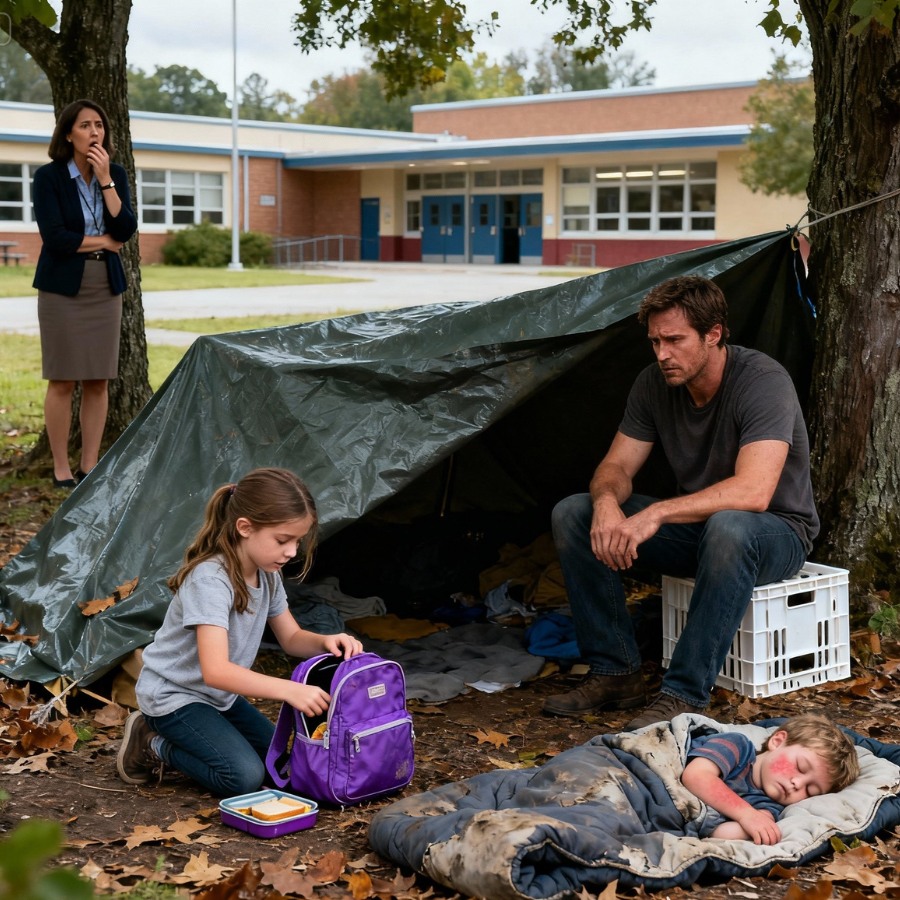
    Nestled against the embankment was a makeshift shelter, constructed crudely from salvaged tarps, an old tent, and wooden debris. A man sat on an overturned milk crate, his face buried in his hands. Beside him, a smaller boy, perhaps four years old, lay on a tattered sleeping bag, his face flushed and sweaty despite the crisp, cool air.

    “Daddy?” Lily’s small voice carried across the clearing. “I brought lunch. Is Noah feeling any better?”

    The man looked up, his eyes ringed by deep, dark circles, his hollow cheeks covered in several days’ worth of stubble. Despite his disheveled state, there was something about the set of his jaw and the quality of his once-good, now-dirty clothing that spoke of someone unaccustomed to such abject circumstances.

    “Hey, pumpkin,” he replied, his voice a hoarse whisper. “He’s still got a fever. I’ve been giving him Tylenol, but we’re almost out.”

    Lily approached him, unzipping the front pocket of her backpack and pulling out the lunchbox. “I brought my lunch. And look, they had chocolate pudding today!” she exclaimed, holding it out like a sacred offering.

    The man’s composure crumpled for a fleeting second before he regained control. “That’s great, sweetie, but you should eat that. You need your strength for school.”

    “I’m not hungry,” Lily insisted, her words contradicting the pallor of her face. “Noah likes pudding. Maybe it’ll make him feel better.”

    “Lily,” the man said gently, “you’ve been saying you’re not hungry for two weeks now. You need to eat.”

    I could not remain hidden any longer. Stepping into the clearing, the crunch of leaves beneath my feet sounded deafening. “Lily?”

    The girl whirled around, her face draining of color. The man sprang to his feet, instinctively placing himself between me and the sleeping boy.

    “Miss Collins,” Lily whispered, her voice barely audible. “I… I was just…”

    “It’s okay, Lily,” I said, keeping my tone deliberately calm despite the whirlwind of shock in my mind. I turned to the man. “I’m Rebecca Collins, Lily’s teacher.”

    The man regarded me wearily, his body tight with defensiveness. “Daniel Parker,” he finally managed. “Lily’s father.”

    I looked at the small, feverish boy. His cheeks were scarlet, his breathing congested and uneven. “That’s my son, Noah,” Daniel clarified, shame etched on his face. “My younger son.”

    “Lily’s been bringing you her lunches,” I stated, bypassing the need for a question.

    Daniel closed his eyes briefly in defeat. “I’ve told her not to. I’ve told her she needs to eat.”

    “Daddy needs it more,” Lily piped up. “And Noah, too. I can eat when I get home.”

    “When you get home?” I repeated softly, glancing at the makeshift shelter. “Is this home now?”

    Daniel’s jaw tightened. He looked at his sleeping son before meeting my gaze with profound despair. “For the time being. It’s temporary.”

    My mind raced, trying to access proper protocol, but the only thing that mattered was Noah’s labored breathing. “How long has Noah been sick?”

    “Three days,” Daniel answered. “It started as a cold, but the fever won’t break. I’ve been giving him children’s Tylenol, keeping him hydrated as best I can.”

    I moved closer and placed my hand on the boy’s forehead. The heat radiating from his small body was alarming. “He needs medical attention,” I said firmly. “This isn’t just a cold.”

    “We don’t have insurance anymore,” Daniel confessed, his voice cracking. “I can’t—”

    “Daddy, is Noah going to be okay?” Lily asked, tears beginning to well in her eyes.

    Daniel knelt beside his daughter, placing his hands protectively on her shoulders. “Of course he is, pumpkin. He just needs rest, that’s all.”

    Watching their interaction, the obvious love and the gentle way Daniel comforted his daughter despite his own devastation, I knew this wasn’t willful neglect. This was desperation born of tragedy.

    “Mr. Parker,” I said quietly. “Noah needs to see a doctor. I’m going to call for help.”

    Panic flashed across his face. “Please, don’t. They’ll take them away from me. I can’t… they’re all I have left.”

    “Who will take them away?”

    “Child Services, the state,” he whispered, rubbing a tired hand through his unkempt hair. “We lost our house. Emma… my wife… she died six months ago from a heart condition. The medical bills, the funeral costs… I fell way behind. I’ve been looking for work, but it’s hard with Noah, and the shelters are full or won’t take a single father with kids. Please. We just need a little more time.”

    I looked at Noah again, at his feverish face, and then at Lily, thin and pale, silently sacrificing her own sustenance. “Noah needs help now,” I said firmly. “I understand you’re afraid, but his health has to come first.”

    Daniel’s shoulders slumped in defeat. “They’ll separate us.”

    “I’ll do everything I can to prevent that,” I promised, the certainty in my voice surprising even myself. “But right now, Noah needs immediate medical care that you can’t provide here.”

    I pulled out my phone, stepped slightly away, and dialed 911. As I gave the dispatcher the details of their location and Noah’s alarming symptoms, I watched Daniel kneel beside his son, stroking his hair with a trembling hand, his quiet resignation heartbreaking.

    “They’re sending an ambulance,” I said, ending the call. “They’ll be here in a few minutes.”

    Daniel nodded, the last vestige of panic gone. “Thank you… for caring about Noah,” he said quietly. “And for looking out for Lily at school. She thinks the world of you.”

    As the paramedics emerged from the trees, guided by a school security guard I had called on my way back, I stepped forward. I quickly explained the situation and Noah’s high fever, carefully omitting the context of the makeshift shelter. The lead paramedic, after checking Noah’s vitals, reported the child’s temperature grimly: 104.2°F.

    “We need to transport him now,” the paramedic ordered. “Dad, you can ride with us.”

    “My daughter…” Daniel started.

    “I’ll bring Lily to the hospital,” I offered instantly.

    Relief washed over Daniel’s face. “Thank you.”

    I watched as Daniel climbed into the ambulance beside his son’s stretcher, Lily’s small hand clutched in his. I knew the security guard, who had been listening intently and scanning the shelter, would file reports. I knew the principal would demand an explanation. But watching the family pull away, I knew I had made the right choice. Protocol exists for a reason, but humanity had to come first.

    “I’ll meet you at Memorial,” I called as the ambulance doors closed.

    I turned to the security guard, who stood rigid with confusion. “Tell Principal Washburn I’m fulfilling my duty of care to a student,” I interrupted his impending objection, my voice firm. “I’ll explain everything later.”

    As I guided Lily back toward the school, her purple backpack bobbing ahead, I tried to process the impossible burden this seven-year-old had been silently carrying: a family shattered by loss, a father pushed to the absolute edge of desperation, and a little girl starving herself to keep them all afloat.

    “Miss Collins?” Lily’s voice broke through my thoughts. “Are they going to take Noah and Daddy away from me?”

    I stopped, kneeling down to look directly into her worried eyes. “I’m going to do everything I can to keep your family together,” I promised, an instinctive pledge that I had no idea how to fulfill.

    Only later, in the antiseptic, cold reality of the hospital, did the true magnitude of that promise reveal itself. Dr. Patel confirmed the diagnosis: pneumonia, significantly progressed, requiring IV antibiotics and fluids for dehydration. Noah would need to be hospitalized for several days.

    It wasn’t long before Vanessa Morales from hospital social services entered the room. Her practiced, professional manner did not soften the message: she was obligated to report the situation to Child Protective Services. “Living outdoors with minor children, especially heading into winter, is considered potentially endangering,” she explained, her voice devoid of judgment but heavy with consequence.

    Daniel’s hands clenched as he faced the bureaucratic reality. “I’ve done everything possible to keep them safe.”

    “Your son has pneumonia,” Vanessa pointed out. “And it appears you’ve been relying on your daughter’s school lunches for food.”

    When Vanessa later recommended temporary placement in emergency foster care while Daniel secured stable housing, the finality of the words struck me. “That’s not necessary,” I insisted, thinking of my own loss. “Separating him from his children now would be needlessly traumatic.”

    “My obligation is to ensure those children are safe,” Vanessa reiterated.

    “What if Mr. Parker had immediate access to stable housing?” I asked, the idea suddenly solidifying in my mind. “Would that change your recommendation?”

    Jade Wilson, the CPS caseworker who took over, studied my face. “Potentially. Stable housing, adequate food, and a clear plan for sustainable income would certainly strengthen his case.”

    “I have a two-bedroom apartment,” I blurted out. “The spare room is ready for them. It’s clean, safe, close to the school. They can stay there while Daniel gets back on his feet.”

    Jade’s professional façade faltered. “Miss Collins, are you offering to house this entire family in your home? That’s highly unusual.”

    “These are unusual circumstances,” I countered. “You know as well as I do that siblings are often separated in foster care. I want to prevent that.”

    Jade reluctantly agreed to recommend a provisional plan, contingent on a sixty-day maximum stay, regular home visits, and a formal agreement.

    The next morning, I faced Principal Washburn. She thundered through my breaches of protocol: leaving school property, failing to notify administration, inserting myself into a family’s personal situation. I calmly informed her that I was taking a leave of absence from teaching to stabilize the situation.

    “Your position here could be jeopardized,” she warned, then delivered the final blow: Lily was being reassigned to another class immediately due to my “inappropriate level of involvement.” The principal’s threat was final, but the promise I had made to Lily was stronger.

    “When my husband died,” I explained to Daniel later, after the arrangements were finalized, “people helped me. But even with all that support, there were days I wasn’t sure I’d survive. You’re trying to hold together an entire family while processing your own grief. I felt like I had something specifically useful to offer.”

    Daniel accepted the help, but his pride remained intact. “We won’t stay a minute longer than necessary.”

    Six months later, on a perfect June day, I watched from the driveway of a beautiful colonial-style house on Oak Lane as Daniel and my brother moved the last boxes inside. A settlement from a wrongful foreclosure lawsuit—a long shot I had encouraged Daniel to pursue—had arrived before Christmas, transforming their possibilities overnight. Daniel, now working at the hospital and maintaining his independence, had purchased a comfortable four-bedroom home in a good school district.

    Our relationship had blossomed gently over those months: quiet dinner dates, weekend outings, and evenings spent talking after the children were asleep. The past half-year had transformed us all. Daniel was confident, the haunted look gone. The children had blossomed. And I had emerged from the careful shell I’d constructed after my husband’s death.

    “It already feels like home,” Lily declared, joining us with the confidence of her eight years. “Because we’re all here together.”

    “Coming?” Daniel asked, holding out his hand to me from inside the house.

    I smiled, taking his hand and stepping across the threshold. “Yes,” I said simply. “I’m coming home.” I’d made an emergency call that saved a child’s life, but in following my heart instead of the rules, I had set in motion a chain of events that would ultimately save us all.
  • Injured Marine Holds Salute For 3 Hours! Then Bikers Unexpectedly Appear And Do The Unthinkable!

    Injured Marine Holds Salute For 3 Hours! Then Bikers Unexpectedly Appear And Do The Unthinkable!

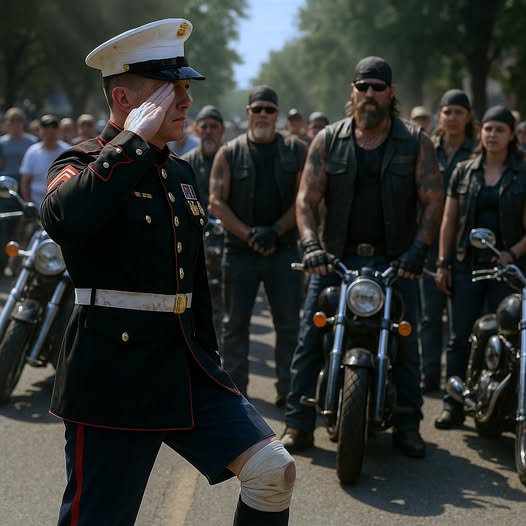
    The punishing heat of the midday sun beat down upon Washington D.C., transforming the asphalt into a shimmering kiln. Yet, Sergeant Tim Chambers, a veteran Marine, stood utterly unmoving on a busy street, his body fixed in a solitary, resolute vigil. It was Memorial Day weekend, the time of the massive tribute known as Rolling Thunder, and Tim’s presence was a lone, profound monument. His uniform, heavy with the history of his service, was quickly soaked with sweat, and his arm was raised, locked in a flawless, unwavering salute—a gesture not of transient duty, but of enduring, solemn homage to the fallen.

    He had held the salute for fifteen agonizing minutes, his gaze fixed straight ahead toward the distant war memorial where the names of the lost were being etched into stone. It was immediately clear to every observer that Sergeant Chambers was utterly committed; his arm was set, a quiet, unyielding tribute that would defy the blazing heat, the throbbing pain he carried, and the passage of time.

    For three long, torturous hours, Tim Chambers was immovable. His boots were fused to the pavement, his expression steady, his salute as steady and immutable as stone. An old, persistent injury—a brutal souvenir from his last deployment—screamed incessantly in his leg, but the thought of surrender never entered his mind. His arm did not drop, not even a fraction of an inch, held taut by an iron will that bewildered passersby. Word spread rapidly about the lone Marine, the man honoring those who never returned. Crowds began to gather, some standing respectfully roadside with small flags, others watching from a distance, mesmerized by the powerful, wordless drama unfolding under the scorching sky.

    Though his body was anchored in the capital, his mind was deeply rooted in memory, drawing inexhaustible strength from a truth that had defined his life for years. Tim was an identical twin, and this Memorial Day marked the exact anniversary of the moment his brother, Mark, had died in combat, saving Tim’s life. They had been inseparable, sharing every interest, every dream, and ultimately, the binding decision to join the Marines. They had remained close during their service, a unit of two, always watching each other’s backs, clinging to the expectation of growing old together. But fate had intervened violently.

    As Tim stood, his heart pounding a rhythm of grief and defiance beneath his uniform, the last memory of Mark played out again, sharp and terrible. They had been deployed in a volatile, hostile zone. The air was thick with the scent of explosives and the terrifying cacophony of gunfire. Their unit, ambushed by hidden adversaries operating secretly in the area, was decimated instantly. Snipers, positioned expertly on rooftops and distant hills, opened fire, instantly claiming two of their comrades. In the brutal, blinding chaos, a sniper’s bullet tore into Tim’s leg, sending him sprawling into the dirt in profound agony.

    Struggling and unable to move to safety, he was spotted by Mark, who acted without a flicker of hesitation or calculation. Dodging the live fire, Mark ran straight toward his brother, dragging Tim toward meager cover while using his own body as a living shield against the incoming rounds. It was an act of ultimate, spontaneous courage, yet it placed him squarely in the sniper’s line of fire. A single shot found its mark, hitting Mark in the head. He collapsed directly onto Tim, dying there in the very act of saving his brother’s life. Tim’s screams of agony and denial were swallowed by the battle’s roar until other Marines reached them, gently pulling Mark’s body off of his wounded twin.

    Tim’s jaw was clamped tight, his eyes squeezed shut for a fleeting second to fight back the hot, insistent rush of tears. Losing his twin had left a wound that was not merely a scar, but an internal, inescapable canyon of grief. The emotional pain of that memory hit harder and deeper than the physical ache in his leg. Through years of wrestling with survivor’s guilt, Tim had finally arrived at a necessary peace: Mark had died a hero, having made a choice rooted in unconditional love and sacrifice. Tim held on to the unwavering, sacred knowledge that his brother’s bravery would never, could never, be forgotten.

    Two hours into the vigil, the midday sun was relentless, baking the street and raising the temperature to an oppressive degree. Sweat poured down Tim’s face, causing his thick wool uniform to chafe against his skin. Every passing minute was an endless, draining strain, but not even the blazing heat could break his focus. On the sidelines, spectators were forced to open umbrellas for meager relief, yet Tim did not flinch. His throat was parched, his injured leg screamed in protest at the prolonged, unnatural posture. Yet the Marine stayed firm. The discomfort, he reasoned, was nothing, absolutely nothing, compared to the ultimate price his fellow service members, particularly Mark, had paid.

    As the second hand swept toward the third hour, Tim’s silent salute transcended a simple tribute. It became a powerful, breathing symbol of the unyielding perseverance, commitment, and quiet suffering shared by veterans across the globe. Whispers from the crowd articulated the shared awe and recognition: “Who’s he saluting?” “Has he been standing there this whole time?” “Is he a veteran?” The soft murmurs underscored the deep, collective resonance of the moment, a universal recognition of profound sacrifice.

    Three full hours had elapsed. Tim was running solely on adrenaline and iron will, his exhaustion profound, when a low, sustained, throbbing rumble broke the silence of the crowd. The sound grew louder, matching the heavy, aching rhythm of Tim’s heart. Over the ridge, rolling in a tight, disciplined formation, came a long line of bikers. They wore the intimidating uniform of black leather vests covered in patches, their faces weathered and marked by untold experiences and stories.

    The sudden, loud arrival caused the crowd to stir and recoil. Quiet conversations turned into anxious, worried glances. Many immediately assumed the bikers were there to disrupt the solemn tribute; their loud machines, rough appearance, and defiant, outsider reputation had long fostered an unfortunate societal stereotype of lawlessness. Spectators instinctively backed away, anticipating conflict. What the wider public often failed to grasp was that biker culture encompasses far more complexity than a single stereotype; many of these individuals were law-abiding, hard-working people, and a significant portion were veterans themselves, sharing the very same unspoken code of service and sacrifice that held Tim Chambers on the pavement.

    As the motorcycles came to a quiet stop, the riders dismounted and walked toward Tim with a steady, confident gait. Their black leather and tough exterior were momentarily intimidating, but their eyes held an unexpected depth of sincerity and purpose. The street fell silent, the crowd holding its collective breath, anticipating confrontation. What followed was the very antithesis of disruption, defying every assumption.

    Without exchanging a single word, the bikers moved with coordinated precision, forming a tight, protective semicircle around the exhausted Marine. One by one, they stood at rigid attention. Then, in a perfect, unified motion that spoke of discipline and respect, they raised their arms in a salute. The sight was instantly powerful, deeply moving, and transformative. For several long minutes, they stood unmoving, united with Tim in honoring the fallen—a silent, powerful promise of eternal remembrance.

    Tim glanced at them, a small, quiet look of profound gratitude passing over his face. In their eyes, etched with experience, he saw the same code of respect and commitment that had kept him standing there. The crowd saw it, too: the bikers hadn’t come to cause trouble; they had come, as fellow warriors, to honor.

    Then, one of the bikers, whose arms and face were covered in intricate tattoos, stepped forward. The crowd stirred nervously, some whispering fearfully of a hidden weapon. But the biker merely reached into his jacket pocket and pulled out something simple and entirely unexpected: a bottle of water. Gently unscrewing the cap, he walked directly up to Tim. “Take a sip, brother. It’s too hot out here,” he said softly. With quiet, gentle care, he held the bottle up so Tim could drink without lowering his arm, ensuring the salute remained unbroken, his vigil unimpaired.

    The cold water was a shock of instant, vital relief, restoring just enough strength to continue. Tim offered a small, meaningful nod to the biker, a silent thank you that conveyed more than any words could. The man returned to the formation, raised his arm, and joined the steadfast salute. As time passed, the subtle divide between the Marine and the bikers began to dissolve, their simple, powerful action a visible testament to their shared purpose and mutual respect.

    As the sun began its glorious descent, painting the sky with deepening shades of purple and gold, Tim finally lowered his arm. His body was utterly spent, but his heart felt full, complete. He had kept his promise. Around him, the bikers slowly dropped their salutes. One by one, they approached Tim—some shook his hand firmly, others offered a quiet, understanding nod. No words were truly needed; the profound respect between them spoke volumes.

    Tim turned to the riders and thanked them sincerely for standing watch with him, then addressed the crowd gathered nearby. “Today I saw the best side of these bikers,” Tim began, his voice hoarse but clear with conviction. “They might carry a rough reputation, but today they truly earned my respect. What they showed us is that it’s easy to judge someone based on what others say or how they look, but a person’s true character lives deeper than that, in their heart.”

    His heartfelt words struck a deep, resonant chord, causing a visible, powerful shift in the atmosphere. The onlookers left carrying not just photos or videos, but the lasting memory of unity, quiet respect, and the powerful, humbling lesson that character should never be judged solely by appearance. It was a small, profound step toward healing the societal gap between the public and the often-misunderstood biker community.

    The bikers mounted their powerful machines, the low rumble of their engines receding into the twilight as they rode off, undoubtedly hoping the world might see them a little differently now. Tim watched their silhouettes fade into the distance. He knew their paths might never cross again, but the sacred moment they had shared would always remain with him. He turned and began his slow walk home, knowing he had honored his brother and every soldier who never made it back. It was achieved not through loud speeches or major headlines, but through quiet gestures, mutual respect, and the profound understanding that only warriors truly share. The simple, lasting truth of that Memorial Day was that the story inside the cover might just change your heart forever.

  • Girl Disappeared in 1990, 22 Years Later, Her Father Notices Something Strange in Her Old Yearbook

    Girl Disappeared in 1990, 22 Years Later, Her Father Notices Something Strange in Her Old Yearbook

    The spring afternoon in 1990 was etched forever into the memory of the Brown family as the moment tragedy struck. Jamila, their vibrant, seventeen-year-old daughter, vanished from Savannah without a trace. For twenty-two agonizing years, her absence was a perpetual shadow, paralyzing her parents, Maurice and Lorraine, in a state of unresolved grief. The police had pursued every possible lead, but the initial burst of investigation had long faded into an impenetrable silence, leaving behind only the haunting specter of their lost, beloved girl.

    Jamila’s bedroom remained untouched, a meticulous shrine to a life frozen in time. Posters of 1980s pop stars still adorned the walls; her bed was neatly made, holding the threadbare teddy bear she’d loved since childhood. Every item in the room—the books, the high school trinkets, the academic trophies—spoke of a young woman brimming with dreams of marine biology, now utterly overshadowed by a vast, aching emptiness. Maurice, unable to endure the pain that clung to the air, had not set foot in the room for over a decade.

    Then, one particularly quiet afternoon, Lorraine gently suggested that it was finally time to confront the past. They needed to sort through Jamila’s belongings, to transition from the unbearable expectation of her return to a painful acceptance of her absence. With a familiar, sickening tightness in his chest, Maurice entered the room. He began the slow, emotionally draining task of sorting through notebooks, faded T-shirts, and scattered keepsakes when his fingers brushed against a maroon yearbook from Jefferson High, dated 1990. Its spine was cracked but intact, a forgotten artifact untouched since the day Jamila disappeared.

    With trembling hands, Maurice opened the volume. He flipped past images of pep rallies and prom, past the smiling, carefree faces of students who had filled the halls of their school a lifetime ago. Finally, he found Jamila’s portrait, her gaze confident and kind, brimming with youthful potential. The accompanying caption read: “Jamila Brown, future marine biologist.” The words elicited a bittersweet, fleeting smile. But it was a small, hastily scribbled note beneath the picture that snagged his attention—a reference to her favorite book, The Secret Garden, and an urgent plea to return it to her best friend, Kendra.

    Intrigued by this fragile thread from the past, Maurice flipped to Kendra’s profile and noticed a phone number scribbled near her name. He knew the number was almost certainly disconnected after two decades, yet a powerful, almost primal urge compelled him to try. He dialed, but the call went straight to an automated message, confirming his suspicion. Downstairs, Lorraine returned from the market, and Maurice shared his discovery. Her face tightened with apprehension; they had agreed to clear out the room, not to reopen old wounds. But Maurice felt an undeniable pull, a conviction that this forgotten detail might be the single remaining key to the mystery.

    He pressed Lorraine, asking if she knew Kendra’s current whereabouts. After a moment of hesitation, she mentioned hearing that Kendra had been spotted near an art center downtown, working on local projects. Without waiting for further debate or demurral, Maurice grabbed his keys and the yearbook, driven by an urgency he hadn’t felt in twenty years.

    The air outside was thick with the heavy southern humidity as he drove. He eventually found the trailer park where Kendra lived—a quiet lot bordered by tall pines and overgrown brush. He spotted Kendra’s blue and white trailer, easily identifiable by a small ceramic owl perched above the door. When Kendra opened the door, her cautious expression instantly melted into warm recognition.

    Inside, the small trailer felt dated but welcoming. Kendra, though older, her face etched with time and experience, maintained a welcoming demeanor. They sat at a small table, and Maurice placed the yearbook between them, pointing to Jamila’s handwritten note. Kendra’s eyes welled up. Hesitantly, she opened a cabinet under the sink and pulled out a well-preserved copy of The Secret Garden. She admitted she could never bring herself to return it after Jamila disappeared; it was the last tangible connection she had to her best friend.

    As they talked, Kendra began to reveal disquieting details about Jamila’s final months. Jamila had developed a keen interest in a boy named Darius Hayes during their senior year of high school. Darius was known to have a cold, manipulative streak and a reputation for aggression. Kendra recalled that Jamila had begun taking solitary walks and spending hours writing in her journals, behaviors uncharacteristic of the usually outgoing girl. Most alarmingly, Kendra mentioned that Jamila had asked her to drive by Darius’s house, a request that felt strangely secretive at the time. Maurice wrote down the address, a cold dread replacing his initial urgency.

    Kendra’s memories painted a disturbing picture of a subtle but unsettling shift in Jamila’s behavior during those last weeks. Maurice listened intently, the weight of Kendra’s words settling heavily upon his heart. He left the trailer with the yearbook and a faded photograph of Jamila and Kendra at the beach, smiling and carefree. The mention of Darius Hayes was a persistent, jarring chord in his mind, fueling an overwhelming need to uncover the truth about his daughter’s final days.

    Maurice drove to the address Kendra had given him, finding himself in a quiet neighborhood of large, pristine homes—a deceptive picture of suburban tranquility. He parked across the street from Darius’s beige house, taking a moment to calm his pounding heart before knocking. When Darius answered, Maurice recognized him instantly. Though older, the familiar, unsettling hardness in his eyes sent a deep chill down Maurice’s spine.

    Maurice identified himself as Jamila’s father, hoping to elicit some flicker of empathy or acknowledgment. Instead, Darius’s demeanor instantly shifted to defensive dismissal. He claimed he barely remembered Jamila and insisted he had nothing to add to an investigation that was two decades old. Maurice pressed gently, but Darius’s agitation mounted rapidly, and he abruptly cut the conversation short, retreating into the sterile security of his home.

    Feeling frustrated, utterly dismissed, and intensely suspicious, Maurice left. He drove aimlessly for a time before pulling into the parking lot of a nearby funeral home, intending to inquire about planning a memorial for a daughter whose life remained tragically unresolved. As he stepped outside, he spotted Darius Hayes again. This time, Darius was leaving a hardware store with a new shovel and a wooden box tucked under his arm. Maurice’s heart seized in his chest. He immediately followed Darius, tracking him to a secluded cottage near the cliffs outside the city. From his hidden vantage point, Maurice watched Darius dig a hole in the ground.

    Maurice watched in horror as Darius placed the wooden box into the disturbed earth, speaking softly, almost tenderly, “You can hold these memories now, Jamila.” The chilling words sent a shiver down Maurice’s spine, shattering his resolve to remain hidden. When Darius turned away from the grave, Maurice emerged from the shadows and confronted him, demanding to know what lay beneath the surface.

    Darius’s reaction was explosive. He pulled a gun, ordering Maurice to drop the shovel he still clutched. In a desperate surge of fatherly fury, Maurice lunged at Darius, tackling him to the ground. The struggle that ensued was fierce and brutal, a battle for twenty-two years of buried truth. In the ensuing chaos, Darius’s gun tumbled over the cliffside. Maurice seized the moment of advantage, grabbing his phone to call for help.

    As the wail of sirens echoed rapidly in the distance, Darius’s grip tightened around Maurice’s throat, but the arrival of the police officers broke the tension. Darius was immediately apprehended. Maurice, gasping for air, explained everything to the detectives, who swiftly turned their attention to the patch of freshly disturbed earth.

    What they found beneath the surface would change everything. As forensic teams carefully unearthed the wooden box, they discovered not a body, but a cache of letters exchanged between Jamila and Darius. The contents revealed a secret relationship that had quickly devolved into one of manipulation and fear. Jamila’s letters shifted from initial warmth to growing regret and a desire to end the relationship, while Darius’s responses grew increasingly possessive and erratic, detailing his refusal to let her go.

    The chilling, final truth of the confession unfolded in the days that followed. Darius admitted to luring Jamila to the secluded cottage, promising her a fresh start, a life away from Savannah. But when she tried to leave him, he overpowered her in a fit of uncontrollable rage. He then buried her remains in the remote woods, hiding the terrible truth for over two decades.

    The news of Jamila’s remains finally being found reverberated through the community, bringing a painful closure but also unbearable heartbreak. Maurice and Lorraine, though utterly devastated, finally knew what had happened to their daughter. They gathered with friends, family, and Kendra to bid farewell to Jamila, taking a boat out to sea to scatter her ashes into the water she had once loved so much, the water of her future as a marine biologist.

    As the sun began to set over the horizon, casting a golden glow over the waves, Maurice spoke quietly of Jamila’s dreams and passions, while Lorraine scattered white hyacinths, Jamila’s favorite flowers, across the surface of the ocean. Each guest released their own personal tokens of love and remembrance, a final, necessary farewell to a girl who had been agonizingly lost for far too long.

    In the quiet that followed, Maurice and Lorraine held hands tightly, finding solace in their shared, profound grief. They had endured twenty-two years of uncertainty, but now they could finally remember Jamila not as a missing person, but as the vibrant young woman full of potential she had been. The brutal truth had finally been brought to light, and with it, the possibility of real, enduring healing. As they returned to shore, they knew the journey ahead would be difficult, marked by loss, but for the first time in years, they felt a sense of peace, knowing that Jamila’s story had been told, and she would never truly be forgotten.

  • A little girl whispered to 911, I am hiding in the school bathroom! Someone is following me, The police rushed over and were shocked to discover the horrifying truth!

    A little girl whispered to 911, I am hiding in the school bathroom! Someone is following me, The police rushed over and were shocked to discover the horrifying truth!

    “911, what’s your emergency?” The voice on the line, belonging to dispatcher Amanda Cole, was a practiced blend of calm authority and professionalism. But what followed instantly froze the blood in her veins. A tiny, trembling whisper cut through the routine, barely audible over the static of the open connection: “I’m hiding in the school bathroom… someone is following me.”

    Amanda, a seasoned dispatcher with years of experience handling everything from minor traffic incidents to major crises, instantly straightened in her chair. She could hear the child’s shaky, uneven breathing—the sound of pure terror—over the faint, muffled echo of footsteps that seemed to be growing closer on the other end of the line.

    “Sweetheart, can you tell me your name?” Amanda asked, softening her voice to a gentle, compelling murmur designed to draw the frightened child out of her paralyzing fear.

    “It’s… Lily. Lily Parker,” the girl whispered back.

    “How old are you, Lily?”

    “Seven,” the child replied, the single syllable heavy with fear. “He’s still outside the door.”

    Amanda’s fingers flew across the keyboard, instantly activating the GPS tracking feature on the call and sending the coordinates to the nearest patrol units. Within seconds, multiple officers were dispatched on an emergency, code-three alert to Ridgeview Elementary School.

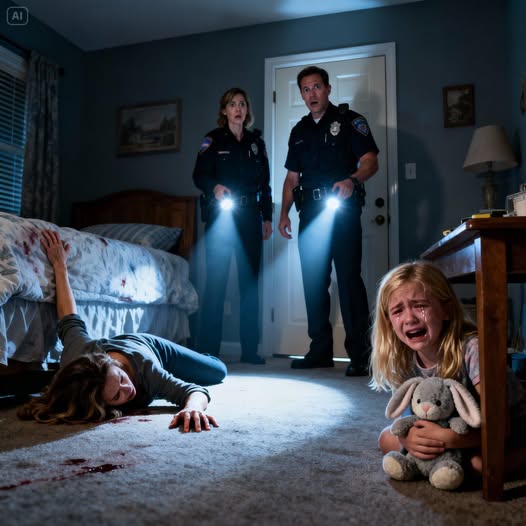
    Inside the quiet, deserted school building, seven-year-old Lily Parker was curled into a tight, miserable ball behind the farthest row of bathroom stalls, her knees pulled up to her chest. She had stayed late for tutoring that afternoon, but when she ventured out to retrieve her purple backpack from the hallway, she had seen him—a man she did not recognize, standing near the exit, watching her with a chilling, predatory focus. Driven by instinct, she had run. Now, every creak of the floorboards, every settling groan of the building, sent a painful jolt of adrenaline through her small body.

    Outside, the shrill wail of police sirens cut through the suburban silence. Two patrol cars arrived simultaneously, and officers, weapons drawn, burst through the front entrance, their eyes scanning the long, silent hallways for any sign of intrusion or danger.

    Meanwhile, Amanda Cole maintained her connection to the child, her voice the only lifeline tethering Lily to safety. “Lily, they’re almost there. Don’t make a sound, okay? Just stay put.”

    But then came the terrifying, chilling break in the routine—Amanda heard the unmistakable metallic screech of the bathroom door hinges as it creaked slowly open on the other end of the line.

    “Lily?” a deep, rough male voice muttered into the sudden silence.

    The dispatcher’s hands shook uncontrollably over the keyboard. She shouted an urgent command into her headset: “Officers, suspect is in the bathroom! Move! Move now!”

    The response was instantaneous. Within minutes, the officers had surrounded the restroom. They kicked the door open—a sound that echoed like a gunshot—and what they found made every heart in the building momentarily stop.

    The man was lying face down on the polished linoleum of the bathroom floor, completely unconscious. A heavy, industrial-sized metal pipe, likely pulled from a nearby janitorial cart, lay beside his prone body.

    Behind the farthest stall door, Lily was curled up, weeping softly but now breathing a relieved gasp. Officer Daniels, the first on the scene, gently nudged the stall door open, his weapon lowered, and crouched down to meet her gaze. “You’re safe now, sweetheart,” he whispered, his own voice thick with emotion.

    As medics rushed in to check the man’s vitals and confirm his identity, the investigation took a deeply disturbing turn. The man was quickly identified from his wallet as Thomas Gray, a former janitor who had been fired from Ridgeview Elementary just months prior due to documented inappropriate and erratic behavior.

    Amanda, still listening from the dispatch center, exhaled a shuddering breath of profound disbelief. She had handled countless emergencies, but the sheer malevolent intent behind this case made her skin crawl. The undeniable fact was that seven-year-old Lily’s incredible presence of mind—the courage to dial 911 and communicate in whispers while actively being stalked—had almost certainly saved her life.

    The immediate investigation, bolstered by the school’s security footage, provided the astonishing answer to how a seven-year-old girl had managed to subdue an adult male assailant. The cameras captured the moment Lily darted into the restroom, Thomas Gray just seconds behind her. When he forcefully tried to open the stall door, Lily had blindly grabbed the heavy metal pipe from the abandoned cleaning cart and, in a desperate, single act of self-preservation, had swung it with all her might. The strike had been precise and powerful, knocking him instantly unconscious.

    “Smartest, bravest little girl I’ve ever met,” Officer Daniels later confirmed in a press briefing that captivated the town. “She didn’t freeze. She didn’t panic. She fought back with everything she had.”

    When Lily’s parents finally arrived, her mother collapsed into tears of relief and sheer terror, clutching her daughter tightly as if to permanently anchor her to safety. The chilling surveillance footage and the details of the attack made the local news that night, leaving the entire community horrified by the close call—and simultaneously amazed by the child’s profound bravery. Yet, even as a fragile calm settled over the school, one haunting question remained for investigators: how long had Thomas Gray been meticulously planning this attack?

    The subsequent weeks were a jarring blur of intense media attention, necessary therapy sessions for Lily, and widespread community shock. Ridgeview Elementary immediately launched massive security upgrades, installing new surveillance systems, reinforcing all exterior entrances, and adding panic buttons in every classroom and secluded staff area.

    A month after the incident, Amanda Cole, the dispatcher whose calm voice had been Lily’s lifeline, met the little girl in person. She brought a small, fluffy teddy bear and hugged the child tightly. “You’re the reason I come to work every day, Lily,” Amanda told her, her voice thick with emotion.

    Lily smiled shyly, clutching the bear to her chest. “I was just scared,” she admitted.

    “You were scared—but brave,” Amanda replied, her gaze steady and unwavering. “That’s what matters most.”

    Thomas Gray was formally charged with multiple serious felonies, including attempted kidnapping, aggravated assault, and unlawful entry. During his preliminary hearing, prosecutors revealed the results of the investigation: Gray had been stalking the area for weeks, watching dismissal times, familiarizing himself with the school’s layout, and tracking teacher schedules. His plan had been deliberate, calculated, and malicious—but Lily’s quick, defensive action had ruined it instantly.

    The case became an immediate national reminder of the critical importance of teaching children how and when to use 911 in an emergency. Police departments across several states adopted Lily’s story as a core component of their school safety and emergency training programs.

    Today, Lily is ten years old. She still lives in the Ridgeview area and dreams of one day wearing a badge herself, aspiring to become a police officer. Her extraordinary story is frequently retold by first responders, who affectionately call her “the little hero who refused to be a victim.”

    And Amanda? She keeps a photograph of Lily’s small teddy bear prominently displayed on her dispatch desk—placed right next to the call log from that horrifying, pivotal day. Whenever the demanding nature of the job threatens to cause burnout, she looks at the photo and remembers a profound, lasting truth: one small, terrified whisper, backed by the refusal to surrender, can absolutely save a life.

  • The New Nurse Pulled Off a Miracle Saving a Man No Doctor Expected to Live, The Next Morning, A Team of Serious-Looking Visitors Arrived! and the Hospital Fell Silent

    The New Nurse Pulled Off a Miracle Saving a Man No Doctor Expected to Live, The Next Morning, A Team of Serious-Looking Visitors Arrived! and the Hospital Fell Silent

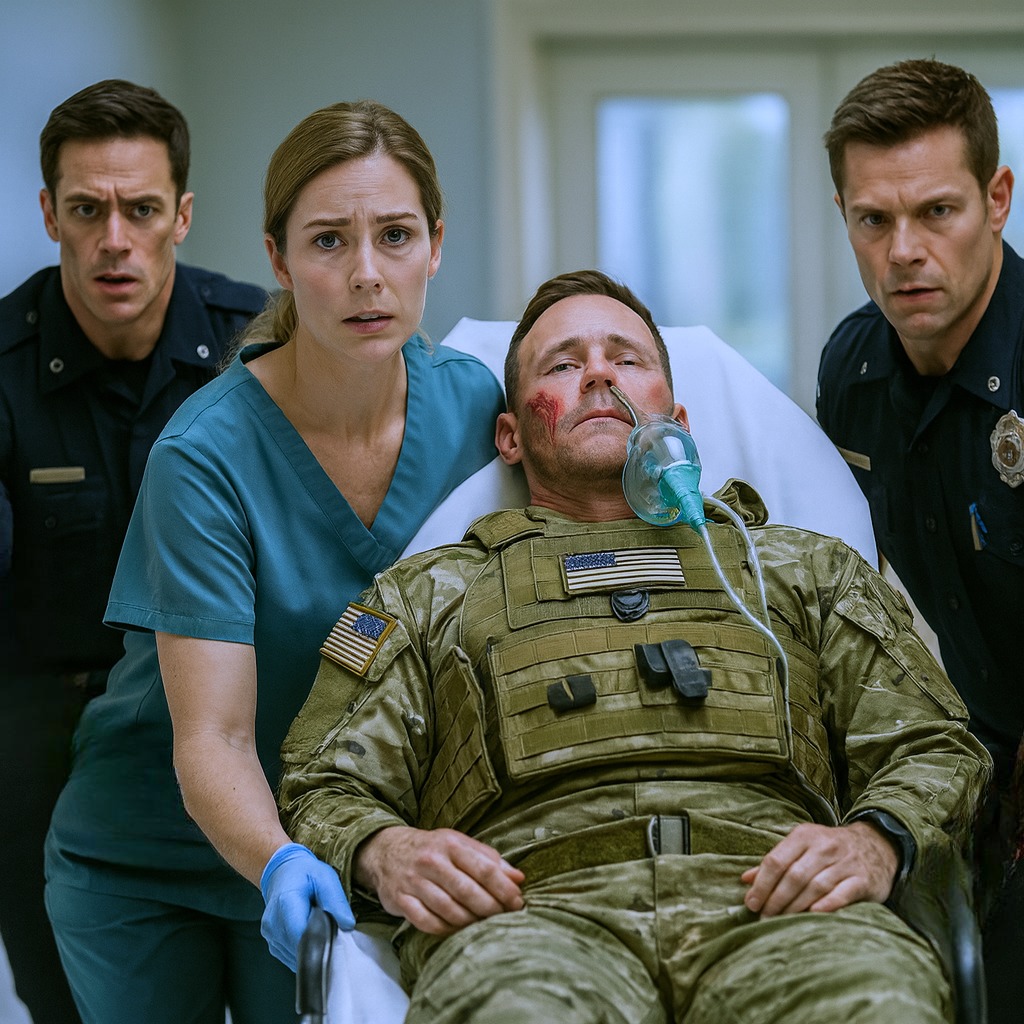
    The double doors of the ER blew open at three in the morning, and the chaos hit like a bomb. A stretcher came in hard, pushed by medics who already looked defeated. On it lay a man in his late thirties, his body riddled with holes. Twenty gunshot wounds, multiple calibers, multiple angles. The trauma chief took one look and barked, “No pulse. Massive blood loss. He’s not going to make it.” The room went tight and quiet in that way people get when they’re watching someone die.

    In the middle of that hesitation, one person moved. The new nurse. Badge: “N. Walters, RN.” First-year staff, barely a month on the job. She was already at the bedside, gloves on, eyes locked on the wrecked body in front of her. No panic. No shaking. Just that strange, controlled focus you only see in people who’ve done this under worse conditions.

    While the surgeon shouted orders and reached for the paddles, she spoke once, calm and flat. “If you cut blind, you’ll blow his artery and lose him before you start.” He shot her a look. “Step back, nurse.” She didn’t move. Her gaze had already mapped the pattern of entry wounds, noted the old scars, the sloppy past stitch work, the triangle of burns on his shoulder that only meant something to people who’d been in certain places.

    The monitor flattened. “He’s gone,” someone said. The surgeon called time. That should have been it. Instead, she pressed her palm over the man’s sternum, fingers cutting between his ribs, not doing CPR, not following any civilian protocol at all. The room watched, caught between outrage and morbid curiosity. Seconds stretched. Then the monitor chirped once. Then again. A thin, ragged rhythm crawled back onto the screen. The surgeon stared. “What did you just do?” She didn’t look up. “Bought you a few minutes. Use them.”

    Those minutes turned into hours. While the surgeon bounced between bays, she stayed with the SEAL—because that’s what he was, they learned quickly—a decorated operator under federal protection, now a bullet-riddled target who’d somehow refused to die. When his blood pressure crashed again and the transfusions weren’t holding, she read the labs once and said, “This isn’t just blood loss. His coagulation’s been suppressed. I’ve seen this before.” She dug into the bottom of the crash cart, pulled an unmarked vial she clearly wasn’t supposed to have access to, mixed a dose, and pushed it without hesitation. The anesthesiologist nearly choked. “That’s not in protocol.” The monitors answered for her. Pressure climbing, rhythm stabilizing, oxygenation improving. “What was that?” he asked. “Something they didn’t teach in nursing school,” she said.

    By sunrise, nine critical patients had come through. Nine were still alive. The hospital buzzed with the kind of rumor that spreads faster than lab results. The rookie nurse with no history on anyone’s radar had done what senior physicians swore was impossible. She just clocked out, walked past the reporters gathering outside, and went home to a bare apartment with no photos, one folded flag, and a single dog tag on the table. She picked it up, thumb over the engraved name—Sergeant Matthew Raines—and whispered, “I kept the promise. I stayed out.” Her phone flashed a missed call from an unlisted number. No message. Just a reminder that the past never actually disconnects.

    By mid-morning, the black SUVs rolled up to the ER. Badges flashed. Agent Donovan and Agent Keene introduced themselves, claiming some bland division title that didn’t match the way they scanned the room. “We’re here about Nurse Walters,” Donovan said at the front desk. “We just want to understand how a first-year nurse saved a Navy SEAL with twenty bullet wounds and no pulse.” The clerk shrugged. “Because she’s good?” Donovan gave a thin, humorless smile. “Because there’s no record of her existing under that name ten years ago.”

    They sat her in a break room that smelled like burnt coffee and antiseptic. “You were lead on nine trauma cases last night,” Donovan said. “I assisted,” she replied. “You used unapproved techniques, off-protocol interventions, and at least one unidentified drug.” She held his stare. “Protocols are written for average nights. Last night wasn’t average.” When he pushed harder—military background, training, who taught her what she did—she gave him almost nothing. “Experience,” was all she said. But outside that room, he was already pulling threads. Her fingerprints were missing from HR files. Old records were scrubbed. When he dug deeper, past firewalled military databases, he finally hit a redacted personnel entry: Fleet Marine Force corpsman, attached to special operations. Declared dead in 2010.

    The SEAL, Jason Cross, woke up the next day demanding to see her. “That nurse,” he rasped. “The one with the steady hands.” When Donovan questioned him, Jason didn’t mince words. “You’re wondering how she did it? I’ve seen medics like her in the field. They move like they’ve already watched too many people bleed out. They don’t freeze.” When Donovan hinted that Walters was once part of a classified field stabilization unit—a team that kept half-dead soldiers alive just long enough to squeeze intel out of them—Jason’s jaw hardened. “Yeah. I know that program. I know what it did to people. I also know she walked away from it. Maybe let her.”

    They didn’t. Orders came down to bring her in. Not for a thank you. For containment. Meanwhile, someone else was coming. Not Bureau. Contract cleanup. The kind of men who show up in vans with no plates and don’t carry arrest warrants. When they found her apartment, she was already watching them through the blinds. She didn’t panic. She grabbed a modified first aid kit and left by the alley.

    The confrontation happened in an old storage hangar on the edge of town. When the contractors arrived, thinking they’d cornered her, they ran into someone who knew how to choose ground, count footsteps, and control exits. She didn’t fight like a cop or a criminal. She fought like someone who’d been trained to keep other people breathing under fire and learned, eventually, to turn that training around. When the smoke cleared, two contractors were down, the others routed, and she was already moving Jason out the back with a flash drive in his hand. “Get this to Donovan,” she told him. “It proves they’re still running the project that killed my husband.” Then she disappeared again, leaving behind a burned name tag and a trail of questions.

    The drive cracked things open. Procurement trails, shell charities, covert medical stockpiles. A program called Field Stabilization Group—FSG—hidden under layers of patriotic nonsense and paperwork. Donovan and Keene raided a “donation warehouse” and found enough illegal pharmacology to support a small war. Walters met them there, stepping out from the shadows like she’d never really been gone. “You wanted the source,” she said. “Here it is. You can’t shut it down without understanding it.”

    Her testimony in a closed-door hearing wasn’t dramatic, just precise. She described how FSG had started as a desperate attempt to drag mortally wounded soldiers a few extra minutes toward a helicopter, then morphed into something uglier: stretching life just long enough to extract what command wanted, then deciding who counted as expendable. She told them about Matthew, the man who died pulling her out of a blast, and the promise she made to leave that world behind. “I disappeared because I couldn’t keep doing math on who gets to live,” she said. “I broke protocol last week for one reason: he was dying in front of me, and I could stop it. That’s it.”

    It didn’t magically fix the system, but it cracked it. Contracts were canceled. A few people lost careers they should’ve lost years ago. The machine didn’t vanish, but it got knocked off balance. Back at the hospital, they quietly reframed the Marine green sleeve they’d hung in the hallway. They added Matthew’s ring and a card: “For those who choose life before paperwork.”

    Jason showed up at Walters’ door with a small box of recovered personal effects—her ring, a photo of her and Matthew in desert light, a laminated scrap of map. He also brought an offer. “The board wants you back in the ER,” he said. “Not because you’re clean on paper. Because nine people are breathing who shouldn’t be.” She hesitated. “I broke the rules.” He nodded. “Yeah. You did. Now decide whether you want to be the reason someone else gets a chance to complain about it.”

    In the end, she signed the forms, not as a ghost or an asset, but as what she’d been all along: a nurse who happened to know what it meant to work under fire. Her first shift back wasn’t cinematic. A kid with a crushed hand. An old woman whose heart needed coaxing. A laborer with blood pressure through the roof. Ordinary emergencies. Necessary, quiet work. Near midnight, a multi-car crash call hit the intercom. The room shifted into high gear. Walters pulled on her gloves, stepped to her bay, and felt the familiar readiness roll through her—but this time, without the old dread. The ambulance doors flew open. As the gurney came in, she touched the dog tag at her collar and, for the first time in years, felt like the promise she’d made hadn’t been broken—it had just taken the long way around.

  • The Story of How a Waiter Learned a Harsh Lesson About Customer Service!

    The Story of How a Waiter Learned a Harsh Lesson About Customer Service!

    Shaquille O’Neal walked into La Lumiere looking like he’d come from the gym instead of Beverly Hills: worn sneakers, gray t-shirt, sweatpants. No jewelry, no entourage, no announcement. Just a giant man moving quietly through a room full of people who paid good money to be seen.

    The diners noticed him immediately—first because of his size, then because of the clothes. A few recognized him, but most just saw “someone who didn’t match the décor.” Crystal chandeliers, soft jazz, polished marble floors, and then him. Calm. Unbothered. Almost too comfortable for a place that thrived on presentation.

    Emma, the long-time waitress manning the reception desk, spotted him and instantly judged him. Her smile stayed professional, but her eyes narrowed with condescension.

    “Good evening,” she said, her tone dripping with fake politeness. “Are you sure you want to dine here?”

    Shaq didn’t flinch. “Yes, ma’am. Table for one.”

    Emma held his gaze a moment too long, then nodded as if granting him permission. She led him past the prime tables—those bathed in warm light, close to the music, filled with designer clothes and practiced laughter—and kept walking. Straight to the dim corner near the kitchen, where the smell of dishwater lingered.

    “This should suit your style,” she said, dropping the menu a bit too hard.

    Shaq gave her an easy smile. “Thank you.”

    She wanted a reaction—embarrassment, irritation, anything—and the lack of it irritated her more than any complaint could have.

    Around the room, people took notice. A young woman whispered to her date, “Why is she treating him like that?” An older couple, Mr. and Mrs. Carter, watched with growing displeasure. They’d been coming to La Lumiere for years and had never seen a server act so openly disrespectful.

    Emma circled back with a flourish, as if performing for an audience. She leaned over Shaq’s table.

    “Would you like me to explain the prices?” she asked loudly. “Our most expensive dish is $350.”

    Shaq glanced at the menu once, then handed it back. “I’ll take the filet mignon Rossini.”

    Emma blinked. She’d expected him to panic or backpedal—not casually order the priciest thing on the menu.

    “Are you sure?” she asked, letting sarcasm bleed through. “It’s… refined.”

    “It sounds great,” Shaq replied.

    She walked away, muttering to a coworker, loud enough for half the room to hear. “He’s just ordering it to show off. Wait until he sees the bill.”

    People exchanged looks. Some shook their heads. Others stared at Emma like they couldn’t believe she had the nerve.

    Shaq just sat there, relaxed, taking in the ambiance, occasionally nodding at the jazz band in the corner. His composure irritated Emma to the core. She ignored him on purpose, lingering at other tables, offering wine recommendations with sugary smiles. Every time she passed him, she made sure not to look his way.

    Twenty minutes went by.

    Mr. Carter whispered to his wife, “She’s trying to humiliate him. Shameful.”
    His wife nodded. “If the manager doesn’t step in soon, I will.”

    Lisa, the young entrepreneur, leaned to her friend. “He’s handling this better than I would. She’s lucky he’s patient.”

    Eventually, Emma returned with his food. She set the plate down harder than necessary.

    “This is what you ordered. Hope you can appreciate it,” she said.

    Shaq smiled. “Thank you.”

    “And if it’s too… sophisticated for your taste, we have simpler dishes,” she added, almost sweetly.

    “I’ll keep that in mind,” Shaq said.

    Emma turned away, satisfied she’d put him “in his place.” But the room had shifted. People weren’t admiring her confidence—they were watching her dig her own grave.

    Then the manager stepped out.

    Mr. Thompson moved quickly through the restaurant, scanning tables until he found Shaq. His face lit up with genuine recognition and horror that the VIP of all VIPs had been parked next to the kitchen.

    He bowed slightly. “Shaq, welcome to La Lumiere. We’re honored to have you. I’m so sorry for the delay—we didn’t know you were coming.”

    The restaurant fell dead silent.

    Emma froze. Her stomach dropped. Her face drained of color.

    Shaq?
    THAT Shaq?
    The global icon?
    The philanthropist?
    The businessman who owned more restaurants than she’d ever visited?

    Whispers rippled across the dining room.

    “That’s Shaquille O’Neal.”
    “He’s worth hundreds of millions.”
    “She treated him like some stray off the street…”

    Emma felt every pair of eyes burning into her. Mr. Thompson’s expression hardened as he looked between Shaq and the corner table.

    Shaq picked up his water, took a sip, then addressed Emma directly. His voice stayed calm, but the weight behind it was unmistakable.

    “Miss Emma,” he said, “what do you think customer service is about?”

    Emma’s voice trembled. “I… I didn’t know who you were.”

    Shaq shook his head slowly. “You shouldn’t have to know. Respect isn’t something you give based on appearance. It’s the baseline for everyone.”

    The words landed hard. Not just on her—on the entire room.

    People murmured in agreement. Some nodded. Others watched Emma with quiet disappointment.

    She whispered, barely audible, “I’m sorry.”

    Shaq didn’t gloat. He didn’t raise his voice. He simply said, “Every person who walks through those doors deserves dignity. Uniform or no uniform. Sneakers or designer shoes. Doesn’t matter.”

    The manager swallowed, furious and embarrassed. “Shaq… I’ll handle this immediately.”

    But Shaq raised a hand. “It’s not about punishment. It’s about learning.”

    Emma felt her throat tighten. Shame, regret, and the brutal clarity of hindsight hit her all at once. She knew this night would stay with her for the rest of her life—not because she embarrassed a customer, but because she’d exposed who she truly was.

    Shaq finished his meal in peace. When he stood to leave, he thanked the staff, nodded to the band, and shook Mr. Carter’s hand on the way out.

    The diners applauded—not because he was famous, but because he showed what real class looks like.

    Emma watched him leave, knowing she’d been given a lesson she couldn’t ignore: respect isn’t optional, and judgment has a price.

    She didn’t lose her job that night, but she lost her arrogance. And in its place, a hard truth settled in—one she’d carry long after the dining room lights dimmed.

  • A 9-year-old girl called 911 in tears, saying she and her little brother needed help, When responders arrived and uncovered the truth, the journal she would been quietly keeping for months became the key that changed everything

    A 9-year-old girl called 911 in tears, saying she and her little brother needed help, When responders arrived and uncovered the truth, the journal she would been quietly keeping for months became the key that changed everything

    The phone felt too heavy for nine-year-old Abigail Pierce, but hunger had a way of pushing fear aside. She’d practiced what to say for days, whispering the lines to herself in the dark. When the dispatcher finally answered, her breath hitched.

    “911. What’s your emergency?”

    “My name is Abigail. I’m nine. I haven’t eaten in four days. My little brother—he can’t stand up anymore.”

    Her voice cracked. She kept an eye on the gap under the bedroom door, terrified a shadow might appear.

    “Is an adult with you? Where are you?”

    “Apartment 4B, Pinecrest on Maple. My mom’s working a double. Her boyfriend was supposed to watch us, but he… he doesn’t feed us when she’s gone.”

    The operator’s tone softened. “You’re very brave, Abigail. I’m sending help. Stay with me.”

    She hurried back to the bedroom. Aiden lay curled on the bottom bunk, barely conscious, his five-year-old frame limp under a blanket that no longer warmed him. She brushed his sweaty hair back.

    “Help is coming,” she whispered.

    She didn’t have a key to the locked door. Richard always kept it that way when their mother wasn’t home. The operator paused at that, clearly understanding exactly what it meant.

    Then sirens echoed outside. Abigail stumbled to the window and pushed aside the curtain. Red and blue lights flashed across the dirty glass. Relief hit her so hard her knees almost buckled.

    “They’re here,” she sobbed.

    “Stay on the line, sweetheart.”

    A pounding on the door shook the apartment.

    “Police! Anyone inside?”

    “We’re locked in!” she cried. “Please!”

    The next moments blurred: the deadbolt splintering, officers rushing in, paramedics darting to Aiden. A woman knelt beside her, calm but alert.

    “I’m Detective Porter. Tell me what’s been happening.”

    “Richard locks the food,” Abigail said, trembling. “Sometimes he gives us half a sandwich. Sometimes nothing. He says we waste food.”

    Detective Porter’s jaw tightened. “When did you last eat?”

    “Monday.”

    It was Friday.

    “Where’s your mother?”

    “She works at the hospital. Richard says he feeds us good dinners. He lies.”

    A paramedic called for a stretcher. Aiden didn’t respond when they lifted him. Abigail grabbed the detective’s sleeve.

    “Wait—I need to get something first.”

    She ran to the bedroom, pulled up a loose floorboard, and retrieved a battered notebook covered in pencil drawings. She hugged it to her chest before handing it to the detective.

    “I wrote everything down. Dates. What he did. My teacher said journals can be important… so I made one.”

    Detective Porter flipped through the first pages and went still. Childish handwriting. Empty-fridge drawings. Notes about punishments. Entries about locked cabinets and “water-only days.” It was evidence more damning than any adult report.

    “You did everything right,” she said.

    At the hospital, Abigail stayed beside Aiden in the ambulance, sipping juice slowly while paramedics worked. She didn’t relax until they were both admitted. A few hours later, a nurse brought her into a small room on the pediatric floor. Abigail sat wrapped in a warm blanket, feeling floaty from fluids and exhaustion.

    Then the door burst open.

    “Abigail!”

    Her mother, Audrey, looked like she’d aged ten years. She dropped to her knees and hugged her tightly.

    “They said you were starving. How could that be? Richard always told me—”

    “He lied,” Abigail whispered. “He didn’t feed us.”

    Detective Porter stepped in, badge on her belt. “Mrs. Pierce, we have confirmed both children are severely malnourished. Your daughter kept a detailed journal.”

    She handed the notebook over. Audrey stared at the first entry through the plastic evidence bag. Her hands shook.

    “This can’t be real,” she murmured.

    “You didn’t listen,” Abigail said quietly. “When I told you we were still hungry, you said we already had seconds. Because Richard told you that.”

    The words landed like punches.

    Detective Porter’s phone buzzed. “Officers have located Mr. Tanner. He’s being taken into custody.”

    Abigail pulled her knees to her chest. “I want to see Aiden.”

    “You will,” the detective promised.

    The children were released into the care of their grandmother, Eleanor. Her small house felt like another planet—warm lighting, unlocked cabinets, the smell of real food. Abigail organized board games to calm herself. Eleanor brought snacks every two hours, just like the doctor recommended.

    “Is there some for Aiden?” Abigail always asked.

    “Always.”

    One afternoon, Detective Porter arrived with Dr. Melanie Winters, the court psychologist. While Eleanor and the detective reviewed photos from the apartment—the padlocked fridge, the cupboard with a combination lock, Richard’s notebook of lies—the children played quietly upstairs with Dr. Winters.

    Using dolls, Abigail demonstrated their routine: their mother leaving for work, Richard eating alone while they watched, the locked refrigerator. Aiden added softly, “He said if we told Mom, he’d know. And then no food for a whole week.”

    “But you did tell,” Dr. Winters reminded them gently.

    “I didn’t know what else to do,” Abigail said. “Aiden couldn’t get up anymore.”

    Neither child wanted to see Richard again. When asked about their mother, both hesitated. Trust didn’t rebuild overnight.

    Two weeks later, Abigail sat outside the courtroom for the preliminary hearing. Her notebook had been entered as evidence. She took the stand and answered every question clearly, describing timers that forced them to sit and watch Richard eat, describing “water days,” describing nights they cried themselves to sleep.

    Near the end, she risked a glance at Richard. His expression was pure, unfiltered hatred. It chilled her.

    Down the hall afterward, her mother rushed toward her.

    “I heard you did great. I testify tomorrow.”

    Abigail’s voice was flat. “Are you going to tell the judge the truth?”

    “I didn’t know, Abby. I swear I didn’t—”

    “You knew about the locks,” she snapped. “You didn’t see the fridge was locked? You didn’t see we were skinny? You didn’t see anything.”

    Her mother dissolved into tears.

    Detective Porter arrived later with news.

    “Richard pled guilty. Your testimony and your journal made the case unbeatable. He’ll serve a long sentence. You won’t have to face him again.”

    Abigail felt a quiet, tired relief.

    “And one more thing,” the detective added. “The local food bank wants to start a program in your name. Weekend food packs for kids who need help. They want to call it The Abigail Project.”

    Abigail blinked. “Will it help kids like us?”

    “That’s the whole point.”

    Months passed. Abigail and Aiden grew stronger. They still lived mostly with Eleanor, but weekend stays with their mother were slowly becoming routine. Audrey had moved to a new apartment, started therapy, and rebuilt her life piece by piece. Trust was growing, cautiously.

    One snowy December afternoon, Abigail finished her new journal—one filled not with hunger, but recovery. That evening, the judge approved the plan: the children would return home after Christmas.

    Back in her room, Abigail placed the old journal and the new one side by side. One held the record of what she survived. The other held what she was becoming.

    Tomorrow, she’d start a third—the first she’d ever write without fear.