Every year, hundreds of people lose their lives to something most would never expect—a common food that appears in daily meals for millions around the world. It doesn’t come with warning labels or look dangerous at first glance. In fact, for nearly 500 million people globally, it is a staple food, a dependable source of calories, and in many regions a vital lifeline.
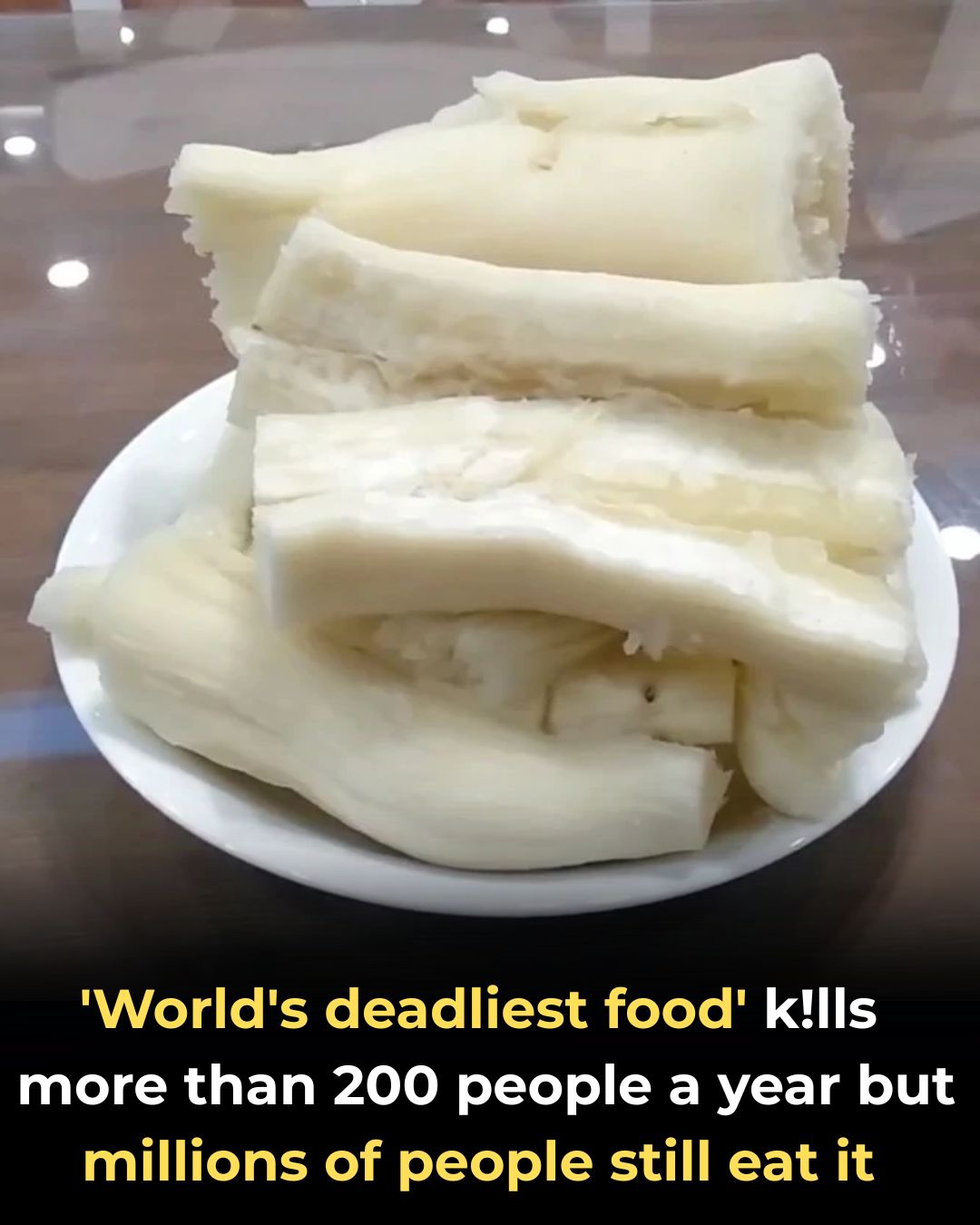
That food is cassava.
At first glance, cassava doesn’t appear threatening. It is a root vegetable that is widely cultivated, extremely resilient, and able to grow in environments where many other crops cannot survive. For generations it has supported communities across Africa, Asia, and South America. Its importance is enormous—it feeds families, strengthens local economies, and provides stability in areas where food security is often uncertain.
However, beneath its surface lies a hidden risk that has given it a troubling reputation.
Cassava naturally contains compounds known as cyanogenic glucosides. These chemicals serve as a defense mechanism for the plant, protecting it from pests and animals. But when cassava is eaten without proper preparation, those same compounds can break down and release hydrogen cyanide, a substance that is highly toxic to humans.
The danger is not merely theoretical—it happens every year. Global health estimates indicate that roughly 200 people die annually from cyanide poisoning connected to poorly prepared cassava. While the number may seem small compared to how widely the crop is consumed, it reflects a deeper issue tied to knowledge, resources, and necessity.
Cassava itself is not inherently dangerous. When it is processed correctly, it becomes a safe, nutritious, and widely enjoyed food. The risk arises when the preparation process—designed to remove toxins—is shortened, skipped, or misunderstood.
In many traditional cultures, cassava goes through a careful preparation method intended to eliminate its toxic elements. This process can include peeling, soaking, fermenting, drying, and cooking, sometimes over the course of several days. These steps are essential rather than optional. When done properly, they allow harmful compounds to break down and dissipate, turning cassava into a safe and valuable food source.
But during periods of hardship, those steps are often reduced or skipped entirely.
Times of famine, conflict, or severe poverty create conditions where people cannot afford to wait. When food becomes scarce, survival often takes priority over safety. In these situations, cassava—especially bitter varieties with higher toxin levels—may be eaten with minimal processing simply because there are no other options available. As a result, the risk of cyanide exposure increases significantly.
The consequences can be immediate or long-term.
Acute cyanide poisoning may cause symptoms such as dizziness, vomiting, stomach pain, and in severe cases death. But beyond these immediate dangers lies a more hidden threat—chronic exposure over time.
One of the most serious conditions associated with cassava consumption is a neurological disorder called konzo. This illness causes sudden and irreversible paralysis, particularly affecting the legs. It is most often seen among vulnerable populations, especially children and women in impoverished areas where cassava dominates the diet and protein intake is low.
Konzo does not develop gradually. It appears suddenly, often leaving individuals permanently disabled. Once it occurs, there is no cure. The damage is lasting, and its effects extend beyond individuals to families and entire communities.
The connection between cassava and konzo highlights an important reality: the danger is not only in the food itself, but in the circumstances surrounding its consumption. A diet heavily dependent on cassava, combined with nutritional deficiencies and insufficient preparation, creates conditions where health risks can emerge.
Despite these risks, cassava remains a staple food.
And that raises an important question—why do so many people continue relying on a food that carries such potential danger?
The answer is simple and rooted in reality: necessity.
Cassava is one of the most resilient crops on Earth. It grows in poor soil, survives drought conditions, and continues producing food even when other crops fail. For millions of people living in regions vulnerable to climate change and economic hardship, cassava is not a preference—it is a constant.
In many cases, it represents the difference between having food and having none at all.
The key, therefore, is not to avoid cassava but to understand it.
Education plays a crucial role in reducing the risks associated with its consumption. Communities that understand proper preparation methods are far less likely to experience poisoning. Techniques such as extended soaking, careful drying, and thorough cooking can greatly reduce cyanide levels and make cassava safe to eat.
Research and public health programs have also introduced improved processing methods that are both practical and accessible. These innovations aim to make detoxification faster and easier without sacrificing safety, allowing communities to continue relying on cassava while minimizing its risks.
At the same time, broader solutions are necessary.
Expanding access to a variety of food sources can reduce overdependence on cassava. Strengthening agricultural systems, improving economic conditions, and addressing poverty all help create environments where people are not forced to choose between hunger and risk.
The story of cassava is not one of contradiction—it is one of complexity.
It is both a life-sustaining crop and a potential hazard. It feeds millions while posing risks when handled improperly. It represents resilience, yet also highlights vulnerability.
Understanding that balance is essential.
When prepared with care and knowledge, cassava is not dangerous. It is nourishing, dependable, and deeply woven into the traditions and cultures of many communities. The real danger lies not in the plant itself, but in the circumstances that interrupt the practices that make it safe.
In the end, cassava reminds us of something broader.
Even ordinary things—foods that appear simple and familiar—can carry hidden risks. But with awareness, education, and the right conditions, those risks can be managed.
And what remains is what cassava has always been for so many people: a source of nourishment, stability, and survival.