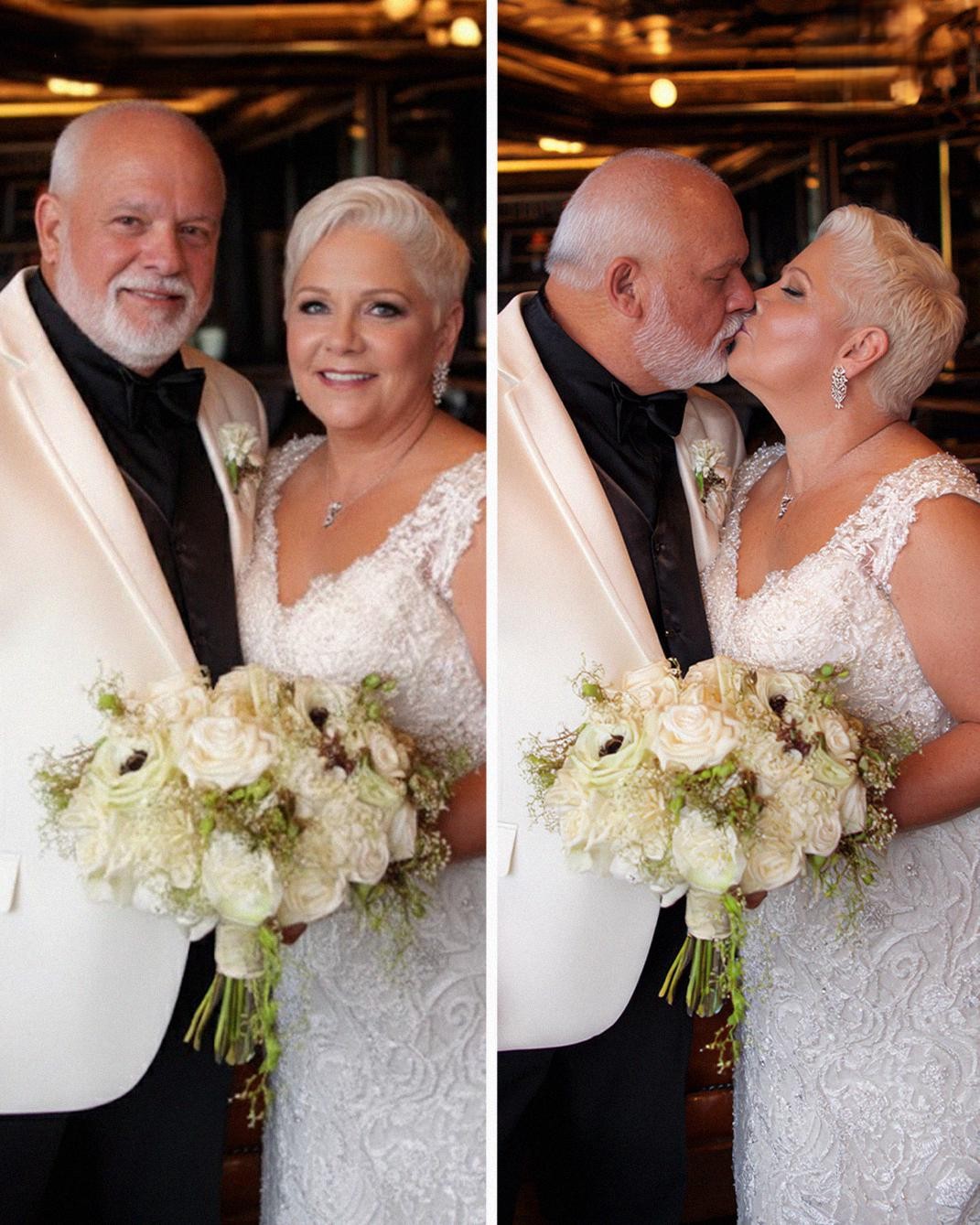
My mother had been gone for less than a month when my stepfather told me he was getting married.
The house still smelled like her. Rosemary oil lingered in the hallway. Her crocheted blanket rested over the back of the chair where she used to sit every evening. Her reading glasses lay on the coffee table beside a bookmark she would never use again. Cancer had taken her slowly over eight months, piece by piece—first her energy, then her hair, then her ability to pretend she wasn’t afraid.
Some days she told me stories from before I was born. Other days she stared out the window, lost somewhere I couldn’t reach. Near the end, she apologized constantly—for being tired, for needing help, for taking up space in a body that had turned against her. I held her hand and told her to stop, but she couldn’t. She was apologizing for dying.
Paul, my stepfather, had been there through all of it. So had Linda—my mom’s best friend since college. They coordinated hospital shifts, brought groceries, reassured me when I was exhausted. Linda used to squeeze my shoulder and say, “We’re a team. Your mom isn’t fighting this alone.”
I didn’t know then how wrong that was.
Four weeks after the funeral, Paul knocked on my apartment door. He didn’t sit down. He paced my small kitchen while the coffeemaker gurgled behind us, running a hand through his hair the way he always did when he was nervous.
“There’s something I need to tell you,” he said. “Before you hear it somewhere else.”
My heart sank. “What’s wrong?”
He exhaled. “Linda and I have decided to get married.”
The words didn’t make sense. “Married?”
“Yes.”
“To each other?”
“Yes.”
My face burned. “My mother died twenty-eight days ago.”
“I know this feels sudden—”
“Sudden?” I said. “She was Mom’s best friend. You were her husband.”
“Was her husband,” he corrected.
Something in my chest went cold. I pointed to the door. “Get out.”
He tried to explain. I didn’t listen. When the door closed behind him, I stood alone in my kitchen, shaking, while the coffeemaker beeped to say the pot was ready.
They married four days later.
The photos appeared online within hours—professional lighting, champagne-colored lace, hashtags about new beginnings and finding light after darkness. The flowers were peonies. My mother’s favorite.
That’s when I remembered her necklace. Heavy gold. Tiny diamonds along the clasp. She’d worn it in every holiday photo and promised it would be mine one day.
I called Paul.
“Where’s Mom’s necklace?” I asked.
Silence.
“The gold one. With the diamonds.”
“We had to make decisions about the estate,” he said carefully.
“Did you sell it?”
He didn’t answer. That was answer enough.
“You sold my mother’s necklace?”
“We needed funds for the honeymoon. It was just sitting in a drawer.”
“It was hers,” I said.
“Does it matter now?”
I hung up.
Two days later, I ran into Linda outside the grocery store. Rage doesn’t wait for invitations.
“Was it worth it?” I asked. “Selling her necklace?”
She laughed. “That old thing? We needed the money. Sentimentality doesn’t pay for honeymoons. Grow up.”
Then she checked her watch. “We leave for Maui in two hours. I don’t have time for the past.”
I stood there, stunned, until a gentle hand touched my arm.
It was Sara, a longtime family friend who worked at the hospital where my mom had been treated. She waited until Linda drove off.
“I’ve been meaning to call you,” she said quietly. “I didn’t know if I should.”
“What do you mean?”
“They were involved before your mom passed,” she said. “I saw them in the parking lot. Holding hands. Kissing. And I heard things.”
My stomach dropped.
“Once, Linda said she couldn’t wait until they didn’t have to keep up appearances anymore,” Sara continued. “Another time, Paul complained about being tired of playing nurse. They talked about trips they’d take once things were ‘settled.’ They laughed outside your mom’s room while she was asleep.”
My mother had called them her angels.
I went home numb. Grief hardened into something else—something focused.
I didn’t confront them. I didn’t explode. I called Paul and apologized.
“I’ve been unfair,” I said softly. “Grief made me irrational. Mom would want us to get along.”
He sounded relieved. “She would.”
“I’d like to bring you both a wedding gift,” I added. “After you’re back.”
They agreed immediately.
What they didn’t know was that while they were honeymooning, I was in the house.
The spare key my mom gave me years ago still worked. Paul’s laptop was unlocked. He’d never been careful. I copied emails, messages, photos, bank statements. Fourteen months of proof. The pawn receipt for the necklace—with Linda’s signature.
When I arrived at their house a week later, I carried a gift bag with tissue paper spilling out. Linda greeted me with a brittle smile. Paul hugged me and told me how proud my mom would be of my maturity.
They opened the bag together.
The binder inside did the talking.
Printed emails. Texts. Photos with timestamps. Bank records. Everything organized, labeled, undeniable. On top, a handwritten card: Copies have been sent to the estate attorney, Mom’s executor, and Paul’s employer. I believe in transparency.
Linda screamed. Paul went pale.
“You broke into our house,” she said.
“My mother’s house,” I replied. “Which she left to me.”
The fallout was immediate.
The estate was frozen. The necklace was recovered and returned within ten days. Paul’s employer launched an investigation after discovering he’d used work email to plan an affair while his wife was dying. Linda’s social circle evaporated.
They lost more than money and reputation. They lost the lie they’d been living in—that they were good people who’d found love in tragedy.
I didn’t feel victorious. I felt tired. But I’d kept a promise.
The necklace sits in my jewelry box now. Sometimes I take it out and remember my mother letting me try it on when I was little, smiling as it slipped over my hands.
“One day this will be yours,” she used to say.
It is now.
And every time I wear it, I remember that love doesn’t end when someone dies—but betrayal always reveals itself in the end.
Leave a Reply