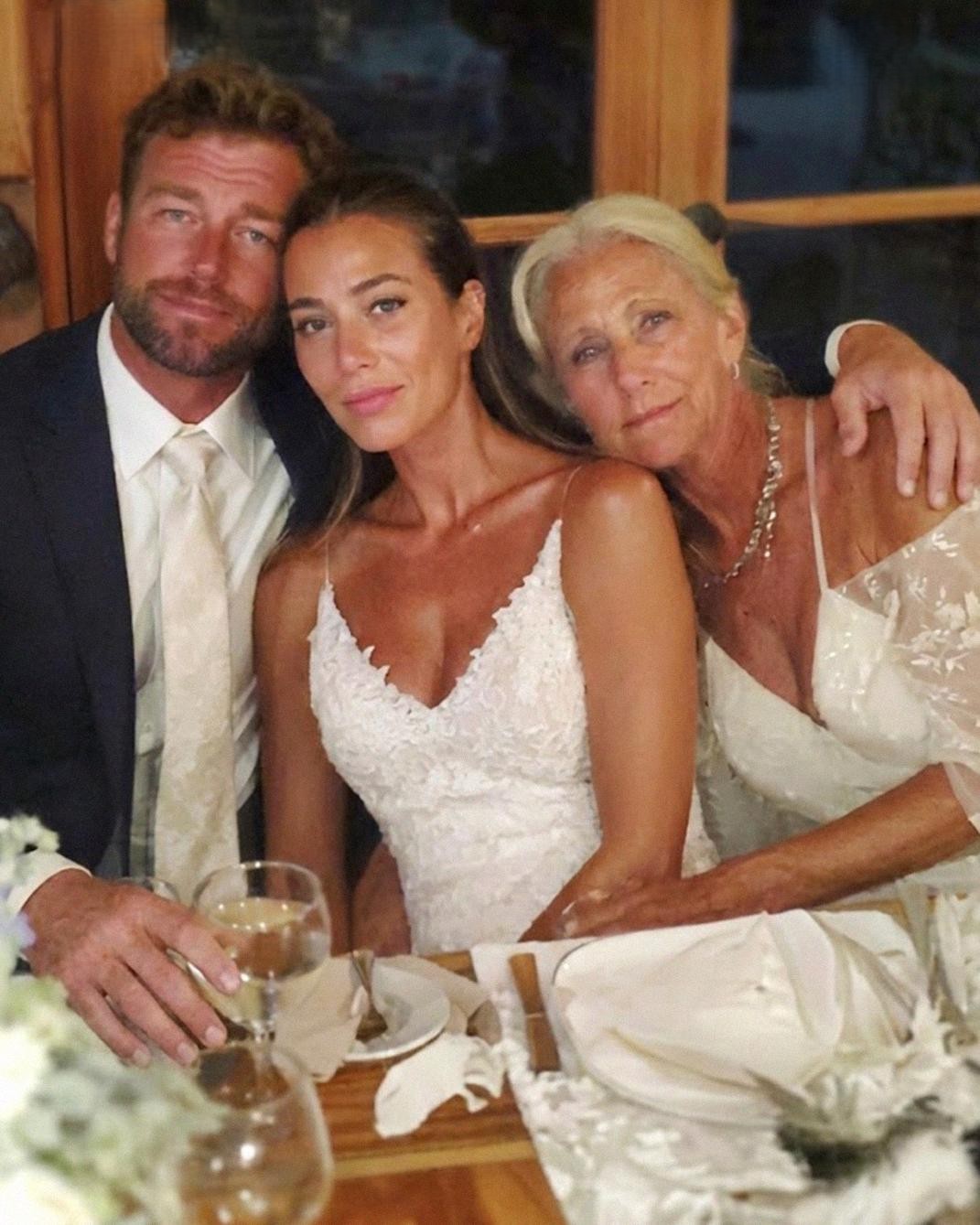
My name is Lily, and I am a woman who finds sanctuary in the details. I plan my life with the precision of an architect, from the color-coded spreadsheets of my weekly grocery lists to the backup routes I map out for every commute. When I got engaged to Ryan, I approached our wedding with the same meticulous rigor. I believed that if I could control every variable—the lighting, the menu, the seating chart—I could guarantee a day of unadulterated joy. What I failed to account for was the one variable that refused to be managed: my mother-in-law, Caroline.
Ryan is thirty-one, a gentle and brilliant tech professional with a heart of gold and a glaring blind spot regarding his mother. Their relationship wasn’t just close; it was a relic of a childhood that should have ended two decades ago. Caroline called him at 7 a.m. every single morning to ensure he hadn’t “died in his sleep.” She folded his t-shirts to ensure the corners were crisp and criticized the strength of my coffee as if it were a personal affront to his palate. At first, I tried to view her behavior through a lens of compassion. I told myself she was just a loving mother struggling with an empty nest. But as our wedding planning began, “sweet” curdled into “smothering.”
Caroline inserted herself into every decision. She critiqued my choice of lace, claiming it made me look “wider.” She fabricated allergies to my favorite flowers and insisted that I wear my hair up because “Ryan prefers it that way.” Whenever I brought these transgressions to Ryan’s attention, he would offer a patient, infuriating smile and tell me she was harmless. He encouraged me to let her feel involved, not realizing that she was slowly steamrolling my identity right out of my own wedding. By the time the big day arrived, she had inflated the guest list with over a hundred strangers from her bridge club and church groups, turning our intimate celebration into her personal gala.
The true escalation occurred on the morning of the wedding. While I was in the bridal suite, a cousin burst in with a look of sheer disbelief. Caroline had arrived, and she wasn’t wearing a standard mother-of-the-groom gown. She had showed up in a floor-length, shimmering ivory dress that could only be described as bridal. She paraded through the hall with the confidence of a queen, waving to guests and basking in the gasps of the crowd. When I saw her, my blood ran cold. Ryan winced and promised to talk to her, but as the ceremony began and he stood at the altar next to a woman who looked like his second bride, he remained silent.
The reception was a masterclass in overstepping. Caroline didn’t just attend; she hosted. She hovered over our sweetheart table, which was meticulously designed for just the two of us, and treated Ryan like a helpless child. But the final straw came during the formal dinner. In front of three hundred and fifty guests, Caroline rose from her assigned table, dragged an empty chair across the dance floor, and wedged herself directly between me and my husband.
“You two looked so lonely up here,” she announced loudly. “I can’t have my son sitting all by himself.”
I watched in stunned silence as she began cutting Ryan’s steak for him and dabbing the corners of his mouth with a napkin. I looked at Ryan, waiting for the “decent man” I married to stand up for us. Instead, he chuckled awkwardly and chewed his medium-rare meat, paralyzed by a lifetime of maternal enmeshment. It was in that moment of profound disrespect—sitting at my own wedding table and being physically separated from my husband by his mother in a white dress—that my “planner” brain shifted gears. I stopped being angry and started being strategic. I offered a calm, terrifyingly polite smile and decided to give Caroline exactly what she wanted: a spotlight.
While Ryan was busy with the traditional mother-son dance, I slipped away to find our photographer, Megan. I asked her for a specific favor. I wanted every single photo of Caroline’s “contributions” to be included in the digital slideshow that would play during the dessert hour. I wanted the photos of her photobombing our first kiss, the shots of her blocking the bouquet toss, and every frame of her sitting at our private table cutting Ryan’s food. Megan, sensing the righteous justice of the request, agreed with a conspiratorial nod.
As the ballroom lights dimmed for the presentation, the room grew quiet. The first few slides were the usual nostalgic fare—baby photos and engagement shots that drew warm “awws” from the crowd. Then, the wedding photos began to loop. The room’s atmosphere shifted instantly. There was Caroline, a shimmering pillar of ivory, standing exactly where the bride should have been. There she was, leaning into our intimate moments, her hand always on Ryan’s arm, her body always eclipsing mine.
The silence was broken by a stifled snort from a groomsman, followed by a ripple of giggles from the bridesmaids’ table. Within minutes, the entire hall was erupting in laughter. It wasn’t mean-spirited at first, but as the sheer absurdity of her behavior was projected in high definition, the guests couldn’t contain themselves. People were wiping tears of mirth from their eyes as they watched the “third person” in our marriage take center stage. The final slide drove the point home with a simple caption: “True love can survive anything… even a third person in the photo.”
The room exploded into applause and hooting. Caroline, who had lived for attention all her life, suddenly found that the wrong kind of attention was unbearable. Her face shifted from ivory to a deep, humiliated crimson. She stood up, muttered a few words about “poor taste,” and fled the room.
Ryan sat frozen, finally seeing the reality of the situation through the eyes of three hundred observers. For the first time, he didn’t laugh it off. He looked at me, and I saw a flicker of genuine understanding. He realized that his “harmless” mother had turned our sacred day into a farce. He didn’t rush after her immediately; he stayed by my side, took my hand, and laughed—a real, relieved laugh. “I guess I deserved that for not stopping her,” he admitted.
He eventually went to find her, and when they returned ten minutes later, the dynamic had fundamentally changed. Caroline looked humbled, her makeup smudged and her shoulders slumped. Ryan led her to me and, in a steady voice, told her that while he loved her, our marriage required respect and boundaries. It was the first time he had ever drawn a line in the sand. Caroline, stripped of her excuses by the sheer weight of public opinion, offered a quiet, genuine apology.
The rest of the night was the celebration I had originally planned. Without the hovering presence of a third party, Ryan and I finally got to be the center of our own story. We danced until the DJ played the final song, and as I sat in a velvet chair with my heels kicked off and my head on Ryan’s shoulder, I realized that my planning hadn’t failed. I had simply planned for a wedding, but I ended up securing a marriage. I had taught my mother-in-law that I wouldn’t be silenced, and I had taught my husband how to choose me. It wasn’t the predictable day I had mapped out on my spreadsheets, but as we toasted with the last of the champagne, I knew it was exactly the beginning we needed.