They tell you weddings are supposed to heal old wounds, stitch families back together, turn messy histories into something soft and ceremonial. Mine did the opposite. Mine ripped everything open and forced the truth into the light.
I never thought I’d live long enough to watch my daughter marry my ex-husband. And I definitely didn’t think the person who would stop it would be my son, standing in a tux with a microphone, turning a reception hall full of polite smiles into dead silence.
To understand how we got there, you have to understand where I came from.
I married Mark at twenty because that’s what was expected. Not “expected” in the romantic sense—more like scheduled. Our families were old-money, country-club, charity-gala people. The kind who traded holiday cards with professional photos and treated appearances like currency. Mark and I grew up orbiting the same events, the same vacations, the same silent rules. By the time we were adults, the marriage felt less like a choice and more like the next item on a list our parents had been writing since we were children.
My wedding dress was designer, hand-picked by my mother, adjusted to fit the image she wanted. I smiled for cameras I didn’t invite. I said vows I meant in the only way I knew how back then—because I’d been taught that commitment was duty and discomfort was normal.
Rowan was born the same year we married. Caleb followed two years later. We built the life we were supposed to build: manicured lawn, tasteful décor, dinner parties, charity auctions, an annual holiday photo that got mailed like proof we were doing everything right. On the outside, we looked polished. Inside our walls, we were slowly suffocating.
The cruel thing wasn’t screaming or fighting. It was the silence. We didn’t argue because arguing would imply something was wrong, and something being wrong would become a story, and stories in our circles were dangerous. So we learned to swallow resentment like it was manners. We learned to smile through strain. We learned to pretend we were fine until we didn’t even know what fine looked like anymore.
After seventeen years, we divorced with less drama than a PTA meeting. No affairs, no screaming matches—just paperwork and exhaustion. Even our parents’ outrage was carefully managed behind closed doors. When it was done, I felt something close to relief, and I hated myself for how much I needed it.
Five years later, I met Arthur.
Arthur wasn’t from my world. That was part of the attraction. He was a high school teacher with a quiet charm, divorced, raising three kids, the kind of man who talked about poetry and old cars instead of social status. He felt grounded, imperfect in a way that was human, not scandalous. With him, I didn’t have to perform. I didn’t have to be the version of myself that fit into photographs.
It felt like a new life. It also moved too fast.
We married quickly, and for a few months I told myself I’d finally found something real. Then the energy shifted. Arthur didn’t explode or cheat. He simply withdrew. He stopped planning dates, stopped talking about the future, stopped reaching for me in ways that made me feel chosen. It was like he’d gotten what he wanted and didn’t need to try anymore.
After six months, we ended it. Again, no drama—just a quiet unraveling. I told people it was mutual because that was easier than admitting I felt dismissed. I filed it away as a mistake, a second chapter that didn’t work out. I assumed we’d never cross paths again.
Then, two years later, Rowan sat me down and said she was in love.
She was twenty-four, brilliant and ambitious, already climbing fast in a competitive marketing firm. Rowan didn’t ask permission; she informed you of her decisions like they were already finalized. When she said she was dating someone serious, I smiled on instinct, ready to play the supportive mother.
Then she said his name.
Arthur.
For a second, I didn’t understand the words. Like my brain refused to accept the shape of them. My ex-husband. My second ex-husband. The man I’d married for half a year. The man who was sixteen years older than my daughter.
I tried to speak, but Rowan cut me off with a sentence that landed like a knife: either I accepted it, or she’d cut me out of her life.
I should have fought harder. I should have told her it was inappropriate, unhealthy, predatory. I should have asked what she was running toward and what she was running from. But the fear of losing my daughter—after losing my first marriage, after losing my second—made me fold.
So I lied.
I told her I supported her.
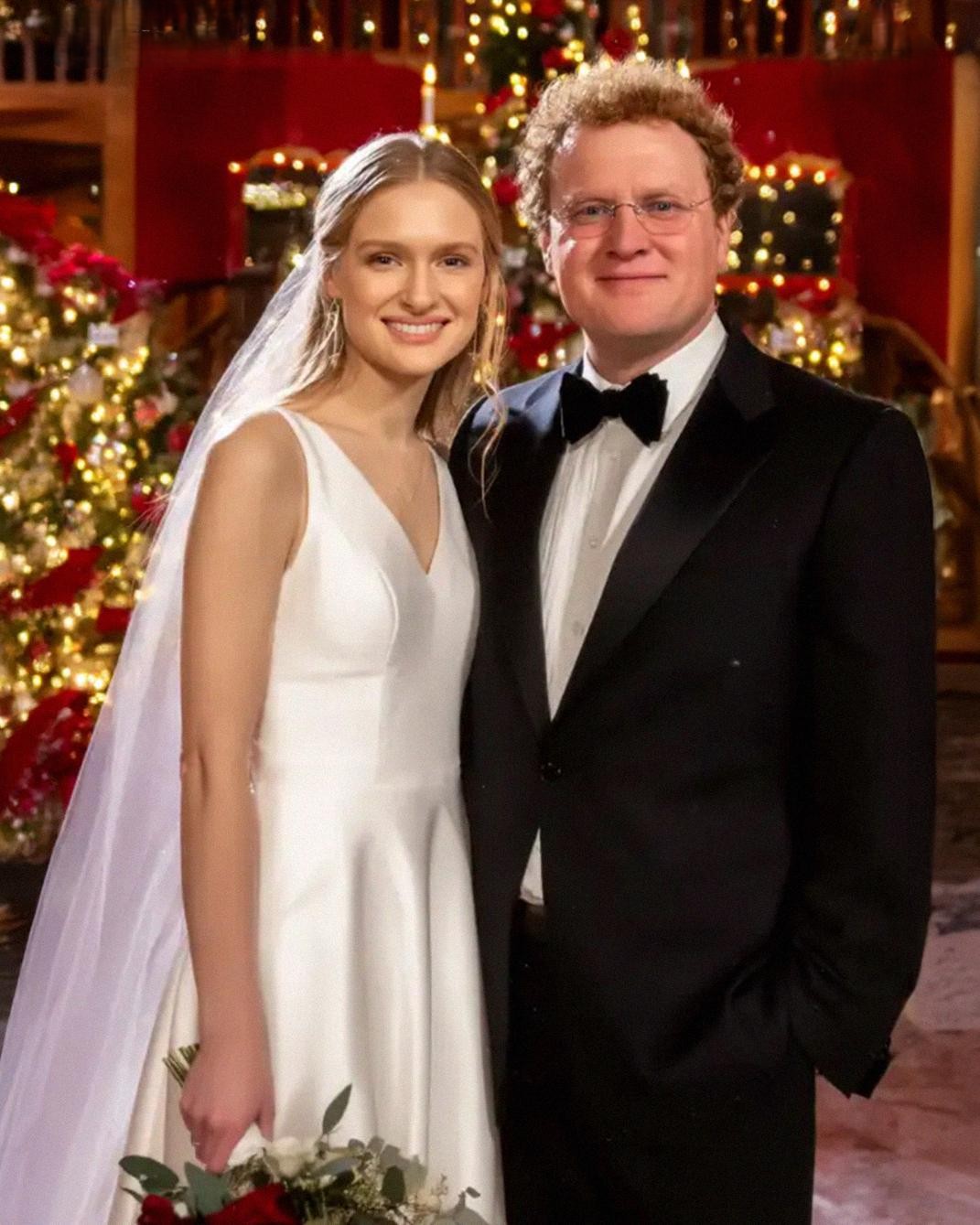
A year later, I stood in a venue glowing with candles and eucalyptus garlands while soft jazz floated through the air. I watched my daughter in ivory walk down the aisle toward Arthur, and I forced my face into something that resembled pride. I posed for photographs. I raised a champagne flute. I played my part so well I almost convinced myself I was fine.
Almost.
Then Caleb found me.
Caleb was different from Rowan—steady, practical, careful in a way that made him seem older than his years. At twenty-two, he was already building a small tech startup and still found time to call his grandparents every Sunday. He wasn’t dramatic. So when he grabbed my arm and said, “Mom, we need to talk,” my stomach tightened.
He didn’t drag me off in a scene. He just guided me out to the parking lot far enough that the music and laughter blurred into a muffled background.
“What is it?” I asked.
He pulled out his phone and opened a folder. His voice was low and controlled. “I waited until today because I needed everything confirmed. I hired a private investigator.”
I stared at him like he’d lost his mind. “You did what?”
“I didn’t trust Arthur,” he said. “Something’s always been off about him. The way he talks around details. The way Rowan started isolating. It reminded me of how things ended when you were married to him.”
Then he showed me the documents. Not gossip. Not screenshots. Court records. Financial filings. Investigative summaries. Arthur had filed for private bankruptcy two years before meeting me and never disclosed it. There were defaulted business loans, credit accounts in collections, unpaid back taxes. A lawsuit from his ex-wife describing years of hidden money, missed alimony, and patterns of manipulation.
Caleb looked sick with anger. “He targets women with money. Rowan has your name and connections. He’s using her.”
My mind flashed back to my short marriage with Arthur—how he’d hesitated when I insisted on a prenup. How he’d called it unromantic. How I’d told him, flat and calm, that if love was real, paperwork wouldn’t scare him. He signed it, but something in him cooled after that. Soon after, he began to disappear from the relationship without ever leaving the house.
Caleb squeezed my hand. “We have to tell her.”
“She won’t believe us,” I whispered. “Not privately. Not when he’s in control.”
Caleb’s expression didn’t change. “Then we make it public.”
I walked back into the reception feeling like I was carrying a bomb under my ribs. The room was warm, cheerful, oblivious. Rowan sat beside Arthur glowing with happiness that suddenly looked fragile to me. Arthur wore the confident smile of a man who thought the story was already written.
Caleb stepped onto the small stage, took the microphone, and smiled like he was about to give a sweet toast.
“I want to congratulate my sister and Arthur,” he began, voice steady. “Marriage is built on trust and honesty. So tonight, I want to toast to honesty.”
A few laughs. A few clinks of glasses. Arthur shifted in his seat.
Caleb continued, polite as a knife. “Arthur, how’s your ex-wife? Is she still waiting for those alimony checks?”
The laughter died in the air.
Arthur’s face drained of color so fast it was almost impressive.
Caleb didn’t pause. “Or are you still tied up in litigation? With the lawsuits? The unpaid debts? The bankruptcy you never mentioned?”
Rowan’s smile collapsed into confusion. The room went quiet, the kind of quiet that makes you hear the air conditioning.
Caleb held up his phone, turning the screen outward. “These are public legal records. Filed years before he met Rowan. Years before he met our mother. He just didn’t think anyone would look.”
Then he looked directly at Rowan, voice softer but sharper. “You didn’t know. I know you didn’t. He’s good at hiding things. He tried it with Mom too, but when he realized he couldn’t touch her finances because of a prenup, he moved on.”
Arthur finally spoke, reaching for charm like a lifeline. “It’s complicated, my love.”
Rowan stood up slowly, her hands shaking. “Is it true?” she asked, staring at him like she didn’t recognize his face anymore.
He didn’t answer. Not really. He fumbled, tried to minimize, tried to redirect. He kept saying “complicated” like it was a spell.
Rowan’s voice went flat. “No. It’s not.”
She turned and looked at me with horror blooming across her features as everything rewired in her mind at once. Then she walked straight into my arms, and I held her as she shook, and we left her wedding together.
Behind us, the reception broke apart like glass. Guests stood, whispered, left. Arthur tried to follow, but there was nothing left to chase except the consequences.
By morning, Rowan had filed for an annulment on grounds of fraud. The marriage barely had time to exist on paper before it ended.
In the weeks that followed, she moved back in with me temporarily. We talked like we hadn’t talked in years—not polite conversations, not strategic ones, but real ones. We talked about my marriages, her choices, the pressure we’d both swallowed our whole lives. We talked about how easy it is to mistake intensity for love when you’ve been raised to mistake performance for stability.
One night over coffee, Rowan asked quietly, “Did you love him?”
I thought about it longer than I expected.
“I loved who I thought he was,” I said. “But I think I mostly loved the quiet he promised me. Not him.”
Rowan nodded once, eyes red. “Same.”
Caleb never said “I told you so.” He didn’t need to. His work spoke for him. He’d trusted his instincts, gathered proof, and did the one thing Rowan couldn’t ignore: he placed the truth in the open where Arthur couldn’t twist it in private.
Arthur disappeared after that. No grand apology. No fight. Just a man backing away from the wreckage once the lights were turned on.
Rowan started therapy. Took a solo trip. Rebuilt her confidence piece by piece. One evening, she told me, “I don’t know what’s next, but at least I know who I am again.”
And for the first time in a long time, I believed her.
Leave a Reply