The heavy, rhythmic thud of a shovel hitting dirt is a sound you never forget. You think you’ve hit rock bottom when you stand at a gravesite, watching the mahogany casket containing your mother be lowered into the earth. You think that’s the end of the descent. My mother, Laura, was the kind of woman who hummed while she wrapped Christmas gifts and spent her Saturday mornings kneeling in the garden, coaxing tulips from the stubborn soil. Then came the car accident—the sudden, violent rupture of a Tuesday afternoon—and she was gone.
I was thirty years old, and I thought the worst thing I would ever have to endure was the sight of my father, Charles, collapsing into his chair as the police officer delivered the news. I thought the worst thing was the hollow silence of our family home. I was wrong. Rock bottom has a basement, and I found it eight days after the funeral.
In the week following the accident, our house was a revolving door of casseroles and performative grief. The loudest mourner was my mother’s sister, Aunt Corrine. She was a whirlwind of dramatic sighs and “we’ll get through this” promises. Even through the haze of my own shock, something about her felt staged. I remember sitting at the kitchen table three days after we buried Mom, watching Corrine’s hands. Her nails were a fresh, glossy pink.
“I had to redo them, Tess,” she whispered, catching my stare. “I chipped one while I was hugging everyone at the service.”
I didn’t answer. I just watched her move through my mother’s kitchen like she was already measuring it for new curtains. I didn’t realize then that she was doing exactly that.
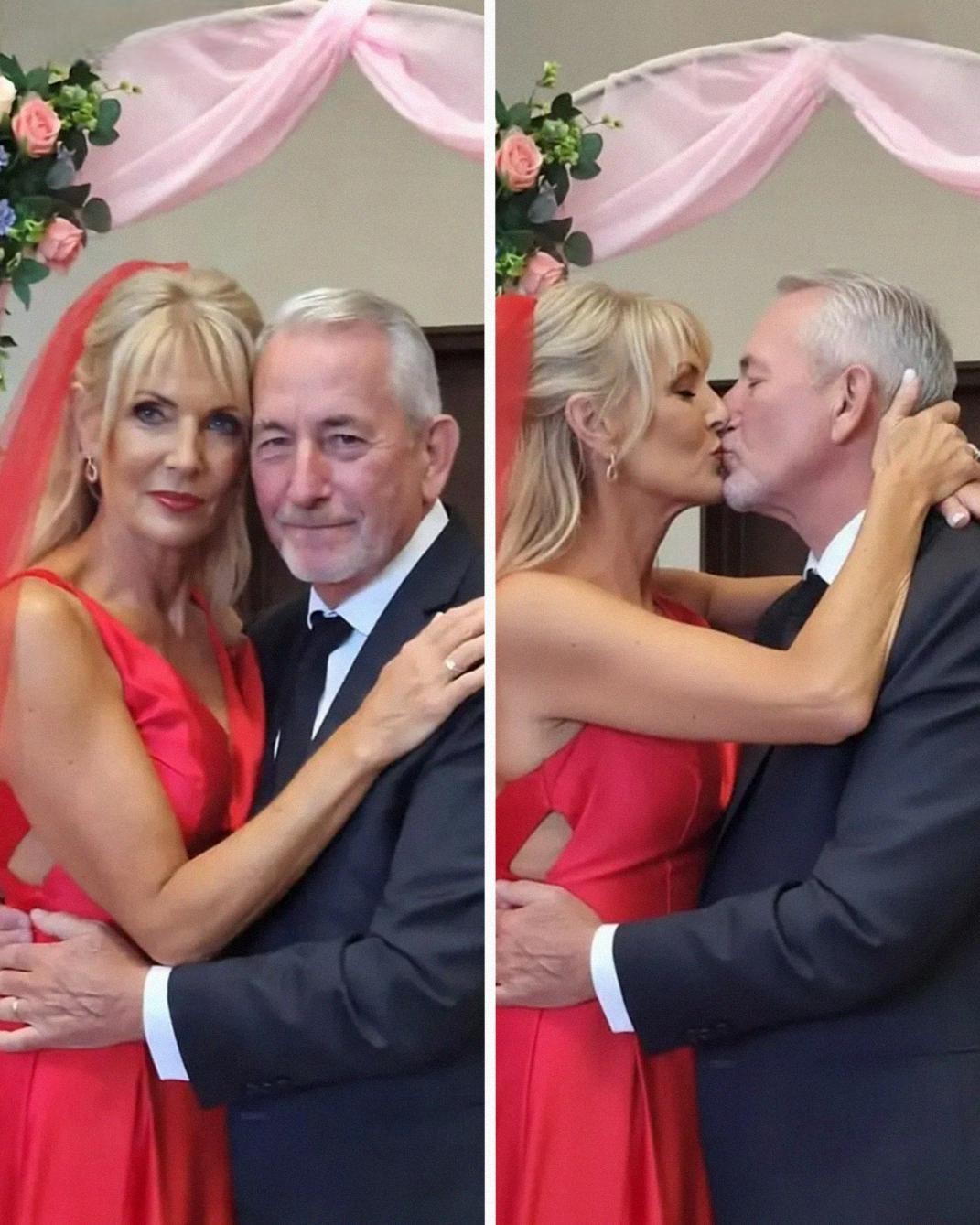
Eight days after my mother’s burial, I stood in the hallway of my childhood home and watched a rental company set up forty white folding chairs in the backyard. There was a florist arranging eucalyptus centerpieces and a caterer uncorking champagne. My father was in his bedroom, pinning a boutonniere to a suit he hadn’t worn in years.
“Is this real?” I asked him, my voice trembling. “Dad, it’s been eight days. Mom isn’t even… the grass hasn’t even grown back over her.”
“It just happened quickly, Tessa,” he said, refusing to meet my eyes. “Corrine and I… we found comfort in each other. Let’s not dwell on the details today.”
The “details” were the life I had known for thirty years being incinerated in real-time. I walked into the backyard and saw Corrine directing a gardener to rip out the tulips Mom had planted just last spring.
“They’ll look messy in the photos,” Corrine said airily. When I protested that they were Mom’s, she looked at me with a chilling lack of empathy. “Your mother made this family hard to live in, Tessa. We’re fixing that now.”
I retreated to the side of the house, my stomach churning. I was still wearing black, a stark contrast to the festive sundresses of the guests who were starting to arrive. These were people who had known my parents for decades, yet they were nodding and smiling, murmuring platitudes about how “God brings comfort in surprising ways.”
I felt like I was losing my mind until I saw Mason. Mason was Corrine’s nineteen-year-old son—my cousin. He was a quiet, observant boy, and today he looked physically ill. He caught my eye and gestured toward the shadows behind the garden shed.
“Tessa,” he whispered, his voice cracking. “I can’t let them do this to you. Not without you knowing.”
“If you’re going to tell me they’re just ‘healing,’ Mason, please don’t,” I snapped.
“It’s not that,” he said, glancing nervously toward the wedding music starting to play. “That ring on my mom’s finger? She showed it to me last Christmas. She told me Charles had already picked it out. She said it was their ‘real beginning.’”
The world didn’t just tilt; it shattered. Last Christmas, my mother was alive. She was healthy. She was laughing. While she was baking sugar cookies and planning our family holiday, her husband and her sister were picking out engagement rings.
“Are you sure?” I breathed.
Mason pulled out his phone. “I took a photo of the card in the jewelry box back then. It had the order number on it. Ridgeway Jewelers.”
I didn’t stay for the vows. I didn’t wait for the “I dos.” I grabbed my keys and drove. My mind was a white-hot blur of betrayal. When I walked into Ridgeway Jewelers, the chime above the door sounded like a mocking laugh. I gave the clerk the details Mason had provided.
She pulled up the digital record and turned the screen toward me. There it was: Charles’s name, his phone number, and the purchase date—December 18, 2025. Two months before the accident. The note attached to the order read: For our real beginning.
I snapped a photo of the screen. I didn’t need a paper copy; the truth was now etched into my phone and my soul.
When I returned to the house, the “celebration” was in full swing. My father and Corrine were dancing on the patio, right over the spot where the tulips used to be. The air smelled of expensive lilies and cheap deception. Someone handed me a glass of champagne, assuming I wanted to offer a toast.
I walked to the center of the yard. The music faded as people noticed the look on my face. I raised the glass, but I didn’t look at the guests. I looked straight at my father.
“Eight days ago,” I said, my voice carrying across the silent lawn, “I buried my mother. Today, I’m standing in her backyard watching her sister wear a ring that my father bought while my mother was still alive.”
A collective gasp rippled through the crowd. I saw Mrs. Dobbins, our neighbor, put her hand over her mouth. My father’s face went from pale to a deep, ugly purple.
“Tessa, that’s enough,” he hissed, stepping toward me. “You’re grieving. You’re confused.”
“I’m not confused, Dad. I have the receipt from Ridgeway Jewelers. December 18th. I know this wasn’t ‘sudden comfort.’ I know you were planning this while Mom was wrapping your Christmas presents.”
Corrine’s bridal glow vanished, replaced by a sharp, predatory sneer. “How dare you embarrass us? This was supposed to be a day of healing!”
“You embarrassed the memory of your own sister,” I countered. “I’m just telling your guests the truth.”
I set the glass down on a table, the crystal clinking against the wood in the deafening silence. I didn’t wait for a rebuttal. I walked into the house, went to the garage, and began packing the only things that mattered—my mother’s vintage dresses, her handwritten recipe box, and the photo albums she had carefully curated over a lifetime.
My father found me there an hour later. The guests had scrambled away, the “beautiful day” ruined by the sunlight I had thrown on their secrets.
“You humiliated us,” he said quietly.
“No,” I replied, zipping a suitcase. “I revealed what you tried to bury. You could have divorced her. You could have let her keep her dignity. Instead, you let her live a lie until the day she died.”
“We were going to tell you eventually,” he muttered.
“After the wedding photos were posted? After you’d convinced everyone of your ‘tragic romance’? My mother was the best part of you, Dad. Now that she’s gone, you’re just a stranger in a cheap suit.”
I walked past him for the last time. In the driveway, I saw the pile of uprooted tulips Corrine had discarded like trash. I knelt, ignored the dirt staining my clothes, and salvaged a few bulbs that still looked viable.
I drove to the cemetery. The sun was setting, casting long, golden shadows over the headstones. I knelt by my mother’s grave and tucked the bulbs into the earth. It wasn’t a professional garden, and it wasn’t a grand gesture, but it was honest.
Mason appeared a few minutes later, having followed me in his own car. He didn’t say much; he just stood by me in the quiet.
“They think they won,” I said, looking at the fresh mound of earth.
“They didn’t,” Mason replied. “Everyone knows now. They have to live with that.”
I realized then that I wasn’t angry anymore. The anger had been replaced by a cold, clear resolve. My father and Corrine could have the house, the ring, and their tainted marriage. But they couldn’t touch the parts of my mother that lived in me. I had her resilience, her memories, and her truth.
As I drove away from the cemetery, leaving that house and that life behind, I knew the tulips would come back in the spring. They always did. And for the first time since the knock on the door, I could finally breathe. I wasn’t just surviving the wreckage; I was leaving it behind.
Leave a Reply