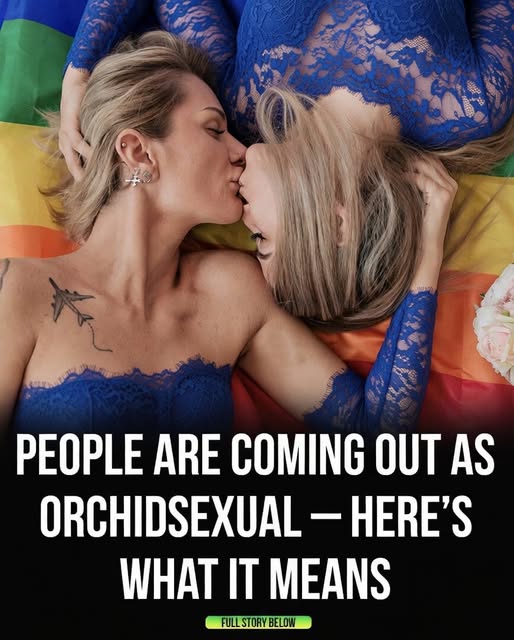
The landscape of human identity is undergoing a profound linguistic expansion, moving beyond the broad strokes of traditional categorization into a world of nuanced, self-defined terminology. As our collective understanding of sexuality deepens, so too does the vocabulary we use to navigate it. In recent years, the digital sphere has become a greenhouse for “microlabels”—highly specific terms like graysexual, neptunic, and aegosexual—that aim to capture the subtle complexities of the human experience. While critics often argue that this proliferation of labels is becoming overly granular or confusing, proponents suggest that these words provide an essential service: they offer a name to experiences that have existed in silence for generations. One of the latest terms to emerge from this evolving conversation is “orchidsexual,” an identity that is sparking a significant dialogue about the distinction between attraction and desire.
To understand orchidsexuality, one must first look at the broader asexual spectrum (often referred to as the “Ace” spectrum). According to the working definitions within various identity-focused communities and wikis, orchidsexual describes a sexual orientation in which an individual experiences sexual attraction toward others but lacks any desire to act on that attraction or engage in sexual relationships. For an orchidsexual person, the “spark” or the recognition of someone’s sexual appeal is present and real, yet it does not translate into a physiological or emotional urge to pursue sexual activity. In some cases, there may even be a distinct aversion to the act itself. It is a state of being that exists in the space between traditional allosexuality (experiencing attraction and desire) and asexuality (experiencing little to no attraction).
This distinction is the cornerstone of the orchidsexual identity and is what separates it from more familiar concepts like celibacy or abstinence. Celibacy is a conscious, often situational choice—a decision to refrain from sexual activity despite having the desire to engage in it, usually for religious, personal, or health-related reasons. Orchidsexuality, by contrast, is described as an intrinsic orientation. It is not a “choice” to avoid sex; rather, it is the natural absence of a desire for it, despite the presence of attraction. It is the difference between being on a diet and simply not being hungry for a specific meal, even if that meal looks aesthetically pleasing.
The term itself is relatively new to the public lexicon, having been coined in 2021 by a FANDOM user known as Ringotheman. Along with the name came a visual representation in the form of the orchidsexual pride flag. This flag features a series of horizontal stripes in pink, gray, purple, and black, each carrying a specific symbolic weight. The pink represents the presence of attraction; gray acknowledges the identity’s place within the asexual spectrum; purple symbolizes the concept of sexual relationships; and black represents the lack of desire or the “unwanting.” A simplified outline of an orchid is often featured in the center, serving as a floral sigil for the community. For those who adopt this label, the flag is more than just a piece of digital art; it is a tool for visibility and a signal to others that they are not alone in their specific experience of the world.
As the term “orchidsexual” has gained traction on platforms like Reddit and TikTok, it has naturally encountered a wave of both confusion and curiosity. One of the most effective metaphors to emerge from these online discussions involves the “scented candle” analogy. In this comparison, a scented candle might smell like a delicious dessert—it is enticing, attractive, and pleasant to experience. However, an orchidsexual person understands that even though the candle smells like food, biting into it would only yield the taste of wax. They recognize the “scent” (the attraction), but they have no interest in “eating” the candle (the sexual act) because they know it is not an experience they would actually enjoy. This metaphor effectively clarifies that the appreciation of beauty or appeal does not inherently mandate a desire for consumption or physical interaction.
The debate surrounding orchidsexuality often mirrors the larger cultural divide over the necessity of microlabels. On one side are those who find the increasing specificity of these terms to be a “boxing in” of the human spirit. They argue that by creating a label for every variation of behavior, we are complicating the social fabric and making it harder for people to connect. On the other side are the individuals who find that these labels act as a “key” to their own self-understanding. For someone who has spent years feeling “broken” because they feel attraction but have no interest in sex, discovering the term orchidsexual can be a life-altering moment of validation. It transforms a perceived personal failing into a recognized, shared identity.
[Image representing the spectrum of human sexuality and the diversity of identity labels]
In 2026, the move toward these specific identities reflects a broader societal shift toward radical authenticity. We are increasingly moving away from a “one size fits all” approach to human relationships. The emergence of orchidsexuality suggests that we are becoming more comfortable with the idea that human desire is not a binary switch, but a complex, multi-dimensional landscape. It acknowledges that attraction and action are not always linked by an inevitable chain of events. By creating a space for those who feel attraction but choose—or naturally gravitate toward—a sex-free life, we are expanding the definition of what a healthy, fulfilled life can look like.
The exchange of ideas on Reddit also highlights a growing sense of “live and let live” among younger generations. Many users suggest that even if they don’t personally relate to a term like orchidsexual, they see no harm in its existence if it helps another person articulate their truth. This perspective prioritizes human complexity over rigid categorization. It suggests that we don’t always have to fit 100% into a certain box to be valid, but if a specific box helps us organize our internal world, then that box has a legitimate purpose.
Ultimately, the rise of orchidsexual as a recognized identity is a testament to the power of language. It is a reminder that we are constantly in the process of “naming” ourselves. As the conversation continues to grow, it serves as a bridge between the clinical and the personal, allowing individuals to navigate their lives with a greater sense of clarity. Whether the term becomes a mainstay of the LGBTQIA+ lexicon or remains a specific microlabel for a small community, its impact is the same: it provides a sense of belonging to those who previously felt outside the lines. In a world that often demands we be one thing or the other, being “orchidsexual” is a quiet, powerful assertion that one can be both attracted to the world and perfectly content to remain at a peaceful distance from its traditional demands.
Leave a Reply