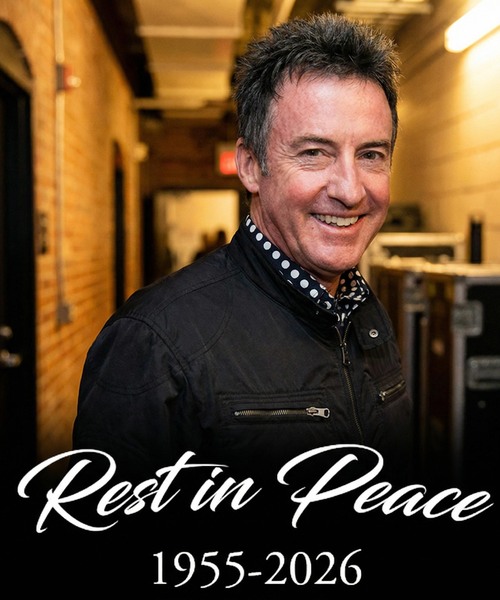
The rhythmic heart of Midnight Oil, the foundational drummer whose steady pulse fueled decades of Australian rock history, has fallen silent. Rob Hirst, a founding member of the legendary ensemble, passed away at the age of 70 following a courageous and protracted battle with pancreatic cancer. The band confirmed the news through a poignant statement on social media, expressing a profound sense of loss that words could scarcely capture, while simultaneously honoring a brotherhood that spanned over fifty years of music, activism, and shared purpose. In the wake of his passing, the global music community has paused to reflect on a career that was as much about social conscience as it was about sonic power.
The story of Midnight Oil began in Sydney in 1972, but it was the synergy between the members that transformed them from a local pub act into a global phenomenon. While many rock bands of the era focused on escapism, Midnight Oil, with Hirst at the kit, carved out a niche for music that demanded engagement. They were a band that sold more than 20 million albums worldwide, not by adhering to pop sensibilities, but by confronting the uncomfortable truths of environmental destruction and the rights of Indigenous peoples. Their 1987 masterpiece, Diesel and Dust, remains a landmark in recording history, a collection of songs that acted as both a mirror to the Australian landscape and a megaphone for social justice.
Hirst was far more than a technician behind the drums. While his energetic, physical style was the engine room of the band’s live performances, his intellectual and creative contributions were woven into the very fabric of their identity. He was a prolific songwriter and a key architect of the band’s lyrical depth. Hirst co-wrote some of the most enduring anthems in the rock canon, including “Beds Are Burning,” “Blue Sky Mine,” and “The Dead Heart.” These tracks were not merely hits; they were cultural milestones that challenged listeners to look beyond the melody and confront the political and environmental realities of the world around them. His ability to marry urgent, socially conscious lyrics with driving, accessible rhythms allowed the band’s message to reach across borders and generations.
Throughout the band’s initial four-decade run, Hirst remained a constant creative force. Even after the group entered a hiatus in the early 2000s, his passion for the craft never wavered. He pursued various solo projects and collaborations, always seeking new ways to articulate the human experience through sound. When Midnight Oil officially reunited in 2016, it was as if no time had passed. The band returned to the global stage with a renewed sense of urgency, culminating in their final studio effort, Resist, in 2022. The subsequent farewell tour was a triumphant celebration of their legacy, a final opportunity for fans to experience the raw, percussive energy that Hirst brought to every show, even as he navigated his health challenges in private.
Beyond the grand scale of stadium rock, Rob Hirst’s later years were marked by a deeply personal and touching musical chapter. After reconnecting with his daughter later in life, the two embarked on a collaborative recording project. This creative union resulted in music that reflected warmth, discovery, and a poignant sense of reconciliation. It was a testament to Hirst’s belief that music was a living, breathing entity capable of healing personal fractures just as easily as it could highlight national ones. In late 2025, even as his illness progressed, he released a final solo EP. In his final interviews, he spoke with a serene clarity about the nature of his vocation, describing songwriting as a lifelong companion—a force that remains with a creator until the very end.
The outpouring of tributes since his passing underscores the respect Hirst commanded within the industry and among the public. Fellow musicians have spoken of his technical prowess and his unique ability to drive a band forward without overshadowing the message. Fans have shared stories of how his rhythms provided the soundtrack to their own awakenings, both musical and political. For many, Rob Hirst represented the gold standard of artistic honesty; he was a man who used his platform not for vanity, but for purpose.
The band’s final message to their fans was one of bittersweet resilience. They noted that while the physical presence of their brother was gone, the “Oil” would never truly stop flowing as long as the songs were played. His daughter expressed a heartbreaking gratitude for the years they spent making up for lost time through the language of music, a gift that survives the silence of his passing. The legacy of Rob Hirst is etched into the grooves of every record he touched—a legacy of precision, passion, and an unwavering belief that rock and roll could, and should, mean something.
As Australia and the world say goodbye to one of the most significant drummers in rock history, the songs he helped create continue to echo across airwaves and stages. His life was a masterclass in the power of the beat—not just the beat of a drum, but the beat of a heart devoted to truth. Rob Hirst proved that a musician could be both a fierce performer and a thoughtful poet, and that the most powerful music is often that which beats in time with the struggle for a better world. While the final tour has ended and the stage lights have dimmed, the rhythmic foundation he built remains unshakable, ensuring that the message of Midnight Oil will continue to challenge and inspire for generations to come. In the end, he was right: the music never truly leaves; it simply waits for the next person to listen, to learn, and to resist.