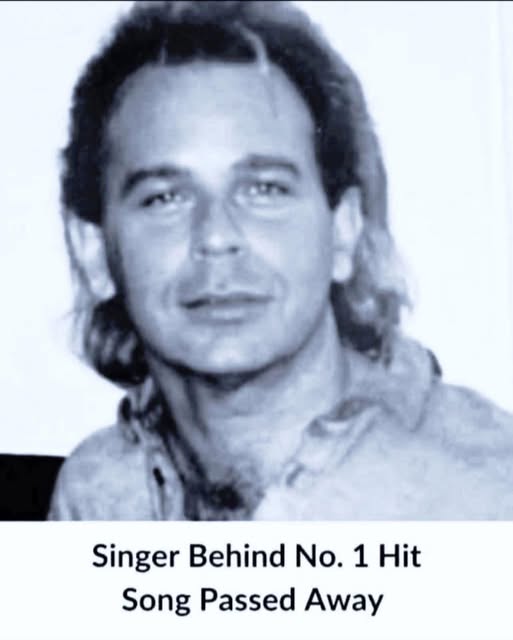
The news of his passing arrived with a quiet, devastating finality, a stark contrast to the soaring, operatic heights of the voice that once defined an entire era of teenage longing. When a voice that helped shape the collective emotional landscape of a generation falls silent, the absence feels unexpectedly heavy, as if a thread has been pulled from the tapestry of our shared history. In place of the applause and the crystalline harmonies that once filled concert halls and radio waves, a family and a global community of fans are left holding the fragile remnants of memory. It is the story of a life interrupted by a brief illness that moved with a predatory speed, leaving little time for the world to fully comprehend the loss of Lou Christie.
Born Lugee Alfredo Giovanni Sacco, the man who would become Lou Christie carried a name that felt as grand and operatic as his vocal range. He was a son of Pennsylvania who possessed a talent that was impossible to contain within the modest expectations of a traditional life. In the mid-1960s, a period defined by a restless search for new sounds and a desperate need for authentic expression, Christie emerged as a singular force. In partnership with his longtime collaborator and co-writer, the eccentric and brilliant Twyla Herbert—a woman decades his senior who reportedly possessed a psychic-like intuition for hits—Christie transformed the raw, messy intensity of adolescent emotion into something theatrical, precise, and hauntingly beautiful.
Their most enduring collaboration, “Lightning Strikes,” did significantly more than merely climb to the top of the Billboard charts in 1966. It functioned as a sonic lightning rod, capturing the volatility, the danger, and the sheer overwhelming power of young love. At the center of the track was Christie’s signature falsetto—a voice that didn’t just sing but seemed to slice through the atmospheric noise of the decade with surgical clarity. It was a sound that challenged the boundaries of what a male pop vocalist was expected to do, blending a gritty, driving backbeat with a vocal performance that reached for the heavens.
That sound became a permanent marker of time for millions. It was a voice that echoed through the linoleum-floored basement dances of the sixties, crackled through the tinny speakers of mid-century car radios, and provided a soundtrack to the private intensity of first heartbreaks. For a teenager in 1966, Lou Christie wasn’t just performing music; he was validating their internal world. He gave a tangible, audible shape to feelings that many hadn’t yet learned how to name—the terrifying rush of attraction, the agony of betrayal, and the desperate hope of reconciliation. His music elevated the “teenage experience” from something trivial into something epic, proving that the emotions of youth were worthy of a grand, operatic scale.
However, the man behind the dramatic recordings was often described as a gentler, more grounded presence than his stage persona might suggest. In an industry often characterized by ego and artifice, Lou Christie remained a person of remarkable accessibility and warmth. He was known for answering fan letters personally, long after the height of his fame made such gestures unnecessary. He carried his success without the need for spectacle, preferring the company of old friends and the quiet dignity of a private life over the fleeting vanity of the Hollywood spotlight. In his later years, as the music industry shifted toward digital landscapes he could never have imagined in the sixties, his life grew quieter, but his influence did not recede. To the contrary, it deepened, becoming a touchstone for new generations of artists who sought to capture that same sense of uninhibited vocal expression.
As his recordings inevitably resurface in the wake of his passing, they feel less like dusty artifacts of a bygone age and more like vibrant, living bridges. Each familiar note and every sky-scraping falsetto run carries an unspoken assurance: that intensity, vulnerability, and the courage to feel deeply were once not only allowed but celebrated as the highest forms of art. In a modern era often defined by a cynical detachment or a fear of appearing “too much,” Christie’s work stands as a monument to the beauty of being “everything at once.” He reminded us that the human heart is capable of incredible volume, and that expressing that volume is an act of profound bravery.
The tragedy of his sudden departure lies in the “brief illness” that claimed him. It is a reminder of the fragility that sits beneath even the most powerful voices. There is a specific kind of grief that accompanies a death that moves too quickly for a proper goodbye—a sense of a story being cut short mid-sentence. Yet, as the initial shock fades, it is replaced by a realization of the permanence of his contribution. Some voices are of their time, tied strictly to the fashions and fads of a single year. Others are threaded into the very fabric of the human experience. Lou Christie’s voice belongs to the latter category. It is a sound that we revisit when we need to be reminded of our own capacity for passion, or when we need to remember that once, we felt everything at full volume, and that those feelings did not destroy us.
Lou Christie’s legacy is not found in a trophy case or a chart position, but in the way his music continues to make the world feel a little more vivid. It is found in the aspiring singer trying to hit that impossible high note in “Two Faces Have I,” and in the listener who finds their own grief reflected in the sweeping drama of his arrangements. He was a man who understood that music is, at its core, a form of emotional transport. He took us somewhere higher, louder, and more honest than the everyday world usually permits.
As the echoes of his life continue to resonate, we are reminded that true talent is a light that doesn’t go out; it simply changes form. The “lightning” may have faded, but the echoes remain, providing a steady, glowing warmth for all those who still believe that music should be a grand adventure. Lou Christie left the stage as he lived on it—with dignity, with grace, and with a voice that will remain a part of our lives for as long as people continue to fall in love and need a song to explain why. His was a life well-lived and a song well-sung, a crystalline note held indefinitely in the memory of the world.