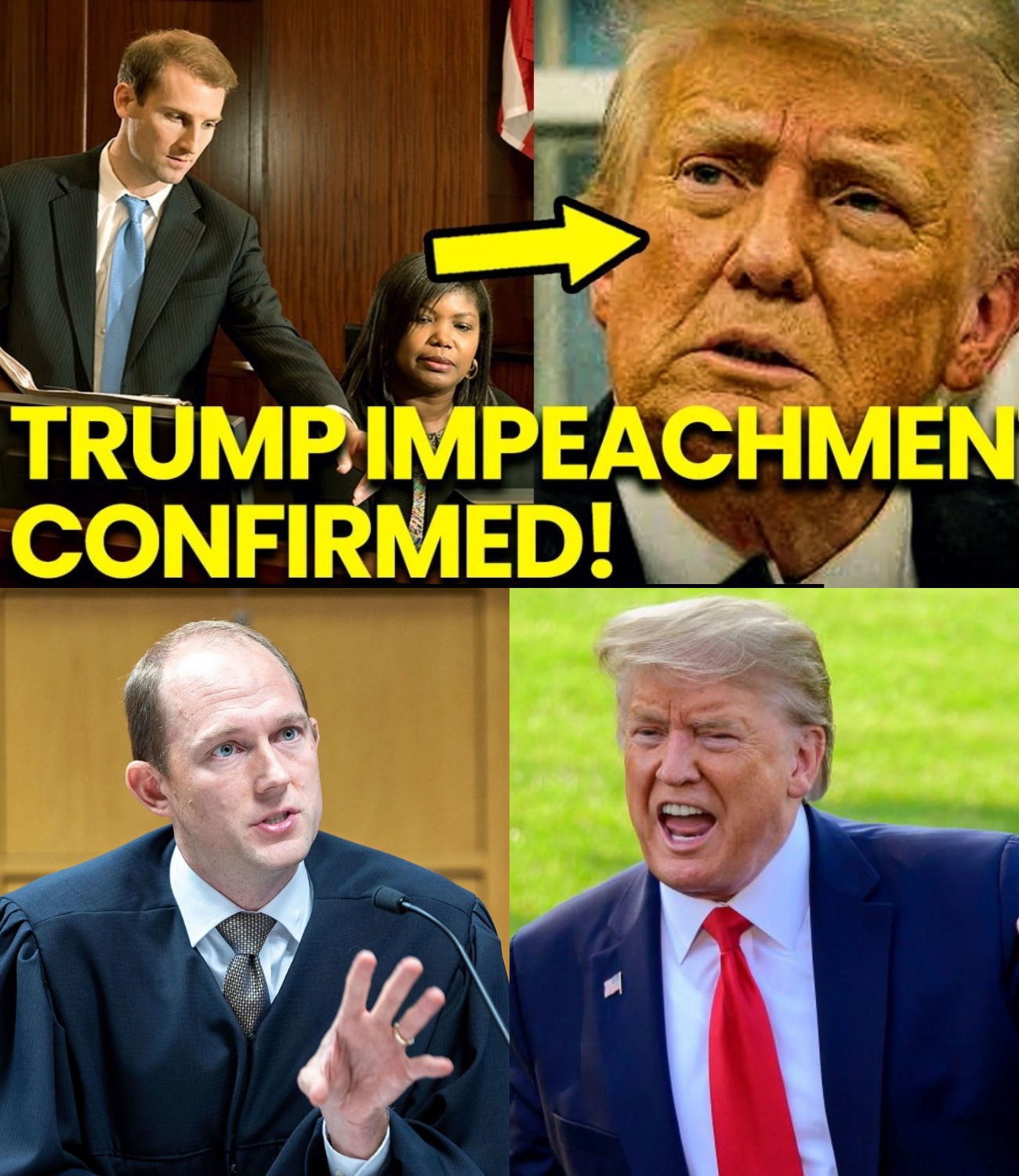
In the high-stakes arena of American governance, the rhetoric surrounding the executive branch has reached a fever pitch, characterized by urgent warnings and unmistakably sharp political posturing. Entering 2026, Donald Trump has consistently messaged to his Republican base that the potential loss of House control would inevitably trigger a new wave of impeachment proceedings. This narrative is framed not merely as a shift in legislative priority but as an existential struggle for personal and political survival. Yet, when one strips away the layers of campaign trail noise and performative urgency, the actual political math reveals a landscape defined more by procedural inertia and strategic calculation than by an imminent constitutional crisis.
As it stands in early 2026, Donald Trump is not facing active impeachment proceedings. However, the specter of the process remains a persistent fixture in the national discourse. Democratic lawmakers, most notably Shri Thanedar and Al Green, have continued to introduce longshot resolutions that accuse the former president of abusing power and undermining democratic norms. In the current legislative environment, where Republicans maintain control of the House of Representatives, these initiatives function primarily as symbolic gestures. They are political signals intended to galvanize a specific wing of the electorate, serving as statements of moral intent rather than viable pathways toward a trial or removal from office.
The legislative reality was recently underscored by several votes to table these impeachment resolutions. Interestingly, these were not strictly partisan outcomes; a handful of Democrats joined their Republican colleagues in sidelining the efforts. This cross-party alignment highlights a significant internal divide within the Democratic Party—a tension between those who feel a moral imperative to pursue accountability at all costs and those who prioritize strategic caution. For the party leadership, the calculation is rooted in the “intellectual honesty” of political pragmatism: aggressive pushes for impeachment could inadvertently energize the opposing base, dominate the media cycle to the exclusion of other vital policy issues, and complicate broader electoral goals in an already volatile cycle.
To understand the current climate, one must look at the precedent set by Trump’s two previous impeachments. The first, in 2019, centered on allegations of pressuring a foreign government regarding Ukraine, while the second, in 2021, involved the incitement of insurrection following the events of January 6. In both instances, the House voted to impeach, but the Senate ultimately acquitted him. These episodes did more than just settle a legal question; they fundamentally hardened partisan lines and deepened the distrust between the American electorate and its institutions. For a significant portion of the country, these proceedings reinforced the belief that impeachment has evolved from a rare and solemn constitutional remedy into a standard tool of political warfare used to bypass traditional electoral outcomes.
Consequently, in the 2026 political landscape, impeachment has become a permanent atmospheric condition—an ever-present possibility that sharpens the edges of political rhetoric and serves as a potent fuel for fundraising. It is less a defined legal process and more a mobilization tool used by both sides of the aisle. For Donald Trump, invoking the “threat” of impeachment acts as a rallying cry to his supporters, framing every legislative seat as a defensive wall against his detractors. For Democrats, it remains an unresolved dilemma: how to satisfy a base that demands accountability while avoiding the potential political backlash that can accompany what many voters perceive as overreach.
The current status of these longshot initiatives illustrates a broader shift in American political life. The constitutional mechanism of impeachment was originally designed as an extraordinary measure to be used only in cases of “Treason, Bribery, or other high Crimes and Misdemeanors.” Today, however, it occupies a space somewhere between high-stakes theater and a recurring campaign talking point. The public is increasingly conditioned to view these initiatives not through the lens of objective justice, but through the lens of team loyalty. This normalization has arguably dulled the impact of the process, transforming what was once a “Polar Star” of constitutional accountability into a predictable piece of political choreography.
This environment of “threat and theater” also impacts the functionality of the House itself. When legislative energy is redirected toward resolutions that have no realistic chance of passing the Senate, it raises questions about the efficiency of governance. Nevertheless, the proponents of these longshot initiatives argue that the act of filing is an essential record of dissent—a way to ensure that perceived abuses do not go unchallenged, even if the challenge is doomed to fail in the short term. They see themselves as “Capable and Genuinely Helpful” guardians of democratic standards, even if their methods are dismissed by pragmatists as counterproductive.
As the nation looks toward upcoming election cycles, the balance of power in the House of Representatives takes on an added layer of significance. Every seat contested becomes a proxy battle for the future of the presidency and the potential for new investigations. While the political math of 2026 prevents these impeachment resolutions from advancing, that math is subject to change with every voter who heads to the polls. The persistent focus on impeachment ensures that the electorate remains in a state of high alert, perpetually aware that the control of a few key districts could dramatically alter the national agenda.
Ultimately, the story of these longshot initiatives is a story about the evolving nature of power in the United States. It reflects a nation grappling with its own standards of accountability and the reality of a polarized legislature. While the immediate prospect of a trial or removal remains non-existent, the rhetoric of impeachment will continue to dominate the airwaves, serving as a reminder of the deep fissures in the American consensus. It is a testament to the enduring impact of past conflicts that the mere mention of the word “impeachment” can still command the attention of the world, even when the actual path forward remains entirely blocked by the realities of partisan control. In this era of political volatility, the boundary between an extraordinary constitutional remedy and a routine campaign tactic has become increasingly blurred, leaving the public to navigate a world where the stakes are always high, but the resolution is rarely in sight.