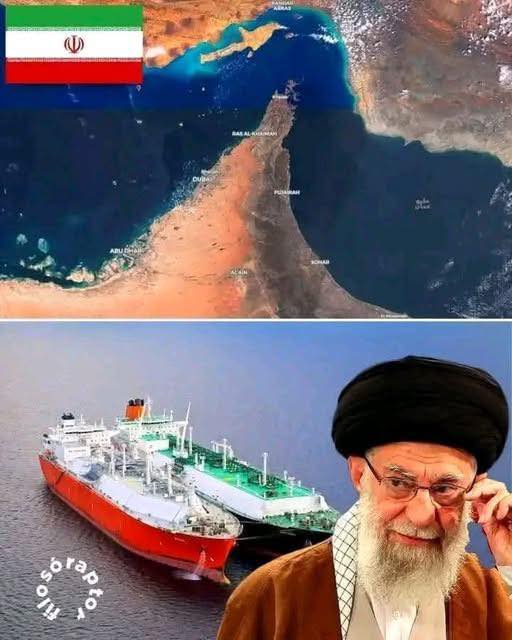
Recent developments in the Middle East have drawn intense global attention after reports emerged that Iran’s parliament approved a motion related to the potential closure of a crucial maritime route.
Although the exact details of how the measure might be implemented remain unclear and still require further governmental procedures, the announcement alone has already created concern across international markets, shipping industries, and diplomatic circles.
Focus on the Strait of Hormuz
At the center of the situation is the Strait of Hormuz, a narrow but extremely important waterway connecting the Persian Gulf to the open ocean.
Despite its relatively small size, the strait plays an essential role in global trade. A large portion of the world’s oil and liquefied natural gas (LNG) exports travel through this passage every day, making it one of the most strategically significant shipping routes in the world.
Because major energy-producing countries rely on this corridor to supply international markets, even the possibility of disruption can immediately raise alarm among governments, energy companies, and global investors.
Shipping companies, oil refineries, insurers, and policymakers are closely monitoring the situation, knowing that any interruption could affect global energy supplies and economic stability.
Immediate Reaction in Global Markets
One of the first areas to react to geopolitical tension is the financial market. Analysts say energy markets are especially sensitive to uncertainty.
Even before any official action takes place, the possibility of restricted shipping through the strait has already influenced oil markets. Experts explain that such situations often create a “risk premium”, which increases the price of crude oil, shipping insurance, and transportation costs.
These price changes are not necessarily caused by an actual blockade but by uncertainty about future supply.
For consumers, this kind of market reaction can eventually lead to higher fuel prices, increased transportation costs, and inflation affecting everyday goods.
Legal and Strategic Questions
The situation also raises complex questions regarding international maritime law.
Agreements such as the United Nations Convention on the Law of the Sea are designed to protect freedom of navigation through international straits. Any action that interferes with that principle could trigger diplomatic or security responses from multiple nations.
Security experts often compare the current situation to earlier periods of tension in the region, including the “Tanker Wars” of the past, when naval patrols increased to ensure the safe passage of commercial ships.
Military analysts say preventing escalation requires careful coordination, communication, and strategic deterrence to avoid misunderstandings that could lead to wider conflict.
Global Economy Closely Linked to the Situation
The modern global economy is highly interconnected, meaning decisions made in one region can quickly affect markets and industries worldwide.
A potential disruption in the Strait of Hormuz could influence manufacturing, shipping, and energy prices across multiple continents.
Because of this vulnerability, many countries have spent the past decade working to diversify energy supplies, develop alternative transport routes, and build strategic petroleum reserves.
Energy diversification is now considered not just an economic strategy but a critical element of national security.
Diplomatic Efforts Behind the Scenes
While public attention focuses on official statements and headlines, much of the most important work is happening through quiet diplomatic discussions.
Governments in several regions are reportedly engaged in conversations aimed at clarifying intentions and exploring ways to reduce tensions.
Historically, sustained diplomatic communication has often played a key role in preventing regional crises from escalating into larger international conflicts.
International monitoring organizations also help provide verified information during times of uncertainty, which can help prevent misinformation from spreading.
The Role of Social Media and Speculation
In today’s digital environment, news spreads rapidly across social media platforms, sometimes before official confirmations are available.
Experts caution that speculation and exaggerated claims can increase public anxiety and even affect financial markets.
Because of this, analysts recommend paying close attention to verified statements from governments and international institutions rather than relying solely on online commentary.
Important Clarification
It is important to note that a parliamentary vote does not automatically mean the Strait of Hormuz will be closed immediately.
Implementing such a measure would require additional political and administrative steps, and some observers believe the vote may represent strategic political signaling rather than an immediate plan for action.
However, the announcement highlights the vulnerability of global trade routes and the importance of maintaining stability in critical international corridors.
A Test for Global Stability
The situation underscores how interconnected today’s world has become. Energy markets, international law, diplomacy, and economic stability are closely linked.
A decision taken within a single national parliament can quickly influence global trade, financial markets, and the cost of living for people around the world.
As the international community continues to watch developments closely, the coming days will likely test how effectively global institutions and governments can manage tensions and maintain stability in one of the world’s most critical shipping routes.