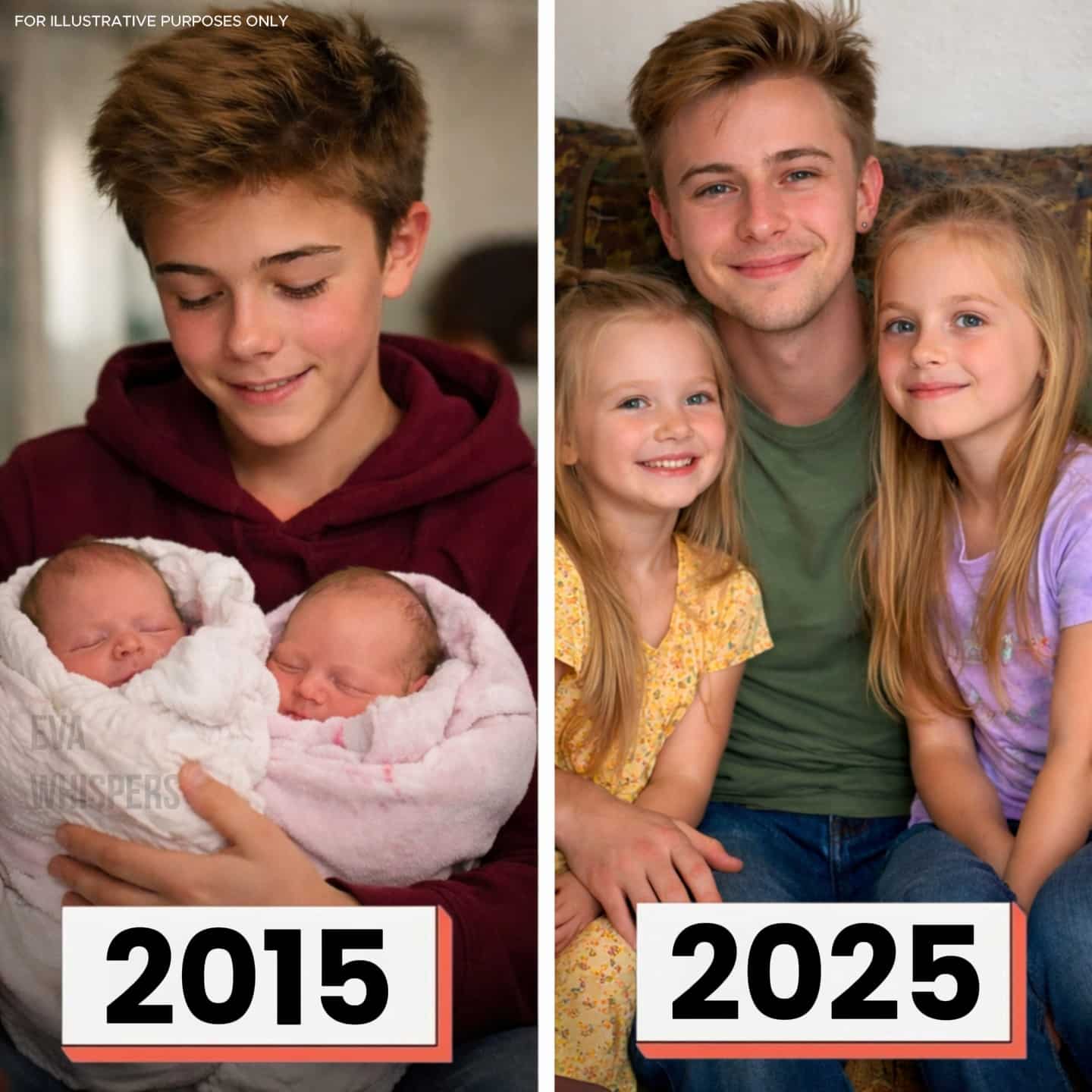
When my mother died, I didn’t just lose a parent.
I inherited a life I hadn’t planned for—and two fragile hearts that suddenly depended on mine.
Six months earlier, I had been a 25-year-old structural engineer with spreadsheets, deadlines, and a future neatly arranged. A wedding was on the horizon. A honeymoon in Maui was half paid. My fiancée, Jenna, had already started talking about baby names and paint colors for a nursery that didn’t yet exist.
Life wasn’t easy, but it was legible.
“James, you work too much,” Jenna used to say, handing me another vitamin bottle. “I’m proud of you. I just want you to live a long life with me.”
Stress, sure. But it was the kind of stress you expect when you’re building something.
Then my mother, Naomi, was killed in a car accident while buying birthday candles for my ten-year-old twin sisters, Lily and Maya.
And overnight, everything familiar vanished.
I went from brother to guardian. From designer of foundations to becoming one. The wedding plans stalled. The registry was canceled. I moved back into my mother’s house the same night, leaving behind my apartment, my routines, and the illusion that adulthood is something you finish assembling before responsibility arrives.
Our father had disappeared years earlier, the moment he learned my mother was pregnant with twins. There was no safety net. Just three of us standing in the aftermath of loss.
I was drowning quietly.
Jenna, on the other hand, appeared to float.
She moved in two weeks after the funeral. She packed lunches, learned braids, found lullabies online. She made it all look effortless. When Maya wrote Jenna’s name as an emergency contact in her notebook, Jenna cried and said she’d always wanted little sisters.
I thought I had been given grace in human form.
I didn’t know I was watching a performance.
Last Tuesday, I came home early from work. The sky was heavy, the kind that presses on your chest before rain. The house looked peaceful. Maya’s bike lay in the yard. Lily’s gardening gloves rested neatly on the porch rail.
Inside, the hallway smelled like cinnamon and glue.
I was halfway in when I heard Jenna’s voice—low, controlled, sharp.
“Girls, you’re not going to be here much longer. So don’t get too attached.”
I stopped breathing.
“I’m not spending my twenties raising someone else’s children,” she continued. “A foster family would be better. When the adoption interview comes up, you’ll tell them you want to leave. Understand?”
Silence.
Then a small, broken sound.
“Don’t cry, Maya,” Jenna snapped. “If you cry again, I’ll throw away your notebooks. You need to stop with those silly stories.”
“But we want to stay with James,” Maya whispered. “He’s the best brother in the world.”
Something inside me cracked open.
“You don’t get to want things,” Jenna replied calmly. “Go do your homework.”
Footsteps. A door slammed upstairs.
I stayed frozen, afraid that moving would make this real before I was ready.
Then her voice shifted—lighter now. A phone call.
“They’re finally gone,” she said, laughing softly. “I’m exhausted, Karen. Playing perfect caretaker is draining.”
Pause.
“He won’t move forward with the wedding because of them. Once they’re adopted, they’re legally his problem. That’s why they need to go.”
Another pause.
“The house? The insurance money? That should be ours. I just need my name on the deed. After that, I don’t care what happens to them.”
I backed out of the house without a sound.
In the car, my hands shook. I wasn’t angry yet. I was clear.
This wasn’t a mistake. It was a plan.
That night, I came home with pizza and acted as if nothing had happened.
Later, after the girls were asleep, I spoke gently.
“Maybe you were right,” I said. “Maybe I can’t do this.”
Her eyes lit up.
“And maybe we shouldn’t delay the wedding,” I added. “Life is short.”
She didn’t question it. She celebrated it.
By morning, she had booked a ballroom.
Meanwhile, I made promises—to Lily and Maya—and phone calls of my own.
The wedding night arrived dressed in white linen and candlelight. Jenna glowed. She believed she had won.
When she raised the microphone, I stepped forward and took it instead.
“We’re here to reveal the truth,” I said calmly.
The footage played.
Not edited. Not exaggerated. Just unfiltered character.
Her voice echoed through the room. Her intentions laid bare.
I didn’t raise my voice. I didn’t insult her.
“I heard everything,” I said. “You weren’t building a future. You were dismantling one.”
Security escorted her out.
I didn’t feel satisfaction. I felt release.
The adoption was finalized a week later.
That night, we made spaghetti. Lily stirred. Maya danced with the parmesan. We lit a candle for our mother.
“We knew you’d choose us,” Lily said.
I didn’t speak. I cried. I let them see it.
Not because I was strong—but because I was present.
We were no longer surviving.
We were home.
Leave a Reply