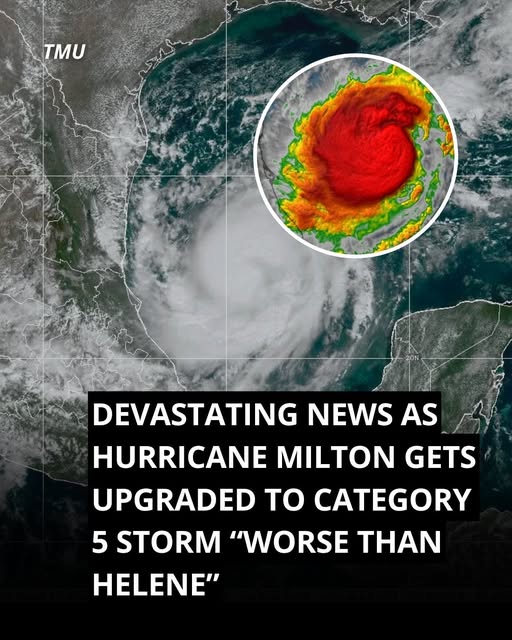
Hurricane Milton has strengthened into a Category 5 storm, placing Florida’s Gulf Coast on high alert as officials warn the system could bring severe and potentially life-threatening conditions.
According to the National Hurricane Center (NHC), Milton’s sustained winds have reached approximately 160 mph (250 km/h), making it one of the strongest storms currently active in the Atlantic. Data collected by hurricane hunter aircraft confirmed the storm’s rapid intensification — a phenomenon where hurricanes strengthen dramatically within a short period.
Florida’s Gulf Coast Faces Rising Risk
Current forecast models show Milton moving toward Florida’s Gulf Coast, with particular concern focused on the Tampa Bay region, an area that has avoided a direct hit from a major hurricane for more than a century.
Emergency officials warn residents to prepare for several potential hazards, including:
- Storm surge: Up to 12 feet (3.6 meters) in low-lying coastal areas
- Heavy rainfall: Between 5 and 10 inches across parts of central Florida
- Destructive winds: Strong enough to cause widespread structural damage
- Flooding and power outages: Likely in many communities along the storm’s path
Meteorologists also stress that small shifts in the hurricane’s track could significantly change which areas experience the most severe conditions.
State of Emergency Declared
Florida Governor Ron DeSantis has declared a state of emergency in 51 counties, including major population centers such as:
- Broward
- Miami-Dade
- Monroe
More than 5,000 National Guard members have already been mobilized to assist with emergency operations, and officials say an additional 3,000 personnel may be deployed to support evacuations, rescue operations, and recovery efforts.
Kevin Guthrie, Director of the Florida Division of Emergency Management, emphasized the urgency for residents in vulnerable coastal areas to follow evacuation orders where issued.
Historical Comparisons Raise Concern
If Hurricane Milton maintains its strength as it approaches land, experts say it could rank among the most powerful storms to threaten Florida in decades.
The last Category 5 hurricane to strike Florida was the Labor Day Hurricane of 1935, which produced winds of roughly 185 mph and resulted in more than 400 fatalities.
The Tampa Bay area, in particular, has not experienced a direct major hurricane strike for more than 100 years. However, the 1921 Tampa Bay hurricane produced an 11-foot storm surge that caused widespread damage throughout the region.
What Experts Expect Next
Forecast models suggest Milton may weaken somewhat after landfall, potentially dropping to a Category 1 or Category 2 storm as it moves across Florida and toward the Atlantic Ocean.
Even if that occurs, experts warn the system could still produce:
- Strong, damaging winds
- Intense rainfall and flash flooding
- Dangerous coastal storm surge
Safety Recommendations
Emergency officials are urging residents in potentially affected areas to take precautions immediately:
- Follow all official evacuation instructions
- Secure homes and outdoor items
- Prepare emergency kits with food, water, and medications
- Monitor updates from trusted weather and government sources
Authorities stress that early preparation and timely evacuation remain the most effective ways to reduce risk as Hurricane Milton approaches Florida.