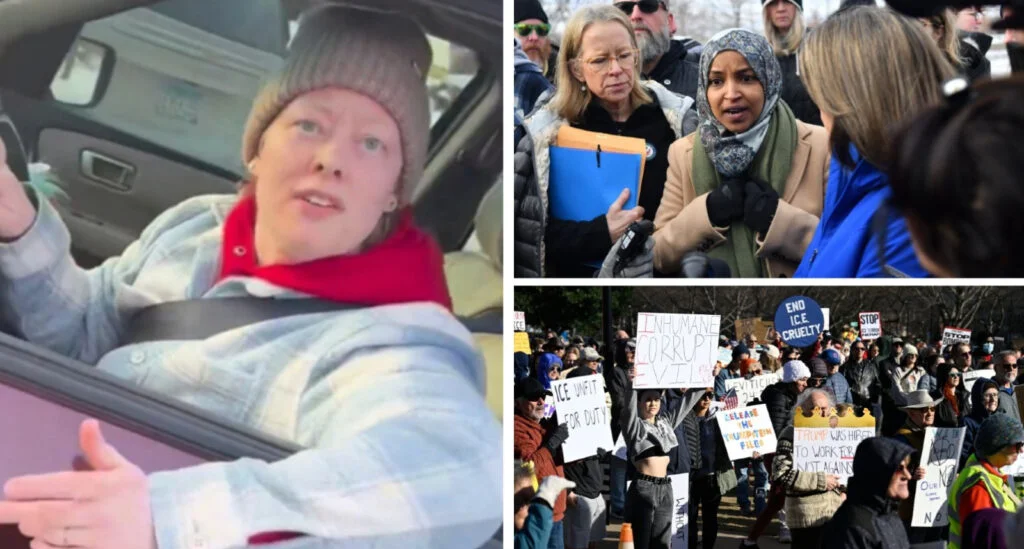
A new report has intensified scrutiny around the protests opposing Immigration and Customs Enforcement operations in Minneapolis, pointing to a network of activist organizations and prominent figures who have helped organize and amplify resistance efforts. According to reporting by the New York Post, several radical left-leaning groups, including organizations linked to major progressive funding sources, are playing central roles in coordinating demonstrations and so-called “legal observer” activities aimed at disrupting ICE actions in Minnesota.
At the center of the controversy is Indivisible Twin Cities, which describes itself as a grassroots collective of volunteers. The group has organized multiple protests against ICE raids across the Minneapolis area and has been active in mobilizing supporters through social media and local networks. While Indivisible Twin Cities emphasizes peaceful resistance, critics argue that its activities contribute to heightened tensions between activists and federal agents.
The issue gained national attention following a fatal incident on Wednesday involving Renee Nicole Good, who was shot and killed during an encounter with ICE agents. Authorities allege that Good attempted to run over an ICE officer with her vehicle during the confrontation. Activist groups, however, have disputed that account, describing Good as a “legal observer” who was present to monitor law enforcement activity rather than interfere with it. The circumstances surrounding her death remain under investigation and have become a flashpoint in the broader debate over ICE enforcement tactics and protest activity.
Financial links between activist networks and major donors have also drawn attention. Public records show that Open Society Foundations, founded by billionaire philanthropist George Soros, provided approximately $7.85 million in funding to Indivisible Project between 2018 and 2023. Based in Washington, D.C., the Indivisible Project positions itself as a national movement aimed at opposing conservative policies and defeating what it refers to as the “Trump agenda.” While the organization has denied directing local protest actions, critics argue that its funding and messaging infrastructure indirectly empower regional affiliates like Indivisible Twin Cities.
The same activist ecosystem has been linked to other large-scale demonstrations in recent years, including protests in support of Venezuela and the nationwide “No Kings” demonstrations opposing the administration of Donald Trump. These overlapping efforts suggest a coordinated network rather than isolated grassroots movements, according to conservative analysts.
Another organization involved in the Minneapolis protests is the Council on American-Islamic Relations. The Minnesota chapter’s executive director, Jaylani Hussein, has been a vocal critic of ICE and has addressed crowds at multiple demonstrations. Speaking through a megaphone at a protest following Good’s death, Hussein accused authorities of spreading false information about the incident and characterized Good as a peaceful observer who was killed while monitoring law enforcement activity.
“They are lying,” Hussein told demonstrators, rejecting official accounts of the encounter. His remarks underscored the growing distrust between activist groups and federal agencies, as well as the sharply different narratives surrounding events on the ground.
Left-leaning outlets and advocacy organizations have continued to describe Good as a legal observer, emphasizing her role in documenting ICE activity. However, the New York Post reported that Good, who relocated from Colorado to Minnesota last year, was an active member of ICE Watch, a network dedicated to alerting communities about ICE operations and attempting to obstruct raids through rapid-response mobilization.
Another prominent figure linked to the protests is Nekima Levy Armstrong, founder of the Racial Justice Network. Armstrong, a Minnesota-based lawyer and activist, has been heavily involved in organizing protest activity and coordinating legal observers who attend ICE raids across the city to record interactions between agents and civilians. Through her social media platforms, she regularly shares information about upcoming vigils, demonstrations, and protest logistics.
Armstrong is no stranger to national attention. She played a significant role in the protests that erupted in Minneapolis following the killing of George Floyd in May 2020, events that sparked widespread unrest and a national reckoning over policing and racial justice. Her continued involvement in immigration-related protests reflects the overlap between various social justice movements operating in the city.
Beyond immigration activism, Armstrong has also weighed in on state politics. She recently criticized Tim Walz after he announced he would not seek re-election, calling the decision a “retreat” in the face of political pressure tied to a major welfare fraud case in Minnesota. In a Facebook post, Armstrong argued that what she described as Democratic capitulation to bad-faith attacks ultimately weakens marginalized communities and legitimizes political cruelty.
Another organizer identified in the protests is Edwin Torres DeSantiago, who leads the Immigrant Defense Network. The network describes itself as an umbrella organization representing more than 90 nonprofits and religious groups focused on protecting immigrant rights. DeSantiago, who was born in El Salvador, is notable for being the first undocumented immigrant to earn a doctorate from the University of Minnesota. Following Good’s death, he publicly accused President Trump of spreading “terror and chaos” in Minneapolis through aggressive immigration enforcement.
Legal questions surrounding the fatal incident have also emerged. Gregg Jarrett suggested during an appearance on Fox & Friends that Rebecca Good, the spouse of Renee Good, could potentially face criminal liability depending on the findings of the investigation. Jarrett stated that if evidence shows Rebecca Good encouraged or assisted actions that impeded law enforcement, charges such as aiding and abetting could be considered.
Jarrett emphasized that any legal determination would depend on intent and motive, noting that prosecutors would need to establish whether there was a deliberate effort to obstruct ICE agents during the January 7 encounter that ended in Good’s death. He went further, suggesting the actions could potentially be evaluated under theories related to aiding the flight from law enforcement with a domestic extremism motive, though no charges have been filed.
As investigations continue, the Minneapolis ICE resistance movement remains deeply polarizing. Supporters frame the protests as a necessary response to what they see as aggressive and unjust immigration enforcement. Critics argue the movement is driven by well-funded ideological groups whose tactics risk escalating confrontations and endangering lives. With multiple organizations, prominent activists, and national political figures now linked to the protests, the debate shows no signs of cooling, and the city remains a focal point in the broader national conflict over immigration, activism, and law enforcement authority.
Leave a Reply