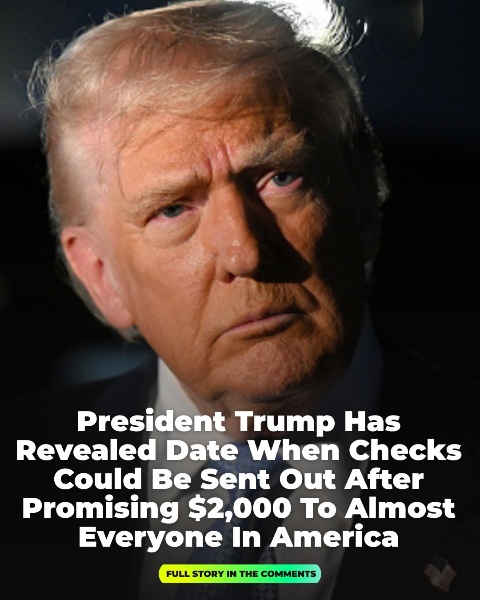
Trump sold the idea like a quick fix: slap tariffs on foreign goods, rake in the cash, and hand out $2,000 dividends to working families as if the government had just discovered a hidden treasure chest. It was pitched as simple, automatic, inevitable — money flowing straight back into American households because “America finally stopped getting ripped off.” But once you strip away the slogans, the picture gets messy fast.
Start with the numbers. The tariff revenue simply isn’t big enough to fuel the promise. Since the policy kicked in, the total haul sits under $200 billion, which sounds enormous until you divide it by tens of millions of households and spread it across multiple years. Suddenly the math collapses. And that’s before you look at the lawsuits. A significant chunk of that money is tied up in court battles challenging whether those tariffs were even legal in the first place.
The Supreme Court hasn’t been friendly to Trump’s argument. They’ve signaled real skepticism about using emergency powers to impose broad, long-term tariffs, especially ones justified by national security claims that looked suspiciously like economic policy in disguise. If the Court rules against him, it wouldn’t just block future tariffs — it could force the government to pay refunds rather than send out rebates. Instead of checks landing in mailboxes, money could start flowing in the opposite direction.
Meanwhile, the legislative side of this whole thing is a brick wall. Congress still has to approve any dividend program, and there’s no consensus on anything: who qualifies, how much they get, how it would be delivered, or whether it should be a direct payment, a tax credit, or something else entirely. Every version of the plan raises new arguments — income caps, costs, inflation concerns, fairness, and whether tariff revenues should even be treated like “free money” in the first place. This isn’t some neat, prepackaged program waiting for a rubber stamp. It’s a draft that hasn’t even made it onto a proper desk.
Trump keeps insisting that higher earners won’t see a dime. It’s a clean political line, but the actual policy hasn’t been written, scored, debated, or tested. And when he’s pushed about the legal obstacles, he defaults to a familiar refrain: if the courts shoot him down, he’ll “do something else.” What that “something else” is remains undefined. It could mean restructuring the plan, shifting to tax cuts, pushing Congress to find funding elsewhere, or simply reframing the promise once the legal constraints become unavoidable.
In the meantime, millions of Americans are left doing what they’ve done through countless political cycles — waiting, watching, and trying to figure out whether another big headline is actually tied to something real. Political promises always sound clean at the microphone. Implementation is where they fray. This one is already fraying before it gets off the ground.
Supporters latch onto the clarity of the pitch: tariffs bring money in, the government hands it out, and ordinary people get a benefit they can actually feel. It’s a refreshing contrast to programs that get swallowed in bureaucracy. But clarity is not the same as reality. The legal barriers are real. The financial gaps are real. The legislative uncertainty is real. The timing is unknown. And despite the boldness of the promise, nothing resembles a functioning mechanism that could deliver checks anytime soon.
The irony is that tariffs aren’t inherently bad or unworkable. They’re just complicated. They raise prices on imports, push companies to adjust supply chains, and sometimes generate revenue, but they also hit consumers and businesses in ways that often outweigh the benefits. Revenue from tariffs also isn’t some magic pool of cash politicians can freely toss around. It has to be legally collected, properly allocated, and managed within the federal budgeting process. None of that fits neatly into a campaign soundbite.
The courts are the first domino. If the Supreme Court rules that Trump exceeded his authority when imposing broad tariffs under the guise of national security, the entire financial base of the promised dividend becomes unstable. If they uphold his authority, Congress still has to navigate a deeply divided political environment to authorize the distribution. Even that assumes revenue continues flowing at the same pace — something far from guaranteed, especially if tariffs start triggering retaliation, supply shifts, or new trade disputes.
For families hearing the promise, waiting on real details feels like déjà vu. Big political declarations, followed by vague timelines and shifting explanations, have been the norm for years. People want something tangible — a date, a process, a rollout plan. Instead, they get a headline that sounds like money is coming soon, only to find that all the gears behind the scenes are grinding slowly, or not moving at all.
What’s happening now is predictable: supporters assume the check is on its way, critics dismiss the whole thing as fantasy, and policymakers are stuck parsing legal text while pundits shout over each other. Underneath the noise, the truth is blunt: the dividend program doesn’t exist yet, can’t function yet, and depends on a chain of approvals and legal victories that are nowhere near guaranteed.
Trump, as always, leans on momentum. He knows that bold promises land. People remember the number — $2,000 — not the legal caveats, not the revenue charts, not the congressional procedures. It’s the same pattern that has carried him through multiple political cycles: pitch big, dominate the conversation, and force others to react. Whether the policy ever materializes is secondary to holding the narrative.
But families trying to budget, trying to make rent, trying to stay ahead of bills — they don’t live on narratives. They live on numbers that need to show up in their bank accounts. And for them, the story right now is simple: there’s promise, but no plan. There’s a pitch, but no path. There’s talk, but nothing they can rely on.
If the Court rules soon, things might shift. If Congress gets serious, details might emerge. But until then, the whole concept is suspended in political limbo — not dead, not alive, just floating in that familiar space where big ideas live until the machinery of government finally decides their fate.
For now, the payout remains exactly what it is: a headline, a talking point, and a maybe — not a check, not a date, not an actual program. People looking for something they can count on will have to wait longer, because nothing about this plan is ready, deliverable, or close to crossing the finish line.
Leave a Reply