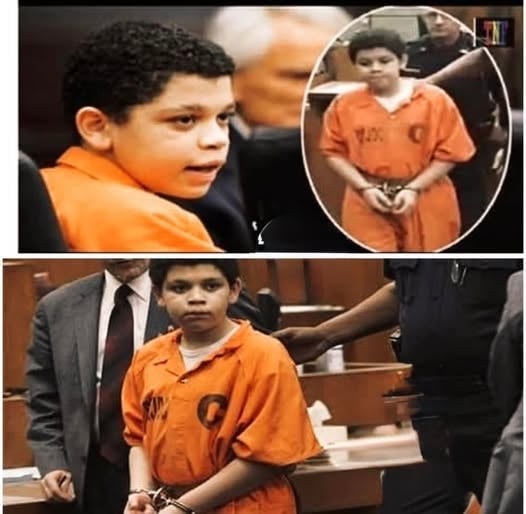
The shadow of the American criminal justice system often falls heavily on some of its youngest offenders. Within the network of federal and state prisons, there exists a group of individuals whose cases continue to spark debate across the country: people who were children when they committed serious crimes. In the United States, at least 79 individuals who were under the age of 14 at the time of their offenses are currently serving life sentences without the possibility of parole. This reality has generated widespread discussion among legal scholars, human rights advocates, and policymakers about how the justice system should treat juvenile offenders.
To understand the weight of this issue, it is important to consider the meaning of the sentence itself. A “life without parole” sentence for someone who committed a crime at the age of 13 means they could spend the rest of their life in prison without the opportunity for release. Human rights organizations, including Human Rights Watch and the Equal Justice Initiative, argue that such sentences raise serious ethical and legal concerns. They emphasize that children’s brains are still developing, which affects their ability to fully understand consequences and control impulses.
Research in psychology and neuroscience has shown that adolescence is a period of rapid development. The parts of the brain responsible for judgment, long-term decision-making, and emotional regulation are still forming during the teenage years. Because of this, many experts believe that young offenders may have a greater capacity for personal change and rehabilitation compared with adults.
In many cases, the backgrounds of these young offenders reveal difficult circumstances. Studies often show strong connections between juvenile crime and environments affected by poverty, instability, or exposure to violence. Advocates argue that when a child commits a serious crime, it can sometimes reflect deeper social challenges that were never addressed early enough.
One of the most widely discussed cases in this debate involved Lionel Tate. In 1999, at the age of 12, Tate was involved in the death of a six-year-old girl. Tate claimed that the two had been imitating professional wrestling moves and that the death occurred during play. Despite his young age and the lack of clear intent, he was tried as an adult and initially sentenced to life in prison without parole. The case attracted national attention and raised difficult questions about how the legal system should treat children accused of serious crimes. Tate’s sentence was later overturned and reduced after an appeal, but the case became a turning point in the national conversation about juvenile sentencing.
Scientific research has played an important role in shaping this discussion. Brain imaging studies consistently show that the prefrontal cortex—the part of the brain responsible for planning, reasoning, and evaluating consequences—continues developing into a person’s mid-twenties. Because of this, many psychologists argue that actions committed during early adolescence should not be seen as a permanent reflection of a person’s character.
The U.S. Supreme Court has acknowledged these findings in several important rulings. In the 2012 case Miller v. Alabama, the Court ruled that mandatory life-without-parole sentences for juveniles violate the Constitution. The decision recognized that young people have “diminished culpability” and a greater potential for change. In 2016, the Court’s decision in Montgomery v. Louisiana made the Miller ruling retroactive, allowing individuals previously sentenced as juveniles to request new sentencing hearings.
Despite these rulings, the process of reviewing past cases has been slow and uneven in some states. In certain jurisdictions, long sentences remain in place that effectively mean a person may spend most of their life in prison, even if they were very young at the time of the crime.
Some legal scholars and advocates support the idea of restorative justice as an alternative approach. Restorative justice focuses on accountability, rehabilitation, and understanding the harm caused by crime. Programs based on this philosophy often include education, counseling, and structured rehabilitation, aiming to help offenders develop empathy and responsibility while also addressing the needs of victims and communities.
Others argue that the severity of certain crimes should remain a central consideration in sentencing decisions. Families of victims often feel that strict punishment is necessary to acknowledge the seriousness of the harm that occurred. This ongoing debate reflects the challenge of balancing justice, public safety, and the potential for rehabilitation.
Some reform advocates suggest that allowing parole reviews after long periods—such as 20 or 25 years—could provide a balanced approach. Such policies would not guarantee release but would allow authorities to evaluate whether an individual has demonstrated significant personal change over time.
As conversations about criminal justice reform continue, the cases of individuals who committed crimes at very young ages remain a complex issue. They raise difficult questions about responsibility, punishment, and the possibility of growth.
Ultimately, the discussion surrounding juvenile life sentences reflects broader questions about how societies respond to crime committed by children. It highlights the importance of considering both accountability and the potential for rehabilitation as part of a justice system that aims to be both fair and effective.