The path of the American Dream is often described as a steady climb from humble beginnings to great wealth, but the story of Donald J. Trump follows a far more dramatic and unpredictable course. Rather than a gradual rise, it resembles a high-stakes saga marked by bold risks, financial collapses, and an extraordinary reinvention that ultimately led him to the most powerful political office in the world. Long before he became a polarizing political figure or a television personality, he was a young man from Queens, New York, determined to step beyond the success of his father and place his own name—quite literally—onto the skyline of the world’s most competitive city.
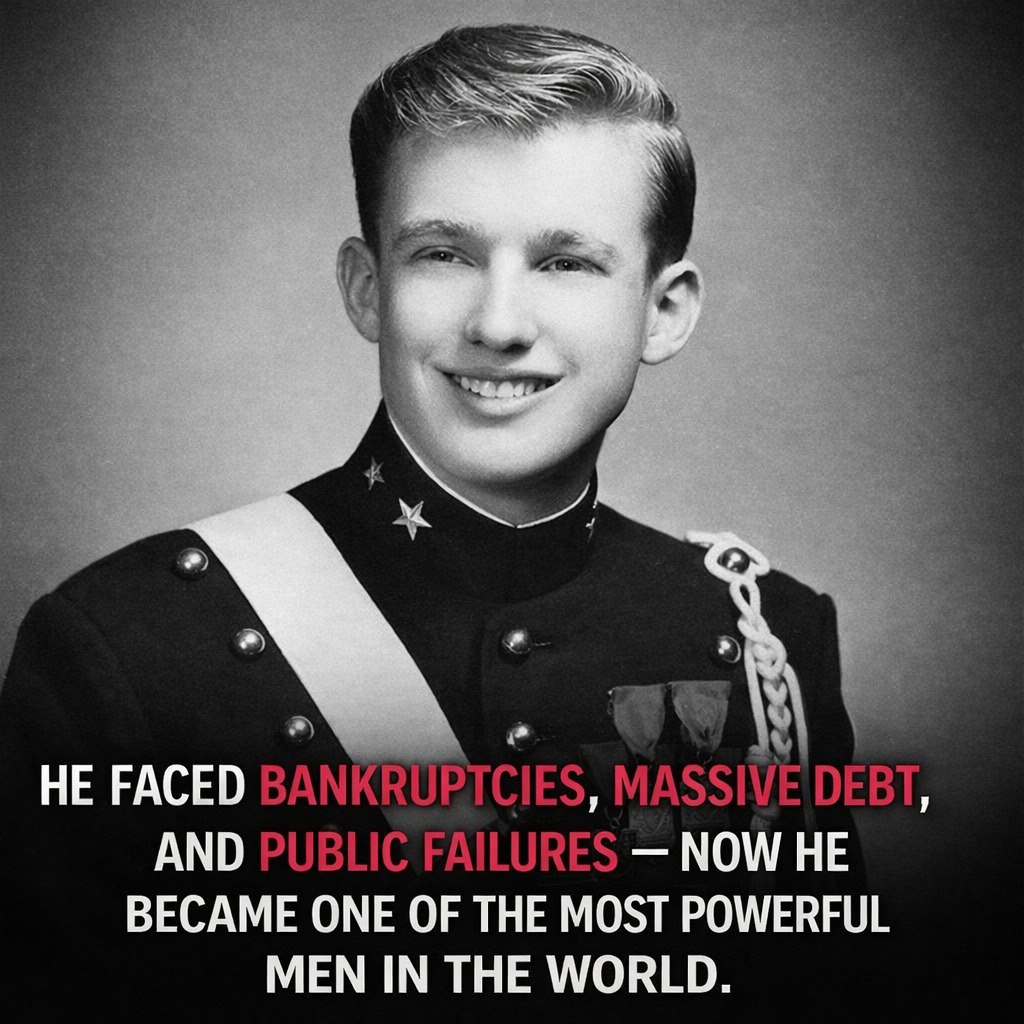
Born on June 14, 1946, Donald was the fourth of five children raised in a household shaped by the relentless work ethic of Fred Trump, a successful real estate developer. Although the family enjoyed financial comfort, their home environment was strict and highly competitive. As a teenager, Donald’s rebellious streak and assertive personality often clashed with traditional school systems, prompting his parents to enroll him in the New York Military Academy. The change proved pivotal. Within the structured, disciplined setting of military school, he thrived, channeling his energy into sports and leadership positions. It was there that his competitive instincts sharpened, reinforcing a worldview in which life was measured in victories and defeats—with little tolerance for second place.
After graduating from the Wharton School at the University of Pennsylvania, Trump entered the family real estate business. Yet the outer boroughs of New York could not contain his ambitions. His focus quickly shifted to Manhattan, a move many experienced developers considered risky during the city’s financial crisis of the 1970s. Where others saw decline, Trump recognized opportunity. By negotiating tax abatements and navigating complex political structures, he redeveloped the deteriorating Commodore Hotel into the gleaming Grand Hyatt. The project became a defining moment—an early example of his distinctive formula combining luxury design, bold branding, and aggressive self-promotion. Soon, the name “Trump” appeared in gold lettering on skyscrapers, casinos, and hotels, becoming synonymous with the extravagance of the 1980s.
Yet the empire he constructed stood on an unstable foundation of enormous debt. By the early 1990s, economic conditions shifted, and many of the properties that had brought him fame began losing money. The financial figures were staggering: Trump faced nearly $1 billion in personal debt and roughly $3.5 billion in corporate liabilities. The same media outlets that once celebrated him as the ultimate dealmaker now predicted the collapse of his career. Banks closed in, and multiple corporate bankruptcies followed. For most entrepreneurs, this would have marked the end. Trump, however, recognized another powerful currency in the modern era: public visibility.
Through intense negotiations with lenders, he convinced creditors that his brand remained valuable. Instead of focusing solely on property development, he repositioned himself as a brand. He began licensing the “Trump” name to projects and products he did not own, effectively turning his identity into a global commodity. This strategy reached a new peak in 2004 with the launch of The Apprentice. The reality television show did more than revive his public profile—it reshaped it entirely. To millions of viewers, he became the embodiment of business authority, the decisive billionaire seated at the head of the boardroom table whose phrase “You’re fired” quickly became a worldwide catchphrase.
As the 2010s approached, Trump turned his attention toward a different arena: national politics. When he descended the golden escalator of Trump Tower in 2015 to announce his candidacy for president, many in the political establishment responded with skepticism or ridicule. Commentators dismissed him as a fringe candidate or a celebrity seeking publicity. Yet they underestimated the connection he had built with voters who felt overlooked by traditional political leadership. Trump’s campaign broke with many conventional strategies. He bypassed traditional media channels, relied heavily on social media to communicate directly with supporters, and turned criticism into a form of political momentum.
The 2016 election became one of the most surprising outcomes in modern political history. Against expectations, Trump was sworn in as the 45th President of the United States. His presidency reflected the same intense polarization that had characterized his business career. Supporters viewed him as a disruptive figure who challenged established political norms, reshaped the federal judiciary, and emphasized domestic economic priorities. Critics, on the other hand, argued that his rhetoric and policies created deep divisions and strained democratic institutions and international relationships.
Regardless of political perspective, his influence on American politics has been profound. Trump reshaped the Republican Party and forced broader debates about populism, global trade, and the influence of media. Even after leaving the White House amid controversy and facing numerous legal and political challenges that might have ended another public career, he remained one of the most dominant figures in the national political landscape.
His journey—from military school cadet to real estate magnate, from near financial collapse to television celebrity, and eventually to the Oval Office—illustrates a distinctive form of American resilience combined with the modern power of branding and media visibility.
Donald Trump’s story ultimately demonstrates that in public life, the final chapter is rarely written until the central figure decides it is finished. He is a personality defined by extremes, capable of inspiring intense loyalty as well as strong opposition, but rarely indifference. His rise was not only a political development but also a cultural shift that reshaped the American conversation about power, influence, and leadership. As he continues to move through the complex landscape of modern politics, his legacy remains unfinished—a continuing narrative of a man who repeatedly refused to accept the word “no,” whether from banks, voters, or history itself.