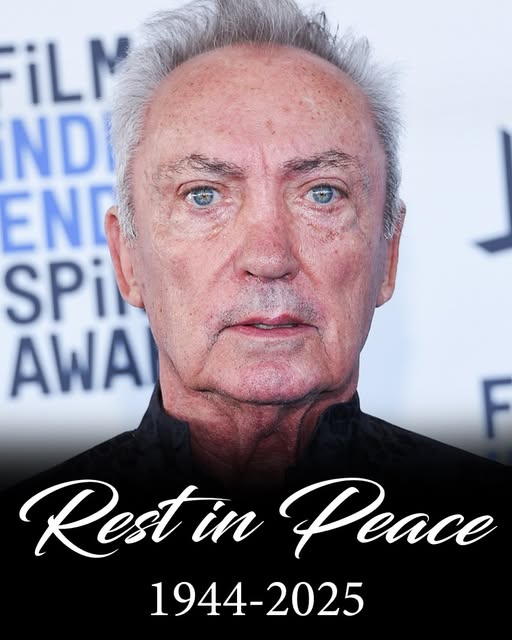
The story of Udo Kier is one of the most improbable and cinematic arcs in the history of modern film, beginning not in the glow of a spotlight, but amidst the literal ruins of a collapsing world. Born Udo Kierspe in Cologne, Germany, in 1944, his entrance into the world was marked by the violent crescendo of World War II. Only hours after his birth, the hospital where he lay was obliterated by Allied bombs. In a scene that would foreshadow the dramatic intensity of his future films, the infant Udo and his mother were pulled from the smoking rubble by rescuers. This baptism by fire set the stage for a life defined by resilience, an appreciation for the macabre, and a career that would span over 275 roles, bridging the gap between high-art European cinema and the gritty cult underground of Hollywood.
Growing up in the fractured landscape of postwar Germany, Kier’s childhood was far from the idyllic life one might associate with a future star. He often described his early years as “horrible,” shaped by poverty and a complicated family dynamic. His father was already married with another family when Udo was born, a fact kept hidden from his mother at the time. This instability meant that basic luxuries were non-existent; Kier famously noted that he did not have access to hot water until he was seventeen years old. Yet, it was perhaps this early exposure to hardship and the stark realities of survival that gave him the “piercing gaze” and haunting presence that would later become his professional trademark.
Kier’s transition from a young man in Germany to an international icon began with a move to London to study English. His discovery was the stuff of industry legend—spotted in a coffee shop, his striking features and magnetic energy were immediately apparent to those with a keen eye for talent. He admitted later in life that he pursued acting simply because he “liked the attention,” a candid admission that stripped away the pretension often found in his craft. His breakout role came in the 1970 horror film Mark of the Devil, a movie so graphic it was marketed with “barf bags” for the audience. This early association with the visceral and the transgressive defined his trajectory; Udo Kier did not just play characters, he inhabited the shadows.
One of the most pivotal moments in his career happened by pure chance during a flight when he found himself seated next to director Paul Morrissey. This serendipitous encounter led to his legendary collaborations with the Andy Warhol factory, specifically the cult classics Flesh for Frankenstein (1973) and Blood for Dracula (1974). In these films, Kier’s unique blend of aristocratic elegance and unsettling intensity made him a sensation. He was handsome enough to be a traditional leading man, yet he possessed an edge that made him far more suited for the roles of tragic monsters and sophisticated villains. He understood instinctively that playing the “guy in the post office” was forgettable, whereas playing the vampire or the mad scientist ensured a permanent place in the audience’s subconscious.
As his reputation grew, Kier became a muse for some of the most challenging and visionary directors in the world. He formed a deep and lasting professional bond with Rainer Werner Fassbinder, appearing in seminal works like The Stationmaster’s Wife and Lili Marleen. Later, he became a central figure in the filmography of Lars von Trier. Their collaboration spanned decades, covering masterpieces such as Breaking the Waves, Dancer in the Dark, and Melancholia. The trust between the two was so profound that Kier was named godfather to von Trier’s child, a testament to a friendship built on a shared desire to push the boundaries of what cinema could express. Whether he was working with Dario Argento in the neon-soaked horror of Suspiria or navigating the psychological depths of von Trier’s dramas, Kier remained a fearless performer who never shied away from the grotesque or the controversial.
In the 1990s, Kier successfully transitioned into the American mainstream without losing his cult appeal. He proved his versatility by moving seamlessly between high-budget blockbusters and indie darlings. He shared the screen with Jim Carrey in Ace Ventura: Pet Detective, went toe-to-toe with Keanu Reeves in Johnny Mnemonic, and faced off against Arnold Schwarzenegger in End of Days. He even became a fixture in pop culture through his work with Madonna, appearing in her controversial Sex book and several of her music videos. For Kier, there was no role too small or too strange. He approached a voice-acting role in a video game like Command & Conquer: Red Alert 2—where he played the iconic, telepathic Yuri—with the same gravity and charisma he brought to a Fassbinder set.
Despite his onscreen penchant for the dark and the deviant, Kier’s personal life was characterized by a love for beauty, architecture, and the quiet joys of nature. He moved to Palm Springs, California, in 1991, where he lived in a beautifully converted mid-century library. He often remarked that if he hadn’t been an actor, he would have been a gardener, and he spent much of his time tending to his home and his vast collection of art. He was a man who embraced his identity with a quiet, unwavering confidence. Openly gay throughout his entire life, he noted that his sexuality was never a barrier to his success because his talent was undeniable. He lived authentically in an era when many felt forced to hide, proving that his strength of character was just as formidable as the villains he portrayed on screen.
In his later years, Kier experienced a career resurgence with roles that allowed him to showcase a more vulnerable, poignant side of his talent. His performance in the 2022 film Swan Song was a revelation, as he played a flamboyant, retired hairdresser embarking on a final journey to style a former client’s hair for her funeral. The role was a beautiful summation of his career—blending his natural camp, his European sophistication, and a deep, resonant humanity. It reminded the world that beneath the “monsters and creeps” was an actor of immense range and soul.
Udo Kier’s passing at the age of 81 in a Palm Springs hospital marks the end of an era. He leaves behind a filmography that serves as a bridge between the avant-garde and the mainstream, the beautiful and the terrifying. He famously joked that of his hundreds of films, “100 movies are bad, 50 movies you can watch with a glass of wine, and 50 movies are good.” While he may have been modest about his prolific output, the reality is that he was a singular presence who could elevate any scene simply by entering it. From the rubble of a bombed hospital to the heights of cinematic immortality, Udo Kier’s journey was a masterclass in survival and artistic reinvention. He will be remembered not just for the nightmares he created on screen, but for the light he brought to the craft of acting, proving that even the most “horrible” beginnings can lead to a legacy that never fades.
Leave a Reply