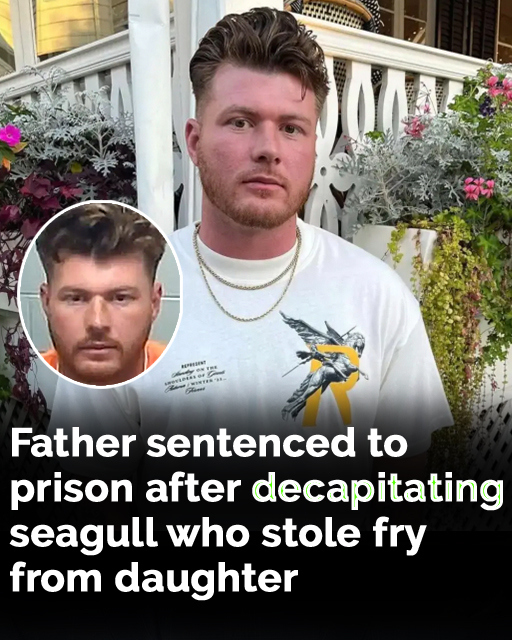
A troubling incident on the Jersey Shore has sparked renewed debate about animal cruelty laws after a man avoided additional prison time despite admitting he killed a seagull in front of families.
The case involving 30-year-old Franklin Ziegler has attracted widespread attention — not only because of the disturbing nature of the act, but also due to what many observers believe was a relatively lenient sentence.
Disturbing Moment on a Busy Boardwalk
The incident occurred on July 6, 2024, at the North Wildwood Boardwalk, near Morey’s Piers and Beachfront Water Parks.
What began as an ordinary summer day for visitors quickly turned unsettling.
According to reports, Ziegler became angry after a seagull tried to snatch a French fry from his daughter. Witnesses say the situation escalated rapidly, leaving many bystanders shocked.
People at the boardwalk — including families with children — said they watched in disbelief as the man violently killed the bird in public view.
Several witnesses reported that he was later seen holding the bird’s body and asking nearby workers for a trash bag.
Authorities were called to the scene after multiple bystanders contacted police, describing the event as disturbing and traumatic to witness.
Charges and Court Decision
Ziegler later admitted to killing the seagull. Police reports also indicated that he became confrontational while officers questioned him at the location.
He was ultimately charged with several offenses, including third-degree animal cruelty.
After entering a guilty plea, the court issued the following sentence:
- 263 days in jail, which was credited as time already served
- Five years of parole
- $155 in fines and court fees
Rather than being sent to state prison, Ziegler was placed into a recovery court program, a form of supervised probation often used in cases where substance abuse may have played a role in a person’s actions.
His attorney, Jack Tumelty, confirmed that Ziegler will participate in outpatient treatment as part of the program’s requirements.
Understanding Recovery Court
Recovery courts are designed to address underlying issues such as addiction or behavioral health challenges, with the aim of preventing future offenses.
Participants are closely supervised and must follow structured treatment plans, attend counseling sessions, and regularly report to court officials.
Supporters of the program argue that this approach can help individuals address root causes and reduce repeat criminal behavior.
Critics, however, question whether such programs are appropriate in cases involving extreme acts of violence — especially incidents carried out in public settings that involve cruelty toward animals.