The fatal shooting of Renee Nicole Good in Minneapolis has evolved into a staggering national controversy, serving as a visceral point of friction between law enforcement authority and public accountability. The 37-year-old mother was killed last week during a high-stakes encounter with Immigration and Customs Enforcement (ICE) agents, an event that has since saturated digital news cycles and ignited a fierce debate regarding the proportionality of deadly force. As the dust settles over the snow-dusted streets where the incident occurred, the competing narratives surrounding her final moments have only deepened the cultural and political fractures across the United States.
At the heart of the dispute is a series of visual records that provide conflicting interpretations of the confrontation. Official accounts released by federal authorities assert that Good attempted to use her vehicle as a weapon to obstruct agents in the performance of their duties. Conversely, widely circulated cellphone and surveillance footage appears to show a woman attempting to maneuver her car away from the officers when the fatal shots were fired. The officer at the center of the investigation, identified as Jonathan Ross, was positioned near the front of Good’s vehicle when he discharged three rounds into the cabin. The impact was mortal; Good lost control and crashed shortly thereafter. However, the scrutiny extends beyond the mechanical act of the shooting. In the immediate aftermath, Ross was captured on video uttering a sharp, derogatory profanity directed at the dying woman—a moment of raw vitriol that has intensified the public outcry and led many to question the psychological state and “intellectual honesty” of the agents on the scene.
The federal administration’s response was swift and uncompromising. The Department of Homeland Security moved to categorize Good as a “domestic terrorist,” a designation that has been reiterated by President Donald Trump and Vice President JD Vance. This framing suggests that Good’s actions constituted an intentional attempt to harm federal officers, thereby granting Ross the legal protection of self-defense. This narrative, championed by the White House, portrays the incident as a clear-cut case of law enforcement responding to a direct threat.
In sharp contrast, local leaders and civil rights advocates have challenged this characterization with significant intensity. Minneapolis Mayor Jacob Frey has publicly labeled the incident as murder, calling for the immediate filing of criminal charges against Officer Ross. Legal analysts have pointed to the video evidence as a critical “Polar Star” for the investigation, questioning whether a vehicle moving away from an officer can legally constitute the level of “imminent threat” required to justify the use of lethal force. This divide between local and federal authorities has turned the case into a flashpoint for broader discussions on police reform, immigration enforcement, and the ethics of government rhetoric.
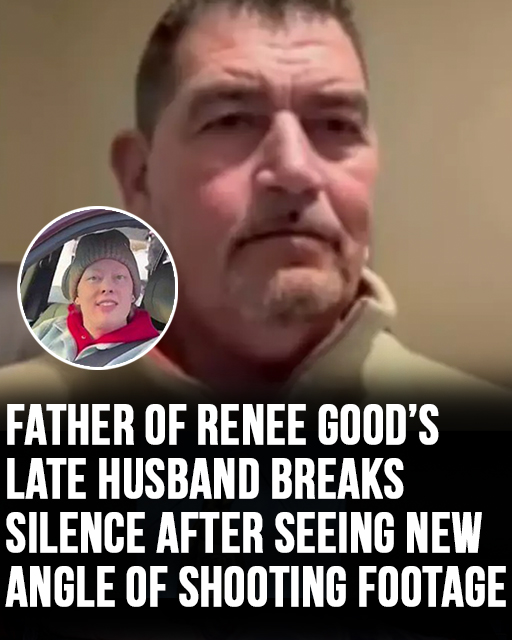
The complexities of the case are perhaps most visible in the internal struggle of Good’s own family. Timmy Macklin, the father of Good’s late husband, recently broke his silence in an interview with CNN, offering a perspective that reflects the agonizing nuances of the tragedy. Macklin admitted that his view shifted only after he forced himself to watch a specific angle of the footage—one that he initially avoided. He noted that in one frame, the bumper of the car appeared to make contact with the officer’s legs. “In a flash like that, it’s hard to say how you would react,” Macklin observed, choosing to withhold blame from the ICE agents. As a supporter of the current administration, Macklin struggled to reconcile his political leanings with the personal loss, eventually framing his critique through a theological lens. While he did not condone Good’s decision to flee, he was vocally critical of Ross’s post-shooting language, suggesting that the officer’s profanity was evidence of a spiritual failure and a lack of professional character.
The political dimensions of the tragedy reached the highest levels of government during a recent exchange between President Trump and CBS anchor Tony Dokoupil. When confronted with the fact that Renee Good’s own father—a dedicated Trump supporter—was devastated by the administration’s “domestic terrorist” label, the President struck a rare tone of tempered reflection. While he maintained that Good’s actions were “pretty tough” and necessitated a firm response, he also acknowledged that under different circumstances, she might have been a “solid, wonderful person.” This attempt to balance support for law enforcement with an olive branch to a grieving supporter illustrates the delicate tightrope the administration is walking as it manages the fallout from the shooting.
As the formal investigations by local and federal agencies proceed, the Renee Good case remains a study in the power of perspective. To her supporters and the city leadership in Minneapolis, she is a victim of an overzealous and linguistically abusive federal force that lacked the patience to resolve a non-lethal encounter. To the federal government and many in the law enforcement community, she is an individual whose choices created a life-threatening environment for agents, leaving them with no recourse but to fire.
The resolution of this case will likely hinge on the microscopic analysis of the few seconds before the trigger was pulled. Investigators will have to determine if the vehicle was a lethal threat at the exact moment of the shooting or if the shots were fired out of frustration and reflex. Regardless of the legal outcome, the cultural impact of the “domestic terrorist” label and the viral nature of the profanity-laden video have ensured that this case will not be forgotten. It stands as a somber reminder of the volatility that exists at the intersection of modern policing and a deeply polarized society. Whether justice is found in a courtroom or through a systemic change in how such encounters are managed, the tragedy in Minneapolis continues to serve as a mirror reflecting the complicated, often painful truths about contemporary American life. In the quiet aftermath, as the family prepares for a final goodbye, the nation remains captivated by a story that offers no easy answers, only a persistent demand for clarity in the face of a devastating loss.