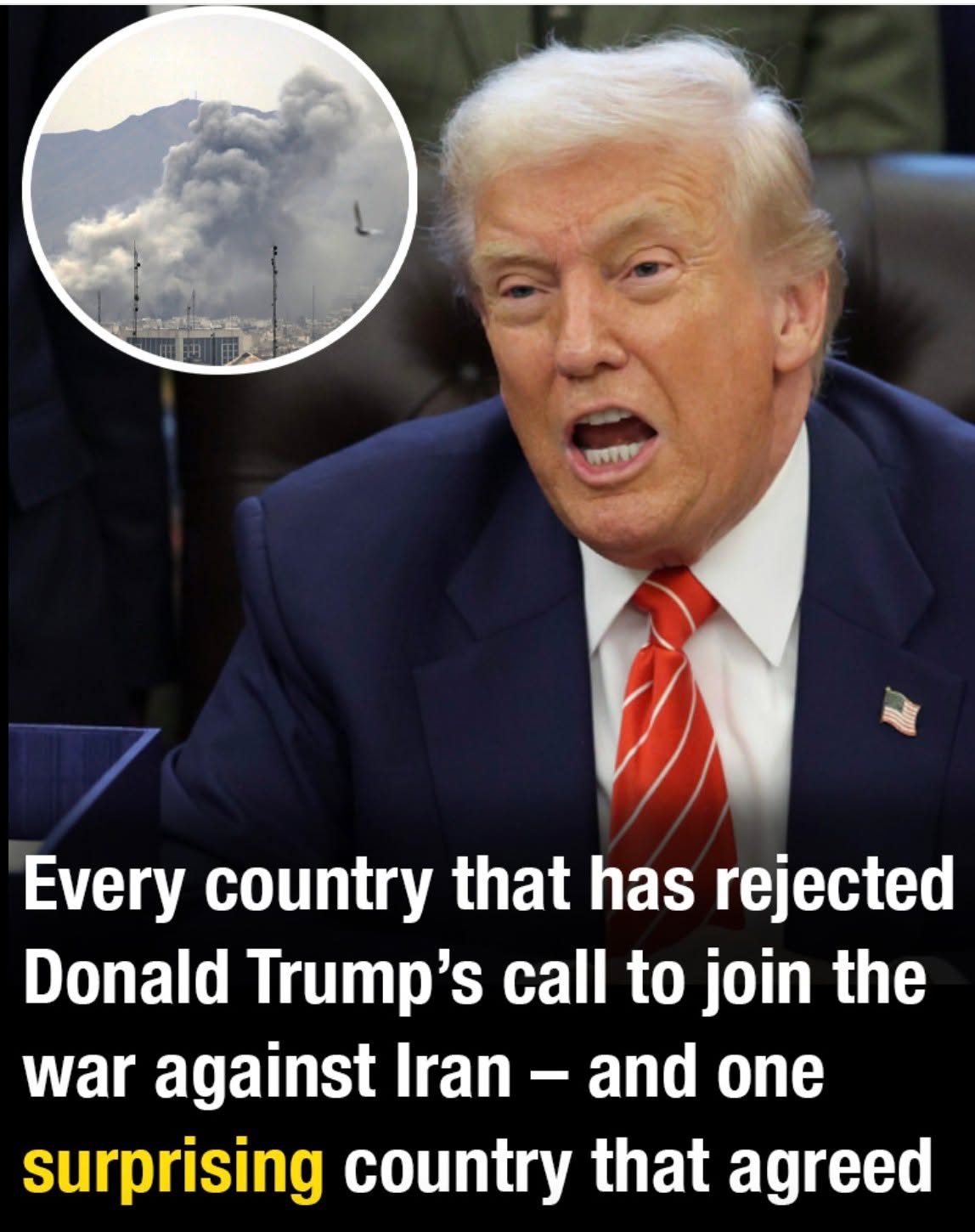
Growing tensions around U.S. policy toward Iran have once again highlighted a familiar reality in international politics: even close allies do not always move in perfect alignment. In the case of the proposed “Operation Epic Fury,” efforts by Donald Trump to assemble a broader coalition have so far met with visible hesitation.
Across Europe, reactions have ranged from cautious distance to clear refusal. The United Kingdom—long considered one of Washington’s most dependable partners—has ruled out participation in any expanded military action. Prime Minister Keir Starmer emphasized that Britain would not be drawn into a wider conflict, though he signaled openness to diplomatic engagement.
“Britain won’t be drawn into the wider war,” Starmer said, adding that involvement from NATO “won’t be, and it’s never been envisioned to be, a NATO mission.”
Other major European nations have expressed similar positions. Italy has indicated that military participation is not under consideration, while Germany has gone further by rejecting any potential role in intervention. Chancellor Friedrich Merz stressed that no joint decision had ever been made regarding involvement.
“There was never a joint decision on whether to intervene… We will not do so,” Merz stated.
At the same time, German officials have raised broader strategic concerns. Defence Minister Boris Pistorius questioned both the necessity and the likely effectiveness of the proposed approach, suggesting that large-scale military action might not address the underlying issues.
“This is not our war… What does Donald Trump expect from a handful of European frigates… that the mighty U.S. navy cannot manage alone?”
Elsewhere in Europe, countries such as Netherlands, Lithuania, Estonia, and Greece have also expressed uncertainty or declined involvement. Their concerns often focus on the mission’s objectives and the risks of escalation, particularly in sensitive areas such as the Strait of Hormuz.
The pattern extends beyond Europe. Nations including Australia, South Korea, and Japan have also stopped short of committing military support. While some have left the door open for further dialogue, none have indicated immediate participation.
Australia’s position was stated directly by Transport Minister Catherine King:
“We won’t be sending a ship to the Strait of Hormuz… that’s not something we’re contributing to.”
Meanwhile, China remains an uncertain factor. Although no formal commitment has been made, U.S. officials have suggested Beijing could potentially play a stabilizing role, particularly given its reliance on energy routes that pass through the region.
In contrast to the broader reluctance, Ukraine has signaled a willingness to assist despite its ongoing conflict with Russia. President Volodymyr Zelenskyy indicated that support might be offered in specific areas, such as countering drone threats.
“Whenever it is possible for us to help… we sent our teams,” Zelenskyy said.
The broader picture suggests a noticeable gap between U.S. expectations and the responses of many allies. While Washington may seek collective action, several partners appear wary of becoming involved in a potentially expanding conflict—especially one without clearly defined limits or objectives.
Trump has acknowledged this hesitation, hinting that the reactions of allied governments are being carefully noted.
“Whether we get support or not… we will remember,” he said.
For now, the situation remains fluid. Whether additional countries will adjust their positions—or whether the operation will move forward largely without allied backing—remains an open question shaped by diplomacy, regional security concerns, and domestic political calculations in each nation.