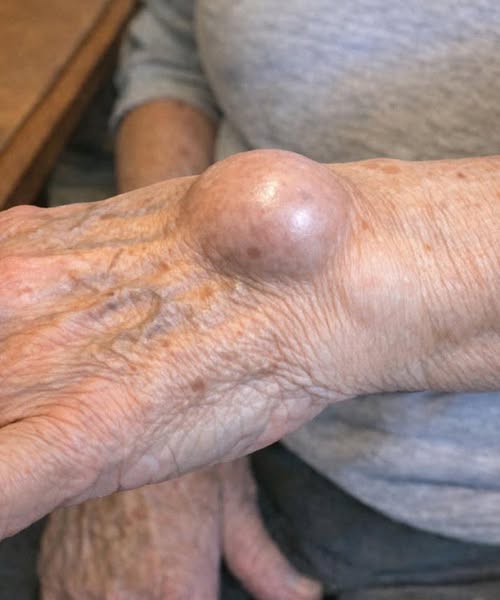
Discovering an unfamiliar growth on your body can be a jarring experience, especially when that growth appears on a highly visible and frequently used area like the wrist. When a lump seemingly materializes overnight, the immediate reaction is often a mix of confusion and anxiety. However, medical professionals emphasize that while any new physical development warrants attention, the vast majority of sudden wrist swellings are benign, manageable, and well-understood by modern medicine. By peeling back the layers of mystery surrounding these “overnight” lumps, patients can move from a state of worry to an informed plan of action.
The primary reason a sudden wrist lump causes such alarm is its rapid onset. Unlike many health issues that develop slowly over months, certain wrist conditions can manifest in a matter of hours. This speed is typically indicative of fluid dynamics rather than a cellular growth like a tumor. When the body experiences a sudden shift in internal pressure or a minor structural leak within a joint, fluid can accumulate quickly, creating a protrusion that feels like it appeared out of nowhere.
The most common culprit behind this phenomenon is the ganglion cyst. These are noncancerous, fluid-filled sacs that typically develop along the tendons or joints of the wrists or hands. Imagine a small balloon filled with a thick, clear, jelly-like substance known as synovial fluid. In a healthy joint, this fluid acts as a lubricant, ensuring smooth movement. However, if there is a tiny “leak” from the joint capsule or a tendon sheath, that fluid can collect in a sac, forming a cyst. These cysts can range in size from a tiny pea to an inch in diameter. They are famously temperamental—they might grow larger with increased activity, shrink during rest, or even disappear entirely on their own, only to reappear weeks later.
While the exact “why” of ganglion cysts remains a subject of medical debate, they are remarkably common. They frequently appear in individuals between the ages of 20 and 40 and are found more often in women. Gymnasts, weightlifters, and office workers who subject their wrists to repetitive stress are also at a higher risk. Interestingly, even though they look like a sudden injury, they aren’t always preceded by a specific traumatic event.
Diagnosing a ganglion cyst is usually straightforward. A physician will perform a physical examination, checking the lump’s firmness and location. One of the most telling tests is “transillumination”—if you hold a small flashlight against the lump in a dark room and the light passes through it, it confirms the mass is fluid-filled rather than solid. If there is any doubt, a doctor might use a thin needle to “aspirate” or withdraw some of the fluid. The presence of a clear, viscous gel is the definitive “smoking gun” of a ganglion cyst.
However, the wrist is a complex anatomical neighborhood, and other “neighbors” can move in unexpectedly. A lipoma, for instance, is a slow-growing, fatty mass that sits between the skin and the underlying muscle layer. Unlike the firm or rubbery feel of a cyst, a lipoma is usually soft and doughy. Then there are bone spurs, often associated with osteoarthritis, which feel hard and immovable because they are actual protrusions of bone. In other cases, especially for those with a history of autoimmune issues, a lump might be a rheumatoid nodule.
The most important distinction to make is whether the lump represents a medical emergency. While the majority are harmless, you should seek immediate care if the lump is accompanied by signs of infection—such as intense redness, warmth, or a fever. Furthermore, if the lump is pressing on a nerve, it might cause “drop wrist,” numbness, or a tingling sensation in the fingers. If you lose the ability to grip objects or move your hand normally, it is time to skip the research and head to a professional.
When it comes to treatment, the medical community has moved away from the “old-fashioned” remedies. Centuries ago, these were known as “Bible bumps” because the common folk remedy involved striking the cyst with a heavy book (like a family Bible) to rupture it. Modern doctors strongly advise against this. Not only can it cause bone fractures and skin bruising, but the cyst is almost certain to return if the underlying “root” or stalk is not addressed.
Current management usually begins with “watchful waiting.” If the cyst isn’t painful and doesn’t interfere with function, many doctors recommend simply keeping an eye on it. If it causes discomfort, the next step is typically aspiration—using a needle to drain the fluid. While this provides immediate relief, the recurrence rate for drained cysts is nearly 50%, because the sac remains. For persistent or painful cases, surgical excision is the gold standard. This involves a minor outpatient procedure where the surgeon removes the cyst along with the tiny portion of the joint capsule or tendon sheath it’s attached to. Even with surgery, there is a small chance (roughly 10% to 20%) that the cyst could return, but it remains the most effective long-term solution.
For those managing a lump at home, a wrist splint can be an invaluable tool. By limiting the range of motion in the joint, you reduce the “pumping” action that forces fluid into the cyst, often causing it to shrink. Over-the-counter anti-inflammatories can help with any dull aches, and ice packs are useful for temporary swelling.
As you navigate this, especially if you are caring for an elderly family member like a grandmother, the key is clear communication with healthcare providers. Ask the right questions: Is this definitely fluid-filled? Does it interfere with any nerves? What are the risks of leaving it alone versus draining it?
The landscape of 2026 medicine is one of caution and precision. Whether the news of the day involves the latest health updates for public figures like Bruce Willis or personal medical mysteries like a new wrist lump, the principle remains the same: information is the best antidote to fear. A sudden lump on the wrist is rarely the “horrifying incident” that headlines might suggest. Instead, it is usually just a signal that a joint needs a little rest, a little repair, and a bit of expert attention. By understanding the anatomy of a ganglion cyst and the variety of other benign possibilities, you can handle an overnight change with the same composure and grace that professionals strive for in the public eye.
Leave a Reply