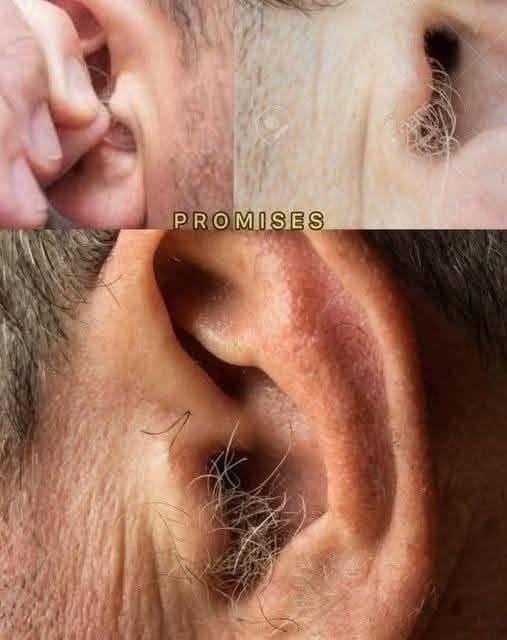
Noticing hair growing on or inside your ears can be surprising, and for many people, even a little embarrassing. It’s often joked about as a sign of aging or poor grooming, and some viral headlines go further, suggesting it means “your body is trying to tell you something.” In reality, ear hair is completely normal, biologically purposeful, and far less mysterious than it’s made out to be.
The human body is covered in hair almost everywhere. The only true exceptions are the palms of the hands, the soles of the feet, and parts of the lips. That includes the ears. Hair growth in and around the ears is part of normal human anatomy, and while it can become more noticeable over time, it is not automatically a sign that something is wrong with your health.
Understanding why ear hair exists, why it sometimes becomes more prominent, and what it does can help strip away the myths and unnecessary worry surrounding it.
Ear hair appears in two main areas: the outer ear, known as the pinna, and the ear canal itself. These two types of hair serve different functions.
Hair inside the ear canal plays a protective role. It works alongside earwax to trap dust, dirt, insects, and other foreign particles before they can reach the eardrum. This system helps reduce the risk of infection and damage to the delicate structures responsible for hearing. Without this barrier, our ears would be far more vulnerable to irritation and injury.
The ear also contains microscopic hair-like cells deep within the inner ear. While these aren’t visible and aren’t the same as body hair, they are critical to hearing and balance. These tiny structures detect vibrations and fluid movement, converting them into signals the brain can interpret. Damage to these cells can result in hearing loss or balance disorders, which shows just how essential “hair” is to ear function at every level.
Hair on the outer ear has less of a functional role today, but it remains an evolutionary leftover. Early humans had more body hair to help regulate temperature and protect the skin. Over time, as humans evolved and relied less on body hair for survival, much of it became finer and less noticeable. Ear hair, like eyebrow hair or arm hair, simply never disappeared entirely.
Before birth, humans develop a soft, fine layer of hair called lanugo. This hair covers nearly the entire body, including the ears, and helps regulate temperature and hold a protective substance called vernix caseosa against the skin in the womb. Lanugo typically sheds before or shortly after birth, but it demonstrates that hair growth in the ear area is part of normal human development from the very beginning.
So why does ear hair often become more noticeable later in life?
The most common factor is aging. As people get older, hormonal changes affect hair growth patterns throughout the body. In men especially, testosterone and its byproduct dihydrotestosterone (DHT) can stimulate thicker and longer hair growth in areas like the ears, nose, and eyebrows. At the same time, hair on the scalp may thin or disappear, creating an unfair trade-off that many people notice with frustration.
Genetics also play a major role. Some people are simply more predisposed to visible ear hair than others. If older male relatives in your family have prominent ear or nose hair, chances are you may develop it too. This isn’t a disease or a deficiency; it’s inherited biology.
Contrary to some online claims, ear hair growth is not a reliable indicator of poor circulation, heart disease, or internal toxicity. While there have been limited studies exploring correlations between certain types of hair growth and health conditions, no strong scientific evidence supports the idea that ear hair itself is a warning sign. In most cases, it’s just hair doing what hair does.
That said, excessive ear hair can sometimes contribute to practical issues. Thick hair inside the ear canal can trap more earwax, potentially leading to buildup. This may cause muffled hearing, discomfort, or a feeling of fullness in the ear. In rare cases, it can increase the risk of infection if debris accumulates and isn’t cleaned properly.
If ear hair becomes bothersome, removal is a personal choice rather than a medical necessity. There are several safe and common options, each with pros and cons.
Trimming is the simplest and safest method. Small grooming scissors or electric trimmers designed for ear and nose hair allow you to shorten visible hair without removing it entirely. This maintains the ear’s protective function while keeping things tidy.
Waxing or plucking removes hair at the root, which can keep the area smooth for longer. However, this approach carries more risk. The skin in and around the ear is sensitive, and improper waxing or plucking can cause irritation, ingrown hairs, or infection. It’s generally better left to professionals if chosen at all.
Laser hair removal offers a longer-term solution by reducing hair growth over time. While effective, it is costly and typically reserved for cosmetic concerns rather than practical ones. It also requires multiple sessions and should only be done by trained specialists.
One thing experts strongly advise against is inserting sharp objects or unapproved tools into the ear canal. The risk of damaging the eardrum or pushing debris deeper into the ear far outweighs any cosmetic benefit.
Ultimately, ear hair is neither dirty nor abnormal. It’s a natural feature of the human body with protective roots and evolutionary history. Cultural standards and beauty norms may encourage its removal, especially in men as they age, but biologically speaking, it’s doing exactly what it’s supposed to do.
The idea that ear hair is your body sending an urgent warning message is more internet myth than medical reality. For most people, it’s simply another reminder that the body changes over time, sometimes in inconvenient or unexpected ways.
Understanding the science behind ear hair replaces embarrassment with perspective. It’s not a flaw, not a failure, and not a hidden diagnosis. It’s just biology—mundane, practical, and far less dramatic than the headlines make it out to be.
Leave a Reply