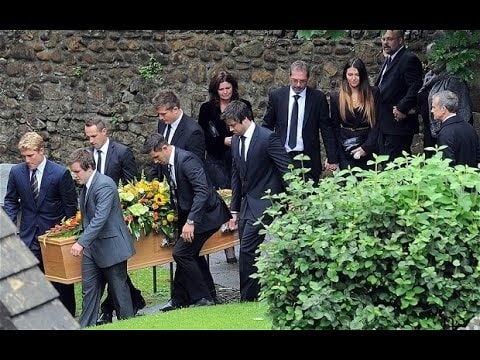
The entertainment world continues to reflect on the monumental legacy of Don Rickles, the undisputed “Merchant of Venom,” whose passing at the age of 90 marked the conclusion of one of the most remarkable chapters in the history of American comedy. Emerging from the smoky nightclubs of the 1950s and rising to become a towering figure in both Las Vegas and late-night television, Rickles didn’t just perform comedy; he weaponized it. With a career that spanned over six decades, he mastered the precarious art of the insult, transforming what could have been mere cruelty into a sophisticated, high-energy performance that celebrated the absurdity of human ego. He passed away peacefully at his home in Los Angeles, leaving behind his beloved wife, Barbara, his daughter, and two grandchildren, along with a comedy world that remains deeply in his debt.
To understand Don Rickles is to understand the paradox of the “insult comic.” While his stage persona was that of a relentless, fast-talking agitator who delighted in pointing out the flaws of his audience, the man behind the microphone was a paragon of old-school Hollywood integrity and familial devotion. He was famously a “late bloomer” in his personal life, living with his mother—whom he adored—until he married Barbara at the age of 38. That marriage became one of the industry’s most enduring success stories, lasting 52 years until his final day. Rickles often made Barbara the “victim” of his sharpest barbs on stage, joking that her jewelry was so extravagant and shiny it could be used to signal passing ships or land aircraft. However, these jokes were always delivered with a metaphorical wink; the audience understood that the mockery was a thin veil for a deep, unwavering affection.
Rickles’s rise to stardom is often traced back to a legendary encounter in a small Hollywood nightclub during the late 1950s. Frank Sinatra, the most powerful man in show business at the time, walked into the club while Rickles was performing. Most comedians would have been paralyzed by nerves, but Rickles saw an opportunity. As Sinatra took his seat, Rickles barked from the stage, “Make yourself at home, Frank. Hit somebody.” He followed this up by ruthlessly mocking Sinatra’s singing voice and his tough-guy reputation. It was a high-stakes gamble that could have ended Rickles’s career before it truly began. Instead, Sinatra erupted in laughter. By refusing to be intimidated, Rickles earned the respect of “The Chairman of the Board,” gaining entry into the inner circle of the Rat Pack. While he was never a singer or a “cool” crooner like Dean Martin or Sammy Davis Jr., Rickles became their honorary comedic mascot—the man who was allowed to say the things no one else dared to utter.
His comedy was built on a foundation of lightning-fast improvisation. Rickles possessed a supernatural ability to read a room and identify the exact pressure points of his audience. He didn’t discriminate in his “attacks,” aiming his verbal arrows at every race, religion, and social class with equal fervor. In today’s more sensitive cultural climate, his routine might seem provocative, but in the context of a Rickles show, the insults acted as a form of social leveling. By making fun of everyone, he created a strange sense of unity. To be insulted by Don Rickles was considered a badge of honor; it meant you were important enough to be noticed. His “hockey puck” and “dummy” epithets became iconic, and his appearances on The Tonight Show Starring Johnny Carson—more than 100 in total—are still regarded as some of the funniest moments in television history.
Beyond the stage, Rickles was a talented actor who brought his unique energy to the screen. Younger generations may know him best as the voice of Mr. Potato Head in the Toy Story franchise, a role that perfectly captured his “lovable curmudgeon” persona. In films like Martin Scorsese’s Casino, he proved he could handle dramatic weight, playing the loyal right-hand man to Robert De Niro’s character with a quiet, menacing gravity. This versatility was a testament to his craftsmanship. He wasn’t just a guy with a loud voice and a quick wit; he was a disciplined artist who understood the rhythm of storytelling and the nuances of character.
The true measure of Rickles’s impact, however, is found in the tributes from the comedians who followed him. He was a mentor and a source of inspiration for the giants of the modern era. Figures like David Letterman, Jimmy Kimmel, Chris Rock, and Louis C.K. have all cited Rickles as a foundational influence. They admired his fearlessness—the way he could walk onto a stage without a script and command the room through sheer force of personality. Kimmel, in particular, maintained a close friendship with Rickles in his later years, often featuring him on his show to remind audiences that even at 90, the “Merchant of Venom” hadn’t lost a step. He was a link to a vanished era of show business, a time of tuxedoes, martinis, and the bright lights of the Sands Hotel, yet his humor remained timelessly sharp.
His friendships in Hollywood were as legendary as his comedy. He was part of a tight-knit “poker group” that included Carl Reiner and Bob Newhart, a circle of comedy royalty who spent decades laughing with and at one another. Newhart, often the “straight man” to Rickles’s chaos, shared stories of a man who was profoundly kind and supportive behind the scenes. This duality—the harsh public tongue and the soft private heart—is what made Rickles such a beloved figure. He proved that you could be the “meanest” man on stage while being the gentlest man at home.
Don Rickles’s death signifies the passing of a pioneer. He paved the way for the “roast” culture that remains popular today, but he did it with a level of charm and professionalism that few have been able to replicate. He understood that comedy is a safety valve for society, a way to release tension and acknowledge our shared absurdities through laughter. As he once famously said, “If I were to insult people and mean it, that wouldn’t be funny.” He never meant it, and that was the secret to his longevity.
As we celebrate his life, we remember a man who lived to hear the roar of a crowd and who valued his family above all accolades. He was a man who stayed true to his roots and his style, even as the world around him changed. The “Merchant of Venom” may be gone, but the echoes of his laughter and the “insults” that brought people together will continue to resonate in the hallowed halls of comedy history. He was a true icon, a devoted husband, and a brilliant performer who reminded us all not to take ourselves too seriously. The stage is a little quieter now, and the “dummies” of the world are a little safer, but the legacy of Don Rickles remains a masterclass in the power of a well-timed joke and a life well-lived.
Leave a Reply