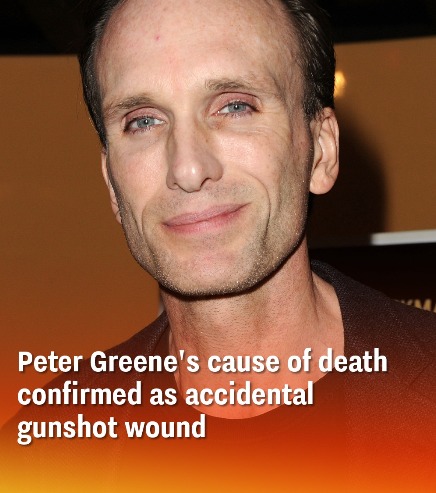
In the competitive and often mercurial world of Hollywood character acting, few performers possessed the raw, visceral intensity of Peter Greene. Known for his indelible turns as the villainous Zed in Pulp Fiction and the menacing Dorian Tyrell in The Mask, Greene carved out a niche as a performer who could command the screen with a single, steely gaze. In early 2026, the final chapter of his life was officially clarified by the New York Medical Examiner’s Office, bringing a somber resolution to a story that had been shrouded in speculation since his passing in December. The 58-year-old actor’s death has been confirmed as a tragic accident, the result of a self-inflicted gunshot wound that ended the career of one of cinema’s most recognizable and respected “tough guys.”
The chronology of the event began on December 12, when police were called to Greene’s New York apartment. For nearly 24 hours, neighbors had been unsettled by the sound of loud music emanating from his unit—a persistent, unchanging wall of sound that eventually prompted a welfare check. Upon entry, authorities discovered the actor’s body. While the initial scene led investigators to deem the death non-suspicious, the presence of a firearm and a cryptic note referencing a neighborhood group fueled a wave of internet speculation and “true crime” theories. However, the forensic report released in February 2026 has provided a definitive and heartbreaking technical explanation: Greene died from an accidental gunshot wound to his left axilla (the armpit area).
The Fatal Mechanics of the Accident
The medical examiner’s report highlights the terrifying speed of such an injury. The projectile struck and severed Greene’s brachial artery, a major blood vessel responsible for supplying oxygenated blood to the arm. Because of the high pressure within this artery, medical experts note that an injury of this nature can lead to fatal hemorrhaging within mere minutes. This clinical clarity has helped dispel the more sensationalist rumors that circulated following the discovery of the note, reframing the event as a catastrophic lapse in firearm safety rather than a deliberate act.
For those in Greene’s inner circle, the “accidental” ruling aligns with the man they knew in his final days. His manager shared that the actor had been in exceptionally positive spirits, enjoying a late-career resurgence. Greene was not a man in retreat; he was actively engaged in the promotion of a recently released film and was in the midst of filming a documentary about his life and the craft of character acting. He was a performer who had survived the highs and lows of the industry and was looking forward to the future with the same intensity he brought to his roles.
A Legacy Defined by Depth and Versatility
The tragedy of Greene’s passing is magnified by the void he leaves in the film community. Often relegated to the role of the antagonist, Greene possessed a unique ability to find the humanity—or the terrifying lack thereof—in every character he played. Whether he was playing a crooked cop, a drug kingpin, or a supernatural mobster, he approached the work with a blue-collar professionalism that earned him the unwavering respect of his peers.
Colleagues from the sets of The Usual Suspects and Under Siege 2 have spent the early months of 2026 sharing anecdotes of his kindness and his quiet, focused presence between takes. They describe a man who was the antithesis of the “monsters” he portrayed—a generous scene partner who understood that the strength of a movie often lies in the quality of its supporting cast.
Contextualizing a Loss in a Year of Uncertainty
The news of Peter Greene’s cause of death arrives during a period of intense public focus on safety and forensic clarity. In 2026, the public consciousness is saturated with stories of unexpected loss and the search for truth—from the devastating birthday party shooting in Stockton, California, to the ongoing, high-tech search for Nancy Guthrie in Arizona. In each of these cases, whether it is the discovery of a “blood-stained glove” in the desert or the analysis of an accidental wound in a New York apartment, there is a collective drive to find the “signal in the noise.”
For fans of cinema, the closure provided by the Medical Examiner’s Office allows the focus to shift back to Greene’s artistry. His death is a sobering reminder of the permanence of a single mistake, but his life is a testament to the power of a dedicated craftsman. He was part of a generation of actors who didn’t need a leading role to be a star; he just needed a few minutes of screen time to make an audience remember him forever.
The Role of Forensic Clarity in the Digital Age
The speed with which the Medical Examiner’s report was circulated reflects the 2026 media environment, where clarity is the only antidote to viral misinformation. Just as AI is being used to “unmask” figures in the Nancy Guthrie case, forensic science has been used here to unmask the truth of a Hollywood tragedy. By confirming the accidental nature of the wound, the state has protected Greene’s legacy from the tarnishing effects of baseless rumors, allowing his family and fans to grieve without the added weight of unanswered questions.
As we look toward the remainder of 2026, Peter Greene’s body of work will undoubtedly see a resurgence in viewership. From the cult classic status of King of New York to the blockbuster success of The Mask, his filmography is a masterclass in the “intense supporting character.” His passing is a heartbreak for the industry, but the official report provides a sense of peace, confirming that while his death was sudden and tragic, it was a moment of human error in a life otherwise dedicated to the pursuit of creative truth.
The New York apartment where he was found is silent now, but the films he made continue to play in every corner of the globe. Peter Greene left the stage too soon, but he did so with his boots on, working until the very end. While the circumstances of his departure were accidental, the impact he made on the world of film was entirely intentional. He will be remembered not for how he died, but for the depth he brought to the screen—a depth that made him, in every sense of the word, a giant of the character acting craft.