Category: Uncategorized

  • My father wasn’t cruel

    My father wasn’t cruel

    My father wasn’t cruel in the usual ways. He never raised his voice or his hand. But he was distant, rigid — a man who lived by rules, not emotion. His life ran like the garage he owned: precise, spotless, and unforgiving. There was no space for mistakes. I knew my news would break something between us, but I still hoped he’d show a hint of compassion. He didn’t.

    “Dad,” I whispered, trembling, “I’m pregnant.”

    He didn’t shout. He didn’t ask who or how. He just looked at me — hard, silent — then opened the front door and said flatly, “Then you’d better handle it yourself.”

    At seventeen, I stuffed a few clothes into a bag and walked out into the night. When the door clicked shut behind me, it sounded final — like the end of childhood. The baby’s father lasted another couple of weeks before vanishing. I learned then that some people love you only until it’s inconvenient.

    I found a run-down apartment with peeling paint and the smell of mildew. I worked at a grocery store during the day and cleaned offices after dark. When my belly grew, so did the stares and whispers. I stopped expecting understanding. I stopped waiting for help.

    When my son arrived, there were no visitors, no flowers, no family waiting. Just me and him — this tiny, beautiful boy I named Liam.

    Every sleepless night, every meal skipped, every job taken — it was all for him. He was my reason, my anchor.

    Liam grew fast. By fifteen, he was already working part-time at a mechanic’s shop, his hands moving with confidence that reminded me of my father. At seventeen, people were requesting him by name. He had the discipline and drive that my dad once demanded from me.

    When he turned eighteen, I asked what he wanted for his birthday. He didn’t even pause. “I want to meet my grandfather.”

    My heart dropped. My father hadn’t called, written, or asked about us in eighteen years. My first instinct was to protect Liam from that same rejection. But he looked at me and said quietly, “I’m not angry. I just need to see him. Once.”

    So we drove there. The same driveway. The same porch light. My hands gripped the steering wheel while Liam got out, shoulders squared like he was walking into battle.

    When my father opened the door, confusion turned to recognition. Liam looked too much like both of us for him not to know.

    They stared at each other for what felt like forever. Then Liam reached into his jacket and handed him a small box. “Happy birthday to me,” he said with a faint smile.

    Inside was a single piece of chocolate cake.

    My father just stood there. Silent.

    “I forgive you,” Liam said softly. “For what you did to my mom. For what you didn’t do for me.”

    The words landed like a quiet thunderclap. My father’s jaw barely moved, but something flickered in his eyes — maybe guilt, maybe sorrow.

    Liam continued, steady and sure. “Next time I knock, it won’t be for cake. I’ll have my own garage. I’m going to do it better — not to prove you wrong, but because you made us strong.”

    Then he turned and walked back to the car. My throat burned, but I couldn’t say a word.

    “I forgave him, Mom,” Liam said softly once we were inside. “Maybe it’s time you did too.”

    I couldn’t respond. I just stared at him — this man I’d raised, full of grace I’d never learned. He carried peace where I still carried pain. He’d taken the weight of our story and turned it into strength.

    The drive home was silent, but my mind was loud. His words. My father’s face. That small piece of cake. Somewhere in the replay, I realized forgiveness wasn’t about excusing him — it was about freeing myself. Freeing that seventeen-year-old girl who’d been cast out.

    That night, I sat by the window, tears blurring the streetlights. For years, I’d measured my life by what I’d lost — home, family, belonging. But watching Liam, I finally saw what I’d built: resilience, love, and a life no one could take from us.

    Six months later, Liam opened his garage. On opening day, my father appeared — older, smaller somehow — standing in the back. He didn’t say much, just handed Liam an old wrench. The one he’d used his whole career. It wasn’t a speech, but it was something. Maybe everything.

    Liam shook his hand, calm and certain. There was no bitterness, just peace. And for the first time in almost two decades, I felt it too.

    We were never going to be the family my father wanted. But that was okay. We were real — and that was enough.

    Now, when I look at Liam, I see everything my father missed. Kindness. Strength. Decency. He grew not from comfort, but from challenge. From love that refused to quit.

    I used to think being thrown out at seventeen was the end of my story. It wasn’t. It was the start. Sometimes, hitting the bottom isn’t destruction — it’s the beginning of your rebuild.

    Liam was right. Forgiveness doesn’t erase the past. It just releases you from it.

    And that freedom — that peace — became the life we made from nothing.

  • I Found Out My Husband Was Having an Affair With My Younger Half-Sister — Instead of Exposing Them, I Asked Her to Come Over the Following Day.

    I Found Out My Husband Was Having an Affair With My Younger Half-Sister — Instead of Exposing Them, I Asked Her to Come Over the Following Day.

    I often look back and try to pinpoint the exact moment my marriage began to crack. But the truth is, I can only pinpoint the moment it finally shattered — and it happened on a quiet Friday afternoon, in the most ordinary way imaginable. Not during an argument, not during a confession, not during a dramatic turning point like in movies.

    It started with a carton of forgotten milk. For sixteen years, I had believed with my whole heart that our marriage was steady, warm, and deeply rooted. David and I had built a home together in a small, tree-lined suburban neighborhood, the kind of place where porch swings creaked in the breeze and children rode bikes until sunset.

    Our front yard bloomed year-round, and neighbors often commented on how peaceful our home felt. People used to tell me — almost admiringly: “You’re so lucky. He’s such a family man.” And I believed it. I believed every single word.

    David was thoughtful in ways that seemed rare. He warmed my car on winter mornings. He left little handwritten notes inside my lunch bags. He remembered birthdays, anniversaries, milestones — even my mother’s birthday, long after she passed away.

    He kissed my forehead every night. He said “I love you” in the quiet tone of someone who meant it. He told me I didn’t have to work after our second child was born, insisting the family needed stability and that I deserved rest.

    I took his words as affection. I saw his decisions as supportive, protective, dependable. He made it easy to believe I had chosen the right person. We were the couple people pointed to as an example — solid, united, predictable in the best way.

    A life that could have been printed on the front of a holiday card. And then… that Friday came.

    The day began normally. A blur of errands, school drop-offs, tidying up the house. Nothing unusual, nothing significant. The world felt perfectly ordinary until, halfway through the day, I realized I had forgotten to buy milk — a simple oversight that sent me back home earlier than usual.

    I pulled into the driveway twenty minutes ahead of schedule. The first thing I noticed wasn’t a sound. It was the silence. A silence that felt heavy, uneasy, almost watchful — a stillness that made something deep in my stomach twist instinctively.

    I stepped inside, grocery bags in hand, and for a moment, everything seemed normal. But then I heard it — faint, drifting from down the hallway: A man’s voice, familiar in its ease. And a woman’s voice, light, high-pitched, flirtatious… disturbingly familiar.

    At first, I thought David was on the phone with someone. But the tone in his voice… the softness… the warmth… felt different. Too different. I froze. My breath caught somewhere between my chest and my throat. And then I heard her say it — with a playful lilt that made the words sound even worse:

    “Oh, please… you just like forbidden things, big brother.” My entire body went cold. That voice belonged to Mia. My half-sister. Twenty-six. Beautiful in the curated, trendy way. Vibrant. Energetic. The type of girl who always smelled like floral perfume and impulsive decisions.

    She was the kind of person who floated through life believing the universe owed her good fortune. She changed careers like she changed nail polish colors — dog grooming, yoga instruction, tarot reading, life coaching, and whatever else made her feel “aligned” with herself.

    She was dramatic, charming, always seeking attention… but I had always thought she was harmless. But that day, the universe shifted. Before I could fully process what was happening, I heard the unmistakable sound of a kiss. Not a polite kiss on the cheek. Not the kind exchanged between family friends.

    A kiss full of intention. A kiss full of desire. It felt like the ground dropped beneath me. But I didn’t scream. I didn’t drop the groceries. I didn’t burst into tears. Instead, something colder, sharper, calmer washed over me. A clarity I didn’t know I was capable of. My mind didn’t panic. My instincts planned.

    I set down the grocery bags quietly. My heart was racing, but my thoughts were razor-focused. I listened to their soft laughter, to the intimate way they spoke, to the rustling of clothes and movement. And then I did something that surprised even me: I turned the front doorknob loudly. The click echoed down the hallway like a warning bell.

    I made noise as I entered — keys jangling, bags shifting, footsteps deliberate. Enough to give them a sliver of time to pull apart, to hide the evidence, to prepare a lie. By the time I walked toward the hallway, they were standing several feet apart, a book awkwardly held between them like a prop in a poorly rehearsed play. Mia flashed a bright, nervous smile.

    David’s eyes flickered with guilt he couldn’t hide. “Oh!” Mia chirped, too cheerfully. “I just stopped by to give him this book. It’s about, um… finding yourself.” Yes. She had certainly found something. Just not herself. I smiled — calmly, sweetly, disturbingly composed.

    “How thoughtful,” I said. “You always know exactly what we need.” Her face stiffened, but she didn’t dare look away. That night, I cooked dinner the way I always did. Set the table. Passed the mashed potatoes. Listened to David’s usual stories from work. I nodded. I smiled. I played the part.

    Inside, my heart was shattering, piece by piece, but my face never faltered. Every word he said felt heavier, colder, sharper — each syllable reminding me of the betrayal I had uncovered. I didn’t sleep that night. I lay awake beside him, listening to the steady rhythm of his breathing as he slept peacefully, unaware that our marriage was crumbling quietly and entirely.

    In the morning, I prepared breakfast, packed the kids’ lunches, kissed him goodbye… Just like always. And when he drove away, believing everything was normal, I finally picked up my phone. I messaged Mia — sweetly, gently, with a tone she couldn’t question:

    “Hey, could you come over tomorrow? I really need your advice. I’ve been feeling down about my body lately and I know you’re into fitness and wellness. Maybe you could help me figure out what to do?” She replied in less than a minute: “Aww, of course! Six?” “Perfect.” I typed back. But the smile on my face wasn’t warm. It wasn’t soft. It wasn’t thankful.

    It was the kind of smile born from controlled, deliberate rage — the kind that never reaches the eyes. She thought she was coming to guide me. Support me. Advise me. What she didn’t know was that she was walking straight into the moment where everything she had broken would finally come back to face her. And this was only the beginning.

    The next evening arrived with the heaviness of a storm that had been gathering for years. Even though the sky outside was clear and golden with sunset, the air inside my home felt tense, like the walls themselves were waiting for what was about to unfold.

    I prepared the house carefully, not in anger, but in precision. I cleaned the kitchen counter until it gleamed. I arranged the chairs around the table. I made chamomile tea — the kind I usually saved for long, difficult conversations. I made sure the kids were at the neighbors’ house, safe and unaware of the truth that was about to shatter the world they knew.

    I wanted no distractions. No interruptions. Just the truth. When the doorbell finally rang, my heart didn’t pound — it steadied. That alone surprised me. I thought I would feel panic or fury, but what I felt instead was something colder. A quiet certainty. A strength I didn’t know I had. I opened the door. And there she was: Mia, in all her reckless glory.

    Her outfit was far too revealing for a family visit — a deep, plunging top paired with tight pants that belonged more in a nightclub than in my kitchen. Her lip gloss glistened under the light, and her hair was styled so flawlessly that it looked like she had spent an hour ensuring every strand fell perfectly. She smiled like nothing in the world was wrong.

    “Hey, girl!” she chirped as she wrapped her arms around me. She smelled like expensive perfume mixed with artificial sweetness — a scent I once thought was charming. Now it made my stomach twist. “You look amazing,” I said softly, not meeting her eyes. “Tea?” “Yes, please,” she said, settling into a chair at the table like she owned the place. Her confidence filled the room the way smoke fills a small space — silently, suffocatingly.

    I placed a cup in front of her and took a seat across from her. She dove right into conversation, as she always did — loud, enthusiastic, overflowing with opinions no one asked for.

    “So,” she began, leaning forward with a sympathetic pout, “if you really want to feel better about yourself, the first thing is a detox. You have to clear your energy, clear your body, clear your mind. Once you do that, you’ll start loving yourself more. I can send you affirmations. They changed my life.”

    Her voice was syrupy, overflowing with performative compassion. I nodded, stirring my tea slowly. “That sounds like a plan,” I said. Then, without lifting my gaze, I added in a calm, almost gentle tone: “And should I also find myself a married man to stay motivated? Or is that part of your personal wellness routine?”

    Her body went rigid. Her smile froze mid-air. Her hand hovered above her teacup. For a moment, she didn’t breathe. “I… I don’t know what you mean,” she stammered, blinking rapidly. I finally looked up, meeting her eyes with a steady, unwavering stare.

    “You’re glowing, Mia,” I said. “I just figured wrecking someone’s marriage must burn calories. Should I try it too, or is that something only you specialize in?” She swallowed hard, her eyes darting nervously around the room as though looking for an escape route. “Nina,” she whispered, “maybe this is a misunderstanding. I should go.”

    “Sit,” I said, my voice soft but firm. “We’re not done.” Something in my tone made her obey. She lowered herself back into the chair, her composure slipping with each passing second. I reached for the laptop sitting quietly on the table and opened it — slow, deliberate, almost ceremonial. Her eyes widened. Her fingers trembled.

    A still image appeared first — the hallway from the day before. The muted colors, the soft shadows, the angle of the security camera I had installed years ago to monitor my kids after an incident with our oldest child. Then the video started. Movement. Breathing. Two figures stepping close. Too close. Mia flinched.

    Her lips trembled as her own voice filled the room, echoing back at her with no mercy: “You just like forbidden things, big brother…” There was no way to deny what she had said. No way to deny what they had done. The sound of their kiss played next — unmistakable, intimate, violating.

    She covered her mouth with a shaking hand as tears pooled in her eyes. “Nina,” she whispered, “I didn’t know the camera—” “You didn’t know I would hear,” I corrected calmly. “You didn’t know I would catch you.” I leaned back in my chair, watching her unravel. Her mascara smudged. Her voice cracked. Her confidence shattered like thin glass under pressure. She looked smaller now — fragile, guilty, exposed.

    “I made a mistake,” she said, voice trembling. “It just… happened. I didn’t plan it. He came onto me.” “Of course,” I said softly, tilting my head. “Naturally. You just accidentally fell into his arms. And then his lap. And then into every boundary you were never supposed to cross.” She shook her head violently. “Nina, please. I never wanted to hurt you.”

    “Yet you did,” I replied. “Over and over again.” Silence stretched between us, thick and suffocating. She stared at her cooling tea, unable to find words, unable to defend herself. The room felt smaller, heavier, as though every lie she had told had begun collapsing on top of her.

    But we weren’t done. There was still one more piece she didn’t know about. “Before you go,” I said quietly, “there’s someone who wants to say something.” Her head jerked up. Her eyes widened. She turned as the guest room door opened. And my father stepped out. His expression was not angry. It was worse — disappointed beyond measure. The kind of disappointment that cuts deeper than any shout.

    “Dad…?” Mia whispered, her entire body trembling now. He walked slowly to the table, his steps heavy. He looked at her like he was looking at a stranger — someone he barely recognized. “Mia,” he said, voice low and steady, “I raised you better than this.” She burst into tears instantly. Her shoulders shook, her breathing uneven. “Dad, I—I didn’t mean—”

    “You didn’t mean to get caught,” he said sharply. “You always wanted attention. You always wanted what wasn’t yours. But this… this is beyond selfish.” She sobbed harder, hiding her face in her hands. I stood silently as the cracks in her perfect image grew wider. “David is your sister’s husband,” my father continued. “You don’t get confused about something like that. You choose it.”

    She choked on her own breath. Her world was collapsing — and this time, she felt it. She grabbed her purse with shaking hands and stumbled to her feet. Without another word, she fled out the front door, crying uncontrollably. The moment the door closed behind her, the air in the room shifted — not lighter, but clearer.

    My father placed a hand on my shoulder. “You okay?” he asked gently. I nodded, even though I wasn’t sure what “okay” meant anymore. “She was your favorite,” I whispered. He didn’t hesitate. “Not anymore.” David came home later that night. He saw the laptop first — open on the table, the video paused on a frame of him kissing my half-sister.

    He froze in the doorway, the color draining from his face. His keys nearly slipped from his hand. “Nina…” I didn’t let him speak. “I know,” I said. “I know everything.” He stepped forward, palms raised, voice trembling with fear and regret. “Nina, please—” “No,” I said firmly. “You don’t get to talk yet.” My father and stepmother quietly stood and left, brushing past him without a single word. His shame was thick enough to fill the room.

    He tried again: “It wasn’t what you think—” “Oh,” I said softly, “did you trip and fall into her arms too?” He looked like he had been punched. “You convinced me to quit my job,” I said. “You told me our family needed stability. Meanwhile you were destroying the very thing you claimed to protect.” “Nina, I love you—”

    “You don’t betray someone you love,” I said. “Not like this.” There was no screaming. No broken plates. No chaos. Just silence. A silence full of endings. I filed for divorce that weekend. I met with a lawyer. I secured the home. I protected the kids. I blocked Mia on everything. I told David he needed to find somewhere else to stay.

    The truth spread slowly among family and neighbors — messy, painful, unavoidable. And every time I shared even a piece of the story, I kept my head high. By the time the divorce was finalized, I had full custody of the children. I kept the house. I kept the car. I kept my dignity. David moved into a small, dull apartment across town.


    Mia left the state entirely. My nights were filled with therapy sessions, long walks, whispered tears after the kids fell asleep — but I healed, piece by piece. One night, months later, my daughter looked at me with big, searching eyes and asked: “Mommy, are you ever going to be happy again?” And for the first time in a long time, my smile was real.

    “I already am,” I said. Her brow furrowed. “Even though Dad and Aunt Mia are gone?” “Yes,” I whispered. “Because we’re still here. And that’s enough.” That night, we curled up on the couch beneath the same fluffy blanket we had used a hundred times before. We watched the same movie we had watched together the night after their father moved out — our quiet ritual of starting over, just the three of us.

    There were no speeches. No dramatic declarations. Just popcorn, soft laughter, and the warm glow of beginning again. Sometimes, revenge isn’t loud. Sometimes, healing isn’t dramatic. Sometimes, the strongest thing you can do is refuse to break.

    Rebuilding can be quiet. Steady. Powerful. And I learned something important: They never expect you to rise — until you already have.

  • Exclusive: DOGE ‘doesn’t exist’ with eight months left on its charter

    Exclusive: DOGE ‘doesn’t exist’ with eight months left on its charter

    – U.S. President Donald Trump’s Department of Government Efficiency has disbanded with eight months left to its mandate, ending an initiative launched with fanfare as a symbol of Trump’s pledge to slash the government’s size but which critics say delivered few measurable savings.

    “That doesn’t exist,” Office of Personnel Management Director Scott Kupor told Reuters earlier this month when asked about DOGE’s status.

    It is no longer a “centralized entity,” Kupor added, in the first public comments from the Trump administration on the end of DOGE.

    The agency, set up in January, made dramatic forays across Washington in the early months of Trump’s second term to rapidly shrink federal agencies, cut their budgets or redirect their work to Trump priorities. The OPM, the federal government’s human resources office, has since taken over many of DOGE’s functions, according to Kupor and documents reviewed by Reuters.

    At least two prominent DOGE employees are now involved with the National Design Studio, a new body created through an executive order signed by Trump in August. That body is headed by Joe Gebbia, co-founder of Airbnb, and Trump’s order directed him to beautify government websites.

    Gebbia was part of billionaire Elon Musk’s DOGE team while DOGE employee Edward Coristine, nicknamed “Big Balls,” encouraged followers on his X account to apply to join.

    The fading away of DOGE is in sharp contrast to the government-wide effort over months to draw attention to it, with Trump, his advisers and cabinet secretaries posting about it on social media. Musk, who led DOGE initially, regularly touted its work on his X platform and at one point brandished a chainsaw to advertise his efforts to cut government jobs.

    “This is the chainsaw for bureaucracy,” Musk said, holding the tool above his head at the Conservative Political Action Conference in National Harbor, Maryland, in February.

    DOGE claimed to have slashed tens of billions of dollars in expenditures, but it was impossible for outside financial experts to verify that because the unit did not provide detailed public accounting of its work.

    “President Trump was given a clear mandate to reduce waste, fraud and abuse across the federal government, and he continues to actively deliver on that commitment,” said White House spokeswoman Liz Huston in an email to Reuters.

    TRUMP OFFICIALS HAVE BEEN SIGNALING DOGE’S DEMISE

    Trump administration officials have not openly said that DOGE no longer exists, even after Musk’s public feud with Trump in May. Musk has since left Washington.

    Trump and his team have nevertheless signaled its demise in public since this summer, even though the U.S. president signed an executive order earlier in his term decreeing that DOGE would last through July 2026.

    In statements to reporters, Trump often talks about DOGE, opens new tab in the past tense. Acting DOGE Administrator Amy Gleason, whose background is in healthcare tech, formally became an adviser to Health and Human Services Secretary Robert Kennedy in March, according to a court filing, opens new tab, in addition to her role with DOGE. Her public statements have largely focused on her HHS role.

  • Untitled post 3558

    Trump news at a glance: president says Democrats should be arrested for ‘seditious behavior’, drawing outrage

    After Trump logged on and chose violence, Democratic leaders condemned his ‘disgusting and dangerous death threats’ – key US politics stories from 19 November

    Donald Trump called for the arrest of a group of Democratic lawmakers he accused of engaging in “SEDITIOUS BEHAVIOR, punishable by DEATH”.

    The president’s remarks, issued on his Truth Social platform on Thursday morning, came after the legislators posted a video in which they told active service members they should refuse illegal orders.

    In another post, he wrote: “This is really bad, and Dangerous to our Country. Their words cannot be allowed to stand. SEDITIOUS BEHAVIOR FROM TRAITORS!!! LOCK THEM UP??? President DJT.” In a third post, he added: “SEDITIOUS BEHAVIOR, punishable by DEATH!” He also reposted a statement that said: “HANG THEM GEORGE WASHINGTON WOULD!!”

    Following Trump’s statements on Thursday, House Democratic leader Hakeem Jeffries, Democratic whip Katherine Clark and Democratic caucus chair Pete Aguilar released a joint statement condemning the remarks.

    “Donald Trump must immediately delete these unhinged social media posts and recant his violent rhetoric before he gets someone killed,” the statement added.

    The White House walked back the president’s comments later Thursday, saying Trump does not want to see Democratic members of Congress executed.

  • Trump news at a glance: Marjorie Taylor Greene is gone, but Trump wonders for how long

    Trump news at a glance: Marjorie Taylor Greene is gone, but Trump wonders for how long

    The ultra-loyal Maga star announced her departure in typical shocking fashion, but president says he would love to see her back in politics – key US politics stories from 22 November 2025

    The surprise resignation of Marjorie Taylor Greene reverberated through Saturday, as figures from across the political spectrum gave responses ranging from criticism to acclaim, including Donald Trump, who hinted at a future political career for her.

    Alexandria Ocasio-Cortez, the Democratic congresswoman and Greene’s frequent sparring partner, criticized her voting record on healthcare and claimed “She’s carefully timing her departure just 1-2 days after her pension kicks in”, adding: “… her actions have not backed up the rhetoric. For all her talk, she’s still voting with them to gut healthcare … ”

    Greene voted in the summer for cuts to Medicaid and the reduction of enhanced tax credits for the Affordable Care Act, but then in October criticized the ACA cuts as premiums soared.

    Kentucky Republican congressman Thomas Massie, who has also taken public stands against Trump including over the Epstein files release, said on X that he was “very sad for our country but so happy for my friend Marjorie. I’ll miss her tremendously.”

    Greene said in her resignation video that she refused to be a “battered wife” after her public fallout with Donald Trump, but the president suggested to NBC News that he would like to see Greene resume her political career.

    “It’s not going to be easy for her” to revive her career in politics, he said, adding: “I’d love to see that.” In the meantime, “she’s got to take a little rest”

  • Every day, a 7-year-old girl tucked her lunch away instead of eating it! Curious, her teacher followed her during break! and what she saw behind the school forced her to make an emergency call

    The familiar chime of the school bell signaled the end of another lunchtime at Oakwood Elementary, sending a stream of second-graders back to class, trailing the sweet, heavy scent of the cafeteria. I, Rebecca Collins, stood by the door, greeting the children, my mind running a silent headcount. Nineteen, twenty, twenty-one—one girl was missing. Lily Parker. Again.

    This was the third instance this week Lily had failed to return with her classmates. On previous occasions, she’d offered flimsy excuses about losing track of time while reading, but a quick check with the librarian had exposed her absences as deliberate. “Katie, would you please lead the class in silent reading until I return?” I asked my classroom helper, a responsible girl who instantly beamed with the temporary authority granted to her.

    Stepping into the hallway, I pulled my cardigan tighter against the late October chill that seeped through the aging windows. Three years of widowhood had sharpened my awareness of absence, granting me an unwanted intuition for when something was fundamentally wrong. And something was deeply wrong with seven-year-old Lily Parker.

    I scanned the deserted hallway before heading to the cafeteria. The lunch manager, Marjorie, was already cleaning up. “Marjorie, have you seen Lily Parker? Dark hair, purple backpack?”

    Marjorie shook her head, leaning heavily on her mop. “That little one with the big eyes? Haven’t seen her since the lunch bell. Come to think of it, haven’t seen her eat much lately, either.”

    “What do you mean?” I asked, a prickle of professional guilt running down my spine.

    “She takes her tray, but she’s not eating,” Marjorie explained. “Just sits there, pushing food around, then dumps it. Thought you teachers were supposed to notice these things.”

    had noticed the changes: the dark circles under her eyes, the waning diligence in her homework, the quiet withdrawal. But I had dismissed it, attributing it to the common disruptions of childhood—a new sibling rivalry, perhaps, or domestic stress. I hurried back toward the playground, shielding my eyes against the autumn sun. The playground was nearly empty, but a flash of purple—the familiar color of Lily’s backpack—caught my eye. It was disappearing around the corner of the building, toward the dense, wooded buffer that bordered the school property.

    Groceries

    My heart quickened with alarm. That area was strictly off-limits to unsupervised students. My intuition warred with proper procedure. Following a student off school grounds without alerting security was a breach of protocol, but allowing a seven-year-old to wander into the woods alone felt deeply irresponsible. I quickly pulled out my phone, texting the school secretary: Checking on Lily Parker behind the school. Back in 10 minutes.

    I kept a measured distance, letting my sensible navy flats tap quietly on the dirt path that wound between the maple trees. The woods were not extensive, merely a small green belt between the school and the surrounding neighborhood, but they were thick enough that I soon lost sight of the school roof. I watched as Lily stopped beside a massive oak tree, glanced around furtively, and knelt down. I ducked behind a large trunk, feeling like an absolute intruder.

    From my hiding place, I watched as Lily unzipped her backpack and carefully removed her lunchbox. Inside was the standard lunch I’d seen her pack away, untouched: a sandwich, an apple, a small bag of carrot sticks, and a prized chocolate pudding cup. A wave of confusion and dread washed over me. Was this a childhood eating disorder? To my confusion, Lily simply repacked the entire lunchbox into a smaller front pocket of the backpack, zipped it shut, and continued deeper along the path.

    I followed, my concern hardening into certainty that something far beyond a behavioral issue was at play. After another minute, the trees thinned, revealing a small, desolate clearing beside a babbling creek that marked the property line. I stopped abruptly at the edge of the clearing, my hand flying to my mouth.

    Nestled against the embankment was a makeshift shelter, constructed crudely from salvaged tarps, an old tent, and wooden debris. A man sat on an overturned milk crate, his face buried in his hands. Beside him, a smaller boy, perhaps four years old, lay on a tattered sleeping bag, his face flushed and sweaty despite the crisp, cool air.

    “Daddy?” Lily’s small voice carried across the clearing. “I brought lunch. Is Noah feeling any better?”

    The man looked up, his eyes ringed by deep, dark circles, his hollow cheeks covered in several days’ worth of stubble. Despite his disheveled state, there was something about the set of his jaw and the quality of his once-good, now-dirty clothing that spoke of someone unaccustomed to such abject circumstances.

    “Hey, pumpkin,” he replied, his voice a hoarse whisper. “He’s still got a fever. I’ve been giving him Tylenol, but we’re almost out.”

    Lily approached him, unzipping the front pocket of her backpack and pulling out the lunchbox. “I brought my lunch. And look, they had chocolate pudding today!” she exclaimed, holding it out like a sacred offering.

    The man’s composure crumpled for a fleeting second before he regained control. “That’s great, sweetie, but you should eat that. You need your strength for school.”

    “I’m not hungry,” Lily insisted, her words contradicting the pallor of her face. “Noah likes pudding. Maybe it’ll make him feel better.”

    “Lily,” the man said gently, “you’ve been saying you’re not hungry for two weeks now. You need to eat.”

    I could not remain hidden any longer. Stepping into the clearing, the crunch of leaves beneath my feet sounded deafening. “Lily?”

    The girl whirled around, her face draining of color. The man sprang to his feet, instinctively placing himself between me and the sleeping boy.

    “Miss Collins,” Lily whispered, her voice barely audible. “I… I was just…”

    “It’s okay, Lily,” I said, keeping my tone deliberately calm despite the whirlwind of shock in my mind. I turned to the man. “I’m Rebecca Collins, Lily’s teacher.”

    The man regarded me wearily, his body tight with defensiveness. “Daniel Parker,” he finally managed. “Lily’s father.”

    I looked at the small, feverish boy. His cheeks were scarlet, his breathing congested and uneven. “That’s my son, Noah,” Daniel clarified, shame etched on his face. “My younger son.”

    “Lily’s been bringing you her lunches,” I stated, bypassing the need for a question.

    Daniel closed his eyes briefly in defeat. “I’ve told her not to. I’ve told her she needs to eat.”

    “Daddy needs it more,” Lily piped up. “And Noah, too. I can eat when I get home.”

    “When you get home?” I repeated softly, glancing at the makeshift shelter. “Is this home now?”

    Daniel’s jaw tightened. He looked at his sleeping son before meeting my gaze with profound despair. “For the time being. It’s temporary.”

    My mind raced, trying to access proper protocol, but the only thing that mattered was Noah’s labored breathing. “How long has Noah been sick?”

    “Three days,” Daniel answered. “It started as a cold, but the fever won’t break. I’ve been giving him children’s Tylenol, keeping him hydrated as best I can.”

    I moved closer and placed my hand on the boy’s forehead. The heat radiating from his small body was alarming. “He needs medical attention,” I said firmly. “This isn’t just a cold.”

    “We don’t have insurance anymore,” Daniel confessed, his voice cracking. “I can’t—”

    “Daddy, is Noah going to be okay?” Lily asked, tears beginning to well in her eyes.

    Daniel knelt beside his daughter, placing his hands protectively on her shoulders. “Of course he is, pumpkin. He just needs rest, that’s all.”

    Watching their interaction, the obvious love and the gentle way Daniel comforted his daughter despite his own devastation, I knew this wasn’t willful neglect. This was desperation born of tragedy.

    “Mr. Parker,” I said quietly. “Noah needs to see a doctor. I’m going to call for help.”

    Panic flashed across his face. “Please, don’t. They’ll take them away from me. I can’t… they’re all I have left.”

    “Who will take them away?”

    “Child Services, the state,” he whispered, rubbing a tired hand through his unkempt hair. “We lost our house. Emma… my wife… she died six months ago from a heart condition. The medical bills, the funeral costs… I fell way behind. I’ve been looking for work, but it’s hard with Noah, and the shelters are full or won’t take a single father with kids. Please. We just need a little more time.”

    I looked at Noah again, at his feverish face, and then at Lily, thin and pale, silently sacrificing her own sustenance. “Noah needs help now,” I said firmly. “I understand you’re afraid, but his health has to come first.”

    Daniel’s shoulders slumped in defeat. “They’ll separate us.”

    “I’ll do everything I can to prevent that,” I promised, the certainty in my voice surprising even myself. “But right now, Noah needs immediate medical care that you can’t provide here.”

    I pulled out my phone, stepped slightly away, and dialed 911. As I gave the dispatcher the details of their location and Noah’s alarming symptoms, I watched Daniel kneel beside his son, stroking his hair with a trembling hand, his quiet resignation heartbreaking.

    “They’re sending an ambulance,” I said, ending the call. “They’ll be here in a few minutes.”

    Daniel nodded, the last vestige of panic gone. “Thank you… for caring about Noah,” he said quietly. “And for looking out for Lily at school. She thinks the world of you.”

    School supplies

    As the paramedics emerged from the trees, guided by a school security guard I had called on my way back, I stepped forward. I quickly explained the situation and Noah’s high fever, carefully omitting the context of the makeshift shelter. The lead paramedic, after checking Noah’s vitals, reported the child’s temperature grimly: 104.2°F.

    “We need to transport him now,” the paramedic ordered. “Dad, you can ride with us.”

    “My daughter…” Daniel started.

    “I’ll bring Lily to the hospital,” I offered instantly.

    Relief washed over Daniel’s face. “Thank you.”

    I watched as Daniel climbed into the ambulance beside his son’s stretcher, Lily’s small hand clutched in his. I knew the security guard, who had been listening intently and scanning the shelter, would file reports. I knew the principal would demand an explanation. But watching the family pull away, I knew I had made the right choice. Protocol exists for a reason, but humanity had to come first.

    “I’ll meet you at Memorial,” I called as the ambulance doors closed.

    I turned to the security guard, who stood rigid with confusion. “Tell Principal Washburn I’m fulfilling my duty of care to a student,” I interrupted his impending objection, my voice firm. “I’ll explain everything later.”

    As I guided Lily back toward the school, her purple backpack bobbing ahead, I tried to process the impossible burden this seven-year-old had been silently carrying: a family shattered by loss, a father pushed to the absolute edge of desperation, and a little girl starving herself to keep them all afloat.

    “Miss Collins?” Lily’s voice broke through my thoughts. “Are they going to take Noah and Daddy away from me?”

    Family games

    I stopped, kneeling down to look directly into her worried eyes. “I’m going to do everything I can to keep your family together,” I promised, an instinctive pledge that I had no idea how to fulfill.

    Only later, in the antiseptic, cold reality of the hospital, did the true magnitude of that promise reveal itself. Dr. Patel confirmed the diagnosis: pneumonia, significantly progressed, requiring IV antibiotics and fluids for dehydration. Noah would need to be hospitalized for several days.

    It wasn’t long before Vanessa Morales from hospital social services entered the room. Her practiced, professional manner did not soften the message: she was obligated to report the situation to Child Protective Services. “Living outdoors with minor children, especially heading into winter, is considered potentially endangering,” she explained, her voice devoid of judgment but heavy with consequence.

    Daniel’s hands clenched as he faced the bureaucratic reality. “I’ve done everything possible to keep them safe.”

    “Your son has pneumonia,” Vanessa pointed out. “And it appears you’ve been relying on your daughter’s school lunches for food.”

    When Vanessa later recommended temporary placement in emergency foster care while Daniel secured stable housing, the finality of the words struck me. “That’s not necessary,” I insisted, thinking of my own loss. “Separating him from his children now would be needlessly traumatic.”

    “My obligation is to ensure those children are safe,” Vanessa reiterated.

    “What if Mr. Parker had immediate access to stable housing?” I asked, the idea suddenly solidifying in my mind. “Would that change your recommendation?”

    Jade Wilson, the CPS caseworker who took over, studied my face. “Potentially. Stable housing, adequate food, and a clear plan for sustainable income would certainly strengthen his case.”

    Groceries

    “I have a two-bedroom apartment,” I blurted out. “The spare room is ready for them. It’s clean, safe, close to the school. They can stay there while Daniel gets back on his feet.”

    Jade’s professional façade faltered. “Miss Collins, are you offering to house this entire family in your home? That’s highly unusual.”

    “These are unusual circumstances,” I countered. “You know as well as I do that siblings are often separated in foster care. I want to prevent that.”

    Jade reluctantly agreed to recommend a provisional plan, contingent on a sixty-day maximum stay, regular home visits, and a formal agreement.

    The next morning, I faced Principal Washburn. She thundered through my breaches of protocol: leaving school property, failing to notify administration, inserting myself into a family’s personal situation. I calmly informed her that I was taking a leave of absence from teaching to stabilize the situation.

    “Your position here could be jeopardized,” she warned, then delivered the final blow: Lily was being reassigned to another class immediately due to my “inappropriate level of involvement.” The principal’s threat was final, but the promise I had made to Lily was stronger.

    “When my husband died,” I explained to Daniel later, after the arrangements were finalized, “people helped me. But even with all that support, there were days I wasn’t sure I’d survive. You’re trying to hold together an entire family while processing your own grief. I felt like I had something specifically useful to offer.”

    School supplies

    Daniel accepted the help, but his pride remained intact. “We won’t stay a minute longer than necessary.”

    Six months later, on a perfect June day, I watched from the driveway of a beautiful colonial-style house on Oak Lane as Daniel and my brother moved the last boxes inside. A settlement from a wrongful foreclosure lawsuit—a long shot I had encouraged Daniel to pursue—had arrived before Christmas, transforming their possibilities overnight. Daniel, now working at the hospital and maintaining his independence, had purchased a comfortable four-bedroom home in a good school district.

    Our relationship had blossomed gently over those months: quiet dinner dates, weekend outings, and evenings spent talking after the children were asleep. The past half-year had transformed us all. Daniel was confident, the haunted look gone. The children had blossomed. And I had emerged from the careful shell I’d constructed after my husband’s death.

    “It already feels like home,” Lily declared, joining us with the confidence of her eight years. “Because we’re all here together.”

    “Coming?” Daniel asked, holding out his hand to me from inside the house.

    I smiled, taking his hand and stepping across the threshold. “Yes,” I said simply. “I’m coming home.” I’d made an emergency call that saved a child’s life, but in following my heart instead of the rules, I had set in motion a chain of events that would ultimately save us all.
  • A little girl whispered to 911, I am hiding in the school bathroom! Someone is following me, The police rushed over and were shocked to discover the horrifying truth!

    A little girl whispered to 911, I am hiding in the school bathroom! Someone is following me, The police rushed over and were shocked to discover the horrifying truth!

    “911, what’s your emergency?” The voice on the line, belonging to dispatcher Amanda Cole, was a practiced blend of calm authority and professionalism. But what followed instantly froze the blood in her veins. A tiny, trembling whisper cut through the routine, barely audible over the static of the open connection: “I’m hiding in the school bathroom… someone is following me.”

    Amanda, a seasoned dispatcher with years of experience handling everything from minor traffic incidents to major crises, instantly straightened in her chair. She could hear the child’s shaky, uneven breathing—the sound of pure terror—over the faint, muffled echo of footsteps that seemed to be growing closer on the other end of the line.

    “Sweetheart, can you tell me your name?” Amanda asked, softening her voice to a gentle, compelling murmur designed to draw the frightened child out of her paralyzing fear.

    “It’s… Lily. Lily Parker,” the girl whispered back.

    “How old are you, Lily?”

    “Seven,” the child replied, the single syllable heavy with fear. “He’s still outside the door.”

    Amanda’s fingers flew across the keyboard, instantly activating the GPS tracking feature on the call and sending the coordinates to the nearest patrol units. Within seconds, multiple officers were dispatched on an emergency, code-three alert to Ridgeview Elementary School.

    Inside the quiet, deserted school building, seven-year-old Lily Parker was curled into a tight, miserable ball behind the farthest row of bathroom stalls, her knees pulled up to her chest. She had stayed late for tutoring that afternoon, but when she ventured out to retrieve her purple backpack from the hallway, she had seen him—a man she did not recognize, standing near the exit, watching her with a chilling, predatory focus. Driven by instinct, she had run. Now, every creak of the floorboards, every settling groan of the building, sent a painful jolt of adrenaline through her small body.

    Bathroom furniture

    Outside, the shrill wail of police sirens cut through the suburban silence. Two patrol cars arrived simultaneously, and officers, weapons drawn, burst through the front entrance, their eyes scanning the long, silent hallways for any sign of intrusion or danger.

    Meanwhile, Amanda Cole maintained her connection to the child, her voice the only lifeline tethering Lily to safety. “Lily, they’re almost there. Don’t make a sound, okay? Just stay put.”

    But then came the terrifying, chilling break in the routine—Amanda heard the unmistakable metallic screech of the bathroom door hinges as it creaked slowly open on the other end of the line.

    “Lily?” a deep, rough male voice muttered into the sudden silence.

    The dispatcher’s hands shook uncontrollably over the keyboard. She shouted an urgent command into her headset: “Officers, suspect is in the bathroom! Move! Move now!”

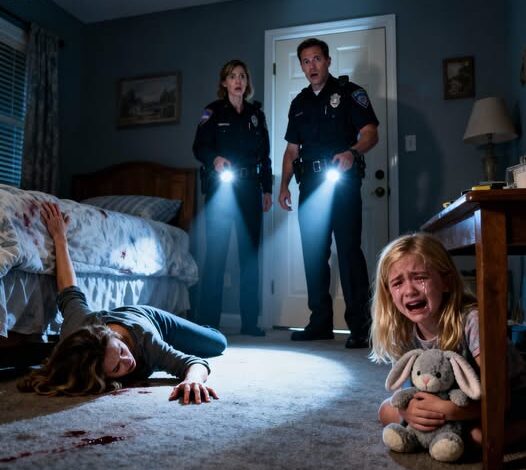
    The response was instantaneous. Within minutes, the officers had surrounded the restroom. They kicked the door open—a sound that echoed like a gunshot—and what they found made every heart in the building momentarily stop.

    The man was lying face down on the polished linoleum of the bathroom floor, completely unconscious. A heavy, industrial-sized metal pipe, likely pulled from a nearby janitorial cart, lay beside his prone body.

    Behind the farthest stall door, Lily was curled up, weeping softly but now breathing a relieved gasp. Officer Daniels, the first on the scene, gently nudged the stall door open, his weapon lowered, and crouched down to meet her gaze. “You’re safe now, sweetheart,” he whispered, his own voice thick with emotion.

    As medics rushed in to check the man’s vitals and confirm his identity, the investigation took a deeply disturbing turn. The man was quickly identified from his wallet as Thomas Gray, a former janitor who had been fired from Ridgeview Elementary just months prior due to documented inappropriate and erratic behavior.

    Amanda, still listening from the dispatch center, exhaled a shuddering breath of profound disbelief. She had handled countless emergencies, but the sheer malevolent intent behind this case made her skin crawl. The undeniable fact was that seven-year-old Lily’s incredible presence of mind—the courage to dial 911 and communicate in whispers while actively being stalked—had almost certainly saved her life.

    The immediate investigation, bolstered by the school’s security footage, provided the astonishing answer to how a seven-year-old girl had managed to subdue an adult male assailant. The cameras captured the moment Lily darted into the restroom, Thomas Gray just seconds behind her. When he forcefully tried to open the stall door, Lily had blindly grabbed the heavy metal pipe from the abandoned cleaning cart and, in a desperate, single act of self-preservation, had swung it with all her might. The strike had been precise and powerful, knocking him instantly unconscious.

    “Smartest, bravest little girl I’ve ever met,” Officer Daniels later confirmed in a press briefing that captivated the town. “She didn’t freeze. She didn’t panic. She fought back with everything she had.”

    When Lily’s parents finally arrived, her mother collapsed into tears of relief and sheer terror, clutching her daughter tightly as if to permanently anchor her to safety. The chilling surveillance footage and the details of the attack made the local news that night, leaving the entire community horrified by the close call—and simultaneously amazed by the child’s profound bravery. Yet, even as a fragile calm settled over the school, one haunting question remained for investigators: how long had Thomas Gray been meticulously planning this attack?

    School supplies

    The subsequent weeks were a jarring blur of intense media attention, necessary therapy sessions for Lily, and widespread community shock. Ridgeview Elementary immediately launched massive security upgrades, installing new surveillance systems, reinforcing all exterior entrances, and adding panic buttons in every classroom and secluded staff area.

    A month after the incident, Amanda Cole, the dispatcher whose calm voice had been Lily’s lifeline, met the little girl in person. She brought a small, fluffy teddy bear and hugged the child tightly. “You’re the reason I come to work every day, Lily,” Amanda told her, her voice thick with emotion.

    Lily smiled shyly, clutching the bear to her chest. “I was just scared,” she admitted.

    “You were scared—but brave,” Amanda replied, her gaze steady and unwavering. “That’s what matters most.”

    Thomas Gray was formally charged with multiple serious felonies, including attempted kidnapping, aggravated assault, and unlawful entry. During his preliminary hearing, prosecutors revealed the results of the investigation: Gray had been stalking the area for weeks, watching dismissal times, familiarizing himself with the school’s layout, and tracking teacher schedules. His plan had been deliberate, calculated, and malicious—but Lily’s quick, defensive action had ruined it instantly.

    The case became an immediate national reminder of the critical importance of teaching children how and when to use 911 in an emergency. Police departments across several states adopted Lily’s story as a core component of their school safety and emergency training programs.

    Today, Lily is ten years old. She still lives in the Ridgeview area and dreams of one day wearing a badge herself, aspiring to become a police officer. Her extraordinary story is frequently retold by first responders, who affectionately call her “the little hero who refused to be a victim.”

    And Amanda? She keeps a photograph of Lily’s small teddy bear prominently displayed on her dispatch desk—placed right next to the call log from that horrifying, pivotal day. Whenever the demanding nature of the job threatens to cause burnout, she looks at the photo and remembers a profound, lasting truth: one small, terrified whisper, backed by the refusal to surrender, can absolutely save a life.

  • During class, the boy became the center of laughter, but what followed was beyond anyones imagination

    During class, the boy became the center of laughter, but what followed was beyond anyones imagination

    The laughter started small — a few snickers from the back of the classroom — then spread like wildfire. Chairs creaked as students leaned over desks, whispering jokes and pointing. The teacher, Ms. Halpern, sighed in irritation but didn’t intervene. It was just another day, another round of teasing directed at Daniel, the quiet boy with patched-up clothes and a hand-me-down backpack.

    Daniel sat frozen, his cheeks burning as he stared at the doodles in his notebook. He had made the mistake of talking about his “invention project,” an idea he’d been working on at home with his parents. He had spoken with excitement, explaining how he wanted to build something that could “create clean energy from motion.” The class thought it was hilarious.

    “Yeah right,” one kid laughed. “You gonna save the planet with duct tape?”

    Even the teacher’s forced smile had felt like mockery. “That’s… creative, Daniel,” she said gently. “But maybe focus on the assignment at hand.”

    That was when the door opened.

    A tall man stepped inside, dressed plainly — faded jeans, a work shirt, and an old leather bag slung across his shoulder. He carried himself with quiet confidence. The room went still. Even the laughter died.

    “Can I help you?” Ms. Halpern asked, clearly surprised.

    The man nodded politely. “I’m Alex. Daniel’s uncle.” His gaze was steady, his tone calm but firm. “I was just outside. I heard what happened.”

    Dream journal app

    The class exchanged uneasy glances. Daniel looked up, mortified. His uncle gave him a small, reassuring smile.

    “I think it’s time,” Alex said, “that you all learned a little more about this boy you’re laughing at.”

    Without waiting for permission, he walked to the front of the room, picked up a piece of chalk, and began to draw on the blackboard. The sound of chalk scratching filled the silence. At first, the shapes looked abstract — circles, lines, angles. But soon, a detailed design took form.

    “This,” Alex said, stepping aside, “is a schematic for a renewable energy generator — one my nephew and I have been working on.”

    A ripple of confusion moved through the room. The drawing looked technical, advanced — something that belonged in an engineering lab, not on a classroom board.

    Alex continued, “It captures kinetic energy — movement — and turns it into usable electricity. A small version could power a classroom fan. A larger version could power a small building.”

    The teacher blinked, startled. “Wait — you’re serious?”

    Alex nodded. “Completely.”

    He turned to the students. “You see, Daniel isn’t just imagining things. He’s been helping me test prototypes. Some of his ideas — about magnetic resistance and energy storage — actually improved my design. He’s only twelve, and already he thinks like an inventor.”

    The classroom was silent. The same students who had laughed minutes earlier now sat rigid, their curiosity replacing ridicule.

    Alex turned back to Daniel. “Show them the concept you came up with last month. The one with the motion trigger.”

    Daniel hesitated, his hands trembling. But his uncle’s calm nod gave him courage. He stood, moved to the board, and picked up the chalk.

    “Um… so,” Daniel began, his voice unsteady, “this part here — it spins with movement. Like when you walk or ride a bike. It builds up energy that can be stored in a battery. If we could make it small enough, you could charge your phone just by walking.”

    He looked up, expecting laughter again. None came. Instead, several students leaned forward, their faces filled with genuine interest.

    “That’s actually brilliant,” one of them muttered.

    Daniel blinked, unsure if he’d heard right.

    Ms. Halpern crossed her arms, a guilty expression on her face. “I had no idea,” she said softly. “I’m sorry, Daniel. I should have listened instead of brushing you off.”

    Alex smiled faintly. “We all make assumptions. That’s the real lesson here — learning to look beyond what’s easy to see.”

    He glanced around the room, his tone steady but meaningful. “Daniel’s parents don’t have fancy jobs. They’re not rich. But they’re innovators. They’ve been building tools from recycled materials for years — things that actually work. They don’t chase money. They chase solutions.”

    The students exchanged looks, realizing how wrong they’d been.

    One raised a hand timidly. “So… you’re inventors?”

    Alex nodded. “We’re trying to be. The world needs people who think differently — people who don’t laugh at ideas just because they sound impossible.”

    Comedy show tickets

    By now, even the teacher’s posture had changed. She moved closer to the front, her voice warm with admiration. “Daniel, would you consider presenting your project at the science fair next month? I think the whole school should hear about this.”

    Daniel’s eyes widened. “Really?”

    “Really,” she said. “And I’ll help you prepare.”

    A soft murmur filled the room — not mockery this time, but excitement. Some of the same students who had teased him earlier began asking questions. How did the generator work? Could it power lights? Could they help him test it?

    Alex stepped back, letting Daniel take the stage. As his nephew explained the principles behind his invention — words tumbling out faster now, filled with passion and confidence — Alex felt a quiet pride. This was the same boy who had cried himself to sleep over broken experiments, who had once said, “No one cares about what I make.”

    But now, they did.

    When the bell finally rang, no one rushed out. Instead, a few students lingered to talk to Daniel. Even Ms. Halpern thanked Alex for visiting. “You reminded us all,” she said, “that education isn’t just about grades — it’s about empathy.”

    Alex smiled. “That’s all Daniel ever needed — a chance to be seen.”

    As the hallway emptied, Daniel gathered his things, his heart lighter than it had been in months. “Uncle Alex,” he said quietly, “thank you for coming.”

    Alex put a hand on his shoulder. “You didn’t need me to prove your worth, Daniel. You already did that. I just helped them see it.”

    Walking out of the school, the afternoon sun glowed on the sidewalk. Daniel’s classmates watched him go — no longer the boy they laughed at, but the one who might one day change the world.

    That night, Alex sent a photo of the classroom drawing to Daniel’s parents. Beneath it, he wrote: He finally believes in himself.

    And that was the real invention — not a machine that generated energy, but a spark of self-worth that would power everything Daniel built from that day forward.

  • After my husband betrayed me, I threw him out, believing I would never lay eyes on him again!

    After my husband betrayed me, I threw him out, believing I would never lay eyes on him again!

    The day I found out the truth about my husband was the day my life cracked in two. We had been married for twenty-three years — long enough to finish each other’s sentences, or so I thought. Long enough to assume I knew the man I slept beside. But betrayal doesn’t knock first. It breaks the door down, and it changes everything you believe about love.

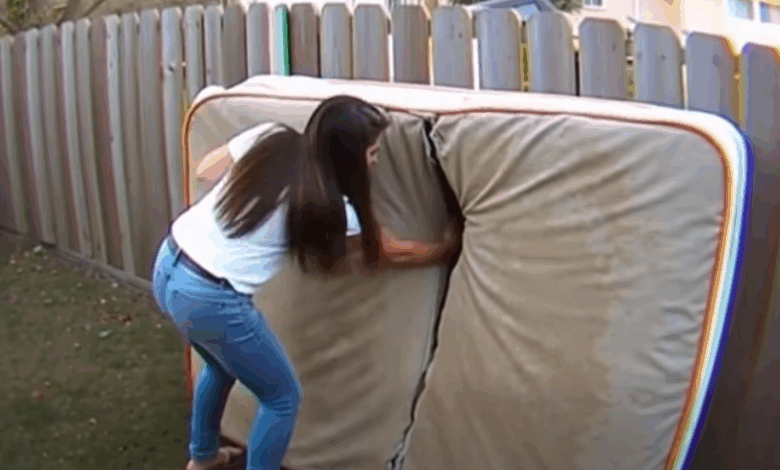
    It began with a mattress.

    He’d been acting paranoid about it for weeks. Whenever I mentioned replacing it, he’d brush me off — too expensive, too soon, or “let’s wait until next month.” At first, I thought he was just being frugal. But one morning, after he’d rushed off for “a work trip” that didn’t feel right, curiosity got the better of me. I stripped the sheets, grabbed a knife, and sliced open the lining.

    Money poured out. Bundles upon bundles of cash, wrapped in rubber bands. Tucked beneath them were passports — six, each bearing his face but a different name. And then the papers: contracts, foreign bank statements, and maps marked with symbols I didn’t understand. I felt like I was staring into a stranger’s life, not my husband’s.

    I sat there on the bedroom floor surrounded by money and lies, my hands shaking so badly I could barely breathe. The man I’d trusted, the man I’d loved — who was he really?

    When he returned that evening, I was waiting.

    He froze the moment he saw the open mattress. His face drained of color. “Where did you—”

    “Inside our bed,” I said. “The bed we shared for twenty-three years.”

    He didn’t even try to deny it. Just slumped onto the edge of the stripped mattress, head in his hands. “You weren’t supposed to find out like this,” he whispered.

    “Find out what?” I demanded. “That my husband isn’t who he says he is? That you’ve been living a double life under my roof?”

    He didn’t answer. Instead, he muttered something about “protecting” me, about “things I couldn’t understand.” That was the moment my anger turned cold. I realized then that I was married to a man who had chosen secrets over truth — not once, but every single day of our marriage.

    “Get out,” I said. “Take your lies and go.”

    He tried to reach for me. I stepped back. “Don’t,” I warned. “You’ve already touched enough.”

    That night, I locked the door behind him. It was raining, and I could hear his footsteps fade down the driveway until only the sound of water remained. I told myself it was over. That I’d never see him again. But of course, life doesn’t end neatly at the moment you think it does.

    Over the next few days, I contacted a lawyer. Then the police. They told me to sit tight — that what I’d found was evidence of serious crimes. Money laundering, fraud, maybe worse. I handed everything over: the cash, the documents, the fake passports. It was like peeling back the skin of my own life to expose the rot beneath.

    Each new discovery came with a deeper cut. Offshore accounts. Property deeds in countries we’d never visited. Emails connecting him to people under investigation for identity theft and wire fraud. My husband — the quiet man who fixed the sink, who read bedtime stories to our kids — had been running an international con right under my nose.

    The authorities launched a full investigation. I answered their questions for hours, reliving years of memories that now felt like theater — his late nights “at the office,” the untraceable “business trips,” the unexplained deposits in our joint account. I had called it hard work. It was deception.

    The hardest part wasn’t the money or the humiliation. It was realizing that I’d built my entire adult life around a man who never existed. The real him had been hiding behind carefully curated moments — a mask made of charm, reliability, and half-truths.

    But grief, even for a liar, has its stages. After the shock came anger, and after anger came resolve. I wasn’t going to let his betrayal define me. I refused to become another ghost orbiting the ruins of someone else’s lies.

    I started small. I sold the bed first. It felt symbolic, setting it out on the curb with a “Free” sign taped across it — letting the world take what was left of him. Then I cut my hair, opened a separate bank account, and began volunteering at a local legal-aid center. Helping other women disentangle themselves from fraud and financial abuse gave me back something I hadn’t felt in years: purpose.

    A month later, the detectives called. They’d traced him to South America. He’d been living under one of his aliases, moving money through shell companies. When the local authorities closed in, he vanished again — leaving behind only fragments of his false life. He was officially a fugitive.

    Oddly, hearing he was gone for good didn’t break me. It freed me. I slept deeply for the first time in months. I painted the bedroom. I stopped checking the driveway for headlights.

    But closure has its own timeline.

    Nearly a year later, I received a letter forwarded through my lawyer. It was from him — written in his handwriting, unmistakable and careful.

    I don’t expect forgiveness, it said. But I want you to know the money wasn’t stolen. It was hidden. I was laundering for people I couldn’t refuse. I thought keeping you in the dark would protect you. I see now it only destroyed us. I never stopped loving you — even if that love was built on fear.

    I read it once. Then I burned it. Love that destroys truth isn’t love. It’s control wearing a mask.

    That night, I poured myself a glass of wine, stepped onto the porch, and watched the sunset. The air was cool, tinged with that faint scent of rain that always follows endings. I realized I wasn’t angry anymore — just done. Done being afraid, done carrying a life that was never real.

    People like to talk about betrayal as if it’s the end of something. But I’ve learned it can also be a beginning — a painful, necessary rebirth.

    I rebuilt slowly, piece by piece. I took night classes, opened a small accounting firm, and started counseling women who’d been financially deceived by their partners. Every time I helped someone untangle the numbers, I felt like I was reclaiming a fragment of my own story.

    Sometimes I wonder if he’s still out there — if he ever looks back and realizes what he lost. But that’s no longer my concern. My life is mine again. My truth, my choices, my peace.

    The mattress, the passports, the lies — all of it became part of a chapter I’ve closed for good.

    I used to think betrayal was the worst thing that could happen to me. Now I know better. The worst thing would have been never discovering the truth at all — and spending the rest of my life asleep beside a stranger.

  • After being uploaded online, a phrase scrawled on the rear of an SUV swiftly gained popularity.

    After being uploaded online, a phrase scrawled on the rear of an SUV swiftly gained popularity.

    After being uploaded online, a phrase scrawled on the rear of an SUV swiftly gained popularity.

    After a Reddit user posted a picture of the driver on the platform,

    several people praised the driver for having the message visible on the back of the SUV.

    “This is America…we don’t redistribute wealth—we earn it,” the message said.

    With regard to the transfer of wealth, many readers agreed with the driver’s statement.

    “Well done to the man who had the audacity to put this phrase on his back window!

    The same thing should be said and done by more people, and who knows?

    Maybe it will reach everyone, or at least some of the countless freeloaders who believe they should be paid for their labor!

    A reader made a comment.