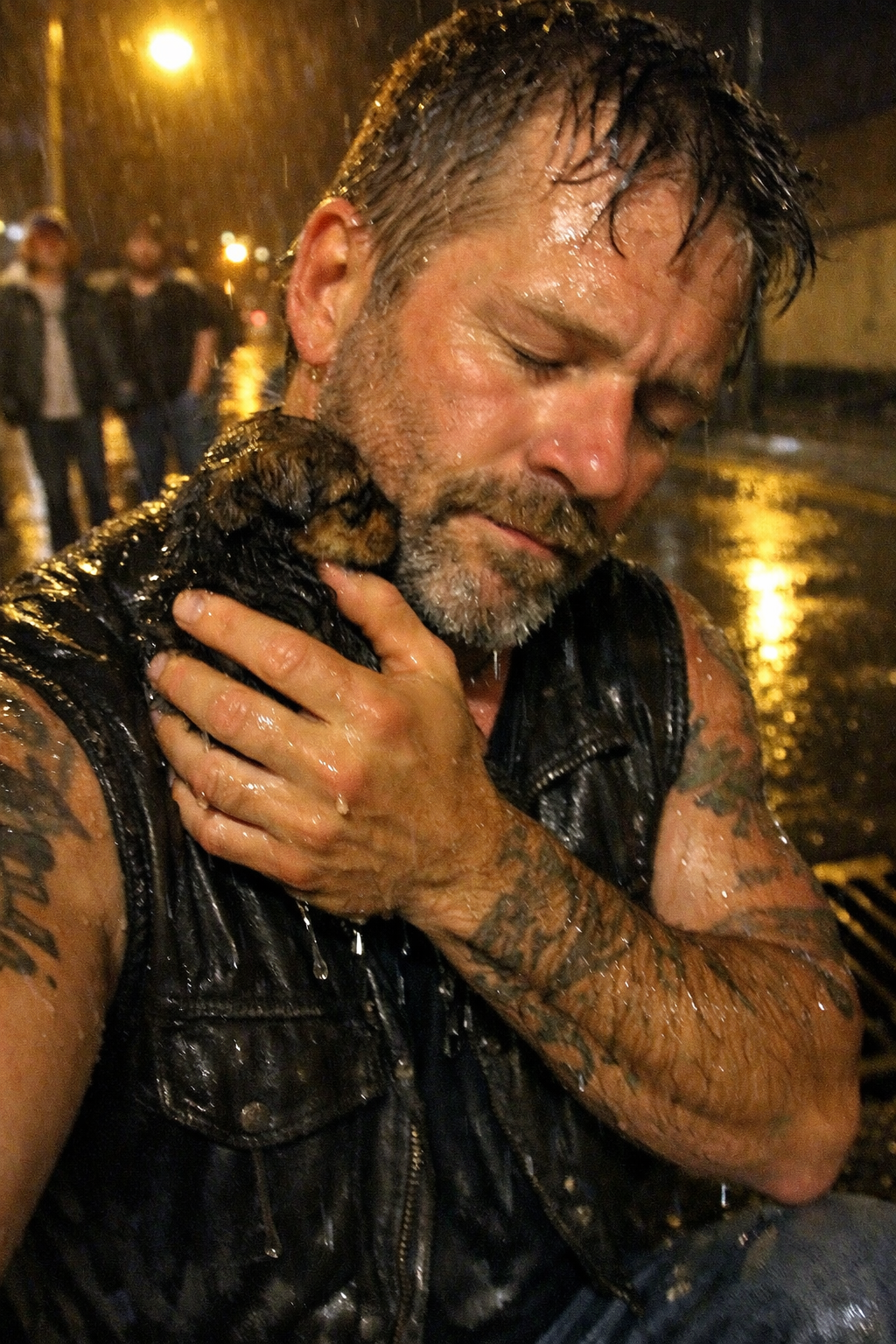
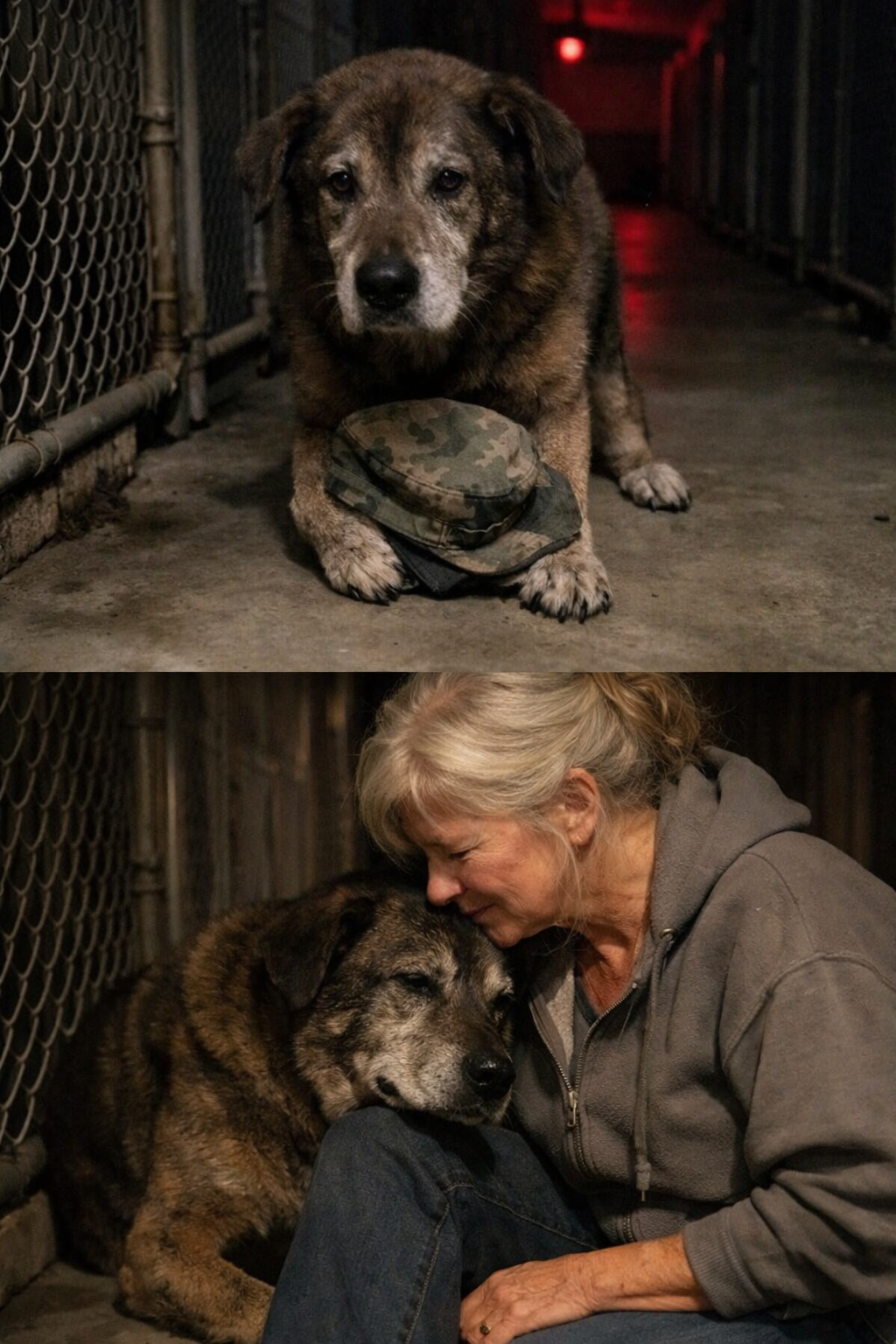
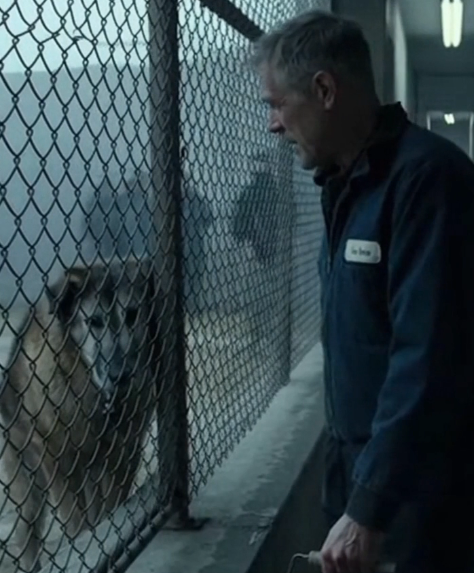
The courtroom doors opened — and before anyone could object, a dog was led inside, straight toward the man about to be sentenced.
The air stopped moving.
No coughs.
No whispers.
No rustle of papers.
A white American man in his late forties stood at the defense table, wrists cuffed, shoulders stiff beneath a worn gray suit that smelled faintly of stale coffee and stress. His face was hollow, eyes sunken, lips pressed tight like he’d already accepted whatever was coming. This was the end. Everyone knew it.
The judge lifted his gaze, clearly irritated.
The bailiff took one step forward — then hesitated.
Because the defendant had collapsed.
Not fallen.
Collapsed.
His knees buckled. His breath hitched violently, like air had been punched from his lungs. His hands — rough, trembling — reached forward as if his body recognized something his mind hadn’t caught up to yet.
The dog stopped three feet away.
Medium-sized. About five years old. Brown-and-white fur, clean but worn. One ear bent slightly at the tip. A service vest hung loosely from its frame, the strap faded from years of use.
The dog tilted its head.
Then its tail wagged.
The man broke.
A sound tore out of him — not a cry, not a word — something raw, animal, full of shock and grief. He pressed his forehead to the cold wooden rail and sobbed openly, shoulders shaking, breath coming in ragged gasps.
“I thought you were gone,” he choked.
The courtroom was paralyzed.
The judge’s gavel hovered midair — then slowly lowered back to the bench.
“Everyone… wait,” the judge said quietly.
Because whatever was happening here was no longer just a sentencing.

The defendant’s name was Thomas Hale.
On paper, his case was simple. Felony assault. Prior record. No excuses that the court could accept. The sentencing guidelines were clear. Prison time was inevitable.
The public saw him as another angry man who’d crossed a line.
They didn’t know about the dog.
Five years earlier, Thomas had been a different person.
A construction foreman. Married. One daughter. A quiet life built on routine. And after returning from military service with severe PTSD, he’d been paired with a service dog named Buddy.
Buddy was more than support.
He was grounding.
When Thomas woke screaming at night, Buddy pressed against his chest until his breathing slowed. When crowds triggered panic, Buddy guided him to exits. When Thomas forgot to eat, Buddy nudged his hand. When he dissociated, Buddy brought him back.
“They said he’d be temporary,” Thomas once told a social worker. “But he saved my life.”
Then everything unraveled.
A workplace accident crushed Thomas’s leg. Pain pills followed. Then stronger ones. His wife grew distant. Arguments turned sharp. One night, police were called. A fight escalated. A neighbor was injured trying to intervene.
Thomas was arrested.
Buddy was taken away by animal services, reassigned while Thomas awaited trial.
In jail, without Buddy, Thomas deteriorated fast.
Night terrors returned. Panic attacks. Medication changes. Isolation. He stopped sleeping. Stopped speaking much at all.
He asked about Buddy every week.
No answers came.
Eventually, Thomas assumed the worst.
“They wouldn’t keep him,” he told his lawyer once, voice flat. “Not for someone like me.”
He prepared himself for sentencing without hope — or defense.
Until today.
The dog’s handler — a middle-aged woman from a veterans’ therapy organization — stood quietly at the back of the courtroom, tears sliding down her face.
She hadn’t planned to interrupt the sentencing.
But she’d received a letter from Thomas weeks earlier.
It was short. Shaky handwriting.
If Buddy’s still alive, please tell him I’m sorry. He deserved better than me.
She couldn’t ignore it.
“Your Honor,” she said softly, stepping forward. “With permission… this dog is the reason the defendant is still alive.”
The judge motioned her on.
She explained.
How Buddy had been placed in temporary foster care.
How he refused to eat for days.
How he searched doors at night, whining.
How he reacted to Thomas’s name.
“He was trained to bond deeply,” she said. “And he did.”
She looked at Thomas, now kneeling on the floor, arms wrapped around Buddy’s neck, face buried in fur.
“When we learned today was sentencing,” she continued, voice breaking, “we thought… he should know Buddy survived.”
The judge leaned forward.
Thomas was shaking now, but steady. Buddy pressed against him, applying deep pressure, just like he’d been trained to do.
Thomas’s breathing slowed.
“I failed him,” Thomas whispered. “But he never failed me.”
The courtroom felt smaller. Warmer. Human.
The prosecutor cleared his throat, uncomfortable.
“This doesn’t erase the crime,” he said carefully. “But… it explains the man.”
The judge closed his eyes briefly.
When he opened them, they were wet.
“I’m ordering a recess,” the judge said. “And a review.”
The gavel struck.
But not in judgment.
Thomas was still sentenced.
Justice wasn’t undone.
But it was tempered.
The judge ordered placement in a rehabilitation-focused facility with a veterans’ mental health program. Buddy was approved to rejoin him as a registered therapy companion during treatment.
When Thomas left the courtroom, cuffs still on his wrists, Buddy walked beside him.
Head high.
Tail steady.
They moved in sync.
Months later, Thomas began therapy in earnest. He slept again. Spoke again. Took responsibility — fully — for what he’d done. Buddy was there for every session, grounding him, reminding him.
People who worked at the facility noticed something.
When Buddy entered a room, Thomas softened.
When Thomas struggled, Buddy leaned in.
Not as forgiveness.
As support.
Some people say justice is blind.
But that day, it listened.
It paused.
And it remembered that behind every crime is a story — and sometimes, a dog who never gave up.
If this story moved you, share your thoughts in the comments.
Do you believe compassion has a place in justice?