Category: News

  • SOTD – After 50 Years of Marriage, I Asked for a Divorce, Then His Letter Broke My Heart

    SOTD – After 50 Years of Marriage, I Asked for a Divorce, Then His Letter Broke My Heart

    After fifty years of marriage, I never thought I’d be the one asking for an ending. At seventy-five, most people cling tightly to what they have left. But I found myself wanting out—not because Charles had wronged me, not because he’d changed, but because I had. Somewhere between raising children, caring for parents, building a home, and smoothing over every bump in our lives, I had stopped existing as myself. I had become an extension of him, of our routine, of the quiet predictability that once comforted me but now felt like a slow suffocation.

    We married young. He was steady, patient, gentle—the kind of man everyone said I was lucky to have. And for decades, I believed them. We built what people called the perfect life: a warm home, traditions, shared jokes, Sunday dinners, anniversaries marked with handwritten notes. But in the quiet years after retirement, while he leaned deeper into the comfort of routine, I began to feel the walls closing in. The house felt too small. The silence felt too loud. And the love that once grounded me began to feel like a cage I had built with my own hands.

    It started subtly. A sharp reply. A cold shoulder. Then more frequent arguments over nothing at all. He would ask what was wrong; I couldn’t tell him because I didn’t understand it myself. All I knew was that anger simmered under my ribs, resentment I couldn’t explain, and an ache I had no words for.

    One afternoon, after weeks of restless thoughts and long nights staring at the ceiling, I told him I wanted a divorce.

    He didn’t shout. He didn’t plead. He simply watched me with those soft eyes that had once made me fall in love and said, “If freedom is what you need, I won’t stand in your way.”

    It should’ve made things easier. Instead, his calm broke something in me.

    We signed the papers quietly, like two people finalizing a business transaction instead of unraveling half a century. The lawyer, maybe trying to soften the blow, suggested we go to dinner—“one last meal, for old times’ sake.”

    We went, though I don’t know why. Habit, maybe. Or obligation.

    The restaurant was dim, but when we reached our table, Charles lowered the lights even further. “For your eyes,” he said gently. “They’ve been bothering you lately.”

    But my heart had hardened, and instead of seeing the small kindness, I saw control. A man who still presumed to know what I needed. A man making decisions for me, even in the last hours of our marriage.

    I snapped. Angry words spilled from me—accusations, frustrations, bitterness I’d been swallowing for years. His face didn’t twist with anger. It fell with sadness. I didn’t care. I grabbed my coat, left him sitting alone under those soft lights, and convinced myself it was the first step toward my new life.

    He called that night—three times. I ignored him every time. I was done, I thought. He wanted to talk me out of it, I assumed. I refused to be pulled back into the life I’d escaped.

    By morning, everything had changed.

    A neighbor called me, her voice shaky. Charles had collapsed from a heart attack. Paramedics revived him, barely. He was rushed to the hospital in critical condition.

    My entire world went silent.

    I drove to the house in a daze, heart pounding, regret already spreading like poison through my chest. When I opened the front door, I didn’t find him—I found an envelope on the kitchen table with my name written in his familiar handwriting.

    I sat down before my legs gave out and opened it with trembling fingers.

    “I have loved you every season of our life. I dimmed the lights for your comfort, not control. I have learned your habits not to guide you but to care for you. You say you want freedom. I understand. But I need you to know that every choice I made was to ease your days, never to confine you. If I seemed overprotective, it was only because loving you has been the greatest purpose of my life.”

    I don’t remember dropping the letter, only the sound it made when it hit the tile.

    By the time I reached the hospital, he was pale, hooked to machines, a fragile thread holding him to this world. I rushed to his bedside and collapsed into tears, clutching his hand as if my grip alone could pull him back.

    “I’m sorry,” I whispered over and over. “I didn’t see you. I didn’t see what you were trying to give me. I thought your love was a wall, but it was a shelter. Please forgive me. Please don’t leave.”

    He stirred faintly, eyes fluttering open just long enough to squeeze my hand. It wasn’t strength—it was recognition, a final offering of the love he never stopped giving.

    In that moment, the truth hit me with brutal clarity: the freedom I had been chasing wasn’t out in the world—it had always lived quietly inside the way he loved me. I wasn’t suffocating because of him. I was suffocating under regrets, under unspoken fears, under the weight of a life I had never paused to understand.

    Charles didn’t need me to be perfect. He only needed me to see him. And I had failed to do that until I almost lost him forever.

    He survived that night, barely. Recovery would be slow. Uncertain. But I remained by his side, determined not to waste another second resenting a man who had never given me anything but his fullest heart.

    Fifty years of marriage taught me many things, but almost losing him taught me the most important: love is not confinement. Love is attention, and care, and a lifetime of small gestures so subtle you forget to notice them — until the moment they’re gone.

    Whatever time we have left, whether it’s years or days, I will spend it seeing him clearly, loving him deliberately, and choosing him the way he chose me every day for half a century.

    Freedom was never something I had to find. It was something I needed to understand.

    And now, finally, I do.
  • SOTD – BREAKING! At least 300 homes estimated damaged or destroyed after large fire! See more

    SOTD – BREAKING! At least 300 homes estimated damaged or destroyed after large fire! See more

    The fire started small — a wisp of smoke rising from a cluster of tightly packed homes on the steep hillside of Pamplona Alta in San Juan de Miraflores. At first, residents thought it was another routine flare-up in a neighborhood accustomed to electrical issues and improvised wiring. But then the wind shifted. Flames leaped from one structure to the next, devouring plywood walls and plastic roofing as if the entire hillside had been soaked in gasoline.

    Within minutes, the blaze transformed into a roaring monster, swallowing homes faster than firefighters could reach them. Families ran through the narrow pathways carved into the hillside, shouting warnings, grabbing children, hauling buckets of water that evaporated before they hit the flames. Dogs barked wildly. Smoke rolled down the slopes in thick gray curtains, turning afternoon light into something dark and disorienting.

    By the time emergency crews arrived, the fire had already carved a jagged path through the community. Dozens of homes — and possibly more than a hundred — were gone. For families who had built their lives with their own hands, every plank, every corrugated sheet of metal, every piece of furniture dragged up those steep hills now lay in charred fragments scattered across the dirt.

    Firefighters worked relentlessly, forming lines against the blaze, trying to push it back before it reached the next cluster of dwellings. Some locals joined in, passing buckets, tearing away burning debris, shouting instructions to save what little could be saved. But the fire only grew stronger as it reached a small structure at the center of the neighborhood — a place that, at first glance, looked like a storage room.

    What happened next changed everything.

    Residents reported hearing a series of sharp explosions — small, rapid, violent pops that cracked through the chaos. Firefighters quickly realized the flames had reached what appeared to be a clandestine pyrotechnics workshop. Inside were stacks of illegal fireworks, chemicals, and ignition materials packed into a space that had no business housing them. When the fire reached it, the entire structure blew open like a giant matchbox tossed into an inferno.

    The blasts sent debris flying down the hillside. Sparks rained over the rooftops like burning hail. For a moment, firefighting efforts faltered as crews scrambled for cover. Then they regrouped, pushing forward again with renewed urgency — if the fire spread any further, the whole hillside would be at risk.

    Hours later, firefighters managed to box in the flames. The blaze was finally under control.

    But the damage was everywhere.

    Families stood in the streets carrying whatever they had managed to salvage: a mattress, a bag of clothes, a kettle, a family photo sealed in soot. Others had nothing left but the clothes on their backs. Children clung to their parents, coughing from the smoke. Elderly residents sat on overturned buckets, watching plumes rise from what used to be their homes. A few people wandered silently through the ashes, searching for anything that could be saved — a pot still intact, a chair not entirely burnt, a toy recognizable through the blackened rubble.

    Relief teams arrived with bottled water, masks, food packets, and blankets. Volunteers from nearby neighborhoods came with bags of clothing and shoes. Ambulances tended to people suffering from burns, smoke inhalation, and shock. Fire crews remained on site, dousing hot spots and checking weakened structures for collapse.

    Authorities began their assessments: how many homes were destroyed, how many families displaced, how many children now without a place to sleep. Early estimates suggested that more than three hundred homes might be affected. The numbers were still rising.

    Investigators focused on the destroyed workshop, now a crater of twisted metal and scorched concrete. The explosions had intensified the spread of the fire and may have been responsible for its rapid escalation. Whether the workshop sparked the fire or simply made a bad situation worse remains under investigation, but one thing is clear — the illegal storage of fireworks had turned a dangerous blaze into a disaster.

    As night fell, the hillside glowed faintly from the remaining embers, a haunting reminder of how quickly a community’s world can be erased. Families who once lived separated by thin plywood walls now stood shoulder-to-shoulder in the streets, bound together by shared loss. Children slept in their parents’ arms. Volunteers handed out bowls of soup to people too numb to speak. A woman broke down as a firefighter returned a single intact item he had found in the ashes — a small ceramic figurine she’d owned since childhood.

    Moments like this strip life down to its essentials: survival, solidarity, and the fragile threads that hold people together.

    Tomorrow, the rebuilding begins. Officials will call for donations. Engineers will inspect the stability of the hillside. Aid organizations will start setting up temporary shelters. The government will debate how such densely packed communities can be better protected. Investigators will sort through the ruins of the illegal workshop, trying to determine responsibility.

    But tonight, the community sits in the raw aftermath — grieving what was lost, grateful for what was spared, and clinging to one another in the uncertainty of what comes next.

    Disaster does not discriminate. It doesn’t wait for convenience, or mercy, or preparedness. It arrives suddenly, tearing through lives with no regard for the stories inside each home. Yet within that devastation, something else always emerges: people stepping forward for their neighbors, strangers offering hands, resilience rising from the ashes even before the smoke clears.

    In the midst of destruction, humanity becomes visible again — fierce, steady, and unwilling to let anyone face the darkness alone.

  • Erika Admits After Liberal News Outlet Pulled Controversial!

    Erika Admits After Liberal News Outlet Pulled Controversial!

    In the fictional aftermath of Charlie Kirk’s imagined death, shock rippled outward in every direction — from the quad at Utah Valley University where the shooting occurred, to national media platforms that devoured the news, to the tight circle of people who actually knew him beyond headlines and arguments. Across the country, political commentators dissected the event, supporters mourned, critics reevaluated their tone, and social media spiraled into a frenzy. But inside the Kirk home, where life had once been loud with toddlers and routines and debates and laughter, a suffocating quiet took over. For Erika Kirk, the fictional widow at the center of the storm, the loss struck with a force no public statement could possibly reflect.

    She described those final days before the tragedy as strangely heavy, marked by an unease she couldn’t shake. Charlie had brushed it off as stress, but Erika felt something tightening around them — a sense that the air had changed. That uneasy feeling sharpened into fear when Jezebel published a satirical piece claiming they had paid for symbolic “curses” against Charlie. In the fictional narrative, the article was intended as dark political humor, but the timing and tone cut deeply into Erika’s already fraying nerves. It mocked her husband at a moment when the hostility surrounding him seemed to be escalating. It turned their private anxieties into something exposed and raw.

    To the wider public, the stunt was another outrageous headline in a crowded news cycle. To Erika, it was personal.

    The article hit just days before Charlie’s scheduled appearance at Utah Valley University — the event that would, in this fictional storyline, become the scene of his death. She had begged him to reconsider the tour stop or increase security. Friends in their circle echoed her concerns, urging caution. But Charlie refused to retreat. He believed backing down would betray the mission he’d dedicated his career to. Shaking hands, answering questions, standing in front of students — he felt it was part of the responsibility he carried.

    Erika supported him, even as fear settled into her bones.

    When Megyn Kelly condemned the satirical article on her show, calling it reckless and emotionally cruel, Erika felt a flicker of relief. Kelly questioned the ethics of spinning fantasies of harm toward real people, especially those who already faced threats. The critique validated the unease Erika had kept mostly private. But the article had already done its damage. It spread quickly online, sparking outrage, mockery, and endless commentary. Jezebel eventually removed it in the fictional account, but the impact lingered like a bruise.

    After the shooting, speculation inevitably connected the satirical piece to the tragedy, though authorities never identified a link. Still, the timing was impossible to ignore. For many, it raised questions about how easily political discourse slips into dehumanization — and what happens when that dehumanization becomes normalized.

    Erika’s fictional retelling of those final days before the event revealed a woman living in a pressure cooker of public scrutiny and private dread. She remembered standing in their bedroom, watching Charlie pack his suitcase for the trip, and wanting to tell him not to go. She remembered the moment he kissed their children goodbye. She remembered the strange, sharp fear she felt watching his car pull out of the driveway. She had chalked it up to nerves. She didn’t realize she was watching the end of something irreplaceable.

    When the tragedy struck, everything collapsed at once: their routines, their plans, their hopes, and the life they had imagined stretching out ahead of them.

    In the fictional narrative, Erika described the silence of the house afterward — his jacket still draped over the chair, his shoes by the door, the half-finished cup of coffee on the counter from the morning he left. She walked through the rooms in a daze, touching the things he last touched, staring at the imprint he’d left on their shared world.

    She had always known that public figures attract attention — praise and fury in equal measure — but she hadn’t understood how violent that world could become until she found herself on the other side of it.

    Her interview added dimension to the tragedy. It reminded people that behind every headline, every debate, every pundit’s soundbite, there are families who carry the emotional fallout. Erika spoke not as a political widow, but as a woman who lost her partner, her children’s father, and the man who prayed with her in the kitchen before each difficult day. She talked about sitting in the hospital room after the shooting, holding his hand, searching for any sign of life. She talked about faith — not as a shield from grief, but as the only thing that kept her upright when the weight felt unbearable.

    Her honesty rekindled a fierce discussion about media ethics. Commentators debated whether satire that imagines symbolic harm crosses a line when the target is a real person with real vulnerabilities. Others questioned how much responsibility media outlets have when their content fans flames in an already volatile climate. Nobody agreed on the answers, but the conversation was unavoidable.

    Through it all, Erika’s fictional voice remained steady. She didn’t demand blame. She didn’t point fingers. She simply told the truth of what it felt like to live in the crossfire of political outrage — and then lose the person she loved to real violence.

    Her story became a quiet but powerful call for empathy. She wasn’t interested in silencing commentary or reshaping politics. She wanted people to remember that behind the arguments, behind the viral clips and headlines, behind every public figure, there are human beings — spouses, children, parents — who absorb wounds that the world rarely sees.

    In the fictional aftermath of Charlie’s imagined death, the noise of politics eventually settled. But Erika’s message lingered: that compassion should never be optional, that satire loses its power when it abandons humanity, and that every public conflict leaves private scars.

    And in the quiet of her home, she continued to rebuild her life — not as a symbol, not as a political figure, but as a woman who loved deeply, lost deeply, and learned that grief, even when shared with millions, is carried alone.

  • BREAKING NEWS! Police Helico!

    BREAKING NEWS! Police Helico!

    Before sunrise, when most of the country was still wrapped in sleep, the police helicopter lifted off from its base—another anti-narcotics mission in a nation where missions like this are both common and perilous. The men on board knew the routine: fly low, gather intelligence, return home. But “routine” in Colombia has never meant safe. Every flight carries the same unspoken understanding—that they might not come back.

    Above the dense canopy, where the jungle swallows sound and light, that quiet understanding became reality.

    Somewhere over cartel-controlled territory, gunfire erupted from the trees below. The bullets sliced through the helicopter’s metal skin with brutal precision. Pilots tried to steady the craft, but there was no time—no chance. The rotors stuttered, the nose pitched forward, and the helicopter spun helplessly toward the ground.

    It crashed hard in terrain that was already hostile before the smoke began rising.

    By the time rescue teams reached the site, flames still licked the edges of the shredded wreckage. The earth was scorched black, leaves turned to ash, and twisted metal lay scattered across the jungle floor like broken bones. The air smelled of fuel, burnt rubber, and finality. Survivors were few—too few. Those who made it out alive were found fighting for their lives, battered and barely conscious. The rest were silence and shadows under the smoldering remains.

    Across Colombia, the news spread with a grief so sharp it felt personal, even to people who didn’t know a single name on the flight roster. The flags lowered to half-mast by evening, each one a reminder of how often the country mourns people who die quietly in battles the world rarely sees.

    President Gustavo Petro called the attack a cowardly assault on the nation, vowing justice and honoring the fallen. His words echoed across television screens and radios, but no speech could touch the immediate, intimate devastation waiting behind closed doors. Children pressed their faces to windows, hoping to see a familiar silhouette walking up the driveway. Wives and husbands stared at phones that refused to ring. Parents traveled to identify uniforms when the faces they belonged to were already gone.

    For families of those who work in the air, danger is a permanent shadow. They live with the knowledge that every takeoff carries a possibility they don’t dare say out loud. Still, they pack lunches, kiss foreheads, straighten collars, and pretend not to see the fear reflected in each other’s eyes. Service becomes a habit of courage—one that exacts a heavy price.

    The crash drove home an old truth: in regions where cartels operate like small armies, every patrol is a gamble. Every low pass over the treetops is an act of faith. And every day, good men and women choose duty despite the coin toss between life and death.

    Investigators now face the grim task of piecing together what happened. The trajectory of the gunfire, the type of ammunition, the likely ambush points—all of it matters for justice, but none of it can repair what has been taken. No report can fill the empty chairs at breakfast tables. No arrest can bring back the voices lost in that burning wreckage. And no headline can soften the blow for those who will wake up tomorrow to a world permanently altered.

    In neighborhoods across the country, people lit candles on their doorsteps. Others gathered in prayer, whispering the names of people they’d never met simply because grief feels lighter when carried together. Stories began emerging about the fallen: a pilot who loved to dance, a technician who saved every paycheck for his daughter’s education, a young officer on his first mission. Their lives—rich, complicated, full of purpose—were reduced to photos and uniforms.

    One mother stood outside the morgue clutching a rosary, whispering, “He was supposed to come home for dinner.” Another woman, newly widowed, traced the edges of her husband’s last text: I’ll be home soon. Their heartbreak echoed the sorrow of countless families who have walked this road before.

    The tragedy also reignited urgent conversations about resources, strategy, and the escalating danger facing law enforcement. Cartels have become more heavily armed, more organized, more willing to shoot down whatever threatens them. Helicopters—once symbols of advantage—are now vulnerable targets in areas where criminal groups hold power like warlords.

    Commanders know this. Officers know this. And yet the missions continue, because the alternative—stepping back, surrendering the sky—would hand over the country piece by piece.

    In the days ahead, there will be investigations, funerals, processions, and speeches promising justice. There will be calls for better equipment, stronger intelligence, safer flight paths. Some demands will be met, some delayed, some forgotten—until the next tragedy forces the cycle to repeat.

    But beneath the politics and analysis lies the deeper, quieter truth that no official statement fully captures: the cost of this war is paid in human lives, in families forever marked by sacrifice. These men did not die in a news story—they died in the service of a country that relies on them more than it admits.

    Tonight, Colombia mourns again. The wreckage will be cleared. The jungle will grow back over the scars. And someday another helicopter will lift off before dawn, its crew wearing the same uniforms, carrying the same sense of duty, and accepting the same risk.

    Because service, in places like this, is not just a job. It is an inheritance passed from one generation to the next. It is courage that refuses to die, even when those who carry it do.

    The investigation may find the attackers. It may even bring them to justice.

    But nothing—not justice, not time, not even peace—can fill the empty spaces left behind by the men who fell from the sky that morning.

  • Updates on Guy Fieri Recent Health Situation!

    Updates on Guy Fieri Recent Health Situation!

    Guy Fieri’s year took an unexpected and painful turn when a simple misstep on set spiraled into a medical emergency none of his team saw coming. While filming scenes for his new show, he stepped down from a platform, missed the edge by inches, and felt his leg snap in a way that instantly told him something was very wrong. What doctors later confirmed was even more shocking: a rare quadriceps tear, not at the tendon or near the knee like most injuries, but directly through the center of the muscle — the kind of tear surgeons rarely see and athletes dread.

    The moment it happened, production froze. Crew members rushed to him, the cameras were shut off, and within minutes paramedics were on site preparing him for emergency transport. The medical team moved quickly, knowing a tear like this could worsen fast. Surgery was performed almost immediately to prevent long-term damage. And while the injury was unusual, the surgeons were confident — but clear — about the long road ahead.

    Filming, meanwhile, had to change on the fly. The show adjusted its schedule, shifted scenes, and rewrote segments so crews could continue working while Guy focused on recovery. Even with his trademark energy, the sudden shift forced him to slow down. And that alone was a shock — the man who built a career on motion, travel, and nonstop chaos was suddenly anchored to a hospital bed.

    Now back at his ranch in Northern California, Guy’s recovery has entered its most demanding phase. He’s using a wheelchair and crutches to get around, forbidden from putting any weight on the injured leg for several weeks. After that comes a rigid cast, then a tough rehabilitation schedule designed to retrain the muscle from the ground up. Doctors have warned him it will be months before he’s moving freely, and even longer before he regains full strength.

    The injury also collided with family plans, including the holiday season he normally hosts with the enthusiasm of a man who treats Thanksgiving like the Super Bowl of food. This year, he had no choice but to hand over the reins. His son Ryder took the lead in the kitchen, teasing that he finally had the chance to “show Dad how it’s done.” Joined by his brother Hunter and cousin Jules, the next generation took over the cooking for the 40-person family gathering — a major undertaking even for seasoned chefs. Guy coached from the sidelines, offering guidance from his wheelchair as they chopped, sautéed, and plated the feast he usually commands personally. For a family built around food, the moment was bittersweet but meaningful — proof that while setback slowed him down, it didn’t dim the spirit of the home.

    Just two months earlier, life had been very different. The Fieri family had celebrated one of its biggest milestones: the wedding of Guy’s son Hunter to his bride, Tara. The celebration stretched across several days at the family’s Sonoma ranch, drawing hundreds of friends, relatives, and familiar faces from the culinary world. It was the kind of event the Fieris do best — grand, heartfelt, and overflowing with food.

    The weekend began with a “Denim & Diamonds” welcome party, a blend of casual flair and polished charm, catered in part by Chef Lorena Garcia, who created a menu that felt both festive and personal. The ceremony itself was steeped in family tradition, with one moment in particular stealing every heart in the crowd: Hunter’s grandmother walking down the aisle as the flower girl, scattering petals with pride. Tara’s gowns — custom-made and elegant — elevated the entire event, while Hunter’s handwritten vows brought a hush over the guests, capturing the sincerity and deep emotion of their relationship.

    Since the wedding, Hunter and Tara have stepped into married life with focus and intention. They’ve spoken publicly about their commitment to growing together, both personally and professionally. Their friends in the culinary world — Gordon Ramsay among them — offered congratulations, reflecting the tight-knit community surrounding the Fieri family. Tara herself has expressed gratitude for Guy’s influence, crediting him with helping her become more confident and adventurous in the kitchen, building a shared passion she and Hunter cherish.

    Online reactions to the wedding were varied, as is typical whenever public figures celebrate major life events. But the overwhelming tone was one of warmth: admiration for the joy of the day, appreciation for the family’s authenticity, and excitement for the newlyweds’ future.

    The contrast between the joy of that celebration and the injury Guy now faces is stark. Yet the Fieri way has always been about resilience, humor, and sticking close through every high and low. This setback, like so many others in life, has simply brought the family even closer. With his sons stepping into roles he once commanded, and Tara now part of the fold, the Fieris are navigating this chapter with the same unity that built their name.

    Despite the pain, the limitations, and the uncertainty of recovery, Guy has remained characteristically upbeat. He’s grateful for the doctors who acted fast, the production team who adapted without complaint, and the family who rallied around him. And as he’s reminded everyone around him — sometimes life forces you to slow down so you can actually see who’s beside you.

    Even from a wheelchair, he hasn’t lost his spark. He’s already planning future projects, new menus, and upcoming travels once he’s fully healed. For now, though, he’s embracing the rare chance to rest, recharge, and let others take the wheel — literally and figuratively.

    Through celebration and chaos, injury and healing, the Fieri family continues moving forward in the same way they always have: together, with grit, humor, and an unshakeable sense of home.

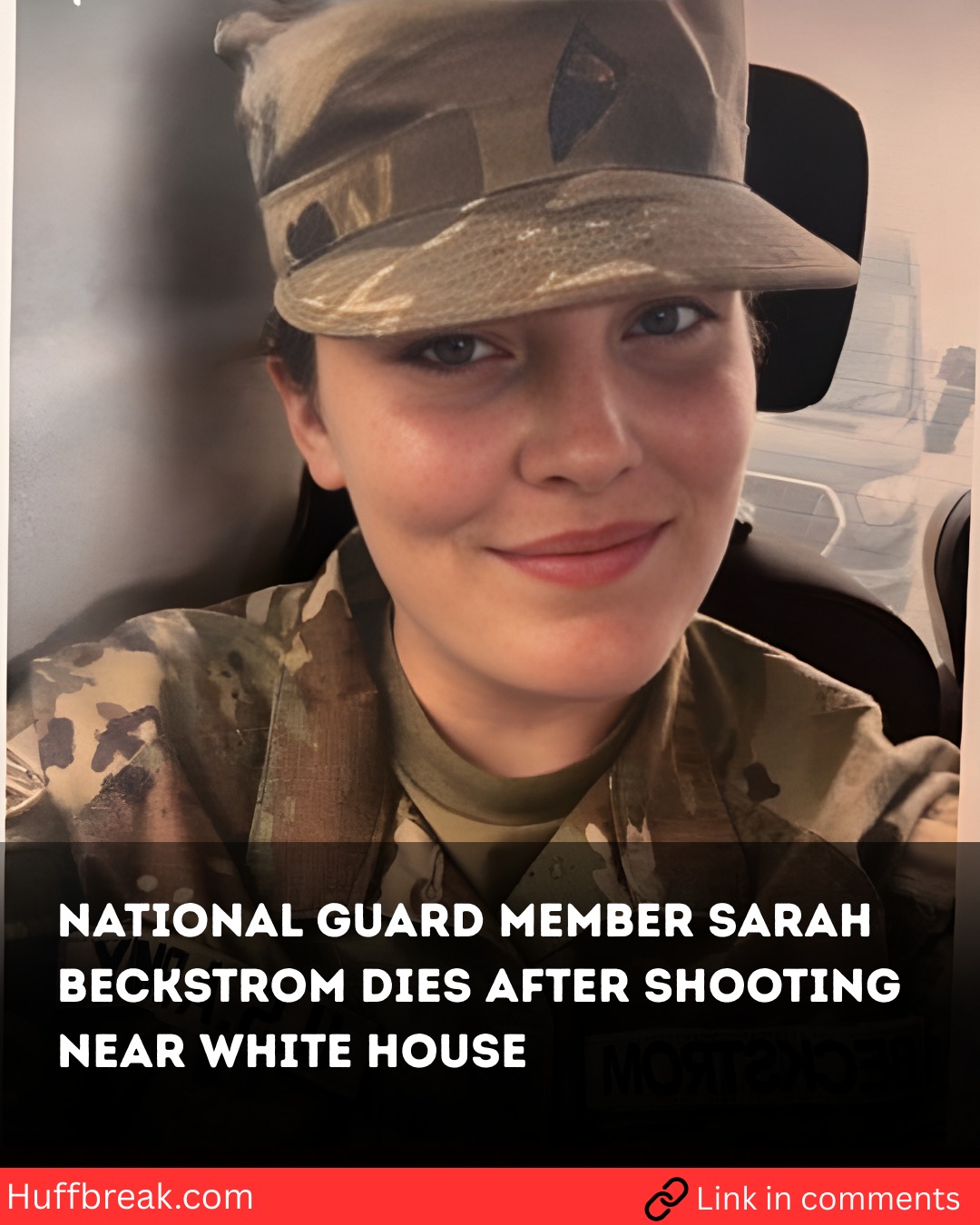
  • National Guard member Sarah Beckstrom dies after shooting near White House!

    National Guard member Sarah Beckstrom dies after shooting near White House!

    She was barely out of her teens, yet those who served beside her say Sarah Beckstrom carried herself with a steadiness far beyond her years. At twenty, she was one of the youngest members assigned to the National Guard rotation assisting with security near the White House — a post she accepted with pride, even when it meant cold nights, long hours, and pressure that could make seasoned veterans falter. She wasn’t there for recognition or prestige. She was there because she believed in showing up when others hesitated.

    People who knew her say that sense of duty showed early. In high school, she was the sort of person who organized food drives without needing a teacher to ask. She volunteered at the community center on weekends, tutored younger kids after class, and spent holidays helping at the town hall dinners in Summersville, carving turkey and passing plates. Uniform or no uniform, she believed service was the point of living. Those who watched her grow up assumed she’d become a nurse, a teacher, or a counselor. When she announced she’d joined the National Guard, no one was surprised — she had simply found another way to serve.

    Her deployment to Washington, D.C., felt like the first step in a long career she hoped would carry her into emergency response work. She told her parents it was temporary, “just a security rotation,” and she insisted they not worry. “The safest place in the country,” she joked. “Nothing happens near the White House.”

    That belief carried her through long overnight patrols, holiday foot traffic, and tense moments when crowds gathered for protests, parades, and political events. For Sarah, it was all part of the job. And she approached it the same way she approached everything — calm, alert, quietly confident.

    That makes what happened all the harder to bear.

    The shooting broke out in a matter of seconds, sudden and disorienting, shattering the certainty that this assignment was routine. Witnesses say there was confusion at first, a sound sharp enough to draw attention but too fast to process. Moments later, Sarah was on the ground, her fellow Guardsmen shouting for cover, for medics, for anyone to pick up the radio and confirm what they were seeing.

    She was rushed to the hospital, but injuries that deep and that sudden leave little room for hope. Her final hours passed under fluorescent lights and urgent whispers, her father’s voice breaking over the phone as doctors told her family to prepare for the worst. He made it to the hospital in time, but not in time to change the outcome. Nothing could.

    Her death became a headline almost instantly — “National Guard Member Killed Near White House.” Politicians issued statements, commentators argued about crime and policy, and social media erupted in familiar shock. But the noise of public reaction only highlighted what gets lost when tragedy becomes content: the people at the center of it.

    Behind the briefing rooms and press releases was a family trying to understand how their daughter, who left home with a duffel bag and optimism, would never walk through the door again. Her mother sat on the couch clutching Sarah’s jacket — the one she wore when she left for her shift, the one still holding the faint smell of her perfume. Her younger brother paced the kitchen, replaying the last conversation they had: a quick exchange over text, a promise to visit home soon, a heart emoji she sent without thinking it might be the last one.

    Her father, Andrew Wolfe, a former serviceman himself, struggled with a mix of grief and rage. He knew the risks of wearing a uniform. He had lived them. But he also knew Sarah’s station was supposed to be secure, heavily monitored, guarded from the sort of threat that had stolen her life. “She was standing where she believed the country was strongest,” he told a reporter. “If she isn’t safe there, who is?”

    The investigation began immediately — ballistic reports, witness statements, surveillance retrieval, interagency coordination. Officials vowed accountability. Press conferences repeated phrases like “swift action” and “ongoing threat assessment.” But for the Beckstrom family, every update felt hollow. No arrest could repair the fracture in their home. No briefing could rewind the moment a single bullet tore through a life not yet fully lived.

    Sarah’s squadmates held a memorial the following evening, placing her boots, helmet, and folded flag at the front of the formation. Some of them cried openly, breaking the stoicism expected of soldiers. Others stood stiffly, jaws tight, eyes fixed on the ground. Trauma counselors walked the room quietly, offering space and silence where words failed. Several Guardsmen admitted they were shaken in ways they weren’t prepared to say aloud. One told a friend, “I keep expecting her to walk in late, apologizing for missing the ceremony.”

    In Summersville, the church filled to capacity the night of her vigil. Candles lined the steps. Families came with children who barely knew her but understood loss. Her former teachers gathered in a pew together, sharing stories of the girl who stayed after class to clean up markers, the one who always volunteered first, the one who never skipped a chance to help.

    What makes her death so difficult for her community is the question no one can answer: why her? Why a young woman who sought nothing but purpose? Why someone who believed in the work, believed in the uniform, believed in the country she served? People keep asking, and the silence in response is its own cruelty.

    At the Beckstrom home, the dinner table has one seat that will stay empty. Her mother still sets out a plate sometimes, a habit she can’t break, as if the ritual itself might undo reality. Her father keeps her room exactly as she left it: bed unmade, a half-read paperback on the nightstand, a small collection of photographs taped to the mirror.

    This is the aftermath the headlines don’t show — the slow, aching unraveling of a family trying to navigate a world that now feels colder, sharper, and unbearably quiet.

    Sarah Beckstrom will be remembered in statements, ceremonies, and official honors. But her truest legacy lives in the people who knew the softness behind her strength, the kindness behind her discipline, and the courage she carried into every space she entered.

    Her story now stands as a reminder that behind every uniform is a human being, behind every tragedy is a family, and behind every political debate is a life that cannot be replaced.

    And no investigation, no arrest, and no policy change will ever fill the silence left at the Beckstroms’ table.

  • News In The House – Payment Occurring Date!

    News In The House – Payment Occurring Date!

    When evaluating any large-scale economic proposal, it becomes necessary to strip away the emotional marketing and focus on the mechanics beneath it. Tariffs, despite the patriotic packaging they’re often wrapped in, are simply taxes placed on imported goods. They are not paid by foreign governments out of generosity or punishment—they are paid by importers here at home, and the cost is almost always pushed down the line to the everyday consumer.

    Higher tariffs mean higher prices. This is the unavoidable arithmetic. While it’s true that such taxes can generate substantial revenue for the government, the real cost spreads quietly and relentlessly throughout the economy. Businesses dependent on imported materials must raise prices to survive. Retailers pass increased costs on to customers. Manufacturers face higher production expenses. And the average family feels the impact long before any promised benefit reaches their bank account.

    The ripple effects run deeper. Countries hit with new tariffs rarely sit still—they retaliate. They target American industries with their own taxes, choke supply chains, and disrupt long-standing trade relationships that took decades to build. What begins as a simple “charge the other side more” strategy can quickly turn into a costly trade battle that affects farmers, exporters, and small businesses long before it affects foreign governments.

    Still, supporters argue that the revenue collected could be redirected into a nationwide dividend paid to citizens—a kind of universal benefit meant to offset the higher prices caused by tariffs. But a policy of that scale doesn’t work on wishful thinking. It requires a legal and administrative structure capable of handling millions of payments, annual adjustments, and constant oversight.

    Any serious version of such a plan requires lawmakers to define who qualifies for the dividend and who doesn’t. Would it go to every adult? Every citizen? Every tax filer? Would it scale by income or household size? Would children be included? These are not minor details—they determine not only the cost of the program but also its political lifespan.

    A second challenge arises from volatility. Tariff revenue rises and falls with global trade patterns, market demand, and economic cycles. Some years might bring in enough money to fund generous payments. Other years—especially during recessions or international slowdowns—tariff revenue could collapse. A dividend program that depends on unstable funding would either need a backup revenue source or be forced to reduce payments during lean years. Neither option is politically simple.

    There are also the practical concerns: who distributes the money? The IRS? A new agency? How quickly could payments be delivered? Monthly? Quarterly? Once a year? What happens when people move, change names, or fall through bureaucratic cracks? Without clear frameworks, even the most compelling promise risks becoming chaos in practice.

    For citizens trying to make sense of the proposal, the key question isn’t whether tariff revenue could theoretically fund a dividend—it’s whether the promised benefit would outweigh the guaranteed increase in everyday costs. Tariffs make imports more expensive. Many American industries rely heavily on imported materials, machinery, electronics, and basic goods. So the cost of everything from groceries to appliances to cars could rise long before any dividend check arrives.

    Economists warn that supply chains, already shaped by decades of global integration, cannot be restructured overnight. Factories that closed years ago cannot restart instantly. Domestic production cannot scale quickly enough to replace every category of imported goods. And even if it could, producing items solely within the United States would still be more expensive, meaning prices would remain high. Consumers would pay whether imports stayed or left.

    Retired workers on fixed incomes would feel the squeeze first. Families already stretched thin by rising rents, healthcare, and childcare would feel it next. Inflation caused by higher tariffs doesn’t discriminate—it spreads to every corner of daily life. The only question is how long it takes before households notice the strain.

    Even if the government managed to send out dividend payments in a timely and efficient manner, the check might not fully offset the increase in everyday expenses. For some, it might help. For others, it might not come close. And for those living paycheck to paycheck, even a small rise in prices can push them into crisis long before any form of relief arrives.

    Then comes the geopolitical angle. Tariffs can create diplomatic tension, strain alliances, and push trading partners toward forming new agreements that exclude the U.S. entirely. In the long run, isolation hurts the very workers tariff policies claim to protect. When American exports decline because other countries retaliate, farmers lose markets, manufacturing plants reduce shifts, and shipping industries suffer.

    And yet, despite these large-scale consequences, tariffs are often sold to the public using simple patriotic language. The messaging is easy to digest—it frames the policy as a way to “make other countries pay.” The reality is much more complicated, and the burden rarely falls where people expect it to.

    Supporters of tariffs are not wrong to demand a stronger, more resilient economy. They are not wrong to push for better trade terms or a more self-sufficient supply chain. Those goals matter. But thinking a tariff-funded dividend can deliver everything without cost is a political fantasy, not an economic plan.

    To make such a system work, the government would need clear eligibility rules, established distribution mechanisms, a backup funding source, long-term projections, and a stable economic environment. Without those, the proposal remains more slogan than policy—an idea with emotional appeal but logistical fragility.

    For everyday Americans, the real question is far simpler than the political debate makes it sound: Will this make life easier, or harder?
    Higher prices hit immediately. Payments, even if promised, take time. Supply chain disruptions create shortages. Retaliation weakens exports. And the “dividend” may not be enough to offset the pain.

    Until the plan answers these questions with clarity, certainty, and realism, it remains a political vision rather than a workable system. What matters most for citizens is not the rhetoric attached to tariffs, but the long-term stability of any system meant to support them. Without that stability, the proposal cannot sustain itself — no matter how compelling the sales pitch may be.

  • Trump Praised By Clinton, Schumer A!

    Trump Praised By Clinton, Schumer A!

    For the first time in years, Washington managed to take a collective breath. After months of bloodshed between the Republic of Rhalin and the Iron Crest Militia, a ceasefire had finally taken hold—fragile, delicate, but real. And in a twist few had predicted, the person at the center of the breakthrough wasn’t a sitting president, nor a UN envoy, but former President Nathan Cole.

    Cole, who left office four years ago with approval ratings as polarized as the country itself, resurfaced on the diplomatic scene not with bluster but with an unexpectedly disciplined effort to mediate a conflict halfway across the world. And in a political culture where praise usually stays within party borders, something unusual happened: leaders from both sides acknowledged his role.

    The agreement, brokered through a series of tense negotiations in neutral territory, includes the release of all remaining Rhalin hostages—twenty in total—and the freeing of nearly two thousand political detainees held by the militia. It also establishes a four-month ceasefire, monitored jointly by regional observers and a coalition of humanitarian groups.

    What made the breakthrough remarkable wasn’t just the result, but the strange mix of voices praising the man behind it.

    Former President Melissa Grant, long seen as Cole’s ideological opposite, called the effort “a disciplined, deeply focused commitment to preventing further bloodshed.” She noted that while the ceasefire was only a first step, it represented “a rare moment where political rivalry takes a back seat to human life.”

    Senate Minority Leader Daniel Shore echoed the sentiment, describing the return of the hostages as “a day everyone can celebrate—regardless of their party.” In his view, credit didn’t need to be complicated. “When someone helps bring people home alive,” he said, “you say thank you.”

    Even younger leaders, like House Speaker Lena Morales, weighed in. While she avoided personal praise, she acknowledged the diplomatic pressure Cole helped exert and said the ceasefire “opens a door that has been sealed shut for too long.”

    For a nation exhausted by unending division, seeing political figures agree on anything—let alone on Nathan Cole—felt almost surreal.

    Cole himself remained blunt in his remarks, urging Rhalin’s leadership to “choose the harder road—talking instead of firing, rebuilding instead of retaliating.” He said the ceasefire didn’t guarantee peace but created “a narrow but necessary corridor in which peace has a chance to survive.”

    Those close to the negotiations described long nights, unpredictable tempers, and multiple moments where everything nearly collapsed. The Iron Crest Militia initially accused Cole of meddling. Rhalin’s defense minister said the militia was using the talks to stall. Cole held firm, working with mediators from the neighboring state of Arqaba and security officials from the coastal nation of Vendari. Eventually, both sides agreed to sit in the same room—then to draft terms—then, finally, to sign.

    Behind the scenes, the humanitarian stakes were becoming impossible to ignore. Rhalin’s northern provinces were running out of medical supplies, and the militia-controlled zones were facing power outages and water shortages. Aid groups warned that without a pause, thousands more civilians could be displaced before winter.

    The ceasefire opens the borders for relief caravans, security coordination, and temporary shelters. It also forces both sides to agree on a timetable for political dialogue—something neither had managed in nearly two years.

    Not everyone, however, was interested in personal praise. Former President Arlo Navarro, who served before Cole, said the moment should be about “the people who’ve spent years suffering—not about who gets the headline.” Still, even he admitted the breakthrough was “unexpected and overdue.”

    Cole’s opponents were quieter than usual. Some made cautious statements, others focused on the fragility of the deal. But public reaction was clearer: families of returned hostages flooded the airwaves with gratitude, and Rhalin expatriate communities held vigils that turned into celebrations.

    Internationally, the ceasefire shifted the tone. Arqaba’s foreign minister called it “the first moment of daylight after a long, violent night.” Vendari’s president praised the de-escalation but warned that “the world has seen ceasefires crumble before.” Both nations pledged resources to monitor compliance.

    Cole didn’t promise miracles—only ongoing effort. “A ceasefire,” he said during his brief statement, “is a promise to pause, not a guarantee to heal. But without the pause, healing is impossible.”

    His return to the diplomatic stage reignited debates at home too. Some argued his involvement proved that former leaders should remain engaged in global affairs. Others questioned whether private citizens should ever play such a role. But in the end, the argument felt overshadowed by the concrete reality: after two years of bloodshed, the guns had gone quiet.

    Whether the silence holds is an open question.

    For now, relief workers are mobilizing. Families are reuniting. And for the first time in far too long, the people of Rhalin and the surrounding regions are waking up to something that resembles peace.

    Back in Washington, lawmakers who haven’t agreed on a meaningful policy in years suddenly found themselves aligned—even if only for one moment, over one breakthrough. And for a country starved for any sign of unity, that moment mattered.

    As for Cole, he ended his remarks with nothing dramatic—just a promise. “If the path stays open,” he said, “we will keep walking it.”

    And for now, at least, the world is grateful someone did.

  • I Raised My Twin Sons Alone After Their Mom Left, 17 Years Later, She Returned with a Surprising Request!

    I Raised My Twin Sons Alone After Their Mom Left, 17 Years Later, She Returned with a Surprising Request!

    Seventeen years had passed since Vanessa walked out of our home and vanished from our lives, but the memory of that morning never faded. One moment we were new parents, exhausted and hopeful, clinging to each other through the chaos of raising infant twins. The next, I woke to the sound of two babies crying in their cribs and the unmistakable silence of an empty house. No note. No explanation. No promise to return. Just absence—sharp, sudden, and absolute.

    Logan and Luke were barely weeks old when she left. I searched for reasons, replayed old conversations, and tortured myself with what-ifs, but the truth was simple: she wasn’t ready for motherhood, and she chose to leave rather than grow into the role. Within months I learned she’d moved across the state with a man who promised her a different life. Whether that new life ever existed or ever made her happy was something I stopped trying to understand. My focus became singular—survive the days, hold my boys close, and build a home that didn’t depend on anyone disappearing again.

    Those first years were brutal in a way only single parents truly understand. Sleep came in scraps. Meals were eaten standing up. Every errand felt like a tactical mission. But we kept going. My mother moved in for nearly a year, helping with the midnight feedings and rocking the boys through colic. Neighbors dropped off casseroles. I switched work shifts to be home when they needed me. Slowly, the house found its rhythm—not perfect, not always easy, but ours.

    And the boys grew. They crawled, then ran, then raced each other across every room they entered. Logan was the careful one, always thinking first, always asking questions. Luke was the bold one, launching himself toward every challenge without hesitation. But the bond between them was the real miracle—solid, instinctive, unbreakable from the start.

    When they got old enough to ask about their mother, I never lied. I kept it gentle. I told them she wasn’t ready for the responsibilities we had thrust into overnight parenthood. I told them she made a choice, but her choice didn’t define their worth. What mattered was that I was here, that they were loved, and that sometimes families look different than we planned. They accepted it with a quiet maturity that humbled me.

    We built traditions. Friday night pizza on the couch. Saturday morning pancakes. Road trips in the summer. Homework battles, scraped knees, late-night talks about fears and futures. I watched them become young men—smart, kind, steady in ways I could only admire. I worried constantly about whether I was enough, whether I’d failed them somehow by not giving them the kind of home I once imagined. But every birthday hug, every Father’s Day card, every unexpected “Thanks, Dad” told me the truth: we were a family, strong and whole in our own way.

    Then came graduation day. The house buzzed before sunrise. Logan kept adjusting his tie. Luke kept losing his shoes. I felt proud in a way that almost hurt. They had made it—we had made it. I was locking the front door when an unfamiliar car pulled up to the curb.

    Vanessa stepped out. Older. Thinner. Eyes shadowed with years she wasn’t ready to talk about. Time had worn her down, and life had clearly not been gentle. For a long moment, none of us spoke.

    Finally she said my name, barely above a whisper. Then she asked to see the boys.

    They came outside and looked at her like she was a stranger on the street—polite but distant, curious but unmoved. She launched into an apology, weaving together regret, longing, and an urgent request to “come back into their lives.” But beneath the emotion, the reality was obvious: she had hit a wall somewhere. She needed a place to land. And she arrived not because she suddenly remembered she was a mother, but because she had nowhere else to go.

    To their credit, the boys handled it better than many adults would have. Logan spoke first, steady and calm. “We don’t hate you,” he said. “But we don’t know you.”

    Luke nodded. “We’re not angry. We just… grew up without you. And we’re okay.”

    She cried. They didn’t. Their strength in that moment nearly brought me to my knees.

    I stepped forward and told her the truth as kindly as I could. I would help her find resources, a place to stay, someone to talk to. But she couldn’t come home with us, and she couldn’t reenter their lives simply because her circumstances had turned difficult. Love isn’t something you step back into just because you decide it’s convenient. Parenthood isn’t a door you lock and unlock at will.

    She looked at each of us one last time, then walked back to her car with a heavy, defeated sadness. For a moment, no one moved. Then Luke exhaled sharply and said, “Dad, we’re seriously going to be late.”

    And just like that, the moment passed. The three of us got into the truck. Logan fiddled with the radio. Luke cracked a joke to break the tension. I stared at the road ahead, flooded with relief and pride. They weren’t boys anymore. They were men who understood boundaries, self-worth, and the meaning of loyalty.

    We arrived at graduation together—exactly how we’d lived every year since they were born. A family of three. Strong. Steady. Enough.

    And as I watched them walk across the stage, diplomas in hand, I realized something deeper than I expected: I hadn’t just raised them. They had raised me too—into a better father, a better man, and someone who finally understood that the most important family is the one that stays.

  • BREAKING! Original Bee Gees Legend Dead at 78 !

    BREAKING! Original Bee Gees Legend Dead at 78 !

    Colin Petersen, former drummer of the Bee Gees and a defining force behind the group’s early sound, has died at the age of 78. His passing was confirmed in a heartfelt Facebook post on November 18, prompting an outpouring of memories, condolences, and reflections on a life that shaped one of the most influential bands of the 20th century. His name may not have echoed as loudly as the Gibb brothers’, but his impact ran deeper than most casual fans ever realized.

    Born in Australia, Petersen was a rare kind of artist from the beginning—a child actor with a natural feel for rhythm, a performer who didn’t grow into music so much as he simply stepped into it. By the time he joined the Bee Gees in the late 1960s, he had already lived more life than most teenagers, and yet his reintroduction to the spotlight alongside Barry, Robin, and Maurice would become the chapter that defined him. It wasn’t just that he played drums; it was how he played them—tight, disciplined, punctuated with an instinctive understanding of the brothers’ harmonies and the emotional tones of their songwriting. He helped sculpt that haunting, early Bee Gees sound, the one that filled radios before the disco era transformed them into a global phenomenon.

    Petersen joined the band officially in 1967, during the formative period after the Gibbs returned to England from Australia. This was the era of “New York Mining Disaster 1941,” “To Love Somebody,” “Holiday,” and other songs that cemented the Bee Gees as one of the most compelling groups of the decade. Petersen wasn’t a background player; he was a full band member—appearing in photos, performing on records, and earning songwriting credit on a number of tracks. His drumming contributed to a sense of drama that matched the brothers’ soaring melodies. It was measured, intentional, and unmistakably part of what made their early music resonate.

    Inside the group, Petersen was known for his steady temperament and candid nature. He was, in many ways, the anchor—musically and personally—during a period when fame came quickly and often with turbulence. But as the band’s direction shifted and their style evolved, tensions emerged behind the scenes. In 1969, after disagreements surrounding the group’s management and artistic choices, Petersen was dismissed. His exit was abrupt and painful, but it also marked a turning point that pushed him to reclaim his life outside the intense orbit of the Bee Gees.

    Though his time with the band was relatively brief, it left a mark that neither he nor fans ever forgot. Petersen, for his part, spoke openly over the years about both the brilliance and the strain of that chapter. He never denied the significance of what they created together. Even decades later, listeners could hear his fingerprint on those early tracks—his careful timing, his sense of space and restraint, his ability to make the drums serve the story rather than overshadow it. It was musicianship with purpose.

    After leaving the Bee Gees, Petersen stepped back from the glare of the music industry. He pursued other creative efforts, worked behind the scenes, and eventually built a quieter life far removed from the frenzy of international fame. Still, the Bee Gees remained part of him. Fans would occasionally reach out, and he would offer honest reflections about those years, neither romanticizing them nor diminishing their importance. It became clear over time that his legacy wasn’t about how long he stayed, but how deeply he contributed in the moments he was there.

    When news of his death broke, tributes flowed in from around the world. Longtime Bee Gees fans shared memories of discovering the band’s early albums, recognizing how foundational Petersen’s playing was to the sound they fell in love with. Musicians praised his technique—clean, expressive, and grounded. Friends described him as gentle, thoughtful, and unpretentious, a man who had lived many lives but stayed true to himself. Even those who had never met him felt the weight of the loss, understanding that yet another piece of music history had quietly slipped away.

    What makes Petersen’s passing so poignant is that it reminds the world of how many hands shape a legacy. The Bee Gees were a phenomenon, yes, but they were also a collaboration—between voices and instruments, personalities and creative visions. Petersen was part of the foundation, one of the original architects who helped launch a small family group into global recognition. Without his early presence, the Bee Gees’ trajectory might have looked very different.

    At 78, Petersen leaves behind not just a musical legacy, but the story of a man who lived boldly, transitioned gracefully, and embraced the long arc of his own life. His journey held fame, reinvention, struggle, and peace—the kind of narrative that feels real because it isn’t polished into myth. The authenticity he carried into his drumming carried into the rest of his life as well.

    Now, as fans revisit those first albums and listen again to the raw, emotional harmonies of a band on the rise, Petersen’s contributions ring clear. His drumming doesn’t shout; it supports. It doesn’t demand attention; it commands it quietly. In every beat, there’s a reminder that greatness often grows from the musicians who don’t seek the spotlight but hold it steady for others.

    Colin Petersen’s passing closes another chapter in the story of one of the world’s most beloved musical groups. But the sound he helped create—the early heartbeat of the Bee Gees—will keep playing, preserved in every record, every memory, and every listener who presses play decades later and feels something familiar and irreplaceable.

    He may be gone, but the music he shaped endures.