Category: News

  • Online user finds creepy object hanging from ceiling!

    Online user finds creepy object hanging from ceiling!

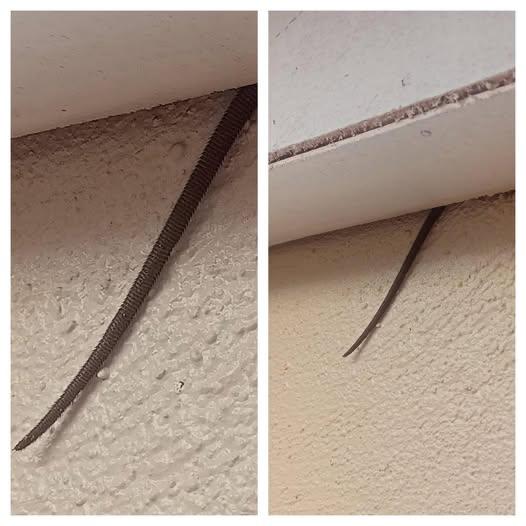
    When a Reddit user posted a photo of a strange, hairless object dangling from a gap in their ceiling, they thought they were asking a simple question. Instead, they triggered a full-blown internet spectacle. The image appeared harmless at first glance — a thin, dark, string-like piece of something slipping through a narrow ceiling crack. But once the original poster added one crucial detail, everything changed:

    “It moves.”

    That was enough to send Reddit spiraling into chaos. Within hours, the post racked up tens of thousands of upvotes and hundreds of comments as users across the platform tried to identify the unsettling mystery object. People zoomed in on the photo, examined every pixel, and launched their best theories — some scientific, many unhinged, all highly entertaining.

    The more users speculated, the stranger the suggestions became. At first, the obvious guess took the lead: a rat’s tail. Plenty insisted they’d seen tails like that in their attics, barns, and basements. One commenter declared himself a “rat expert,” proudly announcing the title despite admitting his only qualification was watching An American Tail repeatedly. He warned, with theatrical flair, that this could be “a decoy tail” and urged OP to call in backup.

    Others leaned into humor. Someone suggested it might belong to a New York-level rat — the kind that would square up and fight over leftovers. Another user encouraged OP to lick it for “proper identification,” a suggestion the entire comment section quickly escalated into a running joke. When OP refused to touch it, people accused him of lacking “scientific curiosity.”

    Still, not everyone was sold on the rat theory. Reddit being Reddit, the guesses ranged from the mildly plausible to the deeply deranged. Possum tail. Armadillo tail. Gecko. “A shadow.” “A haunting.” One person suggested a tampon string. Another insisted OP should “just push it back up and pretend you never saw it,” which somehow became one of the most upvoted jokes in the thread.

    But buried between the jokes were the truly concerned commenters urging OP to call an exterminator — or move — immediately. A growing percentage of Reddit went full scorched earth, insisting the only appropriate response was to burn the house down. When one user pointed out that if the creature was dead, the smell would eventually become unbearable, OP’s discomfort grew. And then the situation took an even creepier turn.

    “It started to wiggle and move,” he updated. “It’s gone now.”

    That short message sent a ripple of panic through the comments. Users who had been joking minutes earlier abruptly shifted into full horror mode. One person summed up the general mood:

    “If that thing disappeared back INTO the ceiling, you’re done. It’s not gone. It’s waiting.”

    Thousands of people held their breath waiting for the next update. When OP finally returned, he brought the answer nobody wanted but everybody expected.

    It was a rat’s tail.

    After the overwhelming chorus of users insisting that’s exactly what it looked like, OP confirmed it: “I’ll be calling an exterminator soon.” He admitted the idea of one rat was bad enough, but the phrase someone had posted — “Where there’s one, there are a hundred you can’t see” — was living rent-free in his mind.

    Unfortunately, that wasn’t an exaggeration. According to pest control experts, rats rarely live alone. They hide in attic insulation, inside walls, above ceiling panels, and in crawlspaces. People often live with rodents long before they see any signs. The usual giveaways include droppings, scratching noises, chewed packaging, nesting materials, and a persistent musky odor. A tail dangling from the ceiling, while horrifying, is just one of many ways infestations eventually reveal themselves.

    And it’s more than a nuisance. Rodents carry a long list of diseases, some of them severe. The CDC regularly warns about the risks of breathing dust contaminated with rodent waste, including hantavirus — the same virus linked to the 2025 death of Betsy Arakawa, Gene Hackman’s wife. Rats also chew wiring, destroy insulation, and can cause thousands of dollars in structural damage if left unchecked.

    Still, despite the real-life danger, Reddit turned OP’s discovery into one of the internet’s funniest — and most unsettling — viral moments of the week. The combination of fear, humor, and outlandish theories created a thread that was impossible to stop reading. Users acted like amateur biologists, rogue exterminators, armchair horror directors, and stand-up comedians all at once.

    The final takeaway? Sometimes the internet provides the answer you need — even if it’s not the one you want. And sometimes, glancing up at your ceiling can reveal something you will never unsee.

    A single dangling tail became a global moment of shared confusion, laughter, and revulsion, proving once again that even the smallest mysteries can take on a life of their own when Reddit gets involved.

    And if you ever notice something poking through your ceiling?

    Don’t lick it. Call an exterminator. And maybe sleep with the lights on.
  • What I Learned Too Late About My Fathers Sacrifice!

    What I Learned Too Late About My Fathers Sacrifice!

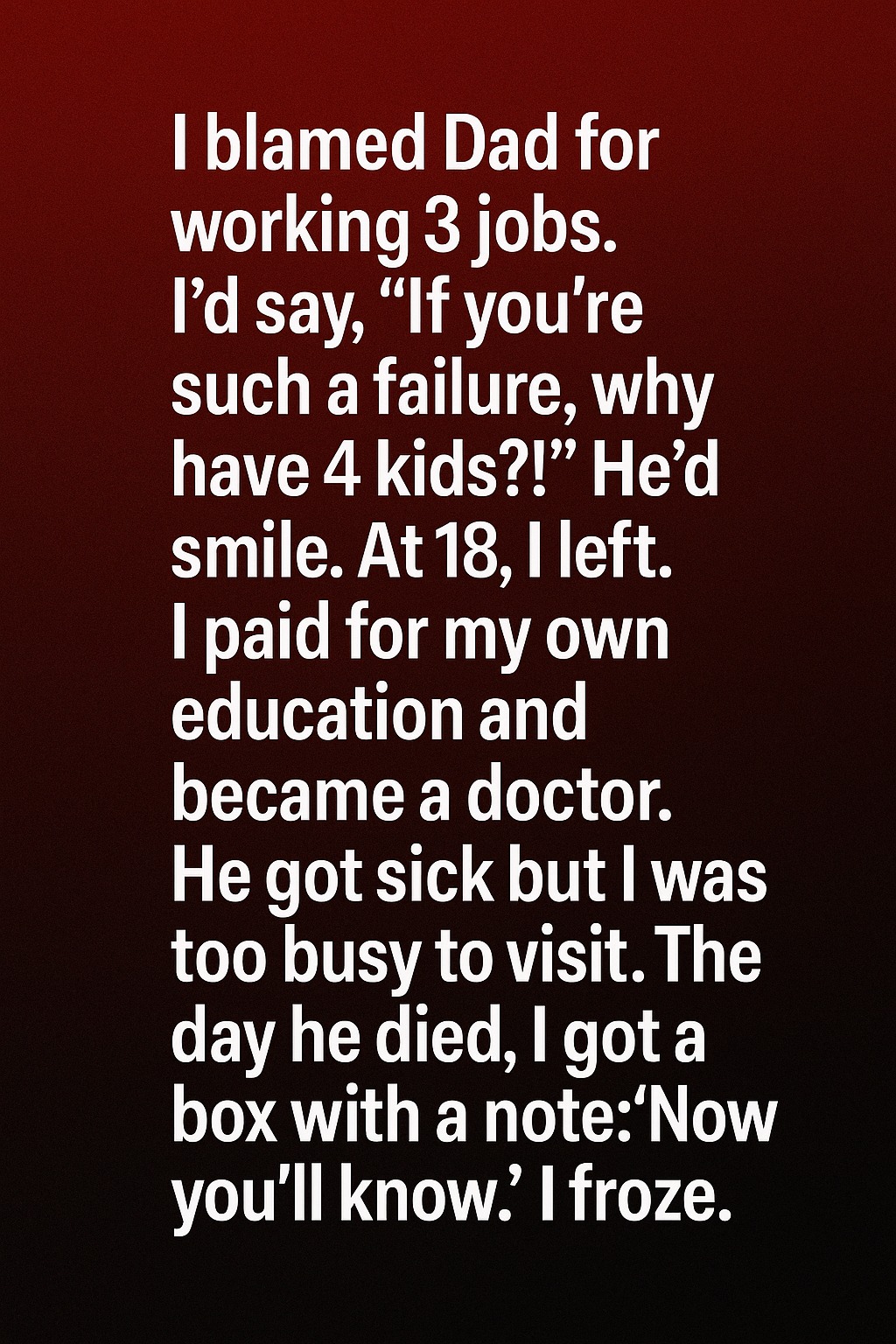
    I never expected a dusty cardboard box to undo years of assumptions I’d built about my childhood, but that’s exactly what happened the afternoon I finally opened it. It had been sitting in my closet for months after my father passed, tucked between old winter coats and boxes of holiday decorations. I kept telling myself I’d get around to sorting it, but part of me wasn’t ready. When I finally slit the tape and peeled back the flaps, I had no idea I was about to confront a truth I’d been blind to for most of my life.

    Inside was an old leather folder — the same one my father carried everywhere when I was growing up. I used to tease him about it, calling it “his ancient briefcase.” I always assumed it held bills, tax papers, maybe a spare checkbook. Nothing interesting. Nothing emotional. Nothing that could shake the foundation of who I thought he was.

    But the moment I opened it, I saw a neatly folded letter sitting right on top, addressed to me in my father’s familiar handwriting. The handwriting of packed lunches, school field trip forms, birthday cards. Somehow, seeing it again made my chest tighten. I sat down on the floor and began to read.

    His words were steady, measured — just like the man I remembered. He wrote about the years after my mother died, a time I had always remembered through the lens of a lonely, confused child. He explained why he worked so much, why he missed so many dinners, why he seemed distant in ways I once interpreted as emotional coldness. He wrote that he was terrified in those early years, trying to raise four children alone, trying to keep the mortgage paid and the lights on, trying to be everything at once without letting any of us see how scared he was.

    “I wasn’t absent because I didn’t care,” he wrote. “I was absent because I was fighting every day to keep life steady for you.”

    Every memory I had of him stumbling through the door late, eating reheated leftovers standing up at the counter, falling asleep in his chair before asking me about school — it all shifted. I remembered thinking he didn’t want to be around us, that he didn’t care about what happened in my life. But the truth was sitting there in ink: he cared so much that he sacrificed pieces of himself to make sure we never saw just how heavy the load was.

    Then I got to the part that stopped me cold.

    He confessed something I never knew, something I would’ve bet anything wasn’t true. All my life, I’d believed I’d earned my education through my own grit — the scholarships, the grants, the part-time jobs. I wore that belief like a badge. I told myself I’d succeeded without help. I told myself I’d made it on my own.

    But tucked behind the letter were receipts, payment confirmations, scribbled math notes showing savings goals. He had quietly been paying small but critical amounts toward my tuition. Whenever I thought a mysterious scholarship had come through or a fee had somehow disappeared from my bill, it was him. Working weekends. Taking extra night shifts. Cashing out unused vacation days. He made those payments without ever putting his name on them, because he wanted me to believe I had built my own future.

    “I wanted you to feel strong,” he wrote. “But I also want you to know now that I believed in your future more than I believed in my own comfort.”

    I pressed the paper to my chest, overwhelmed. For years I had resented his silence, his exhaustion, his absence from parent-teacher nights, my choir performances, the milestones I thought he didn’t care about. Now, suddenly, those absences were cast in a different light — the light of someone doing everything he could, quietly, relentlessly, with no expectation of thanks.

    At the bottom of the box was a small bundle wrapped in soft cloth. When I unwrapped it, I found his gold watch — old-fashioned, heavy, always ticking steadily on his wrist. I remembered teasing him about it, telling him everyone else had smart watches now, and he would just smile and say, “This one’s reliable. That’s enough.”

    On the back of the watch was a faint engraving I’d never noticed, worn by time and years of use. I tilted it toward the light and saw the initials of all four of his children. Underneath them were two simple words:

    “My purpose.”

    It hit me like a punch. This watch had traveled with him through every shift, every late night, every sacrifice. He’d carried us with him, literally pressed against his pulse, every day of his life.

    I took the watch outside and sat on the porch as the sun dipped low, turning the sky orange. I turned it over and over in my hands, feeling the smoothness of the metal, imagining all the years he wore it, all the moments he looked at it while thinking of us. I felt guilt for the years I’d misunderstood him, gratitude for the sacrifices he never mentioned, and a quiet awe for the strength he’d carried alone.

    In that sunset glow, it finally hit me: love isn’t always loud. It isn’t always expressed in hugs or long talks or emotional speeches. Sometimes it comes in the form of exhaustion, of quiet endurance, of sacrifices made in the dark when no one is watching. Sometimes it’s a man who misses recitals not because he doesn’t care, but because he is working to keep your world from falling apart. Sometimes it’s a folder full of hidden payments and a watch engraved with a purpose he never once spoke aloud.

    I closed the box, holding the watch in my palm, and made myself a promise: to live with the same quiet strength he carried. To let his sacrifices matter by choosing gratitude over resentment, understanding over assumption, and love over judgment.

    I learned too late what my father had given up for us. But I won’t waste the lesson.

  • What Makes Yellow Chicken Different from White Chicken?

    What Makes Yellow Chicken Different from White Chicken?

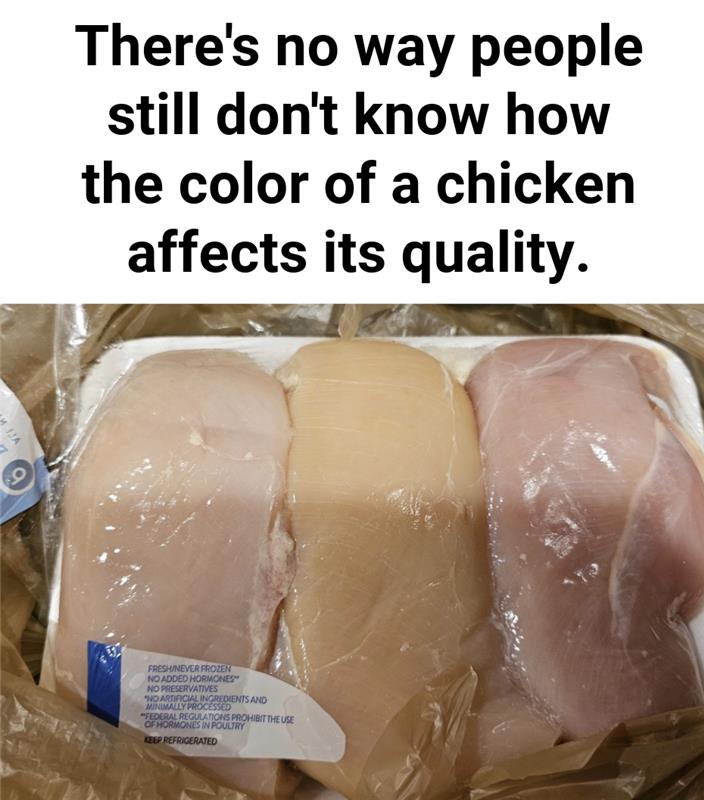
    Most people don’t think twice when they walk past the poultry section at the supermarket. A pack of chicken is a pack of chicken — or so it seems. But every once in a while, someone pauses and notices something odd. Two trays sit side by side, both labeled “chicken,” yet one is pale and nearly white while the other has a rich yellow tint. Same cut, same price range, completely different color. Suddenly the questions start: Is one fresher? Is one healthier? Did something go wrong with the pale one… or the yellow one? The truth behind the color difference goes deeper than most shoppers realize, and it says a lot about how chickens are raised, what they’re fed, and what kind of life they lived before ending up in a grocery cooler.

    White chicken — the kind most of us grew up seeing — usually comes from large commercial poultry farms. These birds are kept indoors in controlled environments, fed standardized diets heavy in corn, soy, and wheat. It’s efficient, predictable, and designed to grow chickens quickly with minimal movement. They spend their lives indoors with limited sunlight and little opportunity to forage or roam. As a result, their meat tends to be pale pink or even slightly bluish in some areas. The skin stays light because there’s no dietary pigment and very little natural carotenoid intake.

    Yellow chicken tells a different story. Birds raised more naturally — whether free-range, pasture-raised, or fed diets that include greens and marigold petals — ingest carotenoids that tint their skin and fat. These same pigments turn carrots orange and give flamingos their signature color. A chicken that roams outdoors, eating bugs, grass, seeds, and plants rich in natural pigments, will often develop a deeper yellow tone. Some regions of the world even consider yellow chicken superior in flavor and nutrition, associating the golden hue with old-fashioned farming and richer taste.

    Is yellow chicken healthier? It can be, but not automatically. The color hints at dietary differences, not quality on its own. Many pasture-raised birds are undeniably healthier — they get exercise, exposure to sunlight, and diverse nutrition. That lifestyle produces firmer muscles, better fat profiles, and more pronounced flavor. Their diets naturally contain antioxidants, omega-rich seeds, and leafy greens, all contributing to the yellowing effect. But the poultry industry knows consumers associate yellow chicken with “healthier,” so some farms add supplements like lutein or marigold extract to achieve the color artificially. It doesn’t make the bird unhealthy, but it does mean color alone can’t determine quality.

    Understanding labels helps. “Free-range” in the U.S. only guarantees access to the outdoors — not how often the chickens actually go outside. The door may open onto a small dirt patch they rarely use. “Pasture-raised,” on the other hand, indicates significant outdoor time and space. Organic certification restricts antibiotics and feed additives, and “Certified Humane” or “Animal Welfare Approved” labels provide even more assurance about living conditions. These details matter far more than whether the chicken is white or yellow.

    Flavor differences also trace back to lifestyle. Chickens that move more develop stronger, firmer meat, which holds up better in long cooking and carries deeper flavor. Many chefs prefer them for soups, stews, and braised dishes because the broth turns richer and the meat stays intact. Factory-farmed chickens, with their rapid growth and limited movement, produce softer meat with higher water content. That’s why some store-bought chicken breasts release excess liquid in the pan — it’s not your cooking; it’s the bird’s upbringing.

    Even chicken skin tells a story. In some cultures, yellow chicken skin is prized, associated with superior texture and deeper taste. In others, white skin is seen as “cleaner” or more neutral. Neither interpretation is wrong. Much of it comes down to generational preference, the foods people grew up with, and regional farming traditions. The skin color doesn’t determine safety or freshness, only diet and environment.

    If you want the best chicken — nutritionally and in terms of flavor — think beyond color. Choose birds from sources you trust. Look for firm texture, clean smell, and proper cold storage. Visit farmers markets if possible, where you can actually ask farmers what their chickens eat. If buying in-store, check for visible water pooling in the package — a sign of excess moisture content — and avoid any with a sour or metallic odor.

    The difference between yellow and white chicken touches on a broader truth: most people don’t realize how much lifestyle translates directly into food quality. Chickens raised in sunlight with space to roam, eating bugs and plants that mirror their natural diet, simply develop richer, more nutrient-dense meat. Chickens raised indoors in large-scale facilities grow bigger faster but without the depth of flavor or nutrient variation.

    At the end of the day, the color is just the first clue. The real story is in how the bird lived. A golden tint can signal a more natural upbringing, but only if the farming practices match the color. When in doubt, labels matter more than hue, and taste tells the rest.

    So next time you’re in the store and you see a pale breast next to a bright yellow one, don’t assume either is superior based on appearance alone. The truth is a mix of biology, diet, farming method, and regulation — and understanding that makes you a smarter shopper and a better cook. Whether the chicken ends up roasted with herbs, simmered in broth, or sizzling on a skillet, the real decision comes down to what you value: nutrition, ethics, flavor, or simply cost.

    Color may begin the conversation, but the deeper story — the life behind the chicken — is what truly separates one from the other.

  • Shania Twain Recent Performance Look Stirs Online Discussion!

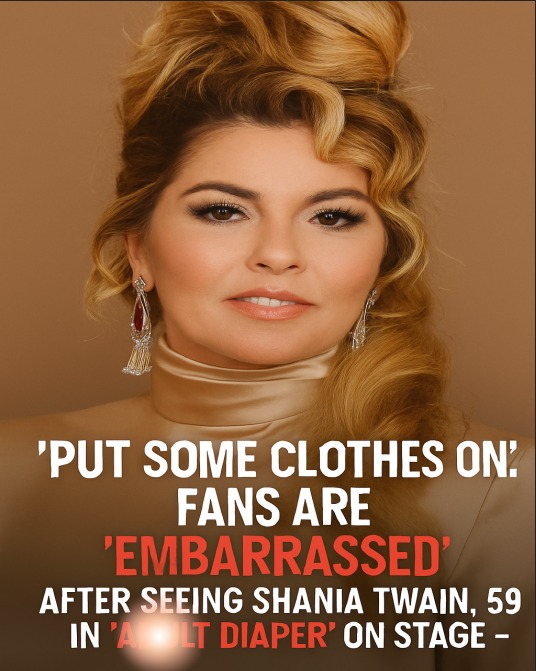
    Shania Twain Recent Performance Look Stirs Online Discussion!

    Shania Twain has never been one to blend into the background, and her latest Las Vegas performance proved once again that she knows exactly how to command a stage—and the internet. After decades at the top of the music world, the 59-year-old superstar is still finding ways to surprise fans, and her recent look sparked a wave of online conversation that spread far beyond the concert hall. What began as another high-energy night in her residency quickly turned into a trending topic as videos and photos circulated across social platforms, drawing fascination, admiration, and plenty of commentary about her newest stylistic turn.

    Twain stepped under the lights wearing a bold metallic bodysuit crafted to echo the show’s electric pace. The outfit shimmered with every movement, its reflective textures and layered details catching the stage lights in a way that made her look almost sculpted from metal. Accessories amplified the effect—glistening accents, high-glam elements, and custom-designed features intended to sync with the production’s choreography and cinematic lighting. The moment she hit center stage, the visuals made it clear the look wasn’t meant to be subtle. It was built for spectacle, drama, and impact.

    Clips posted online captured the intensity of the performance: the lasers, the choreography, the swelling crowd, and Twain herself—confident, steady, and visibly enjoying the show. Audiences reacted immediately. Some viewers compared the look to iconic outfits from her earlier tours, calling it a modern evolution of the bold costumes she wore in the “Man! I Feel Like a Woman!” and “Rock This Country!” eras. Others pointed out that Las Vegas residencies are intentionally theatrical, pushing performers to elevate their visual identity to match the city’s over-the-top entertainment culture. In the mix were fans simply thrilled that Twain continues to take risks instead of falling into predictable patterns at this stage of her career.

    As the conversation grew, the tone shifted from pure curiosity to appreciation. Fans highlighted something critics often forget: stagewear is engineered for performance, not street style. Under heavy lighting, high-definition screens, and fast-paced choreography, costumes must be loud enough to hold the audience’s attention from a distance. What looks striking or unconventional up close may be exactly what a production needs to create magic from the back row. Twain has always understood that balance, and her willingness to lean into theatricality is part of what has kept her concerts visually unforgettable for three decades.

    Supporters also reminded newcomers to the fandom that Twain’s boldness isn’t new. From leopard-print ensembles to dramatic gowns, from powerful music videos to arena-sized illusions, she built her legacy on reinvention. Her willingness to experiment with sound, image, and persona helped reshape country music, turning it into something bigger, bolder, and more crossover-friendly. Even now, in her late fifties, she’s proving that evolution isn’t something reserved for early-career artists—it’s a creative mindset she never abandoned.

    The show itself was part of her Las Vegas residency celebrating the anniversary of Come On Over, the album that not only cemented her as a global force but also changed the landscape of modern country-pop. That record broke barriers, smashed sales records, and influenced a generation of artists who cite her as a trailblazer. The residency pays tribute to that era while spotlighting the fearless approach that helped her shape a new sound—one that blended country storytelling with pop confidence and rock energy.

    Offstage, Twain’s resilience remains a significant part of her story. She’s survived illness, personal upheaval, career pauses, and the kind of industry scrutiny that has ended many careers. Instead of fading, she reinvented herself, returning stronger with new music, renewed confidence, and a clear sense of identity. Her Vegas residency became a living tribute to that journey—a reminder that longevity in music isn’t an accident. It’s earned through grit, reinvention, and the guts to keep stepping forward.

    That’s why the online conversation surrounding her recent performance felt bigger than a debate about a bodysuit. It became a reflection of how much people still care about her, how invested they remain in her artistic choices, and how her presence continues to influence both nostalgia and current pop culture. For every commenter surprised by her look, there were dozens applauding her audacity, her confidence, and her refusal to shrink her vision to meet anyone else’s expectations. The reverence in many responses made one thing clear: Twain isn’t just performing her past—she’s still pushing herself creatively.

    And she isn’t slowing down. Each show in her residency has been met with strong reviews, sold-out crowds, and renewed interest from younger audiences discovering her catalog for the first time. As she revisits the songs that made her a global superstar, she brings a new depth and maturity that comes from years of experience, along with the same electric energy that made her famous. It’s a combination that resonates across generations.

    In the end, the buzz around her latest performance only reaffirmed something her fans have known for decades: Shania Twain doesn’t follow trends—she sets her own. Her bold fashion choices aren’t just costume decisions. They’re extensions of the artistic vision that has fueled her career from the beginning. Whether she’s wearing a shimmering metallic bodysuit, a classic country ensemble, or an elegant gown, she owns every look with the same certainty she brings to the microphone.

    Her recent appearance served as a reminder of what keeps people talking about her: the confidence to embrace change, the courage to be seen, and the instinct to reinvent without losing who she is. At fifty-nine, she’s still taking risks, still commanding stages, still making headlines—not because she’s chasing attention, but because she’s doing what she’s always done: performing with authenticity, power, and a flair that no one else can quite match.

    Shania Twain continues to evolve, and people continue to watch. That alone says everything about her staying power.

  • Prayers are needed for Ellen DeGeneres! What happened to her is terrible!

    Prayers are needed for Ellen DeGeneres! What happened to her is terrible!

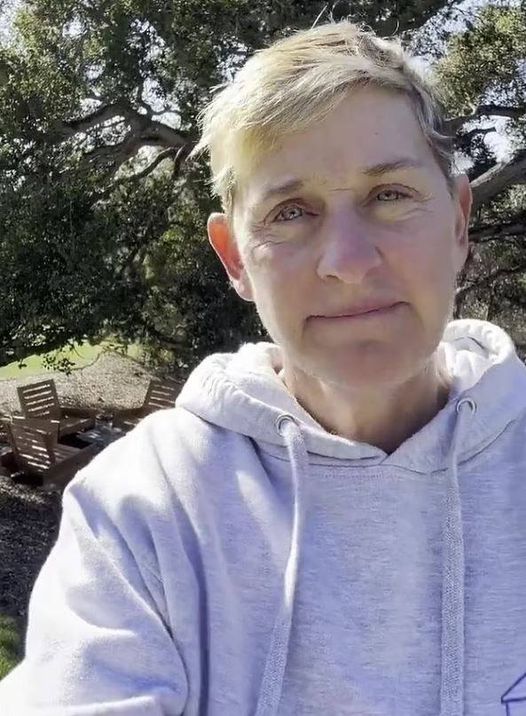
    Ellen DeGeneres has spent decades in front of cameras, shaping a career that made her one of the most recognizable faces in entertainment. But the end of her talk show after 19 seasons marked a major shift in her life—one that pushed her away from the daily spotlight and into a quieter chapter focused on personal priorities. Even so, fans were shaken when troubling news surfaced about her health, stirring a wave of concern and sympathy online.

    The 64-year-old comedian had been dealing with the lingering aftermath of a COVID-19 infection she contracted at the height of the pandemic. What caught everyone off guard was the severity of the symptoms she described afterward—specifically, the sudden and “excruciating” back pain she said blindsided her. It wasn’t a symptom most people associated with the virus at the time, and her public admission sparked confusion, fear, and a lot of questions.

    Her diagnosis came in December 2020, back when the nation was still trying to understand how COVID behaved. DeGeneres announced that she had followed every recommended precaution, yet still contracted the virus. Days later, she posted an update for her fans, sitting upright on a couch but clearly drained. Despite looking tired, she insisted she was feeling “100%,” then added a detail that left people stunned: no one had warned her about the back pain.

    “What they don’t tell you,” she said, “is that COVID gives you extreme back pain. I didn’t know that until I talked to a few other people.” Her tone mixed frustration with disbelief—an honest reaction to a symptom many early COVID patients were discovering the hard way.

    Medical experts hadn’t yet connected the dots. The CDC did not list back pain as a recognized symptom during the early outbreak, instead grouping physical discomfort under “muscle or body aches.” That broad definition didn’t capture how intense some of the pain could be. In those days, people focused on fever, cough, shortness of breath, and the well-known loss of taste and smell. But as more cases piled up, so did reports of patients dealing with intense joint and muscle discomfort, especially in the back and shoulders.

    In the UK, the NHS later provided clarity. When people become ill, especially with something that forces them into isolation or bed rest, normal physical movement drops significantly. Less mobility means muscles stiffen, weaken, and become more prone to pain. The NHS noted that many people already had minor aches before COVID, but the virus—and the inactivity that comes with recovery—intensified them. Back pain became one of the most commonly reported lingering issues, especially for people who were previously active.

    A study conducted in Malta highlighted the growing problem. Before the pandemic, roughly 30% of participants reported chronic back pain. After COVID began spreading, that number jumped to nearly half, and many of those individuals had never experienced back problems before. DeGeneres was far from alone. Her honesty simply made more people realize what had been happening to them.

    Of course, back pain on its own doesn’t automatically point to COVID. Winter illnesses like the flu can create similar symptoms—body aches, stiffness, and fatigue. Pneumonia can trigger back pain as well, especially when inflammation affects the thoracic region near the lungs. Other signs such as fever, congestion, sneezing, or coughing often help distinguish one illness from another. But the reality is simple: COVID made life more physically taxing for many people, even those who experienced only mild respiratory symptoms.

    DeGeneres’ case brought attention to another issue as well—how drastically routines changed during lockdowns. With millions working from home, many were stuck at kitchen tables, couches, or makeshift desks for hours. Poor posture, limited movement, and stress created the perfect conditions for back and shoulder pain. Even those who avoided the virus found themselves dealing with physical issues tied directly to pandemic living.

    Her story painted a much larger picture: COVID affected far more than lungs. It hit bodies, routines, mental health, and lifestyles. And like many others, DeGeneres discovered just how much strain her body had been under once she slowed down.

    During this time, she also pulled away from public life. The controversies surrounding accusations of a toxic workplace environment pushed her to step back, reflect, and redirect her energy into something personally meaningful. She poured her time into her passion for wildlife conservation, establishing The Ellen DeGeneres Campus of the Dian Fossey Gorilla Fund in Rwanda—a massive undertaking that blended philanthropy, science, and environmental protection. It was a project rooted in compassion, far from the chaos of Hollywood headlines.

    Her return to television appearances—like her interview on Jimmy Kimmel Live!—showed a woman trying to move forward while still acknowledging the scars left behind. During the interview, she reiterated how much the back pain had shocked her, adding a touch of humor but also a dose of seriousness. Even with her upbeat tone, viewers could tell the experience had humbled her.

    Many fans found themselves resonating with her story. Countless people across the world had felt strange aches, unexplained pains, and long-term symptoms months after catching the virus. Hearing a celebrity describe the same struggle made them feel seen. The stigma around long-COVID symptoms made many individuals reluctant to talk about their lingering pain. DeGeneres unintentionally became part of the conversation simply by being honest about her experience.

    Back pain associated with illness often presents itself in various forms:

    a sharp or stabbing sensation

    a burning or radiating ache

    pain traveling down the leg

    pins-and-needles tingling

    difficulty moving or lifting objects

    a constant dull throb that won’t ease up

    She described it as severe enough to disrupt daily life—a feeling some compared to spasms or the pain from a slipped disc. The discomfort was intense, unexpected, and for many, frightening.

    What her fans didn’t expect was how much compassion surfaced in the comments once her story spread. People who had battled COVID shared their own experiences. Others who had lost loved ones expressed empathy. Many simply wished her strength and healing. A woman who spent years making others laugh was suddenly the one receiving support.

    Ellen DeGeneres’ journey through COVID and the unexpected pain that followed is a reminder of how profoundly the pandemic affected everyone, regardless of fame or wealth. Her decision to be candid about the struggle offered clarity at a time when the world desperately needed more transparency about the virus’s real effects.

    And while her back pain eventually eased, the story remains a snapshot of a moment in history—one where even the most familiar figures weren’t spared from the uncertainty, fear, and physical strain that defined the early pandemic years.

    If anything, her experience underscored a truth many learned too late: COVID wasn’t just a respiratory virus. For countless people like DeGeneres, it became a full-body battle—one that tested strength, patience, and resilience long after the initial symptoms faded.

  • My Daughters Unexpected Question Changed Our Fathers Day Plans!

    My Daughters Unexpected Question Changed Our Fathers Day Plans!

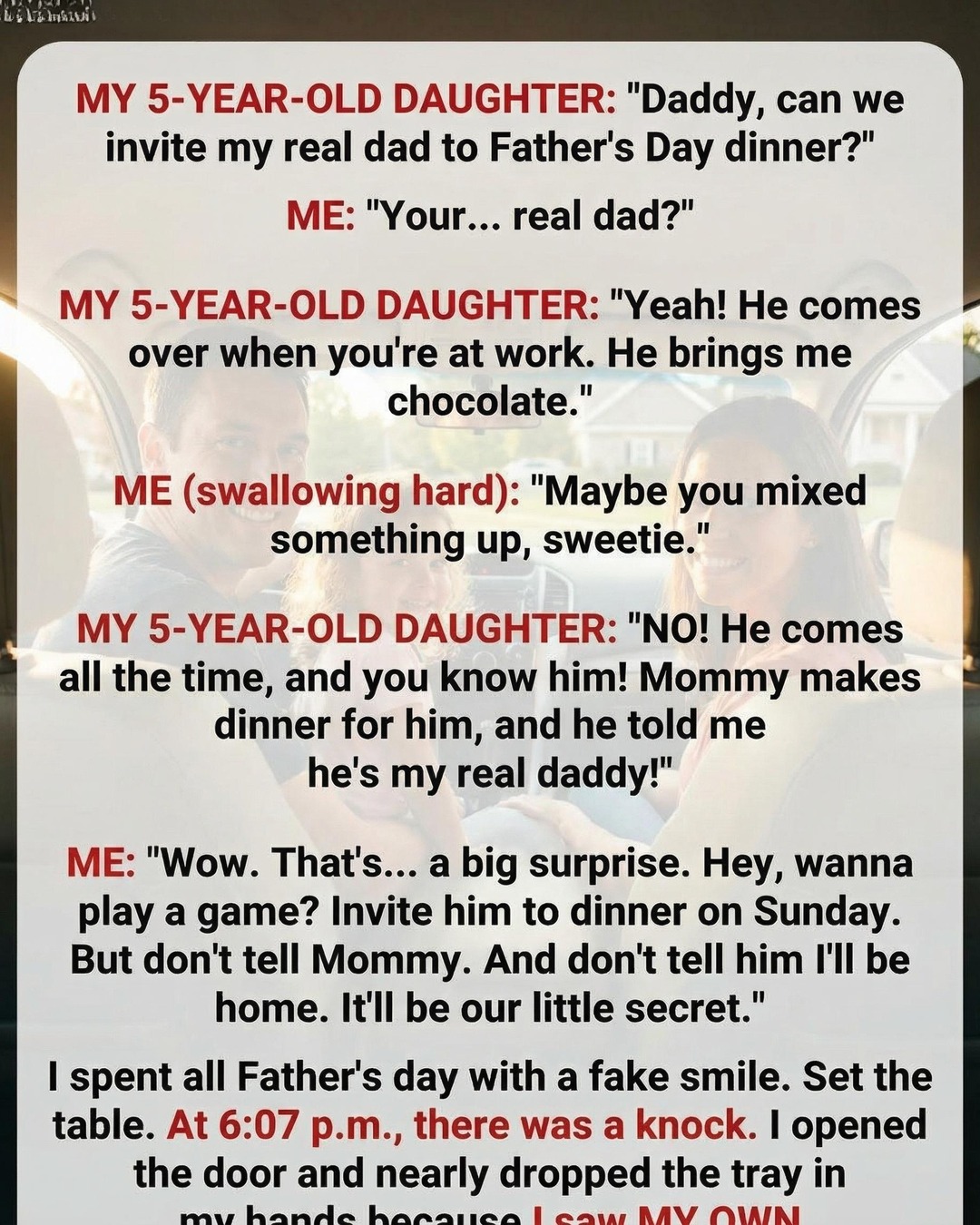
    Father’s Day was supposed to be simple—warm, easy, predictable. I imagined pancakes on the table, glitter-covered cards taped to the fridge, and my daughter’s small arms wrapped around my neck before I’d even had coffee. Instead, the day blindsided me. It was a reminder that the truth has a way of surfacing at the most unexpected moments, sometimes from the smallest voices.

    Lily, my five-year-old, has always drifted between reality and the worlds she creates in her mind. She treats puddles like magical doors and believes the moon follows us because it prefers our neighborhood. So when she spoke up from the back seat with a question that didn’t fit into her usual imagination—one that felt too pointed, too real—I froze.

    The innocence in her voice was the part that hurt most. She wasn’t trying to confuse me or hint at something dramatic; she was simply sharing what she believed was normal. There was no suspicion in her tone, no hesitation. Just a child speaking honestly about her day-to-day life.

    I forced myself to stay calm. Panic wouldn’t help either of us. I kept my voice soft, steady, warm—guiding her into a conversation without letting her sense that anything was wrong. She talked openly, unaware of the way each detail slowly rearranged the ground I stood on. While she described moments that happened when I was at work, I felt a quiet unease settle in my chest. Not fear—just a gnawing recognition that something in our home wasn’t what I thought it was.

    Instead of interrogating her or making her feel responsible, I turned the conversation into a game. I told her we were planning a “Father’s Day surprise dinner,” and that we had to gather clues—fun little details—to make it perfect. She lit up at the idea, excited to help. I smiled and played along, even as my mind churned with questions I wasn’t ready to say out loud.

    That evening, with my wife out on a photography assignment, Lily and I cooked together. She insisted on setting the table herself, placing forks crookedly and pushing a vase of sunflowers—picked moments earlier from the garden—into the center. The vase leaned, threatening to topple with every bump, but she stood back proudly and announced, “It’s perfect.” And somehow, in its own small, uneven way, it was.

    The knock came just as we were finishing. It wasn’t loud, but it cut straight through the quiet of the house. The person on the other side wasn’t unknown to me, but the look on their face made one thing clear—they hadn’t expected to be there either.

    The conversation that followed didn’t explode. There were no slammed doors or raised voices. Instead, it unfolded in low tones, each sentence carrying the weight of years spent avoiding hard truths. Misunderstandings that had been brushed aside resurfaced. Decisions once made in silence were finally voiced. Some of it hurt. Some of it brought clarity. All of it needed to be said.

    By the time the door closed and the house fell quiet again, the sunflowers on the table had begun to droop. Lily, too little to grasp the meaning behind the adult conversation, hummed softly while coloring at the counter. I stood there, watching her small hand move across the page, and felt the sharp edge of reality press in. I didn’t know what the next few days would bring, but I knew my decisions had to center around her.

    In the days that followed, my focus narrowed to one priority: keeping Lily’s world steady. I stuck to the routines she knew—morning cartoons, her favorite strawberry oatmeal, the nightly ritual of brushing her doll’s hair before bed. When she asked questions, I answered them gently, framing everything through the lens of love and stability. Kids don’t need every detail. They need reassurance, anchors, safety.

    One night, after we read her favorite bedtime book, she scooted closer and placed her small hand on my chest.

    “Daddy?” she whispered. “Are you still my daddy?”

    The question cracked something open in me. It wasn’t dramatic or loaded from her perspective. It was pure, honest, simple. She wanted to know if the love she depended on was still solid.

    I wrapped my arms around her and held her close.

    “I’ve always been your daddy,” I told her, steady and sure. “And I always will be. Nothing changes that.”

    She nodded against my shoulder, gripping her stuffed rabbit with her free hand. Her breathing softened, slow and even, the kind that comes only when a child feels safe again. And in that moment, despite everything unsettled beneath the surface, the world felt just a little less heavy.

    The days ahead will bring more conversations, more truths, more work. Nothing resolves overnight. But love—the real kind, the steady kind—isn’t shaken by revelations or mistakes. It anchors itself in the quiet moments, the whispered reassurance, the promise that family is built on more than biology or conflict. It’s built on presence, patience, and the commitment to show up even when the ground shifts.

    Father’s Day didn’t go the way I planned. But maybe it went the way it needed to. It peeled back every layer hiding what needed to be faced. And it reminded me that the bond between a parent and a child isn’t fragile—it’s resilient, rooted in something deeper than circumstance.

    And as Lily fell asleep that night, curled beneath my arm, I realized the truth that mattered most: whatever our family becomes, the love we have is still here, still strong, still ours to protect.

  • Children among four kiIIed in horror ma!

    Children among four kiIIed in horror ma!

    Children were laughing minutes before the first gunshot echoed through the banquet hall in Stockton, California. The music stopped. Balloons trembled on their strings. What was supposed to be a joyful birthday celebration collapsed into chaos so fast that most people didn’t even have time to react. In the end, four people—including children—were dead. At least ten others were rushed to hospitals across the city. And the shooter slipped into the night, leaving a community shattered and searching for answers.

    The brightly decorated hall still sits behind police tape, frozen in the exact moment the joy evaporated. Streamers hang at odd angles, paper plates lie scattered across the floor, and untouched slices of birthday cake sit abandoned on tables. Outside, families stand in knots, hugging each other, praying, whispering, and waiting. Some pace. Some stare silently into space. Some are still clutching the gifts they never got to deliver.

    Police officers and city officials try to keep their composure as they face the cameras. Their words—“unthinkable,” “senseless,” “horrific”—feel too small for the scene behind them. Even the most seasoned responders looked shaken as they left the building, unable to hide how deeply this one struck them. It wasn’t just a shooting. It was a children’s birthday party turned into a nightmare.

    Neighbors described hearing what they thought were fireworks. Then came the screams—high, panicked, primal. People ran into the street carrying children in their arms, some injured, some in shock, all of them terrified. Parents who had dropped off their kids earlier sprinted back to the hall, only to be held behind the police line, begging officers for information.

    Inside hospitals, doctors and nurses worked frantically through the night. Some victims were in critical condition, and families were told to prepare for the worst. One emergency room nurse said it felt like “trying to save innocence itself.”

    As investigators pieced together the timeline, witnesses described a celebration that had been full of joy just seconds before the gunman opened fire. Kids were dancing, adults were taking pictures, and the birthday child had just blown out the candles. No one saw the attack coming. No one had a chance to run or hide before the hall erupted into panic.

    Detectives are now reviewing security footage, interviewing witnesses, and chasing leads. A suspicious vehicle was spotted speeding away from the area moments after the shooting. Authorities believe the suspect may have known someone at the party, though the motive remains unclear. Police have warned residents that the gunman is still at large and considered extremely dangerous.

    Online, the reaction has been a mix of heartbreak, fury, and exhaustion. “Not again,” one mother wrote. Others demanded action from local leaders. Some simply asked for prayers, especially for the children who survived but will carry the trauma with them for the rest of their lives.

    Stockton has weathered its share of violence over the years, but this attack has cut deeper than most. It struck at a moment of celebration, in a room filled with kids who were supposed to be safe. The city is grieving not just for those who lost their lives, but for the innocence that was stolen from every child in that room.

    As night fell on the day after the shooting, residents gathered near the taped-off banquet hall for an informal vigil. There were no speeches, no microphones—just candles, flowers, and quiet sobs carried on the evening breeze. Parents held their children a little tighter. Strangers hugged without saying a word. The grief was shared, heavy, and raw.

    Now Stockton waits—waits for answers, waits for justice, waits for the kind of closure that rarely comes quickly after a tragedy like this. The manhunt continues, and investigators say they’re pouring every resource into finding the shooter before he disappears further.

    Meanwhile, the question hanging over the city is simple but painful: How do you ever walk back into a room meant for celebration when it’s been turned into a place of loss? How do you blow out candles again without remembering the night they became a target?

    For now, Stockton can only mourn, hope, and stand together as it faces the long road of healing ahead.

  • SOTD – Visible Veins Explained! Normal Causes, Health Risks, and When to Worry

    SOTD – Visible Veins Explained! Normal Causes, Health Risks, and When to Worry

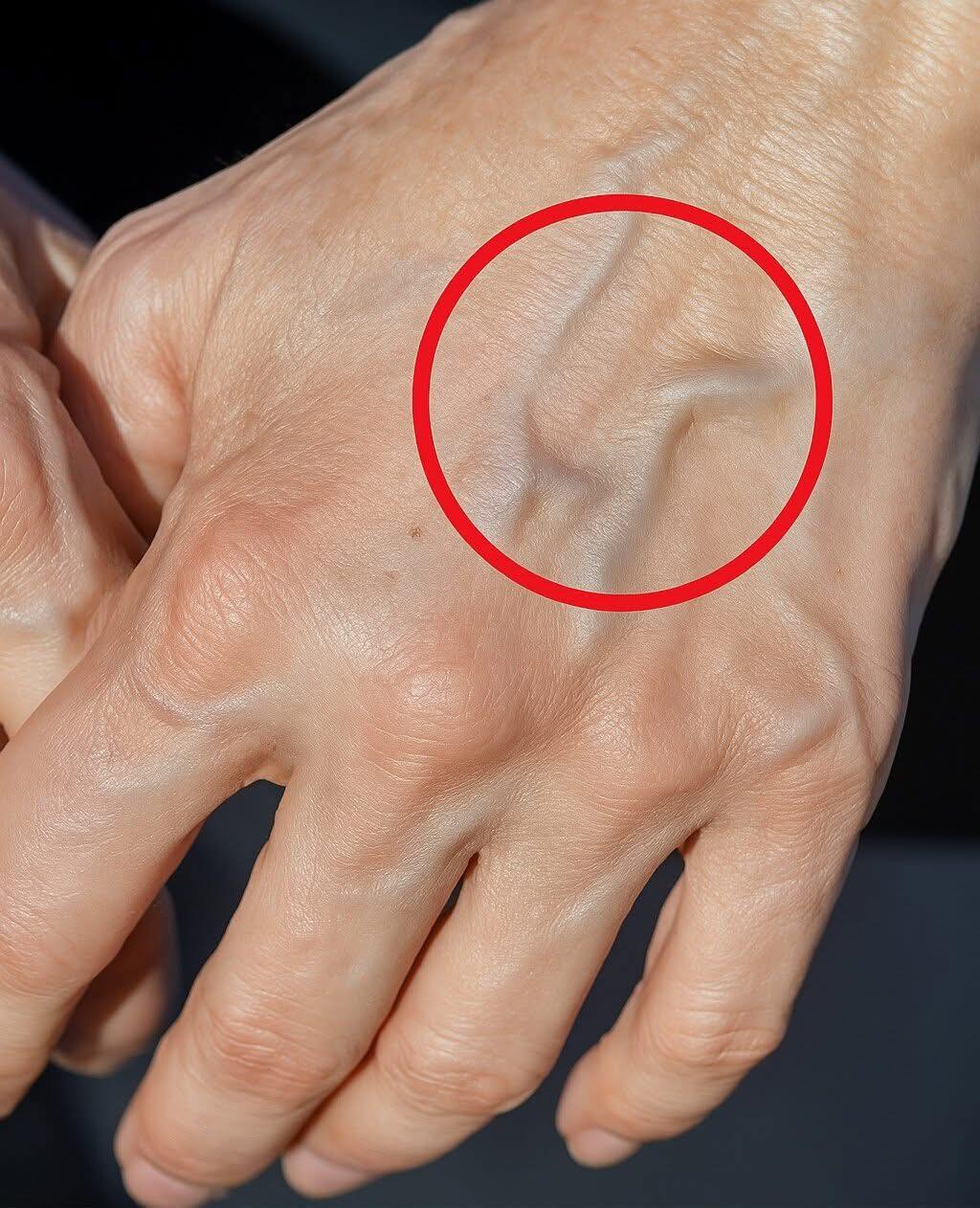
    Visible veins have a way of catching your attention at the most random moments. You’re washing your hands, walking past a mirror, or stretching after a workout—and suddenly the blue or green lines beneath your skin look sharper, brighter, more pronounced than they ever did before. For some people, it’s nothing more than a curiosity. For others, it sparks worry: Why do my veins look like this? Should I be concerned? What seems like a simple cosmetic change can actually tell a pretty detailed story about what’s happening beneath the surface of your skin, whether it’s completely normal or worth a second look.

    Veins work quietly in the background, returning deoxygenated blood to the heart with the help of tiny valves and the rhythm of your muscles. They sit closer to the skin than arteries, which makes them sensitive to temperature changes, physical activity, hydration, and shifts in blood pressure. When these factors fluctuate, your veins respond—and sometimes, they make their presence known.

    In many cases, visible veins are nothing to worry about. Some people simply have thinner skin or lower body fat, making veins more obvious. Athletes and people who work out regularly often see their veins pop during and after exercise because increased blood flow expands them. This “vascular” look is especially common among bodybuilders and endurance athletes whose routines reduce fat and increase muscle definition. Warm weather can exaggerate the effect too, since heat dilates veins to help cool your body down. Genetics also plays a significant role. If your parents or grandparents had visible veins, chances are you may simply inherit that trait.

    Aging is another major factor. As skin loses collagen and elasticity over time, it becomes thinner and more transparent, making veins stand out. None of this is harmful—it’s just biology doing what biology does.

    But not all visible veins are harmless. Sometimes, they’re the body’s early signal that something isn’t functioning the way it should. One common issue is chronic venous insufficiency, a condition where the valves inside your veins weaken. When they fail to push blood upward efficiently, blood collects in the lower legs, creating swelling, heaviness, and prominent bulging veins. Although treatable, ignoring the signs can eventually lead to skin discoloration and discomfort.

    Varicose veins are another recognizable concern. These twisted, enlarged veins often appear blue or purple and can feel achy or itchy. While they’re not usually dangerous, they can become painful and occasionally indicate deeper circulation issues.

    More urgent conditions exist too. Superficial thrombophlebitis occurs when a small blood clot forms near the skin, creating a firm, tender, rope-like vein. It’s uncomfortable but typically manageable with treatment. Deep Vein Thrombosis (DVT), however, is a medical emergency. A clot in the deeper veins of the leg can break off and travel to the lungs, causing a potentially fatal pulmonary embolism. Symptoms such as sudden swelling, pain, warmth, or redness in a single leg should never be ignored.

    Even temporary lifestyle triggers can make veins more noticeable. Dehydration reduces fluid volume in your body, making veins stand out. Hormonal fluctuations during menstruation, pregnancy, or menopause can also cause veins to appear more prominent. Sudden weight loss, whether intentional or due to illness, removes the fat cushion beneath your skin, revealing veins that were always there but less visible.

    With all these possibilities, knowing when to call a doctor becomes important. If your veins suddenly appear more visible without any obvious cause—no intense workout, no heat exposure, no recent weight change—it’s worth monitoring. Add symptoms like swelling, pain, skin dryness, itching, or discoloration, and you should book an appointment. A healthcare provider can determine whether the change is purely cosmetic or linked to a circulatory condition needing treatment.

    When it comes to managing visible veins, there are multiple options depending on your goals. If your concern is cosmetic or comfort-related, simple lifestyle adjustments can help maintain vein health. Staying hydrated supports healthy blood flow. Keeping active—especially in jobs or routines that involve long periods of sitting or standing—prevents blood from pooling in the legs. Elevating your feet at the end of the day helps circulation, and avoiding smoking protects vascular health across the board.

    Compression stockings are a highly effective tool for people who experience swelling or discomfort. They gently squeeze the legs to promote blood return and reduce strain on vein valves. For more severe cases or cosmetic preferences, medical treatments like sclerotherapy, laser therapy, or minimally invasive vein procedures can offer long-term solutions.

    There’s also an emotional layer to this topic. Visible veins can affect confidence, especially when they appear suddenly or change your skin’s appearance. But for many people—especially athletes—pronounced veins symbolize strength, determination, and physical achievement. Perspective shapes everything. What one person sees as a flaw, another sees as proof of effort and discipline.

    At the end of the day, visible veins sit at the intersection of appearance and health. They’re usually harmless, tied to genetics, fitness, age, or temporary changes in your body. But they can also serve as early clues that circulation needs attention. Learning to distinguish between the two is the key to taking care of your health without unnecessary worry.

    If a new pattern of visible veins appears without explanation—or comes with discomfort—listen to your body. Getting clarity from a healthcare professional is always better than guessing. Your veins aren’t just lines beneath your skin; they’re messengers. And paying attention to what they say can give you a clearer picture of your overall well-being.

  • HORRORR! At least 300 homes estimated damaged or destroyed after large fire! See more

    HORRORR! At least 300 homes estimated damaged or destroyed after large fire! See more

    The fire in Pamplona Alta started as a single blaze on a cramped hillside, but within minutes it turned into a roaring wall of flames that tore through the community with brutal speed. Families ran with whatever they could grab—important documents shoved into plastic folders, a single change of clothes, a photo ripped from a wall already filling with smoke. Most escaped with nothing more than the items they could hold in their hands.

    In the narrow alleys carved into the hillside, neighbors tried to fight the fire themselves long before emergency crews could even reach the area. They formed human chains, passing buckets of water pulled from plastic barrels and makeshift tanks, shouting instructions through the smoke as sparks rained down around them. But the houses here—built from thin plywood, recycled metal sheets, cardboard, and tarps—stood no chance. They caught fire like dry leaves, collapsing in on themselves as the flames swept upward, house by house, row by row.

    By the time firefighters gained control of the inferno, the damage was staggering. Early estimates placed the number of homes destroyed or damaged at around three hundred. But numbers never tell the full story. Every “destroyed home” is a kitchen table where a family once ate together, a mattress where a child slept, a shelf holding medicines for an aging parent. Now those places are gone, replaced by charred beams, twisted roofing sheets, and the smell of smoke that lingers long after the flames die.

    As dawn broke, residents began searching through the ruins. They moved slowly, stepping over ash and debris, hoping to find anything that had survived—an ID card, a school notebook, a pair of shoes. Some found nothing. Others clutched small victories, like a metal pot that somehow didn’t warp or a wet album with a handful of photos still recognizable. Children wandered between the adults, stunned into silence, their backpacks and school supplies reduced to cinders. Elderly residents, some still in pajamas, sat on the ground staring at the remains of the only home they had ever known.

    Authorities arrived to assess the scene, walking the perimeter with clipboards and radios. They spoke in statistics—structures lost, families displaced, hectares burned. But the residents weren’t focused on investigations or official reports. They wanted answers, but more urgently, they needed help: food, blankets, medicine, shelter. Many had slept outside under nothing but smoke-filled air and a night sky they wished they didn’t have to look at.

    Investigators quickly traced the origin of the blaze to an illegal pyrotechnics workshop hidden among the tightly packed homes. For the officials, that detail mattered—someone would be held responsible. But for the victims, the cause meant little in the moment. Knowing why didn’t replace a roof. It didn’t bring back medication lost in the fire, or school uniforms, or baby formula, or the small savings people kept tucked in drawers. It didn’t protect them from the cold night ahead.

    As the day progressed, volunteers began arriving. Some brought water, others brought clothes and food. Tarps went up. Temporary shelters started forming in open areas, strung between poles hammered into the ground. Families grouped together, trying to create makeshift spaces so their children could feel safe again. But even then, the fear lingered—fear that the fire might return, fear that help would be slow, fear that promises made today might fade by tomorrow.

    Community leaders walked the hillside, checking on the elderly, making lists of what each household needed most urgently. For many women, the concern centered on their children—whether they’d be able to return to school, whether the government would step in quickly, whether this catastrophe would mark their children’s futures in irreversible ways. Others worried about where they would sleep that night or how long their employers would tolerate their absence from work.

    Emotions ran raw. Some cried openly; others held back tears, focusing on the next task, the next step, anything to avoid collapsing under the weight of loss. The smell of burnt wood and melted plastic filled the air, a constant reminder of everything that had vanished in a matter of hours.

    Despite the devastation, moments of solidarity emerged. One man offered his tent to an elderly couple who had lost not only their home but their cane and medicine. Neighbors shared water. Someone grilled what little food they salvaged and fed the people around them. When a group of children began crying at nightfall, volunteers gathered them and told stories to keep their minds away from the flames they had witnessed.

    Officials promised emergency assistance, temporary housing, and a long-term plan for rebuilding. But the residents have heard promises before. What they need now is action—not just visits from authorities, not just statements of sympathy, but trucks of supplies, construction materials, medical support, and a commitment that won’t disappear when cameras turn away.

    For now, the people of Pamplona Alta remain on the hillside, staring at the ashes of what used to be their homes, waiting for real help. They don’t need explanations—they need blankets, walls, roofs, medicine, hot meals, and the reassurance that they won’t be abandoned after the headlines fade.

    Tonight, hundreds will sleep under tarps or open skies. The wind will blow across the blackened ground where homes once stood. But in their grief, the community still holds on to something powerful: each other. And as long as they stand together on that scorched hillside, waiting for help to arrive, their resilience remains unbroken—even in the aftermath of so much loss.

  • SOTD – Why Understanding Women Gets You Laid!

    SOTD – Why Understanding Women Gets You Laid!

    Women aren’t some mystical puzzle. Most men just bulldoze through interactions without actually noticing what’s right in front of them. When you dial in, slow down, and pay real attention, everything shifts. You stop guessing, stop posturing, and start understanding what’s actually going on beneath the surface. That’s where the real leverage is. Understanding women isn’t about manipulation. It’s about having the awareness most guys never develop because they’re too wrapped up in their own ego to look beyond it.

    The biggest mistake men make is assuming women think the same way they do. They don’t. Their radar is sharper. They pick up on tone before words, intention before action, insecurity before confidence. If you talk big but your body language betrays you, they see it. If you project confidence but crumble when challenged, they know. If you pretend you’re relaxed but you’re buzzing with scattered energy, they feel it instantly. You can’t fake your way through this stuff. Women live in the details, and the details always tell the truth.

    Understanding women starts with shutting up long enough to actually hear them—not just their words but how they say them. Women communicate in layers. On the surface is whatever they’re talking about. Underneath is the emotional meaning. And deeper still is the pattern behind it: what she values, what she fears, what she’s drawn to, what she avoids. Most men stop at the surface and wonder why they keep missing the point. When you listen with depth, you catch the emotional cue, and suddenly everything makes sense.

    You also start to notice the little things: the shift in expression when something hits a nerve, the spark in her eyes when she feels understood, the subtle body lean that shows comfort, the micro-pause that signals hesitation. Women reveal everything—they just don’t do it through blunt statements. They do it through responses, energy, rhythm. When you’re actually tuned in, you can read a conversation without needing it spelled out.

    The second key is owning your presence. Not the fake tough-guy act men throw around to impress each other. Women don’t fall for that. They’re tired of the chest-beating bullshit. They’re drawn to a man who’s grounded—someone who knows who he is, doesn’t apologize for it, and doesn’t need approval to feel whole. A man who walks into a room without needing to dominate it. A man who talks with clarity, not noise. Someone who’s calm under pressure and doesn’t crumble when things get uncomfortable.

    Confidence isn’t loud. It’s steady. A confident man doesn’t overshare to prove depth. He speaks openly when it matters, listens more than he talks, and stays authentic. He’s not afraid of vulnerability, but he doesn’t weaponize it for attention. He doesn’t hide behind jokes, bravado, or motivational quotes. He simply is who he is—and that consistency is magnetic.

    Understanding women also means understanding polarity. Women respond to a man who leads, but not a dictator. Someone who makes decisions, but isn’t controlling. Someone who initiates, but still listens. Leadership isn’t about barking orders. It’s about creating safety—emotional, physical, conversational. When a woman feels safe around you, she opens up. When she opens up, connection deepens. And when connection deepens, everything else—attraction, intimacy, trust—follows naturally.

    A woman who feels seen acts differently. She relaxes. Her guard drops. She laughs more. She becomes more expressive. She tests less. Most “tests” come from insecurity or uncertainty. If a woman keeps testing you, it usually means she’s not convinced you’re who you present yourself to be. When you’re consistent, grounded, and attentive, her nervous system settles. That’s when she shows her real self—and that’s where the connection becomes effortless.

    Most guys never reach that stage because they’re too busy performing. They think dating is some competitive sport where they have to “win” her over with tactics, strategies, or scripted lines. That’s what insecure men do. Women sense the act from a mile away. They’ve dealt with enough surface-level guys to recognize the pattern instantly. What actually stands out is authenticity backed by awareness. A man who gets her without making her explain everything. A man who can hold his own emotions and still understand hers.

    Understanding women also means understanding yourself. You can’t tune into someone else if you’re drowning in your own noise. You need emotional self-control. Not avoidance—control. Know why you react the way you do. Notice your triggers. Catch your defensiveness before it ruins the conversation. Show interest without becoming needy. Express desire without becoming desperate. Set boundaries without being rigid. Understand your values so you don’t bend to every gust of wind.

    Women respect men with solid boundaries. Respect deepens attraction. Attraction fuels connection. Connection drives intimacy. It’s all connected—but it starts with you being stable.

    Another piece most men ignore: curiosity. Not the stiff “interview-style” questions guys ask when they’re nervous. Real curiosity. The type where you actually want to know who she is, what drives her, what scares her, how she thinks. Women feel when a man is curious for real, not just fishing for compliments or pushing for an opening to flirt.

    Ask smarter questions. Listen without planning your response. Follow emotional threads, not just factual ones. If she tells you about her day, listen for the part that mattered to her emotionally, not just the logistics. When you respond to her emotional reality, she feels understood on a deeper level than most guys even attempt.

    Understanding women is also about timing. Not pushing when she’s withdrawn, not retreating when she leans in. Recognizing when she needs space and when she needs closeness. Knowing when to challenge her and when to reassure her. Being adaptable without losing yourself. Women move in an emotional rhythm. Men who understand that rhythm don’t get confused or frustrated—they move with it.

    And then there’s attraction. Real attraction isn’t built on looks or money or status—though those don’t hurt. It’s built on energy. When you’re confident but not arrogant, expressive but not chaotic, strong but not rigid, attentive but not clingy—that mix is rare. Women respond to rare. Not because they’re complex, but because most men never reach that level of awareness or maturity.

    Understanding women makes everything easier. It makes dating smoother, relationships richer, and intimacy deeper. You stop stepping on landmines. You stop misreading signals. You stop sabotaging yourself. And yes—you get laid more. Not because you’re manipulating women, but because women trust you, feel safe with you, and actually want to be close to you. Attraction becomes the natural outcome, not the goal.

    At the end of the day, women aren’t impossible to understand. They’re intuitive, emotional, perceptive, and honest in ways men often aren’t used to. Once you stop treating them like a foreign species and start paying attention, the whole game becomes simple. You start seeing what they’re really saying, feeling, and wanting. You connect instead of guessing. You stand out because you’re not another clueless guy stumbling through conversations.

    Understanding women makes you better. Better at relationships, better at communication, better at carrying yourself. And when you get this right, everything—from dating to long-term connection—falls into place without the struggle most men create for themselves.