Category: News

  • UPDATE! The hero from Bondi has now been identified as 43 yea! See more!

    UPDATE! The hero from Bondi has now been identified as 43 yea! See more!

    The global spotlight, usually reserved for the picturesque waves and vibrant life of Sydney’s Bondi Beach, has recently focused on an extraordinary act of selfless courage. The man hailed as an undeniable hero following the traumatic and deadly terrorist attack that targeted a Hanukkah celebration at the beach on Sunday has been officially identified as Ahmed al-Ahmed, a 43-year-old local fruit shop owner and father of two. His immediate and instinctive intervention in a moment of extreme peril is credited by authorities and eyewitnesses with saving countless lives, an act that has prompted an overwhelming wave of public praise and international recognition.

    The incident unfolded with terrifying speed as two gunmen opened fire on a crowd gathered for the “Chanukah By The Sea” event near a children’s playground. As panic and chaos erupted, Ahmed, an Australian citizen of Syrian origin, was nearby. The dramatic moment, captured on viral video footage, shows the unarmed civilian crouched behind parked cars, assessing the immediate danger. In a split second decision of pure, unadulterated bravery, Ahmed broke cover and charged one of the heavily armed attackers, tackling him from behind and engaging him in a desperate, violent struggle.

    Despite having no prior experience with firearms, Ahmed managed to wrestle the weapon—a long gun—from the assailant’s grasp. This pivotal, heroic action not only disarmed one of the terrorists but forced him to retreat, fundamentally disrupting the coordinated assault. However, Ahmed’s courage came at a severe personal cost: he was shot multiple times, sustaining serious injuries to his shoulder and hand, likely at the hands of the second perpetrator. The footage later showed Ahmed, though wounded, lucidly placing the seized weapon against a tree to ensure it could not be used again, before being aided by rushing bystanders.

    Authorities, including Australian Prime Minister Anthony Albanese, have been unequivocal in their praise. Prime Minister Albanese, who visited Ahmed in the hospital, confirmed his identity and bravery, stating that his actions were an example of “the best of humanity” running toward danger and that his courage “saved lives.” The New South Wales Premier Chris Minns echoed this sentiment, calling Ahmed a “real-life hero” whose “incredible bravery no doubt saved countless lives when he disarmed a terrorist at enormous personal risk.” The police have officially acknowledged Ahmed’s selfless response, emphasizing that individual responsibility and community cooperation played a crucial role in preventing further fatalities in the face of what was quickly declared an antisemitic terror attack.

    Ahmed al-Ahmed is currently recovering in a Sydney hospital, undergoing multiple surgeries to address his severe gunshot wounds. His family, who are equal parts distraught and immensely proud, have spoken out, sharing that Ahmed’s actions were driven by an overwhelming sense of conscience and humanity. His father noted that Ahmed “would have done anything to protect anyone,” regardless of their background or faith, and simply “couldn’t bear to see people dying.” His cousin shared that Ahmed believed “God gave me courage to jump on the gunman” and that he did not regret his choice, despite the pain.

    The worldwide response has transcended political and religious boundaries. Jewish community leaders, both locally and abroad, have expressed deep gratitude for the Muslim Australian’s intervention, seeing in his action a powerful affirmation of solidarity against hate. This unity in the face of terror has become a powerful focus in the ongoing post-tragedy narrative. Furthermore, the public’s desire to support the man who literally took bullets for strangers has manifested in remarkable fashion: a GoFundMe campaign set up to assist Ahmed and his family with medical costs and recovery has already raised well over a million Australian dollars, with contributions pouring in from around the globe.

    Ahmed al-Ahmed’s story is a profound demonstration of the capacity for heroism that resides in everyday people. His life, previously defined by the ordinary routines of running a fruit shop, raising his two young daughters, and being a dedicated member of the Sydney community, has now become a powerful, global symbol of defiance against hatred and violence. As he faces a long road to recovery, the outpouring of support and praise from community members, political leaders, and international figures serves as a testament to the fact that his bravery will not be forgotten. His quick thinking and unwavering courage in the face of two armed terrorists epitomize the highest form of everyday heroism, ensuring his place as a national hero in the history of the Australian community.

  • BREAKING! At least 4 dead! See More

    BREAKING! At least 4 dead! See More

    The vibrant, anticipated joy of a child’s birthday celebration in the usually quiet community of Stockton, California, was brutally extinguished by a sudden eruption of gunfire, leaving a staggering toll of at least four dead and multiple others injured. By the time the terrifying echoes of the final shots had faded, a typical American home was transformed into a scene of unspeakable tragedy. Parents, moments before celebrating a milestone, found themselves holding trembling children, seeking desperate refuge behind parked cars, whispering frantic prayers, or frozen in sheer, disbelieving shock as law enforcement officers flooded the bullet-riddled residence. The surreal clash of innocence and violence was palpable; the festive smell of frosting and cake lingered in the air, sickeningly mixed with the metallic, sharp tang of blood—a scene so profoundly and violently wrong that even the most seasoned first responders struggled to articulate the horrific reality they faced.

    As of the latest updates, the city of Stockton remains shrouded in a stunned, aching quiet. The immediate aftermath has seen local hospitals crowded with terrified family members, bracing for news on the condition of their loved ones, many of whom sustained grievous injuries. Meanwhile, detectives from the local police department have launched an immediate and intensive criminal investigation, sifting through the chaos for critical clues. The focus of the law enforcement efforts is currently centered on meticulously replaying grainy surveillance footage frame by frame, searching desperately for any identifying detail—a face, a specific vehicle, or a license plate—that could lead them to the perpetrator and, perhaps, provide a motive for this inexplicable act of violence. The rapid response and extensive search effort underscore the seriousness of this mass casualty incident in a residential area.

    The neighborhood surrounding the tragedy has become a grim tableau of mourning and investigation. Neighbors, hesitant to cross the yellow police tape that now seals off the property, have created an impromptu memorial, leaving flowers, votive candles, and soft stuffed animals near the perimeter. This outpouring of grief reflects the community’s shared trauma and their need to collectively process the violation of their peaceful existence. A heart-wrenching symbol of the loss remains visible in the yard: a brightly colored child’s birthday banner, fluttering innocently in the wind, a painful and stark reminder of how utterly ordinary the day was just moments before it became a nightmare of gun violence in America.

    The circumstances surrounding the shooting suggest a targeted or domestic incident rather than a random act of violence, a distinction which, while often complex, is central to the police’s immediate search for answers. The unexpected nature of the attack—interrupting a celebration within a private home—points toward an internal conflict that tragically spilled over into a public, deadly act. The Stockton Police Department is undoubtedly employing all available resources, utilizing both forensic analysis and advanced digital evidence gathering, to piece together the sequence of events and identify any individuals who may have been involved in the escalating conflict.

    In the broader context of California, where gun control legislation is among the strictest in the nation, this event has already ignited conversations about public safety and the tragic reality of violent crime that continues to plague communities. The high death toll in what was supposed to be a celebratory gathering places intense pressure on local and state officials to address the root causes of such devastating violence. The case has become a major focus for local news outlets and is receiving significant attention from national news media, raising urgent questions about community safety and the protection of vulnerable populations, particularly children, whose sense of security has been shattered.

    For the victims and their families, the road ahead is long and arduous. It involves not only the physical and emotional healing for the injured but the excruciating process of grief for the dead. The trauma experienced by the children present at the scene is immeasurable, and the long-term psychological impact of witnessing such violence will require extensive resources. The community faces a period of profound re-evaluation and healing, forced to confront the harsh reality that such a devastating event could occur during a moment of simple family joy.

    The ongoing homicide investigation is focused on establishing a clear motive—whether it was tied to a domestic dispute, gang activity, or another form of targeted violence—and bringing the perpetrator to justice. Until an arrest is made and the full facts are disclosed, Stockton will remain on edge, unified in its sorrow, and desperately seeking closure. The memory of the unlit birthday candles and the sheer horror of the bullet-riddled celebration serves as a stark, unforgettable testament to the devastating suddenness of the violence that forever changed this otherwise ordinary Sunday. The police continue to urge anyone with information, no matter how insignificant it may seem, to come forward immediately to aid in solving this catastrophic crime.

  • Urgency! The hero from Bondi has now been identified as 43 yea! See more

    Urgency! The hero from Bondi has now been identified as 43 yea! See more

    The iconic Australian landmark of Bondi Beach was recently the site of a dramatic incident, where a local hero’s quick thinking and extraordinary courage prevented a far greater tragedy. The man who rose without hesitation in a moment of extreme peril has now been identified as Ahmed, a 43-year-old resident whose selfless actions are being universally lauded by the community and acknowledged by authorities. His bravery in the face of imminent danger serves as a powerful testament to the capacity for everyday heroism.

    The dramatic events unfolded rapidly, creating immediate chaos and putting numerous lives at risk. According to multiple eyewitness accounts, Ahmed stepped into the fray immediately upon realizing that other people were in grave danger. In a profound display of altruism, he consciously put his own safety aside, a spontaneous act that fundamentally shifted the course of the unfolding crisis. His decisive actions were instrumental in bringing a much-needed measure of calm to a frightening and volatile situation, providing the critical moments of respite that allowed several individuals to secure their safety before emergency services could arrive on the scene.

    The response from official channels has been one of unequivocal praise and gratitude. Law enforcement and Australian government officials have publicly acknowledged Ahmed’s role, describing his intervention as both selfless and brave. While officials continue their rigorous investigation into the incident, they have emphasized that the community’s spirit of cooperation and the exemplary display of individual responsibility by people like Ahmed were key factors in mitigating further harm and stabilizing the situation.

    Since his identification, the outpouring of gratitude for Ahmed from across Australia has been nothing short of immense. Messages of thanks, support, and admiration have poured in, with many commentators and citizens declaring Ahmed a true example of an everyday hero. His story quickly became a centerpiece of local news and national news coverage, highlighting the deep connection and appreciation felt by the public for acts of civic courage. His actions have resonated far beyond the confines of Sydney, sparking a national conversation about the quiet bravery that exists within communities.

    Despite the intense spotlight and the genuine hero status he has earned, Ahmed himself has reportedly remained humble, deflecting personal praise and focusing instead on the well-being of the victims and the community. However, those who were present and witnessed his remarkable courage insist that his valor will not be forgotten. His swift and effective response in a crisis situation underscores the profound impact that a single individual can have when faced with moments of extreme danger, transforming a potential disaster into a narrative of survival and unity.

    This entire episode serves as a powerful reminder of the values that underpin Australian society—namely, courage, mateship, and a willingness to help others in need. Ahmed’s actions stand as an inspiring example of human decency and resilience, offering a beacon of hope and strength in the aftermath of a traumatic event. The focus on Ahmed’s role in the incident is expected to continue as authorities provide further updates on their official investigation, but his legacy as the hero of Bondi is already cemented in the public consciousness.

  • Our thoughts and prayers are with Trump Family during these difficult times! See more

    Our thoughts and prayers are with Trump Family during these difficult times! See more

    The attention of the nation and the global media has once again turned toward the Trump Family, as they navigate a challenging and difficult period. In moments like these, the intense focus that perpetually surrounds public figures and political leaders momentarily shifts, offering a poignant reminder of the shared human experience that exists beyond the polarized realm of politics and the relentless cycle of breaking news headlines. A collective sense of concern and goodwill has prompted an outpouring of support, underscoring the universal values of empathy and compassion during times of personal hardship.

    Families who operate under the persistent gaze of the public eye often face unique obstacles, where private moments of struggle are inevitably magnified by intense media scrutiny. For a family as prominent and continuously scrutinized as the Trumps, navigating any form of personal trial becomes exceptionally difficult. Nevertheless, both dedicated supporters and detached observers have expressed messages of encouragement, unity, and hope, demonstrating a willingness to set aside political differences to focus on the human dimension of the situation. This collective gesture highlights the enduring importance of shared societal values, particularly in moments of vulnerability.

    While specific details remain limited regarding the precise nature of the challenges the family is currently facing, the overarching public reaction has emphasized a need for respect and understanding. This pause for reflection serves as a powerful reminder that all individuals, regardless of their public standing, are subject to life’s unexpected trials and tribulations. The current situation involving the Trump family has naturally prompted broader conversations across social and traditional media platforms about the nature of resilience, the solace offered by faith, and the immense personal strength required to persevere through profoundly challenging chapters of life. This narrative arc, focusing on the strength of character in the face of adversity, is a persistent theme in both celebrity news and political reporting.

    The willingness of Americans to pause and reflect on the importance of humanizing those in the public sphere often helps to forge a temporary, yet meaningful, sense of community. When political and ideological differences are temporarily suspended, the focus shifts to a collective concern for well-being, reinforcing the notion that, at the fundamental level, shared values of care and respect prevail. This dynamic is particularly potent in the age of digital media and 24/7 news cycles, where compassion can be easily drowned out by controversy. The widely shared messages of goodwill underscore a common hope for peace, strength, and healing for the family as they continue to navigate this delicate phase.

    For the Trump family, this period represents a test of their ability to manage personal grief and difficulty while maintaining their high-profile public roles. Their experience offers a window into the demanding life of a political dynasty and the often-unseen struggles that occur behind the scenes of national and global power. The very public nature of their existence means that every step they take during this time will be documented and analyzed, necessitating a careful balance between privacy and public acknowledgement.

    Ultimately, the outpouring of support serves as a crucial collective reminder: compassion is not a commodity to be reserved for those with whom one agrees, but a fundamental human necessity to be offered universally, especially when it is needed the most. As the Trump family moves forward, the messages of support from across the nation and the world will continue to serve as a vital source of comfort and strength, demonstrating that even in a polarized environment, there remains a capacity for shared humanity in the face of personal trials. The resolution of this current challenging period will undoubtedly be closely followed across all forms of news consumption, from conservative media to mainstream news outlets.

  • Rob Reiners Daughter Showed Support for Her!

    Rob Reiners Daughter Showed Support for Her!

    The image, now a poignant artifact of a family’s final, unwitting moments of peace, depicts a casual snapshot of a streaming platform menu. It prominently features two of the cinematic masterpieces created by Rob Reiner, the legendary Hollywood director. This seemingly ordinary social media post, shared by his daughter, Romy Reiner, was intended as a simple, proud gesture of support for her father’s enduring creative legacy. No one could have predicted that within hours, this lighthearted digital moment would precede the ultimate, devastating rupture of her world: Romy would be the person to discover her father and his wife, Michele Singer Reiner, deceased in their exclusive Brentwood, Los Angeles home, victims of an apparent homicide.

    In the immediate, frantic aftermath of the discovery, this brief digital message has been tragically re-contextualized. It has morphed from a benign recommendation of great American cinema into a heartbreaking relic—a final, public snapshot of a father and daughter connected through shared affection and professional pride. The raw, gut-wrenching irony is lost on no one: a daughter cheering on her devoted dad one minute, only to find the unimaginable horror the next, forever linking this quiet, domestic moment to the eruption of a devastating criminal investigation.

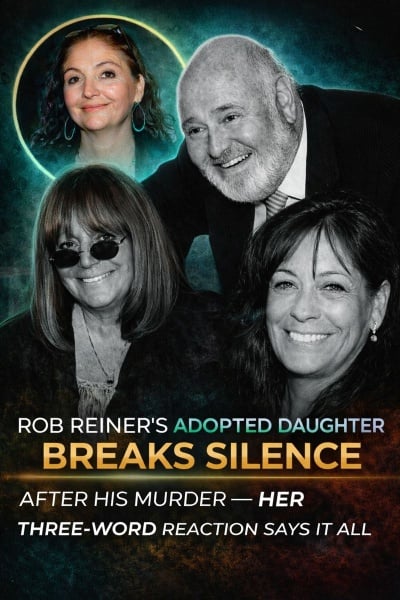
    As the Los Angeles Police Department’s Robbery-Homicide Division meticulously investigates the circumstances of the apparent double murder, the public’s attention has been drawn to the profound personal tragedy overshadowing Reiner’s celebrated professional life. Fans and colleagues are replaying the post, watching it transform from fleeting content to a painful memento. It now stands alongside the public comments made by his eldest daughter, Tracy Reiner, from his first marriage to the late director and actress Penny Marshall. Tracy’s raw, emotional statement—calling theirs “the greatest family ever”—underscores the depth of the shock and the sudden collapse of a seemingly happy family structure.

    Rob Reiner’s life was a massive, intertwining web of entertainment history. As the son of comedy giant Carl Reiner, he was born into Hollywood royalty. His own career spanned decades, from his iconic acting role as “Meathead” in the groundbreaking sitcom All in the Family, which remains a landmark in television history, to his towering achievements as a director. His filmography includes some of the most beloved and profitable titles in modern cinema, such as the comedy classic This Is Spinal Tap, the tear-jerking coming-of-age film Stand By Me, the whimsical, universally adored fantasy film The Princess Bride, and the defining romantic comedy When Harry Met Sally. The sudden, violent end to such a consequential life has generated an immense response across all forms of news consumption and social media platforms.

    Michele Singer Reiner, an accomplished photographer and producer who married Rob in 1989, shared his passion for both the arts and political activism. The couple’s decades-long partnership anchored a family that, despite its fame, sought to maintain a degree of privacy in their upscale Los Angeles area home. The emergence of reports suggesting that the perpetrator may be a family member, adding the crushing layer of domestic violence to the tragedy, only deepens the narrative of an unbearable plot twist that no one in the motion picture industry could have scripted.

    What remains behind the sensational headlines, the detailed police investigation, and the public mourning of a lost cultural figure, is a quiet, devastating truth: even the brightest, most ordinary moments can, without warning, become our last unknowing snapshots of life before an irreversible change occurs. Romy Reiner’s simple, proud post, now frozen in time, represents that agonizing transition—the last flicker of normalcy before the darkness descended. The world has lost a directorial giant and his beloved wife, but the Reiner children have lost parents in a manner that will forever define their personal and public narrative. The search for justice, conducted by the highest levels of law enforcement in Southern California, continues to seek answers in the place where a family’s history was tragically and violently concluded.

  • I Invited My Grandma to My Prom – Everyone Laughed, So I Stopped the Party and Spoke Up!

    I Invited My Grandma to My Prom – Everyone Laughed, So I Stopped the Party and Spoke Up!

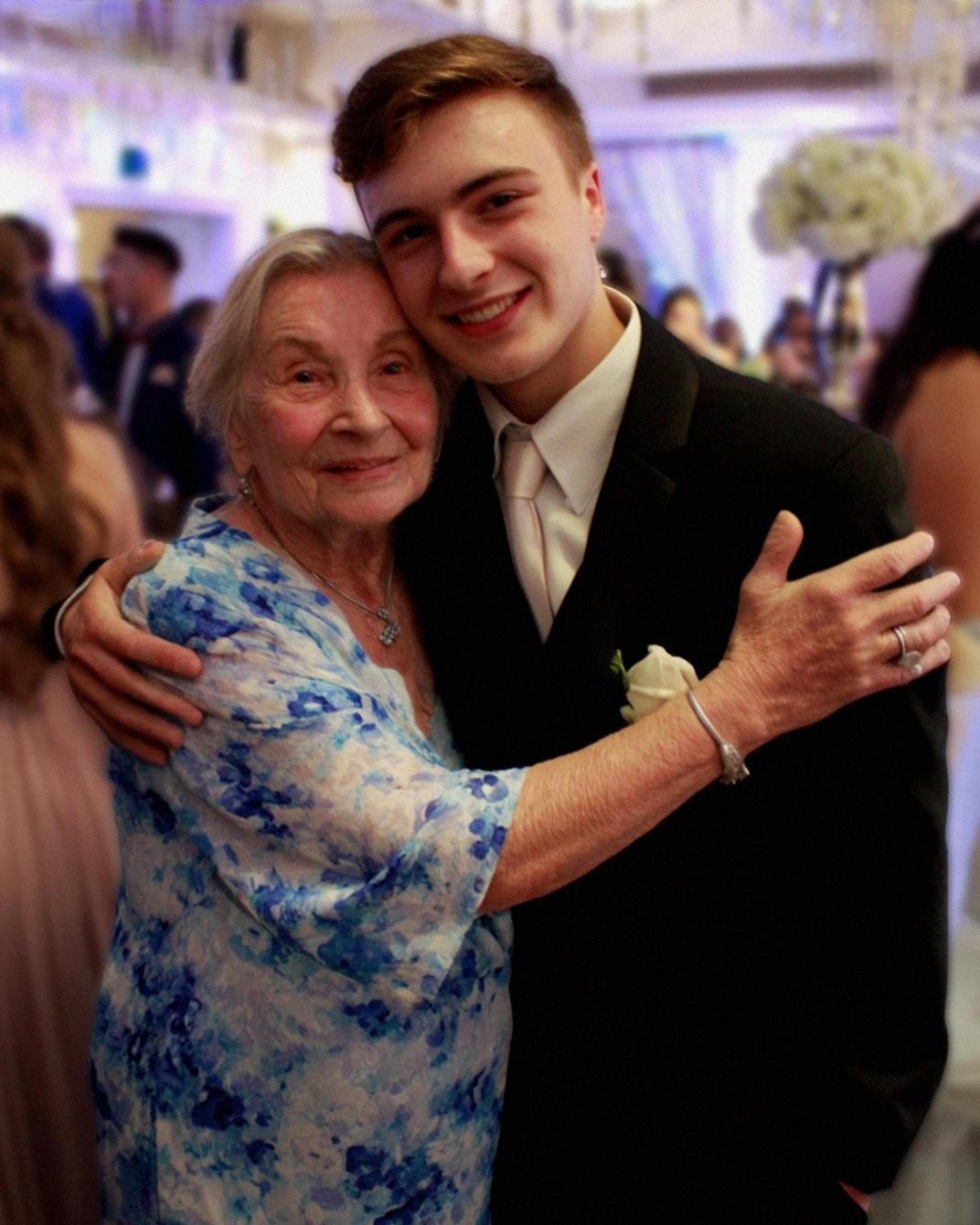
    The glittering promise of prom night, a staple of American high school culture, often serves as the backdrop for youthful drama, but for Lucas, it became the crucible where he finally defined his values. Lucas, a young man who had spent his life keeping his head bowed against the cruel judgment of his peers, was forced to confront the prejudice directed toward the woman who had sacrificed everything for him: his grandmother, Doris, the school janitor. His decision to invite her as his date, a choice met with mockery and derision, ultimately led to a public stand that earned him not just respect, but genuine community appreciation.

    Lucas’s life began with loss. His mother, Lina, died just three days after his birth, and his father was a complete absence. At 52, Grandma Doris stepped into the void, becoming his entire world. To support them, she took a demanding night job as a school janitor at the very high school Lucas would later attend. She was a woman of quiet strength, known for her secondhand books, her cracked-sole boots, and her ability to make the world feel “big and possible” despite their modest means. To Lucas, she was a one-woman village, a constant source of unconditional love and stability, despite the financial strain that often meant struggling to keep up with the cost of raising a child on a janitor’s salary.

    Lucas guarded his grandmother fiercely, never once telling her about the persistent, cutting insults he endured at school. The boys—and some girls—would whisper and jeer, calling him “Mop Boy” and making cruel jokes about the smell of bleach. The worst was finding deliberate spills of milk or juice at his locker, left with taunting notes. The thought of his grandmother feeling ashamed of her honest, hard work was unbearable to him. He countered the hostility with silence, coming home to make her laugh and help with chores, ensuring her comfort after long, grueling shifts spent cleaning the vast, impersonal classrooms and locker rooms.

    The only real respite from the school environment was Sasha, a smart, confident girl who also lived around the edges of privilege. Her mother was a nurse working double shifts to make ends meet, relying on an unreliable car and using public mass transit. Sasha understood the reality of balancing tip money and knowing the difference between cafeteria muffins and hospital vending machines. It was this shared experience of understanding economic disparity that drew them together. Sasha met Doris once in the cafeteria, recognizing instantly the warmth in the janitor’s eyes, saying, “She looks like the kind of person who gives second helpings even when you’re full.”

    As prom approached, the pressure of expectations mounted. Everyone assumed Lucas, who was becoming closer to Sasha, would ask her. When Sasha directly inquired about his date, Lucas was deliberately evasive. “I’ve got someone in mind,” he said carefully. “She’s important to me, Sasha.” He knew his cagey answer hurt Sasha, but he felt a deeper commitment to the person he was planning to take.

    The night of the prom, Grandma Doris was a picture of nervous hesitation, holding the floral dress she hadn’t worn since a cousin’s wedding. She worried she would embarrass him, offering to stay home, knowing the school had hired other cleaners for the night. Lucas was insistent. “Gran, you’re not going to embarrass me. I promise. I want you to be there!” He helped her with her little silver leaf earrings and reassured her as she straightened his tie. He needed her there, a sentiment rooted not in obligation, but in a profound, deep-seated love.

    The high school gym, transformed by string lights and paper awards, quickly filled with dancing couples. After Lucas and Sasha shared a laugh over their “Most Likely To” awards, Sasha asked again about his date. “She’s here,” Lucas said, spotting Doris near the refreshment table. “I told you, Sasha. She’s important.” And then, Lucas walked straight across the floor to his grandmother.

    “Would you dance with me?” he asked. Despite her hesitation—”I don’t know if I remember how, sweetheart”—Lucas gently led her onto the floor. For a fleeting moment, it was perfect. Then, the inevitable mockery began. “No way! He brought the janitor as his date?” a voice shouted. “Lucas is pathetic! What the heck?!” The laughter, echoing over the music, was loud, ugly, and designed to shame. Lucas felt his grandmother tense, her slight retreat a silent apology for being the cause of his humiliation. “Sweetheart,” she whispered. “It’s alright. I’ll head home. You don’t need all this.”

    In that second, a fierce, protective clarity washed over Lucas. This was not anger; it was an absolute moral conviction. “No,” he said. “Please don’t go.” He looked at the whispering faces, the judgment in their eyes, and recognized the exact moment when his core values demanded action. “You told me once that you raised me to know what matters. Well, this matters,” he told his grandmother.

    He crossed the floor again, weaving between the paused couples, and marched straight to the DJ booth. He took the microphone, cutting the music, plunging the vast, shimmering space into an absolute silence. “Before anyone laughs or pokes fun again… let me tell you who this woman is,” he declared. He spoke directly to his peers, not with rage, but with unassailable truth. “This is my grandmother, Doris. She raised me when no one else would. She scrubbed your classrooms at dawn so you could sit in clean seats… She is the strongest person I know.”

    He allowed the silence to settle, letting the weight of his words sink in. He caught the eye of a boy named Anthony, whose father sat on the school board—Anthony, whom Doris had quietly helped clean up after finding him drunk in the locker room two years earlier, keeping his secret safe. “And if you think dancing with her makes me pathetic,” Lucas concluded, his voice ringing with conviction, “then I truly feel sorry for you.”

    He walked back to his grandmother, whose eyes were brimming with tears, and held out his hand. “Gran, may I have this dance?” As the applause swept through the room, replacing the mockery with respect, Lucas and Doris danced. For the first time, she was not invisible; she was honored.

    Later, Sasha brought him punch. “For the record,” she said, smiling warmly, “I think that was the best prom date choice anyone’s made all year.” Lucas admitted he had cried, too, recognizing the overwhelming emotion of honoring the woman who gave him life. The following Monday, Doris found a note taped to her locker in the staff room, simply signed “— Room 2B,” and containing a sincere apology: “Thank you for everything. We’re sorry, Grandma Doris.” She tucked it into her pocket, knowing her dignity had been restored by the courage of the grandson she raised. Lucas, in choosing to honor the woman who sacrificed her life for his, received the greatest education of all: understanding that true value lies not in status, but in unwavering love and profound integrity.

  • 20 minutes ago, With Heavy Hearts, Its time to say goodbye to our lovely Bruce! Our prayers will always be with you!

    20 minutes ago, With Heavy Hearts, Its time to say goodbye to our lovely Bruce! Our prayers will always be with you!

    The global community, and the millions of fans who grew up watching his iconic roles, continue to follow the profoundly challenging health journey of legendary actor Bruce Willis. Since first sharing the difficult news in March 2022, the Willis family has maintained a commitment to transparency, revealing the gradual progression of a debilitating neurodegenerative disease that has forced one of Hollywood’s biggest stars to step away from his iconic acting career. The initial diagnosis of aphasia, a complex language disorder that severely impairs an individual’s ability to speak, write, and comprehend verbal and written language, sent shockwaves through the entertainment world.

    Following the initial announcement, the family later provided an important and necessary update: Willis is now living with the long-term implications of Frontotemporal Dementia (FTD).1 FTD is a devastating umbrella term for a group of brain disorders that primarily affect the frontal and temporal lobes of the brain, leading to changes in personality, behavior, and language.2 This more specific diagnosis provided crucial clarity, not only for the family’s understanding but for the millions of people worldwide grappling with or supporting loved ones through similar neurological conditions.

    Bruce Willis established himself as a global superstar through a remarkable and varied career that spanned decades.3 His name is synonymous with the action genre, anchored forever by his role as John McClane in the mega-franchise Die Hard, a film that redefined the modern action hero and solidified his status as an A-list box office draw.4 Beyond action, his versatility shone in critically acclaimed and culturally significant films such as the neo-noir masterpiece Pulp Fiction, the seminal sci-fi classic The Fifth Element, and the supernatural thriller The Sixth Sense.5 His extensive filmography remains a powerful driver of streaming revenue and continues to be analyzed in film studies programs globally, cementing his position in the pantheon of American cinema.

    Throughout this deeply challenging chapter, the strength and unity of the Willis family have become a source of immense inspiration. His current wife, Emma Heming Willis, has been an unwavering advocate and caregiver, openly sharing the reality of FTD to raise awareness.6 Crucially, the support network extends to his ex-wife, the equally famous actress Demi Moore, and their children, showcasing a remarkable example of blended family solidarity.7 This unified front of love and support provides Willis with the best possible care as he navigates the complex and often unpredictable progression of the disease. Their public commitment to managing this private crisis with dignity has been widely praised in celebrity news and beyond, transforming their personal struggle into a powerful platform for advocacy.

    The progression of FTD has profound implications for a person whose career was built on high-level cognitive function, quick wit, and charismatic delivery. As the disease advances, the family’s efforts have pivoted toward focusing on the quality of his daily life and increasing public health awareness regarding FTD.8 FTD is frequently under-recognized or misdiagnosed as other conditions, such as Alzheimer’s, making the family’s advocacy work essential.9 By sharing their story, they are providing invaluable support for dementia research and encouraging earlier, more accurate diagnoses for other families facing similar uncertainty. The global health community has benefited greatly from the heightened visibility brought by the Willis family.

    For his millions of fans, the sadness over the loss of his acting presence is tempered by admiration for his resilience. Tributes continue to pour in from fellow actors, directors, and fans across social media platforms, underscoring the deep affection and respect he earned over his long career. Even as he lives with the severe limitations imposed by the disease, Bruce Willis remains a figure of profound inspiration, demonstrating courage and strength in the face of a challenge that transcends the dramatic roles he once portrayed on screen. The family’s dedication to transparency and awareness-raising ensures that while the world says a difficult goodbye to the actor in his public capacity, his legacy of strength and his family’s commitment to FTD advocacy will continue to impact lives far into the future.

  • Items You Should Consider Letting Go After a Loved One Passes Away!

    Items You Should Consider Letting Go After a Loved One Passes Away!

    The profound experience of grief and loss extends far beyond the emotional core, subtly and often dramatically transforming the very environments we inhabit. After the passing of a cherished loved one, the familiar rooms of a home can take on an altered, heavier atmosphere, becoming silent repositories for memories. Everyday objects—a favorite armchair, a jacket draped over a chair back, a particular coffee mug in the cupboard, or a drawer that remains symbolically unopened—suddenly acquire an immense emotional significance. These seemingly mundane items possess the unsettling ability to trigger intense memories without warning, instantly pulling the bereaved back into moments of shared laughter, deep closeness, or the haunting echo of an unfinished conversation. This deep entanglement of sorrow and material possession illustrates how grief attaches itself to physical things, making a home feel emotionally heavier, even when the visual appearance remains unchanged.

    In the initial, raw stages of loss, clinging to the deceased’s belongings offers a powerful, almost primal form of comfort. It often feels instinctive to keep these objects near, perceiving them as tangible mechanisms for preserving connection, honoring the intensity of the love shared, and protecting fragile memories from the perceived threat of fading. However, over the extended course of the grieving process, this protective impulse can subtly shift. Certain items can quietly transition from being comforting relics into debilitating emotional anchors, inadvertently chaining the survivor to the pain of the loss rather than serving as gentle reminders of positive remembrance. It is crucial to internalize the therapeutic insight that the deliberate decision to letting go of material possessions does not equate to abandoning the person, diminishing the relationship, or betraying the deep bond that was shared. Instead, this act can be a thoughtful, critical step toward genuine emotional healing, a brave acknowledgment that the true essence of the loved one—their lessons, their spirit, and the shared love—resides within the survivor, not solely in the objects that clutter the physical space.

    The environment plays a profoundly influential role in the process of emotional recovery. Small, manageable adjustments to the living space—such as strategically rearranging furniture, purposefully clearing a previously cluttered shelf, or perhaps undertaking a thoughtful home redesign project—can serve as gentle, yet powerful, signals to the subconscious that the survivor is entering a new phase of life. These intentional actions are not undertaken with the goal of erasing the past or attempting to forget the person who is gone. Rather, they are about establishing a vital and necessary psychological balance between honoring the memory of the past and fully engaging with the present moment. By consciously choosing which items truly facilitate comfort, peace, and positive recollection, the survivor actively shapes a supportive living space that actively promotes current well-being and growth. A home, through this careful, mindful curation, can successfully operate as a sanctuary that both respectfully memorializes the past while offering essential room for future growth, renewed warmth, and the establishment of a future purpose.

    It is paramount to understand that the process of moving forward requires neither rushing nor forcing decisions, which can often lead to regret. A gentle approach to decluttering is consistently recommended by experts in grief counseling: starting with items that are perceived to carry less immediate emotional weight and gradually moving toward more significant objects, allowing the survivor to naturally decide what feels right to retain. Many individuals find deep meaning and comfort in establishing a memory box or a dedicated small area for a few highly meaningful mementos—such as a specific photograph, a handwritten note, or a small, symbolic keepsake. Conversely, donating or thoughtfully passing along other belongings allows these items to gain new purpose, potentially bringing comfort and utility to others, effectively transforming an object once tied to pain into one that supports a cycle of generosity. This entire, intentional process offers a path for transforming the sharp edges of acute grief into something softer and more manageable. By making necessary physical space in their homes through this thoughtful curation, individuals invariably succeed in making psychological space within themselves, allowing cherished memories to settle peacefully into their personal narrative rather than continuing to overwhelm their day-to-day existence. In the end, the most profound and enduring remembrance of a loved one lives not on dusty shelves or in unopened drawers, but in the lessons, the enduring love, and the powerful, life-affirming connections that the survivor carries forward each and every day.

  • URGENT PRAYERS NEEDED  PLEASE PRAY NOW  BREAKING! TRAGIC MASS SHOOTING REPORTED AT! see more

    URGENT PRAYERS NEEDED  PLEASE PRAY NOW  BREAKING! TRAGIC MASS SHOOTING REPORTED AT! see more

    A beautiful, warm summer evening, intended for celebration and light, was violently and tragically transformed into a scene of unspeakable horror as a horrific mass shooting shattered a Hanukkah celebration by the sea. In an act of what authorities are now investigating as likely antisemitic terror, gunfire ripped through the peaceful gathering on the shoreline, turning the sand blood-streaked and prompting a frantic stampede for survival. The tranquil sounds of the ocean and the celebratory music were quickly overpowered by the wail of sirens and the agonizing screams of parents searching for children who would never answer their call. In mere minutes, a place intended for joy became a devastating crime scene, shattering the nation’s sense of calm and shaking its established certainties to the core.

    Witness accounts paint a surreal and terrifying picture of the initial moments of the attack. For a few stunned seconds, as the first screams rose, the celebratory music continued to play, providing a cruelly dissonant soundtrack to the unfolding tragedy. This brief, terrifying delay was followed by a desperate stampede toward the water and away from the source of the gunfire. In a profound demonstration of instinctual human courage and immediate selflessness, parents were seen lifting children over barriers, while complete strangers grabbed the hands of others, guiding them toward safety without stopping to learn their names. This raw, improvised heroism provided a stark counterpoint to the calculated violence.

    In the days since the attack, Australia has been forced into a painful period of introspection, directly confronting the reality of a form of terror and hatred that many citizens once believed belonged exclusively to other parts of the world. The questions now being asked run deeper than mere inquiries into security briefings or conventional political speeches. Across the nation, people are struggling to understand how a festival symbolic of light and resilience could have become such a visceral, targeted symbol of hatred, and how such malicious intent could walk so easily and suddenly onto a beloved public beach. This incident has sparked an intense, necessary national conversation about community vulnerability and the insidious spread of extremism.

    The national news media and international media outlets have provided continuous breaking news coverage of the incident, focusing on the victims, the ongoing police investigation, and the profound impact on the local community, particularly within the Jewish community who were targeted. The swift declaration of the incident as a potential act of terror has elevated the investigation to the highest levels of national security, with specialized units meticulously processing the crime scene for forensic evidence and pursuing leads related to the perpetrators’ ideology and planning. The police are utilizing all available resources, including advanced surveillance technology and digital analysis, to piece together the entire sequence of events and ensure the swift capture of all those responsible.

    Yet, amid the horror and the necessary focus on security and justice, a different, quieter, but equally powerful story is taking root. It is a narrative defined by shared grief—a collective trauma that transcends political and religious lines—and the quiet determination of a community to stand together. The immediate, reflexive heroism of citizens on the beach, the later outpouring of support for the victims’ families, and the resolute commitment of political leaders to condemn the hatred all speak to a stubborn, defining refusal to let one night of violence rewrite the national identity.

    The attack, which occurred during the widely observed celebration of Hanukkah, a holiday that commemorates resilience and the triumph of light over darkness, has ironically reinforced those very themes within the affected communities. This tragic event serves as a stark reminder of the enduring need for religious tolerance and unity in the face of targeted bigotry. As the community moves from shock to mourning and eventually to healing, the long-term focus will pivot toward trauma recovery and implementing more rigorous, integrated public safety measures. Ultimately, the tragedy at the sea will be remembered not only for the terrifying speed and brutality of the violence but for the powerful, human response that demonstrated an unbreakable spirit in the darkest of moments. The nation’s current focus on urgent prayer and support underscores a deep-seated belief that unity and compassion remain the most powerful defense against hatred and extremism.

  • Rob Reiner and His Wife Michele Were Found by Their Daughter (Exclusive Sources)

    Rob Reiner and His Wife Michele Were Found by Their Daughter (Exclusive Sources)

    The sanctity of the Brentwood family home, long associated with the enduring creative genius of Rob Reiner, was irrevocably violated by a tragedy whose details are almost too painful to comprehend. Emergency calls reporting the horrific incident were logged around 3:30 p.m. on that devastating Sunday afternoon, yet sources indicate that the bodies of the legendary Hollywood director and his wife, Michele Singer Reiner, were already cold, suggesting the crime occurred hours earlier. The quiet Los Angeles residence, a symbol of professional success and comfortable living, had become the scene of a double murder, and in a development that shatters the national consciousness, exclusive sources allege the perpetrator to be the couple’s own son, Nick Reiner.

    This horrific event rips away the comforting illusion that wealth, fame, and success can insulate even the most prominent families from private torment. To the outside world—to neighbors in the affluent Southern California enclave, to fans who adored his films, and to colleagues in the motion picture industry—Rob Reiner was known simply as a celebrated filmmaker, a devoted husband, and a proud father. The public narrative of his life focused on masterpieces like The Princess Bride and A Few Good Men. Yet, behind the carefully curated walls of the multi-million dollar real estate, lay a decades-long struggle with the devastating impact of Nick’s crippling battles against substance addiction and periods of homelessness.

    The Reiner family’s deeply personal pain was not entirely hidden from the public record. In a poignant, heartbreaking attempt to transform their private struggle into public art and awareness, Rob and Nick collaborated on the semi-autobiographical film Being Charlie. This project openly explored Nick’s harrowing journey through rehabilitation centers and relapses, turning the family’s torment into a powerful statement on addiction recovery. This creative effort, intended perhaps as a form of catharsis and an offering of help to others, now stands as a tragic monument to the love and immense effort the parents invested in trying to save their son. The question that haunts the ongoing criminal investigation and the public consciousness is brutally simple: somewhere, somehow, despite all that love and all that effort, something snapped, violently and irrevocably, severing the bond forever.

    The tragic discovery was made by the Reiners’ daughter, Romy Reiner, whose own movements mere hours before the tragedy—including a simple, supportive social media post for her father’s films—have been painfully documented. First responders, entering the scene on that December afternoon, encountered a sight they will not soon forget: two parents brutally taken, and a family story violently severed. Romy now bears a grief that is almost impossible to articulate—she is mourning not only the loss of her mother and her world-famous father but also the devastating, irreversible loss of her brother, who is now the prime suspect accused of committing the heinous act. This multi-layered personal devastation adds an unparalleled level of sorrow to an already shocking homicide case.

    As the Los Angeles Police Department’s Robbery-Homicide Division continues its meticulous investigation, including analysis of any digital evidence and the collection of forensic data, the case transcends the typical parameters of a high-profile celebrity crime. It has become a painful allegory about the limits of parental love and the ravages of substance abuse—a theme that tragically mirrors the plot of many a dark drama, yet plays out in the unforgiving glare of reality. The case is a tragedy with no easy villains and, more acutely, no true resolution that can restore what was lost. All that remains is the cold, agonizing echo of what might have been if the decades of searching for help, for treatment, and for recovery had somehow, finally, been enough. The arrest of Nick Reiner and the deaths of his parents will forever be entwined in a narrative of fame, failure, and unimaginable loss in the heart of Hollywood.