Category: General News

  • They Stole My Clothes, Cowboy, He Took Her In, Then the Men Came Back

    They Stole My Clothes, Cowboy, He Took Her In, Then the Men Came Back

    The sun was sinking low over the north pasture when Cole Merrick spotted movement by the creek. It had been a long day of riding fence, tightening wire, and checking water lines. Sweat clung to his back, and dust coated his boots. He was thinking about nothing more than a simple meal and a quiet evening when he noticed a figure down near the cottonwoods.

    At first he thought it was a deer. Then the shape shifted.

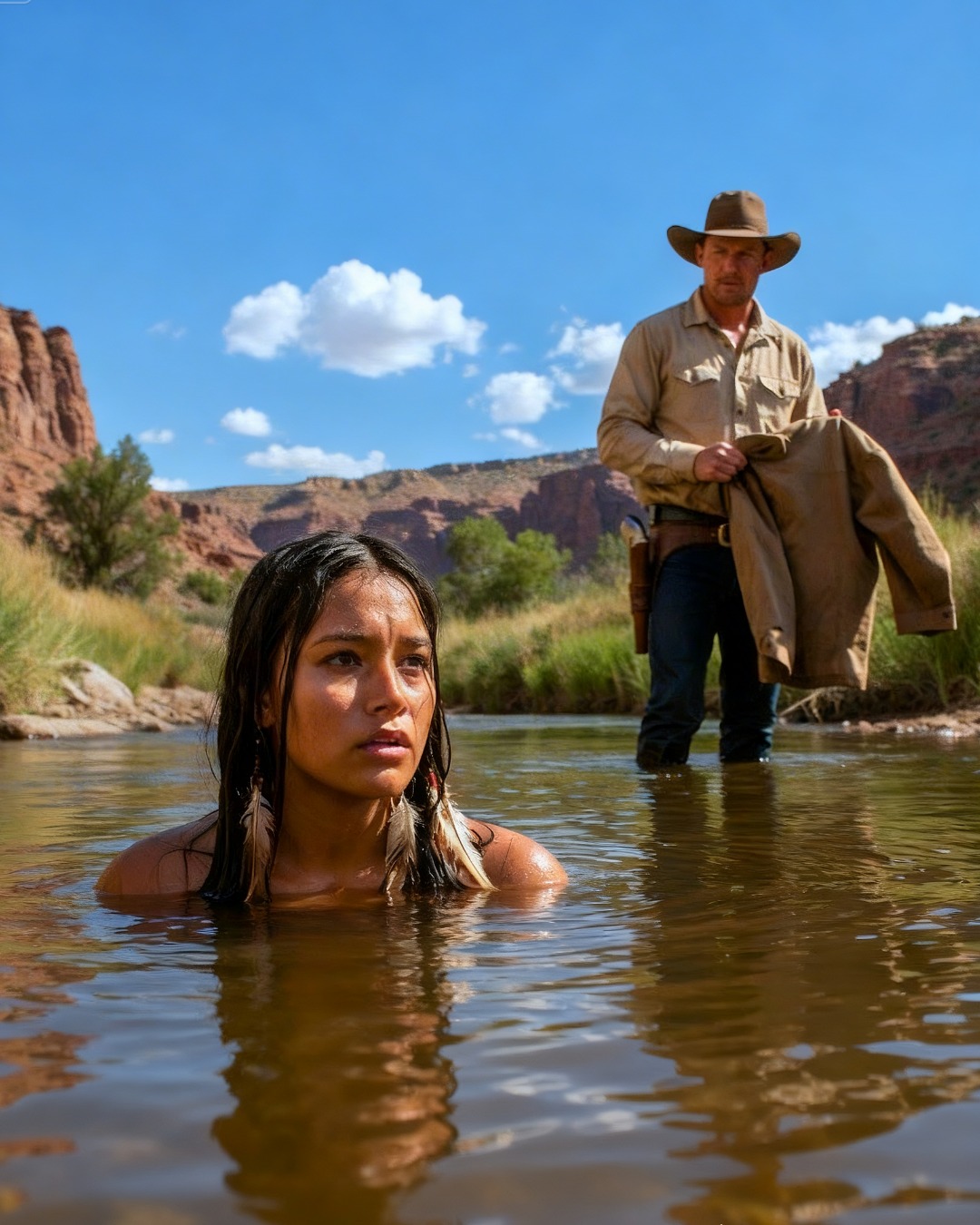
    A young woman stood knee-deep in the shallow water, her dark hair hanging wet down her back. What remained of her dress was torn badly, the fabric clinging in shreds to her shoulders. Bruises marked her arms. Her feet were bare and scraped raw. When she saw him, she froze like a startled animal.

    “They stole my clothes, cowboy. Please help me.”

    Her voice cracked on the last word.

    Cole didn’t rush forward. He had learned long ago that fear made people unpredictable. Years back, he had scouted for the army and seen enough violence to last a lifetime. Three years earlier, he had buried his wife during a fever outbreak and retreated into the quiet isolation of ranch life. He trusted little and spoke less.

    But the terror in the woman’s eyes cut through his caution.

    He shrugged off his coat and held it out slowly. She hesitated only a moment before snatching it and turning her back to wrap it tightly around herself. Up close, he saw rope burns on her shoulder and scratches along her ribs. Someone had handled her roughly.

    He helped her up the bank and lifted her onto his horse when her legs trembled too hard to carry her. She clung to him as they rode toward his cabin, silent except for her uneven breathing against his back.

    The cabin was small and plain—just a table, two chairs, a narrow cot, and a stove. Cole lit a lantern and built a fire without asking questions. He gave her a blanket and turned his back while she adjusted the coat around herself. He worked quietly at the table, stitching the torn dress with rough but careful hands.

    She watched him the entire time, measuring him.

    That night he didn’t sleep. He sat by the door with a rifle across his knees, listening to every sound beyond the walls. He had taken in wounded men before, back during the war years, but this felt different. This was not just about survival. Whoever had hurt her might come looking.

    Morning light crept through the shutters. The smell of coffee stirred her awake.

    “You got a name?” he asked gently.

    “Nia,” she replied.

    She spoke in short, flat sentences as she explained what had happened. Three white boys had stopped her near town. They mocked her, took her sack of corn, tore her clothes, and left her by the creek. One of them had been called Clay.

    Cole knew the name. A ranch hand’s son with too much time in the saloon and a taste for trouble.

    “You got family?” he asked.

    She shook her head. Her people had been scattered after army campaigns burned settlements farther south. She had come north hoping for work.

    He weighed the risk. Bringing her to town would invite questions. Leaving her alone meant certain danger.

    “You can stay here awhile,” he said finally. “Till it’s safe.”

    Her eyes sharpened with suspicion. “Why?”

    “Because I don’t let folks starve on my doorstep.”

    That was enough.

    Over the next few days, Nia insisted on helping. She limped beside him along the fence line, carrying tools despite her blistered feet. She sewed better than he did, mending shirts with quick, practiced hands. She swept the porch, hauled water, and refused to sit idle.

    She kept her back to walls. She flinched at sudden sounds. At the creek, she washed carefully, always keeping one eye on the trees.

    “You don’t have to keep looking over your shoulder here,” Cole told her.

    “I keep watch for myself,” she answered.

    He respected that.

    But he also kept his rifle close.

    On the third morning, Cole saddled up before dawn. “I’m riding into town,” he told her. “Need to see who’s talking.”

    She stiffened. “Clay.”

    “Better I find out than wait for him to show up here.”

    He left her with the rifle propped behind the table and instructions to bar the door.

    Town was waking slowly when he arrived. Wagons creaked along the dirt street. The saloon doors were already open. Cole stepped inside and ordered coffee, taking a seat where he could see the entrance.

    It didn’t take long.

    Clay and another boy stumbled in, laughing too loud. Clay’s hat sat crooked over greasy hair, and the smirk on his face hadn’t changed since Cole last saw him years back.

    Their laughter faded when they noticed him.

    “Well now,” Clay drawled. “Heard you picked up a stray.”

    Cole didn’t blink. “You got something to say, say it plain.”

    Clay leaned back in his chair, grin widening. “Just heard there’s an Apache girl hiding up at your place. Folks talk.”

    Cole stood slowly. The room went quiet.

    “You and your friends were near the north creek two days back,” he said evenly. “You took something that wasn’t yours.”

    Clay’s smirk faltered for half a second. Then it returned. “Careful, Merrick. You making accusations?”

    “I’m making a warning.”

    The bartender shifted nervously. Other men stared into their cups.

    Clay rose to his feet, trying to match Cole’s height. “You think you can tell me what to do?”

    Cole stepped closer, voice low enough that only Clay could hear. “You come near my land again, you won’t leave it walking.”

    Silence pressed heavy in the room.

    Clay searched his face for doubt and found none.

    Cole turned and walked out without another word.

    By the time he reached the ranch, dust clung to his coat. Nia was on the porch, eyes fixed on the road. Relief flickered across her face when she saw him.

    “They know you’re here,” he said plainly. “But they won’t come.”

    She studied him. “How you know?”

    “Because I made it clear.”

    That night they ate quietly by the fire. The tension in her shoulders had eased, just slightly. She no longer flinched at every snap of wood in the stove. When he rolled out his bedroll on the floor again, she didn’t protest, but she watched him with something different in her eyes—less fear, more trust.

    Days passed. No one came.

    Nia’s laughter surfaced once when the horse nudged her for grain. It was quick and surprised, as if she hadn’t meant to let it escape. Cole caught himself smiling at the sound.

    The ranch felt less empty.

    One evening, as the sun dipped low again over the pasture where he had first seen her, Nia stood beside him watching the sky turn gold.

    “You don’t have to stay,” he told her quietly. “When you’re ready.”

    She considered that for a long moment. “Maybe I stay,” she said finally. “For now.”

    Cole nodded. He didn’t ask for more.

    He had lived too long in silence and grief to mistake this for something simple. Trust grew slowly, like fence posts set deep in hard ground. But the fear that once shadowed her eyes was fading.

    And if the men ever came back, they would find more than a frightened girl by the creek.

    They would find Cole Merrick waiting.

  • The Missing Child Case That Took 51 Years to Solve!

    The Missing Child Case That Took 51 Years to Solve!

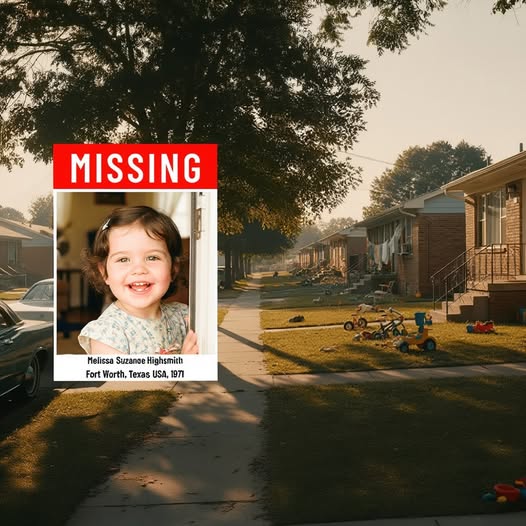
    The summer of 1971 in Cedar Ridge, Ohio, felt ordinary in the way small towns often do. Lawns were trimmed on Saturdays, kids rode bikes until dusk, and neighbors left their doors unlocked. Nothing about July 12th hinted that it would carve a permanent scar into the town’s history.

    That morning, Margaret Carter dressed her two-year-old daughter, Emily, in a yellow sundress. Emily insisted on bringing her stuffed rabbit, Mr. Whiskers, gripping it by one floppy ear. Margaret remembered the small details forever—the peanut butter on Emily’s cheek, the way her curls bounced as she laughed.

    They drove to Harlan’s Grocery on Main Street for milk and flour. It was supposed to be a ten-minute stop.

    At 10:17 a.m., the bell above the store door chimed as they entered. Margaret placed Emily in the shopping cart and moved toward the baking aisle. She reached for a bag of sugar and glanced down.

    The cart was empty.

    For a second, her mind refused to process it. She assumed Emily had toddled a few feet away. “Emily?” she called gently, expecting to hear a giggle.

    Silence.

    What followed unfolded in frantic fragments. Margaret racing down aisles. Cans crashing to the floor. The store owner shouting for someone to check outside. A customer sprinting toward the parking lot.

    Police arrived within minutes.

    By noon, Cedar Ridge was unrecognizable. Search parties combed fields and riverbanks. Volunteers formed lines through cornfields. Helicopters circled overhead. Margaret and her husband, Thomas, stood stunned as neighbors moved around them with flashlights and hope.

    There were rumors—a blue pickup seen idling nearby, a stranger at the gas station, travelers passing through town. But no one saw a child being taken. No ransom demand arrived. No clues emerged.

    By fall, the FBI joined the case. By winter, the investigation stalled.

    Margaret kept Emily’s room untouched. The crib stayed beneath the window. Mr. Whiskers sat propped against the pillow. Each night she whispered goodnight into the quiet.

    Thomas buried himself in factory work. He rarely spoke about that day. Grief hollowed him out from the inside. When Margaret found him sitting alone in the garage long after midnight, she understood they were both drowning in questions.

    Years slipped by. Flyers faded from telephone poles. The town moved on because it had to.

    Margaret did not.

    She clipped articles about missing children and kept them in a scrapbook. She studied photographs for familiar eyes. On Emily’s tenth birthday, she baked a cake and placed two candles on top—one for the daughter she had lost and one for hope she refused to surrender.

    In 1973, Margaret gave birth to a son, Daniel. Some people whispered that he was a blessing meant to replace what had been taken. Margaret never allowed that idea to take root. Daniel was loved fiercely, but the presence of his missing sister hovered like a quiet ghost in the house.

    Photographs of a curly-haired toddler lined the hallway. Daniel learned early not to ask too many questions.

    Thomas died of a heart attack in 1998. Margaret endured another loss without answers. When she passed away in 2019 at eighty-eight, Daniel inherited the old house on Maple Street and the boxes in the attic.

    Inside were decades of investigation files—police reports, letters to officials, maps dotted with red pins marking possible sightings. Margaret had never stopped searching.

    In 2021, Daniel submitted his DNA to a public genealogy database. He had watched documentaries about cold cases solved through genetic matches. He didn’t expect a miracle. It felt like a final gesture, a message in a bottle tossed into open water.

    Meanwhile, in Denver, Colorado, Laura Mitchell lived an ordinary life. At fifty-three, she was a high school history teacher, divorced, with a grown son. She had been adopted at age two through a private agency that no longer existed. Her adoptive parents had been loving and steady, but much of her early history was sealed or lost.

    There had always been a question inside her—a quiet space where origins should have been.

    On a spring afternoon in 2022, Laura opened an email from the DNA service she had used out of curiosity.

    “Close Family Match Identified.”

    She clicked.

    Predicted relationship: Parent/Child or Sibling.

    The name attached to the match was Daniel Carter, age forty-nine, Columbus, Ohio.

    Carter.

    The name tugged at her, though she couldn’t explain why.

    With trembling fingers, she sent a message.

    Hello. It appears we share a close DNA connection. I was adopted in 1971 and am searching for biological relatives. I don’t know if this is a mistake, but I would love to talk.

    Daniel read her message that evening.

    Adopted in 1971.

    Age fifty-three.

    Close family match.

    His pulse hammered in his ears. He typed back carefully.

    My sister disappeared in July 1971 at the age of two. Her name was Emily Carter. Can you tell me your birthdate?

    Laura responded quickly.

    July 10, 1969.

    Emily Carter had been born on July 10, 1969.

    Daniel felt the air leave his lungs.

    Further testing was arranged. Both agreed immediately. While they waited, Laura searched through her adoption papers. One faded document listed her original name as “Baby Girl C.” The agency had been located in Ohio.

    Ohio.

    Memories stirred faintly—sensations rather than images. The smell of farmland. Wind brushing tall grass. A woman humming softly. She had always dismissed them as imagination.

    Three weeks later, the confirmation arrived.

    Probability of sibling relationship: 99.999%.

    Daniel called her.

    For several seconds, neither spoke.

    “Hello?” Laura said quietly.

    “I think you’re my sister,” Daniel answered, his voice breaking.

    The word sister felt enormous.

    They cried openly. Fifty-one years of silence collapsed into a single phone call.

    A reunion was planned for June 15, 2022, nearly fifty-one years to the week since Emily vanished.

    Laura stepped off the plane in Columbus unsure what she would feel. Daniel recognized her instantly. The resemblance startled them both—hazel eyes, the same tilt to their smiles.

    They stared for a heartbeat before Daniel embraced her.

    “I’ve waited my whole life for this,” he said.

    Driving toward Cedar Ridge, they passed fields that stretched beneath wide Ohio skies. The town had changed. The old grocery store was now a hardware shop. The factory where Thomas had worked stood empty.

    Margaret’s house still waited at the end of Maple Street.

    Inside, Daniel had preserved the hallway photographs. He watched Laura pause in front of one—a picture of a curly-haired toddler in a yellow dress.

    She reached out slowly, tracing the frame.

    “That’s me,” she whispered.

    There were still unanswered questions. Investigators believe Emily had likely been abducted and illegally adopted, though the individuals responsible were never identified. Records from the defunct agency offered little clarity. The passage of five decades erased many trails.

    But one truth remained undeniable: the missing child had come home.

    Laura walked into the bedroom that Margaret had preserved for so many years. The crib was gone, but Daniel had kept Mr. Whiskers, worn and faded.

    He placed the rabbit in Laura’s hands.

    She held it against her chest, overwhelmed by a strange familiarity.

    For fifty-one years, Margaret had whispered goodnight to an empty room.

    Now, standing inside the house her mother had refused to abandon, Laura felt something shift—a sense of belonging stitched back together through science, patience, and persistence.

    Some mysteries remain incomplete.

    But after half a century, a family fractured by a single morning in 1971 finally found its missing piece.

  • Forgotten Ranger Cabin Saves Orphaned Brother and Sister!

    Forgotten Ranger Cabin Saves Orphaned Brother and Sister!

    The letter arrived on a Thursday in late October, carried up the rutted dirt road outside Asheville by a mail carrier who had no idea he was delivering the final blow to a crumbling family. Fourteen-year-old Lily Harper was out back, her rhythmic strikes with the dull axe splitting kindling into thin slivers of cedar, when her nine-year-old brother, Owen, ran toward her. He held the envelope at arm’s length as if it were a live coal.

    “It’s from the county,” Owen whispered, his breath hitching.

    Lily didn’t need to break the seal to understand the contents. Their parents had been gone for three weeks, victims of a rain-slicked mountain highway and a late-night shift that never ended. Since then, the silence in their sagging rental cabin had been deafening. The meager savings were gone, swallowed by the predatory hunger of hospital bills and funeral costs. Their landlord had been patient, but in the mountains, patience usually expires when the first frost hits.

    Inside the envelope was a thirty-day notice. After that, the only home they knew would belong to someone else. Owen read the letter twice, his brow furrowed as he folded it into a neat, desperate square. “What do we do, Lily?”

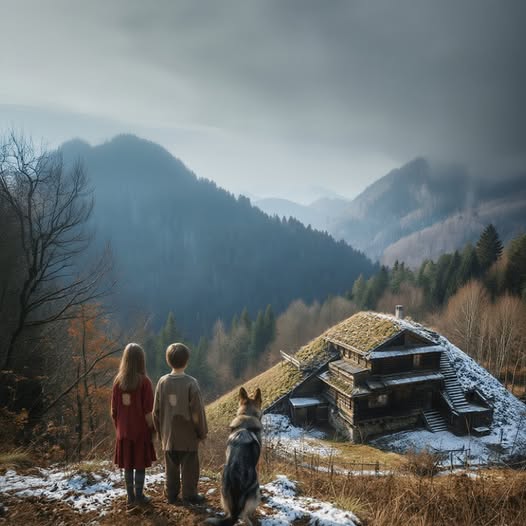
    Lily looked past the clearing toward the Blue Ridge Mountains, which rose like ancient, bruised giants against the autumn sky. She remembered her father’s hands—calloused, smelling of pine resin and woodsmoke. He had spent his life clearing brush for trail crews and repairing the forgotten bones of the forest. “We don’t wait for the county to decide where we go,” she said, her voice hardening with a resolve she didn’t yet feel. At her feet, Scout, their scruffy brown mongrel, thumped his tail against the hard-packed dirt, a silent vote of confidence.

    The options available to them were bleak: a foster system that would likely split them apart or a distant aunt in Florida who was a stranger in every way that mattered. Lily wasn’t thinking about being a hero; she was thinking about the way Owen reached for her hand in his sleep. She made her decision that night while the wind scraped against the thin cabin walls.

    They left three days later, long before the sun touched the valley floor. Their backpacks were heavy, stuffed with canned beans, oatmeal, matches, a dented cooking pot, and two wool blankets. Lily turned the key in the lock for the last time and slipped it into the mailbox. The hike was grueling. Within a mile, the familiar trails dissolved into animal paths choked with briars. Fallen leaves hid slick rocks and treacherous roots. Owen stumbled often, his small frame shaking with exhaustion, but Scout acted as an anchor, circling back to nudge the boy’s hand whenever he lagged.

    By midday, the world they knew had shrunk into a watercolor blur far below. “Are you sure it’s even there?” Owen asked, his voice small against the vastness of the woods.

    “No,” Lily admitted, “but Dad said the old rangers never built where the water couldn’t reach.”

    As the afternoon light slanted gold through the hemlocks, Scout suddenly froze. He didn’t bark; he simply stared into a dense thicket of rhododendron. Hidden behind a screen of overgrown pine stood a structure that seemed more like a growth of the earth than a man-made thing. It was a cabin, half-swallowed by the forest. The timber walls were rough-hewn and grey with age, topped by a sagging metal roof. One window shutter hung by a single rusted hinge, revealing a hollow darkness.

    Owen pulled back. “Is it haunted?”

    “It’s empty,” Lily said, pushing through the brush. The door groaned on its hinges, protesting the intrusion. Inside, the air was thick with the scent of dust and old pine, but the floorboards didn’t give way. A massive stone hearth dominated the main room, and a sturdy loft ladder leaned against a hand-cut beam. It was a sanctuary that time had forgotten to reclaim. “We clean it,” Lily declared. “We see if it holds.”

    The first few weeks were a lesson in the brutality of the wild. The cold seeped through gaps in the logs, and the wind hissed under the door like a living thing. Their first fire filled the room with choking grey smoke until Lily learned to read the chimney’s draft, adjusting the airflow by trial and error. They spent their days transforming survival into a routine. Owen gathered fallen branches for firewood while Lily cleared years of debris from the flue. They discovered a rain barrel system that had rotted through; Lily patched it with strips of bark and pine resin. A shallow well, capped with heavy stones, provided water that tasted of iron and earth.

    Food became their primary obsession. They rationed their beans and oatmeal, supplemented by what the forest offered. Owen learned to set simple snares for rabbits, and Lily spent hours by a narrow, ice-fringed creek, her fingers numb as she waited for a strike on her makeshift line. They weren’t playing house; they were fighting a war of attrition against the winter.

    January arrived with a sudden, suffocating whiteness. The snow layered the roof, but the old beams held firm. Lily stuffed the cracks between the logs with a mixture of moss and mud to block the drafts. She remembered her father saying that stone was a battery for heat, so she kept a small, constant fire burning, letting the hearth glow deep into the night.

    One afternoon, the silence was shattered. While gathering wood on a steep, icy slope, Owen’s foot slipped. He tumbled twenty feet down the ridge, his body slamming against a frozen oak. Lily reached him in a panic, her heart hammering against her ribs. He was conscious, but his ankle was already turning a sickening shade of purple. She managed to haul him back to the cabin, where she splinted the limb with carved branches and cloth strips. For three days, Lily worked the tasks of two people—chopping wood, hauling water, and tending the fire—while Scout never left the boy’s side, his warm fur acting as a living heating pad.

    During Owen’s recovery, Lily noticed a loose floorboard near the hearth. Prying it up, she found a rusted tin box containing yellowed papers dated 1948. They were the journals of Samuel Harlan, a retired forest ranger. He had written of the storms he weathered and the solitude he cherished. One line, written in a cramped, steady hand, changed everything for her: “If anyone finds this place after I’m gone, know that it was built to shelter. Use it. Respect it. Pass it on.” Lily realized then that they weren’t intruders. They were the latest inhabitants of a legacy of resilience.

    By March, the thaw began. The smoke from their chimney, a steady grey ribbon against the spring sky, was eventually spotted by hikers on a distant ridge. When the authorities finally climbed the trail—two deputies and a social worker—they didn’t find two bedraggled orphans. They found a homestead.

    The social worker stood inside the cabin, her eyes taking in the neatly stacked wood, the repaired rain barrels, and the way the children stood together, shoulders squared. She looked at the splint Lily had fashioned and the journal entries of Samuel Harlan laid out on the table. “You did this yourselves?” she asked, her voice trailing off in disbelief.

    “We didn’t break anything,” Lily said quietly. “We just finished what Mr. Harlan started.”

    The law could not allow them to live in the wilderness indefinitely, but the story of the Harper children touched a chord in the mountain community. Instead of being lost in a faceless system, they were placed with a local couple who ran an outdoor education program only a few miles from the trailhead. The cabin was not boarded up or torn down; it was designated as a historical landmark under the children’s care. Lily and Owen returned every weekend, no longer as fugitives from grief, but as keepers of the mountain’s secret. They had lost their parents, but in the heart of the Blue Ridge, they had found a way to stand on their own.

  • My Son Threw Me Out With Only a Garage, Inside Was a Secret He Never Imagined

    My Son Threw Me Out With Only a Garage, Inside Was a Secret He Never Imagined

    The smell was a suffocating blend of stagnant motor oil and the dry, metallic tang of undisturbed dust. I stood in the dark, my fingers fumbling with a jagged, unfamiliar key while the echo of my son’s final words played on a loop in my mind.

    “You’re just a useless old woman, Mom. What would you even do with a real inheritance? Dad knew that.”

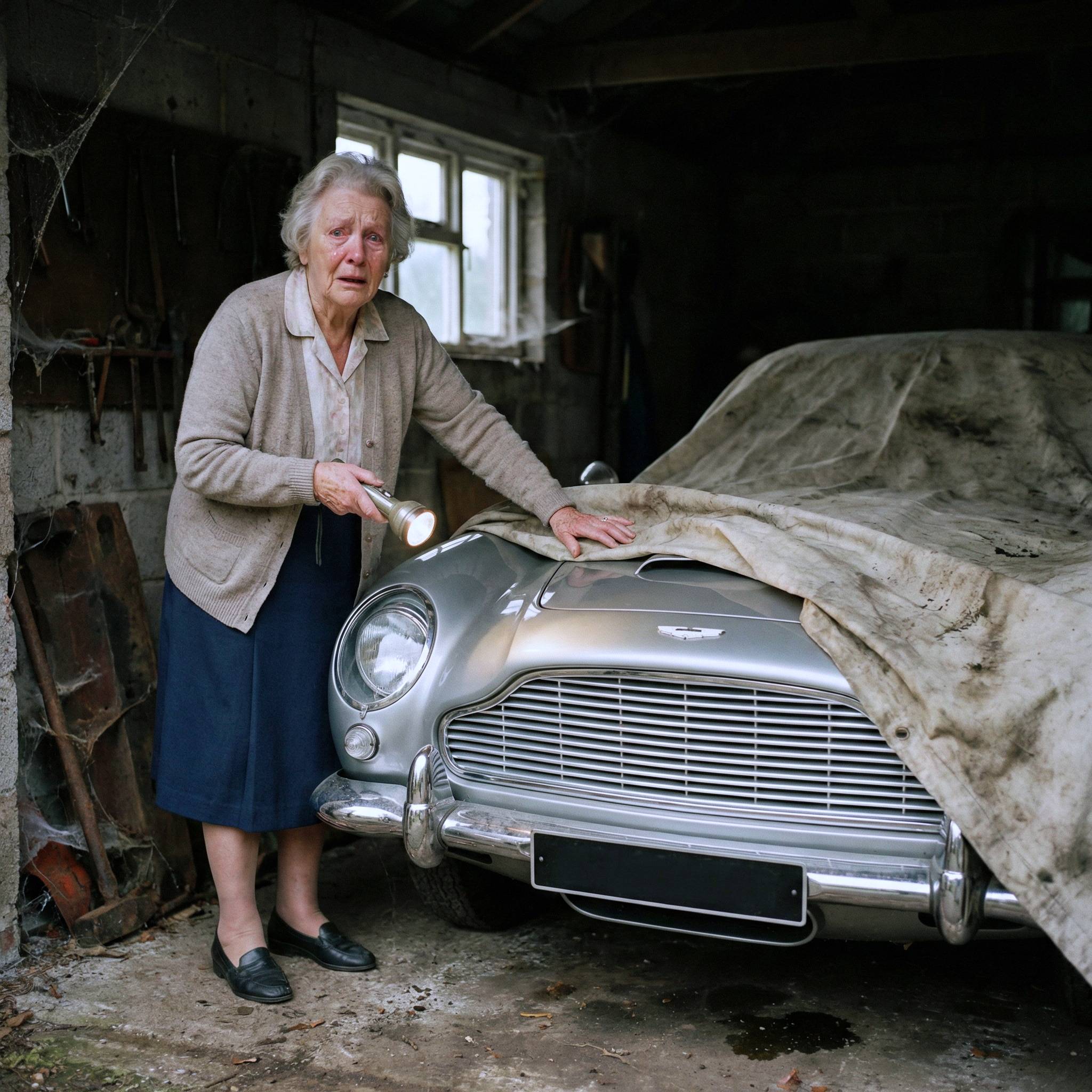
    The lock yielded with a heavy, industrial thunk. As I pushed the door open, the hinges screamed in protest, a fitting soundtrack for the wreckage of my forty-two-year marriage. I clicked on my flashlight, expecting to see a graveyard of rusted lawnmowers and forgotten junk. Instead, the weak beam caught a glimmer of silver—a polished, chrome-toothed snarl that froze the air in my lungs.

    Before I can tell you what I found, you have to understand how I ended up homeless on my birthday, clutching a single suitcase and a brass key that felt like a mockery of a life spent in service to my family.

    The nightmare began that morning in the mahogany-shrouded office of Mr. Hoffman, our family attorney. My son, Jonathan, sat across from me, looking every bit the corporate predator in a tailored Italian suit. I felt small in the black dress I’d worn to my husband Robert’s funeral only three weeks prior.

    Mr. Hoffman looked pained as he adjusted his glasses. “Before I read the last will and testament,” he began, “I must state that these instructions were drafted with absolute clarity by Mr. Campbell.”

    The reading was a blur of legal jargon until the hammer fell. “To my son, Jonathan Campbell, I leave the penthouse residence and my primary investment portfolio. To my beloved wife, Susan, I leave the property at 1420 Industrial Parkway—the garage and its contents.”

    The silence that followed was broken by Jonathan’s smug chuckle. He leaned over, his hand squeezing my shoulder with a pressure that felt more like a threat than a comfort. “Don’t worry, Mom,” he whispered. “I’ll make sure you’re taken care of.”

    But “taken care of” meant being shown the door that very evening. Jonathan had dropped my suitcase in the marble foyer of the penthouse we had called home for fifteen years. “I’m turning Dad’s study into a home office. I need you out by tonight. You can go to Aunt Helen’s, or,” he sneered, “there’s always that dump of a garage.”

    Driven by a mix of shock and a sudden, burning spark of defiance, I didn’t go to Helen’s. I drove to the industrial district. I drove to the “dump.”

    As I stepped further into the structure, my flashlight swept over three shapes draped in custom-fitted cloth. I reached for the first one, my hand trembling as I pulled back the fabric. It slid away like silk to reveal a 1964 Aston Martin DB5 in pristine Silver Birch. It was a masterpiece of rolling sculpture.

    I moved to the second: a 1956 Mercedes-Benz 300SL Gullwing, its deep blue paint reflecting my light like a dark ocean. The third was a 1967 Ferrari 275 GTB/4, glowing in a shade of red so deep it looked like a heartbeat.

    I found a light switch and the space was suddenly flooded with brilliant, recessed LED lighting. This wasn’t a garage; it was a climate-controlled vault with epoxy floors and high-end security. Taped to the wall was a white envelope with my name scrawled in Robert’s looping hand.

    “My Dearest Susan,” the letter began. “If you are reading this, I am gone. Six years ago, when I received my diagnosis, I knew I had to protect you. Not just from the world, but from our own son.”

    The letter explained that Robert had watched Jonathan grow into a man who valued assets over people. He knew that if he left everything to me openly, Jonathan would have bullied me into “managing” it until I had nothing left.

    “The cars are worth twelve million dollars,” the letter continued. “But they are just the beginning.”

    Behind a framed photograph of us in Venice lay a digital safe. Using our anniversary—0614—I opened it to find a leather portfolio that made my head spin. It contained deeds to apartment buildings in Seattle, commercial retail spaces in Chicago, and a boutique vineyard in Northern California. All held in a Living Trust that transferred solely to me the moment Robert passed.

    The most poignant discovery was a deed to a small, fully furnished cottage in Carmel-by-the-Sea—the town where we had spent our happiest summers.

    I spent that first night in a small, hidden office within the garage complex. Robert had even stocked a closet with clothes in my size, tags still attached. He hadn’t just left me money; he had left me a fortress of dignity.

    The next morning, I met with Marcus Weatherby, the curator Robert had hired to maintain the collection. “Robert was methodical,” Marcus told me over coffee. “He wanted to leave you something tangible, something beautiful that increased in value every second it sat in the dark. He called it your ‘Independence Fund.’”

    As Marcus walked me through the provenance of the Ferrari, my phone rang. It was Jonathan.

    “Mom? Why haven’t you called Aunt Helen? Anyway, I need you at the penthouse by nine to clear out your junk. The designers are arriving.”

    “I’ll be there, Jonathan,” I said, my voice steadier than it had been in years.

    I arrived at the penthouse precisely at nine. Jonathan was already there, pacing the marble floors and barking orders into his headset. He looked at me with a mixture of pity and annoyance. “Did you sleep in your car, Mom? Honestly, if you’d just listen to me—”

    “I’m not here to listen, Jonathan,” I interrupted. I handed him a small, elegant folder.

    “What’s this? An invoice for a moving van?”

    “It’s a copy of the deed to the property in Carmel,” I said. “And a summary of the Living Trust your father set up. It turns out the ‘garage’ contained more than just stale oil.”

    Jonathan flicked through the pages, his face draining of color as he saw the valuations. Twelve million in cars. Forty million in real estate. A dividend income that dwarfed his corporate salary.

    “This… this has to be a mistake,” he stammered, his bravado collapsing. “Dad wouldn’t… we need to consolidate this. I can help you manage these properties, Mom. We should move you back in here and—”

    “No,” I said, reaching for my suitcase. “You were right, Jonathan. This penthouse is yours. It’s exactly what you deserve—a high-rise box of glass and cold stone. But as for me, I think I’ll go to the coast. I have a cottage to open.”

    I walked toward the elevator, but paused at the door. “Your father gave you exactly what you wanted, Jonathan. He gave you the status. But he gave me the life. And just so you know, I’ve already instructed Mr. Hoffman to ensure my estate bypasses you entirely. Since I’m just a ‘useless old woman,’ I wouldn’t want to burden you with the responsibility.”

    The doors slid shut on his stunned silence. As I drove my old Toyota out of the city, headed toward the salt air of Carmel, I looked at the brass key on the passenger seat. Robert had played a long game, a masterpiece of foresight fueled by a love I was only beginning to truly measure. I wasn’t just surviving; I was finally starting, with twelve million dollars of vintage steel in my rearview mirror and a horizon that belonged entirely to me.

  • The Grave That Never Froze, A Caretakers Discovery of Loves Endless Vigil

    The Grave That Never Froze, A Caretakers Discovery of Loves Endless Vigil

    The frost in Willowbrook Cemetery didn’t just bite; it consumed. By mid-January, the ground usually turned into an iron-hard slab of permafrost, and the grass withered into a brittle, ghostly tan. Thomas Hartwell, the cemetery’s caretaker for over three decades, knew the personality of every acre. He knew where the shadows lingered too long and where the drainage failed during the spring thaw. He thought he had seen every manifestation of human sorrow—from the widows who brought fresh tea to headstones to the parents who left rotting teddy bears in the rain.

    But Plot 47 in Section C was an anomaly that defied the seasons.

    The headstone was a modest slab of grey granite, marked with a name that Thomas had seen etched too often in his ledger: Marcus James Whitman, 1999–2025. He was twenty-six—an age that suggests a life interrupted mid-sentence. What drew Thomas’s attention, however, wasn’t the tragedy of the age; it was the vibrant, defiant emerald rectangle surrounding the marker.

    During the brutal cold snap of 2026, when temperatures plummeted to fifteen degrees below zero, the rest of Willowbrook was a wasteland of white and grey. Every other grave was buried under a foot of suffocating snow. Yet, Marcus Whitman’s plot remained clear. The grass there wasn’t just surviving; it was lush, thick, and pulsating with a spring-like vitality that felt almost predatory against the surrounding death.

    Thomas stood at the edge of the plot one Tuesday morning, his heavy boots crunching on frozen snow while his eyes rested on the soft, damp turf of Section C-47. He pulled off a glove and knelt, pressing his palm to the earth. It wasn’t just thawed; it was warm. A low, subterranean heat radiated against his skin, a ghost of a fever beneath the soil.

    As a man of logic and dirt, Thomas’s mind immediately went to the practical. He suspected a wealthy family had installed some sort of illicit memorial tech. He had seen solar-powered lanterns and digital frames before, but this was a feat of engineering. For four consecutive mornings, he staked out the section in the pre-dawn gloom, his flashlight beam slicing through the mist. He expected to find a maintenance crew or a grieving relative with a snowblower and a portable heater.

    He found no one. No footprints disrupted the pristine snow leading to the plot. No tire tracks marred the access road. It was as if the heat were an internal property of the grave itself, a metabolic fire burning in the deep.

    On the fifth day, driven by a mixture of professional duty and an itch of curiosity he couldn’t scratch, Thomas returned with a spade. He knew the legalities of disturbing a site, but the “Immaculate Green,” as he’d begun to call it, was a safety hazard and a mystery that kept him awake.

    The shovel sank into the earth as if it were butter. There was no frost line here. Three feet down, the blade struck something with a sharp, resonant chime. Thomas cleared the dirt with his hands, expecting a time capsule or a buried urn. Instead, he unearthed a heavy-duty, weatherproofed black metal box. A thick, industrial-grade electrical cable snaked out from the corner of the box, buried deep and heading straight for the old stone chapel at the heart of the cemetery.

    Thomas sat back on his heels, the cold air stinging his lungs. It wasn’t a miracle; it was a circuit.

    He traced the line back to the chapel’s exterior, finding a hidden junction box tucked behind a screen of overgrown holly. There, a single breaker was labeled with meticulous, obsessive neatness: “Section C-47.” Someone had hired a professional to wire the afterlife.

    The architect of this anomaly revealed himself three days later. In the blue light of a winter dawn, Thomas saw a silhouette standing over the grave. The man was tall and reed-thin, wrapped in a wool coat that looked older than the headstone. He wasn’t crying or praying; he was simply standing there, his eyes fixed on the grass as if waiting for it to speak.

    “Mr. Whitman?” Thomas called out, his voice carrying thin in the frozen air.

    The man turned. He looked seventy, though grief has a way of adding a decade to a man’s gait. His face was a map of exhaustion, but his eyes were clear. “You found the elements,” David Whitman said. It wasn’t an apology; it was an observation.

    “I did. It’s a hell of a piece of work, David. But you can’t just wire a cemetery for floor heating.”

    David walked to the edge of the green patch, being careful not to step on the blades. “Marcus hated the winter. Since he was a boy, he’d go quiet when the first frost hit. He called it the ‘season of bone.’ He said the world felt like it was giving up on him.”

    He knelt, his fingers trembling as he brushed a stray leaf from the turf. “He died in March. Right when the crocuses were coming up. I couldn’t bear the thought of him going back into the cold. I couldn’t let him spend eternity in the one season that broke his spirit.”

    David looked up at Thomas, his breath hitching. “I spent eight thousand dollars on the installation. The electricity is piped in from the chapel’s auxiliary line; I pay the church secretary sixty dollars a month to keep the bill quiet. I know it’s not rational. I know the boy I raised isn’t actually feeling the frost. But when I stand here, and I see this one spot where the world hasn’t died, I can pretend he’s still in the sun. I can pretend I’m still protecting him.”

    Thomas looked at the man and then at the vast, frozen expanse of Willowbrook. He thought of the thousands of souls under his care, all surrendered to the iron grip of the North Carolina winter. He thought of the rules—the strict guidelines about “unauthorized structures” and “uniformity of landscape.”

    Then he looked at the green. It was a defiant, beautiful middle finger to the inevitability of the end. It was the physical manifestation of a father’s refusal to stop being a father. In thirty-three years, Thomas had seen many monuments to the dead, but he had never seen a monument to the living impulse of love quite like this.

    “The wiring,” Thomas said, clearing his throat and looking away. “Is it grounded?”

    David blinked, taken aback. “Yes. Industrial grade. Weather-sealed.”

    “I’ll need a copy of the schematics for my ‘private’ files,” Thomas said, his voice gruff. “And the name of the electrician, just in case a line breaks during a thaw. I can’t have a short-circuiting grave on my watch.”

    David’s face crumpled, not in sorrow, but in a profound, soul-deep relief. “You’ll let it stay?”

    Thomas looked at the emerald rectangle, the only living thing in a city of stone. “I’ve got fifteen years until I retire, David. As long as I’m the one holding the keys, Section C-47 stays in the spring. I’ll adjust my Sunday rounds. Give you some time to sit in the warmth.”

    As the sun finally broke over the horizon, painting the snow in shades of gold and violet, the two men stood in silence. The heat rising from the grave created a faint, shimmering haze in the air—a tiny, private ecosystem of memory. Thomas realized then that his job wasn’t just to tend the grass and the stones. It was to guard the stories that refused to freeze.

    The grave that never froze became a legend among the few locals who dared the cemetery in winter, a whispered miracle of “holy ground.” But for Thomas and David, it was simply the cost of a promise. In the heart of the winter of 2026, while the rest of the world turned to ice, love kept a small piece of the earth warm, one watt at a time.

  • This Is The T-Shirt The Today Show Would Not Allow Him To Wear On Air!

    This Is The T-Shirt The Today Show Would Not Allow Him To Wear On Air!

    The intersection of celebrity, political activism, and the rigid constraints of live network television was thrust into the spotlight following a quiet but significant act of censorship on NBC’s Today Show. During a live performance by R&B icon Macy Gray, viewers observed a typical high-energy set, yet few realized that a quiet battle over freedom of expression had occurred just minutes before the cameras rolled. Billy Wes, Gray’s keyboardist, had arrived at the iconic 30 Rockefeller Plaza studio wearing a T-shirt that featured a bold, white-lettered plea: “Free Brittney Griner.” However, by the time the red light signaled they were on the air, the message had vanished, suppressed not by a change of heart, but by the direct intervention of network executives.

    The incident serves as a stark reminder of the delicate balance networks maintain between entertainment and the perceived risks of political controversy. Wes had intended to use the massive platform of morning television to amplify the plight of WNBA star Brittney Griner, who at the time was embroiled in a harrowing legal ordeal in Russia. For Wes, the shirt was a simple gesture of solidarity; for NBC “head honchos,” it was a liability. Under the directive of show authorities, Wes was forced to turn his shirt inside out, appearing on national television in a plain black garment that effectively silenced his message.

    The Context of the Conflict

    To understand the weight of this wardrobe dispute, one must look at the timeline of Brittney Griner’s detention. The keyboardist’s choice to wear the shirt coincided with a pivotal and grim moment in the athlete’s legal battle: the day she pleaded guilty to drug charges in a Russian court. Griner had been in custody since February 2022, facing up to a decade in a penal colony after vape cartridges containing hashish oil were found in her luggage at a Moscow airport.

    The case had become a geopolitical lightning rod, with the U.S. State Department officially designating her as “wrongfully detained.” Advocates, athletes, and musicians across the United States were mounting a pressure campaign to urge the Biden administration to finalize a prisoner swap. Against this high-stakes backdrop, Wes saw the Today Show performance as the perfect opportunity to keep Griner’s name in the public consciousness.

    Behind the Scenes at Rockefeller Center

    The confrontation behind the scenes was reportedly swift. According to Wes, who later spoke with media outlets to clarify the situation, the instruction was clear and non-negotiable. An authority figure within the production team informed him that the shirt was not permitted on air. While NBC did not release a formal statement detailing the specific policy violation, the decision likely stemmed from a desire to remain “brand neutral.” Major networks often avoid any apparel that could be construed as taking a side on an active international legal case or a sensitive political issue, fearing it might alienate portions of their audience or complicate their journalistic standing.

    Macy Gray herself later commented on the incident, attempting to bridge the gap between the network’s caution and the band’s intent. Gray argued that the message was not inherently political, but rather a humanitarian appeal. “It’s a human being that’s in a really horrible situation,” she noted, emphasizing that the focus should be on the power of individuals and governments to intervene in a crisis of this magnitude. Her defense of her bandmate highlighted a growing trend in the arts: the refusal to separate the performance from the social reality of the era.

    The Mechanics of Network Standards

    Television networks operate under “Standards and Practices” (S&P) departments that oversee everything from profanity to the logos displayed on clothing. While these rules are ostensibly designed to prevent copyright infringement—such as a performer wearing a Nike logo without a partnership—they are frequently used to sanitize the visual landscape of live television from political slogans.

    The “inside-out shirt” has become a recurring symbol of this tension. When an artist is told their message is prohibited, the quickest logistical fix in a fast-paced live environment is to physically invert the clothing. This creates a visual “void” where the message used to be. For viewers, the keyboardist in a plain black shirt was an unremarkable sight; for those aware of the pre-show drama, that plain black shirt was a visual representation of a vetoed protest.

    The Broader Impact of the Gesture

    Despite the T-shirt being hidden from the cameras, the story gained significant traction through digital media. The irony of the situation was that the act of asking Wes to hide the shirt ultimately generated more headlines than the shirt might have on its own. By speaking out after the performance, Wes and Gray ensured that the “Free Brittney Griner” message reached the public anyway, albeit through the lens of a censorship controversy.

    This incident sparked a wider debate about the role of the musical guest on morning news programs. Traditionally, these sets are meant to be upbeat and promotional—a way for audiences to start their day with light entertainment. However, musicians have a long history of using such “apolitical” spaces to make profound statements. When the Today Show blocked the T-shirt, they inadvertently entered into a conversation about where the boundaries of “acceptable” activism lie in the corporate media space.

    Resilience Through Solidarity

    For the advocacy movement surrounding Brittney Griner, the Macy Gray performance incident became another data point in the campaign to keep her story alive. It highlighted the persistence of artists who are willing to risk professional friction to stand by their peers. Wes’s decision to share his experience with the media served as a secondary platform, proving that in the age of social media, a message turned inside out on television can still be read by the world.

    The legal saga of Brittney Griner eventually reached its conclusion with a high-profile prisoner exchange in December 2022, but the story of the keyboardist’s T-shirt remains a significant footnote in the history of live television. It serves as a case study in how corporate interests and individual advocacy collide in the frantic minutes before a live broadcast.

    In retrospect, the plain black shirt seen by millions of viewers that morning was not just a piece of clothing; it was a canvas of silenced support. The incident underscores a persistent truth in the entertainment industry: while networks can control what appears on their screens, they cannot easily control the underlying convictions of the artists who grace their stages.

  • SAD NEWS 10 minutes ago in New York, Savannah Guthrie was confirmed as! See more

    SAD NEWS 10 minutes ago in New York, Savannah Guthrie was confirmed as! See more

    The serene foothills of Tucson, Arizona, usually characterized by their quiet dignity and sprawling retirement havens, have become the epicenter of a chilling and high-stakes mystery following the disappearance of 84-year-old Nancy Guthrie. What should have been a peaceful desert night has instead transformed into a scene of visceral horror, with the evidence left behind suggesting a calculated and violent encounter. The community, once a sanctuary for those seeking rest, is now shrouded in an atmosphere of dread as investigators sift through a crime scene that looks less like a standard missing persons case and more like a focused abduction. The details that have emerged—bloodstains on the front steps, a dismantled security system, and a conspicuous lack of footprints—have left the nation transfixed and the Guthrie family devastated by an uncertainty that grows more suffocating with every passing hour.

    The physical evidence at Nancy’s residence tells a harrowing story of a confrontation that was as brief as it was brutal. Forensic teams have focused their initial efforts on the front entrance, where a faint but unmistakable trail of blood marks the stone steps. This biological evidence is perhaps the most distressing clue for the family, as authorities have yet to confirm whether the blood belongs to Nancy or an intruder. Furthermore, the deliberate destruction of the home’s Ring camera system adds a layer of premeditation to the event. The device was not merely covered or bypassed; it was violently ripped from its housing, a clear indication that the perpetrator was aware of the surveillance and sought to erase any digital witness to their actions. This act of tactical erasure suggests an individual who is not only comfortable with violence but also cognizant of the technological hurdles of modern-day forensics.

    For Savannah Guthrie, a woman whose professional life is spent narrating the tragedies and triumphs of others for a global audience, the situation has created an excruciating role reversal. The anchor, known for her composure and journalistic rigor, is now the central figure in a story she never wished to cover. The irony of her position—being the voice of the news while her own mother remains the most urgent headline—has brought a deeply human face to the investigation. Behind the scenes, sources close to the family describe a state of suspended animation, where every phone call represents a potential breakthrough or a devastating blow. The emotional exhaustion of waiting for news that never comes has reached a fever pitch, as the family navigates the duality of private grief and the public glare of a high-profile investigation.

    As the days turn into weeks, the silence from the Tucson Police Department and federal investigators has become a source of both frustration and fearful speculation. Law enforcement officials have remained tight-lipped, citing the sensitive nature of the ongoing forensic analysis and the need to protect the integrity of the search. While they have confirmed that Nancy was likely taken against her will, they have conspicuously avoided naming suspects or proposing a definitive motive. This lack of information has created a vacuum that the public and the media have filled with theories, ranging from random home invasions to more targeted, personal vendettas. However, the expert analysis of the scene suggests that “rookie” errors may have been made, leading investigators to believe that even a sophisticated perpetrator may have left behind a digital or physical “breadth of evidence” that will eventually lead to an arrest.

    The investigation has seen several complex developments that have only added to the family’s psychological burden. Reports of an “imposter ransom” demand briefly threw the search into chaos, as federal agents swarmed a trusted insider who was allegedly attempting to capitalize on the tragedy for financial gain. This “hoaxer,” identified by some reports as a former associate, was arrested by the FBI after a high-stakes sting operation. The revelation that someone within the periphery of the family’s trust would seek to exploit their pain for a payout has left Savannah and her siblings “shattered beyond repair.” This subplot of betrayal highlights the vultures that often circle high-profile crimes, complicating the work of legitimate investigators who must painstakingly separate genuine leads from predatory fabrications.

    Adding to the surreal nature of the case, reports emerged of a midnight doorbell camera activation at Savannah’s own residence. In a moment of sheer emotional trauma, a shadow appeared on the screen that bore a haunting resemblance to her missing mother. The subsequent breakdown and the desperate hope that Nancy had somehow found her way home underscore the psychological toll this ordeal has taken on the Guthrie children. Every shadow is a ghost, and every sound in the night is a potential sign of life. This atmosphere of “prolonged emotional exhaustion” has become the new normal for the family, as they try to balance the demands of their public roles with the private agony of a missing parent.

    The search efforts have expanded beyond the immediate Tucson area, involving specialized forensic teams and search-and-rescue units who are combing the rugged desert terrain. Reports that agents were seen at a property belonging to Savannah’s older sister, specifically focusing on a septic tank, have ignited fresh waves of speculation. While such searches are standard in comprehensive missing persons investigations to rule out the most grim possibilities, the visual of federal agents in tactical gear at a family home serves as a stark reminder of the gravity of the situation. The Guthrie siblings, who recently posted a unified update expressing their gratitude for public support, remain a solid front of resilience even as the investigation dives into the darkest corners of their lives.

    As the nation watches the Guthrie family navigate this labyrinth of fear and forensic clues, the case has become a focal point for discussions on senior safety and the effectiveness of modern surveillance. The “grave error” reportedly made by the suspect—which some experts believe involves a failure to completely neutralize digital tracking—remains the primary hope for a resolution. Law enforcement continues to sift through thousands of tips, hoping that a single corroborated detail will bridge the gap between the trail of blood on the front steps and the safe return of a beloved grandmother.

    Ultimately, the story of Nancy Guthrie is a testament to the fragility of security and the endurance of the human spirit. In a world where news is consumed in soundbites and viral clips, the reality of this Tucson night remains a heavy, unfiltered tragedy. The blood, the broken camera, and the empty home are not just plot points in a thriller; they are the lived reality of a family in crisis. While the investigators work in their tense silence and the public waits for the next update, Savannah Guthrie and her family continue to hold a vigil for a woman who represents the heart of their world. They are waiting for the silence to be broken, for the shadows to take shape, and for the nightmare that began on a quiet Tucson night to finally find its end.

  • Eating tomatoes – an ally for your health and your kitchen!

    Eating tomatoes – an ally for your health and your kitchen!

    The tomato, a vibrant and ubiquitous staple of the global pantry, is often relegated to the status of a simple garnish or a supporting player in a salad. Yet, this fruit—culinarily treated as a vegetable—occupies a far more significant role in the landscape of human health and culinary science. Beyond its ability to provide acidity and color to a dish, the tomato is a nutritional powerhouse, a dense reservoir of vitamins, minerals, and potent phytochemicals that contribute to the long-term vitality of the human body. As we move through 2026, a year increasingly defined by a return to whole-food nutrition and preventive wellness, the tomato stands out as one of the most accessible and effective allies for maintaining a healthy lifestyle. Understanding the true value of the tomato requires looking past its skin and exploring the complex biological benefits it offers to our hearts, our skin, and our cellular integrity.

    At its core, the tomato is a primary source of several essential micronutrients that the body requires for daily function. It is particularly rich in vitamin C, a powerful antioxidant that is crucial for a robust immune system. Regular consumption helps the body ward off seasonal illnesses and facilitates the repair of tissues throughout the body. Furthermore, tomatoes provide a significant dose of vitamin A, which is vital for maintaining clear vision and a healthy complexion, as well as vitamin K, an often-overlooked nutrient that is indispensable for proper blood clotting and the maintenance of bone density. Despite this density of nutrients, the tomato remains remarkably low in calories, making it an ideal foundational food for those focused on weight management and metabolic health.

    However, the most distinguished feature of the tomato is the presence of lycopene. This naturally occurring carotenoid is responsible for the fruit’s characteristic deep red hue, but its biological importance is far more profound. Lycopene is a potent antioxidant that specializes in neutralizing free radicals—unstable molecules produced during normal metabolism or through exposure to environmental toxins. When left unchecked, free radicals can cause significant oxidative stress, leading to cellular damage that accelerates the aging process and contributes to the onset of chronic conditions. Scientific research has consistently highlighted lycopene’s role in reducing the risk of certain cancers, particularly prostate cancer, and its ability to safeguard the cardiovascular system.

    For the heart, the tomato acts as a multifaceted protector. Regular intake of tomato-based products has been shown to have a positive impact on systemic blood pressure and the regulation of LDL cholesterol, commonly referred to as “bad” cholesterol. These are the two primary pillars of heart health; by managing them through diet, individuals can significantly lower their risk of stroke and heart disease. The high potassium content in tomatoes further supports this by helping to regulate the body’s fluid balance and electrical activity in the heart. This electrolyte is essential for preventing excessive fluid retention and ensuring that the circulatory system operates at peak efficiency.

    The benefits of the tomato also extend to the realm of chronic inflammation. In an era where “silent inflammation” is recognized as a precursor to many modern ailments, the combination of antioxidants and phytonutrients in tomatoes offers a natural anti-inflammatory effect. For individuals suffering from joint pain or inflammatory conditions like arthritis, the regular inclusion of tomatoes in the diet can help mitigate discomfort and improve overall mobility. By reducing systemic inflammation, tomatoes help protect the body’s organs and tissues from the slow, cumulative damage that characterizes many aging-related diseases.

    The skin also reaps significant rewards from a tomato-rich diet. While it should never be considered a replacement for topical sunscreen, the lycopene found in tomatoes provides an internal layer of defense against the damaging effects of ultraviolet (UV) radiation. By strengthening the skin’s natural resilience, it helps to prevent premature wrinkling and sunspots. When combined with the high levels of vitamin C, which is a key cofactor in the synthesis of collagen, the tomato becomes a natural beauty aid that helps maintain skin elasticity and firmness from the inside out.

    One of the most fascinating aspects of tomato nutrition is the way in which the fruit changes when subjected to heat. Unlike many other vegetables that lose their nutritional potency during cooking, the tomato actually becomes more beneficial in certain ways. While raw tomatoes are an excellent source of vitamin C, the process of cooking breaks down the cellular walls of the fruit, making the lycopene significantly more “bioavailable.” This means that the body can absorb more of this critical antioxidant from a slow-simmered sauce or a roasted tomato than it can from a raw slice. Furthermore, lycopene is fat-soluble, meaning its absorption is vastly improved when paired with a healthy fat like extra virgin olive oil. This synergy of ingredients makes the traditional Mediterranean tomato sauce not just a culinary masterpiece, but a clinical-grade health intervention.

    However, as with any potent food, there are certain considerations to keep in mind. The natural acidity of the tomato can be a trigger for individuals suffering from gastroesophageal reflux disease (GERD) or frequent heartburn. For those with sensitive digestive systems, the key is not necessarily to eliminate tomatoes, but to manage their preparation. Cooking tomatoes with sweeter vegetables like carrots or onions can help neutralize their acidic profile, as can the traditional trick of adding a tiny pinch of baking soda to a sauce. By understanding the chemistry of the fruit, even those with digestive sensitivities can often find a way to enjoy its benefits without discomfort.

    In conclusion, the tomato is far more than a decorative ingredient or a convenient base for a meal. It is a biological gift from nature that offers a comprehensive suite of health benefits, ranging from cardiovascular protection and cancer prevention to skin rejuvenation and anti-inflammatory support. Whether enjoyed as a fresh, sun-ripened slice in the heat of summer or as a rich, savory stew in the depths of winter, the tomato remains a constant ally in the quest for a balanced and vibrant life. By prioritizing the inclusion of this versatile fruit in our daily routines, we are doing more than just seasoning our food; we are investing in the long-term resilience of our bodies. The next time you see a basket of tomatoes, view them for what they truly are: a vibrant, accessible, and essential pillar of human health.

  • Obama Fires Back at Trump Over Racist Video Depicting Couple as Apes!

    Obama Fires Back at Trump Over Racist Video Depicting Couple as Apes!

    The political landscape of 2026 has been set ablaze by a direct and unprecedented confrontation between two of the most influential figures in modern American history. Former President Barack Obama has broken his silence to issue a stinging rebuke of President Donald Trump, following the circulation of a highly controversial and racially charged video on social media. The incident, which has reignited a national debate over racial sensitivity, presidential decorum, and the power of digital misinformation, represents a new low in the already fractured relationship between the 44th and 47th presidents. While the digital age has accustomed the public to rapid-fire political sparring, the nature of this specific provocation—and the gravity of Obama’s response—suggests a deeper crisis regarding the core values of the American republic.

    The controversy began on February 5, 2026, when a video was shared on President Trump’s Truth Social account. The clip featured the faces of Barack and Michelle Obama superimposed onto animated apes dancing to the tune of “The Lion Sleeps Tonight.” Though the post was eventually deleted following a wave of bipartisan condemnation, the damage to the social fabric was immediate. President Trump, now 79, has steadfastly refused to issue an apology. In his characteristically defiant style, he shifted the blame to an unnamed staffer while simultaneously defending the content of the post. Trump claimed that his initial viewing of the video led him to believe it was a harmless “takeoff on The Lion King” and asserted that the post carried a “very strong” message regarding his ongoing concerns about voter fraud.

    Former President Obama, speaking during an interview with digital creator Brian Tyler Cohen on February 14, did not mince words. At 64, Obama remains a potent voice for the Democratic party and a symbol of the decorum he claims is now under siege. He described the video not merely as a personal insult, but as a “deeply troubling” symptom of a broader “clown show” that has come to dominate social media and television. Obama lamented the erosion of the presidency’s standards, noting that the sense of propriety and respect for the office, which once acted as a guardrail for political discourse, appears to have been entirely lost. He argued that the majority of the American people are exhausted by the lack of shame displayed by those in power, contrasting the digital “clown show” with the decency, courtesy, and kindness he encounters while traveling across the country.

    The backlash against the video was not confined to the left. In a rare moment of intra-party friction, Republican Senator Tim Scott, a prominent Black conservative, labeled the post “the most racist thing I’ve seen out of this White House.” Such comments from within Trump’s own party highlight the severity of the incident, yet the administration’s response remained combative. White House Press Secretary Karoline Leavitt dismissed the widespread outrage as “fake,” urging the media to focus on issues she claimed were of greater importance to the American public. This dismissive stance has only served to deepen the divide, as critics argue that the use of simian imagery—a centuries-old racist trope—cannot be hand-waved away as mere political satire or a staffer’s oversight.

    However, Obama’s critique of the current administration extended far beyond the digital realm. During the interview, he pivoted to a searing indictment of recent actions taken by U.S. Immigration and Customs Enforcement (ICE). He specifically highlighted a federal crackdown in the Minneapolis-Saint Paul area, describing the tactics used by federal agents as “dangerous” and “unprecedented.” Obama detailed reports of agents pulling individuals from their homes without clear guidelines or training, and most shockingly, alleged the use of young children as “bait” to lure their parents into custody. He drew a direct line between the lack of decorum shown in social media posts and the lack of humanity he perceives in federal policy, suggesting that both stem from a fundamental assault on the nation’s core values.

    The former president also invoked the names of Alex Pretti and Renee Good, two individuals whose recent deaths during immigration enforcement actions have become flashpoints for civil rights advocates. Obama characterized these deaths as a “heartbreaking tragedy” and a “wake-up call” for all Americans, regardless of their political affiliation. He criticized the Trump administration’s explanations for these fatalities, asserting that the official narratives are not informed by any serious or transparent investigation. By tying these specific incidents to the broader political climate, Obama sought to frame the current administration not just as a failure of etiquette, but as a threat to the safety and legal protections of the American people.

    The statistics surrounding these enforcement actions have become a focal point for debate in 2026. Data from the early part of the year suggests a marked increase in federal detentions within urban centers. For instance, in the Minneapolis-Saint Paul region, reported ICE engagements rose by approximately 18% compared to the same period in the previous year. Furthermore, civil rights organizations have pointed to demographic disparities in these actions; while the administration maintains that its focus is on criminal elements, community leaders argue that the psychological impact is felt most acutely in minority neighborhoods, where fear of federal overreach has led to a decrease in the use of public services and schools.

    Obama’s response concluded with a call to action aimed at the American electorate. He emphasized that the ultimate judgment on these actions—from the sharing of racist tropes to the deployment of federal agents—will be rendered at the ballot box. He expressed a firm belief that the truth would eventually prevail over the “distractions” and “clown shows” of the current era. This “fight back” with the truth, as he described it, is a strategy predicated on the hope that the American public still values the “decency, courtesy, and kindness” that he believes defines the nation’s true character.

    The ongoing feud between Trump and Obama is more than a clash of personalities; it is a clash of two diametrically opposed visions for the American presidency and the nation’s future. Trump’s “no-apology” brand of politics continues to resonate with a base that views traditional decorum as a relic of a failed establishment. Conversely, Obama’s appeal to “propriety and respect” seeks to rally those who feel that the country is drifting toward a dangerous and unstable form of populism. As the 2026 political cycle intensifies, the echoes of this confrontation will undoubtedly influence voters who must decide whether they prefer the disruptive energy of the “clown show” or the measured, traditional standards championed by the 44th president.

    In the wake of this interview, the national conversation has shifted toward the responsibility of social media platforms in moderating content shared by world leaders. While Truth Social remains a bastion of unrestricted speech for the Trump administration, the broader impact of such content on public discourse remains a subject of intense scrutiny. As the American people head toward future elections, the question of whether a leader’s online behavior reflects their policy priorities—or merely serves as a distraction from them—remains a central theme of the national zeitgeist. The “wake-up call” Obama described is currently ringing across the country, leaving citizens to decide for themselves which path truly represents the core values of the United States.

  • A farmer and 16 cows discovered lifeless – the heartbreaking reason why will shatter your heart!

    A farmer and 16 cows discovered lifeless – the heartbreaking reason why will shatter your heart!

    The story of Mike Biadasz is a somber chronicle of how a routine morning in America’s Dairyland transformed into a cautionary tale for the global agricultural community. On what appeared to be a standard summer morning in August 2016, the 29-year-old beef farmer set out to perform a task as familiar to him as the rising sun: preparing the manure pit on his family’s farm in Amherst, Wisconsin. Mike was a fourth-generation farmer, a man whose identity was deeply intertwined with the soil and the livestock he tended. He was known for an unshakeable work ethic and a vibrant, outgoing personality that made him a cornerstone of his local community. Yet, in an instant, a combination of everyday labor and an extraordinarily rare meteorological event claimed his life and the lives of sixteen of his cattle, leaving behind a legacy of grief and a renewed mission for farm safety.

    The day began with the optimistic energy that characterized Mike’s approach to life. At approximately 6:00 a.m., he was at the edge of the farm’s manure storage pit, readying the “liquid gold” for hauling—a common term among farmers for the nutrient-rich fertilizer. In a final, poignant moment of modern connectivity, Mike snapped a photo and shared it on Snapchat, playfully acknowledging the hard work ahead. To anyone watching, it was just another day in the life of a dedicated producer. However, as Mike used his machinery to stir the contents of the pit—a necessary step to ensure the manure is of a consistency that can be pumped and spread—he inadvertently triggered a lethal chemical reaction.

    Manure pits are known to produce a variety of hazardous gases, most notably methane, ammonia, and the highly toxic hydrogen sulfide. Under normal conditions, these gases dissipate into the atmosphere, posing a minimal risk in open-air environments. But on August 15, 2016, the atmosphere conspired against Mike Biadasz. A rare weather phenomenon known as an air temperature inversion had settled over Portage County. In this scenario, a layer of warm air sits high in the sky, acting as a literal lid over the cooler air near the ground. Combined with the thick morning fog common to Wisconsin summers, this “atmospheric dome” prevented the toxic fumes released from the agitated manure from rising and dispersing. Instead, the gases remained trapped at ground level in a concentrated, invisible, and odorless cloud.

    When Mike’s friend and colleague, Steve Burclaw, arrived at the farm at 6:30 a.m. to help with the hauling, the scene appeared deceptively serene. The fog hung low over the fields, a sight so common it failed to raise any alarms. It was only as the workers approached the pit that the horror of the situation became clear. Mike lay motionless at the very edge of the pit, overcome so quickly by the high concentration of hydrogen sulfide that he likely never had the chance to realize he was in danger. Nearby, sixteen head of cattle lay dead, having succumbed to the same silent killer. The tragedy was a “freak accident” in the truest sense of the term—a perfect storm of chemistry and meteorology that turned an open field into a gas chamber.

    The news of Mike’s passing sent shockwaves through the tight-knit community of Amherst and the broader agricultural world. His father, Bob Biadasz, was sitting in his kitchen with a cup of coffee when the phone rang, bringing the news that his son, business partner, and the future of the family farm was gone. The subsequent visitation saw an outpouring of support that was unprecedented for the region; more than 1,200 people arrived to pay their respects, a number that exceeded the entire population of the village of Amherst. It was a powerful testament to a young man who, as his father noted, had a rare gift for connecting with anyone, regardless of age or background.

    In the depths of their sorrow, the Biadasz family made a courageous decision: they would not let Mike’s death be in vain. They recognized that if a seasoned, fourth-generation farmer like Mike could be caught off guard by these hidden dangers, then thousands of others were at risk. From this realization, the Mike Biadasz Farm Safety and Education Memorial Fund was born. The fund’s mission is to peel back the veil on the “invisible dangers” of farming, specifically focusing on the hazards of manure gas exposure.

    The work of the memorial fund has become a vital resource for farmers across the Midwest and beyond. They advocate for the use of gas monitors—small, wearable devices that beep or vibrate when concentrations of hydrogen sulfide or methane reach dangerous levels. These devices, which cost significantly less than the price of a single head of cattle, are literal life-savers that could have altered the outcome of that August morning. Beyond hardware, the fund focuses on education, teaching farmers to recognize the weather conditions—such as low wind, high humidity, and temperature inversions—that increase the risk of gas entrapment. They also push for better ventilation designs in manure storage facilities and promote a “buddy system” during high-risk tasks.

    The community’s tribute to Mike remains a vivid memory for those in Portage County. Shortly after his death, a long line of tractors and farm machinery—in the shades of red and blue that define the regional landscape—lined the road to Biadasz Farms. In the center stood Mike’s black pickup truck, a silent sentinel for a life cut short. This display was more than a funeral procession; it was a demonstration of solidarity in a profession that is as dangerous as it is essential. Farming consistently ranks as one of the most hazardous occupations in the United States, and Mike’s story serves as a stark reminder that even routine tasks carry life-altering risks.

    Nearly a decade after the accident, the impact of Mike Biadasz continues to be felt through the safety protocols that have been adopted in his name. Farmers who once ignored the “smell of money” now approach manure pits with a newfound caution, often checking weather reports for inversion warnings and clipping monitors to their lapels. The Biadasz family’s journey from personal tragedy to public advocacy has provided a blueprint for how a community can heal by protecting its own. They have turned a narrative of loss into a mission of life, ensuring that when the next generation of farmers sets out on a foggy summer morning, they are equipped with the knowledge and the tools to return home at the end of the day.

    Mike Biadasz’s passing was a tragedy of atmospheric proportions, but his legacy is one of grounded, practical change. He is remembered not just for the way he died, but for the way he lived—with passion, laughter, and a deep love for the land. Through the education provided by his memorial fund, he continues to serve the farming community he loved so dearly, acting as a guardian for those who continue the essential work of feeding the world.