Category: General News

  • A Simple Laundry Trick That Makes Clothes Look Fresh Again!

    A Simple Laundry Trick That Makes Clothes Look Fresh Again!

    Most of us toss our laundry into the washer with detergent, shut the lid, and walk away hoping everything will come out looking crisp and bright. For a while, that works well enough. But over time, even our favorite clothes begin to look a little tired—colors fade, whites lose their brightness, and fabric starts to feel stiff no matter how carefully we measure detergent or which wash cycle we choose. It sneaks up on you. One day you pull a shirt from the dryer and realize it just doesn’t look as fresh as it used to.

    What most people don’t realize is that this isn’t because the clothes are old or the detergent has stopped working. It’s buildup. Regular washing doesn’t just remove dirt—it also leaves behind residue from detergent, fabric softener, sweat, body oils, deodorant, and even minerals from hard water. Slowly, layer by layer, these cling to the fibers. Once that buildup settles in, your clothes can look dull, feel heavier, and even hold onto smells that should have washed out.

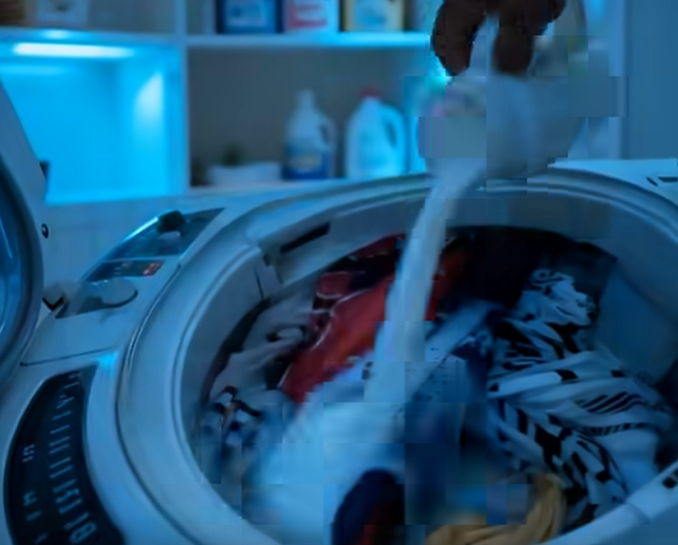
    That’s where a simple trick—one that costs almost nothing—can make a noticeable difference. It doesn’t require buying expensive laundry boosters or switching detergents. You don’t need any specialty equipment or complex steps. Just a small amount of a household staple you probably already have in your kitchen: plain white vinegar or baking soda.

    Both of these mild, natural ingredients help your washing machine do its job better. They don’t replace detergent, and they aren’t meant to scrub out impossible stains. Instead, they break down the residue that detergent alone leaves behind. When those layers dissolve, colors look clearer, whites brighten, fabric softens, and even older clothes feel refreshed.

    Vinegar works by cutting through mineral deposits and leftover soap, loosening the gunk that clings to fabric. It also helps neutralize odors trapped deep in the fibers. Used correctly—about half a cup in the rinse cycle—it vanishes into the wash without leaving a scent. Baking soda, on the other hand, softens the water and helps lift dirt more effectively. Just a small scoop in the wash can help balance pH levels and prevent clothes from feeling rough or stiff.

    The trick isn’t magic. It’s just chemistry quietly working behind the scenes, giving your detergent a boost and helping your machine perform the way it’s meant to. And because these ingredients are gentle, they work well even on delicate fabrics that can’t handle harsh cleaning agents.

    People often assume dull clothing means it’s time to replace it. But buildup can make a perfectly good shirt or towel look older than it is. When you break down those layers, the original color and texture come back to life. Towels become fluffier. Blacks look deeper instead of washed-out. Whites lose that faint gray tint that appears after dozens of laundry cycles. Even athletic wear, which tends to hold on to sweat smells more than anything else, can feel noticeably cleaner.

    What’s surprising is how quickly the difference becomes visible. After one or two loads, fabric tends to feel softer. Colors look cleaner. And the laundry comes out smelling fresh—not perfumed, not chemical-heavy, just genuinely clean. It’s a subtle shift, but one you notice as soon as you fold the clothes or slip into a freshly washed T-shirt.

    There’s also a quiet satisfaction in using a simple, inexpensive solution that actually works. Laundry routines get complicated quickly—detergent pods, softeners, beads, boosters, sheets, sprays—but often the old-fashioned tricks are the ones that make the biggest impact. A cup of vinegar for the rinse cycle. A scoop of baking soda in the wash. That’s it. No gimmicks. No harsh additives. Just a practical tweak that helps your clothes last longer and look better.

    The beauty of this little trick is how easily it fits into your routine. You don’t have to overhaul anything. You don’t have to adjust the wash cycle or run extra loads. You just add one small ingredient and let the machine do its thing. It’s the kind of adjustment that becomes second nature after a while, and you only remember how effective it is when you skip it and notice the difference.

    Many professional cleaners use similar methods behind the scenes. They know that the key to fabric longevity isn’t just through powerful detergents but through removing the residue that keeps fabrics from breathing. When the fibers are clean—truly clean—they stay softer, stretch better, resist odor more effectively, and keep their color far longer.

    Laundry isn’t glamorous, but it’s a small ritual that anchors part of everyday life. There’s something oddly comforting about finding a routine that works, one that keeps your favorite things in good shape. And when you notice a difference—a shirt that looks new again, towels that feel soft after months of use—it makes the chore feel a little more worthwhile.

    Next time you run a load, try adding that splash of vinegar or that handful of baking soda. See how the fabric feels in your hands afterward. Notice how bright the colors look, how clean the whites appear, how naturally fresh everything smells. It’s a simple reminder that even small shifts in how we care for our home—and the things we use every day—can make life run a little smoother.

    Sometimes freshness doesn’t come from buying something new. Sometimes it comes from paying attention, making a tiny change, and letting something as ordinary as laundry feel satisfying again.

  • My Dog Grabbed My Trousers, Then I Understood Everything

    My Dog Grabbed My Trousers, Then I Understood Everything

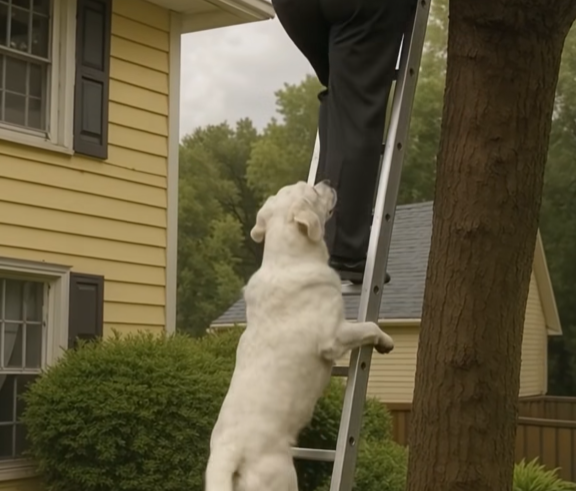
    That morning looked ordinary enough, the kind you glide through without thinking twice. The sky was gray, heavy with clouds that promised rain, but I figured I had time to trim the old apple tree before the weather turned. It had been leaning awkwardly for months, and the branches were dead in places—a chore I’d put off long enough. I set up the ladder, grabbed my tools, and felt the familiar satisfaction of finally tackling something I’d avoided. My dog, Max, followed me with an alertness that didn’t match the calm morning. He paced circles around the yard, tail stiff, ears flicking at every sound. I chalked it up to his usual desire to be near me, the kind of loyalty he wore like a second skin.

    I placed the ladder against the trunk and tested its steadiness. As soon as my boot touched the first rung, Max froze. His entire body went rigid, his eyes locked on mine with a tension I hadn’t seen before. I dismissed it with a quick laugh. “Relax, buddy. I’ll be down in a minute.” I climbed another rung, and that’s when I felt the tug. Not a gentle nudge—this was a sharp, insistent pull at the cuff of my trousers. I looked down, startled, and saw Max clamped onto the fabric, teeth gripping hard enough that I nearly slipped. “Hey! What’s gotten into you?” I said, trying to shake him off without hurting him. He wouldn’t let go. He braced himself, digging his paws into the dirt, eyes wild with a warning I didn’t understand.

    Frustrated, I climbed down and guided him toward the kennel. Maybe he was nervous about the storm rolling in. Maybe he wanted attention. Maybe he was just being stubborn. I led him inside, latched the chain, and tried to soothe him with a pat on the head. He whined low, the kind of sound that vibrated more like fear than protest. “I’ll be right back,” I promised, stepping away.

    I returned to the tree, grabbed the ladder, and climbed again. My foot hadn’t even settled on the second rung when the sky split open. A blinding flash tore through the clouds, so bright I saw it even with my eyes half turned. The thunder that followed wasn’t a rumble—it was a punch, a violent crack that made my ribs vibrate. For a fraction of a second, everything froze. Then the apple tree exploded. There’s no gentler word for it. Lightning struck the trunk with such force the bark blew off in every direction, fragments slicing through the air like shrapnel. A burst of heat washed over me. Instinct threw my body backward, sending me stumbling into the grass as the ladder clattered beside me.

    The smell of burning wood hit next, sharp and electric. Splinters covered the yard. The top half of the tree was smoking, its branches trembling from the impact. I lay there breathless, heart pounding so hard I could hear it in my ears. If Max hadn’t stopped me—if he hadn’t grabbed my trousers when he did—I would have been halfway up that ladder, right beside the trunk when it took the hit. I sat up slowly, mind catching up to the reality that I had just missed death by inches, maybe seconds.

    Across the yard, Max barked frantically, pulling against the chain so hard the metal rattled. I got up on shaky legs and walked toward him. His eyes were fixed on me, desperate and pleading, as if asking whether I finally understood. And I did. Completely. I knelt in the wet grass and unhooked the chain. He rushed forward, not with excitement but with pure relief, pressing his head against my chest. I wrapped my arms around him, holding him tight, feeling the tremors still running through his body—and through mine.

    Animals know things. They sense storms coming long before the sky darkens. They sense danger in ways we can’t articulate but can feel in our bones when they try to warn us. Max wasn’t being playful. He wasn’t being difficult. He saw something I didn’t—some shift in the air, some vibration, some threat I was too human to recognize. He didn’t have words to stop me, so he used the only method he had. He grabbed me. He held me back. He saved my life.

    As the rain finally let loose and started falling in heavy sheets, we stood together under the porch. I watched the ruined apple tree smolder, steam rising as the downpour hit it, and felt a wave of gratitude that made my throat tighten. One minute I was annoyed that my dog had interrupted my chore. The next, I was staring at the aftermath of the strike that would have killed me. It’s a strange thing—how quickly life can tilt from routine to catastrophe and then settle back into clarity.

    Max stayed pressed against my leg, glancing up every few seconds as if checking I was still there. I scratched his ears, the simplest gesture but one packed with more meaning than usual. “Good boy,” I whispered. “You knew. And I didn’t. Thank you.”

    The storm passed as quickly as it had come. The clouds drifted, leaving behind a washed-out sky and the scent of wet earth. The apple tree would need to be removed entirely now, reduced to a dangerous stump. But that was a problem for another day. For the moment, I was content to sit on the porch steps with Max at my side, feeling the aftershocks fade slowly from my nerves. He settled his head on my knee and sighed—a deep exhale that seemed to release the tension from earlier.

    There’s a quiet truth in moments like this. Pets aren’t just companions. Sometimes they’re the instinct we lack, the awareness we ignore, the guardian we didn’t know we had. They catch things in the air—fear, storms, danger—and translate them the only way they can. Max didn’t need thunder or lightning to warn him. Something in him recognized the threat long before it reached me.

    Later, when the yard dried and the sun made its way through the clouds, I walked back to the apple tree with Max trotting beside me. The blackened bark, the ripped trunk, the scorch marks across the grass—all of it was a stark reminder of how close the morning came to turning tragic. I rested a hand on Max’s head, steady and grateful.

    Some people call it instinct. Others call it intuition. Some insist dogs simply react to environmental cues humans can’t detect. Maybe all of that is true. But standing there, looking at the charred remains of the tree and the dog who refused to let me climb it, I knew this much: whatever Max sensed, he acted out of loyalty, out of a protective instinct that ran deeper than explanation.

    Sometimes the bravest warning in the world comes from a tug at your trouser leg, a pair of worried eyes, and a dog who refuses to let you take one more step toward danger. And sometimes the wisest thing you can do is listen.

  • BREAKING NEWS Alert! Powerful 7,7 magnitude earthquake

    BREAKING NEWS Alert! Powerful 7,7 magnitude earthquake

    Asia woke up to devastation before dawn, shaken by one of the strongest earthquakes the region has seen in years. At 3:42 a.m. local time, a massive 7.7-magnitude quake tore through the border region between China’s Yunnan Province and northern Myanmar, its impact spreading far beyond the mountains where it began. Within minutes, entire neighborhoods were reduced to rubble, communication lines went silent, and millions were jolted out of sleep into panic.

    The U.S. Geological Survey confirmed that the quake hit at a shallow depth—barely 10 kilometers beneath the surface—making the impact far more destructive. Residents described the ground heaving as if it were trying to shake the buildings off its back. Whole structures swayed violently before crumbling. Streets split open. Windows shattered across cities and villages. In the darkness, people stumbled outside with only seconds to spare.

    Southern China absorbed a massive part of the blow. In Yunnan alone, emergency lines were overwhelmed within minutes. Entire apartment blocks collapsed in older parts of several towns. Hospitals braced for mass casualties even before the first wave of injured arrived. By sunrise, officials confirmed hundreds wounded and dozens dead, though they warned the numbers would rise once rescuers reached the hardest-hit zones.

    Across the border in Myanmar, the situation was just as dire. Rural communities—many already struggling with limited infrastructure—were thrown into chaos. Walls fell inward. Bridges cracked. Families fled into the streets with nothing but the clothes they were wearing. Entire villages were left inaccessible after landslides tore down hillsides and blocked roads. Early rescue efforts were forced to navigate terrain that had changed overnight.

    Northern Thailand, though farther from the epicenter, wasn’t spared. Cities like Chiang Rai and Chiang Mai felt the shockwaves strongly enough to trigger widespread evacuations. Authorities ordered residents out of vulnerable buildings before aftershocks could cause additional collapse. Schools, hospitals, and malls were cleared within minutes. Crowds gathered in open fields and parking lots, waiting anxiously as tremors continued to roll beneath them.

    While officials worked to assess structural damage, power outages swept across multiple regions. Water systems in several cities shut down automatically after sensors detected dangerous pressure fluctuations. Airports suspended operations to inspect runways for cracks. Entire districts were thrown into darkness, the only light coming from emergency vehicles trying to navigate streets choked with debris.

    Rescue teams—local, national, and international—were immediately deployed. Firefighters, soldiers, and volunteers dug through rubble with bare hands when tools proved too slow. Every hour mattered, especially for people trapped beneath concrete slabs. The air filled with the sounds of sirens, radios, and frantic voices calling out names of loved ones. Dogs trained for disaster zones sniffed through the wreckage, leading responders to survivors clinging to life in pockets of collapsed buildings.

    But progress was painfully slow. The quake had knocked out cell towers and fiber-optic cables, leaving large areas without communication. Coordinating rescue efforts became a challenge. Teams couldn’t rely on GPS in places where the earth itself had shifted. Drones were launched to locate fires, blocked roads, and clusters of people waving for help, but even those struggled in areas smothered by dust clouds.

    Hospitals quickly filled beyond capacity. Hallways turned into makeshift emergency rooms, with doctors working under brutal pressure to triage patients. Supplies dwindled as more injured arrived—fractures, head wounds, crushed limbs, burns from electrical fires sparked by the quake. Many survivors described the experience as being “born again,” shocked to still be breathing after everything around them collapsed.

    In shelters set up at schools, temples, and community centers, families huddled together with blankets and bottles of water handed out by volunteers. The uncertainty was suffocating. Every aftershock sent waves of fear through the crowds. People prayed. Others simply stared at the ground, unable to comprehend the magnitude of the destruction.

    Government officials issued urgent warnings about potential landslides, dam pressure buildup, and gas leaks. Rescue crews blocked off unstable zones where buildings threatened to collapse with the slightest vibration. Engineers were flown in to assess damage to major bridges and highways, determining which ones could still be used to deliver supplies and which had to be closed immediately. Relief trucks carrying tents, medical kits, and food struggled to navigate damaged roads but pushed forward anyway—every delay meant more suffering.

    International aid organizations activated crisis protocols. Neighboring countries offered support, promising to send medical teams, heavy equipment, and emergency shelters. The Red Cross released an early statement calling the situation “critical and rapidly evolving,” urging the global community to prepare for a large-scale humanitarian response.

    Meanwhile, heartbreaking stories began surfacing from survivors. Parents searching for children. Friends digging through ruins for each other. Entire neighborhoods helping rescue strangers when official crews couldn’t reach them fast enough. Tragedy has a way of revealing both the fragility of life and the resilience of the human spirit, and this earthquake was no exception.

    As aftershocks continued to rattle the region, officials warned that more could follow in the days ahead. Rescue teams pushed through exhaustion, fully aware that the first 72 hours after an earthquake are the most crucial for saving lives. With communication lines slowly being restored and additional support arriving, there was hope—but it was cautious, subdued, and overshadowed by the enormity of what had been lost.

    By afternoon, the scale of the disaster was still coming into focus. Entire communities were unrecognizable. The number of missing grew every hour. Governments urged the public to stay alert, stay out of damaged buildings, and conserve resources as emergency crews continued their work.

    The earthquake struck in the dead of night, but its consequences will last far longer. Asia now faces a grueling period of rescue, recovery, and rebuilding. Families will mourn. Cities will repair. Nations will rally together. But on this morning—just hours after the quake—the priority is simple and urgent: save as many lives as possible, while hope still breathes under the rubble.

  • My Baby Shower Took a Turn When My Sister Made a Hurtful Gift

    My Baby Shower Took a Turn When My Sister Made a Hurtful Gift

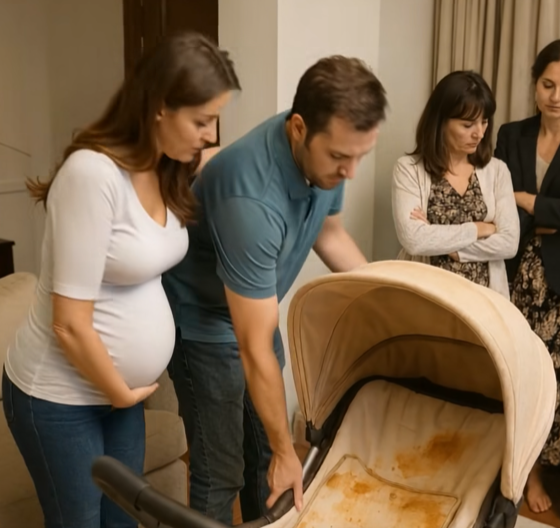
    My baby shower was supposed to be simple, warm, and full of people who genuinely wanted to celebrate the new chapter Ezra and I were stepping into. Instead, the energy shifted the moment my sister Megan strutted in, dragging behind her the most miserable-looking stroller I’d ever seen—faded paint, squeaky uneven wheels, and a fabric basket hanging like it was about to fall off entirely. She pushed it forward with an exaggerated flourish, loud enough for the whole room to hear: “Perfect gift for someone like her. Matches her life exactly.”

    A few guests let out awkward, uncomfortable laughs. Most just froze. My stomach dropped, and heat crawled up my neck. Megan always had a talent for turning any moment that wasn’t about her into a spotlight for cruelty, but I wasn’t expecting she’d pull something like this—not on a day meant to welcome my child into the world. Not when I was eight months pregnant and just trying to keep my head above water emotionally.

    Before I managed to respond, Ezra stepped in front of me and placed a hand on the stroller. Calm. Steady. Completely unbothered by my sister’s theatrics. Megan scoffed, rolling her eyes. “What are you doing? Checking if it still has wheels?”

    Ezra didn’t answer. He crouched to inspect the base, running his fingers along the frame with a focus that shut the room up. I could feel everyone watching—waiting for some explosion, waiting for me to break, waiting for him to scold Megan. But Ezra wasn’t angry. He wasn’t rattled. He was studying this beat-up stroller with a patience that made the tension in the room feel almost ridiculous.

    Then he pressed something under the basket. A muted click echoed in the quiet living room.

    “Watch,” he said.

    One smooth tug on the handle, and the entire thing transformed—the crooked frame realigned, the basket lifted, the wheels snapped into perfect spacing, and the seat straightened out like it was brand new. Gasps rippled through the guests. Even I stared in disbelief. What had looked like a piece of trash was suddenly a sleek, expensive, partially collapsible stroller that probably cost more than half the gifts in the room combined.

    Megan’s smirk flickered, then vanished entirely.

    Ezra stood, brushing dust from his palms. His voice was even, but carried through the room with clarity that didn’t need to be loud: “Sometimes things look broken when they’re not. Sometimes they’re just not handled right.”

    No anger. No accusation. Just truth.

    And it landed.

    The guests who’d chuckled earlier were suddenly all compliments, running their hands along the stroller, praising its quality, talking about how impressive it was that Ezra knew exactly how to unfold it properly. A few looked at Megan with raised eyebrows, realizing exactly what she had tried—and failed—to do. She muttered something under her breath and drifted to the back of the room, suddenly very interested in her phone.

    Meanwhile, Ezra came back to me, kissed my forehead lightly, and whispered, “Don’t let her steal the day you deserve.”

    Those words—soft, simple—did more for me than any confrontation ever could’ve. They snapped the humiliation right out of my chest. I straightened up, rested my hand on my belly, and looked around the room with new steadiness. Guests picked up the mood quickly. The conversation shifted to baby names, nursery colors, funny parenting stories, and whose cupcakes were the best in town. Laughter returned, real this time, not brittle or forced. The baby shower became what it was supposed to be from the start: a celebration, not a stage for my sister’s insecurities.

    As I opened gifts—tiny socks, warm blankets, bottles of baby shampoo—Ezra stayed close, passing things to me, making jokes, keeping the air light. Every so often, I’d touch the stroller beside me, feeling its sturdy frame and thinking about how easily someone can twist something good into something cruel. But also, how quickly the right person can turn it back into something meaningful.

    After most guests had left and the house finally quieted, I stepped out onto the porch, needing a breath. Ezra joined me silently, slipping his hand into mine.

    “You okay?” he asked.

    I nodded. “Yeah. I think I am.”

    Because in that moment, the truth settled in clearly: Megan’s jab wasn’t about me. It was about whatever she couldn’t fix in herself. And earlier, I might have let her ruin my day. But not this time. Not with Ezra standing steady next to me, choosing kindness over conflict, clarity over drama.

    Inside, I could still hear the faint buzz of the last guests cleaning up plates, laughing over leftover cupcakes. Life, moving on. The kind of warmth Megan couldn’t crush no matter how hard she tried.

    When we walked back in, one of the older guests said to me gently, “You two are going to raise a child who knows what real love looks like.”

    I didn’t answer right away. I just looked at Ezra, the man who could diffuse cruelty without a single harsh word, who could rebuild quiet dignity from a pile of insult—and I knew she was right.

    This baby would grow up learning exactly what support looks like. What partnership looks like. What strength looks like when it’s soft and calm and refuses to bend to anyone’s bitterness.

    Later that night, after the last gift bag was tucked away and the house was still again, Ezra wrapped his arms around me from behind, rested his hands over my belly, and whispered, “She tried to embarrass you. But you didn’t go small. You didn’t hide. I’m proud of you.”

    I exhaled slowly, letting the weight of the day settle and then dissolve. “I’m proud of us,” I said.

    Some people tear down. Some people build.

    And that day made one thing unmistakably clear: my child would grow up watching someone who knows how to build—patiently, firmly, and without ever needing to raise his voice.

    Nothing Megan could’ve brought through that door would ever come close.

  • At Her Fiances Grave, Pregnant Olesya Found a Phone, What She Saw Made Her Faint

    At Her Fiances Grave, Pregnant Olesya Found a Phone, What She Saw Made Her Faint

    The bus sighed to a stop at the edge of the forgotten village, its doors opening with a tired groan. Olesya stepped out into the quiet drizzle, pulling her thin coat tighter around her belly. She was several months pregnant, exhausted, and carrying a grief that felt heavier than the child inside her. The driver gave her a sympathetic nod before steering the empty bus back down the road, leaving her in a silence broken only by the soft hiss of rain.

    The village hadn’t changed since the last time she’d been there—bare branches rattling in the wind, crooked fences leaning like old men, narrow dirt paths that turned slick beneath her boots. Olesya walked slowly, her umbrella trembling slightly in her hand. Every step carried a memory. Andrey’s laugh, warm and unrestrained. The calloused hands that used to cup her cheeks. The way he whispered her name like it was something fragile.

    She had not grown up knowing softness. Her childhood belonged to the orphanage—cold corridors, endless chores, and the kind of loneliness that settles in bone. She survived vocational school next, working factory shifts that painted her clothes in metal dust. She never expected to meet someone like Andrey: an engineer who showed up in grease-stained overalls but spoke with a gentleness that disarmed her from the start. He noticed things no one else ever bothered to see. The way she flinched at praise. The way she saved every tiny kindness like treasure.

    Their lunches together turned into walks home. Walks turned into evenings spent talking in her cramped dorm kitchen. One night, he kissed her under a single flickering bulb and everything in her life shifted.

    When she found out she was pregnant, she panicked—but Andrey reacted as if she’d handed him the sun. He proposed that same night with a shy, hopeful smile. “I want you to meet my family,” he said. “Come with me next weekend.”

    But fear wound its way into her chest. People with families, real families, had never looked kindly at girls like her. So she hesitated. “You go first,” she told him quietly. “I’ll come later.”

    He agreed—but he never returned.

    Rumors spread fast. “He got scared.” “He ran from responsibility.” “Who knows where he is now?” Olesya refused to believe any of it. He wasn’t that man. Not him. But weeks passed with no call. Then one evening she overheard the truth whispered in the factory break room: Andrey had been mugged near a train station on his way to see his parents. He’d fought back. He didn’t survive.

    For three months, she carried that truth in silence. Today she had come to bury the last piece of hope she’d been clinging to.

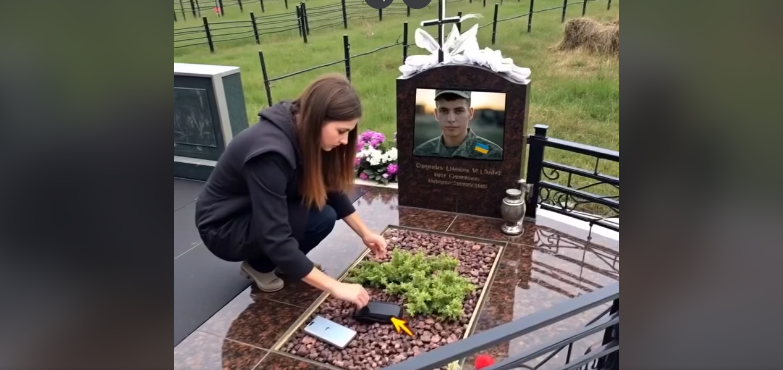
    She reached the cemetery gates, her hand trembling as she pushed them open. The cold smell of wet earth filled the air. She found his grave easily—someone had left a small candle, its flame long extinguished. She placed her chrysanthemums down, knelt, and let the storm inside her finally break. Tears soaked into the soil as she whispered apologies she knew he’d never hear.

    When the chill began creeping under her clothes, she stood to leave—only to realize her phone was gone. Panic fluttered weakly in her chest. She checked her pockets, her bag, even brushed along the ground. Nothing. A wave of dizziness washed over her. Her back ached, her head throbbed, and she was suddenly aware of how long she’d been standing in the rain.

    A nearby mausoleum offered shelter—dark, old, and silent. She pushed the door open and stepped inside, leaning against the wall. “Just a minute,” she whispered to herself. “Just to rest.”

    Then a faint buzzing cut through the quiet.

    A phone lay on the stone floor—definitely not hers. She bent down slowly, picked it up, and pressed the answer button before she even thought about it.

    “Hello?” she managed.

    “Oh! Someone answered—thank God!” a man’s voice said. “That’s my phone. I lost it yesterday.”

    She swallowed, her voice thin. “I’m… I’m in the cemetery.”

    “That makes sense,” he said quickly. “I was working there. Probably dropped it. Are you all right? You sound—”

    “I wasn’t feeling well,” she whispered.

    Her vision blurred. She blinked hard, but the walls tilted anyway. Her hand loosened. The phone slipped from her fingers, clattering to the floor.

    “Hello? Hey—are you okay? Hello?”

    His voice grew distant, swallowed by the darkness overtaking her.

    The last thing she felt was the cold stone beneath her cheek—and the faint kick of the baby inside her—before everything went black.

  • My Sister Kept Dumping Her Kids on Me Before Dawn Without Asking Because I am Single – I Decided to Teach Her the Ultimate Lesson

    My Sister Kept Dumping Her Kids on Me Before Dawn Without Asking Because I am Single – I Decided to Teach Her the Ultimate Lesson

    I don’t deal well with people who confuse kindness for servitude. And my sister, Daphna, had turned that confusion into a lifestyle. She decided that because I was single and worked from home, I was automatically the live-in nanny she never hired. The morning she dropped her kids on my doorstep before sunrise for the fifth time in a week, something twisted in me—not anger, not frustration, but resolve. If she was going to treat me like unpaid labor, she was about to learn exactly what that cost.

    I’m Amy—thirty, single, self-employed, and apparently in my sister’s eyes, available 24/7. Daphna’s thirty-two, juggling a job, a messy divorce, and two kids: Marcus, six, the dinosaur encyclopedia with legs, and Tyler, three, the human tornado with a smile. When she moved two blocks away after her split, I was genuinely glad. I missed having family close. We’d grab coffee, take the boys to the park, talk about life. Normal sister stuff. Until the morning she turned my front porch into her personal daycare lobby.

    The warning signs were there. One August evening, she sat with me on my porch, iced tea dripping onto her jeans, venting about daycare closures. Her boss was fed up, the kids were restless, and she was drowning. I felt for her. I really did. So I said the words that doomed me: “I can help occasionally.” I made sure to emphasize occasionally. She nodded, promised she’d only ask in emergencies, and thanked me like I was handing her a kidney. I should have demanded a contract and a witness.

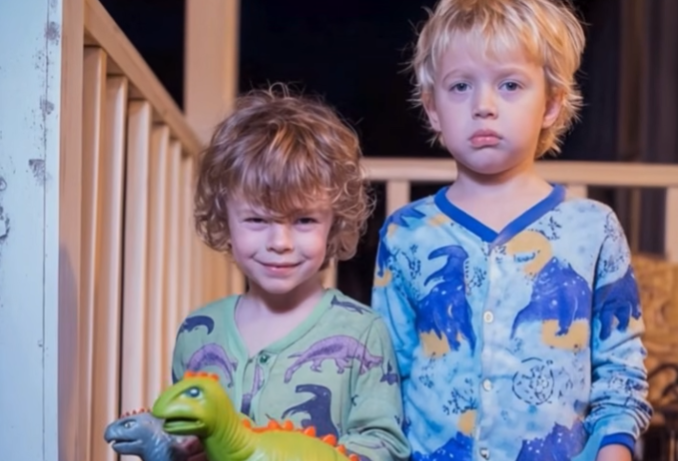
    The first “emergency” came three days later. My alarm wouldn’t ring for another hour, but at 5:40 a.m., my doorbell did. On my porch stood Marcus and Tyler in dinosaur pajamas, clutching their stuffed T. rex and triceratops. Before I could even form a question, Daphna’s voice echoed from the driveway: “Yoga class! You’re a lifesaver!” Then her SUV disappeared, leaving me in the predawn haze with two bewildered boys. No text. No warning. Just instant motherhood.

    The next day? Same thing. And the next. And the next. By week two, I stopped hoping it would end. My days became a circus: making peanut-butter toast with one hand while emailing clients with the other, trying to look sane on video calls while a toddler screamed bloody murder over the wrong color cup. My living room turned into a toy graveyard. My couch wore new stains daily. My work suffered. My social life evaporated. I couldn’t remember the last time I ate a meal that didn’t involve crackers.

    Meanwhile, Daphna acted like she was doing me a favor. She’d sweep in at night, fresh from the gym or drinks with her new boyfriend, and pick up her kids with zero awareness of the chaos she’d left me in. “How were they?” she’d chirp while I stood there in the same pajamas I’d been wearing since dawn. And I’d lie: “Fine.” Because I didn’t want the boys to feel like a burden—they weren’t. The situation was.

    One day I tried setting a boundary. I asked her politely to text me before dropping them off. She laughed like I’d told a joke. “Amy, you work from home,” she said. “It’s not like you can’t handle it.” That sentence lodged itself into my skull like a splinter. According to her, my time was stretchable, bendable, disposable. A rubber band she could snap whenever she wanted.

    The straw that broke me wasn’t dramatic. It was Tyler spilling strawberry yogurt into my laptop keyboard. The sticky pink mess seeped under the keys like poison. My computer died, along with a project due in three hours. As I tried to salvage my work on my phone, Marcus wandered into my living room and used dry-erase markers to “decorate” my wall—he proudly announced it was a mural because I “liked colorful things.” My eye twitched. I laughed, because crying wouldn’t help. But inside, I knew something had to change.

    The next day, I told Daphna straight up: “I can’t watch them anymore.” She brushed me off like lint. “It’s just a few hours in the morning,” she said. “You’re overreacting.” When I insisted, she rolled her eyes and pretended to agree just to end the conversation.

    But Friday morning at 5:20 a.m., my doorbell rang again.

    This time, Daphna didn’t even get out of the car. She rolled down her window long enough to shout, “Romantic getaway weekend! You’re the best—pick them up after work!” And she sped off. That was the moment something inside me clicked into place. I wasn’t furious. I wasn’t hurt. I was simply done.

    While the boys munched cereal at my table, I opened my laptop and typed up an itemized list—every expense, every ruined item, every lost hour of paid work. Groceries. Uber rides. Replacement keyboard. Wall paint. Lost income. Three months totaled $354.31. I formatted it like a proper invoice, printed it, and stuck it to my fridge. Then I created a booking calendar for next month. Every morning slot read: “BOOKED – $50 per morning – Prepayment required.”

    That night, Daphna waltzed in talking about spa treatments and fine dining—until she saw the invoice. Her tan face drained to chalk. “What is this?” she demanded, waving the paper.

    “An invoice,” I said. “For childcare and damages.”

    “You’re charging me to watch your nephews?!” she shrieked.

    “I’m charging you for three months of free labor you took without asking.”

    Her voice climbed into dog-whistle territory. “You’re family!”

    “And I’m not your employee,” I shot back. “I asked for boundaries. You ignored them. Now there’s a price.”

    She tore up the invoice, calling me insane, selfish, ungrateful. Then she spotted the booking calendar and nearly combusted. “You’re turning your nephews into a business?!”

    “No,” I said. “But I’m done being exploited. Anyone who wants childcare—including you—can pay for my time.”

    She stormed out, slamming the door so hard the magnets on my fridge rattled.

    Thirty seconds later, she was screaming outside: “WHAT HAVE YOU DONE?!”

    I looked out the window. The boys had found the bucket of crayons I used to keep on a high shelf. Daphna’s white SUV was now a rainbow mural of scribbles from hood to bumper. Marcus beamed up at me from the driveway. “Auntie! We made it more colorful for you!”

    I took the last sip of my tea, grabbed a sticky note, and wrote: “SUV cleaning and art removal: $50.” Then I taped it to my front door.

    Karma doesn’t always whisper. Sometimes it appears in crayon on a car hood.

    I’m not apologizing. I’m not backing down. My time belongs to me, and my boundaries are non-negotiable. And if anyone in my life still thinks otherwise, they can check the invoice.

  • My son-in-law said he had my late husbands dog taken care of, Three nights later, the dog was in my backyard, alive, digging in the garden my son-in-law built. I helped him dig, When our hands hit a metal box, I finally understood my husbands last gift, my son-in-laws lies, and the secret my daughter was forced to keep

    My son-in-law said he had my late husbands dog taken care of, Three nights later, the dog was in my backyard, alive, digging in the garden my son-in-law built. I helped him dig, When our hands hit a metal box, I finally understood my husbands last gift, my son-in-laws lies, and the secret my daughter was forced to keep

    My son-in-law told me my dog was dead. He walked into my house with a bandaged hand, a pained expression, and an urn he placed on my kitchen table like a trophy. He said the dog had attacked him. Said Bear was dangerous. Said he’d had “no choice.” And like a fool, drowning in grief and still raw from losing my husband, I believed him.

    Three nights later, at two in the morning, something moved in my backyard.

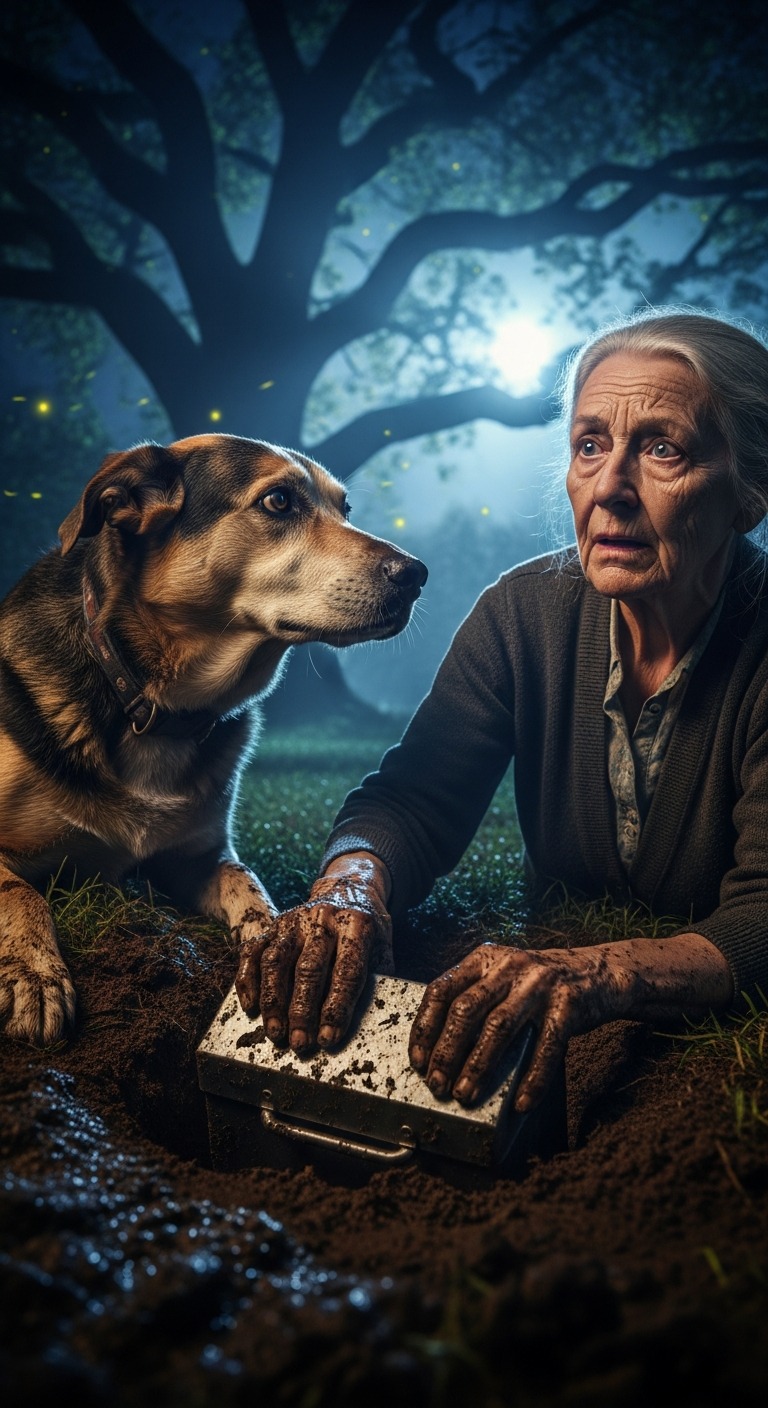
    I went to the window expecting raccoons or a stray cat. Instead, Bear—my late husband’s dog, the one Derek claimed to have euthanized—was very much alive. Alive, frantic, and digging in the memorial garden my son-in-law had built for my husband. The same spot Derek had obsessed over for weeks.

    Bear looked at me once, then went back to digging like he was racing time.

    So I grabbed my robe, went outside, and dropped to my knees beside him. If he was fighting that hard for something, I wasn’t going to stop him. I started digging too.

    When my fingers hit metal, when I pulled out that box and opened it, everything snapped into place: why Derek wanted the dog gone, why Bear wouldn’t stop digging, why my husband had insisted—insisted—that this specific dog come to me before he died. And why my daughter had grown more distant every month of her marriage.

    My name is Diane. This is how I learned what James tried to protect us from—even after death.

    My husband died in June. Forty years of marriage, gone to pancreatic cancer. He died at home with my hand in his. Lauren, my daughter, came to the funeral late. She’d lost weight. Wore long sleeves in the heat. Derek hovered behind her like a shadow. I tried to catch her eye, but she kept her gaze on the floor.

    After the service, James’s best friend Walt pulled me aside. Walt was a retired cop with a barrel chest and a soft heart, the kind of man who could walk into any room and immediately become the one you trusted. He opened his truck and showed me a German Shepherd sitting calmly inside.

    “This is Bear,” he said. “James wanted you to have him.”

    I stared. “A dog? Why?”

    “He wanted you safe,” Walt said. “Said this dog would take care of you.”

    I didn’t have the strength to argue. Bear sat in the passenger seat all the way home, as if he’d been riding next to me for years.

    The next day, Derek showed up with groceries and a rehearsed smile. When he saw Bear, the smile snapped.

    “That’s a big dog,” he said, stepping back. “Is he… safe?”

    “He’s well trained,” I said.

    “Still. That’s a lot of responsibility for you.” The emphasis on you stung.

    “I can handle him,” I said.

    I didn’t miss the way his jaw tightened.

    Lauren called later. Her voice was hollow, careful. “Mom… Derek said the dog seems aggressive.”

    “He isn’t.”

    “They can be unpredictable.”

    “Lauren,” I said softly, “are you doing okay?”

    Silence.

    “Fine,” she finally whispered. “I have to go. Derek’s home.”

    She hung up before I could ask anything else.

    Four days later, Derek came over with plans for a memorial garden. It was elaborate—cedar beds, stepping stones, roses. A beautiful tribute. He spent hours digging in one corner, going far deeper than any planting bed required. Bear watched him constantly, stiff and alert.

    “Can you keep the dog inside?” Derek asked on the second day. “He’s making me nervous.”

    Bear’s behavior changed. He became obsessed with the far corner of the garden—the one Derek kept returning to. He’d dig at it every chance he got. Derek went pale every time he saw dirt kicked up.

    “You need to control that dog,” he snapped once.

    “He’s just digging.”

    “He’s destroying what I built!”

    “You dug that corner deeper than the rest,” I said.

    He froze. “You imagining things?”

    I wasn’t.

    Weeks passed. Bear kept digging. Derek grew more frantic. My sense that something was wrong with Lauren grew heavier. When she visited, she jumped every time Derek touched her shoulder. Her phone never left her hand. She’d smile, but it never reached her eyes.

    Then came the day I came home from visiting a friend and found Derek waiting on my porch, holding his bloody bandaged hand.

    “I need to tell you something,” he said.

    “Where’s Bear?”

    “He attacked me. I barely fought him off.” He lifted the bandaged hand dramatically. “So I took him to the vet. They said a dog that vicious has to be put down. For your safety.”

    I stared at him, cold dread sinking into my bones. “You killed my dog?”

    “I protected you,” he said. Then he handed me a small metal urn.

    I didn’t take it.

    That night, Lauren called again, sounding rehearsed. “Derek did the right thing. That dog was dangerous.”

    “Did he tell you how he tried to make me get rid of him before this?”

    “Mom,” she whispered, “please stop—”

    “What is he doing to you?”

    The line went silent. Then I heard a door open and close behind her. She hung up.

    Two nights later, Bear was in my yard—alive.

    He was weak, covered in cuts, and his paws were rubbed raw. Derek had tried to kill him. He’d gotten away.

    Bear led me straight to the buried metal box. I opened it, and there they were: vacuum-sealed bricks of cocaine. Several kilos. Enough to put someone away for decades.

    I called Walt.

    He arrived in fifteen minutes. When he saw the box, he swore under his breath. “Derek’s been under investigation. We’ve suspected he’s been running product but couldn’t find where he stored it. He used your garden because you’re clean. No one would ever search a grieving widow’s yard.”

    He nodded at Bear. “James picked a retired K-9 for a reason.”

    Then Walt handed me a sealed letter—James’s handwriting. It explained everything: his suspicions, Derek’s sudden “business success,” Lauren’s fear, and Bear’s purpose. James hadn’t lived long enough to act, so he made Walt promise to protect me.

    “He was making sure you’d have everything you needed,” Walt said softly.

    The police set up surveillance. But they needed Derek to incriminate himself. So I called him and told him, cheerful as could be, that a landscaping crew would arrive Monday to excavate the garden.

    He panicked.

    At 2:47 a.m., he crept into my yard with a shovel and a duffel bag. As soon as he unearthed the box and reached inside, every floodlight in the yard blasted on.

    Police swarmed. Derek bolted for the fence. Bear—already at Walt’s side—launched at the command.

    He brought Derek down with a single, controlled bite, pinning him until officers cuffed him.

    Derek screamed when he saw Bear.

    “You’re supposed to be dead!”

    Not tonight.

    The next day, Lauren came over. When I told her everything, she broke. She pushed up her sleeves—bruises, old and new.

    “He told me if I ever tried to leave, he’d kill me,” she said. “He said he’d come after you too.”

    She sobbed in my arms, free for the first time in years.

    Derek was sentenced to twenty-five years. No parole for fifteen.

    Six months later, the new garden—one I built myself—was in full bloom. Bear, old but peaceful, slept beside me. Walt visited often. Lauren was healing. My home felt safe again.

    James had been gone for months, but even in death, he had protected us. He left us Bear. He left us Walt. He left us a warning and a way out. He never stopped loving us.

    And now, finally, we were safe.

  • No One Came to My Graduation, Days Later, Mom Asked for $2,100 for My Sisters Party, What I Did Next Brought the Cops to My Door

    No One Came to My Graduation, Days Later, Mom Asked for $2,100 for My Sisters Party, What I Did Next Brought the Cops to My Door

    The day of my graduation was supposed to feel like arrival—like I had finally fought my way into the light after years of working, studying, and clawing myself out of the holes life kept dropping me into. The stadium was all cheering families, waving signs, kids on their parents’ shoulders. Names echoed off metal bleachers like blessings.

    When they said mine—“Camila Elaine Reed, Master of Data Analytics”—I lifted my head and searched the front rows out of pure instinct. Nothing. Not even an empty seat with a sweater tossed over it to pretend someone cared. Just bare metal catching the sun.

    I smiled anyway because that’s what you do. The camera flashed. I walked across the stage. I didn’t trip. I didn’t cry. I just held my diploma a little too tight and stepped aside so the next person could have their moment.

    After the ceremony, the courtyard was chaos—flowers, hugs, squeals, proud tears. I stood off to the side pretending to scroll my phone. My classmate Ruby found me first, her parents in tow. They insisted on taking pictures of us, smiling like I belonged in their family photos. “Where’s your family?” she asked. “Traffic?” I nodded because lying was easier than admitting the truth: they never intended to come.

    I drove home in silence. The cap and gown stayed in the backseat like an accusation. When I parked, I sat with both hands on the wheel and let the disappointment settle like dust. It felt stupid to have hoped. My parents skipped my college graduation too. My sister had “finals,” my mom said. My dad didn’t even call.

    I was always the financial fallback, never the daughter worth showing up for.

    I’d been working since sixteen, funneling money home because my parents told me Avery “deserved more than we did,” like I was some temporary tenant in my own family. Every time Mom texted me for money, she dressed it up as pride—“You’re so responsible”—as if responsibility and being drained dry were the same thing.

    Three days after my graduation, my gown still hanging over the closet door, my mom texted: Need $2,100 for Avery’s Sweet 16.

    No congratulations. No “How did the ceremony go?” Just cash, demanded like clockwork.

    Something in me finally snapped. Not loudly, not dramatically. Quietly. Like a lock clicking shut.

    I opened my banking app. My savings were barely above three thousand. I typed in $1, added a note—Congrats—and sent it.

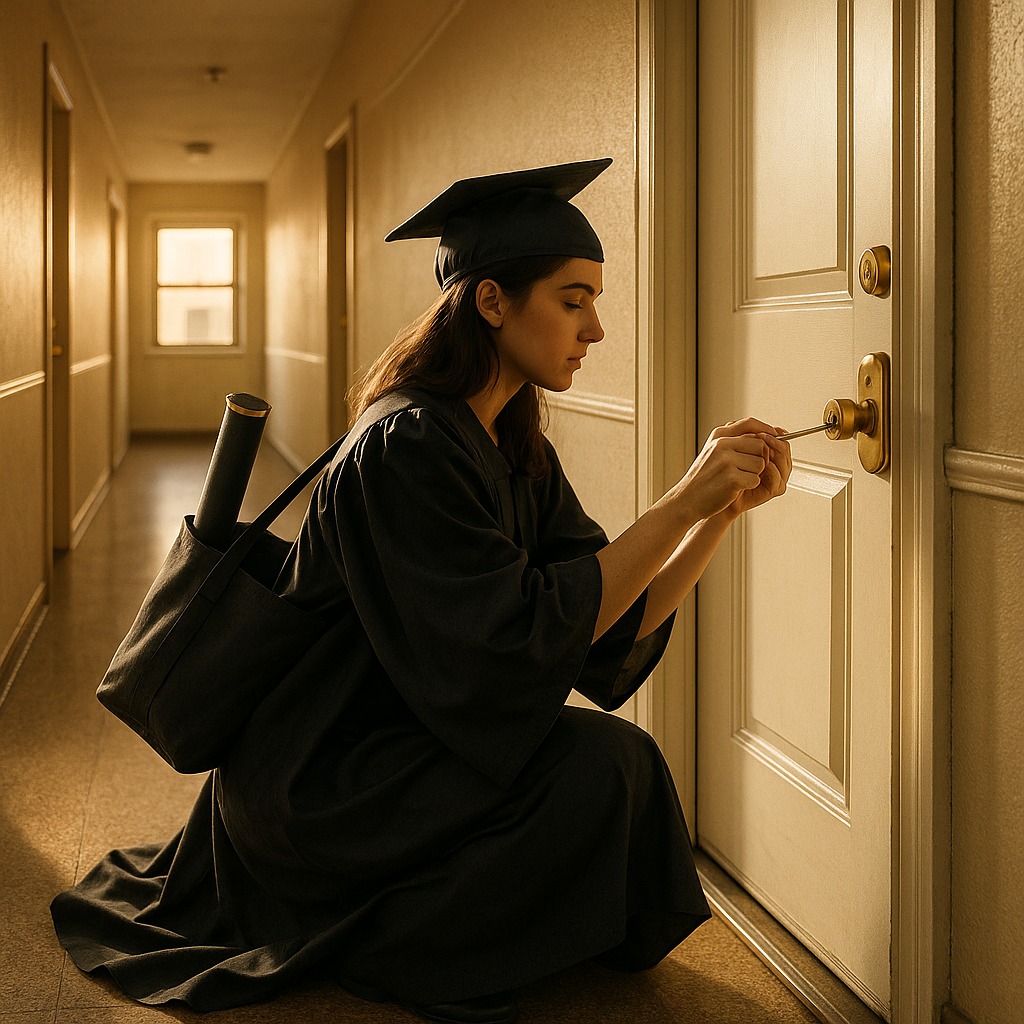
    Then I dropped my parents’ spare key into the trash and called a locksmith. He changed the locks with a soft hum and a kind smile that felt like the first human kindness I’d gotten all week.

    That night, my apartment felt different. Not quiet—free.

    The next morning, that freedom ended with a loud knock. Two police officers stood in the hallway.

    “Denver Police. Miss Reed?”

    My heartbeat crashed into my ribs. I opened the door anyway.

    “We’re responding to a welfare call,” the taller officer said. “Your mother reported erratic behavior. Said you changed your locks, aren’t answering calls, and she’s concerned you may harm yourself.”

    It was so outrageous I almost choked. “Harm myself? I changed a lock.”

    They stepped inside, looked around, and saw the truth: a clean apartment, a laptop open to job applications, my diploma on the wall.

    “You seem fine,” the officer said gently. “We’ll file this as no concern. But if your mother calls again, reference our report.”

    They left, and I stood frozen in the doorway—not scared, but furious. My own mother had weaponized the police because I sent her one dollar instead of paying for a party.

    The next day, I opened my credit app to check my balance and felt ice settle in my stomach. Two new accounts had been opened under my name. Capital One. Discover. Both using my parents’ address.

    My mother hadn’t just expected money. She’d gone ahead and stolen it.

    I called the bank. They told me the accounts were opened in person with my mother listed as co-applicant. That was all I needed.

    I recorded the next call—Colorado is a one-party consent state.

    When she picked up, she didn’t even say hello. “So you’re alive.”

    “You opened credit cards in my name,” I said. “Why?”

    “Oh, please,” she scoffed. “You’re being dramatic. It’s for your credit score. You should be thanking me. Avery needs this party, Camila. Don’t be selfish.”

    “Identity theft isn’t a family favor,” I said. “The bank is investigating.”

    The silence on her end was sharp enough to cut. Then she hissed, “You wouldn’t dare.”

    “I already did.”

    Her breath caught. “You’re destroying this family.”

    “No. You destroyed it when you decided my name was yours to use.”

    I hung up.

    That was the moment she realized I wasn’t her daughter anymore—I was a liability.

    A few days later, the investigation widened. The bank confirmed multiple fraudulent accounts tied to my mother—my cousin, my aunt, even my grandmother with dementia. A detective called and asked for my statement. They were building a criminal case.

    Meanwhile, Avery’s Sweet 16 arrived. I wasn’t invited, obviously. But I heard about what happened from half the city.

    Halfway through the party, police walked in with a banking investigator. They calmly explained that the event was paid for using fraudulent credit. The DJ stopped. Guests stared. Cameras caught my mother trying to argue before breaking down in front of the photo booth backdrop.

    I didn’t gloat. I didn’t celebrate. I wasn’t there. I was in my apartment, making tea, watching the city lights glitter outside my window.

    Peace tastes different when you’ve earned it the hard way.

    Weeks later, my mother was charged. Identity theft. Financial fraud. Elder abuse for using my grandmother’s name. My father filed for divorce. My sister moved to California to live with her biological father. My therapist said what I’d been afraid to admit: I’d been the adult of the family since I was twelve.

    Then, the breakthrough: Nova Data Labs offered me a job. A real job. Good salary, real benefits, people who valued me for my work, not my wallet.

    My first paycheck felt unreal. I opened a savings account and, for the first time, put money into something that belonged only to me.

    Months passed. My father wrote me a letter owning his failures—quiet, honest, overdue. We’re talking now, slowly, on my terms.

    My mother was sentenced to eight years. She’ll be eligible for parole after five.

    And me?

    I’m free.

    I framed three things on my wall: my diploma, my first work badge, and the locksmith’s receipt. My life, my boundary, my beginning.

    I used to think family was something you earned. Something you paid for. Something you proved yourself worthy of.

    Now I know better.

    You don’t earn real love.

    Real love shows up.

    Real love applauds in crowded stadiums.

    Real love doesn’t send cops to your door.

    And when I look in the mirror now, I finally see the one person who never gave up on me—even when I didn’t know I was allowed to choose myself.

    Me.

  • I sent my parents $550 every friday so they could live comfortably!

    I sent my parents $550 every friday so they could live comfortably!

    The $550 transfer hit my phone every Friday at 9 a.m. like clockwork. Three years of it. Three years of watching my paycheck bleed before I even touched it. My parents always called it “helping them live comfortably.” I called it survival—just not mine.

    My name is Sarah, I’m twenty-seven, married, working too many hours, raising a five-year-old, and trying to keep a household afloat while my parents treated my bank account like a subscription service.

    My husband, Marcus, tried to be patient. He understood family obligation—his own parents had struggled when he was growing up. But what he’d done for them was small, occasional. What I was doing for mine—$550 every week, on top of covering their phone lines, their car, the credit card I gave them “for emergencies”—wasn’t help. It was financial triage.

    One Wednesday night, Marcus sat at our wobbly kitchen table, staring at the bank app on his phone.

    “We’re short on rent again,” he said. No blame in his tone, just exhaustion. “Groceries went on credit. Car payment’s due Monday. And your parents—”

    “Need it,” I finished for him, because that’s the script I always recited.

    Marcus took my hand. “Sarah… we have Lily to think about.”

    Our daughter giggled from the living room, building a crooked block tower. Her pajamas were a size too big, clearance bin finds. We always made things stretch. Too much of our life stretched.

    Still, I never questioned sending the money. It felt built into my DNA—daughterhood as debt repayment. My parents had raised me, fed me, given me a roof. I owed them. At least that’s what my mother drilled in from day one. Every accomplishment, every life choice, every failure was weighed against how it reflected on her.

    When I got pregnant at twenty-three, unmarried and broke, her disappointment was volcanic—quiet, cutting, designed to shame me into compliance. “How could you do this to us?” she’d said. Not “Are you okay?” Not “We’ll help you.”

    Just accusation. Always.

    They came around eventually, in their own warped way. They held Lily when she was born. They posted photos like they were proud. But they never missed a chance to remind me how my life wasn’t the one they wanted me to have.

    So when they said they couldn’t make their mortgage and needed “just a little help”—I didn’t hesitate. And when “a little help” became a weekly demand… I still didn’t push back.

    Until Lily’s fifth birthday.

    She’d planned her princess-themed party for months with the seriousness of a general planning a campaign. Marcus and I cobbled together decorations from the dollar store. I baked the cake myself. We confirmed—twice—that my parents would come.

    “They’ll be here, sweetie,” I assured her every time she asked.

    But on the day of the party, every kid from her class showed up… except the two people she was most excited to see. She kept glancing at the door between games, expecting a knock. As the hours passed, her sparkle dimmed.

    By the time I tucked her into bed that night, she whispered, “Grandma and Grandpa forgot me.” And then she cried herself to sleep.

    My parents didn’t call until almost nine o’clock. My dad’s voice was casual, distracted, party noise in the background.

    “Oh, that was today?” he said.

    I went still. “Yes. You confirmed two days ago.”

    “Well, Danny invited us to Phoenix last minute. We’re having a great time! His house is gorgeous, by the way.”

    “You skipped Lily’s birthday to fly to Phoenix?”

    “Sarah, we can’t rearrange our lives for every small event.”

    “Small event?” My voice cracked. “She waited by the window for two hours.”

    “She’s five. She’ll forget.”

    Something cold settled in my chest. “How did you afford last-minute flights?”

    A pause. “We had savings.”

    “My savings,” I said. “The money I send you every week.”

    “That money is ours once you send it.”

    Marcus heard the conversation from across the room. By the time my father said the next part, he was by my side, jaw clenched.

    “You need to understand,” Dad continued, “it’s easier to visit Danny. His house is comfortable. His family is… easier. We feel proud there. Visiting your place is stressful. Depressing. You and Marcus are always tired, always tight on money. It’s… uncomfortable.”

    There it was. The truth. Not even dressed up.

    “Your brother’s family is just easier to love.”

    Something inside me snapped clean.

    After I hung up, I opened my laptop, canceled the $550 weekly transfer, cut off their phone lines, froze the credit card, and initiated the removal process for the car in my name that they’d been driving for two years. Marcus didn’t say a word—just put a hand on my back as I burned the bridge.

    The fallout started immediately.

    My mother called screaming. My father called demanding. Danny texted guilt. But for once, I didn’t fold.

    Two days later, my father showed up at our apartment, pounding on the door hard enough to rattle the frame. Lily started crying. I called 911. The officers removed him and warned him not to return.

    That was the moment I understood: this wasn’t parents needing help. This was parents refusing to lose control of the daughter they’d spent her whole life training to submit.

    With a lawyer’s help, I filed for a restraining order. At the hearing, the judge took one look at the records—$85,000 sent over three years, the attempted school pickup, the harassment, the pounding at my door—and granted it immediately.

    “Mr. and Mrs. Chen,” she said, “if you violate this order, you will be arrested. Parenting does not entitle you to exploitation.”

    They returned the car within 72 hours.

    Three months later, Marcus and I were breathing easier than we had in years. We had savings for the first time. We took Lily to the zoo, the aquarium, the museum—things we always wanted to do but never could. Marcus quit his second job. We had dinner together again.

    Six months later, we bought a small house.

    A yard. A real bedroom for Lily. Space to live without fear.

    Her sixth birthday was everything her fifth should’ve been. Bounce house, unicorn cake, twenty kids running around the yard. She never asked about my parents. Not once.

    That night, sitting on our back porch while fireflies drifted around us, Marcus asked, “Do you regret cutting them off?”

    I thought about it. Really thought.

    “I regret that it had to happen,” I said. “I regret that they weren’t the people I hoped they were. But the choice? No. I don’t regret choosing us.”

    Every Friday now at 9 a.m., my phone is silent.

    No transfer notification. No financial leash. No guilt disguised as obligation.

    Just freedom.

    And the steady, quiet truth that the family I built is the one that counts.

  • DAD, THOSE KIDS IN THE TRASH LOOK JUST LIKE ME!

    DAD, THOSE KIDS IN THE TRASH LOOK JUST LIKE ME!

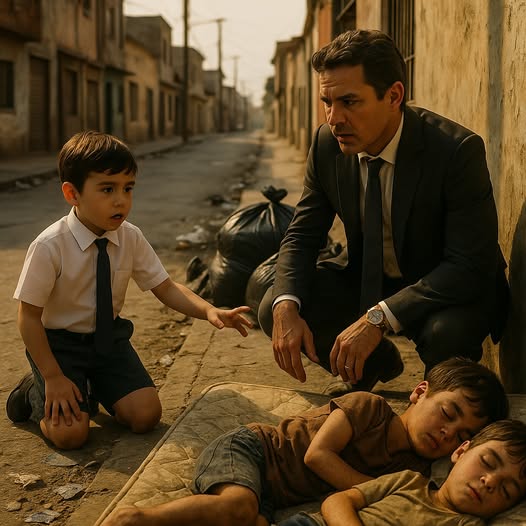
    “Dad, those two children sleeping in the trash look just like me,” five-year-old Pedro said, pointing across the narrow street.

    Eduardo Fernández, a successful businessman, stopped abruptly. His gaze followed his son’s finger to an old, stained mattress lying on the grimy sidewalk, tucked among overflowing garbage bags. Two small figures, apparently the same age as Pedro, slept curled together. Their clothes were filthy and torn, their feet bare, showing cuts and bruises.

    A heavy knot tightened in Eduardo’s chest, but he tried to gently pull Pedro’s hand, urging him toward the luxury car. He had just picked his son up from the exclusive private school, and their usual Friday afternoon routine was a return trip home. Today, however, heavy traffic and an accident had forced them through this run-down, poorer part of the city—a route Eduardo consciously avoided. The streets here were congested with homeless individuals, street vendors, and children playing amongst refuse—a landscape of urban desperation.

    Pedro, however, broke free with a burst of surprising strength and ran toward the sleeping children, ignoring his father’s hurried protests. Eduardo followed instantly, his unease morphing into genuine panic. He worried about his son witnessing such misery, but even more so about the immediate danger this neighborhood posed. Their expensive clothes and his gold watch made them easy targets in an area rife with reports of petty crime and violence.

    Pedro knelt beside the soiled mattress, intently observing the exhausted faces of the children. One had light brown, wavy, and remarkably shiny hair, just like Pedro’s. The other was darker-skinned. But the striking similarity transcended mere hair color. Both shared Pedro’s delicate, oval facial structure, the same arched, expressive eyebrows, and even the identical dimple on the chin that Pedro had inherited from his deceased mother.

    Eduardo approached slowly, his panic intensifying. The resemblance was deeply disturbing, impossible to dismiss as coincidence. It was as if he were seeing three variations of the same creature. “Pedro, we have to go right now. We can’t stay here,” Eduardo tried to say firmly, though his eyes remained fixed on the sleeping children, unable to break the impossible sight.

    “They look just like me, Dad. Look at their eyes,” Pedro insisted as one of the little ones stirred and slowly opened his eyes. To a stunned Eduardo, the boy revealed two piercing green eyes identical to Pedro’s—not only in color, but in their almond shape and natural intensity. Startled by the strangers, the boy quickly woke his companion with gentle, urgent taps on the shoulder.

    The two boys sprang up, hugging each other, visibly trembling from cold and instinctive fear. Eduardo noticed they both had the same tight curls as Pedro, only in different shades, and shared the same guarded posture, the same way of moving, even the same nervous breathing pattern.

    “Don’t hurt us, please,” the brown-haired boy said, instinctively stepping in front of his darker-haired brother, a protective gesture that made Eduardo shudder in immediate recognition. It was the exact same way Pedro protected his younger classmates from bullies at school—the same brave stance despite his visible fear.

    Eduardo felt his legs violently shake, forcing him to lean against a brick wall. The resemblance was terrifying, a defiance of all logic. Every gesture, every expression was identical. When the dark-haired boy opened his eyes wide, Eduardo nearly collapsed: they were Pedro’s mesmerizing green eyes, and the expression—a mixture of caution and curiosity, the particular way he frowned when confused—was his son’s to a devastating degree. The three boys were the same height, with the same slim physique, appearing like perfect reflections in a fragmented mirror.

    “What are your names?” Pedro asked with the innocence of his five years, sitting down on the dirty pavement, oblivious to his expensive uniform.

    “I’m Lucas,” the brown-haired boy replied, relaxing as he judged Pedro to be harmless. “And this is Mateo, my younger brother,” he added, pointing tenderly.

    Eduardo felt the world spin faster. Lucas and Mateo. These were the exact names he and his wife, Patricia, had chosen for their other two children in case the complicated pregnancy resulted in triplets. They were names scribbled on a piece of paper, lovingly stored in his nightstand drawer, and never mentioned to anyone, especially not Pedro, since Patricia’s death. This coincidence was absolutely impossible.

    “You live here on the street?” Pedro continued, already conversing with the boys as if it were the most natural thing.

    “We don’t have a real house,” Mateo said in a weak, hoarse voice. “The aunt who was taking care of us said she no longer had money and brought us here in the middle of the night. She said someone would show up to help us.”

    Eduardo approached even slower, desperately trying to process what he was seeing. Beyond the physical features, the three boys shared the same unconscious, automatic gestures: they all scratched behind their right ear when nervous; they all bit their lower lip in the same spot when hesitating to speak; they all blinked in a particular way when concentrating. These imperceptible details were devastating to a father who knew his son’s every habit.

    “How long have you been out here alone?” Eduardo asked, his voice broken, kneeling next to Pedro, heedless of his expensive suit.

    “Three days and three nights,” Lucas replied, counting carefully on his small, dirty fingers, but with an intelligent precision. “Aunt Marcia brought us here at dawn and said she would return. But she hasn’t come back yet.”

    The blood froze in Eduardo’s veins. Marcia. The name struck him like a thunderclap, reviving memories he had tried to bury. Marcia was Patricia’s younger sister, a troubled, unstable woman who had vanished entirely after Patricia’s traumatic birth and subsequent death. Patricia had often spoken of Marcia’s serious financial difficulties, her drug addiction, and abusive relationships. Marcia had been present at the hospital throughout the labor, asking strange questions about the medical procedures and the babies’ fate in case of complications.

    Pedro looked at his father with eyes filling with genuine tears, gently touching Lucas’s arm. “Dad, they’re so hungry. We can’t leave them here alone.”

    Eduardo looked closer and saw the children were severely malnourished. Their worn clothes hung loosely on their frail bodies. Their faces were pale and sunken, with dark circles betraying sleepless nights. Beside them was a nearly empty water bottle and a torn plastic bag containing the remains of stale bread. Their hands were bruised and cut, likely from rummaging for food.

    “Did you get anything to eat today?” Eduardo asked, controlling the rising emotion in his voice.

    “Yesterday morning, a man at the bakery gave us an old sandwich to share,” Mateo said, his eyes lowered in shame. “But today we didn’t get anything.”

    Pedro instantly pulled a whole package of cookies from his expensive backpack and offered it with a spontaneous, generous gesture that filled Eduardo with simultaneous pride and existential terror.

    “You can eat everything,” Pedro said. “My dad always buys me more, and we have lots of delicious food at home.”

    Lucas and Mateo looked at Eduardo, asking for permission with wide, hopeful eyes—a natural gesture of politeness that sharply contrasted with their desperate situation. Someone had instilled good manners in these abandoned children. Eduardo nodded, still trying to grasp the forces of fate that had placed these children on his path.

    They shared the cookies with an unexpected delicacy, breaking each one carefully in half, always offering a piece to the other first, chewing slowly, savoring every crumb. “Thank you very much indeed,” they said in unison.

    Eduardo was certain he had heard those voices countless times. It wasn’t just the childish pitch, but the specific intonation, the rhythm of speech—absolutely identical to Pedro’s voice. As he watched them, the striking physical similarity, the unconscious gestures, the slight tilt of the head when paying attention, and even the particular way they smiled, showing their upper teeth first, became undeniable.

    “Do you know anything about who your real parents are?” Eduardo asked, trying to keep his voice controlled.

    “Aunt Marcia always said our mom died in the hospital when we were born,” Lucas explained, reciting the words like a memorized lesson. “And that our dad couldn’t take care of us because he already had another small child to raise alone and wasn’t up to it.”

    Eduardo’s heart pounded violently. Patricia had died during the complicated birth. Marcia had mysteriously disappeared right after the funeral, claiming she couldn’t bear to stay in the city. But now, it all made a terrible, devastating sense. Marcia hadn’t just fled the pain. She had taken two children with her.

    “And do you remember anything from when you were babies?” Eduardo insisted, his hands visibly shaking.

    “We remember almost nothing,” Mateo said, shaking his head. “Aunt Marcia always said that we were born with another brother on the same day, but that he stayed with our father because he was stronger and healthier. And we went with her because we needed special care.”

    Pedro opened his green eyes wide in that expression of sudden, terrifying understanding that Eduardo knew so well. “Dad, they’re talking about me, right? I’m the brother who stayed with you because he was stronger, and they’re my brothers who went with their aunt.”

    Eduardo braced himself against the wall. The pieces of the most terrible puzzle of his life fell brutally and definitively into place. The traumatic 18-hour labor, the severe hemorrhage, the doctors fighting to save the mother and children, and Patricia slowly dying in his arms, whispering broken words he couldn’t understand then, but which now made dreadful sense. He remembered Marcia, always nervous and present, asking detailed questions about the procedures.

    “Lucas, Mateo,” Eduardo said, his voice choked, tears rolling freely down his face. “Would you like to come home with us, take a hot shower, and eat something delicious and nutritious?”

    The two children exchanged looks of natural, learned distrust. “You’re not going to hurt us later, are you?” Lucas asked in a small, frightened voice.

    “Never, I promise,” Pedro instantly responded, extending both little hands toward Lucas and Mateo. “My dad is very good and loving. He takes good care of me every day, and he can take care of you too, like a real family.”

    Eduardo watched, fascinated, the absolutely natural way Pedro connected with the boys. There was an inexplicable and powerful connection, an emotional and spiritual bond that transcended all logic.

    “All right then,” Mateo finally said, carefully picking up the torn plastic bag containing their few miserable possessions. “But if you’re mean to us or try to hurt us, we know how to run fast and hide.”

    As they walked toward the luxury car, Eduardo noticed nearly every person they passed stopped, whispered, and pointed. It was impossible not to notice the three identical boys. Pedro firmly held Lucas’s hand, and Lucas held Mateo’s, an instinctive, natural link.

    “Dad,” Pedro suddenly said, stopping. “I always dreamed I had brothers who looked exactly like me. I dreamed we played together every day, that we were never alone or sad. And now they’re here for real, as if by magic.”

    Eduardo felt a chill. He watched their every synchronized movement: the way Lucas helped Mateo when he stumbled, the extreme care Mateo showed with his plastic bag of belongings, the natural cadence of their steps—they all landed with their right foot first, all swung their left arm slightly.

    When they reached the black Mercedes, Lucas and Mateo stopped, wide-eyed in awe. “Is this really yours, sir?” Lucas asked, reverently touching the immaculate body.

    “It’s my dad’s,” Pedro replied casually. “We take it everywhere.”

    There was no trace of envy in the boys’ innocent eyes, only curiosity. Mateo ran his dirty hand over the soft leather seats with reverence. “Never in my life have I traveled in such a beautiful car,” he whispered. “It looks like one of those cars where rich celebrities appear on TV.”

    During the silent drive to the imposing mansion in the exclusive neighborhood, Eduardo couldn’t take his eyes off the rearview mirror. The three boys chatted animatedly, as if reuniting after a long separation. Pedro pointed out sights, Lucas asked intelligent questions, and Mateo listened with a maturity that was impressive for a five-year-old.

    “That tall building over there is where my dad works,” Pedro explained, pointing to a glass skyscraper. “He has a big company that builds nice houses.”

    “Are you going to work there with him when you grow up?” Lucas asked.

    “I don’t know yet. Sometimes I think about becoming a doctor to help sick children who can’t pay for treatment.”

    Eduardo nearly lost control of the wheel. Being a doctor had been his own childhood dream, before family circumstances forced him to inherit the business.

    “I also want to be a doctor when I grow up,” Mateo suddenly said with determination. “To take good care of poor people who don’t have money for consultations.”

    “I want to be a teacher,” Lucas added with the same conviction, “to teach them to read, write, and do arithmetic well, even if they are poor.”

    Tears burned in Eduardo’s eyes. The three boys shared the same noble, altruistic dreams, the same values. It was as if they shared not only their appearance but also their character and deepest aspirations.


    Arrival and the Unspoken Truth

    When they arrived at the majestic mansion, with its perfectly manicured gardens and imposing classical architecture, Lucas and Mateo were paralyzed at the entrance. The three-story house looked like a royal palace to two children who had slept on the streets.

    “Do you really live here in this giant house?” Mateo asked, his voice barely audible.

    “It has 22 rooms in total,” Pedro corrected with an innocent smile. “But we only use a few. The rest always remain closed because it’s too big for just two people.”

    Rosa Oliveira, the experienced housekeeper who had been caring for the house for fifteen years, immediately appeared at the front door. Seeing Eduardo arrive with three absolutely identical children, her expression changed to complete shock. She had known Pedro since birth, and the resemblance was so incredible that she loudly dropped the heavy keys she was holding.

    “My goodness,” she softly murmured, crossing herself. “Señor Eduardo, what impossible story is this? How can there be three identical Pedros?”

    “Rosa, I’ll explain everything later, calmly,” Eduardo said, hurrying the three children inside. “For now, I urgently need you to prepare a very hot bath for Lucas and Mateo, and something nutritious and delicious so they can eat plenty of food.”

    The woman, still bewildered, immediately regained her maternal instinct. She observed the two visibly malnourished children with genuine compassion. “These little ones urgently need specialized medical attention, Mr. Eduardo. They are extremely thin, pale, and covered in wounds.”

    Eduardo nodded silently, his mind focused on more urgent matters. He needed to confirm his growing suspicions before making any final, life-altering decisions.

    While Rosa led Lucas and Mateo to the spacious downstairs bathroom, Pedro stood thoughtfully next to his father, staring out the window toward where his possible brothers were bathing. “Dad, are they really my brothers, right?” he asked, with the seriousness of someone who already instinctively knew the answer.

    Eduardo knelt in front of his son, gently took his small shoulders, and looked directly into his bright green eyes. “Pedro, it’s very possible, my son, but I need absolute scientific certainty before saying anything definitive.”

    “I’m already completely sure,” Pedro affirmed with unwavering conviction, placing his little hand on his chest. “I feel it here inside. It’s as if a very important part of me, which had always been missing, has finally returned home.”

    Eduardo hugged him tightly, trying to contain the avalanche of emotions. Pedro’s pure intuition aligned perfectly with all the accumulating evidence, but he needed irrefutable scientific proof before accepting such a shocking reality.


    Seeking Irrefutable Proof

    When Lucas and Mateo finally emerged from the long bath, dressed in Pedro’s clean clothes that fit them perfectly, the physical resemblance became even more striking. With their clean, shiny, and carefully combed hair, and their angelic faces free of the street grime, the three children looked like identical reflections in perfect mirrors.

    Rosa then appeared with a large tray filled with nutritious sandwiches, fresh fruits, whole milk, and warm homemade cookies. The children began to eat with impeccable politeness, but Eduardo watched with a heavy heart as they devoured everything with desperate speed—the primitive instinct of chronic hunger still dominant.

    “Slow down, my little angels,” Rosa said with genuine affection. “There’s much more delicious food in the kitchen. You don’t need to rush. You can eat as much as you want.”

    “Sorry, Doña Rosa,” Lucas said, embarrassed. “It’s been a long time since we’ve eaten well. We’ve forgotten how to behave.”

    “You don’t need to apologize, my dear boy. Eat calmly and peacefully. This house is now yours too.”

    Eduardo strategically took advantage of that moment of calm to make urgent calls. First, he contacted his trusted personal physician, Dr. Enrique Almeida, a renowned pediatrician who knew the entire family medical history.

    “Dr. Enrique, I need a very urgent personal favor. Could you come to my house tonight? It’s a very delicate medical situation involving children.”

    “Of course, Eduardo, did something serious happen to Pedro?”

    “Pedro is perfectly fine, but I urgently need detailed DNA testing on three children, including him.”

    There was a long, meaningful pause on the other end. “DNA? Eduardo, what’s this complicated situation?”

    “I’d rather explain everything in person when you arrive. Can you bring the complete kit for material collection?”

    “Yes, no problem. I’ll be there in two hours at the most.”

    The second call was to his trusted attorney, Dr. Roberto Méndez, a specialist in family law.

    “Roberto, I urgently need your specialized help with an extremely delicate family matter. I may have two other biological children in addition to Pedro. Children who were, let’s say, irregularly separated from him at birth.”

    “How so, irregularly separated? Eduardo, you’re leaving me very worried and confused.”

    “It’s a long and complicated story. I urgently need to know what my legal rights are as a biological father and how I should proceed properly.”

    “I’ll go early tomorrow morning. Don’t do anything rash until we discuss it in detail.”

    While Eduardo made those calls, the three children played harmoniously in the living room, a disturbing and beautiful natural synchronicity between them.

    “Pedro,” Eduardo said as he returned, “I need to ask Lucas and Mateo some important questions. Can you help your dad?”

    “Of course, Dad. You can ask whatever you want.”

    Eduardo sat comfortably on the rug. “Lucas, can you remember anything specific from when you were little babies? Every detail, no matter how small.”

    “Aunt Marcia always said we were born in a very large and famous hospital,” Lucas said, frowning in concentration. “She said it was very difficult and dangerous, that she had to make difficult choices about who to save first.”

    “Choosing who to save,” Eduardo repeated, his heart pounding.

    “She also said our mother was very sick and weak, and that the head doctor said they couldn’t save everyone at the same time. Then he had to decide to save us.”

    Eduardo felt the world spin. This version perfectly matched his fragmented memories of that terrible hospital night. “And do you know exactly which hospital you were born in?”

    San Vicente Hospital,” Mateo responded immediately. “Aunt Marcia always took us there when we were sick or needed medicine.”

    Eduardo nearly fainted. San Vicente Hospital was the same expensive, private hospital where Pedro had been born, where Patricia had died. It made no sense for supposedly abandoned children to receive regular medical care there, unless there was a legitimate family connection.

    “And Aunt Marcia, what did she look like? Do you remember her well?”

    “She looked a lot like our real mother,” Lucas said thoughtfully. “She had very long, straight black hair, large, dark eyes, and always smelled strongly of cigarettes mixed with sweet perfume.”

    Eduardo’s blood ran cold. It was a perfect, detailed description of Marcia, Patricia’s younger sister. “But she was always very nervous and agitated,” Mateo continued with disturbing seriousness, “especially when she saw police officers on the street or when someone she didn’t know asked us questions.”

    “What kinds of questions exactly made her uncomfortable?”

    “About who our real father was, about our family? About where we came from?” Lucas explained. “He always told us never to talk about such important things with strangers because it was dangerous.”

    Eduardo understood immediately. Marcia lived in constant fear of being discovered. The behavior the children described was typical of someone hiding a serious crime with severe legal consequences.

    “And were you really happy?”