Category: General News

  • Turning Point USA halftime Super Bowl show lineup revealed – and everyone is saying the same thing

    Turning Point USA halftime Super Bowl show lineup revealed – and everyone is saying the same thing

    The stage is set for Super Bowl LX on February 8, 2026, but the headlines surrounding the event are increasingly dominated by a deepening cultural and political chasm. While the NFL has officially tapped global phenomenon Bad Bunny to headline its halftime extravaganza, a significant counter-movement has emerged from the conservative nonprofit Turning Point USA (TPUSA). In a direct challenge to the league’s programming choices, TPUSA has announced its own “All-American Halftime Show,” a move that highlights the ongoing friction between traditional sports entertainment and the polarized values of the American public.

    The friction ignited almost the moment the NFL confirmed Bad Bunny as its marquee performer. Born in Puerto Rico and a U.S. citizen, the artist is a juggernaut of the music industry, yet his selection immediately drew fire from right-wing commentators and political figures. Chief among the critics was President Donald Trump, who publicly questioned the league’s direction. Admitting he was unfamiliar with the superstar, Trump dismissed the choice as “crazy” and “terrible,” suggesting the NFL had surrendered its entertainment decisions to outside interests that were disconnected from its core audience. He further signaled his disapproval by stating he would not attend the game, warning that the selection would only serve to “sow hatred.”

    For his part, Bad Bunny has leaned into his role as both a cultural icon and a political provocateur. His accolades are historic; at the 2026 Grammys, he became the first artist to win Album of the Year for a Spanish-language project, alongside wins for Best Música Urbana Album and Best Global Music Performance. During his acceptance speech, he delivered a pointed message aimed at immigration enforcement, declaring, “ICE out. We’re not savage, we’re not animals, we’re not aliens. We are humans and we are Americans.” His 2025 track “Nuevayol” took the confrontation even further, featuring a simulated version of Trump’s voice offering an apology to immigrants—a bold artistic choice that solidified his stance on identity and belonging in the United States.

    Known for performing almost exclusively in Spanish, Bad Bunny has shown no intention of changing his approach for the Super Bowl’s massive audience. During a hosting stint on Saturday Night Live in late 2025, he addressed the language barrier with characteristic bluntness, telling viewers that if they couldn’t understand him, they had “four months to learn.”

    This unapologetic embrace of Spanish-language artistry provided the impetus for Turning Point USA’s alternative broadcast. Under the leadership of Erika Kirk—who stepped into the role following the death of the organization’s founder, Charlie Kirk—TPUSA initially kept its lineup under wraps, allowing speculation to build. This week, however, the organization unveiled a roster designed to appeal to those who feel alienated by the NFL’s “Global Pop” direction. The “All-American” counter-show will feature Kid Rock, Brantley Gilbert, Lee Brice, and Gabby Barrett.

    The selection of Kid Rock is perhaps the most symbolic. A vocal ally of Donald Trump and a long-standing figure in conservative cultural circles, Rock frames the competing broadcast as a “David and Goliath” struggle. He acknowledged the difficulty of challenging the “pro-football machine” but doubled down on the mission to provide an alternative for those who “love America.” However, this framing has not been without its own internal contradictions. Critics were quick to point out that Kid Rock’s extensive discography is filled with explicit lyrics and themes that stand in stark contrast to the “Christian” and “family-friendly” values often championed by Turning Point USA.

    The country music contingent of the lineup—Gilbert, Brice, and American Idol alumna Gabby Barrett—represents a safe, genre-specific pivot toward the nonprofit’s target demographic. The lineup received a significant boost from political figures like J.D. Vance, who praised the roster on social media, specifically highlighting “Bob Ritchie AKA Kid Rock” as a “fantastic” choice for the event.

    Despite this support, the public and online reaction has been fractured. Skeptics have taken to social media to mock the cultural relevance of the TPUSA event, with many labeling it as “un-American” to host a competing show specifically to oppose an American citizen like Bad Bunny. Some users joked that the lineup felt like a “halftime playlist from 2008,” suggesting that the event might struggle to resonate with a modern audience. There is also a notable generational divide; Gen Z commenters, in particular, have expressed confusion over why a Spanish-language performance by a citizen is being framed as an affront to American values, while simultaneously noting the irony of headlining a “Christian-values” show with an artist known for his profane and rebellious lyrics.

    Beyond the artists themselves, the competing shows represent a struggle for the “soul” of the Super Bowl’s cultural footprint. For the NFL, Bad Bunny represents the league’s push toward a global, multi-lingual, and youth-oriented future—one that recognizes the massive influence of Latino culture in the United States and abroad. For Turning Point USA, the alternative show is an attempt to reclaim a sense of “traditional” Americanism that they feel is being erased by the encroachment of globalism and left-leaning political messaging in sports.

    As February 8 approaches, the duel between these two broadcasts will serve as a real-time metric of American sentiment. The NFL’s official show will undoubtedly command the vast majority of the audience, backed by the sheer scale of the league’s media apparatus. However, Turning Point USA isn’t necessarily playing for a majority; they are playing for a movement. By positioning their event as a sanctuary for those who feel ignored by mainstream media, they are reinforcing a cultural silo that exists entirely parallel to the official Super Bowl festivities.

    The spectacle of Super Bowl LX has, in many ways, become secondary to the conversation surrounding it. Whether viewers choose the global, Spanish-language energy of Bad Bunny or the country-rock defiance of TPUSA’s “All-American” stage, the choice itself is a political act. The stadium may be filled with football fans, but the airwaves will be a battlefield of language, identity, and conflicting definitions of what it means to be an American in 2026. The real score of the game might be tallied in television ratings, but the cultural impact will be measured in the ongoing debate over whose values are represented on the nation’s biggest stage.

  • SH0CKING MOVE THAT NO ONE SAW COMING!

    SH0CKING MOVE THAT NO ONE SAW COMING!

    The glittering spectacle of the 2026 Winter Olympics in Milan was supposed to be a career milestone for the “Today” show’s core team, a broadcast event defined by international prestige and the high-energy camaraderie that viewers have come to expect from NBC’s morning stars. However, a sudden and profound shift in the network’s roster has signaled a shocking departure from the status quo. Craig Melvin, a pillar of the “Today” desk, has officially announced that he will not be traveling to Milan. While early whispers in the industry suggested the pivot might be due to scheduling conflicts or standard contract renegotiations, the reality is far more somber and deeply personal. Melvin is breaking his silence to reveal a truth that has shaken the foundation of the NBC family: he is staying behind to stand in the gap for his friend and colleague, Savannah Guthrie, as her family faces an unimaginable nightmare.

    The desperate search for Savannah’s 84-year-old mother, Nancy Guthrie, has entered a terrifying and high-stakes phase that has effectively halted the normal operations of those closest to her. Savannah, who was originally slated to be the face of the Milan coverage, has naturally stepped away from her professional duties to remain in Arizona, anchored by an agonizing wait for news. The decision for Craig Melvin to also forgo his Olympic assignment was not mandated by the network, but born of a fierce, internal loyalty. Insiders close to the production suggest that Melvin’s choice was immediate and non-negotiable; he refused to be halfway across the globe while one of his closest friends navigated a life-altering crisis. This decision has transformed a standard corporate assignment into a stark human drama, highlighting a rare moment where the “Today” show family has prioritized human connection over broadcast ratings.

    The atmosphere at NBC’s headquarters has shifted from the usual frantic preparation for a global sporting event to a somber, focused vigil. For Savannah, the transition from being the one who reports on national tragedies to being the center of one has been excruciating. Instead of the crisp alpine air of Italy and the thrill of opening ceremonies, her world is currently defined by the sterile rooms of law enforcement briefings, the frantic buzz of search-and-rescue updates, and the heavy, ringing silence that follows a lack of new leads. By choosing to stay in the United States, Melvin has ensured that Savannah is not isolated in her grief and anxiety, providing an on-air and off-air support system that underscores the genuine bonds formed behind the scenes of morning television.

    NBC’s executive leadership has responded with a rapid and respectful reshuffling of its Olympic lineup, a move that demonstrates a commitment to honoring both their massive broadcast obligations and the welfare of their staff. With two of their primary anchors remaining stateside, the network has elevated seasoned veterans Mary Carillo and Ahmed Fareed to more prominent roles in the Milan coverage. Carillo, a legendary figure in sports broadcasting known for her deep analytical skills and storytelling, and Fareed, a versatile and rising star within the NBC Sports ecosystem, are stepping into the vacuum left by Guthrie and Melvin. While the network is determined to provide the high-quality, polished coverage that Olympics viewers expect, there is an unspoken acknowledgement throughout the halls of NBC that this year’s games are being shadowed by a much more urgent story back home.

    As the world prepares to tune in for the pursuit of gold medals and the celebration of athletic miracles, a significant portion of the audience is focused on a different kind of miracle. The “Today” show has always cultivated a unique relationship with its viewers, often feeling more like a neighborhood gathering than a news program. Consequently, the audience has taken up the Guthrie family’s cause as their own. The search for Nancy Guthrie has become a focal point of national concern, with viewers using social media to share information and offer prayers. The contrast is jarring: while the screen may show athletes pushing the limits of human achievement on the ice and snow, the tickers and news breaks are often filled with the harrowing details of a missing 84-year-old woman in urgent need of help.

    The situational gravity of Nancy’s disappearance has forced a re-evaluation of what constitutes “breaking news.” In the high-pressure world of television, where the show must always go on, Craig Melvin’s refusal to board that plane to Italy serves as a powerful reminder of life’s true priorities. His presence in the U.S. allows the morning show to maintain a sense of continuity and stability while their primary anchor is indisposed. It also allows for a more sensitive handling of the story as it unfolds; having a close friend of the family at the helm of the news desk ensures that the updates regarding Nancy are delivered with the dignity and empathy they deserve, rather than as mere sensationalist headlines.

    The investigation into Nancy’s disappearance continues to be a complex operation involving local Arizona authorities and federal resources. As the search reaches this “terrifying new phase,” the stakes could not be higher. Time is the enemy in any missing persons case involving an elderly individual, and the urgency is palpable in every update released by the Guthrie family’s representatives. Savannah’s decision to surround herself with family and law enforcement rather than the glamour of the Olympics is a testament to her character, and the support she is receiving from Melvin and the rest of the NBC team is a testament to the culture they have built together over the years.

    Ultimately, the story of Milan 2026 will be written in the record books of sports history, but for the “Today” show family, the year will be remembered for the moment they stood still. The glitter of the Winter Games has been dimmed by the reality of a family in crisis, and the polished studio lights have been eclipsed by the raw, human necessity of showing up for one another. As the world watches the podiums in Italy, a parallel vigil continues in the American Southwest. The hope remains that the resilience seen on the Olympic stage will be mirrored in the search for Nancy Guthrie—that through the combined efforts of law enforcement, a dedicated community, and a family that refuses to give up, she will be found and brought safely home. Until then, the “Today” show remains a house divided by geography but united by a single, fervent prayer for a safe return.

  • In a significant breakthrough, Arizona law enforcement office!

    In a significant breakthrough, Arizona law enforcement office!

    In a development that has sent shockwaves through the American public, Arizona law enforcement officials have reached a critical juncture in the investigation into the disappearance of Nancy Guthrie, the 84-year-old mother of TODAY show co-anchor Savannah Guthrie. For days, the nation has watched with bated breath as a quiet residential enclave in Tucson was transformed into the epicenter of a massive, multi-agency criminal inquiry. Today, that tension reached a fever pitch as authorities formally identified a suspect in the abduction, marking a significant—and chilling—breakthrough in a case that has redefined the meaning of a family nightmare.

    The designation of a suspect has moved the investigation from a broad search for a missing person to a targeted criminal pursuit. Investigators, led by the Pima County Sheriff’s Department in close coordination with federal partners, are currently obsessing over a reconstruction of the hours and days leading up to Nancy Guthrie’s sudden disappearance. The transition from a welfare concern to a kidnapping case occurred after forensic teams identified disturbing evidence within the home, suggesting that the safety of the residence was violently breached. Every digital footprint, from encrypted communications to cellular pings, is being meticulously mapped to trace the movements of the accused and, more importantly, to determine the current location of Nancy Guthrie.

    The scale of the operation is unprecedented for the region. What began as a local search quickly ballooned into a sophisticated effort involving forensic specialists, technical analysts, and federal investigators. These teams are operating on a dual track: while one group scours physical terrain and follows up on hundreds of community tips, another is deep in the “digital weeds,” analyzing surveillance footage from private Ring cameras and city-managed traffic sensors. The goal is to build a narrative of the perpetrator’s actions that is so airtight it can withstand the scrutiny of a high-profile trial, while simultaneously acting with the frantic urgency required to save a life.

    For Savannah Guthrie, a woman whose career has been defined by her ability to report on the world’s most harrowing tragedies with poise and empathy, the situation is a cruel and surreal reversal. Usually the one asking the difficult questions and guiding a national audience through moments of crisis, she now finds herself at the center of the very kind of story she would normally be covering. The public scrutiny that accompanies her fame has added an extra layer of complexity to her ordeal. As she retreats from the anchor desk to focus on her family, the silence from her end speaks volumes of the agony involved in waiting for word from negotiators and detectives.

    The community in Arizona has transformed its collective shock into a powerful engine of support. In the Catalina Foothills and beyond, neighbors have organized vigils, shared digital flyers across every social media platform, and kept a vigilant eye on their surroundings for anything that might match the descriptions provided by police. This grassroots involvement is more than just a gesture of solidarity; it is a vital investigative resource. Law enforcement officials have noted that in cases of this nature, the “decisive” piece of information often comes from a regular citizen who notices something out of place—a vehicle parked where it shouldn’t be, or a fleeting interaction on a hiking trail.

    As investigators drill down into the suspect’s background, a clearer—and more disturbing—picture is beginning to emerge. Authorities are examining the individual’s past, looking for points of intersection with the Guthrie family or any history of surveillance. The forensic evidence found at the scene, including the intentional destruction of home security cameras, suggests a perpetrator who acted with premeditation rather than impulse. This was a controlled operation, one that required the suspect to know exactly when Nancy would be alone and when the neighborhood would be at its quietest.

    The national focus on this case serves as a stark reminder of the vulnerability of the elderly and the far-reaching impact of violent crime. As the investigation enters this new, aggressive phase, the combination of high-tech forensics and traditional “boots on the ground” police work is being pushed to its limits. The Pima County Sheriff’s Department has reiterated that while a suspect has been named, the primary objective remains the safe return of Nancy Guthrie. They have emphasized that no detail is too small and no observation is too insignificant for the tip line.

    Behind the clinical updates provided at press conferences lies the raw, human reality of a daughter’s grief and a family’s shattered peace. The nation continues to watch closely, not just for the legal resolution of a criminal case, but for the human resolution of a grandmother’s return. The case has become a testament to the resilience of a family under fire and the dedication of the law enforcement officers who have vowed to leave no stone unturned. While the suspect is held under the intense glare of the justice system, the Guthrie family clings to a singular, unwavering hope: that the next knock on the door will be the one that brings Nancy home.

    The path ahead for the investigation involves a rigorous validation of the timeline. Detectives are currently cross-referencing witness statements with physical evidence to ensure that every minute of the suspect’s whereabouts is accounted for. This is a race against time, where the legal need for accountability is matched only by the moral urgency of a rescue. As the case develops, the focus will likely shift to the motive behind such a brazen act, looking for answers in the digital shadows and the histories of those involved. For now, the town remains on edge, the family remains in prayer, and the authorities remain relentless in their pursuit of the truth.

  • Ghislaine Maxwell Claims 25 Jeffrey Epstein Associates Made Secret Settlements!

    Ghislaine Maxwell Claims 25 Jeffrey Epstein Associates Made Secret Settlements!

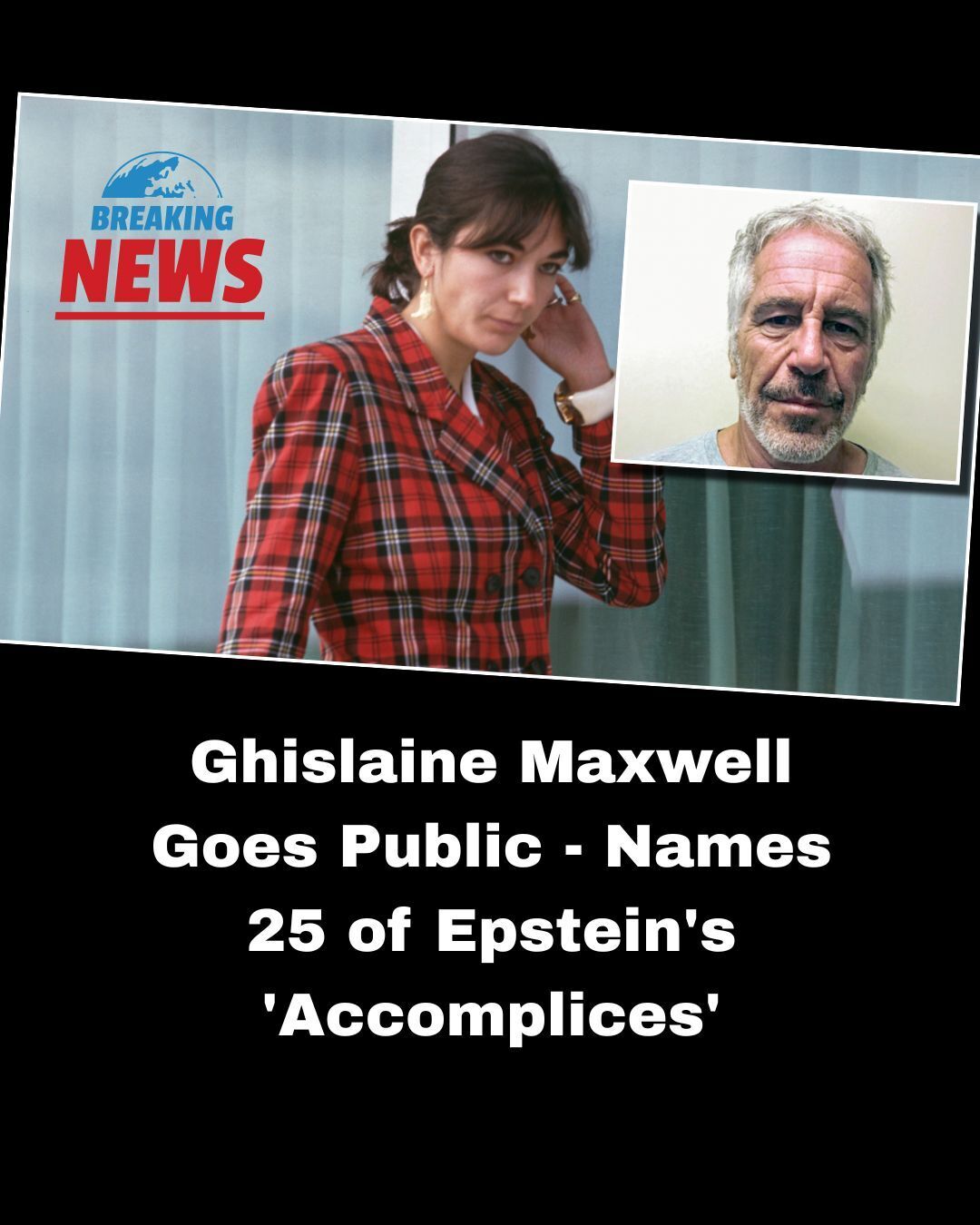
    Ghislaine Maxwell is no longer content to remain the silent face of a dismantled criminal empire. From the confines of a federal prison cell in Texas, the convicted sex trafficker has launched a legal and rhetorical offensive that threatens to reopen the most uncomfortable chapters of the Jeffrey Epstein saga. In a move that has sent ripples through the highest corridors of power, Maxwell is now alleging that a staggering twenty-five of Epstein’s high-profile associates successfully negotiated “secret settlements” to avoid the glare of public prosecution. Her claims, detailed in a series of handwritten motions, suggest that while she was cast as the singular villain of the piece, a vast network of powerful men and complicit staffers managed to buy their way into the shadows.

    Maxwell’s latest strategy is a calculated attempt to recast herself not as an unrepentant predator, but as a convenient scapegoat—the woman left holding the bag while the true architects and beneficiaries of Epstein’s network walked free. She paints a damning picture of a two-tiered justice system: one that publicly immolated her and Epstein, while allowing twenty-five alleged male co-conspirators to finalize quiet deals that ensured their names never appeared on a criminal indictment. Furthermore, she specifically points to four key staffers whom she claims were granted immunity or simply overlooked, despite having intimate knowledge of the operations. Maxwell insists that these names were deliberately withheld from her defense, arguing that federal prosecutors and victims’ lawyers “colluded” to conceal witnesses whose testimony might have redistributed the burden of guilt.

    These explosive allegations arrive at a moment of extreme vulnerability for the Department of Justice. By law, the government is currently being forced to open the extensive Epstein archives, a massive repository of documents, flight logs, and witness statements that have remained under seal for years. As these documents slowly trickle into the public domain, Maxwell is weaponizing the lack of transparency to her advantage. She is leaning into the public’s existing skepticism, asking a question that has haunted the case since Epstein’s death in 2019: who else was in the room, who facilitated the travel, and exactly who was the government protecting?

    The crux of Maxwell’s argument lies in the concept of “diluted guilt.” By alleging that dozens of others were equally involved and shielded by “secret settlements,” she is attempting to undermine the narrative of her own trial. She suggests that the prosecution’s focus on her was a sleight of hand designed to satisfy the public’s hunger for justice without toppling the broader structure of the global elite. Her motion suggests that the true extent of the Epstein network was never actually dismantled, but rather pruned of its most visible branches to save the trunk.

    Legal experts remain skeptical of Maxwell’s ability to overturn her conviction based on these claims. To a court, Maxwell is a convicted felon attempting to deflect blame; however, to a public already weary of perceived “protected classes” in the legal system, her words carry a different weight. Each new release from the mandated Epstein archive is now being viewed through the lens of Maxwell’s accusations. Every redacted name and every sealed deposition becomes potential proof of the “collusion” she alleges. She is no longer just fighting for a shorter sentence; she is fighting to ensure that if she remains in prison, she does not remain there alone in the public imagination.

    The timing of this motion is particularly strategic. As the archive opens, the government must confront its past decisions regarding which individuals to pursue and which to grant non-prosecution agreements. Maxwell’s focus on “secret settlements” taps into the reality of civil litigation, where wealthy defendants often use nondisclosure agreements and massive payouts to bury allegations before they reach a criminal threshold. Maxwell is arguing that these civil maneuvers were improperly used to gatekeep evidence that belonged in her criminal trial.

    Beyond the legal maneuvers, the human element of this story remains the most devastating. For the survivors of Epstein and Maxwell’s abuse, these new allegations are a double-edged sword. On one hand, any information that leads to the exposure of other perpetrators is a step toward broader justice. On the other hand, Maxwell’s attempt to paint herself as a victim of a “collusive system” is a bitter pill for those she personally harmed. Her attempt to “recast” herself is seen by many as a final, desperate act of manipulation—one designed to sow enough doubt to make the world forget the specifics of her own crimes.

    As the Epstein archive continues to be declassified, the tension between Maxwell’s claims and the government’s narrative will only intensify. Whether she is a woman genuinely left to take the fall for a much larger group of men, or simply a master manipulator trying to burn down the house around her, the impact of her words is undeniable. She has managed to shift the conversation from what she did to what everyone else did. The question of “who else knew” has been replaced by Maxwell with “who was paid to keep quiet.”

    The legal system may eventually dismiss Maxwell’s handwritten motions as the self-serving ramblings of a desperate inmate, but the cultural impact is far more permanent. She has successfully weaponized the archive’s slow release to suggest that the “real” Epstein network remains intact, hiding behind the very settlements she now decries. Her appeal may very well fail, and she may serve every day of her decades-long sentence, but the doubt she has stirred regarding the completeness of the investigation will likely outlast her time behind bars. In the court of public opinion, Maxwell has managed to turn the spotlight away from her own cell and toward the boardrooms and private residences of those twenty-five unnamed associates she claims bought their way out of history.

    The archives are opening, the documents are surfacing, and the names are being debated. In this atmosphere of mounting transparency, Ghislaine Maxwell has found her most powerful weapon yet: the insinuation that the truth was never lost, it was simply sold. As the search for accountability continues, the world is left to wonder if the Epstein saga will truly end with Maxwell, or if she is merely the first domino in a line that the government is still trying to stop from falling. Each document release now serves as a potential validation or refutation of her claims, ensuring that even from a prison cell, Ghislaine Maxwell remains at the center of the narrative she helped create.

  • I Never Told My Husbands Family I Understood Spanish – Until I Heard My Mother-in-Law Say, She Cannot Know the Truth Yet

    I Never Told My Husbands Family I Understood Spanish – Until I Heard My Mother-in-Law Say, She Cannot Know the Truth Yet

    For three years, I occupied a quiet corner of my own life, a ghost in the conversations of my husband’s family. When I married Luis, I inherited a vibrant, loud, and deeply tight-knit extended family. I also inherited their assumption that because I was a blonde, blue-eyed American, the Spanish language was an impenetrable fortress to me. They never asked, and I never corrected them. At first, it was a social experiment; I wanted to see who they were when they weren’t performing for the “gringa” daughter-in-law. But as the years passed, it became a heavy, secret armor I wore to every Sunday dinner and holiday gathering.

    I listened as my mother-in-law, Sofia, criticized the way I seasoned my chicken, calling it “bland as paper.” I listened as my sisters-in-law whispered about the weight I struggled to lose after my son, Mateo, was born. I heard the micro-aggressions and the blatant dismissals of my parenting, all delivered in a tongue they thought I couldn’t decipher. I smiled, I nodded, and I pretended to be the oblivious wife, while inside, I was documenting every slight.

    However, a mild annoyance turned into a life-altering betrayal last Christmas. I was standing at the top of the stairs, the plastic weight of the baby monitor in my hand, when the house fell into a momentary lull. From the living room below, Sofia’s voice drifted up, sharp and conspiratorial. She wasn’t talking about my cooking this time.

    “She still doesn’t know, does she? About the baby,” Sofia whispered in Spanish.

    My heart hammered against my ribs. I froze, pressing my back against the hallway wall. My father-in-law, Carlos, gave a dry, dismissive chuckle. “No. And Luis promised not to tell her. He knows it would be a disaster.”

    “She can’t know the truth yet,” Sofia continued, her voice dropping to a hiss. “And I’m sure it won’t be considered a crime. We did what we had to do to protect our blood.”

    I felt a coldness spread through my limbs that had nothing to do with the winter air outside. They weren’t talking about a surprise party or a family secret from the past. They were talking about Mateo—my three-year-old son who was currently sleeping in the room behind me. The “truth” they were hiding felt like a physical weight, crushing the air out of my lungs.

    I waited until Luis came home that evening. He walked in with his usual boyish charm, whistling as he hung up his coat, completely unaware that the foundation of our marriage had just cracked. I didn’t greet him with a smile. I led him upstairs, closed the bedroom door, and turned to face him with a coldness that wiped the grin off his face.

    “What are you and your parents hiding from me about our son?” I asked, my voice dangerously level.

    Luis blinked, his eyes darting to the door. “Sandra, what are you talking about? You’re acting strange.”

    “Don’t play the fool, Luis. I heard them today. I heard your mother talking about ‘the truth’ and a ‘crime’ regarding Mateo. I heard that you promised to keep it from me.”

    The color drained from his face so quickly it was as if a plug had been pulled. He stammered, trying to find a lie that would fit the moment, but I didn’t give him the space. I dropped the bomb I had been carrying for three years.

    “I speak Spanish, Luis. I’ve understood every single word your family has said about me for three years. Every insult, every joke, every critique. And I understood exactly what your mother said today. So, you have ten seconds to tell me what you did to my son.”

    Luis collapsed onto the edge of the bed, his head in his hands. The silence stretched until he finally whispered the words that broke my heart. “They did a DNA test.”

    I stared at him, the absurdity of the statement failing to register at first. “A DNA test? On Mateo?”

    He nodded miserably. “Last summer, when they stayed with us. They took hair from his brush. They took mine, too. They sent it to a private lab. They weren’t sure he was mine because he… because he looks like you. The light hair, the blue eyes. They didn’t think it was possible.”

    The betrayal was multifaceted. There was the violation of my son’s privacy, the absolute lack of trust in my fidelity, and the gut-wrenching realization that my husband had known about this for months and chosen to protect his parents’ comfort over my right to the truth.

    “They told me at Thanksgiving,” Luis confessed, his voice trembling. “They had the papers. It confirmed he’s mine, Sandra. I was angry, I swear I was, but they begged me not to tell you. They said it would only cause pain since the result was what we wanted anyway.”

    “What we wanted?” I hissed. “You mean what they needed to satisfy their prejudice. They treated me like a criminal and a liar in my own home, and you let them sit at our table and kiss our son while they held that secret over my head.”

    “They were trying to protect me,” he argued weakly.

    “Protect you from what? The truth? The truth is that I have been a faithful wife and a good mother, and your parents are monsters who violated our family. And you, Luis, you are a coward for letting them.”

    The argument that followed was the most honest we had ever had. For the first time, I didn’t hide behind a smile. I told him about the three years of insults I had endured in silence. I told him how it felt to realize that his loyalty had a threshold, and that threshold was his mother’s disapproval. I told him that our marriage was currently a hollow shell, and if he wanted to save it, the era of him being a “peacekeeper” was over. He had to be a husband.

    To his credit, the shock of my linguistic reveal and the depth of my fury seemed to wake him up. The following week, after his parents had returned to their own home, Luis finally made a stand. He called them and, for the first time in his life, set a boundary that didn’t have a backdoor. He told them he knew what they had done, that I knew as well, and that their access to Mateo was now conditional on a level of respect they had never shown me.

    I watched him find his backbone, but the wounds didn’t heal overnight. I realized that my own silence had been a mistake. By pretending not to understand, I had allowed their toxicity to grow unchecked. I had thought I was being the “bigger person,” but I was really just a victim who was well-informed.

    Now, things are different. When we visit his family, I no longer nod and smile. I speak Spanish fluently and pointedly. The room goes quiet when I enter, a delicious and deserved awkwardness hanging in the air. Sofia tries to be warmer now, her gifts for Mateo more frequent and her tone more conciliatory, likely out of fear that I will cut her off entirely.

    I haven’t decided if I will ever truly forgive them. Some betrayals are too deep for a simple apology to reach. But I have learned a vital lesson about power and silence. I am no longer the guest in my husband’s life, waiting for his family’s approval. I am the architect of my own family. And the next time someone speaks in a tongue they think I don’t understand, they should be very careful—because I am always listening, and I am no longer afraid to answer back.

  • Neighbor Shares Observations as Investigation Continues Into the Disappearance of Savannah Guthries Mother!

    Neighbor Shares Observations as Investigation Continues Into the Disappearance of Savannah Guthries Mother!

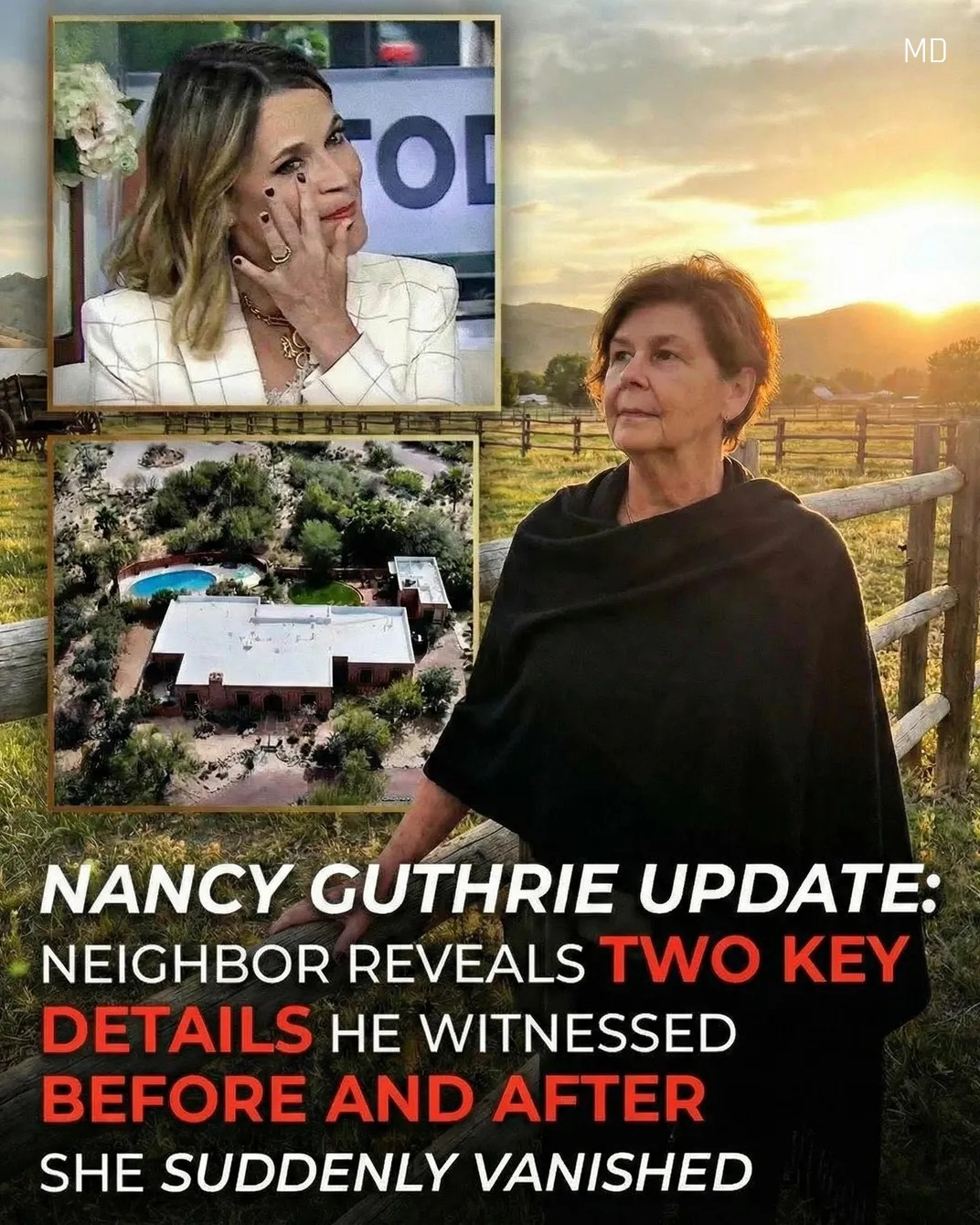
    The sun-drenched Tucson foothills, usually a sanctuary of saguaros and silence, became the epicenter of a harrowing mystery on a weekend that began like any other. This desert community, defined by its rugged beauty and the predictable rhythms of its retired residents, was the home of Nancy Guthrie, a woman known for her kindness and the steady, rhythmic click of the cane she used to navigate the world. But that rhythm was abruptly silenced, leaving a neighborhood in shock and sparking a high-stakes investigation that has drawn the eyes of the nation.

    For decades, the area had been the kind of place where the most pressing concern was a stray coyote or the heat of the afternoon sun. Neighbors like Morgan Brown moved here precisely for that insulation from the chaos of the world. On the morning Nancy was reported missing, however, that peace vanished. The winding, narrow streets were suddenly choked with patrol cars and unmarked investigative vehicles. The transition from a quiet neighborhood to a restricted crime scene happened with a speed that left residents breathless. What began as a localized concern for a vulnerable neighbor quickly spiraled into a complex forensic operation.

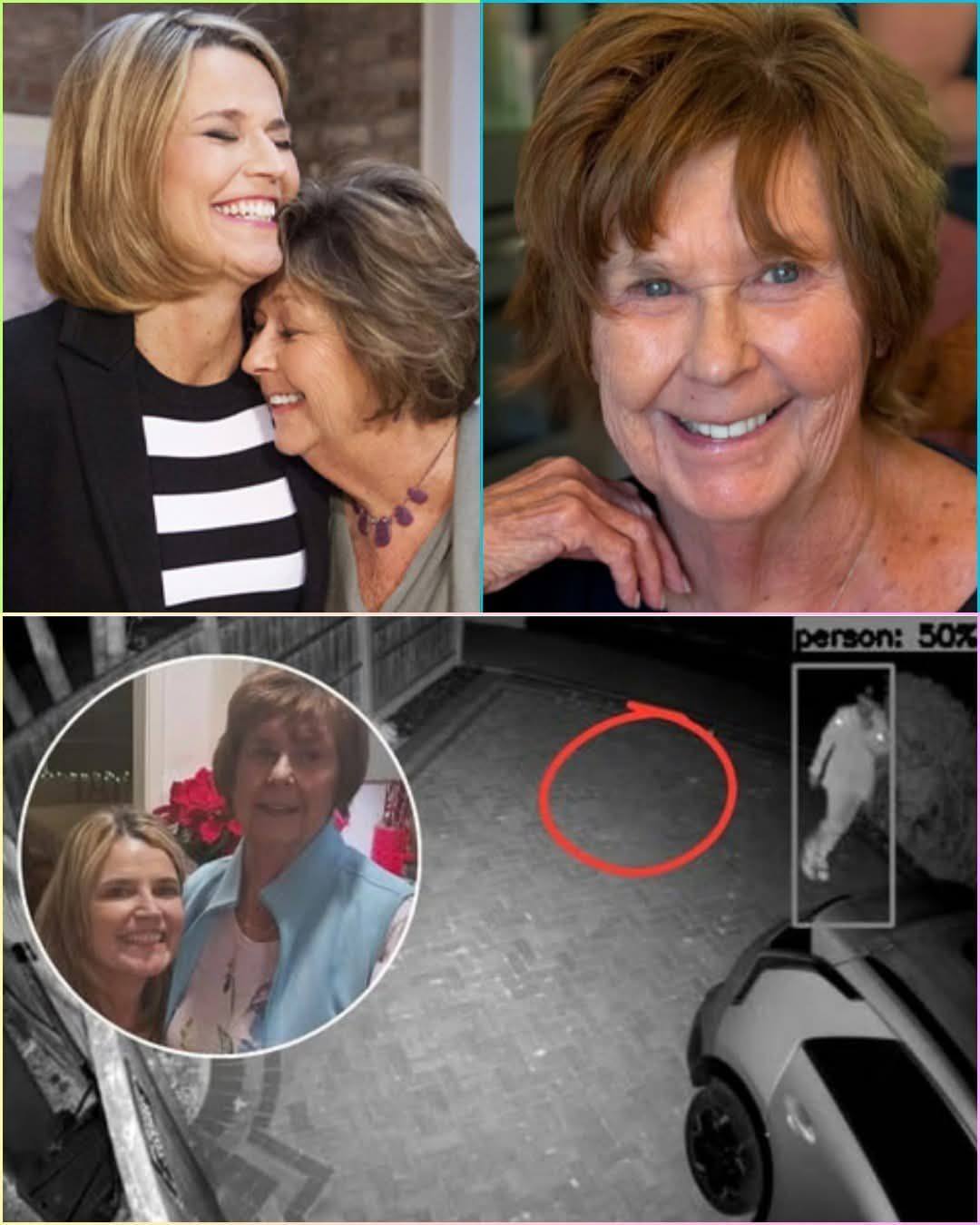
    Morgan Brown vividly remembers the moment the atmosphere shifted. The silence of the desert morning was replaced by the thrumming of low-flying helicopters, their rotors echoing off the canyon walls as they scoured the uneven ground. Law enforcement officials began a door-to-door canvas, their faces grim as they asked residents to scrutinize every second of their home security footage. They were looking for a ghost—a glimpse of Nancy or a vehicle that didn’t belong—within a narrow, overnight window where the timeline of her life went dark.

    The physical reality of the search added to the growing sense of dread. The terrain surrounding Nancy’s home is unforgiving; it is a landscape of jagged rock, dense thickets of cholla, and steep arroyos. For a woman who relied heavily on a cane for mobility, the idea of her wandering deep into this wilderness on her own seemed increasingly improbable to those who knew her. Every neighbor shared the same unspoken thought: if Nancy had left that house, she hadn’t done it under her own power.

    That suspicion was tragically validated as investigators processed Nancy’s home. What was initially treated as a “Silver Alert” or a missing person case underwent a chilling reclassification. Authorities confirmed the discovery of signs suggesting forced entry at the residence. The focus shifted instantly from a search-and-rescue mission to a rigorous criminal investigation. The presence of specialized forensic teams and the arrival of federal agencies signaled that this was no longer just a local matter. Technical experts were brought in to dissect mountains of digital data, from cell tower pings to encrypted phone records, searching for the digital footprint of a perpetrator.

    As the days stretched on, the mystery only deepened. While authorities have been careful to keep specific pieces of evidence close to the chest to protect the integrity of the case, the intensity of their activity suggests a trail that is as complex as the desert floor itself. The announcement of a significant reward for information served as a stark reminder of the gravity of the situation. Detectives have emphasized that in a case this dense, the smallest, seemingly most insignificant detail from a passerby or a neighbor could be the key that unlocks the entire puzzle.

    At the heart of this unfolding tragedy is a family caught in an unimaginable limbo. Savannah Guthrie, a face familiar to millions, has had to navigate this private nightmare in the harshest of public spotlights. She has remained a pillar of grace, publicly expressing her profound gratitude for the outpouring of support from across the country while pleading for the public’s help. Her request is simple yet desperate: keep her mother in your thoughts and, if you know anything at all, speak up. The contrast between her professional life as a conveyor of news and her current reality as the subject of a devastating headline is a burden few could carry.

    Back in the Tucson foothills, the residents find themselves living in a world that no longer feels entirely safe. While law enforcement has issued statements assuring the community that there is no evidence of an immediate, ongoing threat to the general public, the psychological damage is done. The “forced entry” confirmation shattered the illusion of the foothills as an impenetrable fortress. Neighbors who once walked their dogs at dawn without a second thought now double-check their locks and keep their porch lights burning through the night. The desert, once seen as a beautiful backdrop, now feels like a vast, silent witness that refuses to give up its secrets.

    The investigation continues with a relentless, quiet intensity. The federal support brings a level of analytical power that the community hopes will yield a breakthrough soon. Every lead is being exhausted, from the potential of long-range surveillance footage to the re-interviewing of everyone who had contact with Nancy in the weeks leading up to her disappearance. The goal is resolution—not just for the sake of justice, but to provide some semblance of peace to a family that has been hollowed out by uncertainty.

    For now, the Tucson foothills remain in a state of suspended animation. The helicopters have mostly moved on, and the initial swarm of media has thinned, but the yellow crime scene tape remains a jagged scar on the landscape. The routine of daily life has returned in form, but not in spirit. The residents watch the news, check the updates, and look toward Nancy’s darkened house, hoping for the miracle of her return or, at the very least, the dignity of the truth.

    This story serves as a somber reminder of how quickly the foundations of a “solid” life can be shaken. It highlights the vulnerability of our elderly and the suddenness with which an ordinary weekend can transform into a national tragedy. As the investigation into Nancy Guthrie’s disappearance enters its next phase, the collective hope of a neighborhood and a nation remains fixed on a single outcome: clarity. Until then, the quiet of the desert remains heavy, filled with the weight of a mystery that has yet to be solved and a family that refuses to give up hope. In the face of such darkness, the community’s only recourse is vigilance and the persistent belief that no truth can stay buried in the desert sands forever.

  • Neighbor Shares What Happened in the Area After Savannah Guthries Mother Went Missing!

    Neighbor Shares What Happened in the Area After Savannah Guthries Mother Went Missing!

    The sun-drenched Tucson foothills, a landscape defined by towering saguaros and the hushed reverence of the high desert, have long served as a sanctuary for those seeking a life of quiet stability. In this corner of Arizona, where retirees and families once lived within a predictable rhythm of morning walks and golden-hour sunsets, the name Nancy Guthrie was synonymous with the neighborhood’s gentle character. For years, the community’s greatest disturbances were the occasional crossing of a coyote or the rare summer monsoon. However, that sense of enduring peace was shattered on a weekend that began like any other, replaced by a chilling silence that has left a neighborhood in shock and a nation watching with bated breath.

    The transformation of this tranquil enclave into a high-stakes investigative hub happened with a speed that left residents breathless. Neighbors who were accustomed to the solitary sound of the wind through the Palo Verde trees suddenly found their streets lined with marked patrol cars, unmarked federal vehicles, and specialized forensic units. The atmosphere shifted from neighborly concern to an acute, pervasive dread as law enforcement activity escalated. The arrival of investigative teams and the persistent thrum of helicopters overhead signaled to the local community that this was no longer a simple search for a neighbor who had lost her way; it was the beginning of an intense, multifaceted criminal investigation.

    Longtime residents recall the jarring sight of forensic technicians in tactical gear moving through the desert brush. Morgan Brown, a nearby resident, observed that the rapid escalation of the police presence served as a grim indicator that authorities were dealing with something far more sinister than a routine missing-person case. Investigators immediately began a granular canvassing of the area, requesting that every resident within a several-mile radius review their home security footage. They were particularly interested in a narrow, overnight window—the precise hours when the light in Nancy’s home usually dimmed, and the time she was last confirmed to be at her residence.

    The physical reality of the Tucson terrain only deepened the mystery and the collective anxiety. The landscape surrounding the neighborhood is beautiful but unforgiving, characterized by thick, thorny vegetation, jagged rock formations, and uneven ground that challenges even the most seasoned hikers. Those who knew Nancy well pointed to a heartbreaking detail: she relied on a cane for mobility. To the people who saw her every day, the idea of Nancy wandering deep into the rugged desert on her own was not just unlikely; it was a physical impossibility. This realization forced the community to look at the surrounding wilderness not as a place where she might be found resting, but as a vast, silent witness to something far more calculated.

    As the investigation matured, the narrative shifted from a search-and-rescue mission to a forensic reconstruction of a crime. Authorities eventually confirmed what many had begun to fear in their private thoughts: evidence collected from the scene indicated that Nancy did not leave her home voluntarily. Reports of signs of forced entry at the residence turned the investigation on its head, officially reclassifying the case as a criminal matter. While the specifics of the evidence remain closely guarded by detectives to protect the integrity of the pursuit, the involvement of federal authorities suggested a sophisticated level of analysis was being applied. Technical experts began the painstaking process of reviewing communication data and scouring digital footprints, attempting to piece together the movements of an intruder who had managed to slip into one of the most peaceful neighborhoods in the state.

    The national spotlight intensified as the identity of Nancy’s daughter became central to the reporting. Savannah Guthrie, a woman whose career is built on delivering the world’s most pressing news to millions of homes, suddenly found herself at the heart of the most devastating story of her life. Traveling to Arizona to be with her family, she stepped into a role no daughter ever wishes to inhabit. She became the voice of a grieving and hopeful family, issuing emotional appeals for information and asking the public for their prayers. Her presence in Tucson brought a human face to the legal proceedings, reminding the public that behind the yellow crime-scene tape and the clinical police reports was a mother, a friend, and a beloved member of a community.

    Despite the heavy presence of law enforcement, the emotional toll on the neighborhood has been profound. While officials have been quick to reassure the public that there is no indication of a broader threat to the community, the psychological armor of the Tucson foothills has been pierced. The “forced entry” revelation shattered the illusion of safety that retirees move to the area to find. Now, porch lights remain on throughout the night, and neighbors who once greeted each other with casual waves now speak in hushed tones over backyard fences, sharing the latest updates and searching for any detail they might have missed on the night of the disappearance.

    The offer of a significant reward for information has mobilized the public, yet the desert keeps its secrets well. Detectives continue to work around the clock, following leads that stretch across state lines and diving deep into the technical data provided by federal partners. They are searching for the one anomaly—the one car that didn’t belong, the one phone signal that shouldn’t have been there, the one shuttered window that might have caught a reflection. Every tip is being vetted with the knowledge that in a case of this magnitude, resolution often hinges on the most minute observation made by an ordinary citizen.

    As the days turn into weeks, the neighborhood remains in a state of suspended animation. The helicopters have largely vanished, and the initial swarm of media trucks has thinned, but the weight of Nancy’s absence is felt in every corner of the street. The community continues to hold onto hope, a fragile but persistent belief that clarity will eventually emerge from the shadows of the foothills. They wait for the moment when the investigation yields a definitive answer, allowing the Guthrie family to find peace and the neighborhood to reclaim the calm that was so violently taken from them.

    In the end, the story of Nancy Guthrie’s disappearance is a somber reflection on the fragility of the peace we often take for granted. It is a testament to the resilience of a family in crisis and the tireless dedication of those tasked with finding the truth. As the investigation continues into 2026, the people of Tucson and the millions watching across the country remain united by a singular desire: to see Nancy brought home and to see justice served in the quiet desert she called home. The silence of the foothills is no longer peaceful; it is expectant, waiting for the truth to finally be told.

  • Cops respond to claims Savannah Guthries brother-in-law is prime suspect!

    Cops respond to claims Savannah Guthries brother-in-law is prime suspect!

    In the quiet, sun-bleached expanse of Pima County, Arizona, the search for 84-year-old Nancy Guthrie has transformed from a localized missing persons case into a high-stakes criminal investigation that has captured the nation’s attention. As investigators work tirelessly to reconstruct the final known moments of the octogenarian, the case has become a storm of forensic evidence, digital shadows, and rampant public speculation. At the heart of this storm is the Guthrie family, including Nancy’s daughter, television journalist Savannah Guthrie, who now finds herself navigating a personal nightmare under the unrelenting glare of the media spotlight she usually commands.

    The investigation took a darker turn when authorities confirmed that Nancy did not simply wander away from her Tucson-area home. Evidence of a struggle, including traces of blood discovered within the residence, led the Pima County Sheriff’s Department to believe that Nancy was taken against her will. The discovery of a ransom note—chillingly demanding payment in Bitcoin—shifted the focus toward a sophisticated or technologically savvy perpetrator. The FBI has joined forces with local detectives to verify the authenticity of this digital demand, attempting to trace the origin of a note that seemingly bridges the gap between old-world violence and modern cybercrime.

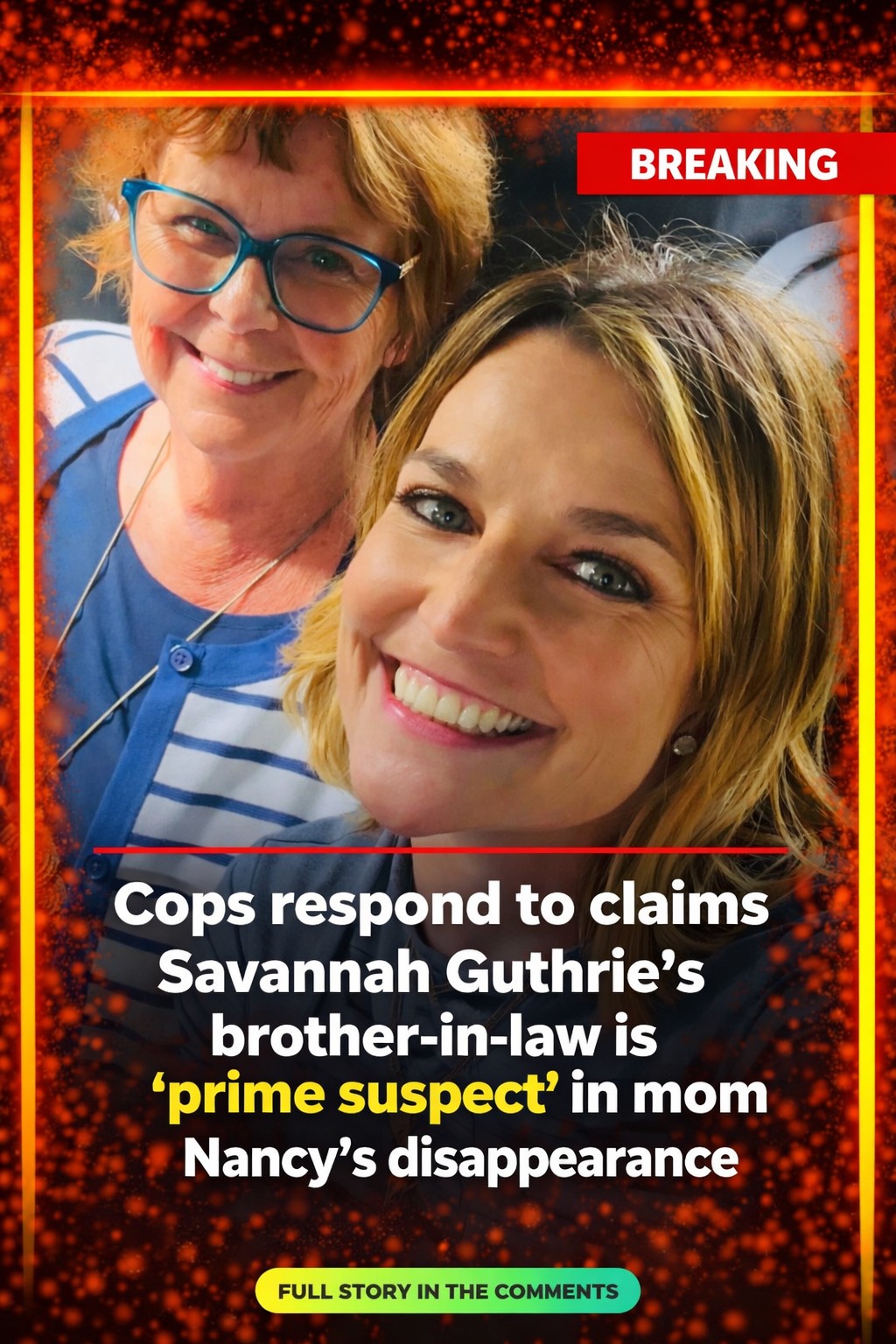
    As the physical and digital searches intensify, a parallel battle is being waged in the court of public opinion. In the vacuum of official information, rumors have flourished, fueled by the internet’s appetite for true-crime narratives. Specifically, reports began to circulate naming Tommaso Cioni, Savannah Guthrie’s brother-in-law, as the “prime suspect” in the disappearance. Social media platforms and fringe news outlets amplified these claims, suggesting that authorities had already moved to seize Cioni’s vehicle as part of a forensic sweep.

    However, the Pima County Sheriff’s Department has taken the rare step of issuing a direct and firm denial regarding these rumors. In an official statement aimed at curbing misinformation, authorities clarified that they have not identified a “prime suspect” or even a “person of interest” at this stage of the inquiry. They explicitly rejected the reports regarding the seizure of Cioni’s car, emphasizing that much of the narrative currently circulating in the public sphere is entirely unsupported by the physical evidence gathered so far. This intervention by law enforcement highlights the challenges of conducting a sensitive investigation in an era where misinformation can travel faster than the truth, potentially compromising the integrity of the case and causing undue harm to those caught in the periphery of the tragedy.

    Despite the noise of the rumor mill, the focus of the Pima County detectives remains on the granular details of Nancy’s life and the forensic reality of her home. Teams are currently engaged in a massive undertaking, interviewing every individual who had contact with Nancy in the weeks leading up to her disappearance. This includes neighbors, healthcare providers, and extended family members, as detectives look for any anomaly—a strange visitor, an unusual phone call, or a shift in her routine—that could provide a breakthrough. Meanwhile, the forensic results from the blood found at the scene are being processed with the highest priority, as DNA analysis may be the only way to identify who else was in the house that night.

    The human element of this story is perhaps the most devastating. For Savannah Guthrie and her family, the past several days have been a blur of agony and suspended animation. Savannah has largely stepped away from her public duties to focus on her family’s private crisis, but she has used her platform to reach out for the only two things that can help: information and faith. In a moving appeal, she asked the public to join her in prayer and to offer any compassion they could spare for her mother. Her message was not one of anger toward the speculation, but of singular focus on the safe return of the woman who raised her.

    The involvement of the FBI brings a specialized layer of expertise to the case, particularly concerning the Bitcoin ransom note. Tracking cryptocurrency transactions is a notoriously difficult task that requires deep technical knowledge and international cooperation. If the note is legitimate, it suggests a level of premeditation and technical literacy that complicates the profile of the abductor. Investigators are currently working to determine if the note was a genuine attempt at extortion or a calculated red herring designed to lead authorities away from a more local or personal motive.

    In the Tucson foothills where Nancy lived, the atmosphere remains one of heavy, expectant silence. Neighbors who once viewed their community as an impenetrable fortress of desert tranquility now watch the police tape with a sense of profound vulnerability. The contradiction of a quiet, retired grandmother being targeted by a high-tech kidnapping scheme is a jarring reality that many are struggling to process. While the Sheriff’s Department has reiterated that they do not believe there is a broader threat to the public, the sense of security that once defined the area has been irrevocably altered.

    As the investigation enters its next critical phase, the Pima County Sheriff’s Department continues to urge the public to rely only on official channels for updates. They have stressed that every tip, no matter how small or seemingly insignificant, is being followed to its conclusion. The reward for information leading to Nancy’s safe return continues to grow, bolstered by contributions from a community that wants nothing more than to see a peaceful resolution to an unsettling mystery.

    The story of Nancy Guthrie is currently a narrative of fragments—a bloodstain, a digital note, a firm denial of rumors, and a family’s unwavering hope. While the headlines focus on the “prime suspect” theories and the fame of her daughter, the actual work of finding Nancy happens in the quiet, meticulous labs of forensic scientists and the patient interview rooms of Pima County. For now, the nation waits alongside the Guthrie family, hoping that the next official update will be the one that brings the 84-year-old home. Until then, the desert wind continues to blow through the Tucson foothills, carrying the weight of a truth that has yet to be fully revealed.

  • People stunned by Melanias comments on age gap between her and Trump!

    People stunned by Melanias comments on age gap between her and Trump!

    The enduring fascination with the partnership between Donald and Melania Trump often centers on the stark optics of their public lives, yet it is their substantial age gap that frequently serves as the catalyst for public debate. With twenty-four years separating the former President and the former First Lady, the mechanics of their initial attraction have long been a subject of speculation. Recently, resurfaced comments from Melania’s personal reflections and memoir have offered a rare glimpse into her perspective on this disparity, leaving many stunned by the intensity and nature of her early feelings.

    To understand the dynamic, one must look back to the autumn of 1998, a year that served as a pivotal crossroads for both. At the Kit Kat Club in New York City, a twenty-eight-year-old Melania Knauss, then an ambitious model from Slovenia, crossed paths with a fifty-two-year-old Donald Trump. At the time, Trump was already a towering figure in American real estate and a fixture of the tabloid circuit, having navigated two highly publicized marriages and divorces while raising four children. Despite the generational divide and the baggage of his high-profile past, Melania insists that the age difference was never a barrier to their connection.

    In her memoir, Melania describes a visceral, almost spiritual reaction to their first meeting. She articulates an experience that contradicts the cynical narrative often projected onto their marriage by critics. While she acknowledges that he was “a bit older,” she emphasizes that her twenty-eight-year-old self felt an “instant connection” that transcended chronological age. She recounts returning home that evening feeling “giddy with joy,” a description that paints a picture of a youthful, romantic spark rather than a calculated social maneuver.

    What many find particularly striking is her description of Trump’s demeanor during that era. She was drawn to what she perceived as a profound sense of authenticity—a quality she found rare in the hyper-polished social circles of Manhattan. Melania recalls being infected by his “zest for life” and was surprised to find that, despite his immense success and legendary work ethic, he appeared “down to earth and real.” This perception of Trump as an approachable, vibrant partner is what she claims facilitated a bond that felt “as if our souls had known each other for a long time.”

    However, the path to their eventual union was not without its hurdles. According to social accounts of that night at the Kit Kat Club, the initial interaction was complicated by the fact that Trump had arrived with another date. This prompted Melania to initially rebuff his advances, demonstrating a level of independence and self-assurance that defined their early courtship. Undeterred by the rejection, Trump persisted, eventually securing her phone number and beginning a relationship that would soon dominate New York’s social columns.

    By the turn of the millennium, they had solidified their status as a power couple, their presence at gala events and fashion shows signaling a new chapter in the Trump legacy. The culmination of this high-romance era occurred on January 22, 2005, in a wedding ceremony that redefined opulence. Melania’s custom Christian Dior gown, valued at an astronomical $200,000, became an instant icon of bridal fashion. The dress, featuring a strapless bodice and a dramatic train, required over 1,000 hours of craftsmanship, symbolizing the grand scale of their shared life.

    The celebration at Mar-a-Lago in Palm Beach, Florida, was a testament to Trump’s penchant for the spectacular. Hosting 450 of the world’s most influential figures, the event featured a menu of caviar and a wedding cake adorned with 3,000 hand-crafted sugar flowers. Yet, behind the towering cakes and the Dior silk, Melania’s comments suggest that the core of the relationship remained anchored in that initial “undeniable chemistry.”

    Throughout their twenty-one years of marriage and their eventual transition into the White House, the couple has maintained a notably private core within their very public existence. The birth of their son, Barron Trump, added a new dimension to their family life, one that Melania has guarded with fierce protectiveness. Despite the relentless scrutiny of their age gap and the political firestorms that have surrounded them, she maintains that their connection has always felt “natural.”

    The public’s shock at these resurfaced remarks likely stems from the contrast between Melania’s stoic, often enigmatic public persona and the romantic, soulful language she uses to describe her husband. While critics often focus on the twenty-four-year difference as a point of contention or a transactional element, Melania’s narrative frames it as an irrelevant detail in the face of a deep, psychological alignment. She describes a sense of being “immediately at ease,” suggesting that the stability of Trump’s age may have actually been an asset to a young woman navigating a new country and a demanding career.

    As the Trumps continue to occupy a unique space in the American consciousness, Melania’s reflections serve as a reminder that the internal reality of a marriage often differs significantly from its external perception. Her insistence that she felt an “instant connection” at twenty-eight challenges the traditional tropes associated with large age-gap relationships. Whether viewed through the lens of a classic romance or a strategic partnership, the bond between Donald and Melania remains one of the most resilient and debated alliances in modern history.

    In the end, Melania’s comments suggest a woman who was not looking for a father figure or a mentor, but for a “natural connection” with a man whose energy matched her own. Her story is one of a rare, instant recognition—a feeling of “soul knowing soul”—that has managed to survive the intense pressures of the global spotlight for over two decades. As these remarks continue to circulate, they offer a provocative perspective on the nature of attraction and the endurance of a marriage that many predicted would not last, yet remains as steadfast as the day it began in a New York club twenty-eight years ago.

  • She grew up with a violent father, started drinking alcohol at just 9 years old, and then she was institutionalized!

    She grew up with a violent father, started drinking alcohol at just 9 years old, and then she was institutionalized!

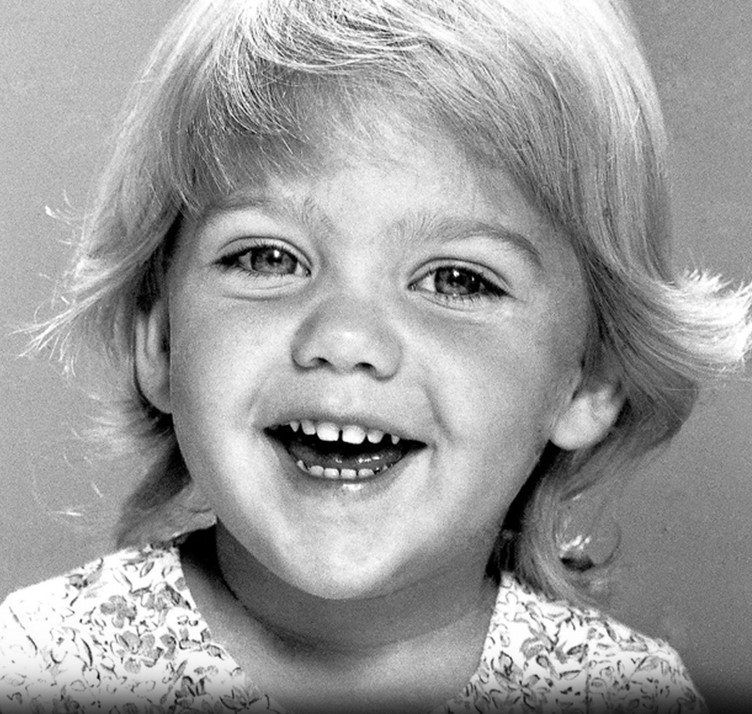
    The story of Drew Barrymore is one of the most harrowing and ultimately triumphant arcs in the history of American cinema. To the world, she was the golden child of a legendary Hollywood dynasty, the wide-eyed girl who captured the heart of the planet in E.T. the Extra-Terrestrial. But behind the precocious smile and the cinematic magic lay a reality so fractured and dark that it seemed destined to end in a familiar Hollywood tragedy. Her journey from the brink of self-destruction to becoming one of the most admired and joyful figures in entertainment is a testament to the resilience of the human spirit.

    Born into the storied Barrymore family, Drew carried the weight of a theatrical lineage that stretched back generations. However, that legacy came with a heavy price. Her father, John Drew Barrymore, was a man plagued by violence and substance abuse, providing a volatile and unstable foundation for a young child. Her mother, Jaid, found herself ill-equipped for the responsibilities of traditional parenting, instead thrusting her daughter into the adult world of the Los Angeles social scene. By the age of nine, while most children were navigating elementary school playgrounds, Drew was a regular at Studio 54. She was a child navigating an adult playground, surrounded by people who viewed her fame as a pass to ignore her age.

    The consequences of this lifestyle were immediate and devastating. Deprived of a protective childhood, Drew began drinking alcohol at nine years old. By the age of twelve, she was addicted to drugs, her life spiraling out of control before she had even reached puberty. The world watched a child star fade, but few saw the profound desperation of the girl behind the headlines. At thirteen, feeling the crushing weight of her circumstances and the absence of any true sanctuary, Drew attempted to end her own life. It was a cry for help that finally forced a reckoning with her reality.

    What followed was a period of intense struggle and forced maturation. Drew was institutionalized for a year and a half, enduring a level of discipline and isolation that stood in stark contrast to the lawless freedom of her early years. It was during this time, within the walls of an institution, that she made a decision that would redefine the rest of her life. Realizing that her parents were unable to provide the stability she needed to survive, a fourteen-year-old Drew petitioned for legal emancipation. She chose to become an adult in the eyes of the law long before she was emotionally ready, simply because it was her only path to safety.

    The years following her emancipation were defined by a different kind of hardship. Hollywood is often unkind to child stars who fall from grace, and Drew found herself blacklisted and broke. She took anonymous jobs, cleaning toilets and working in cafes, living in a small apartment and learning how to exist in a world that no longer had a camera focused on her. This period of anonymity was, perhaps, her greatest act of rebellion. She was no longer a “Barrymore” or an “E.T. girl”; she was a young woman determined to forge an identity that wasn’t a cautionary tale.

    Her return to the screen was not a sudden explosion of fame, but a slow, deliberate rebuilding. She took small roles, often playing against the “America’s Sweetheart” image the industry wanted to impose on her. It was her role in the 1990s that signaled a cultural shift. With a newfound sense of agency, she began producing her own films, creating Flower Films and taking control of her narrative. Hits like The Wedding Singer, Ever After, and Charlie’s Angels didn’t just cement her as a box-office powerhouse; they showcased a woman who had reclaimed her joy. The darkness of her past hadn’t extinguished her light; it had made her radiance feel earned and authentic.

    Yet, the true healing occurred away from the red carpets. For Drew, the journey to wholeness required a commitment to sobriety and a radical re-evaluation of what family meant. When she became a mother, she vowed to break the generational cycles of trauma that had nearly claimed her life. She became a fierce advocate for her children’s privacy, ensuring they would never have to experience the “nightclubs at nine” lifestyle that had stolen her own childhood. Her parenting became her greatest production, a quiet, steady act of love that served as the ultimate closure for her own wounds.

    Today, Drew Barrymore is a multifaceted mogul, a beloved talk show host, and a cultural icon. But her legacy is not defined by her awards or her business successes. It is defined by her radical honesty. By speaking openly about her suicide attempt, her institutionalization, and her complicated relationship with her parents, she stripped away the shame that so often accompanies addiction and mental health struggles. She transformed her scars into a roadmap for others, proving that a shattered start does not dictate a broken finish.

    Her life stands as a powerful rejection of the Hollywood tragedy trope. She refused to become a statistic, and she refused to let her past harden her into a cynic. Instead, she chose to build a life on the pillars of boundaries, hard-won sobriety, and a genuine, infectious enthusiasm for the world. To watch Drew Barrymore today is to witness a woman who has walked through the fire and decided to use the heat to keep her heart warm. She is a reminder that even when the world fails to protect the child, the adult can still find the strength to save themselves and build a life that is, quite literally, a dream come true.