Category: General News

  • What Canned Food Expiration Dates Really Mean , And When You Should Actually Worry

    What Canned Food Expiration Dates Really Mean , And When You Should Actually Worry

    The common pantry discovery—that dusty can of beans or soup lurking in the shadows of the cupboard—inevitably leads to the same anxious ritual: an immediate check of the expiration date. When that date has passed, the instinctive, often panicked, reaction is to toss the item into the trash, driven by the deeply ingrained fear that the contents are instantly unsafe or toxic. However, the surprising reality, backed by food science and regulatory experts, is that the vast majority of dates printed on canned foods have far more to do with the manufacturer’s guarantee of peak quality than with any strict deadline for food safety.

    Labels frequently encountered on non-perishable goods, such as “Best By,” “Best Before,” or “Sell By,” are simply the manufacturer’s professional estimate of the period during which the product will maintain its optimal flavor, texture, and nutritional value. These are not “safety dates.” They do not represent an official, government-mandated cut-off point after which the food automatically becomes dangerous to consume. This widespread misunderstanding leads directly to significant food waste in countless households globally.

    While the dates on highly perishable items like dairy, fresh meat, or baked goods—often marked “Use By”—carry a closer association with eventual spoilage, even these dates typically refer to quality degradation rather than an automatic safety hazard. With commercially canned goods, which undergo a rigorous high-heat sterilization process, proper storage conditions play a far more critical role in safety than the printed date itself.

    When canned goods are stored correctly—in a cool, dry place, consistently away from extremes of heat, moisture, and direct sunlight—the contents are remarkably stable. The preservation methods employed ensure that the food remains safe well beyond the arbitrary window suggested by the “Best By” label.

    Food items are categorized based on their acidity, which dictates both how long they retain peak flavor and their susceptibility to certain forms of degradation:

    1. High-Acid Canned Foods: This category includes products such as tomatoes, various tomato sauces, pineapple, most citrus fruits, and items pickled in vinegar. Due to their natural acidity, these foods react slowly with the metal container over time. They tend to maintain their best flavor and texture for a period of about 12 to 18 months. Beyond this period, they may experience a slight decline in quality, taste a bit metallic, or soften, but they do not abruptly become unsafe the day after the date passes.
    2. Low-Acid Canned Foods: This category encompasses the majority of pantry staples, including green beans, corn, peas, many soups, chili, and canned meats (like tuna or chicken). These foods benefit from the highest level of stability. When stored under ideal conditions, low-acid canned foods have a much more extensive shelf life, often ranging from three to five years or more.

    Food safety experts consistently affirm that as long as the integrity of the can remains completely intact—meaning it is properly sealed, free from any visible damage, and has not been exposed to extreme temperature fluctuations—the contents, having been commercially sterilized, can remain safe for consumption far exceeding the printed expiration date.

    The real and critical warning signs that indicate a safety concern are all physical indicators related to the can’s integrity. If any of the following signs are present, the can should be immediately discarded without opening or tasting the contents, as they point toward potential bacterial contamination, most notably the risk of botulism:

    • Bulging or Swollen Lids/Ends: This is a clear indicator of gas production inside the can, usually due to bacterial growth.
    • Deep Dents: Especially dents along the seams or near the rim, which can compromise the hermetic seal and allow air and microbes to enter.
    • Rust: Significant rust that penetrates the metal can weaken the container’s integrity.
    • Leaks: Any sign of liquid seepage is an immediate safety concern.
    • Strange Odors: If, upon opening, the contents emit an off-odor, the food should be discarded.
    • Discoloration or Foam: Any unnatural color or texture, or the presence of foam, is a red flag.
    • Liquid Spraying Out: A sudden release of pressurized liquid when the can is opened is a sign of internal gas buildup.

    Understanding the genuine meaning behind expiration dates empowers consumers to save money, significantly reduce unnecessary food waste, and shop for and manage their pantry with greater confidence. Before reflexively tossing a can simply because it is past the printed “Best By” date, the responsible action is to take a moment to carefully check its physical condition. If the can’s integrity is sound, and once opened, the food looks normal and smells fresh, it is highly likely to be perfectly safe and good to use. Adopting smart storage habits—keeping cans cool, dry, and clean—combined with this essential knowledge about dating labels can make your pantry safer, streamline your meal preparation, and contribute substantially to a more sustainable household practice.


  • Reba McEntire Left Nothing To Imagination, Try Not To Gasp! See more

    Reba McEntire Left Nothing To Imagination, Try Not To Gasp! See more

    In the sprawling, glittering pantheon of American entertainment, few figures command the universal respect and enduring affection afforded to Reba McEntire. For over five decades, she has been a shapeshifter of the highest order: a rodeo barrel racer turned country music traditionalist, a sitcom star who conquered network television, a Broadway headliner, and a coach shaping the next generation of vocal talent. Her brand has always been built on a foundation of authenticity, grit, and a wholesome, down-home relatability. However, every legend knows that longevity requires the occasional shock to the system, a moment that reminds the public that beneath the friendly smile and the Oklahoma drawl lies a fierce, unpredictable superstar. That reminder arrived recently on a red carpet, in a moment that did not just turn heads—it seemingly stopped time.

    The phrase “left nothing to the imagination” is often deployed in the tabloids to suggest scandal or desperation, but in the case of Reba McEntire’s recent high-profile appearance, it signaled something entirely different: absolute, unadulterated power. When the Queen of Country stepped out of her limousine and into the flashbulb storm of the paparazzi, a collective gasp rippled through the onlookers. She was not wearing the safe, rhinestone-studded jackets of her early Nashville days, nor the conservative evening wear often prescribed to women of a certain age in Hollywood. Instead, she was clad in a jaw-dropping crimson gown that was as architectural as it was alluring.

    The dress itself was a masterclass in daring design. Featuring a plunging neckline that defied gravity and strategic sheer panels that offered glimpses of skin without sacrificing elegance, the garment was a bold declaration of self-assurance. It was a look that required not just a stylist, but a deep well of confidence to pull off. In an industry that notoriously discards women once they pass the threshold of forty, pressuring them to fade into the background or cover up, Reba’s sartorial choice was an act of defiance. She was effectively telling the world that beauty, sensuality, and glamour do not have an expiration date.

    The color of the gown was, of course, no accident. Red has long been Reba’s signature, a visual extension of her fiery hair and her even fierier personality. But for fans of her discography, the image of Reba in a red dress carries a specific, almost mythological weight. It inevitably evokes the narrative of her signature hit, “Fancy.” In that song, a young woman uses a red dress as her armor and her ticket out of poverty, transforming herself from a destitute child into a woman of influence and power. When Reba stepped onto that carpet, she looked like the fully realized incarnation of that character—Fancy Rae Baker, decades later, standing triumphant at the top of the world, unapologetic about her journey or her appearance.

    Social media, naturally, ignited within seconds of the first photos hitting the wire. The internet is a place often characterized by cynicism, but the reaction to Reba’s look was overwhelmingly one of awe and celebration. Younger fans, who perhaps know her best from her sitcom or her tenure on The Voice, were stunned by the sheer “cool factor” of the look. Older fans saw it as a vindication, a rallying cry for their own visibility. The comments sections of fashion blogs and news sites were flooded not with judgment, but with praise for her physique, her poise, and her refusal to play it safe. The viral nature of the moment proved that Reba is not merely a legacy act resting on her laurels; she is a current, vital participant in the cultural conversation.

    This moment also highlights a significant shift in Reba’s public evolution. throughout the 80s and 90s, country music fashion was often characterized by excess—big hair, sequins, and shoulder pads. Reba wore it all. But as she has matured, her style has sharpened. She has moved from “costumes” to high fashion. By choosing a gown that was both elegant and risqué, she bridged the gap between the classic Hollywood bombshells of the past and the modern, body-positive movement of the present. It was a risk, certainly. A dress with sheer panels and a deep cut leaves a celebrity open to critique, to unflattering angles, or to the dreaded “wardrobe malfunction.” But Reba navigated the carpet with the easy grace of a woman who knows exactly who she is.

    Furthermore, this fashion statement serves as a broader commentary on ageism in the entertainment industry. We are currently witnessing a renaissance of women over sixty and seventy claiming their space in the spotlight. From Jane Fonda to Cher to Dolly Parton, these women are rewriting the rulebook on what “aging gracefully” means. It no longer means disappearing; it means evolving. Reba’s appearance in this dress was a contribution to that movement. It challenged the viewer to look at a woman in her golden years and see not just a grandmother figure or a nostalgic icon, but a vibrant, sexual, powerful being. It forced the audience to confront their own biases about what a woman of her age “should” wear.

    The impact of the night extended beyond the visual. It reminded the industry of Reba’s unique position in the pop culture ecosystem. She is one of the few artists who can command a stadium of country purists, star in a network sitcom, and break the internet with a fashion moment, all without alienating her core fanbase. This is a delicate tightrope to walk. Had the dress felt inauthentic—like a desperate attempt to keep up with twenty-something pop stars—the public would have sensed it. But because Reba wore the dress, rather than letting the dress wear her, it felt like a natural extension of her “fancy” persona.

    As the cameras flashed and the reporters shouted her name, Reba offered her signature smile—warm, knowing, and slightly mischievous. She knew she was causing a stir. She knew the headlines the next day would be screaming about how she “left nothing to the imagination.” But in reality, she left us with plenty to imagine. She left us imagining a world where women are celebrated at every stage of their lives. She left us imagining the courage it takes to reinvent oneself after fifty years in the public eye.

    In the end, the dress was just fabric and thread. But the woman inside it was a legend. Reba McEntire’s red carpet moment was not a scandal; it was a coronation. It was a reminder that while trends fade and seasons change, true star power is eternal. Whether she is singing a ballad that breaks your heart, cracking a joke that makes you laugh, or wearing a dress that makes you gasp, Reba McEntire remains the undisputed Queen, and she has no intention of giving up her throne anytime soon. Her story is far from over; in fact, judging by the fire in her eyes and the confidence in her stride, she is just getting started on her next act. The “Fancy” girl from the song didn’t just survive; she thrived, and she’s wearing the red dress to prove it.

  • ld plan on Trut!

    ld plan on Trut!

    In the ever-evolving landscape of American political discourse, few figures command the digital bully pulpit quite like Donald Trump. On a Tuesday in November 2025, the former President took to Truth Social not merely to critique the status quo, but to unveil an economic proposal so audacious it threatens to upend the traditional orthodoxies of both the Republican and Democratic parties. In a post that quickly reverberated from Washington think tanks to Wall Street trading floors, Trump outlined a vision for a “National Dividend”—a direct cash payment of $2,000 to nearly every American citizen, funded entirely by aggressive tariffs on foreign imports.

    The proposal is deceptively simple in its phrasing but complex in its implications. “A dividend of at least $2,000 per person (excluding high-income earners) will be paid to everyone,” Trump declared. With this single sentence, he effectively merged the protectionist trade policies of the 19th century with the modern, often left-leaning concept of Universal Basic Income (UBI), rebranding it as a shareholder payout for the citizens of “USA Inc.” The sheer scale of the promise is staggering. If implemented, it would represent one of the largest direct transfers of wealth in American history, bypassing the traditional levers of tax cuts and trickledown economics in favor of a direct injection of liquidity into the bank accounts of the working and middle class.

    The mechanism behind this proposed windfall is Trump’s long-standing weapon of choice: the tariff. For decades, mainstream economists have viewed tariffs primarily as a tax on consumers—a cost passed down from importers to the average buyer at the checkout line. Trump, however, vehemently rejects this consensus. In his Truth Social manifesto, he doubled down on his belief that tariffs are fees paid by foreign adversaries for the privilege of accessing the American market. “People that are against tariffs are FOOLS!” he wrote, capitalizing the word for emphasis in his signature style. He argued that the United States is now “the richest, most respected country in the world,” citing a record-breaking stock market and what he describes as “almost no inflation” as proof that his economic nationalism is bearing fruit.

    This rhetoric marks a significant pivot in how trade policy is sold to the American public. Historically, tariffs were pitched as a shield to protect domestic manufacturing jobs—a way to stop a factory in Ohio from moving to Guangzhou. Now, Trump is pitching tariffs as a sword—a revenue-generating machine capable of funding social benefits. By framing the payout as a “dividend,” he is encouraging Americans to view their citizenship as a stake in a profitable enterprise. If the country makes money off China or the European Union, he argues, the people should see a cut of that profit, not just the government bureaucracy.

    However, the path from a Truth Social post to a check in the mail is paved with immense logistical and economic obstacles. The most glaring question is the math. To provide a $2,000 payment to roughly 250 million eligible adults would require an expenditure of approximately $500 billion. While tariff revenues have increased under protectionist policies, they historically generate a fraction of that amount. For this plan to remain revenue-neutral—meaning it doesn’t explode the national deficit—tariffs would need to be raised to levels unseen since the Great Depression. Critics argue this would inevitably ignite a trade war of global proportions, with retaliatory measures from trading partners crushing American exporters, particularly in the agriculture and technology sectors.

    Furthermore, the method of distribution remains a “black box” of policy details. The initial announcement left the mechanics of the payout entirely to the imagination. Would this be a tax rebate processed by the IRS during filing season? Would it be a direct deposit similar to the COVID-19 stimulus checks? Or, as some insiders have speculated, could it take the form of healthcare credits or vouchers, thereby subsidizing another thorny area of American life? The lack of an official framework has left policy analysts scrambling to interpret the feasibility of the promise.

    There is also the contentious issue of the “high-income” exclusion. By promising the money to “everyone” but carving out the wealthy, Trump is engaging in a specific form of class politics. Defining “high income” is a notoriously difficult political task. Is the cutoff an individual earning $75,000, or a household earning $400,000? A lower threshold saves the government money but alienates the suburban middle class; a higher threshold balloons the cost of the program. This ambiguity allows the proposal to remain broadly popular in the abstract, as most voters do not consider themselves “high-income” until the specific numbers are released.

    Despite the skepticism from the economic establishment, the political potency of the “Trump Dividend” cannot be underestimated. It addresses a tangible reality for millions of Americans: the feeling that the macroeconomic indicators—the soaring Dow Jones, the GDP growth—have disconnected from their daily struggle with the cost of living. By promising a $2,000 check, Trump is offering a concrete, immediate benefit that abstract discussions about GDP or trade deficits cannot match. It is a populist masterstroke that outflanks Democrats on social spending while adhering to the “America First” nationalism that energizes his base.

    The timing of the announcement is also strategic. With the stock market at record highs, Trump is keen to attribute this prosperity to his influence and philosophy, regardless of who currently sits in the Oval Office. He is creating a narrative where the country is awash in wealth that is being hoarded or squandered, and he presents himself as the only figure willing to unlock the vault and distribute the proceeds to the “forgotten man and woman.”

    As the news cycle digests this bold proposal, the debate will likely shift from the theoretical to the practical. Supporters will champion it as a necessary correction to globalization, a way to ensure that the benefits of the American economy are shared by those who actually live and work within its borders. Detractors will label it a fantasy—a “fool’s gold” promise that ignores the inflationary firestorm that would result from such massive protectionism. They warn that if tariffs skyrocket, the $2,000 dividend would be quickly swallowed up by the rising cost of electronics, clothing, and cars.

    Ultimately, the “Trump Dividend” serves as a stark reminder that the old rules of economic conservatism—free trade, low spending, and fiscal austerity—are effectively dead. In their place has risen a new, hybrid ideology that combines aggressive government intervention in trade with direct populism. Whether this plan ever passes the scrutiny of Congress or the rigors of the global market remains to be seen. But as a statement of intent, it is crystal clear: Donald Trump intends to reshape the American economy not just by changing how we trade with the world, but by changing what citizens expect their government to do for them in return. The promise has been made, the price tag has been set, and the world is watching to see if the “check” will ever clear.

  • The Watch I Sold, The Life I Bought!

    The Watch I Sold, The Life I Bought!

    I was seventeen years old, a child raising a child, the first time I pushed open the heavy door of Sam’s Pawn Shop. The bell jingled, a cheerful sound that felt entirely out of place with the knot of desperation tightening in my stomach. I was clutching my infant son, Elijah, to my chest with one arm, while my other hand gripped the only piece of my father I had left: his stainless steel watch. My dad had died when I was eleven in a car accident that cleaved my life into a stark “before” and “after.” The watch was my talisman. It was heavy, scratched on the face, and if I concentrated hard enough, I swore it still held the faint, spicy scent of his cologne. On nights when the silence of the apartment was too loud, I would fall asleep holding it, imagining the rhythmic tick was his heartbeat.

    But sentimentality doesn’t pay the electric bill. By seventeen, I was living in a cramped apartment that smelled perpetually of damp carpet and formula, scraping by on a part-time grocery clerk’s wage. That morning, I had counted exactly three diapers left in the pack. A red final notice for the utilities was taped to my door like a scarlet letter. My bank account was overdrawn. So, I made the choice that felt like tearing off a limb. I stared at the watch, whispered an apology to a ghost, and drove to Sam’s.

    Sam was a fixture in the neighborhood, a man whose eyes seemed to hold the weight of a thousand sad stories. He stood behind the counter, reading glasses perched precariously on his nose, surrounded by the dust and detritus of other people’s misfortunes. He looked at me, then at the baby, and finally at the watch I placed on the glass.

    “You sure about this?” he asked, his voice rough like gravel.

    “Yeah. I need cash.”

    He examined the watch, turning it over in his calloused hands. “Where’d you get it?”

    “It was my dad’s. He died when I was a kid.”

    His jaw tightened, a subtle flinch I missed in my anxiety. He named a price. It wasn’t a fortune, but it was diapers. It was milk. It was keeping the lights on for another week. I nodded, feeling a piece of my soul detach. As he slid the cash across the counter, he paused, his gaze pinning me to the spot.

    “You’re wasting your life,” he said, the judgment landing with the force of a physical blow. “You’re too young for this.”

    I didn’t answer. I couldn’t. I took the money, grabbed my son, and fled. I cried in the car until my head throbbed, hating Sam for his cruelty and hating myself because I feared he was right. That sentence haunted me for years, a jagged little stone in my shoe, reminding me of my shame every time I stumbled.

    But life, as it does, marched on. I finished high school through night classes, exhausted but determined. I worked double shifts. I raised Elijah into a kind, towering eighteen-year-old who had my eyes and his grandfather’s jawline. The watch remained a hollow ache in my chest, a symbol of what I had sacrificed to survive.

    Then came the knock on the door.

    Elijah was eighteen, and I was tired in the bone-deep way that single mothers know. When I opened the door, Sam stood there. He was older, his hair whiter, his stoop more pronounced, but those sharp eyes were unchanged.

    “Hello,” he said, peering past me. “Is Elijah home?”

    My son appeared, curious. Sam nodded and produced a small wooden box. “This is for you,” he told Elijah. Then he looked at me. “But before you open it, your mom needs to read what’s inside.”

    He handed me a thick envelope. My name was scrawled on the front in a messy, looping script that stopped my heart. It was my father’s handwriting. The hallway tilted. Elijah guided me to a chair as Sam explained, “He asked me to keep it a long time ago. Said I’d know when to give it to you. I think… this is that time.”

    With trembling fingers, I tore open the envelope. Inside were pages of lined notebook paper, yellowed with age, filled with the words of a man writing against a clock he didn’t know was ticking. He wrote about his love for me, his pride, and his fear of missing my life. He cataloged the small memories he hoped I’d keep—his off-key singing, the secret chocolate bars, the silly nicknames. Then, I reached a paragraph that stole the breath from my lungs.

    “I left something behind. Not just the watch. Something more important. I made a deal with a man named Sam. He owns the pawn shop on 5th Street. I asked him to give you this letter and the rest when you needed it most. If you’re reading this, I guess that time came.”

    I looked up at Sam, tears blurring my vision. He gestured for me to continue.

    “The box he’ll give you… it’s not just a box. Inside is everything I could do to protect you after I was gone. Use it wisely. And if you ever have a child, tell your kid I would’ve loved to meet him or her.”

    Elijah’s arm was warm around my shoulders. “Mom, open it.”

    Sam produced a small brass key. “He gave me this the day before his accident. Told me you’d come into my shop one day, lost, and that I’d know. I didn’t then. I do now.”

    I unlocked the wooden box. Inside were neat stacks of papers, photographs, and a smaller velvet box. The papers were property deeds. My father had secretly bought a small piece of land with a cabin on the edge of town, paying it off bit by bit. He had called it his “just in case” plan. Photos showed him fixing the roof, planting a garden, building a future he wouldn’t live to see. In one picture, a sign hung over the door: “For My Girls.”

    Then, I opened the velvet box. Inside lay the watch.

    I gasped, looking at Sam. “You kept it?”

    He nodded slowly. “I lied to you that day. I never put it out for sale. The moment you walked in with that baby and that watch, I knew I couldn’t let it go. And then I said the worst thing I could have said.” He looked at Elijah, his voice thick with old regret. “I told your mother she was wasting her life. I’ve regretted those words every day since. She wasn’t wasting anything. She was saving you.”

    I reached across the table and took Sam’s hand, forgiving the man who had been the unwitting guardian of my father’s love.

    That weekend, Elijah and I drove to the cabin. It stood in a quiet clearing, weathered but sturdy. Inside, dust motes danced in beams of sunlight that illuminated my father’s tools, his books, and a framed photo of toddler-me I had never seen. We slept on mattresses on the floor that night, and for the first time in years, I felt a profound sense of peace.

    The cabin became our sanctuary, and later, a project. We restored it, and in doing so, restored ourselves. One day, I found a stash of eighteen letters my father had written for every birthday he would miss. I read them slowly, letting his wisdom heal the parts of me that still felt broken.

    But the story didn’t end there. Elijah, seeing how the cabin had healed me, surprised me with a gift of his own—a bound book of my own writings, scavenged from old journals and digital files. “You spent my whole life thinking you were just scraping by,” he told me. “I wanted you to see what I see—a woman who wrote her life, one day at a time.”

    Inspired, we turned the cabin into “The Watch House,” a free retreat for young single mothers needing a respite from the grind of survival. It became a place of healing, its walls adorned with letters written by mothers to their children, a testament to fierce love in fragile times.

    Sam passed away three years later. At his funeral, I stood up and told the truth about the “quiet pawn shop guy.” I told them how a harsh judgment masked a decades-long promise kept to a dead man. I told them how he saved my father’s legacy until I was strong enough to carry it.

    I wear the watch now. Not to tell time, but to remember that time is cyclical. What we think we have lost often circles back to us in unexpected forms. The day I walked into that pawn shop felt like the end of my world, but in reality, it was the first sentence of a story about resilience, redemption, and the enduring power of a father’s love.

  • A house full of memories! My fathers final surprise!

    A house full of memories! My fathers final surprise!

    My father was a man of few words, a person who believed that language was often a poor substitute for action. He lived a life that most would describe as simple, perhaps even austere. He drove a truck that had seen the better part of two decades, wore flannel shirts until the elbows wore through, and found his greatest joy in a hot cup of black coffee on the front porch before the sun came up. He never amassed a fortune, never chased accolades, and never seemed to want for anything he didn’t already have. He was the steady, quiet hum in the background of my life—always there, always reliable, but rarely the center of attention.

    When he passed away a few weeks ago, the silence he left behind was deafening. It wasn’t just the loss of a parent; it was the loss of a foundational pillar. As I navigated the murky waters of grief, handling the funeral arrangements and the endless paperwork that accompanies death, I assumed his estate would be as uncomplicated as his life had been. I expected a modest savings account, perhaps his old truck, and a box of sentimental trinkets. So, when his lawyer summoned me to his office for the reading of the will, I went with a heavy heart but no great expectations.

    The lawyer’s office was exactly what you would expect—oak-paneled, smelling faintly of old paper and leather, with a clock ticking rhythmically on the wall. I sat in a high-backed chair, clutching my purse, ready to sign whatever needed signing and leave. The lawyer, a kind man with kind eyes who had known my father for thirty years, cleared his throat and began to read.

    “As per your father’s wishes,” he began, his voice steady, “his house is to be left entirely to you.”

    I froze. For a moment, the words didn’t compute. “The house?” I interrupted, my voice sounding small in the large room. “You mean the old house on Elm Street? I thought… I thought he barely lived there anymore. I thought it was falling apart.”

    My memories of my childhood home were fond but realistic. It was an old Victorian that had been groaning under the weight of time even when I was a child. Drafty windows, squeaky floorboards, peeling paint, and a roof that complained during every storm. Since I had moved away for college and started my own life in the city, I rarely visited the house, usually meeting my dad at diners or parks. In my mind, the house was a derelict vessel, a burden I was terrified to inherit.

    The lawyer took off his glasses and looked at me with a softness I hadn’t anticipated. “Your father spent the last five years of his life working on that house, Sarah. He didn’t want to tell you. He wanted it to be a surprise.”

    He went on to explain that my father had poured every spare ounce of his energy and every extra dollar into the property. He had done it quietly, in the evenings after work and on long, solitary weekends. He had explicitly instructed the lawyer not to say a word until he was gone. “He told me,” the lawyer said, smiling faintly, “that he didn’t want you to feel obligated to help. He wanted it to be a gift, not a project.”

    Driving to the property an hour later, my stomach was in knots. I was expecting to find a home that had been patched up—maybe a fresh coat of cheap paint or a fixed gutter. I was prepared to be grateful for the effort, even if the result was still a crumbling money pit. I turned the corner onto the familiar street, my heart hammering against my ribs, and then I hit the brakes.

    I sat in the middle of the road, staring.

    The house didn’t look patched up. It looked reborn. The peeling grey siding was gone, replaced by a warm, inviting sage green with crisp white trim. The porch, which used to sag dangerously to the left, was straight and sturdy, adorned with hanging baskets of vibrant petunias. The overgrown jungle of weeds that I remembered as the front yard had been tamed into a manicured lawn, bordered by beds of hydrangeas and roses. It wasn’t just a house; it was the prettiest home on the block.

    I walked up the driveway in a daze, the gravel crunching under my boots. I reached into my pocket for the key the lawyer had given me, my hand trembling as I slid it into the lock. The door, solid oak and refinished to a high shine, swung open without a sound.

    Stepping inside was like walking into a physical manifestation of my father’s love. The smell hit me first—not the scent of mildew or old dust that I expected, but the smell of fresh lumber, lemon polish, and the faint, lingering aroma of his pipe tobacco. The sunlight streamed through sparkling clean windows, illuminating floors that had been sanded and stained to a rich honey color.

    I walked slowly from room to room, my fingertips trailing along the walls. I remembered the third step on the staircase, the one that used to scream like a banshee if you stepped on it. I placed my foot on it tentatively. Silence. He had fixed it. I went to the kitchen, where the faucet used to leak a rhythmic torture all night long. It was brand new, gleaming chrome over a deep farmhouse sink. The cabinets were refinished, the hardware updated.

    But it was the library that broke me. My father loved to read, though he rarely spoke about it. He had built floor-to-ceiling shelves in the den, and there, arranged with meticulous care, were all of his books—Westerns, histories, biographies—alongside the children’s books he had read to me when I was small. In the center of the room stood his old leather armchair, the leather cracked and worn, the only thing in the house that hadn’t been made new.

    I collapsed into that chair and wept. I didn’t cry for the house, or the money he must have saved to do this. I cried because I finally understood the language he had been speaking all these years. Every stroke of the paintbrush, every tightened screw, every weed pulled from the garden was a sentence. I love you. I want you to be safe. I want you to have a home.

    He knew I had been struggling in the city, living in cramped apartments, never quite feeling settled. He knew I felt adrift. And in his quiet, stoic way, he had spent his final years building me an anchor. He hadn’t just renovated a building; he had constructed a sanctuary.

    In the weeks that followed, I moved in. I went through the process of sorting his belongings, but I found that I didn’t want to change much. I donated his old clothes, but I kept the books. I brought in my own furniture, my own art, and my own life, but the soul of the house remained his.

    There is a profound sense of settlement that comes over me now when I walk through the front door in the evening. It is a feeling of belonging that I have chased for my entire adult life but never caught until now. I didn’t inherit a fortune. I didn’t inherit stocks or bonds. I inherited something far more valuable. I inherited the labor of his hands and the devotion of his heart.

    Now, when the floor doesn’t creak and the roof doesn’t leak during a thunderstorm, I don’t just feel comfortable; I feel held. I feel protected. My father may be gone, but he is in the walls, in the garden, and in the quiet strength of the foundation he rebuilt for me. He gave me a place where I could finally stop running, a place where I could simply be. And in this house full of memories, both old and new, I have never felt less alone.

  • Shocking moment Trump blasts female reporter who asked about Epstein files with savage 3-word remark!

    Shocking moment Trump blasts female reporter who asked about Epstein files with savage 3-word remark!

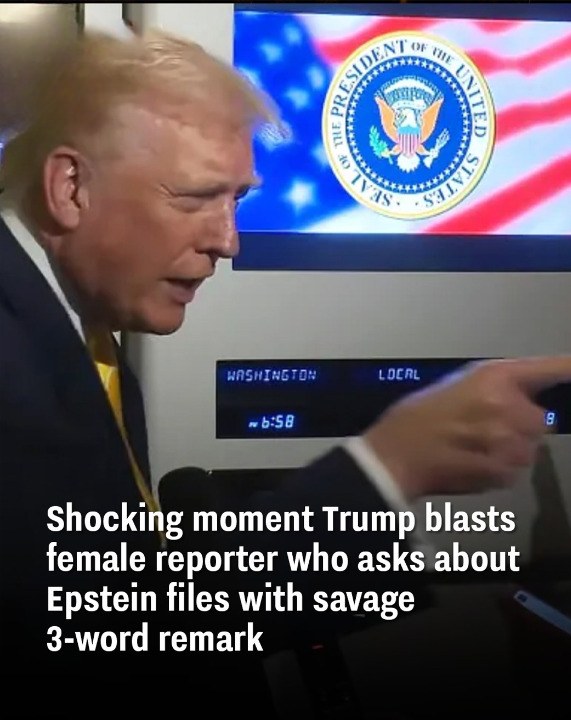
    The roar of jet engines on a presidential tarmac often serves as a convenient shield for politicians, a wall of white noise that allows them to ignore the shouted inquiries of the press pool. However, on the windy afternoon of November 14, 2025, the noise of Air Force One was not enough to drown out a moment of sharp, vitriolic confrontation that has since dominated the national news cycle. As President Donald Trump prepared to board the aircraft, a routine press gaggle descended into a scene of hostility that reignited debates regarding presidential conduct, freedom of the press, and the enduring, toxic shadow of the Jeffrey Epstein scandal.

    The incident began as many do, with a barrage of questions hurled from behind the press rope line. The atmosphere was already charged; just hours earlier, House Democrats had released a fresh tranche of documents related to the late disgraced financier Jeffrey Epstein. Among the reporters present was a correspondent from Bloomberg, who seized the moment to press the President on the contents of these newly public emails. Her question was direct, inquiring whether the released correspondence contained any incriminating information regarding his past association with Epstein.

    What followed was a reaction that observers described as visibly visceral. The President, who had been moving toward the stairs, halted and turned back toward the press pool. His expression darkened, shedding the customary media smile for a look of genuine irritation. Pointing a finger directly at the female journalist, he silenced the rest of the crowd with a cutting three-word command that was caught clearly on microphones. “Quiet,” he snapped, before adding a derogatory punctuation that stunned those within earshot: “Quiet, piggy.”

    The remark was immediate and piercing, stripping away the veneer of professional political discourse. In utilizing a term that weaponizes physical appearance and dehumanization, particularly against a female professional, the President drew immediate condemnation from media watchdogs and political critics. The insult was not merely a dismissal; it was a gendered attack that harkened back to a long and controversial history of the President’s rhetoric regarding women who challenge him. From “horseface” to “dog,” the use of animalistic slurs has been a recurring tool in his verbal arsenal, often deployed when he feels cornered or aggressively questioned. This latest instance, however, carried the added weight of the subject matter: a scandal involving the exploitation of women and girls.

    The catalyst for this explosive interaction was the release of three specific pieces of correspondence by House Democrats, a move that has thrust the Epstein saga back to the forefront of the American political consciousness. The documents in question include email exchanges between Jeffrey Epstein and his longtime confidante and co-conspirator, Ghislaine Maxwell. These communications offer a grainy, often disturbing window into the social circles the pair inhabited, circles that frequently intersected with the global elite, including royalty, scientists, and politicians.

    One email, in particular, has become the focal point of the current controversy. In the exchange, Epstein references Donald Trump, explicitly noting that the former real estate mogul had “never been named” by any of the victims or accusers. On the surface, this might seem exculpatory—a point the President’s legal team would likely highlight. However, the context of the email also revived long-standing, unverified rumors that Epstein and Maxwell had utilized Trump’s Mar-a-Lago club in Palm Beach as a hunting ground to recruit young women. The mere association of the property with Maxwell’s operations is politically radioactive, regardless of the legal nuances. For a President who has spent years attempting to distance himself from a man he once described as a “terrific guy,” having his name circulate in Epstein’s personal inbox is a public relations liability.

    Following the tarmac outburst, the President’s communications team went into damage control mode, though the strategy remained aggressive. Trump has vehemently denied the implications of the emails, reiterating his standard defense: that his relationship with Epstein was superficial and that they had a falling out years before Epstein’s crimes were fully brought to light. He claimed to the press that he had “no knowledge” of the specific contents of the new emails, dismissing the release as a partisan attempt by Democrats to smear him through guilt by association.

    Yet, the intensity of his reaction on the tarmac suggests that the line of questioning struck a nerve. The Epstein case remains a unique vulnerability for powerful figures across the spectrum, a dormant minefield where a single document can shatter reputations. By lashing out at the reporter with such specific, demeaning language, the President may have attempted to assert dominance and shut down the inquiry, but the result has been the Streisand effect. The “piggy” comment has gone viral, drawing millions of eyes not only to his behavior but to the very documents he wished to dismiss.

    The fallout from the exchange highlights the perilous state of the relationship between the executive branch and the Fourth Estate in 2025. The job of the White House press pool is to ask uncomfortable questions, particularly regarding the ethical entanglements of the nation’s highest office. When those questions are met with personal insults rather than policy answers or factual rebuttals, it degrades the democratic process. Critics argue that this behavior creates a chilling effect, designed to make reporters hesitate before asking the next hard question for fear of public humiliation.

    Furthermore, the specific nature of the insult has reignited conversations about misogyny in high office. To call a female reporter “piggy” is to reduce her professional stature to a schoolyard taunt, focusing the narrative on her personhood rather than her journalistic inquiry. It is a tactic of distraction. Instead of discussing the serious allegations involving Mar-a-Lago and sex trafficking rings, the news cycle is forced to debate the propriety of the President’s language. In this sense, the outburst serves a dual purpose: it is an expression of genuine anger, but also a smoke bomb that obscures the substantive issue at hand.

    As the dust settles on the November 14 incident, the questions surrounding the Epstein files remain unanswered. The emails released by the House Democrats are likely just the beginning of a slow drip of information that will continue to plague all those who were in Epstein’s orbit. The President’s assertion that the relationship “soured years ago” will continue to be tested against the written record. Meanwhile, the image of the President of the United States standing before the engines of Air Force One, pointing a finger and hurling a slur at a journalist, will likely endure as a defining snapshot of this political era—a moment where the tension between accountability and power boiled over into something ugly, personal, and profoundly shocking.

  • Firefighters Want Everyone To Know What They Should Never Plug Into A Power Strip!

    Firefighters Want Everyone To Know What They Should Never Plug Into A Power Strip!

    As the northern hemisphere tilts away from the sun and the long, dark nights of winter begin to settle in, a familiar ritual takes place in households across the country. Thermostats are cranked up, heavy blankets are pulled from the depths of linen closets, and families gather to combat the creeping chill. In millions of homes, particularly those with drafty windows or uneven central heating, the supplemental space heater becomes the MVP of the season. These compact devices are miracles of modern convenience, capable of turning a freezing bedroom or a chilly home office into a toasted sanctuary in a matter of minutes. However, beneath the warm glow of these coils lies a significant, often overlooked danger that firefighters are desperate for the public to understand.

    There is a common misconception that a plug is simply a plug, and that any electrical outlet or extension can handle any device. This assumption, while understandable, is proving to be a catastrophic mistake for homeowners every single year. As we enter the peak of heating season, fire departments from Oregon to Ohio are issuing a unified, urgent warning: never, under any circumstances, plug a space heater into a power strip or a surge protector.

    The warning gained viral traction recently thanks to a public safety announcement from Umatilla County Fire District #1 in Hermiston, Oregon. In a heartfelt plea shared on social media, the department showcased the scorched remains of a power strip that had failed catastrophically. Their message was stark and simple: “You should never plug a heater into a power strip.” While this might seem like an inconvenience—especially in older homes where wall outlets are scarce—the physics behind the warning are non-negotiable.

    To understand the danger, one must understand how these devices function. A power strip is generally designed to handle low-voltage electronics. They are perfect for your television, your cable box, your smartphone charger, or a lamp. These items draw a relatively low amount of steady current. A space heater, conversely, is a high-wattage appliance. It is designed to convert a massive amount of electricity into heat instantly. When you plug a space heater into a power strip, you are forcing a high volume of electrical current through a device that was not engineered to handle that load.

    The result is resistance, and in electrical terms, resistance equals heat. The internal components of the power strip begin to overheat, often silently and without tripping the breaker immediately. The plastic casing can melt, the internal wires can fuse, and eventually, the unit can ignite. The Umatilla County firefighters noted that these units simply cannot handle the “added energy flow,” turning a device meant for convenience into an incendiary grenade sitting on your living room floor.

    This is not a theoretical risk; it is a documented reality that first responders face every winter. The Toledo Fire Department in Ohio recently echoed the warnings from their colleagues in the Pacific Northwest following a devastating residential fire. In that specific incident, the improper use of a space heater led to a living room couch catching fire. The speed at which a modern room fire accelerates is terrifying. Within moments, the entire home was engulfed in flames, all because of a simple plugging error.

    It is important to visualize the sheer intensity of these devices. A standard space heater can reach internal temperatures of up to 600 degrees Fahrenheit. When that level of heat generation is paired with an overloaded power strip, the margin for error is nonexistent. This is why fire safety experts insist that space heaters must always be plugged directly into a dedicated wall outlet. The wiring inside your walls is generally of a heavier gauge and designed to handle the amperage that the heater requires, whereas the flimsy cord of a power strip is a weak link in the chain.

    Beyond the “no power strip” rule, fire departments urge everyone to adopt a “three-foot rule” regarding these devices. You must create a circle of safety around the unit. This means keeping the heater at least three feet away from anything combustible. This includes curtains, bedding, furniture, piles of laundry, and even walls. The radiant heat from the front of the unit can dry out and ignite nearby materials much faster than people realize.

    Furthermore, the placement of the heater is just as critical as how it is powered. Heaters should always be placed on a level, flat, hard surface. Placing a heater on a deep pile carpet can trap heat and create a fire hazard underneath the unit. Even worse is the practice of placing small heaters on tables, cabinets, or wooden stools to elevate the heat. This drastically increases the risk of the unit tipping over. While many modern heaters have tip-over sensors that shut the unit off if it falls, these mechanical safeties can fail, and it is better not to rely on them as a first line of defense.

    The vigilance required for space heaters also extends to supervision. These are not “set it and forget it” appliances. Firefighters emphasize that a space heater should never be left running when you are not in the room, and it should absolutely never be left on while you are sleeping. If a fire starts while the household is asleep, the reaction time is lost, and the consequences are often fatal.

    While space heaters are a primary culprit during the winter months, they are part of a broader conversation about electrical safety that homeowners need to have. Electrical fires are insidious because they often start inside walls or behind furniture, smoldering before they burst into open flame. Preventing them requires a proactive approach to how we consume power.

    One of the easiest habits to form is the practice of unplugging heat-producing gadgets when they are not in use. This applies not just to space heaters, but to toasters, electric kettles, curling irons, and hair straighteners. These devices can malfunction, or be accidentally switched on, leading to disaster. If it gets hot, unplug it when you are done.

    Additionally, there is a widespread misuse of extension cords. We often treat extension cords as permanent wiring solutions, running them under rugs or stapling them to baseboards to reach a distant lamp or appliance. This is a fire code violation in many places for a reason. Extension cords are designed for temporary use only. If you find yourself permanently relying on an extension cord to power a device, it is a signal that you need to call a licensed electrician to install a new outlet.

    We must also respect the architecture of our plugs. The third prong on a power cord—the round grounding pin—is there to protect people and property from power surges and electrical faults. In older homes with two-prong outlets, people sometimes use “cheater plugs” or, horrifyingly, cut the third prong off the cord to make it fit. This removes the safety ground path, increasing the risk of shock and fire. If your home still relies on two-prong outlets, it is a sign that your electrical system is outdated and likely struggling to keep up with the demands of modern appliances.

    As the temperature drops and the snow begins to fall, the desire for warmth is primal and immediate. But as we huddle indoors, let us heed the advice of the men and women who run toward the smoke when the alarm bells ring. The extra thirty seconds it takes to clear a safe space, or the inconvenience of rearranging furniture to reach a wall outlet, is a small price to pay for the safety of your family. Keep the power strips for your internet routers and phone chargers, and let the heavy-duty heating be handled by the wall outlet alone. Stay warm, but more importantly, stay safe.

  • Mystery Man Who Donated $130 Million to Pay US Troops ID-ed! You Wont Believe Who It Is

    Mystery Man Who Donated $130 Million to Pay US Troops ID-ed! You Wont Believe Who It Is

    Washington D.C. is a city defined by gridlock, posturing, and the slow grinding of gears, but rarely has the machinery of government ground to such a devastating halt as it has in recent weeks. As the federal government shutdown stretches into its twenty-fifth agonizing day, a new and surreal chapter has been added to the political drama—one involving a massive influx of cash, a shadowy benefactor, and a collision between private benevolence and public law. The mystery that gripped the capital over the weekend has seemingly been solved, revealing that the anonymous figure offering a staggering $130 million to pay United States service members is none other than Timothy Mellon, the reclusive heir to a Gilded Age banking dynasty.

    The saga began on a Friday, amidst the tense atmosphere of a capital paralyzed by budgetary disagreements. President Donald Trump broke the news that an unnamed individual had stepped forward with a patriotic, if unprecedented, offer: a nine-figure donation specifically earmarked to cover the salaries of active-duty military personnel who are currently working without pay. The announcement immediately sparked a firestorm of speculation. In an era of celebrity billionaires and vocal tech moguls, guesses ranged from Elon Musk to various hedge fund titans. However, by Saturday, The New York Times had pierced the veil of anonymity, identifying the donor as Timothy Mellon. While neither the White House nor Mellon has officially confirmed the report, the revelation aligns perfectly with the profile of a man who has spent a lifetime using his vast fortune to influence the American landscape from the shadows.

    To understand the significance of this offer, one must understand the enigma of Timothy Mellon himself. In a culture that celebrates the celebrity CEO, Mellon is a ghost. With an estimated net worth of $14.1 billion, he possesses the resources to be a household name, yet he studiously avoids the limelight. He is the grandson of Andrew Mellon, the legendary Treasury Secretary and banking tycoon, placing Timothy squarely in the lineage of America’s old industrial aristocracy. Yet, unlike many heirs who are content to manage portfolios from penthouses, Mellon has led a life defined by eclectic, often rugged pursuits. He is an aviation enthusiast who once funded a high-tech expedition to solve the disappearance of Amelia Earhart, and a railroad magnate who purchased the rights to the iconic Pan Am brand to use for his railway ventures.

    His recent activities, however, have been decidedly political. Mellon has emerged as a massive gravitational force in the 2024 election cycle, albeit a quiet one. He has garnered attention for his unique strategy of funding disruptors across the political spectrum. Following President Donald Trump’s criminal conviction in 2024, Mellon donated $50 million to a pro-Trump Super PAC, solidifying his status as a Republican megadonor. Yet, in a move that baffled political strategists, he also stood as the single largest financial backer of Robert F. Kennedy Jr.’s independent presidential campaign. This pattern suggests a man less interested in party loyalty and more invested in upending the established order—a trait that makes his attempted intervention in the government shutdown entirely consistent with his character.

    The context of this donation is a humanitarian crisis disguised as a bureaucratic standoff. For twenty-five days, the federal government has been shuttered, creating a ripple effect of anxiety across the nation. While politicians debate in the marble halls of the Capitol, hundreds of thousands of federal employees are in financial limbo. The situation is particularly acute for the military. Unlike civilian employees who may be furloughed, active-duty troops are deemed essential. They are required to report for duty, train, deploy, and potentially put their lives on the line, all while their paychecks are withheld. A recent legislative attempt to pass a temporary pay measure failed in the Senate, leaving military families to face missed mortgage payments, empty refrigerators, and the humiliation of relying on food pantries while serving their country.

    It is into this breach that Mellon has attempted to step. The optics of a private citizen offering $130 million to fund the military are powerful. It highlights the perceived failure of the legislative branch to perform its most basic duty: funding the government. For the average soldier worried about rent, the source of the money matters far less than the relief it promises. However, the road from Mellon’s bank account to a soldier’s pocket is blocked by a formidable obstacle known as the Antideficiency Act.

    This federal law, rooted in the constitutional principle that Congress holds the “power of the purse,” strictly prohibits federal agencies from spending money that has not been formally appropriated by the legislature. It is designed to prevent the executive branch from bypassing Congress by funding its operations through private means or unauthorized debt. Pentagon spokesperson Sean Parnell acknowledged the complexity of the situation, noting that while the donation was made with the specific condition of offsetting salary costs, the Department of Defense is legally hamstrung. Even if the $130 million were wired to the Pentagon tomorrow, the Department likely lacks the legal authority to disburse it as payroll without an act of Congress.

    This creates a bizarre and frustrating paradox. The money is reportedly available. The need is undeniably urgent. The donor is willing. Yet, the machinery of the law, designed to ensure checks and balances, effectively prevents the solution from being implemented. Legal scholars and Pentagon lawyers are reportedly scrambling to find a loophole or a specific trust fund authority that might allow the gift to be accepted, but the precedent is murky. Allowing private billionaires to directly fund the military raises complex ethical questions about allegiance and the privatization of state functions, even if the current intent is purely benevolent.

    Regardless of whether the funds are ever released, Mellon’s gesture has irrevocably altered the narrative of the shutdown. It has stripped away the abstract political arguments and refocused the nation’s attention on the tangible reality of the troops’ financial distress. It serves as a stark indictment of a system where a private citizen feels compelled to subsidize the armed forces because the government cannot manage its own books.

    As the shutdown grinds toward a potential fourth week, the “mystery man” may have been identified, but the resolution remains out of reach. For the families of service members, the headlines about billions of dollars and legal wrangling offer little comfort. They are caught in the crossfire of a political war, waiting to see if their government will reopen, or if a reclusive billionaire will be allowed to come to their rescue. The situation remains fluid, a testament to the strange, unpredictable, and often dysfunctional state of modern American governance. Whether viewed as an act of supreme patriotism or a symbol of systemic failure, the $130 million offer ensures that Timothy Mellon will remain at the center of the conversation, even if he never steps in front of a microphone.

  • My Stepmom Mocked My Grandma at My Brothers Wedding, Unaware It Would Lead to Her Biggest Regret!

    My Stepmom Mocked My Grandma at My Brothers Wedding, Unaware It Would Lead to Her Biggest Regret!

    I always knew that my stepmother, Linda, possessed a unique talent for making everything about herself. She treated attention like oxygen; if she wasn’t the one breathing it in, she felt like she was suffocating. For years, my brother Jacob and I walked on eggshells around her, managing her fragile ego and sharp tongue to keep the peace for our father’s sake. But as Jacob’s wedding day approached, I had a gnawing pit in my stomach. I knew Linda wouldn’t be able to stand aside and let someone else shine, but I never could have predicted the depth of the cruelty she would display or that her attempt to steal the spotlight would result in her permanent exile from our hearts.

    To understand the gravity of that night, you have to understand the woman she decided to target: our grandmother, Ruth. When our mother died, I was seven and Jacob was five. our world shattered into a million jagged pieces. Dad was lost in a fog of grief so thick he could barely function, let alone raise two traumatized children. It was Grandma Ruth who stepped in. She didn’t just visit; she saved us. She was the one who packed our lunches with handwritten notes every single day. She was the one who sat up with me when I had nightmares, stroking my hair until I fell back asleep. She sewed my prom dress with her arthritic hands because I wanted something one-of-a-kind, and she never missed a single soccer game, school play, or graduation. She wasn’t just a grandmother; she was the maternal bedrock upon which our lives were rebuilt.

    Linda entered the picture five years later. From the start, she viewed Grandma not as a matriarch to be respected, but as a rival to be eliminated. Linda was flashy, loud, and desperate to be seen as the “new mom,” yet she refused to put in the actual work of parenting. She wanted the title without the sacrifice. Over the years, she made snide comments about Grandma’s “meddling” or her “outdated” ways, usually followed by a cold shoulder that froze the room. Dad, conflict-averse to a fault, would simply look away, letting the disrespect slide to avoid an argument. But Jacob and I never forgot.

    When Jacob got engaged to Sarah, a wonderful woman who adored Grandma Ruth, they made a conscious decision regarding the wedding reception. They decided that only two people would give toasts from the groom’s side: me, his sister, and Grandma Ruth. When Linda found out she wasn’t on the list, the tantrum was predictable. She cried about “etiquette” and “respect,” but Jacob stood firm. He knew that handing Linda a microphone was like handing a toddler a loaded weapon.

    The wedding day itself was breathtaking. The venue was a restored barn filled with soft amber light, white roses, and the hum of genuine joy. For the first few hours, it seemed like my fears were unfounded. Linda was there, dressed in a gown that was perhaps a shade too bright and a cut too low for a stepmother, but she was behaving. She smiled for photos and mingled with the guests, though I noticed her wine glass was refilled with alarming frequency.

    Then came the speeches. The room quieted down as the clinking of silverware against glass signaled the moment. I went first, sharing funny stories about our childhood and wishing the couple well. Then, it was Grandma’s turn.

    As the MC announced her name, a wave of warm applause rippled through the room. Jacob stood up to help her from her chair. Grandma Ruth was eighty-two, and while her mind was sharp as a tack, her body was frail. She walked slowly to the microphone, her hands trembling slightly as she adjusted her reading glasses. She looked beautiful in a soft lavender dress, her silver hair curled perfectly. She smiled at Jacob with a look of such pure, unadulterated love that it brought tears to my eyes before she even spoke a word.

    “My dearest Jacob,” she began, her voice wavering but clear. “I remember the day you were born, and I remember the day we thought we had lost the light in our family…”

    She was speaking about resilience, about how love stitches broken things back together. The room was mesmerized. You could hear a pin drop.

    And then, the spell broke.

    From the front table, a loud, scoffing laugh cut through the silence like a serrated knife. It was Linda. She was leaning back in her chair, swirling her wine, looking around the room with a smirk.

    “Oh, come on, Ruth,” Linda said, her voice slurred but loud enough for the microphones to catch. “Wrap it up. We’re here to celebrate a wedding, not listen to a eulogy. Don’t you think you’ve mumbled enough? Let the young people party.”

    The silence that followed was not the peaceful silence of before; it was a vacuum, sucking the air out of the room. It was horrified, stunned silence. Guests looked at one another, eyes wide. My father stared at his plate, shrinking into himself. Grandma Ruth froze, her mouth slightly open, looking small and humiliated under the harsh lights.

    I started to stand up, fury boiling in my veins, but Jacob was faster.

    My brother, usually the calmest man I know, turned a shade of pale that terrified me. He didn’t yell. He didn’t throw a glass. He simply walked over to Grandma, placed a protective arm around her shoulders, and then took the microphone from the stand. He looked directly at Linda. His gaze was so intense that even Linda’s drunken smirk faltered.

    “This woman,” Jacob said, his voice resonating with a deep, controlled power that echoed off the rafters, “held me when I cried for a mother who wasn’t there. She taught me how to tie my shoes, how to drive, and how to be a man. She packed my lunches, bandaged my knees, and put every dollar she had into making sure my sister and I had a future.”

    He pointed a finger at Grandma, but his eyes never left Linda. “She stepped in when our world fell apart. She is the reason I am standing here today. She is the reason I know how to love my wife. And she deserves more than your respect; she deserves your silence.”

    Linda tried to open her mouth to retort, perhaps to play it off as a joke, but Jacob cut her off.

    “This is exactly why you weren’t asked to speak today, Linda. Because you don’t understand that love isn’t about being the center of attention. Love is shown through actions, not empty words and cruel jokes. If you cannot honor the woman who raised me, then you do not belong at this celebration.”

    For a heartbeat, no one moved. Then, a single person started clapping. Then another. Within seconds, the entire hall had erupted in thunderous applause. It wasn’t polite applause; it was a roar of agreement, a collective rejection of Linda’s toxicity.

    Linda looked around the room, realizing with dawning horror that she had no allies. Even my father, finally finding a spine, refused to make eye contact with her. Her face flushed a deep, blotchy crimson. She grabbed her purse, stood up, and walked out of the venue with the click-clack of her heels echoing in the hall. She didn’t look back, and nobody stopped her.

    As the applause died down, Jacob handed the microphone back to Grandma Ruth. She took a moment to compose herself, wiping a single tear from her cheek. She looked at the empty chair where Linda had sat, then back at Jacob and Sarah.

    She smiled, and the grace in that smile was the most powerful thing I have ever seen.

    “Thank you, Jacob,” she whispered. She cleared her throat and finished her toast. “My wish for you both is simple. May your life be filled with patience. May your home be a sanctuary. And may your love always be louder than cruelty, stronger than pride, and softer than regret.”

    There wasn’t a dry eye in the house. When the DJ started the music for the mother-son dance, Jacob bypassed the traditional script. He didn’t call for Linda. He bowed to Grandma Ruth.

    “May I have this dance?” he asked.

    She nodded, and he led her to the dance floor. As they swayed to the music, with Grandma resting her head on the chest of the boy she had raised into a man, the atmosphere in the room shifted. The tension evaporated, replaced by a profound sense of wholeness. We realized that by Linda leaving, the dark cloud that had hovered over our family gatherings for years had finally lifted.

    Linda never came to another family event. My father eventually separated from her, finally admitting that he could no longer defend the indefensible. But that night, we didn’t care about the future. We just watched Jacob and Grandma dance, grateful for the truth that had finally been spoken: that real family isn’t just blood or marriage certificates; it is the people who show up, day after day, to love you when the world falls apart.

  • Mike Pence with tears in their eyes make the sad announcement!

    Mike Pence with tears in their eyes make the sad announcement!

    The air in the press conference room on that chilly November day in 2025 was thick with an anticipatory silence, but the atmosphere felt qualitatively different from the usual political sparring. As former Vice President Mike Pence walked toward the podium, the room’s standard aggressive hum of clicking cameras and low-voiced chatter died instantly. Reporters, accustomed to his rigid public composure and measured delivery, sensed something deeply amiss. His suit was immaculate, his tie perfectly knotted, but the familiar shield of stoicism he wore had fractured.

    His face, typically a mask of calm resolve, was etched with a profound vulnerability. His jaw worked visibly, the muscles trembling slightly as he placed his hands on either side of the podium. His eyes, usually cool and direct, glistened under the bright lights, betraying a burden that had clearly become too heavy to bear alone. He paused, inhaling deeply, allowing the awkward silence to stretch and settle, making the moment undeniably personal.

    This was not a prepared statement about a policy initiative, nor was it the commencement of another political chapter. This was an act of raw courage, a concession to the painful reality he had been wrestling with for months—a truth he had prayed, privately and fervently, would never have to be confronted publicly.

    The journey to this podium had begun in the quiet hours of that morning, long before the news cycle awoke. Pence had moved through his routine with an unusual slowness, each familiar step weighed down by the knowledge of what awaited him. He had spent time in private reflection, rerehearsing key lines of his speech, not to craft political messaging, but to ensure his voice would not break when he needed it most. The truth he was about to share had been a growing presence in the family’s life, a looming shadow that could no longer be kept within the walls of their home.

    He had always been defined by his discipline, his unwavering faith, and his commitment to his duties. Yet, those lifelong pillars seemed to be shaking now. This announcement was a test of heart and honesty, demanding a level of public vulnerability that he had seldom, if ever, permitted himself. He stood before the nation, a man renowned for his public reserve, about to expose the deepest, most difficult private truth of his life.

    As he finally lifted his gaze, settling his eyes over the hushed assembly, he began to speak, his voice lower and more resonant than usual, carrying the weight of the last six months. He didn’t jump straight to the devastating news, but instead began where he always started: with his faith and his family.

    “For nearly forty years,” he began, his voice wavering only slightly, “my wife, Karen, has been my greatest confidante, my most trusted advisor, and the absolute cornerstone of our family. Her strength has been the quiet force that allowed me to serve in the halls of Congress, in the Governor’s office, and as Vice President of the United States. She has been my anchor, and indeed, the most beautiful expression of God’s grace in my life.”

    He paused again, his throat visibly tightening. The room was so silent that the rhythmic clicking of a single camera shutter seemed intrusive. He reached into his jacket pocket, pulling out a small, folded linen handkerchief, which he used to quickly dab at the corner of his eye.

    “It is with a heavy heart, and with the utmost gratitude for the privacy and the prayers we have already received from loved ones,” he continued, taking a shaky breath, “that I must share with you today the reason for my recent absence from the public square. After months of testing and consultation with specialists across the country, my wife, Karen, has received a devastating diagnosis.”

    He paused once more, the words catching in his throat. It was the hardest part. “She has been diagnosed with Frontotemporal Degeneration—a progressive neurological condition that affects her memory, her communication, and her ability to navigate the world.”

    The revelation struck the room with an audible gasp. It was a crisis that transcended party lines and political disputes, forcing everyone present to confront a tragedy that was profoundly human. He continued, explaining the progression of the disease and the urgent need for constant care and specialized attention. He spoke of the shock, the denial, and the eventual, sorrowful acceptance that had gripped their family since the initial symptoms had appeared nearly a year ago.

    “The truth is,” he said, his voice now steadier, hardened by determination, “the time for public service must yield to the time for private duty. My most solemn vow was made not to the Constitution, but to my wife on our wedding day: ‘for better or for worse, in sickness and in health.’ That vow now calls me home.”

    He announced that he would be stepping away indefinitely from all current and future political engagements, including his planned advocacy work and lecture series. His focus, he made clear, was now singular: to be Karen’s primary caregiver, her shield, and her constant companion as they faced this crushing challenge together.

    The emotional impact of his words was immediate and palpable. When he finished, there was no burst of questions, no aggressive jostling for a follow-up. Instead, the room remained hushed, the quiet acknowledgment of shared humanity hanging in the air. Reporters, many of whom had spent years criticizing his politics, lowered their notebooks, watching the man simply stand there, stripped bare of his professional armor.

    His final words focused on gratitude: for the doctors, for the privacy they had been afforded, and for the strength he knew he would draw from his faith. He then folded the handkerchief, placed it back in his pocket, and stepped away from the podium without looking back.

    The story that exploded across the news wires that afternoon was not about a political scandal or a campaign shakeup, but about a marriage and a devastating diagnosis. It was a rare and resonant moment that reminded the nation that even the most visible public servants are ultimately defined by their private trials. In choosing to share his deepest sorrow, Mike Pence showed a courage rarely demanded in the political arena—a courage rooted not in conviction, but in vulnerability. He left the room a less imposing figure in the world of politics, but in the eyes of many, he became a far larger figure as a man. The sad announcement, born of tragedy, became an unexpected testament to the enduring, quiet power of a promise kept.