Category: General News

  • Michelle Obama Speaks Out After Trump Attributes Rob Reiners Tragedy to a Fake Syndrome!

    Michelle Obama Speaks Out After Trump Attributes Rob Reiners Tragedy to a Fake Syndrome!

    Michelle Obama has stepped into the national spotlight once again, this time to address a moment that has shaken both the political and cultural landscape. Her remarks came after former President Donald Trump publicly attributed the brutal deaths of filmmaker Rob Reiner and his wife, photographer Michele Singer Reiner, to what he labeled “Trump Derangement Syndrome,” a phrase that immediately ignited outrage across the political spectrum. In a moment already defined by grief and disbelief, the comment was widely condemned as inflammatory, insensitive, and profoundly disconnected from the human tragedy at its center.

    Appearing on Jimmy Kimmel Live, Michelle Obama spoke with visible emotion as she revealed a deeply personal detail that underscored the shock of the loss. She and former President Barack Obama had been scheduled to meet Rob and Michele Reiner just hours before the couple was found dead in their Los Angeles home. The planned meeting, she explained, was not political theater or a public event, but a private engagement between longtime friends whose relationship stretched back years. That proximity to the tragedy gave her words a gravity that resonated far beyond late-night television.

    Obama did not mince words when addressing Trump’s social media post, which characterized the Reiners as victims of an “incurable affliction.” She rejected the framing outright, calling it cruel and dehumanizing. Rob and Michele Reiner, she said, were defined not by political labels or partisan insults, but by decency, courage, creativity, and a lifelong commitment to fairness. Her statement was met with sustained applause, reflecting a broader public sentiment that the moment demanded compassion, not provocation.

    The backlash to Trump’s remarks was not limited to Democrats. In a notable break from partisan reflexes, several Republican figures publicly criticized the former president’s language. Representative Thomas Massie described the post as inappropriate and disrespectful, emphasizing that political rhetoric has no place in the aftermath of a violent family tragedy. That rare bipartisan condemnation highlighted how deeply the comments violated commonly held expectations of empathy and restraint.

    As the political controversy unfolded, law enforcement continued to piece together the devastating facts of the case. Rob Reiner, a celebrated director, producer, and activist, and Michele Singer Reiner, an accomplished photographer and advocate, were discovered fatally stabbed inside their home. Investigators confirmed that the attack was carried out by their own son, Nick Reiner, who was later arrested at a subway station following an extensive search. The revelation stunned Hollywood, the arts community, and the public at large, adding another layer of heartbreak to an already incomprehensible loss.

    According to reports, Nick Reiner had exhibited erratic behavior in the days leading up to the killings. Witnesses described unsettling conduct at a holiday gathering, and further concerns were raised after hotel staff discovered disturbing evidence in a room he had occupied following the attack. Authorities have emphasized that the investigation remains ongoing, with mental health factors and family dynamics under careful review. Even so, officials have urged restraint, reminding the public that speculation does little to honor the victims or aid understanding.

    Against this backdrop, Michelle Obama’s message was strikingly focused. Rather than amplifying political outrage, she urged the nation to step back and remember who Rob and Michele Reiner were beyond the headlines. Rob Reiner’s legacy in American film and television is immense, spanning decades of influential work that shaped popular culture and storytelling. Michele Singer Reiner’s artistic contributions and philanthropic efforts were equally meaningful, though often quieter, reflecting a life devoted to creativity and compassion rather than public acclaim.

    Obama emphasized that reducing such lives to political talking points diminishes not only their memory, but the collective capacity for empathy. In an era dominated by viral outrage, algorithm-driven media cycles, and high-stakes political branding, her remarks served as a reminder that tragedy does not belong to ideology. It belongs to families, to communities, and to the private spaces where loss is felt most acutely.

    Media analysts noted that the controversy illustrates a broader crisis in American political discourse, where even the most personal events are rapidly absorbed into partisan warfare. The phrase “Trump Derangement Syndrome,” long used as a rhetorical weapon, became in this case a symbol of how language can escalate harm when detached from reality and humanity. Crisis communication experts and political strategists alike pointed out that moments like this test not just leadership, but moral judgment.

    For Michelle Obama, the response was consistent with a public identity shaped by empathy, emotional intelligence, and a refusal to dehumanize opponents. Her comments reinforced her standing as one of the most respected voices in American public life, particularly on issues of dignity, mental health awareness, and responsible leadership. Social media reaction to her appearance was swift and largely supportive, with many praising her ability to center compassion in a moment dominated by noise.

    As tributes to Rob and Michele Reiner continue to pour in from filmmakers, artists, activists, and fans, the focus has gradually shifted away from political spectacle toward remembrance. Colleagues have described the couple as generous mentors, principled advocates, and deeply devoted partners. Their deaths have prompted renewed conversations about mental health resources, family support systems, and the unseen struggles that can exist even within prominent households.

    In closing her remarks, Michelle Obama urged the public to allow space for mourning rather than argument. She called on Americans to resist the impulse to dissect tragedy for political advantage and instead reflect on the values the Reiners embodied throughout their lives. Decency, fairness, creativity, and love, she said, are not partisan traits. They are human ones.

    In a media environment driven by clicks, controversy, and high-value political keywords, her message cut through with unusual clarity. This was not about winning narratives or scoring points. It was about honoring a profound loss with humility and respect. In doing so, Michelle Obama reframed the moment, reminding the nation that even amid division, there remains a shared responsibility to treat grief with care and humanity.

  • Grandma reveals what she looked like before full body tattoos!

    Grandma reveals what she looked like before full body tattoos!

    For decades, Kerstin Tristan believed she knew exactly where she stood on tattoos. She disliked them, dismissed them, and never imagined that body art would play any role in her life. Today, at 56 years old, she is a mother, a grandmother, a social media personality, and one of the most recognizable examples of how radical self-expression can rewrite expectations around age, beauty, and identity. Her body is now fully covered in tattoos, a transformation so striking that photos of her before and after continue to captivate audiences around the world.

    Kerstin’s story did not begin with rebellion or a lifelong fascination with ink. It began with restlessness. By her early fifties, she had lived what many would consider a complete, responsible life. She raised a family, followed social norms, and played the roles expected of her. But somewhere along the way, she felt an unmistakable urge for change. Not a cosmetic tweak or a passing hobby, but something deeply personal—something that felt real.

    In 2015, that feeling crystallized into a single decision. She booked her first tattoo.

    “I simply wanted to try something new,” she later explained. “We only live once, and I felt that at my age, something real had to come.” That one experience shattered her long-held assumptions. What she expected to be uncomfortable or regrettable became empowering. The process, the permanence, and the artistry all resonated with her in a way she hadn’t anticipated.

    That first tattoo opened a door she never closed again.

    Over the next several years, Kerstin committed herself fully to body modification art. She didn’t approach it casually. Each piece was intentional, layered, and part of a broader vision. Roses bloomed across her legs in vivid color. Leopard patterns spread across her shoulders. Highly detailed portraits, floral designs, and symbolic elements filled her arms, torso, and neck. Eventually, there was no untouched canvas left.

    The financial commitment alone reflects how serious she was about the transformation. Since 2015, Kerstin has spent approximately €30,000—more than $32,000—on tattoos. For some, that number might seem shocking. For her, it was an investment in identity, confidence, and freedom. She didn’t see the money as lost. She saw it as claimed.

    What truly surprised her was the response from the outside world.

    In an age driven by digital platforms and visual storytelling, Kerstin’s transformation found an audience quickly. Her Instagram account grew to more than 190,000 followers, while her TikTok videos accumulated millions of views. People weren’t just curious—they were inspired. Many were stunned by the contrast between her earlier, tattoo-free appearance and the bold, fully inked woman she had become.

    She frequently shares comparison photos, showing herself just a decade ago alongside her present-day look. The difference is dramatic, but not just visually. The confidence in her posture, the ease in her expression, and the pride in her presence tell a deeper story. This is not about chasing youth. It’s about claiming authenticity.

    “When I look at myself in the mirror,” Kerstin has said, “I see a beautiful meadow full of flowers that one has to love.” That metaphor captures how she views her body now—not as something to hide or explain, but as living art.

    Her followers echo that sentiment. Comments under her photos often describe her as a “work of art” or praise her courage for defying conventional standards of beauty. Others thank her for showing that self-expression doesn’t expire with age. In a culture that often marginalizes older women or confines them to narrow roles, Kerstin’s visibility challenges deeply ingrained stereotypes.

    What makes her story resonate so strongly is not just the tattoos themselves, but the timing. Society still tends to frame reinvention as something reserved for the young. Midlife and beyond are often portrayed as periods of decline, caution, or invisibility—especially for women. Kerstin’s journey stands in direct opposition to that narrative.

    She didn’t get tattoos to shock anyone. She didn’t do it for attention, fame, or rebellion. She did it because something inside her demanded expression. That distinction matters. It reframes body art not as defiance, but as alignment.

    From a broader cultural perspective, her story intersects with growing conversations around age inclusivity, body positivity, and personal branding. In the world of influencer marketing, wellness culture, and digital self-expression, authenticity has become a premium value. Kerstin embodies that shift. She is not trying to look younger. She is not chasing trends. She is unapologetically herself.

    There is also an economic angle to her transformation that often goes unspoken. The tattoo industry, once niche and stigmatized, is now a multi-billion-dollar global market. High-end tattoo artists, custom designs, and long-term body modification have become part of luxury self-expression. Kerstin’s commitment places her firmly within that modern reality, where art, identity, and investment intersect.

    Criticism still exists, of course. There are those who question her choices, who argue that tattoos at her age are inappropriate or excessive. But those voices are increasingly drowned out by a louder, more supportive chorus—people who see her as proof that fulfillment doesn’t have an expiration date.

    Kerstin Tristan did not lose herself in ink. She found herself there.

    Her journey sends a clear message: expression is not reserved for the young, the trendy, or the approved. It belongs to anyone willing to listen to their inner voice and act on it. Whether through tattoos or any other form of self-definition, the courage to evolve remains one of the most powerful human traits.

    In a world obsessed with conformity and timelines, Kerstin chose transformation on her own terms. And by doing so, she became more than a grandmother with tattoos. She became a symbol of late-blooming freedom, embodied confidence, and the enduring right to live authentically—at any age.

  • Bondi Beach Hero Faces Long Recovery as New Details Emerge About His Injuries!

    Bondi Beach Hero Faces Long Recovery as New Details Emerge About His Injuries!

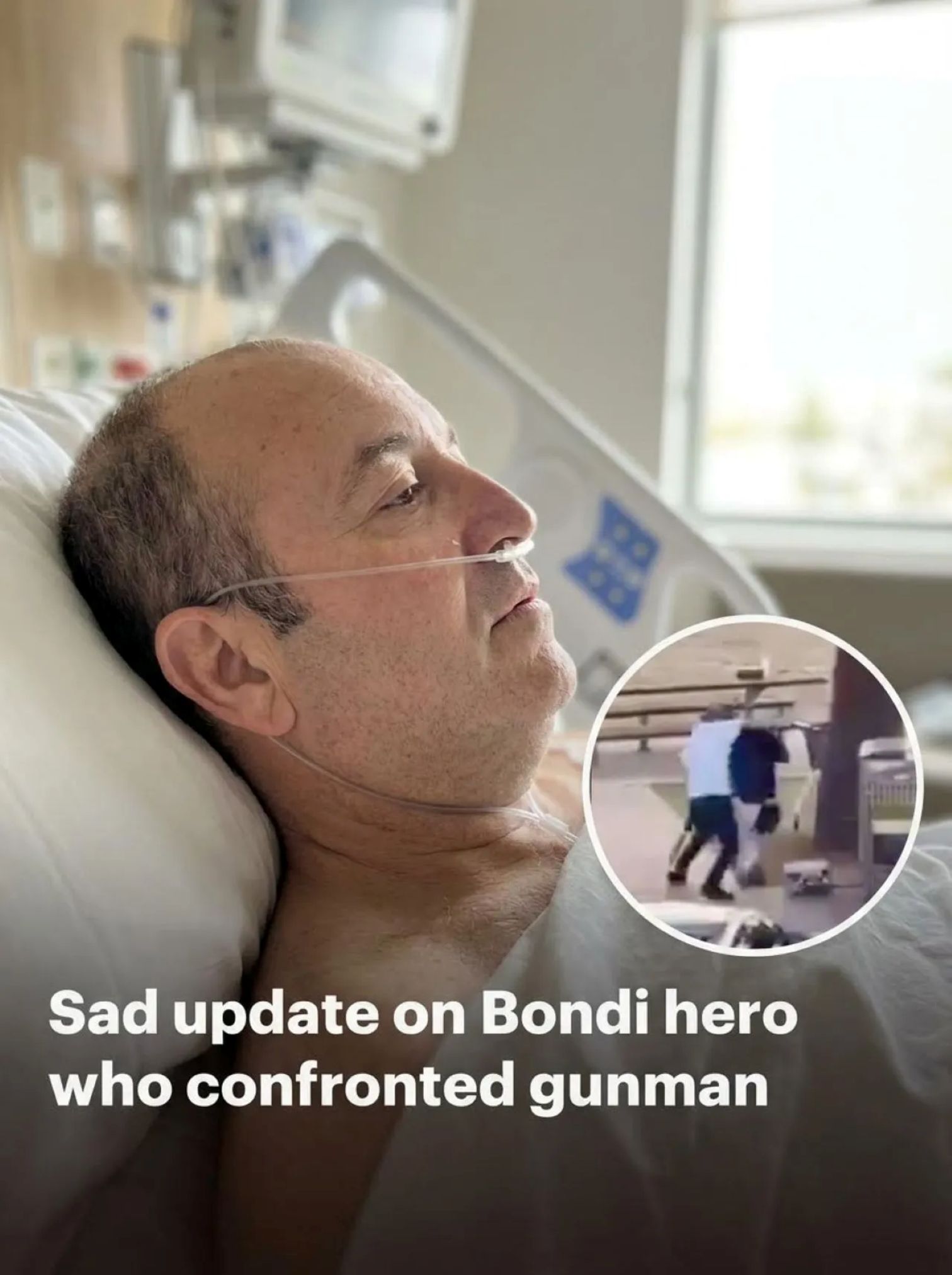
    In the aftermath of the Bondi Beach tragedy, as Australia struggled to process shock, grief, and unanswered questions, one name rose above the chaos as a symbol of instinctive bravery and moral clarity. Ahmed Al-Ahmed, a 43-year-old Sydney shop owner and father of two, did not set out to become a national hero. He acted because, in a moment where seconds mattered and fear could have paralyzed anyone, he chose to move toward danger instead of away from it. What followed was not only an act that likely saved lives, but the beginning of a long, painful recovery that is now revealing the true physical cost of that courage.

    Video footage that spread rapidly across social media and major news networks showed Al-Ahmed approaching an armed attacker from behind, restraining him, and helping to secure the weapon. Security analysts and witnesses have since stated that his intervention almost certainly prevented further loss of life during what has been described as one of the most confronting public safety incidents Australia has faced in decades. In those few seconds, without protective gear, training, or hesitation, he placed himself directly in harm’s way for strangers he did not know.

    As public praise surged and tributes poured in, the focus remained largely on the heroism of that moment. Only later did a quieter, more sobering reality come into view. According to people close to Al-Ahmed, the injuries he sustained are far more severe than initially reported. He remains under intensive medical care at St George Hospital, where doctors are continuing to assess and treat multiple wounds that will require long-term rehabilitation.

    His former migration lawyer, Sam Issa, who has remained in close contact with the family, confirmed that Al-Ahmed has already undergone several medical procedures. One of the most concerning complications is reduced sensation in one arm, raising the likelihood of nerve damage caused during the attack. Medical specialists are proceeding cautiously, aware that nerve injuries can take months—or even years—to fully evaluate and treat. For a man whose livelihood depends on physical work and whose identity is rooted in providing for his family, the uncertainty adds another heavy layer to an already difficult recovery.

    Despite the pain and the mounting physical challenges, Issa has described Al-Ahmed as calm, composed, and unwavering. Those closest to him say he has expressed no regret for his actions. On the contrary, he has reportedly stated that he would act the same way again if faced with a similar situation. His response was not driven by impulse or ego, but by an instinctive sense of responsibility to protect others when no one else could.

    The incident unfolded during Hanukkah by the Sea, a peaceful community gathering where families had come together to celebrate tradition, faith, and togetherness. What should have been a joyful event turned into a scene of terror and confusion when violence erupted. Amid the panic, Al-Ahmed made a decision that would define him in the eyes of a nation. Family members later shared that in the moments before intervening, he quietly asked that a message be passed on to his loved ones, fully aware that he might not survive.

    Al-Ahmed immigrated to Australia from Syria more than a decade ago, building a life through hard work, small business ownership, and devotion to his family. A Muslim by faith, he later explained that his actions had nothing to do with identity, politics, or ideology. He could not stand by while innocent people were in danger. For many Australians, his story has become a powerful counterpoint to narratives of division, reminding the country that shared humanity often emerges most clearly in moments of crisis.

    As details of his recovery have emerged, so too has an outpouring of support that extends far beyond Sydney. Prime Minister Anthony Albanese publicly praised Al-Ahmed’s bravery, calling it a reflection of the best of Australia—ordinary people stepping up for others without hesitation. New South Wales Premier Chris Minns described him as a genuine hero whose actions undoubtedly saved lives. Messages of gratitude and solidarity have arrived from across the globe, underscoring how deeply his actions resonated beyond national borders.

    Crowdfunding efforts and community support initiatives have also gained traction, reflecting public recognition that heroism does not end when the cameras stop rolling. Recovery from traumatic injuries—especially those involving nerve damage and multiple wounds—is often long, painful, and emotionally taxing. Medical experts emphasize that physical healing is only part of the process; psychological recovery, family support, and financial stability play critical roles in long-term outcomes.

    Al-Ahmed’s case has reignited broader conversations around public safety, emergency response, and the role of civilians in violent incidents. While authorities continue to stress that people should not put themselves at unnecessary risk, his actions have also highlighted how quickly ordinary individuals can be forced into extraordinary circumstances. In discussions about national security, violent crime, and community resilience, his story now serves as a real-world example of how courage often emerges without warning.

    For his family, the journey ahead remains uncertain. Doctors have not offered a definitive timeline for his recovery, and each stage of treatment will require patience and resilience. His children have visited him in hospital, a poignant reminder of both what he risked and what he is fighting to return to. Friends say that while the physical toll is undeniable, his spirit remains intact.

    As Australia continues to reflect on the Bondi Beach tragedy, Ahmed Al-Ahmed’s story stands as more than a viral video or a headline. It is a reminder that behind every act of heroism lies a human being who must live with the consequences long after public attention fades. His recovery is not just a medical process; it is a testament to endurance, sacrifice, and the enduring strength of compassion.

    In a world increasingly defined by division and fear, Al-Ahmed’s actions—and his ongoing struggle to heal—offer something rarer and more enduring: proof that humanity can still rise when it matters most, and that true courage often comes at a cost few are prepared to pay.

  • MASH icon passes away at 82! Beloved star of the classic comedy dies following health struggles! a true legend and an incredible person

    MASH icon passes away at 82! Beloved star of the classic comedy dies following health struggles! a true legend and an incredible person

    Patrick Adiarte’s passing at the age of 82 closes a chapter that was never given the volume it deserved. He was a familiar face to millions, yet his name rarely carried the weight of the impact he made. A performer shaped by war, migration, and quiet resilience, Adiarte moved through American popular culture during a time when visibility for Asian and Filipino actors was limited, conditional, and often fleeting. His death, following long-standing health struggles, invites a deeper reckoning with a life that mattered far beyond the brief moments of fame it contained.

    Born in the Philippines during the chaos of World War II, Patrick Adiarte’s earliest memories were formed against the backdrop of survival. War was not an abstraction for him; it was lived experience. That early exposure to instability and loss forged a kind of internal discipline that would later define his career. When he immigrated to the United States, he arrived carrying both trauma and possibility, stepping into a country that promised opportunity but rarely extended it evenly. Hollywood, particularly in the mid-20th century, was not built to welcome actors who looked like him, spoke like him, or carried stories that challenged the dominant narrative.

    Yet Adiarte found his way in. He appeared in some of the most iconic television productions of the era, including the legendary series MASH*, a cornerstone of American television history and one of the most influential comedy-dramas ever produced. His presence on that show, and on other major network programs, was subtle but significant. In an industry that often reduced Asian characters to caricatures or background noise, Adiarte brought humanity, restraint, and emotional intelligence to every role he touched. He did not shout his importance; he embodied it.

    Fame, however, proved to be a fragile and unreliable companion. Like many performers of color in classic Hollywood, Adiarte encountered the limits of an industry that celebrated diversity in theory but resisted it in practice. Roles slowed. Opportunities narrowed. The applause faded. For many, that silence would have been devastating. For Adiarte, it became a turning point.

    Rather than chasing dwindling recognition or clinging to nostalgia, he redirected his energy toward something more enduring. He stepped away from the camera and into the dance studio, the rehearsal space, the classroom. There, he found a different kind of legacy. As a teacher and mentor, Patrick Adiarte influenced generations of dancers and performers, many of whom may never have fully known the breadth of his own journey. What they absorbed instead was his discipline, his honesty, and his insistence that movement and expression could be acts of survival as much as art.

    This transition from screen to studio was not a retreat; it was a reclamation. Teaching allowed Adiarte to control a narrative that Hollywood never quite handed him. He offered young artists what he himself had been denied: patience, visibility, and respect. In an era before diversity and inclusion became high-value keywords in entertainment media, he practiced them quietly and consistently, shaping lives one class at a time.

    His story resonates today because it mirrors broader conversations about representation in Hollywood, Asian American history, and the hidden costs of fame. Patrick Adiarte belonged to a generation of performers who opened doors without ever being allowed to walk fully through them. His career sits at the intersection of classic television history, immigrant resilience, and the often-overlooked contributions of Filipino Americans to the arts. These are narratives now recognized as culturally and historically valuable, but during his prime, they were rarely acknowledged.

    In recent years, renewed interest in classic television series and Hollywood’s golden age has sparked deeper analysis of the performers who existed on the margins of stardom. Adiarte’s work has quietly benefitted from that reassessment. Clips circulate. Credits are reexamined. Viewers ask questions they never asked before: Who was he? Where did he come from? Why didn’t we hear more? The answers reveal as much about the industry as they do about the man.

    Despite personal challenges and declining health in his later years, Adiarte remained grounded. He did not seek public sympathy or attempt a late-career reinvention. Those close to him describe a man at peace with his choices, aware of both the limits and the meaning of his life’s work. He understood that legacy is not always measured in awards, box office numbers, or social media metrics. Sometimes it lives in memory, in influence, in the quiet confidence passed from teacher to student.

    Patrick Adiarte’s death may not dominate headlines the way modern celebrity losses do, but that absence is telling. It reflects the same systemic patterns that shaped his career: visibility without permanence, recognition without security. Yet to frame his life through loss alone would be a mistake. He survived war. He crossed continents. He stood on stages that were not designed for him and made space anyway. He taught when teaching mattered more than performing. He endured.

    In an age obsessed with instant fame and viral relevance, Adiarte’s story feels almost radical. It reminds us that cultural impact does not always announce itself loudly. Sometimes it persists quietly, waiting for a moment when the world is finally ready to listen.

    Patrick Adiarte may no longer be here, but his imprint remains embedded in the fabric of television history, dance education, and the broader story of immigrant contribution to American culture. His name may not always be spoken, but his influence continues to move—through bodies in motion, through stories retold, through doors that stay open because someone once stood in them and refused to disappear.

  • My Moms Cat Vanished After Her Funeral, on Christmas Eve, He Returned and Led Me Somewhere I Never Expected

    My Moms Cat Vanished After Her Funeral, on Christmas Eve, He Returned and Led Me Somewhere I Never Expected

    Four days before Christmas, the house felt frozen in time. The string lights my mother had insisted on hanging far too early still glowed along the window frames, casting a soft, uneven warmth that clashed painfully with the silence she left behind. She had loved Christmas lights, even when cancer hollowed her out, even when chemo took her strength. Sparkle, she said, reminded her she was still here.

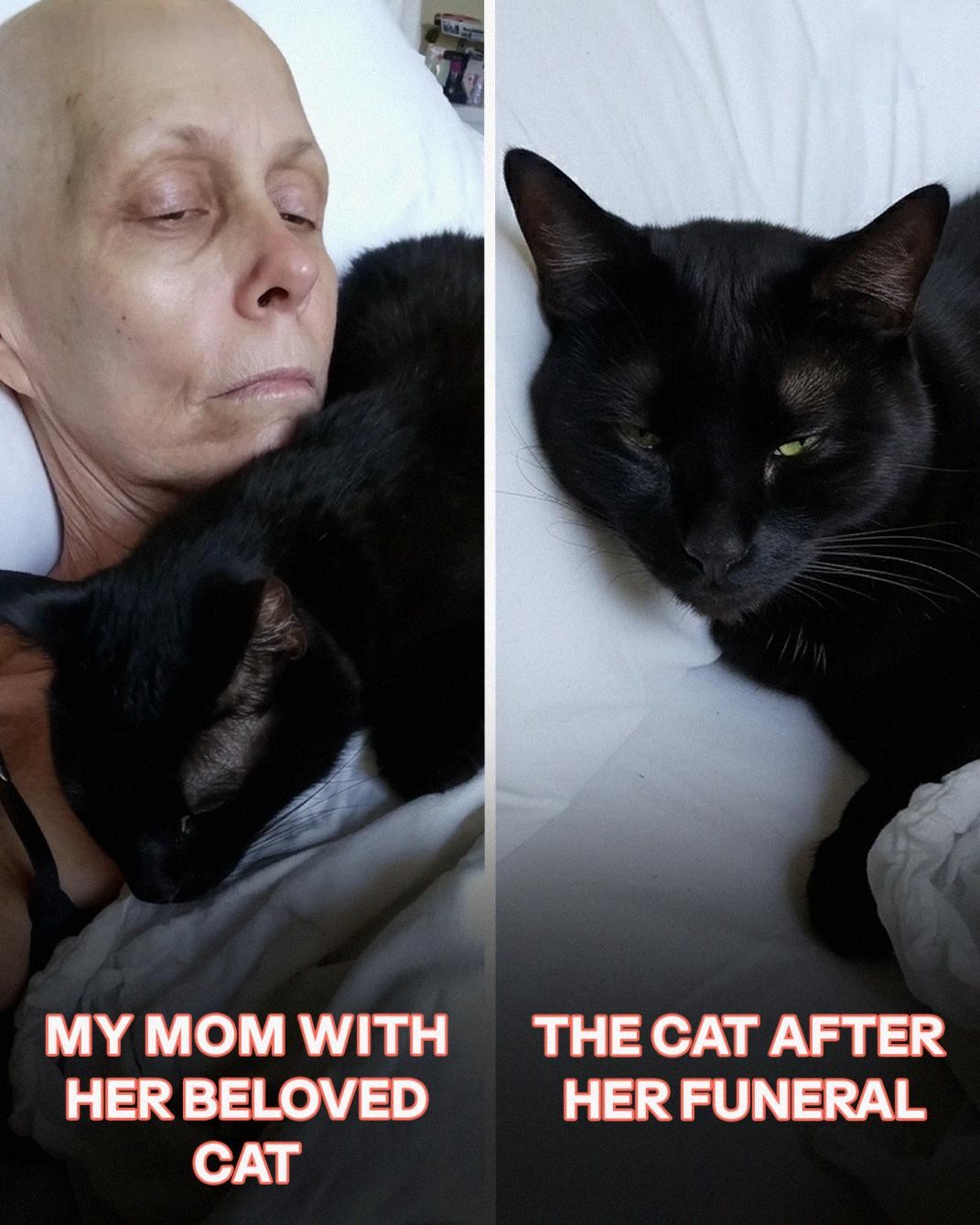
    Now she wasn’t. And the only thing anchoring me to her was her black cat, Cole.

    My mother died a few weeks earlier, quietly, after a long fight with cancer that demanded more bravery than anyone should have to give. In her final days, she made me promise I would still decorate the tree. She made me say it out loud, her voice thin but insistent. I agreed, swallowing the scream rising in my chest, because when someone is dying, you don’t deny them comfort. You carry it for them.

    Cole had been her shadow long before the diagnosis, but afterward, he became something else entirely. He slept curled on her chest, directly over her heart, as if guarding what little time she had left. She joked that he was her nurse, but I knew better. He was holding her together in a way I couldn’t. Watching them sometimes hurt so much I had to turn away.

    After the funeral, Cole followed me everywhere. He didn’t meow. He didn’t wander. He stayed close, silent, grieving alongside me. He was the last living piece of my mother’s presence in that house.

    Then he disappeared.

    I don’t know how long he was gone before panic hit. Grief distorts time. One moment I was moving through the day mechanically, the next I noticed the couch was empty. The spot near the radiator where Cole always slept was cold. The back door hadn’t latched properly.

    I searched the neighborhood in boots and tears, calling his name until my throat burned. I posted online. I taped flyers to poles. I knocked on doors and said he was special, because I didn’t know how to explain that losing him would mean losing my mother all over again.

    No one had seen him.

    Each night I sat on the porch wrapped in a blanket, leaving food out, listening to the wind, imagining the worst. The thought of him alone in the cold, frightened and hurt, broke something inside me that was already splintered.

    Christmas Eve arrived gray and bitter. I hadn’t eaten properly in days. The tree stood half-decorated, ornaments scattered like glass wounds across the table. I sat on the kitchen floor in the dark, knees pulled to my chest, shaking from grief, exhaustion, and the crushing loneliness that comes after loss.

    I whispered his name into the empty house.

    Then I heard it—a soft thud against the back door.

    I froze, afraid hope was playing another trick on me. When I opened the door, there he was.

    Cole stood on the step, thinner than before, dirt clinging to his paws, eyes sharp and steady. In his mouth, he carried my mother’s favorite glass bird ornament, the one she always placed front and center on the tree. He dropped it gently at my feet.

    Something in his posture told me this wasn’t just a return. It was an invitation.

    Without a sound, he turned and walked away. I followed him barefoot into the cold, across the yard, past the frozen flowerbeds my mother once fussed over like children. He glanced back repeatedly, making sure I stayed with him.

    We walked streets I hadn’t thought about in years. Then I saw it—our old house.

    The one we lived in when I was little. The porch swing. The oak trees. The place where my mother used to sit with iced tea, telling me stories while summer cicadas screamed in the dusk. It was where Cole had first lived too, rescued as a shivering kitten and brought home wrapped in her scarf.

    Cole padded up to the walkway and sat, waiting.

    I was crying before I reached him.

    The door opened, and an elderly woman stepped out, silver-haired, wrapped in a cardigan. She wasn’t surprised to see me. Her eyes softened when she saw Cole.

    “There you are,” she said to him gently. Then she looked at me. “He’s been coming by for days. I figured he was looking for someone.”

    Inside, the house smelled of cinnamon and warmth. She poured tea, set down cookies, and let me fall apart at her table. I told her everything—about my mother, the cat, the fear of letting go, the way Christmas felt wrong without her. She listened without interrupting.

    “I lost my son years ago,” she said quietly. “Grief doesn’t disappear. It changes shape. Slowly, it makes room.”

    We spent Christmas Eve together, two strangers bound by loss. Cole slept beside me, purring steadily. When I finally walked home, the glass bird was safe in my pocket.

    Back in my mother’s house, I finished decorating the tree. I placed the ornament exactly where she always did. For the first time since she died, the silence didn’t feel empty. It felt full—of memory, love, and quiet resilience.

    Grief doesn’t mean letting go. It means learning to carry what you’ve lost while still choosing to live. Sometimes, healing arrives in unexpected forms—on cold nights, through acts of kindness, or disguised as a cat leading you exactly where you need to go.

    This story of loss, emotional healing, Christmas grief, and unconditional love reflects how pets help process bereavement, how memory anchors us after death, and how human connection appears when we least expect it. In moments shaped by cancer loss, holiday depression, and emotional recovery, what saves us isn’t forgetting—it’s remembering we are not alone.

  • A boy called 911 for help with his math homework, but when the police arrived, they found a real emergency instead!

    A boy called 911 for help with his math homework, but when the police arrived, they found a real emergency instead!

    On a quiet evening in Madison, an ordinary school night turned into a life-saving chain of events that no one could have predicted. It began not with sirens or screams, but with an eight-year-old boy sitting alone at a kitchen table, a math book open in front of him, numbers blurring together as the minutes passed. What seemed at first like a harmless misunderstanding would soon reveal a real emergency—one that underscored the power of child safety education, emergency response systems, and the instinctive courage of a young child.

    Ryan Crosby had been home from school for hours. His backpack lay on the floor, dinner untouched, the house unusually silent. His mother, Matilda, hadn’t answered her phone all afternoon, but Ryan tried to stay calm. He did what he had been taught: finished his chores, opened his homework, and tried to work through the problems on his own. But when he reached a page of math questions he didn’t understand, frustration gave way to worry.

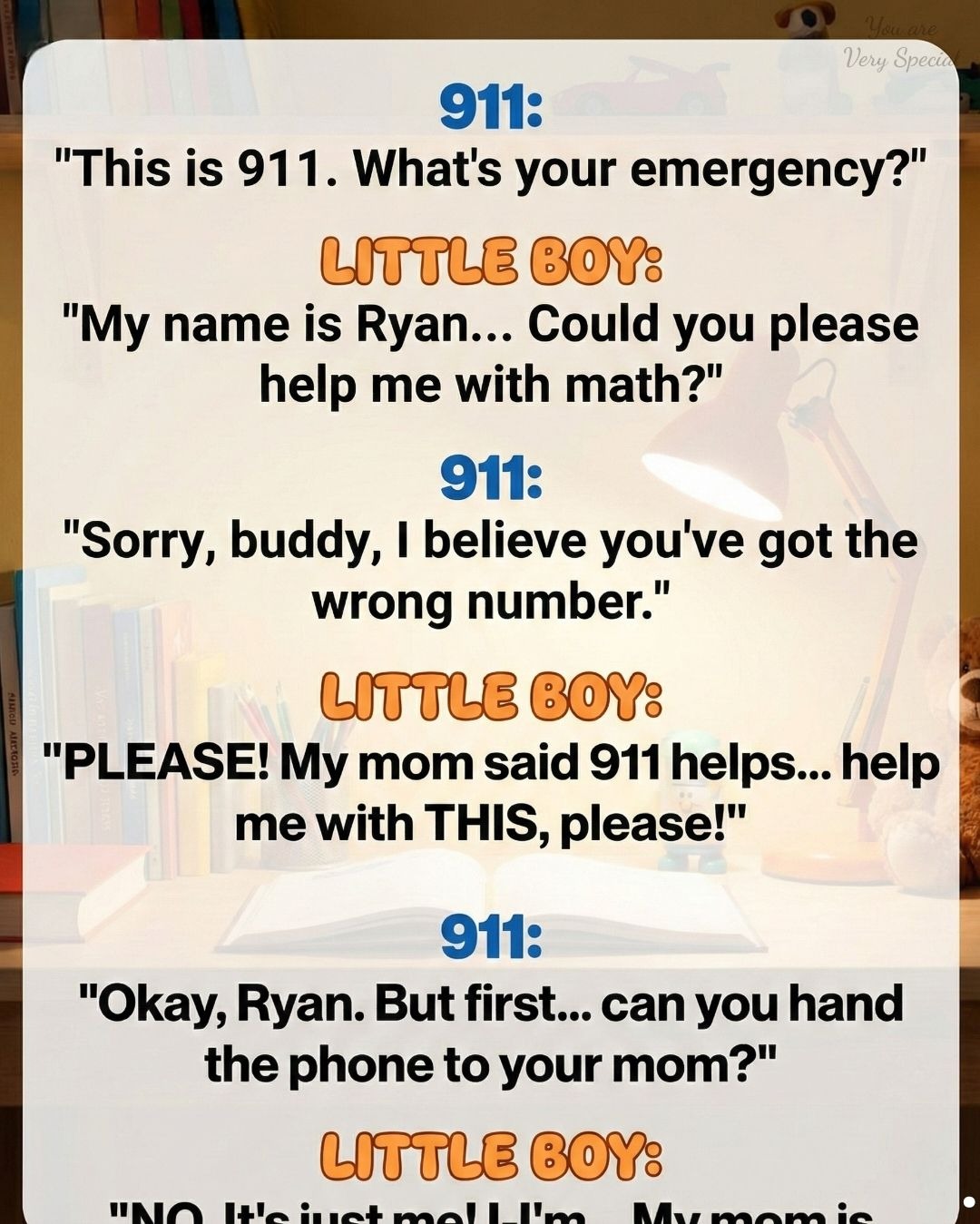
    Ryan had heard his mother say it many times: never be afraid to call 911 if you need help. To him, help was help—whether it came in the form of firefighters, police officers, or someone who could explain fractions. With the earnest logic only a child possesses, he picked up the phone and dialed the number he knew by heart.

    “911, what’s your emergency?” the dispatcher answered.

    Ryan swallowed and spoke softly. He said he needed help with his math homework.

    On the other end of the line, the dispatcher paused. Emergency call centers receive thousands of unusual calls every year, from accidental dials to prank attempts. This one sounded innocent, but protocol demanded caution. The dispatcher gently explained that 911 was for emergencies and asked if there was an adult available.

    That’s when everything changed.

    Ryan’s voice cracked. He began to cry and admitted that he was alone. His mother wasn’t home. She hadn’t been home all day.

    The dispatcher’s tone shifted immediately. Trained professionals know that a child home alone late at night can indicate a far more serious situation. Keeping Ryan calm, she asked for his address while quietly alerting local police officers to conduct a welfare check.

    Within minutes, patrol cars pulled up outside the house. Officers approached carefully, not wanting to frighten the child. When Ryan opened the door, their concern deepened. It was nearly 10 p.m., and there was no sign of any adult in the home. Ryan explained that he had used a spare key after school, assuming his mom would return soon.

    Police attempted to call Matilda’s phone, but it went straight to voicemail. At that point, the situation escalated from a child welfare check to a missing person investigation.

    While one officer stayed with Ryan, reassuring him and making sure he felt safe, others coordinated with dispatch to locate Matilda’s last known phone signal. Thanks to modern emergency technology and mobile location tracking, officers were able to pinpoint where her phone had last transmitted data earlier that day.

    The location was troubling: the outskirts of town, near an abandoned mill and a rarely traveled service road.

    Police immediately redirected resources. Additional units were dispatched, including a K9 search team trained in missing person cases. Time was critical. Exposure, medical emergencies, or accidents in remote areas can turn fatal within hours.

    At the site, officers searched on foot for nearly half an hour with no success. Then the K9 unit arrived. The dog, a German Shepherd named Caesar, was given one of Matilda’s scarves recovered from her home to establish her scent. Within seconds, Caesar pulled hard on the lead, guiding officers down a narrow stretch of road overgrown with brush.

    Less than ten minutes later, they found it: a parked car partially hidden off the road.

    Inside was Matilda.

    She was unconscious, slumped in the driver’s seat, barely responsive. Officers immediately called for emergency medical services and carefully removed her from the vehicle. Paramedics arrived swiftly and transported her to the hospital, where doctors confirmed she had suffered heat exhaustion and fainted earlier that day. Her phone battery had died, leaving her unreachable. With the car window slightly open, she had survived—but only just.

    Doctors later explained that without intervention, prolonged exposure and dehydration could have led to organ failure or worse.

    When Matilda regained consciousness, the first thing she asked about was her son.

    An officer explained what had happened—that Ryan’s 911 call, made for help with math homework, had triggered the investigation that saved her life. She broke down in tears.

    Later that night, when police brought Matilda home, Ryan ran into her arms, clinging tightly, overwhelmed with relief. In that moment, the true meaning of emergency preparedness, parental guidance, and child safety education became painfully clear.

    Matilda had always emphasized the importance of emergency services, teaching Ryan that calling 911 was not something to fear. That lesson—simple but powerful—made all the difference.

    The story quickly spread throughout the community, becoming a powerful reminder of why emergency response systems exist and why children should be taught how and when to use them. Law enforcement officials praised the dispatcher’s professionalism, the officers’ swift action, and the effectiveness of K9 search operations. Child safety advocates highlighted the case as a real-world example of how early education can prevent tragedy.

    Ryan didn’t just ask for help with homework. He unknowingly activated a life-saving chain of events involving emergency call centers, police welfare checks, missing person protocols, mobile phone tracking technology, and search-and-rescue units.

    In a world where emergency services are often taken for granted, this incident stands as a compelling reminder: sometimes, help arrives in unexpected ways. And sometimes, the smallest voice on the other end of the line is the one that matters most.

    Ryan went back to school the next day, math homework unfinished—but with a lesson far more important than numbers. He learned that asking for help is never wrong. And his mother, alive because of it, would never forget that her child’s instinct, courage, and trust in the system saved her life.

    What began as a confusing math problem became a powerful testament to preparedness, awareness, and the quiet heroism of a child who simply did what he was taught.

  • Jane Fonda Reflects on Her Memories of Rob and Michele Reiner!

    Jane Fonda Reflects on Her Memories of Rob and Michele Reiner!

    Hollywood is continuing to absorb the shock and sadness following the sudden passing of legendary filmmaker Rob Reiner and his wife, Michele Singer Reiner, a loss that has sent ripples through the entertainment industry, activist circles, and generations of fans around the world. As tributes continue to surface, one voice in particular has resonated with unusual depth and intimacy: actress, activist, and longtime friend Jane Fonda, who shared a deeply personal reflection that captured not just grief, but the enduring humanity of the couple she knew so well.

    In her tribute, Fonda described Rob and Michele as people whose presence made rooms feel warmer and conversations more meaningful. She recalled seeing them not long before their passing, noting that they appeared joyful, engaged, and full of life. That memory, she wrote, has made the loss even harder to process. There was no sense of closure, no gradual goodbye. Instead, the news landed with the kind of force that leaves even seasoned veterans of loss stunned and unmoored.

    Fonda’s message, shared alongside a candid photograph of the couple, highlighted what many who knew them privately have long said: Rob and Michele Reiner were deeply compassionate individuals whose values extended far beyond their public identities. While Rob Reiner is universally recognized as one of the most influential filmmakers in modern American cinema—responsible for iconic works that shaped entire genres—those closest to him often speak first about his kindness, curiosity, and unwavering moral compass. Michele Singer Reiner, equally admired in her own right, was known for her intellect, quiet strength, and tireless dedication to social causes.

    Together, they formed a partnership that blended creativity, civic responsibility, and genuine care for others. Friends say they were rarely content with surface-level engagement. Whether supporting democratic initiatives, advocating for creative freedom, or mentoring younger voices in film and activism, the Reiners consistently invested themselves fully. They believed that storytelling, when done honestly, could move culture forward—and they lived that belief both publicly and privately.

    Fonda’s tribute emphasized that aspect of their lives, noting that while the world often sees accolades and headlines, the real measure of a life is found in how it touches others. She described their generosity as quiet but constant, their humor as sharp but kind, and their commitment to justice as something that never wavered, even when it would have been easier to step back.

    As the days following their passing unfolded, public attention inevitably turned to reports suggesting the family had been navigating deeply personal challenges behind the scenes. Sources familiar with the situation indicated that Rob and Michele had been dealing with ongoing concerns related to their adult son’s health and well-being. Those who knew the couple stress that these challenges were approached not with denial or distance, but with persistence, compassion, and an unbreakable sense of parental love.

    In a past interview on Piers Morgan Uncensored, Rob Reiner spoke candidly about the complexities of parenthood, especially when children struggle in ways that cannot be easily fixed. He reflected on the reality that love does not disappear when circumstances become painful or confusing. Instead, it deepens, even as it tests one’s resilience. Those words, revisited now, carry a heavier weight, offering insight into the emotional landscape the family may have been navigating.

    Colleagues and friends have been quick to caution against allowing speculation to overshadow remembrance. In an age driven by viral narratives and constant online scrutiny, many have echoed Fonda’s call to center empathy over curiosity. The Reiners’ family has requested privacy, and those close to them have emphasized that honoring Rob and Michele means respecting the dignity with which they lived—and deserve to be remembered.

    Rob Reiner’s legacy alone is monumental. Over a career spanning decades, he helped define modern filmmaking with works that balanced humor, vulnerability, and moral clarity. His films explored friendship, love, power, and justice in ways that resonated across generations, earning both critical acclaim and enduring popularity. Yet even at the height of his success, friends say he remained grounded, using his platform not for self-importance but for impact.

    Michele Singer Reiner, though less visible in the public eye, was no less influential. Those who worked with her describe a woman of sharp insight and deep empathy, someone who understood the power of ideas and the responsibility that comes with influence. She was a trusted advisor, a thoughtful advocate, and a steady presence who helped shape many of the initiatives the couple supported together.

    As Hollywood reflects on their loss, what emerges most clearly is not just admiration, but gratitude. Gratitude for the stories told, the causes championed, and the example set by a partnership rooted in shared values and mutual respect. Jane Fonda’s tribute captured that sentiment with clarity, reminding the public that behind every celebrated career is a human life shaped by relationships, principles, and quiet acts of kindness.

    In the weeks and months ahead, fans will revisit Rob Reiner’s films, rediscovering the wit, warmth, and emotional intelligence that made them timeless. Others will honor Michele Singer Reiner by continuing the advocacy work she believed in so deeply. And for those who knew them personally, the memories will remain—of dinners filled with laughter, conversations that challenged and inspired, and a shared belief that art and activism could, and should, coexist.

    In a culture often quick to reduce lives to headlines or controversies, the legacy of Rob and Michele Reiner stands as a reminder of something deeper: that a life well lived is measured not only by achievement, but by integrity, compassion, and the quiet ways we show up for others. As Jane Fonda and countless others have made clear, their absence leaves a profound void—but their influence, carried forward through stories, values, and love, endures.

  • SOTD – The Graduation Moment That Brought Everyone to Tears!

    SOTD – The Graduation Moment That Brought Everyone to Tears!

    The auditorium was full of applause when my stepson’s name was called. I stood with everyone else, smiling, clapping, watching him walk across the stage in his graduation gown. He looked confident, taller somehow, like the shy little boy I met years ago had finally stepped fully into himself. When he returned to his seat, he glanced around the room, scanning for familiar faces. His eyes met mine for a brief second, then moved on.

    I didn’t feel hurt. Not then. Love doesn’t keep score, and it doesn’t demand acknowledgment on cue. Still, as the applause faded and the principal prepared to move on, something settled quietly in my chest. Not resentment. Not sadness. Just clarity.

    I stood up.

    The sudden movement caught attention. A ripple of murmurs passed through the rows of parents, grandparents, teachers, and students. I walked toward the aisle with measured steps and raised my hand slightly, asking the principal if I could say a few words. He hesitated for a moment, then nodded and stepped aside.

    The room fell silent.

    As I approached the microphone, I could see confusion flicker across my stepson’s face. His eyebrows pulled together, his posture stiffened. He had no idea what was coming. No one did.

    I took a breath. My heart was steady. I wasn’t there to correct him, embarrass him, or rewrite the program. I was there for something else entirely.

    I began by congratulating the graduating class, acknowledging the effort it takes to reach this moment in an increasingly complex world. I spoke about resilience, about learning not only from success but from failure, about how education today is as much about character as it is about achievement. My voice carried clearly through the room.

    Then I shifted my focus to one young man in particular.

    I talked about a boy who once struggled to speak up in class, who doubted himself, who needed time to grow into his confidence. I described how he learned kindness not from textbooks but from observing the people around him. I spoke about how he showed up for others, how he learned accountability, how he became someone dependable and thoughtful.

    I never once said “stepson.”
    I never once said “I raised him.”
    I never once said “I sacrificed.”

    Instead, I talked about how no child is shaped by one person alone.

    I spoke about the invisible network behind every graduate—the teachers who stay late, the coaches who push without breaking, the relatives who show up even when it’s inconvenient, the adults who love quietly without expecting applause. I talked about community, about shared responsibility, about how growth is rarely the result of a single voice but of many steady ones speaking over time.

    The room stayed quiet. People leaned forward, listening.

    Then I turned toward him.

    “What matters most today,” I said, “is not who stands up here or who gets named. What matters is the future you’re walking into. You worked hard. You stayed kind. You became someone this world will be lucky to have.”

    I thanked the school. I thanked the families. I thanked every person who had poured into these students in ways that would never be listed in a program or printed on a certificate.

    And then I stepped away.

    There was no dramatic pause. No reveal. No demand for recognition. Just silence, followed by applause that felt different from before. Slower. Deeper. More reflective.

    When I returned to my seat, my hands were shaking—not from fear, but from release. I had said exactly what needed to be said, and nothing more.

    As the ceremony ended and people began to stand, my stepson turned fully toward me. His face crumpled. He didn’t say anything at first. He just crossed the aisle and wrapped his arms around me, holding on like he was afraid I might disappear.

    “I didn’t realize,” he whispered, his voice breaking. “I should have thanked you. I’m sorry.”

    I smiled and held him tighter.

    “You don’t owe me anything,” I said. And I meant it.

    In that moment, something shifted—not just between us, but in the room itself. People weren’t applauding a speech or a gesture. They were responding to a truth many of them recognized but rarely articulated: that real love doesn’t announce itself. It shows up consistently. It stays. It invests. It lets others shine.

    In an era obsessed with visibility, public credit, and social media validation, moments like this cut through the noise. They remind us that the most meaningful contributions are often the least visible. Stepparents, mentors, guardians, caregivers, teachers—so many people shape lives without ever being formally acknowledged. Their impact doesn’t trend, but it lasts.

    This graduation wasn’t just a milestone for a student. It was a masterclass in emotional intelligence, family dynamics, and unconditional support. It demonstrated that leadership doesn’t always look like standing at the front demanding recognition. Sometimes it looks like stepping forward briefly, speaking with intention, and stepping back so someone else can continue forward.

    Psychologists often talk about secure attachment, emotional maturity, and the long-term effects of stable adult support on child development. This moment embodied all of it. No bitterness. No entitlement. Just grounded love and respect.

    And for my stepson, the lesson landed exactly where it needed to. Not as guilt, but as understanding. Not as obligation, but as gratitude.

    As we walked out of the auditorium together, diploma in hand, I knew this memory would stay with him longer than any speech filled with drama. It would stay because it was rooted in authenticity.

    Love doesn’t need a microphone to be real.
    It doesn’t need applause to be valid.
    And it doesn’t disappear when it isn’t named.

    Sometimes, the strongest love in the room is the one that speaks calmly, steps aside, and keeps showing up—long after the crowd has gone home.

  • Moms boyfriend tried to kill him with an electric heater in 1978 – but please sit down before you see him today!

    Moms boyfriend tried to kill him with an electric heater in 1978 – but please sit down before you see him today!

    At fourteen months old, Keith Edmonds came closer to death than most people ever will in an entire lifetime. In a moment of unthinkable violence in 1978, his mother’s boyfriend pressed the toddler’s face against an electric heater, inflicting catastrophic third-degree burns that destroyed nearly half of his face. Doctors warned his family to prepare for the worst. Survival was uncertain, and even if he lived, they said, his life would be permanently altered. Keith lived. And that survival became the opening chapter of a story defined not by cruelty, but by resilience, transformation, and purpose .

    The years that followed were anything but gentle. Keith spent much of his childhood in and out of hospitals, particularly at the Shriners Burn Institute in Cincinnati, where surgeons performed procedure after procedure in an effort to restore basic function and appearance. Each operation came with pain, fear, and the emotional toll of growing up knowing you look different in a world that rarely handles difference with kindness. Childhood, for Keith, was shaped by sterile hallways, recovery rooms, and the quiet realization that life had asked far more of him than it asks of most children.

    Outside the hospital walls, stability remained elusive. He entered the foster care system and waited for reunification with his mother, while learning that the man who nearly killed him received only a ten-year prison sentence. That knowledge lingered like an open wound. At school, the scars on his face drew stares, whispers, and sometimes outright cruelty. Children can be merciless, and Keith learned early how isolation feels when your appearance becomes the first thing people see.

    By his teenage years, the weight of trauma, pain, and unresolved anger began to surface in dangerous ways. At just thirteen, Keith turned to alcohol as a way to numb what he couldn’t articulate. That coping mechanism followed him into adulthood, intertwining with depression, addiction, and a growing sense that survival alone was not the same as living. His twenties were marked by internal battles invisible to most, yet relentless in their intensity.

    Then, on July 9, 2012—his 35th birthday—everything shifted. In the middle of a drinking binge, Keith experienced a moment of clarity that would redefine the rest of his life. He realized he was tired of running from his pain. Tired of letting his past dictate his future. He made a decision that day to get sober and rebuild himself from the ground up. It wasn’t dramatic. It wasn’t public. It was deeply personal—and it worked.

    Sobriety became the foundation on which Keith rebuilt his life. With discipline and determination, he entered the corporate world, first working in sales at Dell and later joining The Coca-Cola Company. There, he quickly distinguished himself, earning top honors and eventually being entrusted with one of the most challenging inner-city routes in Detroit. In environments where trust is earned, not given, Keith excelled. People sensed authenticity in him. The scars on his face told a story before he ever spoke—a story of endurance, honesty, and lived experience.

    But professional success alone wasn’t enough. Keith understood that his survival carried responsibility. In 2016, he transformed his personal pain into collective purpose by founding the Keith Edmonds Foundation, a nonprofit dedicated to empowering abused and neglected children. His mission was clear: no child should feel unseen, discarded, or defined solely by trauma.

    One of the foundation’s flagship initiatives, Backpacks of Love, provides foster children with essential items during their first days in care—clothing, hygiene products, and personal belongings that offer dignity in moments of upheaval. Another program, Camp Confidence, pairs survivors with mentors and creates safe spaces where children can build self-esteem, resilience, and trust. Keith is adamant that his work is not performative charity. “We don’t just show up and disappear,” he says. “We walk alongside them.”

    The impact is immediate and profound. Educators, counselors, and community leaders have witnessed tangible change in children who once struggled with hopelessness. A high school principal in Tennessee described it plainly: students believe Keith because he never minimizes their pain. He doesn’t offer empty platitudes. He shows them what survival looks like when it’s paired with accountability and compassion. One young girl, teetering on the edge emotionally, met Keith and his wife, Kelly, and emerged transformed—more confident, more hopeful, and visibly lighter.

    Keith understands that connection deeply. “Some people carry their scars on the inside,” he says. “I carry mine on the inside and the outside.” His commitment to sobriety, service, and forgiveness is not abstract. It’s deliberate. He knows where his attacker lives today. He has chosen not to seek him out. Forgiveness, Keith explains, does not excuse harm or erase memory. It frees the person who has been carrying the weight.

    His relationship with his mother, though complicated, has also evolved. The years were not easy, but Keith chose to let healing take precedence over resentment. That decision, like sobriety, was ongoing—not a single moment, but a series of choices. Eventually, he wrote his story down in a memoir titled Scars: Leaving Pain in the Past, not to relive trauma, but to offer proof. Proof that the worst moment of your life does not get to author the rest of your story.

    Today, Keith Edmonds stands as a powerful example of post-traumatic growth, addiction recovery, and purpose-driven leadership. His life speaks directly to conversations around childhood abuse prevention, mental health awareness, foster care reform, and long-term trauma recovery. He is not polished or perfect. His journey is not tidy. But it is real.

    From a toddler fighting for breath to a man handing hope back to others, Keith’s life is defined by the choice to transform suffering into service. Every time a child receives a backpack, finds a mentor, or hears, “I’ve been where you are,” his scars fulfill a role they were never meant to have. They heal.

  • Americas Most Lethal Bunker-Busting Mission Sends Global Shockwaves!

    Americas Most Lethal Bunker-Busting Mission Sends Global Shockwaves!

    In the quiet corridors of global military intelligence and defense strategy circles, one development has sent unmistakable shockwaves across capitals and command centers alike: reports of a covert American bunker-busting operation involving the legendary B-2 Spirit stealth bomber and some of the most powerful non-nuclear weapons ever built. While official confirmations remain limited, the implications are already reshaping conversations about modern warfare, nuclear deterrence, and the fragile balance of power in the Middle East.

    At the heart of the discussion is the B-2 Spirit, the crown jewel of U.S. strategic airpower and one of the most expensive and technologically advanced aircraft ever created. Designed during the Cold War but refined for 21st-century conflict, the B-2 represents a fusion of stealth technology, long-range strike capability, and precision warfare unmatched by any other nation. Its rumored appearance in a mission linked to Iran has reignited debates about America’s ability to project force anywhere on Earth with near-total invisibility.

    According to defense analysts tracking global air movements and satellite data, B-2 bombers are believed to have launched from Whiteman Air Force Base in Missouri, embarking on an intercontinental flight exceeding 13,000 kilometers. Such missions are made possible through complex mid-air refueling operations, allowing the aircraft to remain airborne for extended periods and strike targets halfway around the world without landing. This capability alone places the United States in a category of military dominance few rivals can challenge.

    What elevates this mission beyond a standard show of force is the weapon reportedly carried onboard: the GBU-57 Massive Ordnance Penetrator. Weighing approximately 13.6 tons, this bunker-busting bomb was engineered for a singular purpose—destroying deeply buried and heavily fortified targets that conventional airstrikes cannot reach. With the ability to penetrate up to 60 meters of reinforced rock and concrete before detonating its massive warhead, the GBU-57 is widely regarded as the ultimate tool against hardened underground facilities.

    Military experts have long noted that only the B-2 Spirit can deploy this weapon effectively. Each bomber carries a limited payload—just two Massive Ordnance Penetrators per aircraft—but what it sacrifices in quantity, it compensates for with precision, reach, and strategic impact. The suspected target of such a mission has drawn intense scrutiny: Iran’s deeply buried nuclear infrastructure, particularly facilities like Fordow, designed specifically to withstand air attacks.

    The strategic message embedded in such an operation is impossible to ignore. For Iran, it represents a stark reminder that even the most fortified underground installations may not be invulnerable in the age of advanced stealth aviation and next-generation precision weapons. For U.S. allies and adversaries alike, it underscores America’s continued dominance in long-range strike capability, missile defense evasion, and strategic deterrence.

    The B-2’s defining advantage lies in its stealth architecture. Its unique flying-wing design, radar-absorbing materials, and minimized heat signature allow it to slip past advanced air defense systems undetected. In an era where radar networks, surface-to-air missiles, and electronic warfare dominate military planning, the ability to operate invisibly changes the calculus of national defense. No warning sirens. No early detection. Just impact.

    Defense analysts emphasize that this kind of mission is not merely about destruction—it is about signaling. Modern geopolitics increasingly relies on strategic ambiguity, where capability matters as much as intent. A silent overflight or precision strike can communicate resolve without a single official statement. In that sense, the rumored operation reflects a broader shift in military doctrine, prioritizing speed, surprise, and technological superiority over mass troop deployments.

    From a global security perspective, the operation highlights a widening technological gap between the United States and its competitors. While nations such as China and Russia have invested heavily in stealth aircraft and hypersonic weapons, none currently possess a platform comparable to the B-2 paired with a weapon like the Massive Ordnance Penetrator. This asymmetry reinforces America’s leverage in nuclear nonproliferation negotiations, regional security dynamics, and international diplomacy.

    At the same time, the event has intensified fears of escalation. Any action involving nuclear-adjacent infrastructure carries enormous political and strategic risk. Military strategists caution that even a demonstration of capability can provoke countermeasures, proxy conflicts, or accelerated weapons development. In regions already strained by economic sanctions, regional rivalries, and ideological divisions, the margin for miscalculation remains dangerously thin.

    Still, proponents of deterrence argue that such operations may ultimately prevent conflict rather than ignite it. By demonstrating the ability to neutralize hardened targets without resorting to nuclear weapons, the United States reinforces a doctrine of overwhelming conventional superiority. In theory, this discourages adversaries from crossing red lines, knowing that concealment alone offers no guarantee of safety.

    Beyond immediate geopolitical implications, the mission reflects the future of warfare itself. Precision-guided munitions, stealth aviation, satellite intelligence, and cyber-enabled command systems have redefined what power projection looks like in the modern era. Borders, distance, and terrain are no longer the protective barriers they once were. The battlefield has expanded vertically, technologically, and invisibly.

    Whether the B-2 Spirit’s flight was a rehearsal, a warning, or an operational strike may never be fully disclosed. What is clear, however, is that its shadow has altered strategic thinking worldwide. Defense ministries, intelligence agencies, and policymakers are now reassessing assumptions about underground security, missile defense resilience, and deterrence theory in a world where invisibility and penetration define supremacy.

    As global tensions continue to simmer, this moment serves as a reminder that power in the 21st century is not always loud or visible. Sometimes it moves silently through the skies, unseen until it chooses to be known. And when it does, the reverberations are felt far beyond any single target, reshaping the global balance of power in ways that will be studied for decades to come.