Category: General News

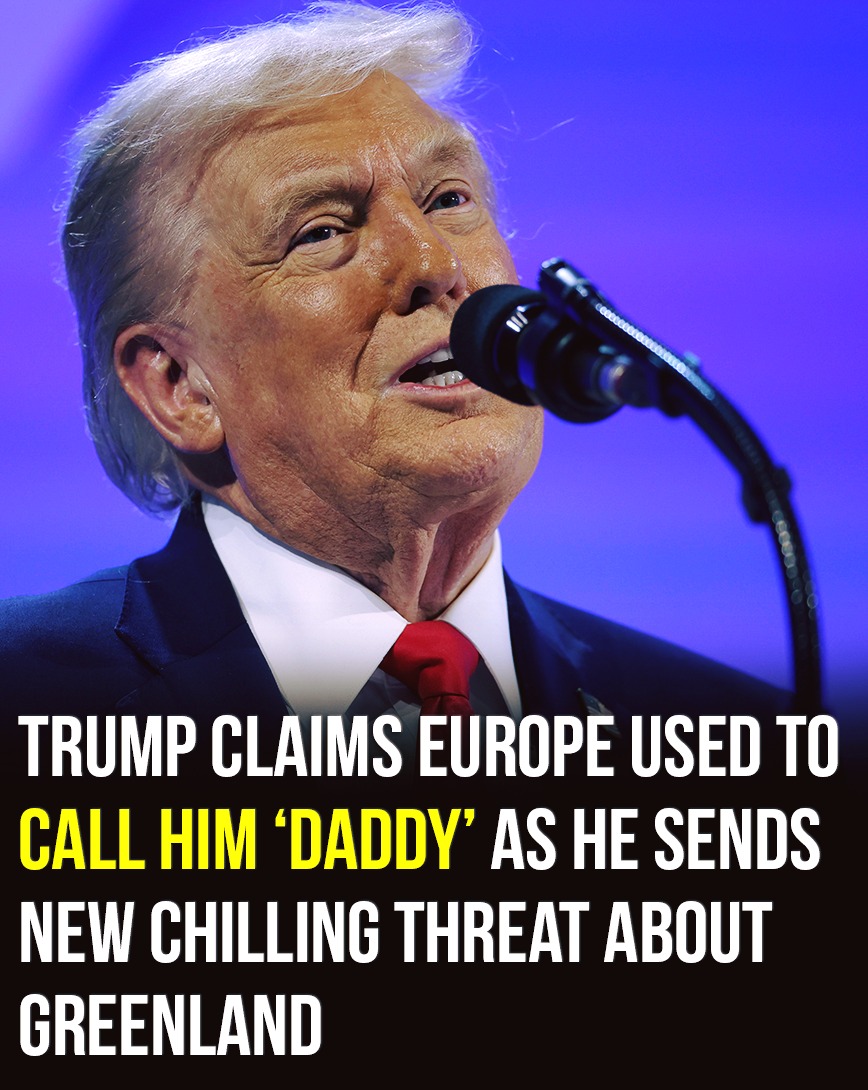
  • They called me daddy, Trump slams Europe and NATO while pushing Greenland grab!

    They called me daddy, Trump slams Europe and NATO while pushing Greenland grab!

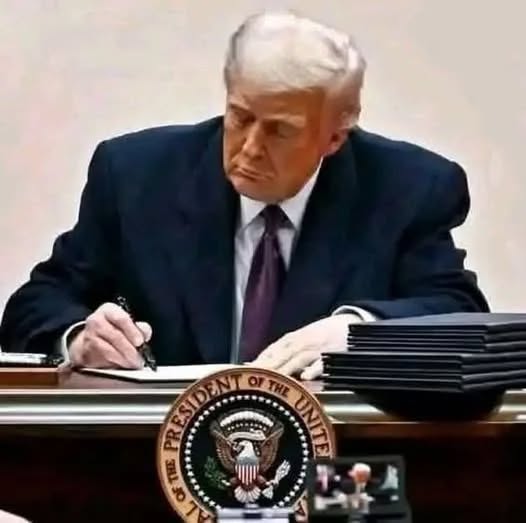
    On the polished stage at the World Economic Forum in Davos, Donald Trump delivered what was nominally a policy address but functioned more like a geopolitical warning shot. The speech blurred the line between diplomacy and provocation, recasting alliances, territory, and power as personal tests of loyalty. Greenland, a vast and sparsely populated Arctic landmass, became the centerpiece—not as geography, but as leverage.

    Trump spoke of Greenland not in the language of treaties or international law, but as a symbol of whether America’s allies still understood who, in his view, carried the real weight of global security. What might once have been framed as strategic interest was instead presented as a reckoning. Cooperation, he implied, was owed. Resistance would be remembered.

    The tone was unmistakable. Trump mocked European leaders, portrayed them as dependent, and returned to a favorite theme: that the United States had long been exploited by allies who took protection without showing gratitude. He recounted moments when foreign officials, as he told it, had treated him with exaggerated deference, joking that they called him “daddy.” The remark drew nervous laughter in the hall, but the message underneath was sharp. Respect, in Trump’s framing, was hierarchical, not mutual.

    Nowhere was this clearer than in his comments about NATO. Trump depicted the alliance as something America sustains almost single-handedly—shielding Europe while receiving little in return. He suggested that NATO survives not because of shared values or collective defense, but because Washington allows it to. In that narrative, allies are not partners but dependents, and dependence is a debt that can be called in.

    Greenland entered the speech as a kind of litmus test. Trump argued that U.S. control over the territory was essential for national and global security, citing threats from Russia and China. He questioned Denmark’s claim to the land and dismissed historical ownership as flimsy. While he stopped short of explicitly threatening military action, he made a point of not ruling anything out—then, almost in the same breath, insisted he preferred peace. The contradiction was familiar: overwhelming force presented as reassurance, not menace.

    The audience in Davos, accustomed to coded language and diplomatic restraint, was confronted instead with a blunt worldview. Power, Trump suggested, is most effective when it is personal, unapologetic, and remembered long after the moment has passed. Allies who say no should expect consequences—not necessarily immediate, but inevitable.

    His remarks on immigration widened the gulf. Trump spoke about migrants from Somalia and other regions in sweeping, derogatory terms, describing entire communities as dangerous or intellectually inferior. These statements were not policy proposals so much as boundary markers, defining who belongs within his conception of the West and who does not. In doing so, he reinforced a narrative that security comes not from cooperation or integration, but from exclusion and force.

    Canada was not spared. Trump portrayed it as another beneficiary of American protection, suggesting that without the United States, it would struggle to survive. The message echoed his treatment of Europe: neighbors and allies were framed as weak, sheltered by U.S. power, and insufficiently appreciative of it. Gratitude, in this vision, is not optional; it is the price of safety.

    Yet beneath the bravado, the structure of Trump’s argument followed a familiar pattern. First comes pressure—verbal, public, unmistakable. Then humiliation, often wrapped in humor. Finally, the suggestion of overwhelming force, paired with a declaration that it will not be used unless absolutely necessary. It is a negotiating style that treats relationships as contests and ambiguity as an advantage.

    For supporters, the speech was a refreshing display of strength. They see in Trump’s approach a refusal to cloak American interests in polite language or multilateral rituals. To them, Davos was proof that he remains willing to challenge assumptions, disrupt alliances, and demand more from partners who, in their view, have grown complacent.

    For critics, the address was something else entirely: a reminder of how fragile international trust can be when diplomacy is replaced by intimidation. They argue that alliances like NATO are not protection rackets but collective agreements built on shared interests and mutual restraint. By framing them as one-sided obligations, Trump risks hollowing out the very structures that have underpinned global stability for decades.

    Greenland itself, largely absent from the room except as an abstraction, became collateral in this debate. Its people, its governance, and its legal status were overshadowed by its strategic value in an era of melting ice and rising great-power competition. In Trump’s telling, the land mattered less for what it is than for what it represents: a test of whether American demands are still met with compliance.

    The irony of the Davos moment was hard to miss. Speaking at a forum dedicated to global cooperation and economic interdependence, Trump articulated a vision rooted in dominance and transaction. He rejected the premise that stability comes from shared rules, instead insisting that it flows from unmistakable power and the willingness to use it—or at least to make others believe it might be used.

    By the end of the speech, it was clear that Greenland was never the sole subject. Nor was NATO, or immigration, or Canada. The real message was about memory. Trump was reminding allies and adversaries alike that, in his view, power is not just exercised in the moment; it is something others are meant to remember long afterward. Who complied. Who resisted. Who showed respect.

    In Davos, Trump did not offer a roadmap for negotiation or compromise. He offered a warning, delivered with bravado and repetition: the United States, as he sees it, is done asking politely. Whether that posture strengthens American influence or accelerates its isolation remains an open question. What is certain is that the speech reinforced a defining feature of Trump’s approach to the world—one where loyalty is demanded, gratitude is expected, and power is never allowed to fade quietly into the background.
  • I Broke My Arm and Leg Before My Dad Married My Moms Sister – They Still Made Me Plan the Wedding, So Grandma Showed Up and Dropped a Gift That Made Them Scream

    I Broke My Arm and Leg Before My Dad Married My Moms Sister – They Still Made Me Plan the Wedding, So Grandma Showed Up and Dropped a Gift That Made Them Scream

    I was nineteen when my father told me that my aunt Amanda was moving into our house.

    My mother had been gone less than a year. Her clothes were still in the closet. Her favorite mug still sat in the cabinet. The grief was fresh, raw, and heavy, and then my father dropped the news as casually as if he were talking about a change in cable providers.

    “She needs a place to stay,” he said, sipping his coffee. “And sometimes things happen. You’re young. You wouldn’t understand.”

    I stared at him, stunned. Amanda was my mother’s sister. The idea that she would replace her—live in her house, sleep in her bed, take her place—felt wrong on a level I didn’t yet have the language to explain.

    But my opinion didn’t matter. It never did.

    At first, Amanda was careful. When my father was around, she was all smiles and soft voices. She brought soup when I was sick. Asked polite questions about my college classes. Touched my arm just long enough to seem affectionate.

    I wanted to believe it could work. I needed to.

    That illusion shattered the first time we were alone.

    I’d come home exhausted from a double shift at the café and forgotten to fold the laundry. Amanda stood over the basket, nose wrinkled, eyes sharp.

    “Honestly,” she said, “you’re just as useless as your mother was.”

    The words landed like a slap. I couldn’t breathe. Couldn’t speak.

    When I stared at her in shock, she rolled her eyes. “Don’t be dramatic. I’m trying to toughen you up.”

    From that day on, the mask came off whenever my father left the room. She criticized everything—my clothes, my posture, the way I walked through the house. If I wore headphones, I was disrespectful. If my room wasn’t spotless, I was lazy. And always, always, the same word.

    “Useless.”

    I tried to tell my father once. Carefully. Quietly.

    “She’s different when you’re not here,” I said.

    He frowned. “Amanda? She’s been nothing but kind.”

    Right on cue, she appeared behind him, concern painted perfectly across her face. I knew then that no version of the truth I offered would ever compete with the performance she gave.

    They got engaged soon after.

    Then I got hurt.

    It was snowing hard the day Amanda sent me out with a list of errands—wedding gifts, decorations, last-minute details. The sidewalks were slick with ice, the air painfully cold. My arms were full of heavy packages when my foot slid out from under me.

    I remember the impact. The sound of my body hitting the ground. The white-hot pain in my leg and arm. I remember thinking, absurdly, that Amanda would be furious if the gifts were damaged.

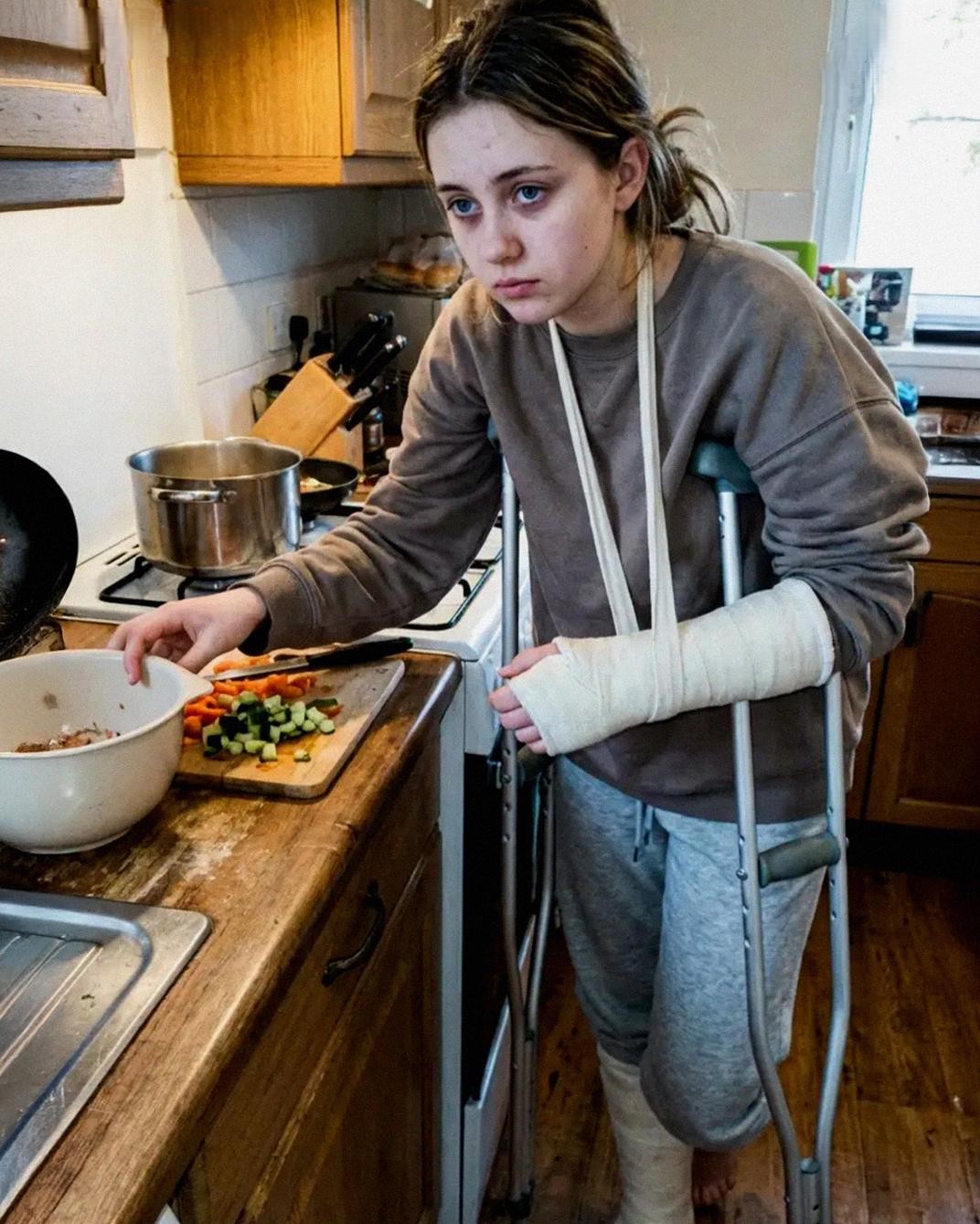
    I woke up in the hospital with casts on my arm and leg.

    Amanda leaned over me, her face tight with irritation.

    “Don’t think this gets you out of anything,” she whispered. “You’re still handling the rehearsal dinner and wedding planning. Don’t be so useless.”

    When we got home, she walked ahead of me up the stairs while I clung to the railing, fighting tears, each step agony. When my father saw me, he shook his head.

    “You should’ve been more careful,” he said. “Ice is dangerous.”

    That night, I called my grandmother.

    She listened while I cried, while I told her everything—the insults, the control, the way Amanda spoke about my mother, the way my father looked away.

    “Do exactly what they ask for now,” Grandma said calmly. “Just for a little while.”

    “Why?” I asked.

    “Because when I arrive,” she said, “I’m bringing them a gift they won’t forget.”

    For the next week, I worked through pain and exhaustion. I booked venues, finalized seating charts, picked up dresses. Every time I asked for help, Amanda sneered.

    “Useless.”

    An hour before the engagement celebration, I was resting in bed when the doorbell rang.

    Amanda came into my room, scowling. “Why are you still lying there?”

    Before I could answer, she went downstairs. Then I heard my grandmother’s voice—bright, cheerful—and a loud crash.

    Shouting followed. My father’s voice. Amanda screaming.

    I forced myself downstairs.

    The front hall looked like chaos. Balloons, streamers, party hats, oversized clown shoes scattered everywhere. Three clowns stood rigidly near the wall, arms folded.

    My grandmother stood calmly in the center of it all.

    “Well,” she said, “since you’ve turned your lives into a circus, I thought this gift was appropriate.”

    Amanda was livid. My father looked mortified.

    Grandma’s eyes found me instantly. “Come here, sweetheart.”

    I hobbled into her arms, and for the first time in months, I felt safe.

    She dismissed the clowns, then turned to my father.

    “You’ve been blind,” she said evenly. “Now listen.”

    She told me to speak. Just the truth.

    So I did.

    I told him everything.

    Amanda laughed, dismissive, then turned on my father. “She’s lying. She’s trying to ruin us. You’re going to throw away our wedding over this?”

    My father hesitated. My heart broke.

    Then Grandma stepped forward.

    “There’s no proof,” she said calmly. “Only a choice.”

    She looked him dead in the eye. “Believe the woman who replaced your wife—or the daughter you raised, sitting in casts because no one protected her.”

    Silence stretched.

    Then my father spoke.

    “The wedding is off.”

    Amanda screamed and stormed out.

    My father knelt in front of me, shaking. “I’m sorry,” he said. “I should’ve seen it.”

    It would take time to heal. Trust doesn’t rebuild overnight.

    But for the first time since my mother died, I knew one thing for certain.

    I was no longer alone.

  • The octuplets of Octomom turn 16 – here is what their lives are like now

    The octuplets of Octomom turn 16 – here is what their lives are like now

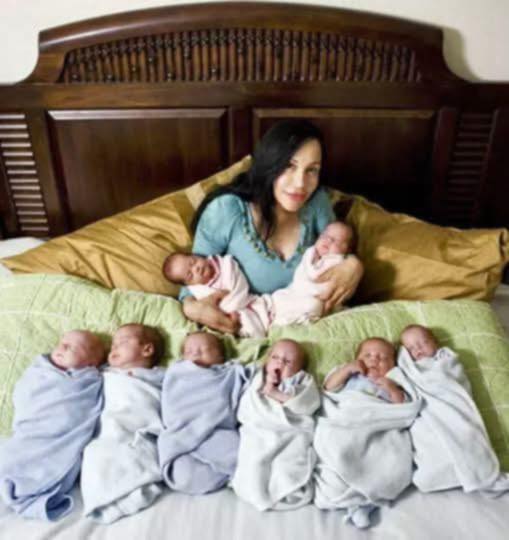
    When Natalie Denise Suleman gave birth in January 2009, the moment instantly entered medical history—and pop culture. The world quickly labeled her “Octomom,” a nickname that followed her relentlessly for years. She had just delivered the first known set of surviving octuplets, eight babies born alive in a single pregnancy. What made the event even more startling was that Suleman was already the mother of six children. Overnight, her family grew to fourteen, and her private life became public property.

    The birth itself was extraordinary, but the fallout was even larger. Media coverage was nonstop, often unforgiving, and the narrative surrounding Suleman hardened quickly into controversy. Yet behind the headlines was a far more complicated story—one rooted in personal conviction, medical ethics, financial hardship, and an unwavering focus on her children.

    Suleman was born on July 11, 1975, in Fullerton, California. She was raised as an only child by her mother, a schoolteacher, and her father, a restaurant owner. From an early age, she gravitated toward caregiving and child development. That interest guided her education and career choices. She studied at Mt. San Antonio College, earned a bachelor’s degree in child development, and later worked as a psychiatric technician at a state mental hospital, caring for individuals with complex needs.

    Her path to motherhood came through in vitro fertilization. Over several years, she underwent IVF treatments that resulted in the birth of six children: Elijah, Amerah, Joshua, Aidan, Calyssa, and Caleb. Suleman has said repeatedly that her desire to have children was deeply personal and rooted in her values, not driven by fame or attention.

    In 2008, she made a decision that would change her life forever. She asked that all of her remaining frozen embryos be implanted in a single IVF cycle, believing it was morally wrong to discard them. Her fertility doctor, Michael Kamrava, transferred twelve embryos—far exceeding standard medical guidelines. Eight developed successfully, leading to the octuplet pregnancy.

    That decision ignited a global debate about reproductive ethics and medical responsibility. Critics accused Suleman of recklessness and questioned her ability to care for so many children. Supporters argued that reproductive autonomy should not be dictated by public opinion. The controversy eventually led to a formal investigation, and in 2011, the California Medical Board revoked Kamrava’s medical license, citing gross negligence.

    On January 26, 2009, Suleman delivered Noah, Isaiah, Jeremiah, Jonah, Josiah, Makai, Maliyah, and Nariyah at UC Irvine Medical Center. All eight survived—a rare and remarkable outcome. The achievement was immediately overshadowed by intense scrutiny. The media frenzy was relentless, and Suleman found herself portrayed as irresponsible, unstable, or exploitative. Death threats followed. Public judgment was harsh and often dehumanizing.

    Despite common assumptions, the birth did not make her wealthy. There was no massive financial payout. Suleman was unemployed at the time and struggled to support her growing family. Faced with mounting expenses, she turned to unconventional ways of earning money—choices that were widely criticized but driven by necessity. Over the years, she appeared in adult entertainment projects, participated in celebrity boxing matches, and made paid media appearances. In 2012, she filed for bankruptcy, reporting nearly $1 million in debt.

    Legal trouble followed soon after. In 2014, she was charged with welfare fraud for failing to report approximately $26,000 in income while receiving public assistance. She pleaded no contest to a misdemeanor, completed community service, repaid the funds, and avoided jail time. The case reinforced negative perceptions, even as she continued to raise her children largely out of public view.

    By 2013, Suleman had had enough. She withdrew from the spotlight almost entirely, choosing privacy over constant defense. For more than a decade, she focused on raising her children away from tabloid culture, sharing only limited updates through social media.

    In January 2025, the octuplets turned sixteen. Suleman marked the milestone with a rare public message, celebrating each child by name and emphasizing gratitude, faith, and love. Her tone was reflective rather than defensive—less about controversy, more about family.

    Today, Suleman speaks openly about what she would do differently. She has expressed regret over not pursuing legal action against her fertility doctor and has acknowledged the lasting consequences of the choices made during that period. She has also been candid about raising a son with profound autism and the daily demands that care requires.

    Some of her children have begun sharing their own perspectives. In the Lifetime documentary Confessions of Octomom, her son Joshua described the shock and emotional weight of learning his mother was expecting eight more children. His account offered a rare glimpse into what it was like growing up inside a story the world thought it already understood.

    Suleman’s parenting style today is notably strict and deliberate. She limits social media use, discourages dating, and emphasizes discipline, routine, and service. She has said she wants her children grounded, empathetic, and resistant to the pull of external validation—lessons shaped by her own experiences with fame and judgment.

    As the octuplets grow older, the narrative surrounding their family has begun to shift. The spectacle has faded, replaced by a quieter, more complex understanding. Suleman’s life remains controversial, but it is no longer defined solely by a single moment in 2009. It is a story of resilience under pressure, of mistakes acknowledged, and of a mother who absorbed public condemnation while keeping her family intact.

    The octuplets are no longer headlines or symbols in an ethical debate. They are teenagers with their own identities, shaped by an upbringing unlike any other. And their mother, once reduced to a nickname, now stands as a reminder that no story—especially one told at volume—is ever as simple as it seems.

  • Hazardous Ice Storm Threatens Mid-Atlantic – Preparation Tips Inside!

    Hazardous Ice Storm Threatens Mid-Atlantic – Preparation Tips Inside!

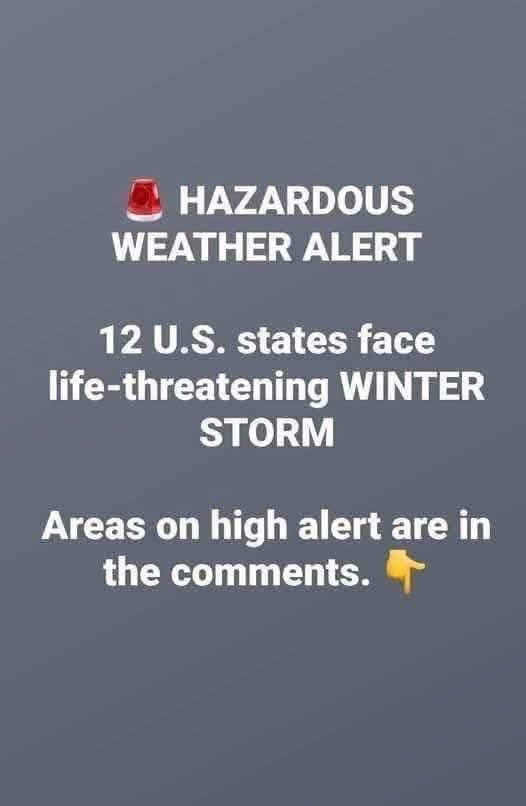
    A dangerous winter storm is bearing down on the Mid-Atlantic, and forecasters are urging residents to take the threat seriously. Unlike classic snowstorms that announce themselves loudly, this system is defined by ice—quiet, deceptive, and often far more destructive. From highways to power lines, even a thin glaze of freezing rain can turn everyday routines into hazardous situations within hours.

    According to forecasts from the National Weather Service, the storm is expected to impact wide portions of Maryland, Virginia, West Virginia, and Pennsylvania, with the greatest risk concentrated in north-central and western Maryland, northwestern Virginia, eastern West Virginia, and central to western Pennsylvania. Meteorologists warn that prolonged freezing rain combined with gusty winds could lead to widespread travel disruptions, power outages, and property damage.

    Ice storms differ from snow events in ways that often catch people off guard. Snow tends to reduce visibility and slow travel, but ice creates a nearly invisible layer that strips tires of traction and turns sidewalks into skating rinks. Roads that appear merely wet can become impassable in seconds, especially on bridges, overpasses, and untreated secondary roads. Emergency officials stress that many winter accidents occur not during heavy snowfall, but during light freezing rain when people underestimate the danger.

    As the storm system moves through the region, a steady flow of moisture is colliding with cold air trapped near the surface. This setup is ideal for freezing rain, allowing liquid precipitation to fall through warmer air aloft and freeze instantly upon contact with the ground. The result is a growing shell of ice on trees, power lines, vehicles, and buildings. Even a quarter inch of ice can be enough to bring down branches and knock out electricity, while higher accumulations dramatically increase the risk of long-lasting outages.

    Utility companies across the Mid-Atlantic have already staged repair crews and equipment in anticipation of downed lines and snapped poles. Ice adds significant weight to trees and wires, and when combined with wind, it can cause failures that cascade across entire neighborhoods. Officials warn that restoration may take time, especially in rural or mountainous areas where access is limited and damage can be widespread.

    Transportation agencies are also bracing for impact. State departments of transportation have pre-treated major highways where possible, but freezing rain can overwhelm even the best preparation. Salt and brine are less effective once ice has already formed, and plow trucks are of limited use without snow to push aside. Authorities emphasize that the safest option is to avoid travel altogether during peak icing conditions, particularly overnight and during early morning hours when temperatures are coldest.

    Airports throughout the region are monitoring conditions closely. Ice accumulation on aircraft surfaces can ground flights quickly, leading to delays and cancellations that ripple across the system. Schools and local governments are preparing for closures or shifts to virtual schedules, recognizing that buses and student drivers are especially vulnerable on icy roads. In many communities, decisions are being made hour by hour as conditions evolve.

    Emergency management officials are urging residents to prepare now rather than react later. That preparation starts with basic supplies: enough food and water for several days, medications refilled, flashlights and batteries readily available, and mobile devices fully charged. Portable power banks can be invaluable if outages occur, and generators should be checked and used only according to safety guidelines to avoid carbon monoxide exposure.

    People who rely on electrically powered medical equipment are advised to notify their utility providers and caregivers in advance. Many power companies maintain priority restoration lists for medically vulnerable customers, but those systems work best when information is updated before a storm hits. Families are also encouraged to check in on elderly neighbors or anyone with limited mobility, as icy conditions can make it difficult to reach help if something goes wrong.

    Outside the home, residents are advised to secure loose objects, protect outdoor faucets, and avoid parking vehicles under trees or power lines. Ice-laden branches can fall without warning, causing damage or injury. Walking should be kept to a minimum, and if it cannot be avoided, officials recommend wearing footwear with good traction and moving slowly, assuming every surface is slick.

    The psychological aspect of ice storms should not be overlooked. Because the storm may arrive quietly, with light rain rather than dramatic snowfall, there can be a temptation to continue normal routines. Emergency officials consistently warn against this mindset. Ice storms are among the most dangerous winter weather events precisely because they disguise their severity until it is too late.

    Forecasters expect conditions to gradually improve by late Thursday as temperatures rise and precipitation tapers off. However, the end of freezing rain does not mean an immediate return to normal. Cleanup and recovery often take longer than the storm itself. Fallen trees, blocked roads, and damaged infrastructure can linger for days, and melting ice can refreeze overnight, creating renewed hazards.

    In past Mid-Atlantic ice storms, some communities have gone days without power, heat, or reliable transportation. Those experiences have shaped current warnings, which emphasize caution over convenience. Officials repeatedly stress that no errand or commute is worth the risk of becoming stranded on an icy roadway or injured in a fall.

    The message from meteorologists and emergency managers is consistent and blunt: treat this storm with respect. Prepare early, stay informed through official updates, and limit exposure until conditions improve. Ice may not be loud or dramatic, but its impact can be severe and lasting.

    In a region where winter weather can change quickly and unpredictably, this storm serves as a reminder that preparation is not panic—it is common sense. Even a thin sheet of ice can bring daily life to a standstill, and those who plan ahead are far better positioned to weather the disruption safely.

  • New Food Stamp Rules Start in! see now!

    New Food Stamp Rules Start in! see now!

    Beginning November 1, 2025, the rules governing food assistance in the United States will change in ways that many low-income households will feel immediately. For millions who rely on the Supplemental Nutrition Assistance Program, commonly known as SNAP, the program is shifting from a broad safety net toward a system with stricter conditions, tighter timelines, and far less room for error. For people already living close to the edge, the changes introduce not just new requirements, but a constant sense of urgency.

    At the center of the overhaul is a renewed emphasis on work requirements for able-bodied adults without dependents. Under the new rules, these individuals must prove that they are working, volunteering, or enrolled in approved job training for at least 80 hours every month in order to continue receiving benefits. Failing to meet that threshold does not simply reduce assistance; it triggers a hard limit. Those who cannot comply are restricted to just three months of SNAP benefits over a three-year period, a policy often described as the “time limit.” Once those months are used, food assistance disappears, regardless of whether circumstances improve or worsen.

    Supporters of the changes frame them as a push toward self-sufficiency, arguing that tying benefits to work or training encourages labor force participation and reduces long-term dependency. Critics see something far different: a policy that assumes stable jobs, reliable transportation, and accessible volunteer opportunities in communities where those things often do not exist. For many recipients, especially in rural areas or regions with weak job markets, meeting the 80-hour requirement can be less a matter of effort than of opportunity.

    One of the most significant shifts is the expansion of who is subject to these rules. Previously, adults aged 59 and older were generally exempt from the work requirement. Under the new framework, that automatic exemption does not apply until age 65. For people in their early sixties—many with health issues, limited mobility, or outdated job skills—this change is more than technical. It forces a demographic already vulnerable to unemployment into compliance with rules designed for a much younger workforce.

    The narrowing of exemptions goes further. Only caregivers of children under the age of 14 are now automatically spared from the work requirement. Groups that once received blanket protections, including people experiencing homelessness, veterans, and former foster youth, no longer qualify for automatic exemptions. Instead, they must navigate the same reporting systems, documentation requirements, and deadlines as everyone else. For populations already dealing with instability, trauma, or bureaucratic barriers, this shift raises the risk that benefits will be lost not because of unwillingness to work, but because of missed paperwork or confusion about the rules.

    The administrative burden is a critical part of the story. SNAP has always required periodic reporting, but the new rules increase the frequency and complexity of compliance. Recipients must document hours worked or volunteered, confirm participation in training programs, and respond promptly to notices from state agencies. Any delay, error, or misunderstanding can result in sanctions or termination of benefits. Advocates warn that this effectively turns food assistance into a test of administrative literacy, disadvantaging those with limited access to the internet, unstable housing, or language barriers.

    Compounding these challenges is the broader fiscal environment. Ongoing federal budget disputes and the specter of government shutdowns add another layer of uncertainty. Even individuals who remain eligible under the new rules may face delays in benefit issuance if agencies are understaffed or systems are disrupted. In such scenarios, the threat is not just losing eligibility outright, but enduring gaps in assistance that can mean empty refrigerators and skipped meals.

    State agencies, which administer SNAP on the ground, are preparing for a surge in case reviews, appeals, and questions from confused recipients. Many offices are already stretched thin, and the new requirements demand more staff time for verification and enforcement. This raises the possibility that errors will increase, not decrease, as workers juggle higher caseloads and stricter timelines. For recipients, resolving a mistake can take weeks—time during which food insecurity becomes a daily reality.

    The human impact of these changes is likely to be uneven but significant. For someone with steady part-time work, the 80-hour requirement may be manageable. For someone piecing together gig work, caring informally for family members, or dealing with chronic but undocumented health conditions, it can be a constant struggle. The three-month limit, in particular, functions like a countdown clock. Each month of benefits used without meeting the requirement brings recipients closer to a cutoff that offers no flexibility for short-term crises or seasonal downturns.

    Food banks and charitable organizations are bracing for increased demand. Historically, when SNAP eligibility tightens, emergency food providers see immediate spikes in need. Unlike federal programs, these organizations rely on donations and volunteers, resources that are often strained during economic uncertainty. The result is a shifting of responsibility from a national program designed to reduce hunger to a patchwork of local efforts that cannot always keep pace.

    Policy analysts note that the timing of the changes matters. Inflation has eased from its peak, but food prices remain elevated compared to pre-pandemic levels. Housing costs continue to consume a growing share of household budgets, leaving less money for groceries. In this context, reducing or delaying food assistance can force families to make impossible choices between rent, utilities, and meals.

    The debate over the new SNAP rules reflects a deeper philosophical divide about the role of social programs. One side emphasizes incentives, arguing that assistance should always be conditional and temporary. The other stresses stability, contending that consistent access to food is a prerequisite for finding and keeping work, not a reward for it. The November 2025 changes do not resolve that debate; they sharpen it.

    For recipients, however, the argument is less abstract. It plays out in monthly reporting forms, in hours tracked and re-tracked, in the quiet anxiety of checking benefit balances and waiting for approval notices. The safety net is not disappearing, but it is becoming narrower, with fewer handholds and steeper consequences for slipping.

    As the new rules take effect, the reality for millions will be defined by adaptation. Some will find ways to meet the requirements. Others will cycle on and off benefits, using their three months strategically while searching for stability. And some will fall through the cracks entirely, relying on informal support or going without.

    What is clear is that SNAP, once designed primarily as a buffer against hunger, is being reshaped into a program where eligibility is increasingly conditional on navigating complex systems and meeting rigid benchmarks. For those already living one paycheck—or one crisis—away from food insecurity, the changes turn assistance from a source of stability into a high-stakes balancing act, where every missed hour and every delayed form carries real, immediate consequences.

  • Mom! should I hand the doctor the powder Grandma mixed into the milk?

    Mom! should I hand the doctor the powder Grandma mixed into the milk?

    The hospital is usually defined by routine. A steady rhythm of monitors, rolling carts, quiet voices trading information in clipped sentences. That night, the rhythm collapsed. The air shifted into something dense and suffocating, as if the building itself had inhaled and forgotten how to breathe.

    Phones rang behind the nurses’ station, sharp and urgent. Security appeared at the doors without explanation. A police officer followed, then another, their belts clinking too loudly in the silence. People moved faster, spoke less. The room that had held my newborn hours earlier became unrecognizable.

    My mother-in-law, Margaret, was being escorted down the hallway.

    She fought them every step.

    “This is God’s will!” she screamed, her voice cracking against the sterile walls. “You don’t get to interfere with purity. You don’t get to corrupt this family!”

    Her eyes were wild, unfocused, sliding past me as if I were already irrelevant.

    My sister-in-law Claire followed, crying into her sleeve, repeating that it was all a misunderstanding, that her mother was confused, that no one meant any harm. Her words dissolved into noise.

    My husband, Daniel, stood frozen near the empty bassinet. His hands shook so badly he had to brace himself against the counter. He kept saying my name under his breath, over and over, like he was trying to remember who I was.

    I watched from the hospital bed, numb spreading outward from my chest. My heart hammered painfully, but my mind floated somewhere far above the room, detached and distant.

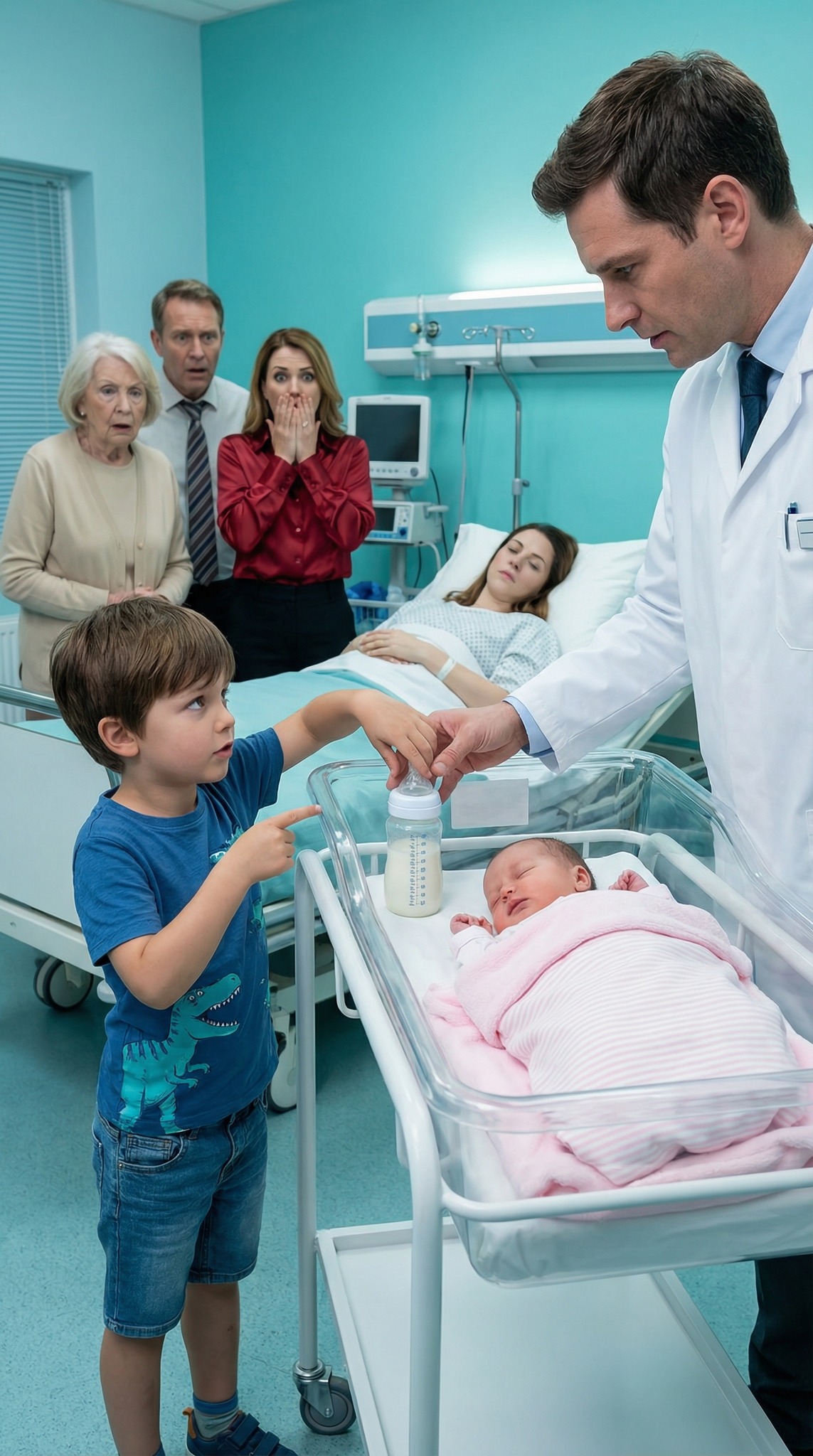
    They took the bottle.
    They took the cart.
    They took my statement.

    And just like that, the place where my son should have slept became a crime scene.

    To understand what happened that night, you have to understand Margaret.

    From the moment Daniel introduced us, she didn’t dislike me. She evaluated me. Every conversation felt like an inspection disguised as politeness.

    “Your family has a history of depression, doesn’t it?” she once asked, sipping tea from delicate china. “And your father passed young. Heart problems, yes?”

    “He was fifty,” I said carefully.

    She hummed. “Weak stock. Daniel’s family survives. We protect the bloodline.”

    I told myself she was eccentric. Old-fashioned. Daniel always brushed it off. “That’s just Mom,” he said. “She doesn’t mean anything by it.”

    When our first son, Noah, was born, her scrutiny intensified. She examined his grip, his eyes, his temperament, searching for flaws she seemed almost disappointed not to find.

    Then I got pregnant again.

    This time, she stopped pretending. She talked openly about risk. About genetics. About how irresponsible it was to “double down” on what she called uncertainty.

    Evan was born a few weeks early. Small, but perfect. Healthy.

    Margaret stared at him through the incubator glass with cold calculation.

    “He’s frail,” she whispered. Not concern. Judgment.

    The toxicology report came back quickly. Too quickly.

    The substance found in the milk was a prescription sedative. One Margaret had been taking for years. Harmless to adults in controlled doses. Lethal to a newborn whose body couldn’t process it.

    The lab found residue. The pill had been crushed deliberately, mixed carefully so it would dissolve completely.

    This wasn’t an accident.

    Detective Miller sat beside my bed, his voice low and steady. “We believe this was intentional.”

    Daniel stared at the floor. He already knew.

    Margaret told police she was protecting the family. That my bloodline was weak. That my history of postpartum depression meant I would ruin another child. She said God would understand her mercy.

    She was arrested before sunrise and charged with first-degree murder.

    The betrayal didn’t end there.

    Claire broke under questioning. She admitted she saw her mother crushing something near the bottle cart. She said nothing. Fear, loyalty, paralysis—whatever the reason, her silence made her complicit.

    Then the social worker spoke to Noah.

    He was eight. Small legs swinging from the chair, comic book clutched too tightly in his hands.

    “Did you see Grandma with the bottle?” she asked gently.

    He nodded. “She said she was fixing it so Evan wouldn’t cry.”

    “Why do you think she said that?”

    Noah hesitated. “She told Dad the baby would be cold soon. That it was better that way.”

    Daniel had cried, Noah said. Just cried.

    I demanded to listen to Daniel’s interrogation. Through the glass, I watched him collapse.

    “She warned me,” he sobbed. “She said she wouldn’t let another mistake live in the house.”

    “And you did nothing,” the detective said flatly.

    Daniel admitted what he had never said aloud. He had seen that look before. As a child. With pets. Animals she deemed weak or sick. She called it mercy.

    “I was afraid of her,” he whispered.

    That was when I understood the truth that hollowed me out.

    My son didn’t die because of an accident.
    He didn’t die because of nature or fate.
    He died because the people closest to him chose fear, silence, and ideology over his life.

    The hospital apologized. Policies changed. Settlements were offered.

    None of it mattered. Evan was gone.

    The media descended. They loved the story. Killer grandmother. Religious extremism. Eugenics dressed as devotion.

    Daniel moved out days later. I didn’t stop him. When he tried to hug me goodbye, I stepped back.

    “You didn’t do it,” he said.

    “You didn’t stop it,” I replied. “That’s the same thing.”

    The trial took eight months. Margaret pleaded insanity. She cried for herself. For her reputation. For prison food.

    She never cried for Evan.

    The jury deliberated less than four hours.

    Guilty.

    Life without parole.

    Claire accepted a plea deal. Five years.

    Daniel was never charged. Cowardice isn’t illegal.

    We divorced quietly.

    Noah and I moved states. New house. Sunlit backyard. A rescue dog Margaret would have hated.

    Noah talks about Evan often. About the bike he would have taught him to ride. The toys they would have shared.

    I let him talk. Memory is how we keep him alive.

    I volunteer now. Hospital advocacy. Policy reform. Evan’s Law exists in three hospitals. Two-nurse verification. No unsupervised access.

    It’s not justice. It’s prevention.

    Daniel sends cards. I shred them.

    Margaret sends letters. I burn them.

    I’m not strong. Strength suggests endurance.

    I’m awake.

    Awake to how ordinary monsters can be. How silence kills. How a child’s question can expose a truth adults are too afraid to face.

    If Noah hadn’t spoken up, Margaret might have walked free. Evan’s death might have been written off as tragedy.

    Instead, the truth survived.

    And for us, that has to be enough.

  • Michael J Fox Opens Up About His Journey With Parkinsons and His Hopes for the Future!

    Michael J Fox Opens Up About His Journey With Parkinsons and His Hopes for the Future!

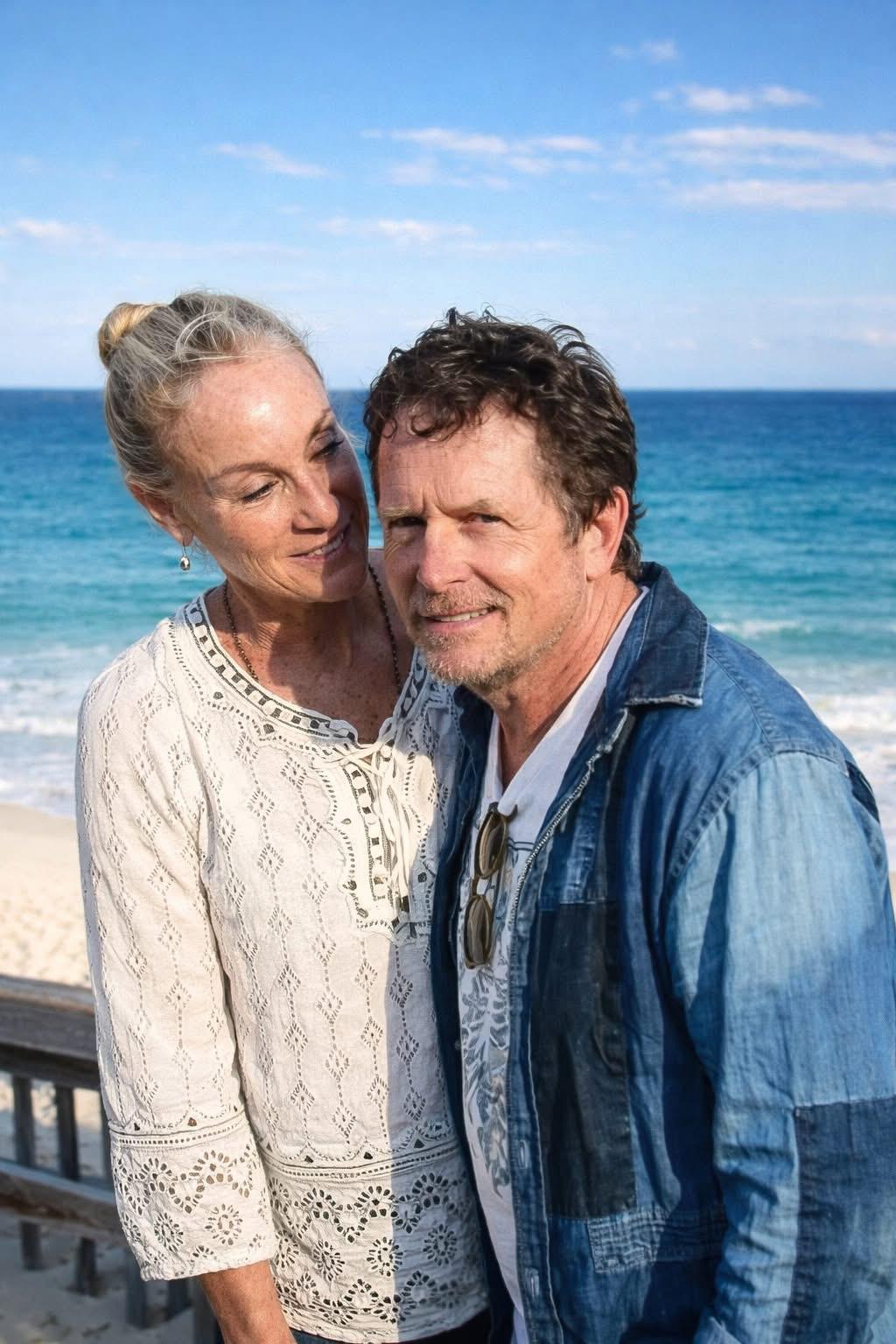
    In the early 1990s, Michael J. Fox seemed to embody momentum itself. He was fast-talking, physically precise, and relentlessly energetic, a performer whose timing depended on every muscle firing exactly when it should. Audiences saw confidence and control. What they could not see was the quiet disruption beginning inside his body.

    In 1991, when Fox was just 29 years old, a subtle twitch in his finger led to a diagnosis that would alter the course of his life: young-onset Parkinson’s disease. For most people, Parkinson’s appears later in life. For someone still building a career defined by movement and physical comedy, the news was devastating. The condition, caused by the gradual loss of dopamine-producing neurons in the brain, brings tremors, muscle rigidity, slowed movement, and problems with balance. It is progressive and incurable. For Fox, it meant confronting a future radically different from the one he had imagined.

    At first, he chose silence. For nearly seven years, Fox kept his diagnosis private while continuing to work at a demanding pace. On set, he learned to hide tremors, to adapt blocking and camera angles, to mask symptoms with medication and discipline. It was exhausting, both physically and emotionally. He has since described those years as a constant calculation: how much energy he had left, how visible his symptoms were, and how long he could maintain the illusion of normalcy.

    By the late 1990s, that balancing act became impossible to sustain. In 1998, Fox publicly disclosed his diagnosis, a decision that marked a turning point not only in his own life but also in how Parkinson’s was discussed in the public sphere. Two years later, he founded the Michael J. Fox Foundation for Parkinson’s Research, transforming his personal struggle into a focused, global effort to accelerate research and improve patient outcomes.

    The foundation quickly distinguished itself by refusing to accept incremental progress as enough. Instead of spreading funds thinly, it concentrated resources on high-impact science, clinical trials, and collaborations across academia and industry. Fox pushed for measurable results, open data sharing, and urgency. Under his leadership, the foundation became one of the most influential funders of Parkinson’s research in the world, reshaping how studies are designed and how quickly discoveries move from labs to patients.

    As the years passed, Fox’s symptoms progressed. He has spoken openly about the realities many patients face but rarely see reflected honestly: frequent falls, broken bones, chronic pain, and the sheer effort required for basic movement. In recent interviews, he has described moments when standing still is harder than walking, and when his body feels unreliable in ways that demand constant adjustment. These admissions are not framed as defeat, but as facts—conditions to be acknowledged rather than denied.

    Fox often describes his outlook as “realistic optimism.” It is not blind hope or false cheerfulness. It is the decision to accept limitations without allowing them to erase meaning. He acknowledges that Parkinson’s has taken much from him, including aspects of his acting career he once loved. At the same time, he insists it has given him something unexpected: clarity about what matters, and a purpose that extends far beyond fame.

    That perspective has resonated deeply with patients and families around the world. By choosing visibility instead of withdrawal, Fox helped dismantle stigma around neurological disease. He showed that Parkinson’s is not a personal failure, not a reason for shame, and not a condition that strips people of dignity. His openness offered language and representation to millions who had previously felt invisible.

    Fox’s influence also changed how society talks about disability more broadly. He challenged the idea that worth is measured by physical capability or productivity. His life became an example of how impact can grow even as physical abilities decline. Advocacy, leadership, humor, and honesty replaced the roles that his body could no longer perform on screen.

    Now in his mid-60s, Fox continues to speak candidly about the future. He does not romanticize his condition or promise outcomes he cannot control. He talks about planning, adaptation, and the importance of community. He acknowledges fear while refusing to let it dominate his choices. When he discusses hope, it is grounded in action: funding research, supporting caregivers, and pushing for better treatments and quality of life.

    His legacy today is no longer defined primarily by the characters he played, but by the doors he opened. The foundation he built has funded billions of dollars in research, supported countless scientists, and brought patients into the center of the scientific process. Clinical trials that once took decades to organize now move faster because of the systems his advocacy helped create.

    Fox has often said that Parkinson’s did not give him purpose, but it clarified it. The disease forced him to choose how he would live with uncertainty, loss, and limitation. He chose engagement. He chose service. He chose to turn personal adversity into collective progress.

    In a culture obsessed with control and perfection, his story stands apart. It is not about overcoming illness or defeating a disease. It is about living fully alongside it. Fox’s journey shows that meaning does not disappear when circumstances change—it evolves. And sometimes, the life you never planned becomes the one that matters most.

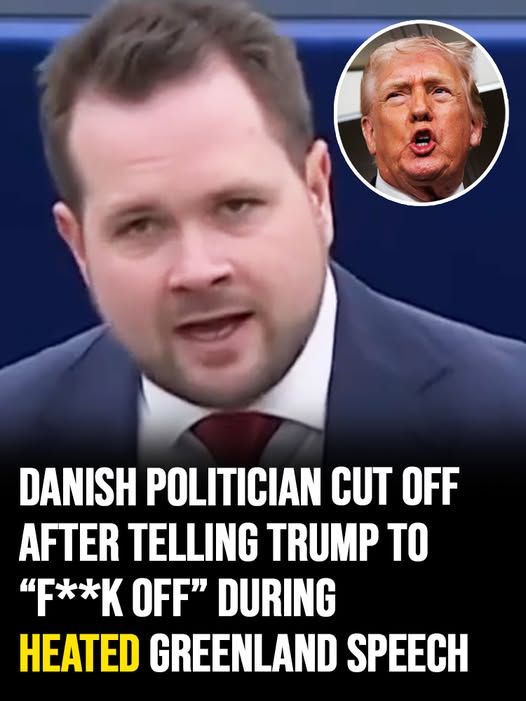
  • Danish politician cut off after telling Trump to fk off during heated Greenland speech!

    Danish politician cut off after telling Trump to fk off during heated Greenland speech!

    The confrontation over Greenland has moved far beyond quiet diplomacy and into open political theater, and few moments captured that shift more vividly than a speech delivered this week in the European Parliament. What began as another debate over sovereignty and security turned into a viral flashpoint when a Danish lawmaker abandoned diplomatic language altogether and told the American president, in blunt terms, to back off.

    At the center of the controversy is Donald Trump, whose renewed push to bring Greenland under U.S. control has rattled allies across Europe. Framed by Trump as a matter of “national and world security,” the proposal has revived memories of his earlier interest in acquiring the Arctic territory and amplified fears that Washington is willing to strong-arm partners to secure strategic and economic advantage.

    Greenland, an autonomous territory within the Kingdom of Denmark, has suddenly become a geopolitical pressure point. Trump has repeatedly argued that the island’s location and resources make it indispensable to American defense interests, particularly in the context of competition with Russia and China in the Arctic. He has also suggested that Denmark lacks the capacity to protect Greenland adequately, a claim Danish leaders strongly reject.

    Those remarks have landed badly not just in Copenhagen, but in Greenland itself. Over recent weeks, demonstrations under the slogan “Hands off Greenland” have taken place both on the island and in major Danish cities. Protesters have accused the U.S. president of treating Greenland as a commodity rather than a homeland, and of ignoring the will of its people. According to reporting by BBC, opinion polls indicate that roughly 85 percent of Greenlanders oppose any move to join the United States.

    Despite that opposition, Trump has doubled down. In a series of posts on his Truth Social platform, he declared that Greenland was “imperative for National and World Security” and insisted that there could be “no going back.” He portrayed the United States as the only power capable of guaranteeing global peace, arguing that American strength, not negotiation, is the ultimate stabilizing force. The rhetoric echoed a familiar theme in his foreign policy: allies are protected by Washington, and therefore owe it compliance.

    The language alarmed European leaders already uneasy about the state of the transatlantic relationship. Trump’s comments did not stop at Greenland. He criticized NATO allies as insufficiently grateful and hinted that American protection should not be taken for granted. To many in Europe, the message sounded less like partnership and more like coercion.

    That tension came to a head during a session of the European Parliament, when Danish Member of the European Parliament Anders Vistisen took the floor. Vistisen, known for his hardline views on sovereignty and national independence, launched into a forceful defense of Greenland’s status and Denmark’s authority.

    He began in measured terms, reminding the chamber that Greenland has been part of the Danish realm for centuries and enjoys a defined autonomous status. It is not, he emphasized, an unclaimed territory waiting to be absorbed by a larger power. It is an integrated country with its own people, culture, and political institutions. “Greenland is not for sale,” he said, directing his remarks squarely at the U.S. president.

    Then the speech took a sharp turn. Abandoning diplomatic restraint, Vistisen addressed Trump directly and delivered the line that would ricochet across social media within minutes. In plain, unmistakable language, he told the American president to “f— off.” The chamber erupted, and the clip spread rapidly online, hailed by supporters as refreshingly honest and condemned by critics as reckless and unbecoming.

    Reaction was immediate and polarized. Many viewers praised Vistisen for articulating what they believed European leaders were thinking but unwilling to say. To them, his outburst captured widespread frustration with what they see as Trump’s bullying approach to allies and disregard for international norms. Others argued that his language undermined the seriousness of Denmark’s position and handed Trump an excuse to dismiss European objections as emotional or unserious.

    The presiding officer of the European Parliament moved quickly to intervene. Cutting off Vistisen mid-speech, the speaker reminded him that parliamentary rules prohibit profanity and personal insults, regardless of political passion. “This is against our rules,” the speaker said, stressing that strong feelings do not justify inappropriate language in the chamber. Vistisen was prevented from continuing, and the session moved on, but the damage—or impact—was already done.

    The incident highlighted a deeper rift over how Europe should respond to Trump’s confrontational style. Some argue that polite diplomacy has failed and that blunt resistance is necessary to draw clear lines. Others warn that theatrics play into Trump’s media instincts and risk escalating tensions rather than resolving them.

    Beyond the viral moment, the stakes are significant. Greenland sits at the crossroads of emerging Arctic shipping routes and is believed to hold substantial reserves of rare earth minerals critical to modern technology. As climate change opens previously inaccessible areas, competition for influence in the region is intensifying. The United States, Russia, and China all have strategic interests there, but for Denmark and Greenland, sovereignty is not a bargaining chip.

    Danish officials have repeatedly stated that Greenland’s future can only be decided by Greenlanders themselves. While Copenhagen recognizes the island’s strategic importance and cooperates closely with the United States on defense, it rejects any suggestion that ownership is negotiable. Greenland’s own leaders have echoed that stance, emphasizing self-determination and warning against becoming a pawn in great-power politics.

    Trump’s remarks, and the reaction they provoked, have also strained conversations within NATO. The alliance depends on mutual trust, and public threats against allies test that foundation. European leaders worry that framing security as a transactional favor rather than a shared commitment weakens collective defense at a moment of global instability.

    In that context, Vistisen’s outburst can be read as more than a lapse in decorum. It reflects a boiling point reached after months of rhetoric that many Europeans perceive as dismissive and domineering. Whether his words ultimately help or harm Denmark’s case is debatable, but they undeniably crystallized the anger simmering beneath the surface.

    As the dust settles, one thing is clear: the debate over Greenland is no longer a hypothetical curiosity. It has become a symbol of broader questions about power, sovereignty, and the future of alliances. Trump’s insistence on framing the issue as a test of loyalty has forced allies to respond, sometimes with restraint, sometimes with open defiance.

    The episode in the European Parliament will likely be remembered not just for its language, but for what it revealed. Beneath the shock value was a stark message: Europe is increasingly unwilling to accept being spoken to as subordinate, and patience with coercive diplomacy is wearing thin. Whether that realization leads to renewed dialogue or deeper division remains to be seen, but the clash over Greenland has already reshaped the tone of transatlantic politics.

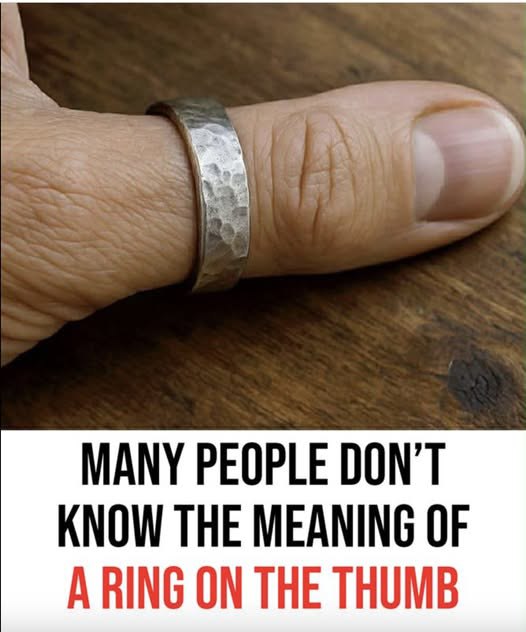
  • SOTM – The Hidden Meaning Behind Thumb Rings!

    SOTM – The Hidden Meaning Behind Thumb Rings!

    Rings have never been just accessories. Long before they became fashion statements or sentimental gifts, they carried meaning—sometimes obvious, sometimes hidden. Across cultures and centuries, rings have symbolized commitment, authority, loyalty, wealth, spirituality, and identity. The finger chosen was never random. It mattered. It still does.

    Most people recognize the symbolism of a ring on the ring finger, tied to love and marriage, or the index finger, often associated with leadership and ambition. But the thumb ring exists in a quieter, more intriguing space. It doesn’t announce itself with tradition or expectation. It doesn’t follow the rules most people know. And that’s exactly what makes it powerful.

    Historically, the thumb has always been different. Anatomically, it’s the strongest finger. It moves independently, opposes the others, and makes grip and control possible. Without the thumb, the hand loses much of its function. Cultures noticed this long before modern anatomy explained it, and they attached meaning accordingly.

    In ancient societies, thumb rings often signified strength and status. In some parts of Asia and the Middle East, thumb rings were worn by archers. They weren’t decorative—they were tools, protecting the thumb while drawing a bowstring. Over time, these rings became symbols of skill, discipline, and power. Wearing one implied mastery. Not everyone earned that right.

    In other cultures, thumb rings were markers of wealth and social standing. Because the thumb is larger, rings made for it required more material, making them more expensive. A thumb ring quietly said, “I can afford excess.” It wasn’t flashy like a crown or necklace, but it didn’t need to be. The message was understood by those who knew how to read it.

    Unlike rings tied to marriage or religious obligation, the thumb ring was often a personal choice. That freedom gave it a different tone. It wasn’t about belonging to someone else or fulfilling a role. It was about self-definition.

    In modern times, that theme hasn’t disappeared—it’s evolved.

    Today, people wear thumb rings for many reasons. Fashion plays a role, obviously. A thumb ring stands out without being loud. It breaks symmetry. It disrupts expectations. On a subconscious level, that makes it compelling. It signals confidence without trying too hard.

    But even when worn purely for style, a thumb ring often reflects something deeper. People who choose it tend to value independence. They’re comfortable stepping outside convention. They don’t need validation through traditional symbols. The thumb ring doesn’t beg to be noticed, but it doesn’t hide either.

    Psychologically, the thumb is associated with willpower and self-direction. In palmistry and symbolic systems, it represents determination, logic, and personal authority. A ring placed there can feel grounding, reinforcing a sense of control and autonomy. It’s no coincidence that many people describe feeling “stronger” or more centered when wearing one.

    There’s also an element of boundary-setting. Unlike rings associated with partnership, a thumb ring doesn’t signal availability or obligation. It subtly communicates self-possession. For some, it’s a reminder that their choices are their own. For others, it’s an outward reflection of an inner mindset: I move on my terms.

    Gender norms around rings have shifted, but the thumb ring has always resisted categorization. Historically worn by warriors, nobles, artists, and rebels alike, it never belonged exclusively to one gender. That neutrality makes it especially appealing today, when many people reject rigid labels altogether.

    For women, a thumb ring is often interpreted as a symbol of strength and self-sufficiency. It pushes back against the idea that jewelry must exist to signify romantic attachment. It can represent independence, resilience, and confidence—qualities that don’t require explanation.

    For men, it can signal individuality and nonconformity. It’s less traditional than a signet ring, less expected than a wedding band. It suggests someone who’s comfortable stepping slightly off the beaten path without making a spectacle of it.

    In some communities, the thumb ring has also been linked to creativity and nontraditional thinking. Artists, writers, and musicians have long gravitated toward symbols that quietly reflect their internal world. A thumb ring fits that mold. It doesn’t shout rebellion. It simply exists on its own terms.

    Material matters too. A thick metal thumb ring carries a different energy than a slim, minimalist band. Heavier designs often emphasize strength and authority, while simpler ones lean into clarity and self-awareness. Even the choice of metal—silver, gold, steel—can subtly reflect personality traits like adaptability, stability, or endurance.

    What’s striking about the thumb ring is how often people choose it instinctively. They may not articulate the reason, but something about it feels right. It’s comfortable. It feels balanced. That instinct is telling. Humans have always used symbols to express what words can’t quite capture.

    In a world obsessed with signaling—status updates, labels, declarations—the thumb ring remains understated. It doesn’t demand interpretation. It invites it. Those who notice may read strength, independence, or confidence. Those who don’t will simply see a ring.

    And that’s part of its appeal.

    The thumb ring isn’t about following tradition or breaking it for the sake of rebellion. It’s about choosing intentionally. It reflects a quiet assurance that doesn’t need approval. A reminder of autonomy worn in plain sight.

    One small accessory. One subtle statement. And yet, for those who understand it, it speaks clearly: this person knows who they are, and they’re comfortable standing there without explanation.

  • In 1987, a Truck Driver Disappeared With His Cargo!

    In 1987, a Truck Driver Disappeared With His Cargo!

    In the middle of the night, long-haul trucks vanish into the dark like ships at sea. Headlights shrink, taillights fade, and the highway swallows them whole. Most of them arrive where they’re supposed to. Some don’t. And when a vehicle the size of a small house disappears, it leaves a question that never fully goes away: how does something that big simply stop existing?

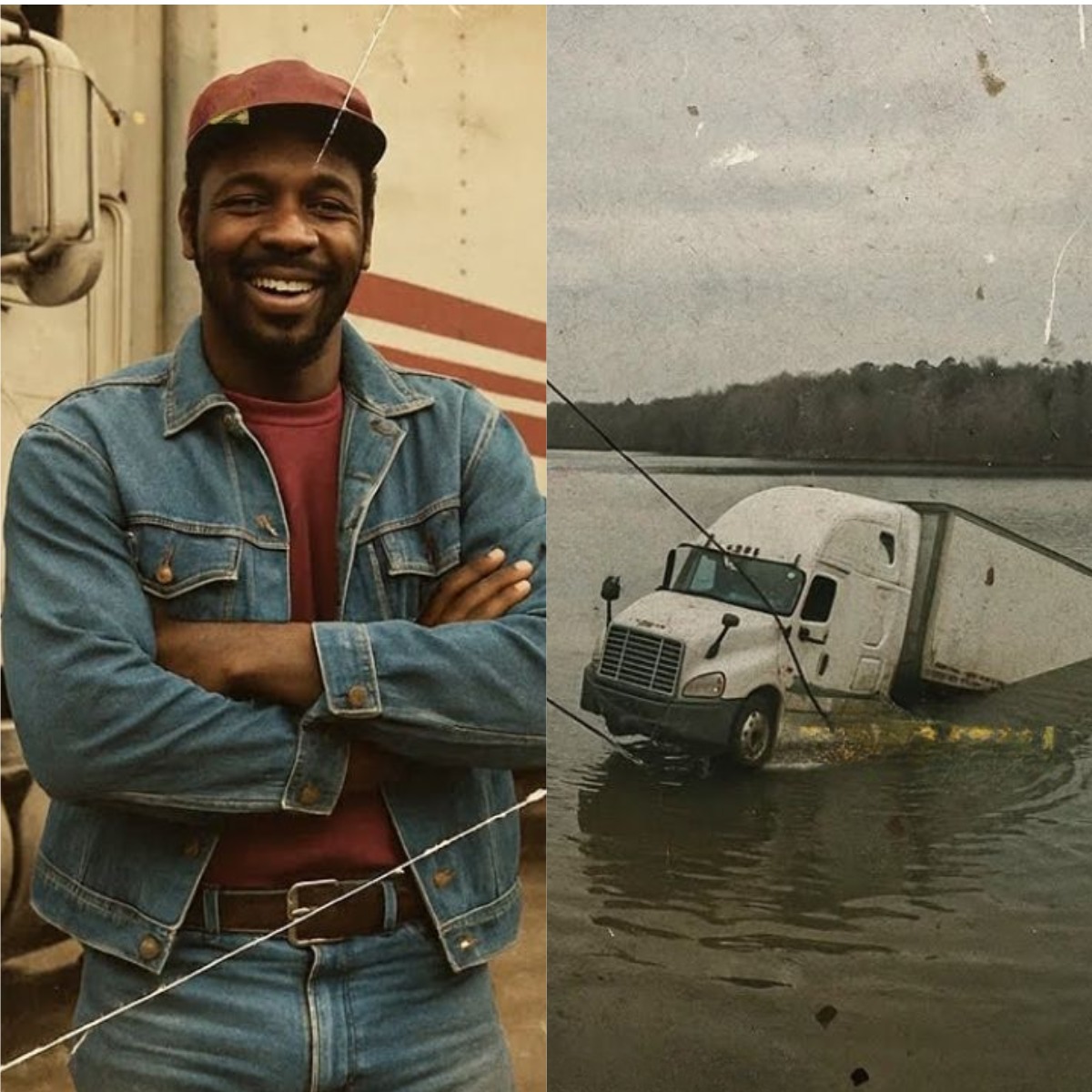
    In the summer of 1987, Raymond Hoffman was one of those men you didn’t worry about. Middle-aged, steady, the kind of driver dispatchers trusted because he didn’t cut corners. He wasn’t flashy, wasn’t reckless, didn’t pick fights at truck stops or chase risky side gigs. He ran his routes, logged his miles, delivered on time, and went home. Other drivers respected him because he’d stop for a stranded rig, share a tool, call in a hazard, do the small decent things that keep people alive out there.

    That week, Raymond was hauling a semi-trailer full of brand-new refrigerators from California into Nevada, crossing a stretch of heat-baked land where the horizon looks like it’s melting. It should have been routine. No storms. No snow. No ice. Just a long drive and a deadline.

    Back then, tracking was primitive compared to today. There was a logbook, and there were rough location entries, sometimes based on older GPS readings that weren’t always precise. Dispatch could usually tell if a truck was on the main path, but if a driver left the route, even by mistake, the trail got fuzzy fast.

    Raymond left California early, and a couple of hours in, dispatch saw his signal ping at a large gas station along the way. The cameras later showed him stepping out, grabbing coffee from a vending machine, talking briefly on the radio, then returning to the cab. His body language looked normal. No frantic movements, no scanning the parking lot, no argument with anyone. Store employees remembered him as quiet and polite. Just another driver taking a short break.

    Then he pulled back onto the highway and disappeared into the heat.

    About two hours later, radio contact dropped. Not a bad connection. Not a crackle. Just silence.

    Dispatch tried again. No response. They checked the last known area and narrowed it down to a deserted section near an old bridge over a narrow river. It wasn’t a busy road. That’s what made it worse. On a low-traffic route, a semi stands out. If a truck with a full trailer had rolled by, someone would have remembered it. But when dispatch called local highway services, the answer kept coming back the same: nobody had seen Raymond’s rig.

    The alarm didn’t truly catch fire until the unloading point in Nevada called, asking why the shipment hadn’t arrived. Refrigerators don’t just vanish without consequences. The customer started calling the transport company. The transport company started calling Raymond. The police got involved when the missed delivery turned into a missing person.

    At first, everyone chased the simplest explanation: accident. They scanned ditches, ravines, gullies—every place a driver might drift off the road after fatigue or a blown tire. They sent units along the suspected route. They even brought in a helicopter to sweep a wide radius. Nothing. No skid marks. No debris field. No trailer on its side. No broken guardrail. No oil slick.

    The next theory was theft. But stealing a full trailer of refrigerators is the kind of crime that creates noise. You need a place to unload, people to move the inventory, contacts to sell it. And refrigerators aren’t subtle. They aren’t jewelry you can slip into a bag or electronics you can flip quickly. A shipment like that is bulky, traceable, and hard to hide. Yet no one reported a similar batch turning up. No warehouse raid. No suspicious resale. No tip.

    Then the theories got darker. Hijacked. Forced to move contraband. Dragged into someone else’s business. But again, Raymond wasn’t known for that life. His family insisted he would never abandon them, never choose a vanishing act. His friends backed that up. He was reliable to the point of stubbornness.

    The case went cold the way cold cases always do: first it’s urgent, then it’s quiet, then it becomes “unsolved,” filed under a number that only a few people still remember. Years passed. A few newspaper stories resurfaced now and then, always with the same old photo, always with the same questions and no answers.

    Then time did what time does. It buried the mystery under other headlines.

    Until nature dragged it back to the surface.

    In 2022, parts of the American West were hit by an intense drought. Rivers shrank. Reservoirs fell. Shorelines retreated by tens of meters, revealing mud and rock where there used to be water deep enough for boats. Near a small Nevada town, locals watched a lake level drop to a point nobody alive had seen before.

    A fisherman walking across newly exposed ground noticed something metallic sticking out of the mud. At first, it looked like scrap—maybe the roof of an old van or the remains of a boat. But as he got closer, his stomach tightened. The shape wasn’t random. The angles were wrong for a boat. Too straight. Too industrial.

    He called the sheriff.

    Rescue crews arrived, and what they uncovered looked like a scene from a crime movie that had been left running for decades. A semi-truck sat half-sunken in the mud, remarkably intact for something that had been underwater so long. The cab wasn’t crushed. The trailer was still connected. The rear doors were closed.

    It didn’t look like a rig that had been launched off a cliff. It looked like a rig that had been guided into the water.

    Divers checked the cab first, and what they found turned the air heavy. A body was inside, still seated behind the wheel, as if caught in the middle of driving. Time and water had done their work, but the position remained unnaturally preserved. The seatbelt was fastened. The doors appeared locked. The steering wheel, still in place.

    When cranes finally lifted the vehicle free, investigators found enough identifying features to match it to Raymond Hoffman’s missing truck. The plates were worn, but the numbers lined up. The engine, fuel tank, and trailer fittings matched old records.

    Word spread fast. People who had forgotten suddenly remembered.

    The trailer was opened next. If there had ever been a question about whether the cargo was stolen, it died right there. Inside were the refrigerators, rusted and ruined, stacked the way they’d been loaded. No hidden compartments. No contraband. Just a full load sacrificed to the bottom of a lake.

    While forensics cataloged the interior, someone reached the front section and opened one of the appliances. Inside, wrapped in plastic, was a rolled piece of paper.

    A note.

    Time had blurred parts of it, but the message still came through like a cold breath:

    “I knew I wouldn’t arrive in time. He knew the route better than I did.”

    No signature. No explanation. Just a bitter fragment.

    That note changed the tone of everything. A driver doesn’t hide a message inside a refrigerator unless he believes someone will search the cab. Unless he believes someone will take the trailer. Unless he thinks the only safe place for truth is somewhere no one will think to look until it’s too late.

    Investigators re-opened the old files, pulling dusty folders and faded reports. They dug into the transport company’s history and found something that mattered: Raymond wasn’t the only driver working those contracts. There had been disputes. Old grudges. One name showed up in recollections from former employees—Don, another driver who had clashed with Raymond months before the disappearance. Jealousy over better routes. Accusations that Raymond kept the best orders. Nothing that sounded like murder at first, but enough to plant a seed.

    Don was dead by the time the case reopened. Many of the people from that era were gone or scattered. But the investigators found something else in the archive that hit harder: a routing note from the day Raymond vanished.

    After the gas station stop, Raymond had reportedly been advised over the radio to take an alternate route due to traffic and roadwork. The record didn’t name the speaker—only a brief notation tied to initials, something like “KL.” It was the kind of vague entry that meant nothing in 1987 and became everything decades later.

    A voice on the radio. A suggestion that sounded helpful. A detour that led away from the main road and toward a lake that would later swallow the evidence.

    The cab’s condition supported the ugliest possibility: Raymond didn’t crash. He didn’t accidentally drive into the water. The truck likely went down a slope, slowly, without the violent impact you’d expect from a fall. That meant someone could have brought him there, forced him, or tricked him, then ensured he couldn’t escape.

    The fractures in the remains were hard to interpret after so many years underwater, but investigators noted injuries that didn’t fit the clean story of a simple accident. And the locked cab raised a final, chilling question: who locks a man inside a truck and sends it into a lake?

    The leading theory became the simplest one that matched the facts: this was an intentional killing disguised as a disappearance. A setup using a false route. A controlled entry into the water. A cargo left behind not because it wasn’t valuable, but because hiding the truck mattered more than the merchandise. The motives narrowed to two: revenge, or money.

    Insurance fraud hovered over the case like a shadow. If someone wanted a payout, a missing truck and lost cargo could be a jackpot—especially if the paperwork was dirty enough. But the company that handled those contracts had long since collapsed. Records were incomplete. Some financial documents hinted that insurance payments exceeded the value of the shipment, but nothing survived well enough to put real names to decisions. No living defendants. No clean paper trail. No confession.

    In the end, the case reached a conclusion without justice. Authorities officially classified Raymond Hoffman’s death as a homicide by unknown persons. With decades passed and key figures dead or unidentified, there was no one left to prosecute.

    But for Raymond’s family, even that incomplete ending mattered. For thirty-five years they lived with a hole in the story—a missing man, a missing truck, a silence that never explained itself. Now they had remains to bury, a place to grieve, and a truth that, while brutal, was finally real.

    At the funeral, Raymond’s son—once a teenager waiting by the phone—stood as an adult and told reporters he wasn’t celebrating anything. He was relieved. There’s a difference. Relief doesn’t erase pain. It just stops the mind from inventing a thousand worse possibilities. At least now he knew where his father had been all those years.

    The lake kept shrinking after the discovery, exposing more debris, more reminders of what water hides when it’s deep enough. Locals began visiting the shoreline out of curiosity, staring at the gouged-out area where the truck had rested for decades. Some said an old access road existed there before the dam raised the water level. If that’s true, it explains how a semi could be guided down without leaving the chaos of an obvious crash.

    Among truckers, Raymond’s story became a warning passed from one generation to the next: don’t trust a random voice on the radio, especially if it pushes you off-route. Confirm changes. Stick to known roads. And remember that danger doesn’t always come with flashing lights. Sometimes it comes as “friendly advice.”

    The truck and trailer were eventually hauled away and scrapped. The refrigerators, ruined, were disposed of after examination. The note—sealed in plastic, written in a hurry by a man who understood too late—was returned to the family after investigators finished with it. Three sentences. A final signal.

    “I knew I wouldn’t arrive in time. He knew the route better than I did.”

    It reads like the moment the trap snapped shut. Like the realization that someone else had been steering the whole time.

    The mystery of how a semi-truck vanished in 1987 ended because a drought pulled the lake back like a curtain. The culprits, if they ever existed in a form that could be named, were swallowed by time. But the story remains what it always was beneath the headlines: a man doing honest work, expecting to go home, and never getting the chance.